Friday, 14 January 2022

Amy - Throwback 10


Survival horror games have become big business over the years. Whilst they may have originally been games that were talked about in hushed whispers so that parents didn't take the 'nasty zombie games' away from you, thanks to some big hits like Resident Evil and Silent Hill more and more publishers have wanted to get a piece of the survival horror pie. 

Whilst not every survival horror game ends up being an amazing hit many still have something to them that makes them enjoyable; they become like a b-movie horror film where you know its not great, but you have a lot of fun with it anyway. But there are a few games that fail to even be that, and just end up being clunky, un-enjoyable messes. Games like 2012's Amy.

Amy puts players in control of Lana, a young woman who has to protect Amy, a little girl with strange powers. The game begins with the two of them travelling together on a train, which is soon caught in an explosion that causes it to crash. When the two of them recover they find themselves in a city overrun with an infection that turns people into zombies. Whilst Lana is susceptible to this infection, and can become a zombie, Amy's evolving powers enable her to cure Lana and restore her to health. But, because of this, the two of them are also being hunted by the shadowy Phoenix Foundation, who want to harness Amy's powers for themselves.


One of the biggest drawbacks to Amy is that essentially the entire game is one big escort quest. Now, I'm sure that there will be some who will turn around and tell me that there have been some good games that involve this mechanic, and are sometimes even built around it; but games like Ico and A Plague Tale: Innocence are few and far between. Most gamers will hear the phrase escort mission and will have flashbacks to the most boring and frustrating parts of some of their favourite games. And that's basically the entirety of Amy.

To begin with the game does present something of a fun challenge, trying to figure out the best way to balance keeping Amy safe from the things that only Lana can fight against, whilst also keeping Lana from turning into one of the infected herself. However, it soon becomes clear that it's almost impossible to find this balance between the two characters, as the game is just too poorly constructed to enable any real success, or enjoyment.

Unfortunately it's not just in the escort mechanic, the main part of the game, where Amy falls apart, as the basic controls are....clunky would be generous I guess. The game will tell you that you can do certain things, but whether these mechanics work will be anyone's guess. The game only allows you to dodge about ten percent of the time, meaning that you'll frequently find yourself getting hit by enemies, and even if you're standing right on top of items you want to pick up your character will stand there doing nothing as you tell them to grab it over and over again. 

The division between the two characters and what each of them needs to do also feels very off in places, as you'll be sending the defenceless Amy into dangerous places because the game tells you Lana can't fit when the crawlspaces are more than large enough for her to get through. I know why they want players to have to do things from a storytelling point of view, but if the level design doesn't fit with this it just ends up feeling silly and broken in a lot of places. And when you add in how easy it is to end up being killed, and how sporadic the checkpoints are, you'll often find yourself playing through the same frustrating parts of the game again and again as you try desperately to have the game actually do what you're telling it to do. A lot of these issues ended up being corrected via a patch a few months later that would add more checkpoints, tweak the controls, and correct errors in the subtitles; though by then many people who bought the game upon release would have already been bored of it.


Graphically the game is also something of a letdown. I know that this is a smaller budget game, made by an independent studio, but often Amy looks like a game that should have been released on the generation of consoles that came before it. It's messy, dirty, and drab; and whilst you could hand wave that away as being part of the survival horror aesthetic, it often comes across as cheap-looking. When you consider some of the more visually interesting independent games coming out at the time it's a shame that the developers didn't take a more unique approach to the graphics, taking the chance to release a game that would look visually distinct even if it didn't play too well.

Upon it's release onto digital marketplaces Amy was met with unfavourable reviews from the vast majority of outlets. Whilst it was given some degree of leeway for being a download game there were still enough issues with the game that people felt unable to give it high scores. The shoddy controls, poor game design, and a story that failed to really do anything new or impress led it to becoming a critical failure, with one reviewer calling it 'one of the worst games ever made'.

As it stands, Amy is probably going to remain as one of those games that people will have largely forgotten, a game they picked up cheap to see what it was like and put down fairly soon into playing it because of how frustrating and dull it is. I myself gave up on Amy not long into playing it when it first came out a decade ago, and I can't ever really see myself ever going back to it.


Support Amy on Patreon

Buy Amy A Coffee

Go to Amy's Blog

Thursday, 13 January 2022

Gears of War: Ephyra Rising by Michael A. Stackpole - Book Review


'The Locust War has ended with an energy weapon that pulsed across the land, destroying Locust and Lambent alike. The world is in shambles and the few survivors are isolated from one another. Humanity must begin anew. This novel reveals the canonical, never-before-seen events set in the time immediately following the game Gears of War 3.

'With most of Sera's civilisation destroyed, Sergeant Marcus Fenix and Lieutenant Anya Stroud must somehow rebuild on the ruins. For Marcus, his purpose is impossible to grasp. With no clear enemy to fight, there may be no place left for him in this postwar world. Some call him hero, others view him with resentment.

'As Anya struggles to create alliances to re-form the Coalition of Ordered Governments, she quickly discovers how impossible it is to tell friend from foe. Then whispers of Locust still stalking the land begin to spread. Fearing the worst, Marcus forms a team to assess the potential threat. As he and the other Gears search for Locust survivors, however, they quickly discover that the new enemy may be all-too-human, and utterly ruthless.'

When I discovered Gears of War when it first came out I, like most people, were drawn to the inventive action, the over-the-top characters, and the stark, ruined beauty of the world that had been created. However, whilst I soon saw other fans moving from the main story into the multi-player and Horde modes as each successive iteration of the franchise came out I was instead drawn to the story, the setting, and the characters. I enjoyed picking up the books, reading the comics, and replaying the campaign over and over again. And when the series made a jump forward in time by decades with Gears of War 4 I was super intrigued by what had gone on in that time gap, and the world building that had happened.

Whilst we get some of this information in the games with files that can be found and snippets of dialogue it's been the novels where we've really had the chance to find out what happened after the defeat of the Locust and the Lambent, before the rise of the Swarm. And Gears of War: Ephyra Rising might give us the best insight into this period yet.

Picking up several weeks after the end of the third game the book begins with Marcus Fenix and Anya Stroud having finished their time in the COG and trying to make a new life together in the remains of Anya's family estate. Whilst the house has been damaged over the years there's still enough of it there to be repaired and rebuilt, providing Marcus with a distraction to keep him mind busy whilst he begins to process the trauma of everything that he's been through during the war.

Whilst Marcus deals with the estate Anya finds herself being approached to help rebuild in another way, as Jamila Shin, a woman with a lot of political connections, tries to bring together influential and powerful people in a bid to build a new form of government that can try and help everyone. Not wanting a career in politics, but knowing that her skills would prove useful and that she could do some genuine good, Anya agrees to help, and begins to form a new Ministry. As Anya begins to learn the ins and outs of political power, as well as finding innovative ways to try and rebuild society, Marcus is approached by Brandon Turrall, a survivor of the war with connections to many small settlements, who has heard stories of surviving Locust. With Anya using her skills to help the world Marcus feels he can finally use his to do some good, and agrees to head out into the wilds with Brandon to make sure that the Locust are finished once and for all.

One of the things that I really enjoyed about Gears of War: Ephyra Rising is how little of the book is given over to action and firefights. Now, that doesn't mean that there aren't any, or that fans of those things will come away disappointed, but for the longest time reading this I didn't even think about those things. I was so engrossed in the story of this world and these people that I'd come to care about that it didn't even occur to me that a book based on an action game would involve action. Michael A. Stackpole had done such a good job in breathing life into Marcus, Anya, and the others that I didn't need monsters and explosions to enjoy things, I simply needed more time with them.

One of the prime examples of how well Stackpole deals with these characters in a setting none of them have ever really been in before, a time of peace, is what's done with Marcus. When Marcus and Anya first arrive at the Storud estate he's full of hope. He's got hope for building a life with the woman he loves, of starting a family together, and spending his time rebuilding the house and growing tomatoes. But slow things begin to turn for him. It begins with how he feels naked when not wearing his armour, how he unconsciously scans his environment for escape route, cover, and places where the enemy could be hiding. He slowly comes to the realisation that the world around him is at peace, but part of him is still at war.

It's not just that Marcus is always on edge though, but the grief that he also has to work through. Early on in his time at the estate he finds the bodies of a young woman and her baby on the land, both having died some time before. This is far from the first body he's seen, even the first dead civilian; but something about it causes him more pain than he's used to. He sees these two bodies as a symbol for all the death during the war, all of the pain and the loss, and sees how close they were to making it through the war alive before dying. Then there's the memories of Dom, the thoughts that sneak up on him when he's least expecting it but leaving him spiralling into depression.

This book takes a figure who has always been portrayed as this big, macho figure, a hero larger than life who's the first to run into danger and can do incredible things, and it shows the real man underneath it all. We see that the scars from the war run a lot deeper than they appear, and how even the bravest, most idolised soldiers come back from that hell as changed, hurt people. And this is why it makes perfect sense for him to go back out into the world to face more danger. He doesn't feel that the war has really finished with him, that even though the fighting might be done it still has his claws in him. He might be going out there to make sure the Locust have gone, and to save some people, but he's also out there to put a lot of his own demons to rest.

Whilst Anya doesn't have as much emotional trauma to work through as Marcus she does get ample things to do in this book, with an almost equal amount of the book given over to her and her story. Having played the later gears games I know that Anya will become the First Minister, and that she helped to shape the society that would rise from the ashes, so it's interesting to see her here as a person who wants nothing to do with politics and needs to be convinced to get involved. Over the course of the book we see her discovering parts of herself she never knew that she had, of her ability to not only manage people, but to see through their exterior and figure out what they're really after and the deceptions underneath. Anya doesn't end the book being First Minister, or even wanting the job, but the Anya from the beginning of the novel isn't the one there at the end, and it's easier to see how she would go on to become one of the most important political figures on Serra.

Outside of Anya and Marcus there are several returning faces throughout the book. We get a brief appearance from Colonel Hoffman, whose relationship with Marcus has definitely changed since these stories began, as well as the surviving members of Delta Squad. The one who gets the most time and development is Baird, and we get to see not only the formation of DB Industries, but also how he becomes one of the most important people in humanity's survival, helping to innovate new technologies and strategies to keep people alive. We also get to catch up with Cole, who's always a delight, as well as having appearances from Samantha Byrne and Clayton Carmine.

The book also introduces several new figures to the Gears of War mythos. There are a number of important political and industrial figures who play large parts in Anya's story, but the best new character is easily Brandon Turrall. Having grown up surviving out in the world during the Locust War Brandon is one of the few non-Gears who seems to be able to earn Marcus' respect, and the friendship that forms between the two of them feels very genuine, and well earned. He doesn't hold Marcus on a pedestal like some do, nor does he look down upon him for being a soldier. The two of them understand that the other did what they had to do to survive, and that their skills are useful and important. He's one of the few characters introduced in the book who I'm genuinely sad isn't in the games, as I'd love to see where he went after this, and if his friendship with Marcus got to carry on.

Fans of Gears of War who, like myself, love the characters and the world and want to see more of it and learn about the gaps between the games are definitely going to enjoy this book. It answers some very important questions about how society began to rebuild itself after the Locust War, and how the members of Delta Squad began their journey to where we find them in Gears of War 4. It takes its time to examine how the war effected these people, how it changed them, and how the hopes for a better world afterwards shape them too. As much a character piece as an action story, this was an absolute delight from start to finish.


Support Amy on Patreon

Buy Amy A Coffee

Go to Amy's Blog

Wednesday, 12 January 2022

Top 10 Books of 2021


Originally published on Set The Tape


With the pandemic still going on, and leaving home still incredibly dangerous for some folk, 2021 has been a good year for finding a decent book or two. Having been unable to leave the house for much of the year I’ve found myself reading a lot more than normal (which was already a lot), so have been wracking my brain to create a list of the 10 books that stood out the most. After a lot of thought, and a changed mind or two, I can present you with ten books from 2021 that you absolutely need to check out.


The Forever Sea by Joshua Phillip Johnson - Titan Books

The first book in a new fantasy series, The Forever Sea is one of the more imaginative and beautiful fantasy stories in years.

Set in a world where vast seas of grass and plants thousands of feet deep are explored by floating ships, the story follows Kindred, a young woman who finds her life forever changing when her grandmother steps off her ship to disappear into to grass below.

What follows is an adventure that sees the crew of Kindred’s ship fleeing from pirates, fighting strange creatures that lurk beneath the grass, and searching for a fabled floating city that might be able to give them refuge. Along the way Kindred will discover ancient mysteries, and terrifying magic, that will push her to her limits. Full Review


Litany of Dreams: An Arkham Horror Novel by Ari Marmell - Aconyte Books

One of the new novels set within the Arkham Horror game universe, this creeping horror story is inspired by the works of Lovecraft, and sets out to unsettle it’s reader with its twisted and disturbing imagery.

Following the disappearance of a student at the Miskatonic University his roommate, Elliot Raslo, sets out to find out what happened to him. Unfortunately for Elliot, he’s being haunted by some strange chanting that only he can hear; a chanting that his friend heard before he vanished.

His investigation leads him to a small community deep in the swamp, a community that is under siege by strange terrors. Along the way he teams up with a Greenland’s Inuk warrior in Arkham searching for a stolen artefact that might be connected to the strange events. Full Review


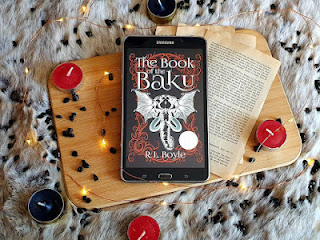
The Book of the Baku by R.L. Boyle - Titan Books

The Book of the Baku is one of the more affecting horror books that I’ve read in a long time.

Thanks to its disturbing, creepy nightmare-like imagery it really gets under the skin; but it’s the emotional story we get along the way that really hits the hardest.

The story follows Sean, a young teen who’s had to move in with his grandfather following some tragic event. As Sean hasn’t spoken a word in month, we watch as his grandfather tries to get him to open up, forming a relationship with him as best he can.

Searching through his grandfather’s book collection one day Sean finds a book written by his grandfather, The Book of the Baku, a collection of terrifying short stories. As Sean reads the book his reality begins to twist, his grandfather seems to change, and the nightmares from the book begin to stalk him. Full Review


The Final Child by Fran Dorricott - Titan Books

A new psychological thriller set in the heart of England The Final Child sees Harriet, a young aspiring writer, looking into the case of a child kidnapper and serial killer from almost twenty years prior.

Her cousins being two of the victims of ‘The Father’, Harriet wants to try and tell the stories of his victims. This leads her to trying to speak to Erin, the only person to ever escape ‘The Father’.

Whilst their relationship fails to start on the best note, the two of them are soon drawn together as Erin begins to receive strange messages and sinister presents. She’s sure she’s being watched, and begins to suspect that perhaps ‘The Father’ isn’t gone as everyone thought. Together, the two of them have to try and get to the bottom of this dangerous mystery; all whilst exploring their growing romantic feelings for each other. Full Review 


Horseman: A Tale of Sleepy Hollow by Christina Henry - Titan Books

Decades after the stories of Sleepy Hollow began with the tales of the Headless Horseman and Ichabod Crane, the townspeople of Sleepy Hollow find their town coming under siege from some dark force within the surrounding woodlands once again.

When Ben, the fourteen-year-old grandson of Brom Bones, finds the headless body of a boy in the woods it begins a new mystery, one that has Ben questioning everything he thinks he knew about his family and the legends of the Horseman.

With dark forces seeming to have an eye on Ben, he also has to contend with his grandmother, who seems intent on forcing Ben to act like the girl he was born as; but he knows in his heart he’s a boy, and will do whatever it takes to make his family see it too. Full Review


Sherlock Holmes & The Three Winter Terrors by James Lovegrove - Titan Books

James Lovegrove returns to write another wintery Sherlock Holmes treat in Sherlock Holmes & The Three Winter Terrors, a book that brings together three cases from across the career of the legendary detective, that test his abilities, and push his disbelief in the supernatural to its limits.

A tragic accident in a private prep school in 1889; a wealthy business owner frightened to death by a ghost in his own home in 1890; and a scientist found killed and gnawed on by a suspected cannibal on his country manor in 1894.

What brings these cases together? Why is the same family seemingly followed by tragedy? And can Holmes get to the bottom of it all? Full Review


Truth of the Divine by Lindsay Ellis - Titan Books

Following on from last year’s Axiom’s End, Ellis’ second book continues the story of Cora, a young woman whose life was forever changed when an alien life-form, Ampersand, entered her life.

Following the traumatic events of the last book, the entire world now knows that alien life exists, and this knowledge seems to be close to causing a dangerous revolution.

Whilst the world argues about the existence of aliens and if these newly discovered beings deserve to receive rights, Cora fights the demons that have been haunting her since she almost died.

Her and Ampersand are doing their best to put their lives back together and survive the best they can when a new threat arrives; a threat that could completely break them both. Full Review


Beyond: The Founding of Valdemar by Mercedes Lackey - Titan Books

Author Mercedes Lackey returns to her long running Valdemar series, going back in time to show readers how this kingdom came into being.

Set within the Eastern Empire, readers follow Kords, the Duke of Valdemar, as he tries to protect the people of his land from the machinations of the Emperor; a man who cares nothing for the common people and is happy to see people die for his own ambitions.

Having hidden illegal mages within his Dutchy for years, Kordas has long been searching for a way to save his people. And thanks to a breakthrough, he may have discovered a means to transport his people to a distant land far from the Emperor’s reach. Working in secret, the people of Valdemar put the pieces of their escape together; but when Kordas is summoned to the capital their entire plan might come crashing down. Full Review


Cult of the Spider Queen: An Arkham Horror Novel by S.A. Sidor - Aconyte Books

Cult of the Spider Queen takes the Arkham Horror series in a new direction as the action shifts away from Massachusetts to the deep jungles of the Amazon.

When a reporter at the Arkham Advisor, Andy van Nortwick, receives a package in the post with a roll of film and the cryptic message ‘Maude Brion is very much alive!’ it leads him to learn of a film crew going missing in the Amazon a year ago.

Putting together a team to try and find the missing people, Andy travels deep into the foreboding rainforest. But even with experts in the field, nothing could prepare them for what they find waiting for them. Strange ships crewed by unearthly beings, spirits that haunt their dreams, distortions in time and space, and the Spider Queen herself; a huge, monstrous creature that hunts her way through the jungle, searching for her next meal. With elements from classic adventure movies, and a set-up that begins like a found footage movie, Cult of the Spider Queen is a heart pounding read. Full Review


The Rebels of Vanaheim: A Marvel Legends of Asgard Novel by Richard Lee Byers - Aconyte Books

Set within the world of Marvel’s Thor, the latest entry in the Legends of Asgard series follows the heroic warrior Heimdall and the Valkyrie Uschi as they travel home to the land of Vanaheim in order to take a rest and visit their families. However, once they arrive in their homeland they find their people under siege from the vicious draugr, powerful undead creatures.

Working alongside their families, and the god Frey, the two warriors find themselves having to fight for their lives against a foe that refuses to die and spreads across the land like a deadly infection, turning the people of Vanaheim into the creatures.

However, the draugr aren’t the only threat the two of them find; as they uncover a mystery that could plunge the realms of Vanaheim and Asgard into vicious war with each other. With a tight focus on characters, some tense and spooky horror, and an intricate plot, The Rebels of Vanaheim is the best entry in the series yet. Full Review


Support Amy on Patreon

Buy Amy A Coffee

Go to Amy's Blog

Tuesday, 11 January 2022

Encanto - Film Review


The latest Disney animated film, Encanto, takes viewers to a small, magical village in Columbia where we get the chance to meet the Madrigal family, three generations of people who have brought safety and happiness to the land thanks to the magical candle that graces them all with powers.

The film begins with a rather heartbreaking flashback to a young Alma Madrigal, who was forced to flee from her home with her husband, Pedro, and their three infant children, Julieta, Pepa, and Bruno thanks to a violent revolution. Unfortunately, when they're pursued by violent attackers Pedro loses his life in order to buy his family time to get away. This selfless act created a 'miracle', changing the candle Alma holds into a magical candle. This candle created a safe haven around Alma, providing her with a sentient house to help her and her children, as well as a safe valley around them for all who need it.

Over the next fifty years more people have moved to this hidden Encanto, and a community has formed. And, Alma's children, and their children have all been given amazing gifts from the magical candle. As the Encanto prepares for the ceremony in which Pepa's youngest son, Antonio, will receive his gift, it's revealed to us that Mirabel, Julieta's youngest daughter, never received a gift during her ceremony. With the family worried that perhaps Antonio won't receive a gift wither, that perhaps the magic is fading, they're relieved when the magic works.


Whilst the rest of the family are busy celebrating Antonio's new powers they fail to recognise how hard this has been for Mirabel, and she's let to wander the house alone. It's then that she begins to notice cracks forming around the house, heading towards the magical candle. When the candle almost goes out she becomes convinced that the miracle, and their home, is at risk. Despite the rest of her family failing to believe her Mirabel sets out to find a solution and save the people she loves.

Even going into Encanto knowing the basic set-up the film does a great job at bringing people up to speed in the first ten minutes, providing the audience with both a handy primer on the history of the Madrigal family, as well as breaking down who everyone is and what their special gifts are. Having grown up with a family who'd often be asking me who people are and why they're doing certain things whenever we'd be watching films this kind of concise opening is the kind of thing that I wish more films had. 

I think another thing that really helps with this film towards the beginning is that at first it kind of feels very familiar. A magical place where the magic is beginning to fade and one person sets out to make things right is a staple of fantasy stories; and we've all seen the kind of interpersonal drama and conflict that the Madrigals engage in across all kind of media, and quite possibly in real life too. But where Encanto really starts to move away from the familiar and feels like its own film is when it starts to address themes of inter-generational trauma, as well as the migrant experience.


As someone who's never lived that life I can't speak to how true these elements of the story are; but having spent even a little time on social media I've been able to see people talk about these aspects, and how the film captures these pains and journeys well and presents them in a way that films often never even tries. It gives viewers a whole new way of seeing this kind of story; one that makes it feel so special and different even if you can't relate to it yourself.

There have been so many amazing things written about this film already by people with important connections to it, people who have had to flee their homes to make new lives for themselves, people who have grown up the children of immigrants, people who have grown up with strong family expectations placed upon them. These are the important themes of Encanto, ones that could be missed on a shallow, cursory viewing of the film, but need to be acknowledged. As such, I'd encourage you to stop listening to some white woman talk about the film and go out to find the people whose opinions really matter.

Encanto isn't just a wonderfully fun and movie film, its an important movie that is going to mean a lot to people. It's continuing Disney's approach of moving away from 'traditional' white stories and embracing the peoples and cultures of the world to tell stories that everyone can enjoy, but that also finally let some people feel seen and represented in important ways.


Support Amy on Patreon

Buy Amy A Coffee

Go to Amy's Blog

Monday, 10 January 2022

Ron's Gone Wrong - Film Review


When the vast majority of the time when we get stories about robots and artificial intelligence they're breaking free of their human creators and turning on mankind it's nice whenever we get these kids movies that frame machines as not only something that can make life better, but things that can become our friends. 

Ron's Gone Wrong tells the story of Barney, a twelve-year-old boy in a Bulgarian-American home struggling to get by with an overworked and unsuccessful widowed father, and well meaning but wonderfully weird grandmother. To make things worse, Barney's struggling to find friends at school too, and ends up isolated and alone. There is a solution to this problem, however, thanks to the tech giants at Bubble Corp, who've created the B-bot; cute little robots that are designed to help bring children together and help them to make friends.

Unfortunately, Barney's family can't afford a B-bot for him, and when his birthday comes round and he still doesn't have one he slips into despair. This encourages his father to go out and do whatever he can to get Barney a B-bot; even going so far as to buy a damaged one off the back of a van. Barney is over-the-moon to finally have his own B-bot; but soon discovers that not everything about it is right. The robot can't connect to networks, it gets his name wrong, and it doesn't act like a regular B-bot. Determined to get a 'regular' one, Barney sets out to take the robot back to Bubble, but when his new robotic friend beats up some bullies in order to defend him Barney realises that whilst his B-bot, now named Ron, isn't working how he's programmed to maybe he's exactly what Barney needs.


The world of Ron's Gone Wrong is a hopeful one; a place where not only are there people who genuinely want to do good and to help heading up tech companies, but the things that they put out into the world are actually designed to make lives better. This isn't the world of billionaire CEO's who work their underpaid staff to death to provide people with sub-par phones that'll wear out after a few years; as the head of Buble, Marc Weidell, makes helping children his ultimate goal.

Whilst this isn't the most believable part of the film it does go a long way to explaining why it seems like Barney is the only child in the world who doesn't have a B-bot; as these things must be ridiculously cheap for how advanced they are. These robots are able to access social media, change their appearance, turn into vehicles, organise and run every aspect of a child's life, and all whilst being absolutely adorable too. The designs of these things are pretty simple thanks to their pill-like shape, but thanks to their changing skins and limbs that can pop in and out they all take on a unique look and you're never left confused over whose robot is whose; which is helpful as Ron himself is very much an important character that you don't want blending into the background.

Ron is an absolutely wonderful little robot, and his 'quirks' and faults make him instantly likeable and charming as a viewer; even if they give Barney a headache to begin with. The simple face display he has, which sometimes fails to hold together, the confusion that often sounds in his voice, and the strange dial-up sounds he makes made his first few scenes brilliant, and I very quickly ended up rooting for the little robot.

Obviously, a film like this doesn't have the two friends getting on to begin with, and it follows some very recognisable patterns in the way the story unfolds. But only up to a point. There was a part of the movie that I honestly assumed was going to be the end; Ron and Barney had become real friends, they'd proven that Ron wasn't a bad or faulty robot, and thanks to him saving Barney's life it looked like things were going to be okay. I was ready for things to wrap up and the two leads to go off to have a happy ending. But then I noticed that there was still half hour left. It's at this point the film takes a swerve and suddenly it becomes a story of Barney and his family setting out to get Ron's programming back into his body in order to save his friend.


This was a wonderful twist on what felt like a fairly predictable story, and I think was perhaps deliberately done. The film had followed an established formula, it has done the things I was expecting it to, and then it gave me more; and it even went on to break my heart by the end. My partner and I saw things slightly different when it came to the end. She saw it as a happy ending with a little bit of sadness to it, whilst I was trying not to cry as I saw it as a sad ending with a sliver of happiness. But however you come to see the film come the conclusion I think that you, like I was, would be suddenly surprised how much this malfunctioning little robot had worked its way into your heart. I'd come to care about Ron, and I was genuinely sad that this story had to end.

I hadn't heard much about the film before it came out, I knew nothing about the plot, I'd not seen any images or trailers, and I had no idea who was in it. As such, I was so pleasantly surprised by it. The film looks really pretty, and the animation style works wonderfully for this kind of story; with Ron and the B-bots looking like amazing little creations. The cast were also perfectly picked, and whilst I thought their acting was great it wasn't until the end credits rolled around that I realised I'd been listening to actors I knew. Ed Helms is great as the tired dad trying his best, Justice Smith is perfect as the tech guy trying to make the world better, and Jack Dylan Grazer continues to impress as a good young actor. The two most surprising performances were hands-down Olivia Coleman as the wacky grandmother, and Zach Galifanakis as Ron. Even knowing now who they are I still can't picture those voices coming out of them, and their performances, especially Galifanakis as Ron, were superb.

Ron's Gone Wrong might not have got much attention in the same year as films like Dune, Spider-Man No Way Home, and Encanto, but it's a wonderful, enjoyable film that I'm sure all of the family will enjoy, even if the end does break your heart.


Support Amy on Patreon

Buy Amy A Coffee

Go to Amy's Blog

Saturday, 8 January 2022

Resident Evil: Welcome To Raccoon City - Film Review


I like the Resident Evil series, ever since I first loaded up the original game, something my uncle owned, to see what it was like, and stumbled across that first zombie in the Spencer mansion I was hooked. It became a series that was janky and hell, with some serious weirdness at times, and not every entry was good, but it still had enough charm to become something wonderful. And whilst the CGI movies seem to be able to translate some of that at times the live action movies really seem to struggle to make Resident Evil work.

This latest reboot of the series takes a different approach to the Paul Anderson movies, which pretty much did its own thing whilst cherry picking certain characters and moments from the games to include. This time round we're getting a new adaptation of the games, bringing together Resident Evil and Resident Evil 2 into the same narrative. Now, if you're thinking that it might be too bold of an idea, that a single film wouldn't be able to accurately or effectively adapt both those stories together you'd be right. Resident Evil: Welcome to Raccoon City is, at best a cluster-fuck, and at worst boring as hell.

The film begins in the past, where we see a young Chris and Claire Redfield who, following the death of their parents, live in the Raccoon City Orphanage, ran by William Birkin. One night Claire sees something creepy watching her sleep, and after some investigating discovers an odd, monstrous looking woman named Lisa Trevor. 

Jumping forward a number of years, we rejoin Claire in September of 1998, where she's returning to Raccoon City after years away. Travelling to the city in a truck she's hitchhiked a ride in, the driver accidentally hits a woman, but when they stop to check if she's okay her body mysteriously vanishes. Once Claire arrives in town she breaks her way into Chris' home and the two of them have a heated discussion as Claire tries to let him in on a conspiracy about Umbrella, before Chris has to report to duty when a city wide warning alarm goes off.

Meanwhile, we also get to meet a number of other cops hanging out in one of the town's diners. Though as only one is wearing a uniform you'd be hard pressed to know they were police if you're not a fan. There's Leon Kennedy, a rookie cop who is nervous, accident prone, and may or may not have narcolepsy. There's also Albert Wesker, a lovely nice guy who is actually not evil and secretly working for Umbrella (no sarcasm, he's not evil and working for Umbrella), and Jill Valentine, a gun nut with an itchy trigger finger who will whip her weapon out at any opportunity.


As chaos begin to overtake the city Chris, Jill, Wesker, and a handful of others are sent to find some missing officers up at the Spencer Mansion whilst Leon is left watching the front desk. When the team arrive at the mansion they're attacked by hordes of the undead, which also happens back in town too as Leon and Claire meet and work together to try and find a way out of town. 

My biggest issues with Resident Evil: Welcome To Raccoon City are twofold. The first is that the film does not have the room to tell the stories that it's trying to tell. By combining the stories of the first two games the film effectively fails to tell either of them with any clarity or sense of worth, reducing the events of those games to tiny set pieces that occasionally appear in this new, mangled together story that even on its own fails to stand up as a coherent and entertaining piece of fiction. The film spends the first half of its runtime telling a slow set up, establishing its characters and the setting, which is fine to do if you have the time to spare; unfortunately, this film doesn't, and by the time anything of much note even happens, such as zombies appearing and running amok, it feels like there's only twenty minutes left and its a mad dash to the end.

I understand that it's important to have characters that you care about, that you've had a chance to get to know, but when the main draw of a film like Resident Evil is the zombies and monsters and action I don't want that part of the film rushed because the first half of the film was spent showing Alpha Team hanging out in a diner making bets, or Chris and Claire arguing over their past. These are things that add little to the experience, and giving part of the runtime over to them instead of scenes where the horror of the undead hunting you as you desperately try to survive feels like a wasted opportunity.

As for the characters, not a single character from Resident Evil appears in this film. I know I've already named several who are in the film, but honestly, it's name only. None of the characters here feel at all like their video game counterparts, and if you'd have given them other names it would have actually helped the story as I'd have been less annoyed that they failed to get any of the characters right. Crhis Redfield is probably the closest to being done right. Whilst they've introduced this whole new backstory of him growing up in an Umbrella orphanage and seeing Birkin as a father figure (which adds nothing to the film and makes things worse) he's still the highly skilled cop from the first game; but then when you're not given anything to do other than shoot you guns and be tough you can't really go too wrong.


Jill Valentine is nothing like her source material. In the games she's cool headed, will only draw her weapon when she needs to, is quiet and reserved, and is great at picking locks. Here she's a hot head who engages in banter, is the first to shoot, and never once unlocks anything (they actually gave the lock picking to Claire for some reason). Claire is also very out of character, being much more confrontational than any version of her I've seen, as well as quick to action and overly familiar with weapons. Whilst the Claire from the games always knew how to handle herself she was never eager to pick up a gun and start shooting, but here's she more competent than some of the cops.

Speaking of competence, Leon, poor Leon. Leon Kennedy has become one of the most beloved characters in the franchise, going from an unlucky rookie cop to a secret service agent sent in to extreme situations thanks to his skills here he's a bumbling fool. The first time we see Leon he's just waking up, which soon becomes him asleep in a diner less than an hour later as people balance objects on his head. Once he arrives at work he gets yelled at for leaving the front desk unmanned, and once he is on the desk he literally sleeps through a truck crashing into the front of the building. So yeah, he might actually be narcoleptic in this film. On top of this we learn he shot someone in the arse during training, gets his gun stolen by a prisoner, and can't work a shotgun. He's a walking joke, in what I can only assume is a deliberate attempt to take one of the most popular characters in the series and subvert expectations. I don't know what led to these decisions, but it's an absolute joke; just not a funny one.

Outside of these gripes the film does strange things with the zombies, having them talk at times, makes references to things from the game that feel really forced like conversations about what would be the worst way to die, eaten by a snake or a shark. It takes ideas from the novelisation book, like one of the characters being given a pda with info on how to get around the mansion by a shadowy figure, but does nothing much with it. It includes Lisa Trevor but does nothing with her, nor explains who she is or how she's there. Its like darts were thrown at a wall filled with Resident Evil trivia and ephemera and they just included whatever was hit without making it work.

The most galling thing is, there are hints that some of the people making this know Resident Evil, and that they care about the source material. The ammo boxes in the RPD building are straight out of the game, a bunch of keys are the card suit keys fro Resident Evil 2, the artwork hanging in the Spencer mansion matches what was in the game, and there are music and audio moments that are from the series. Yet these nods and winks to the longtime fans who recognise such things mean little when the rest of the film feels like they put the first two games in a blender and threw whatever came out on the screen without any creativity or care. It's like the film is simultaneously made by a super fan and someone who has only ever experienced the series by reading a Wikipedia entry.

As a fan of Resident Evil I honestly cannot advise watching this film. If you like zombie movies and have no investment in the series in any way you might find this mildly entertaining, though the flimsy story and ill defined characters might not be enough to keep you invested. If you do like the series just stay away. It's a horrible mangling of the source material that fails to entertain in any way. Resident Evil Apocalypse was a better adaptation of the fall of Raccoon City than this film, and is infinitely more entertaining than this drab affair.


Support Amy on Patreon

Buy Amy A Coffee

Go to Amy's Blog

Friday, 7 January 2022

A Wrinkle In Time by Madeleine L’Engle – Throwback 60


Originally published on Set The Tape


A lot of people think that Young Adult fiction (also known as YA) is something that came about in the ’90s and early 2000s, and whilst these might have been the decades where the genre had some big, well known hits, it’s by no means a genre that came into being at this time. YA has existed for decades, even if it wasn’t called YA. One of the books that really showed how well received teen fiction could be was A Wrinkle In Time by Madeleine L’Engle, first published in 1962.

The book follows thirteen-year-old Meg Murray, the daughter of astrophysicist Alexander Murray, and microbiologist and Nobel laureate Katherine Murray. When the story begins, Meg meets her new neighbour, Mrs Whatsit, who questions her about her missing father, and something called the tesseract, a scientific concept that her father was working on. The next day Meg, her genius brother Charles, and their friend Calvin, visit Mrs Whatsit, meeting her friends Mrs Who and Mrs Which.

The children learn that the three women are actually inter-dimensional beings of immense age and power, and they transport the kids across space to another planet using the power of the tesseract. On another world the children learn that the universe is under threat from a being of immense power called The Black Thing; a huge cloud of darkness that’s spreading across the universe. To stop this personification of all evil the children must travel to a world under its control to try and find Meg’s father before he becomes corrupted.

Despite being a book that seems to be set in a world of science, with some big science fiction themes and the inclusion of references to scientific theories such as Planck’s quantum theory (thanks in part to L’Engle’s interest in science), A Wrinkle In Time is has a lot of spiritual and religious themes to it. There are many references to divine intervention and numerous passages that are reminiscent of Christianity and the love of God and Jesus. The book has been compared to C.S. Lewis’ The Chronicles of Narnia in that regard. L’Engle doesn’t just use Christian mythology to craft her story and setting, however, as she uses several names from Mayan religion, and at one point the children directly name Buddha.

As with many popular books though, there are some who disagree with such interpretations, and the book has been accused of promoting science over religion, as well as encouraging witchcraft over the decades since it was released; although some of this could also come from the fact that L’Engle chose to make her central character a young woman, something which was looked down upon at the time. The book has received praise for being a feminist novel, and some have even said that without Meg Murray we wouldn’t have had some of the other big female leads in fiction that came after.

Despite receiving high praise on its release, as well as having record sales figures, it wasn’t easy for the book to even get published. L’Engle has spoken many times over the years about the difficulty she faced. The novel was rejected twenty six times, with L’Engle being told that it was ‘too different’, and that because of some of the themes and ideas that it deals with publishers were unsure if it would appeal to children or not. She also said that having a young, capable, female lead led to a number of rejections.

Thankfully, once the book finally hit the shelves these doubts were put to rest. A Wrinkle In Time has been republished many times over the years, with special editions and anniversary releases. It was awarded the 1963 Newbery Medal, won the Sequoyah Book Award, and the Lewis Caroll Shelf Award. Over the years the book has been featured in a number of studies that found that it’s one of the most read school books in the US, and the School Library Journal named it one of the top 100 chapter books of all time. It also received two film adaptations in 2003 and 2018, as well as a stage play in 1990, an opera in 1992, and a graphic novel adaptation in 2010.

Whilst YA books like Twilight and The Maze Runner might get more recognition, and young heroines like Katniss Everdeen might be household names, it’s worth remembering that in a lot of ways A Wrinkle In Time helped to lay the groundwork for what came after.


Support Amy on Patreon

Buy Amy A Coffee

Go to Amy's Blog

Thursday, 6 January 2022

Reign of the Devourer: A Marvel Untold Novel by David Annandale - Book Review


'The notorious Doctor Doom’s endless craving for power unleashes a soul-destroying plague on the world, in the latest devastating Marvel Untold novel

'Victor von Doom saw his future for an instant, and now he cannot rest. His obsession with regaining those memories leads him into the arcane science of geomancy. As he delves into the ancient memories that lie beneath his land, Doom discovers a tremendous concentration of power... one that should never be explored. Doom's excavations and necromancy fracture the prison of something awful: the Devourer of Souls. Now free to roam Latveria, the Devourer spreads a plague of soul-hungry vampires. Doom must choose between seizing this power for himself or destroying it, before his realm is no more.'

Reign of the Devourer marks the second time that David Annandale has written a prose novel dedicated to the 'super villain' Doctor Doom, and, much like the first book in the series, Annandale continues to make Doom one of the most interesting characters in Marvel; turning my perception of him from a moustache twirling villain into a complex and caring leader of a nation that genuinely seems better for having him around.

With that being said, it's important to know that this is indeed a sequel book to The Harrowing of Doom, and whilst I wont say that it'd be impossible to read this on its own and still enjoy it, I think that reading it alongside the first would definitely provide the most enjoyment, as not only does it carry on a number of plot threads established in the first, but several minor characters make a return too.

The story takes place several months after the events of the first book, where Doom and his people had to face off against a horde of demonic entities that were let loose across Latveria. Since then Doom has been attempting to find a way to regain the knowledge he lost during that event, knowledge of the future. To this end he's been using science and magic to investigate strange mental activity found in corpses with the help of Orloff, a star doctor who's now been brought into his project; as well as searching the very earth of Latveria for a depository of memories and knowledge with the help of former priest and geomancer Zargo.

Eventually Zargo discovers something hidden deep within the ground, and Doom leads a drilling team beneath the surface to find chambers filled with strange artefacts and half remembered things, as well as an unusual, impossibly resilient stone that seems to hold some ancient presence within it. This prison is home to the Devourer, a force that feeds upon memories, and could hold the secrets to regaining the knowledge that Doom has lost. 

Unfortunately, the Devourer has a will of its own, and does not want to go willingly to Doom. The entity reaches out across Latveria to find Maleva Krogh, a former member of the ruling class of Latveria from the time before Doom freed the people from the despotic regime that enslaved them all. A supporter of the former king, Krogh was one of the most feared and hated people in all Latveria, seeing the common people as nothing more than her playthings for her twisted, psychotic games. The Devourer reaches out to her, and with promise of power and the chance for revenge against Doom, transforms her into an urvullak, a deadly vampiric creature who feeds upon the memories of others, and whose touch can transform humans into monsters under her control. Now, as Doom tries to find a way to reach the Devourer he must contend with an army of monsters that begins to sweep across the country, changing all they come across in their mission to reach the Devourer before Doom.

The first Doom book was something of a slow burn, a novel that let you spend time getting to know the characters over the course of months as Doom prepared himself for something he knew was coming, as he was able to formulate plans far in advance and set things in motion to his own will. Reign of the Devourer is very different. Things move fast here, with the main events of the novel taking place over a much shorter time. It also has Doom and his allies being on something of a back-foot for most of it too. Instead of knowing what's going to happen and being able to prepare in advance Doom is very much taken by surprise by the appearance of the urvullak, and has to think and act quickly in order to save his people and his country.

This change might not seem like much, but it shows us an entirely different side to Doom. Instead of being the man who's always thinking several moves ahead, who's always got a plan, we see a man struggling to catch up, who's having to do all of his thinking and planning mid-battle, and who's watching everything he cares about slipping through his fingers. It allows us a different kind of insight into the man, and at times shows the more 'villainous' side of him as he's forced to become more ruthless and uncaring in order to do what needs to be done to save everyone. 

It's not just Doom who gets a chance to shine, however, as two of the returning characters, Zargo and Orloff, get pushed in new directions; taking the foundation that was established in the first book and going in some unexpected places. At the start of the book Zargo is still a man questioning who he is, especially in relation to his geomancer powers and his position as a man of god. He can't reconcile those two parts of himself, only ever seeing them as two things in conflict with each other. Over the course of the book he very much learns to rely on his powers more, coming to understand them better, and even having to use them to greater heights in order to combat and survive the urvullak. 

Orloff also gets challenged in similar ways, starting the book as a doctor in Latveria's best hospital, but then being assigned to work on Doom's special project. This project introduces her to whole new realms of science and understanding that she was unaware of, and in order to help fight the urvullak she's even forced to become something of a warrior; becoming one of Dooms best weapons in the fight. The two of them feel so much more fleshed out and alive in this book than they did the first, and they get huge amounts of room to grow and develop as the story goes on. If there are more books to come that focus on Doom I really hope that they'll be incorporating both of these characters too.

What I probably liked the most about this book, however, was Krogh and the urvullak. These creatures are legit scary. The early scenes where Krogh is the only one, and she's stalking her victims through the quiet buildings of a small town at night were terrifying, and felt like something straight out of a horror movie. Every time we had the urvullak finding new victims and changing people into more of them it was chilling and tonally very, very dark. Even when there were hundreds or more of the creatures and they were engaging in open warfare with Doom and his people they still managed to be frightening as they were this horde or monsters that were hard to stop, that just kept coming for you, and would destroy who you are with just a single tough. In some ways they made me think of the xenomorph from the Alien series, one of them alone stalking you through dark hallways is just as terrifying as a swarm of them coming at you en mass. In either scenario your chances of survival are incredibly small, and that made them so frightening.

Reign of the Devourer is a fascinating exploration of Doom and his home country, of how he's very much a hero there who has earned the love and admiration of his people. The book shows that he's not just pretending, or making it seem like he's a benevolent leader to the rest of the world, but actually cares about doing the right thing for Latveria, even if that means putting himself between his people and an army of vampire-like monsters. It builds upon the characters and themes established in the first book in exciting ways, and takes an even harder turn into horror than the first book that really sets this apart from the other Marvel books being produced by Aconyte. An absolute must read for anyone who's a fan of Doctor Doom.


Support Amy on Patreon

Buy Amy A Coffee

Go to Amy's Blog

Wednesday, 5 January 2022

The Podquisition – 12 Days of Podmas


Originally published on Set The Tape


If you’re a fan of video games and have ever looked into the industry, The Podqusition might be a name that you’re already familiar with. The show has been around for a long while and has covered a lot of games, but unlike a lot of gaming media, it’s not just there to talk about new games coming out and what might be fun to play.

Hosted by James Stephanie Stirling, Laura Kate Dale, and Conrad Zimmerman, the trio meet up each week to share the games that they’ve been playing, their impressions of them, and why they think it might be a fun experience to check out… or occasionally to be avoided.

However, each show also covers the news. But this news isn’t about upcoming releases, although it does include that. Instead, The Podquisition will talk about the more important issues in the gaming world, such as the predatory practices performed by large companies, systemic abuse of its work force, and generally shady stuff.

This is something that James Stephanie Stirling does on their YouTube channel, The Jimqusition, and that they’ve received a lot of backlash for over the years. The Podquisition is, in a lot of ways, an extension of the YouTube series and, just like their video content, well worth a listen to learn more about the inner workings of the video game industry. Co-host Laura Kate Dale also has a regular YouTube channel, Access-Ability, looking at the games industry with a focus on accessibility in gaming and how new processes and tech are either making things better for gamers, or making it harder.

The Podquisition definitely draws on the hosts’ other work, and there’s a lot of focus on trying to raise awareness of how the industry is massively corrupt, and how these big companies will often exploit the people they employ. But it also has a focus on queer issues too, especially due to both James Stephanie and Laura being queer trans people. In an industry and a fandom that seems to be dominated by toxic white, cis, heterosexual, able-bodied, neurotypical men, it’s a genuine delight to have a show like this that represents the voices that are often drowned out, and gives a focus to issues facing marginalised gamers.

It’s not all just serious issues though. The Podquisition is often packed with jokes, fun anecdotes, and the kind of silly humour that comes from three good friends coming together like this. Whether you’re a long time gamer, or know relatively little on the topic this is a show that will definitely help you to learn more.


Support Amy on Patreon

Buy Amy A Coffee

Go to Amy's Blog

Tuesday, 4 January 2022

Such A Good Wife by Seraphina Nova Glass - Book Review


'Melanie Hale is a devoted mother to her two children, a diligent caregiver to her ailing mother-in-law and a trusted neighbour in their wealthy Louisiana community. Above all, she’s a loving partner to her wonderful husband, Collin.

'Then there are the parts of herself that Mel keeps hidden. She’s exhausted, worried and unfulfilled. So much so that one night, after a writers’ group meeting, Mel begins an affair with a successful local author named Luke. Suddenly she’s transformed into a role she doesn’t recognise—a woman who deceives with unseemly ease. A woman who might be capable of just about anything.

'When Mel finds Luke’s dead body in his lavish rented house, she realises just how high the stakes have become. Not only does she have to keep her affair a secret in order to preserve her marriage, but she desperately needs to avoid being implicated in Luke’s death. But who would want to kill him? Who else in her life is keeping secrets? And most terrifying of all, how far will they—and she—go to keep those secrets hidden?'

I think Such A Good Wife is one of those rare books where whilst I really enjoyed reading it, I absolutely hate the lead character. Honestly, this book is a great read, and I had an absolute blast trying to figure out the mystery and reading long after I should have taken a break because  was desperate to find out what happened next, but Mel is not a person I would ever be able to like.

The story begins by introducing reads to Melanie Hale, a woman with a decent life. She has a caring husband who gives her space when she needs it, is kind and caring when they spend time together. She has a teenage daughter who's becoming a bit of a handful. And she has a young autistic son who's close to joining a new school equipped to meet his needs. They all live in a big, expensive house in a great neighbourhood. Other than taking care of her kids needs whenever they're not in school Mel's only real responsibility is to take care of her mother-in-law, who lives with them but is suffering from dementia. 

Mel has some responsibilities and some stresses in her life yes, but she doesn't have to work, her finances are secure, and she has the freedom and encouragement to turn her hand to any kind of hobby or activity she might ever want to. So, with all that in mind she doesn't seem like the kind of person to go out and have an affair. Yet when she meets a smutty romance author when taking part in a local creative writing group she soon finds herself turning her back on her family and jumping into bed with this exciting, rich writer.

Despite constantly telling herself that she can't keep cheating on her marriage, that she's hurting her wonderful, kind husband, and deciding to break off her affair with Luke she keeps going back to him, keeps sleeping with him. Until one day she goes to his house and finds him laying dead outside. Fearing her affair coming to light and destroying her family, she tries to remove any evidence of her presence in the house and steals Luke's phone. Worried that he might not be found, she makes an anonymous tip to the police. This begins an investigation into his death that Mel watched via the news with baited breath.

However, when the news says that Luke was murdered, and Mel begins receiving mysterious messages threatening to reveal her connection to Luke Mel finds herself caught up in a desperate web of lies as she tries desperately to not have her entire life fall apart around her.

The central mystery of Such A Good Wife, of how Luke ended up dead, of who might be trying to blackmail Mel, and how Mel is going to get away with things is an interesting one. There were times where I thought I'd begun to piece things together, to figure out what the answers were, but Seraphina Nova Glass is clever enough to lead me down an obvious path before pulling the run out from under me to reveal something completely different. Much like her previous book, Someone's Listening, the mystery is never what you first think, and there are clues laid out early on that if you're anything like me you're going to overlook because of how carefully they've been hidden.

The characters are mostly nice people too, and there are some people in the book who you'll come to care for. Mel's husband, Colin, is a decent man, one who manages to balance out his busy work life with caring for his family. Early on it looks like he's going to be one of those husbands who's always working late, his head buried in his laptop, or chatting away on phone calls; but he always seems to have time to take part in barbecues with his wife and children, he takes his kids out for meals, he gives his wife the time away to go and spend time with her friends and take part in clubs. He's a decent man, which makes you feel even worse for him when Mel cheats on him.

Another character who I really enjoyed is Lacy, a young woman who Mel comes across in a bar parking lot after she's been sexually assaulted and beaten by a local cop called Joe, the same local cop who runs the baseball club for kids that her son plays in. Mel helps Lacy out because she sees a woman in need, and over the course of the book she keeps coming back to her, at first to check in on her and to make sure she's okay; but eventually so that she can use her connection to the police for her own good. Lacy is a decent person, a struggling single mother who's caught up in a relationship with an abuser. She comes from a completely different world than Mel, living paycheck to paycheck, doing multiple jobs just to keep a roof over her sons head and food in his belly; but she's a nice person. She comes to see Mel as a friend, tries to form a connection with her, all whilst being used by Mel to get what she wants.

I think I ended up connecting with Colin and Lacy because they were two people who Mel was hurting the most, even though she may not have wanted to, and she may even have ended up doing good for them by the end, she does treat them as disposable and beneath her at times.

There is one thing that I feel I do need to talk about, and it's something of a spoiler, so if you don't want to read about it please skip forward to the last paragraph. Such A Good Wife features sexual assault. The story-line with Lacy is heavily connected with rape and abuse; it's how we first meet her. And this in itself is fine to include, it's important to talk about how people can get stuck in abusive relationships and how people in positions of power, like cops, can be abusers too. The part of the book that I struggled with, however, was that at the end Melanie fakes a rape. She seduces Joe, gets him to sleep with her whilst being rough and films it. She then beats herself to add more wounds, collects the semen from his condom and inserts it into herself, and edits the footage. She goes to the hospital, has them fill out a form that says she was raped, and collects the semen as evidence. She then uses this to blackmail Joe into taking her name out of the murder investigation and to leave Lacy alone.

I honestly didn't know how I felt about this. This was essentially someone faking a sexual assault, lying about being raped; something that is awful and should never, ever be done. However, she did it to a man who is a rapist, a man who beats and abuses women, and uses his powers as a police officer to get away with it. If anyone deserves to be taken down a peg or two it's him for sure, but to do so with a fake rape? And for Mel to further lie to her husband after everything she's already been through? It just didn't sit right with me. It might just be myself, and I'm sure that different people will react to this differently. But the thing that I disliked about it the most was that in the review copy there was no content warning given in the book. As this is something more books have started doing, and books from Titan, I was surprised that one wasn't included for these themes of abuse and rape. Hopefully this will be something that will be included in the finished release.

Overall, I really enjoyed Such A Good Wife. The plot was interesting and engaging, with a mystery that I was invested in and characters that I came to care about. Yes, there was some moral ambiguity in the book too, with a lead character that I didn't really think was a decent person, but then being challenged like that is part of the fun of books with dubious protagonists that aren't just 'good' people. If  you enjoy a good mystery story, and like seeing how domestic life can quickly go off the rails this is a book that you'll probably enjoy.


Support Amy on Patreon

Buy Amy A Coffee

Go to Amy's Blog