Friday, 7 January 2022

A Wrinkle In Time by Madeleine L’Engle – Throwback 60


Originally published on Set The Tape


A lot of people think that Young Adult fiction (also known as YA) is something that came about in the ’90s and early 2000s, and whilst these might have been the decades where the genre had some big, well known hits, it’s by no means a genre that came into being at this time. YA has existed for decades, even if it wasn’t called YA. One of the books that really showed how well received teen fiction could be was A Wrinkle In Time by Madeleine L’Engle, first published in 1962.

The book follows thirteen-year-old Meg Murray, the daughter of astrophysicist Alexander Murray, and microbiologist and Nobel laureate Katherine Murray. When the story begins, Meg meets her new neighbour, Mrs Whatsit, who questions her about her missing father, and something called the tesseract, a scientific concept that her father was working on. The next day Meg, her genius brother Charles, and their friend Calvin, visit Mrs Whatsit, meeting her friends Mrs Who and Mrs Which.

The children learn that the three women are actually inter-dimensional beings of immense age and power, and they transport the kids across space to another planet using the power of the tesseract. On another world the children learn that the universe is under threat from a being of immense power called The Black Thing; a huge cloud of darkness that’s spreading across the universe. To stop this personification of all evil the children must travel to a world under its control to try and find Meg’s father before he becomes corrupted.

Despite being a book that seems to be set in a world of science, with some big science fiction themes and the inclusion of references to scientific theories such as Planck’s quantum theory (thanks in part to L’Engle’s interest in science), A Wrinkle In Time is has a lot of spiritual and religious themes to it. There are many references to divine intervention and numerous passages that are reminiscent of Christianity and the love of God and Jesus. The book has been compared to C.S. Lewis’ The Chronicles of Narnia in that regard. L’Engle doesn’t just use Christian mythology to craft her story and setting, however, as she uses several names from Mayan religion, and at one point the children directly name Buddha.

As with many popular books though, there are some who disagree with such interpretations, and the book has been accused of promoting science over religion, as well as encouraging witchcraft over the decades since it was released; although some of this could also come from the fact that L’Engle chose to make her central character a young woman, something which was looked down upon at the time. The book has received praise for being a feminist novel, and some have even said that without Meg Murray we wouldn’t have had some of the other big female leads in fiction that came after.

Despite receiving high praise on its release, as well as having record sales figures, it wasn’t easy for the book to even get published. L’Engle has spoken many times over the years about the difficulty she faced. The novel was rejected twenty six times, with L’Engle being told that it was ‘too different’, and that because of some of the themes and ideas that it deals with publishers were unsure if it would appeal to children or not. She also said that having a young, capable, female lead led to a number of rejections.

Thankfully, once the book finally hit the shelves these doubts were put to rest. A Wrinkle In Time has been republished many times over the years, with special editions and anniversary releases. It was awarded the 1963 Newbery Medal, won the Sequoyah Book Award, and the Lewis Caroll Shelf Award. Over the years the book has been featured in a number of studies that found that it’s one of the most read school books in the US, and the School Library Journal named it one of the top 100 chapter books of all time. It also received two film adaptations in 2003 and 2018, as well as a stage play in 1990, an opera in 1992, and a graphic novel adaptation in 2010.

Whilst YA books like Twilight and The Maze Runner might get more recognition, and young heroines like Katniss Everdeen might be household names, it’s worth remembering that in a lot of ways A Wrinkle In Time helped to lay the groundwork for what came after.


Support Amy on Patreon

Buy Amy A Coffee

Go to Amy's Blog

Thursday, 6 January 2022

Reign of the Devourer: A Marvel Untold Novel by David Annandale - Book Review


'The notorious Doctor Doom’s endless craving for power unleashes a soul-destroying plague on the world, in the latest devastating Marvel Untold novel

'Victor von Doom saw his future for an instant, and now he cannot rest. His obsession with regaining those memories leads him into the arcane science of geomancy. As he delves into the ancient memories that lie beneath his land, Doom discovers a tremendous concentration of power... one that should never be explored. Doom's excavations and necromancy fracture the prison of something awful: the Devourer of Souls. Now free to roam Latveria, the Devourer spreads a plague of soul-hungry vampires. Doom must choose between seizing this power for himself or destroying it, before his realm is no more.'

Reign of the Devourer marks the second time that David Annandale has written a prose novel dedicated to the 'super villain' Doctor Doom, and, much like the first book in the series, Annandale continues to make Doom one of the most interesting characters in Marvel; turning my perception of him from a moustache twirling villain into a complex and caring leader of a nation that genuinely seems better for having him around.

With that being said, it's important to know that this is indeed a sequel book to The Harrowing of Doom, and whilst I wont say that it'd be impossible to read this on its own and still enjoy it, I think that reading it alongside the first would definitely provide the most enjoyment, as not only does it carry on a number of plot threads established in the first, but several minor characters make a return too.

The story takes place several months after the events of the first book, where Doom and his people had to face off against a horde of demonic entities that were let loose across Latveria. Since then Doom has been attempting to find a way to regain the knowledge he lost during that event, knowledge of the future. To this end he's been using science and magic to investigate strange mental activity found in corpses with the help of Orloff, a star doctor who's now been brought into his project; as well as searching the very earth of Latveria for a depository of memories and knowledge with the help of former priest and geomancer Zargo.

Eventually Zargo discovers something hidden deep within the ground, and Doom leads a drilling team beneath the surface to find chambers filled with strange artefacts and half remembered things, as well as an unusual, impossibly resilient stone that seems to hold some ancient presence within it. This prison is home to the Devourer, a force that feeds upon memories, and could hold the secrets to regaining the knowledge that Doom has lost. 

Unfortunately, the Devourer has a will of its own, and does not want to go willingly to Doom. The entity reaches out across Latveria to find Maleva Krogh, a former member of the ruling class of Latveria from the time before Doom freed the people from the despotic regime that enslaved them all. A supporter of the former king, Krogh was one of the most feared and hated people in all Latveria, seeing the common people as nothing more than her playthings for her twisted, psychotic games. The Devourer reaches out to her, and with promise of power and the chance for revenge against Doom, transforms her into an urvullak, a deadly vampiric creature who feeds upon the memories of others, and whose touch can transform humans into monsters under her control. Now, as Doom tries to find a way to reach the Devourer he must contend with an army of monsters that begins to sweep across the country, changing all they come across in their mission to reach the Devourer before Doom.

The first Doom book was something of a slow burn, a novel that let you spend time getting to know the characters over the course of months as Doom prepared himself for something he knew was coming, as he was able to formulate plans far in advance and set things in motion to his own will. Reign of the Devourer is very different. Things move fast here, with the main events of the novel taking place over a much shorter time. It also has Doom and his allies being on something of a back-foot for most of it too. Instead of knowing what's going to happen and being able to prepare in advance Doom is very much taken by surprise by the appearance of the urvullak, and has to think and act quickly in order to save his people and his country.

This change might not seem like much, but it shows us an entirely different side to Doom. Instead of being the man who's always thinking several moves ahead, who's always got a plan, we see a man struggling to catch up, who's having to do all of his thinking and planning mid-battle, and who's watching everything he cares about slipping through his fingers. It allows us a different kind of insight into the man, and at times shows the more 'villainous' side of him as he's forced to become more ruthless and uncaring in order to do what needs to be done to save everyone. 

It's not just Doom who gets a chance to shine, however, as two of the returning characters, Zargo and Orloff, get pushed in new directions; taking the foundation that was established in the first book and going in some unexpected places. At the start of the book Zargo is still a man questioning who he is, especially in relation to his geomancer powers and his position as a man of god. He can't reconcile those two parts of himself, only ever seeing them as two things in conflict with each other. Over the course of the book he very much learns to rely on his powers more, coming to understand them better, and even having to use them to greater heights in order to combat and survive the urvullak. 

Orloff also gets challenged in similar ways, starting the book as a doctor in Latveria's best hospital, but then being assigned to work on Doom's special project. This project introduces her to whole new realms of science and understanding that she was unaware of, and in order to help fight the urvullak she's even forced to become something of a warrior; becoming one of Dooms best weapons in the fight. The two of them feel so much more fleshed out and alive in this book than they did the first, and they get huge amounts of room to grow and develop as the story goes on. If there are more books to come that focus on Doom I really hope that they'll be incorporating both of these characters too.

What I probably liked the most about this book, however, was Krogh and the urvullak. These creatures are legit scary. The early scenes where Krogh is the only one, and she's stalking her victims through the quiet buildings of a small town at night were terrifying, and felt like something straight out of a horror movie. Every time we had the urvullak finding new victims and changing people into more of them it was chilling and tonally very, very dark. Even when there were hundreds or more of the creatures and they were engaging in open warfare with Doom and his people they still managed to be frightening as they were this horde or monsters that were hard to stop, that just kept coming for you, and would destroy who you are with just a single tough. In some ways they made me think of the xenomorph from the Alien series, one of them alone stalking you through dark hallways is just as terrifying as a swarm of them coming at you en mass. In either scenario your chances of survival are incredibly small, and that made them so frightening.

Reign of the Devourer is a fascinating exploration of Doom and his home country, of how he's very much a hero there who has earned the love and admiration of his people. The book shows that he's not just pretending, or making it seem like he's a benevolent leader to the rest of the world, but actually cares about doing the right thing for Latveria, even if that means putting himself between his people and an army of vampire-like monsters. It builds upon the characters and themes established in the first book in exciting ways, and takes an even harder turn into horror than the first book that really sets this apart from the other Marvel books being produced by Aconyte. An absolute must read for anyone who's a fan of Doctor Doom.


Support Amy on Patreon

Buy Amy A Coffee

Go to Amy's Blog

Wednesday, 5 January 2022

The Podquisition – 12 Days of Podmas


Originally published on Set The Tape


If you’re a fan of video games and have ever looked into the industry, The Podqusition might be a name that you’re already familiar with. The show has been around for a long while and has covered a lot of games, but unlike a lot of gaming media, it’s not just there to talk about new games coming out and what might be fun to play.

Hosted by James Stephanie Stirling, Laura Kate Dale, and Conrad Zimmerman, the trio meet up each week to share the games that they’ve been playing, their impressions of them, and why they think it might be a fun experience to check out… or occasionally to be avoided.

However, each show also covers the news. But this news isn’t about upcoming releases, although it does include that. Instead, The Podquisition will talk about the more important issues in the gaming world, such as the predatory practices performed by large companies, systemic abuse of its work force, and generally shady stuff.

This is something that James Stephanie Stirling does on their YouTube channel, The Jimqusition, and that they’ve received a lot of backlash for over the years. The Podquisition is, in a lot of ways, an extension of the YouTube series and, just like their video content, well worth a listen to learn more about the inner workings of the video game industry. Co-host Laura Kate Dale also has a regular YouTube channel, Access-Ability, looking at the games industry with a focus on accessibility in gaming and how new processes and tech are either making things better for gamers, or making it harder.

The Podquisition definitely draws on the hosts’ other work, and there’s a lot of focus on trying to raise awareness of how the industry is massively corrupt, and how these big companies will often exploit the people they employ. But it also has a focus on queer issues too, especially due to both James Stephanie and Laura being queer trans people. In an industry and a fandom that seems to be dominated by toxic white, cis, heterosexual, able-bodied, neurotypical men, it’s a genuine delight to have a show like this that represents the voices that are often drowned out, and gives a focus to issues facing marginalised gamers.

It’s not all just serious issues though. The Podquisition is often packed with jokes, fun anecdotes, and the kind of silly humour that comes from three good friends coming together like this. Whether you’re a long time gamer, or know relatively little on the topic this is a show that will definitely help you to learn more.


Support Amy on Patreon

Buy Amy A Coffee

Go to Amy's Blog

Tuesday, 4 January 2022

Such A Good Wife by Seraphina Nova Glass - Book Review


'Melanie Hale is a devoted mother to her two children, a diligent caregiver to her ailing mother-in-law and a trusted neighbour in their wealthy Louisiana community. Above all, she’s a loving partner to her wonderful husband, Collin.

'Then there are the parts of herself that Mel keeps hidden. She’s exhausted, worried and unfulfilled. So much so that one night, after a writers’ group meeting, Mel begins an affair with a successful local author named Luke. Suddenly she’s transformed into a role she doesn’t recognise—a woman who deceives with unseemly ease. A woman who might be capable of just about anything.

'When Mel finds Luke’s dead body in his lavish rented house, she realises just how high the stakes have become. Not only does she have to keep her affair a secret in order to preserve her marriage, but she desperately needs to avoid being implicated in Luke’s death. But who would want to kill him? Who else in her life is keeping secrets? And most terrifying of all, how far will they—and she—go to keep those secrets hidden?'

I think Such A Good Wife is one of those rare books where whilst I really enjoyed reading it, I absolutely hate the lead character. Honestly, this book is a great read, and I had an absolute blast trying to figure out the mystery and reading long after I should have taken a break because  was desperate to find out what happened next, but Mel is not a person I would ever be able to like.

The story begins by introducing reads to Melanie Hale, a woman with a decent life. She has a caring husband who gives her space when she needs it, is kind and caring when they spend time together. She has a teenage daughter who's becoming a bit of a handful. And she has a young autistic son who's close to joining a new school equipped to meet his needs. They all live in a big, expensive house in a great neighbourhood. Other than taking care of her kids needs whenever they're not in school Mel's only real responsibility is to take care of her mother-in-law, who lives with them but is suffering from dementia. 

Mel has some responsibilities and some stresses in her life yes, but she doesn't have to work, her finances are secure, and she has the freedom and encouragement to turn her hand to any kind of hobby or activity she might ever want to. So, with all that in mind she doesn't seem like the kind of person to go out and have an affair. Yet when she meets a smutty romance author when taking part in a local creative writing group she soon finds herself turning her back on her family and jumping into bed with this exciting, rich writer.

Despite constantly telling herself that she can't keep cheating on her marriage, that she's hurting her wonderful, kind husband, and deciding to break off her affair with Luke she keeps going back to him, keeps sleeping with him. Until one day she goes to his house and finds him laying dead outside. Fearing her affair coming to light and destroying her family, she tries to remove any evidence of her presence in the house and steals Luke's phone. Worried that he might not be found, she makes an anonymous tip to the police. This begins an investigation into his death that Mel watched via the news with baited breath.

However, when the news says that Luke was murdered, and Mel begins receiving mysterious messages threatening to reveal her connection to Luke Mel finds herself caught up in a desperate web of lies as she tries desperately to not have her entire life fall apart around her.

The central mystery of Such A Good Wife, of how Luke ended up dead, of who might be trying to blackmail Mel, and how Mel is going to get away with things is an interesting one. There were times where I thought I'd begun to piece things together, to figure out what the answers were, but Seraphina Nova Glass is clever enough to lead me down an obvious path before pulling the run out from under me to reveal something completely different. Much like her previous book, Someone's Listening, the mystery is never what you first think, and there are clues laid out early on that if you're anything like me you're going to overlook because of how carefully they've been hidden.

The characters are mostly nice people too, and there are some people in the book who you'll come to care for. Mel's husband, Colin, is a decent man, one who manages to balance out his busy work life with caring for his family. Early on it looks like he's going to be one of those husbands who's always working late, his head buried in his laptop, or chatting away on phone calls; but he always seems to have time to take part in barbecues with his wife and children, he takes his kids out for meals, he gives his wife the time away to go and spend time with her friends and take part in clubs. He's a decent man, which makes you feel even worse for him when Mel cheats on him.

Another character who I really enjoyed is Lacy, a young woman who Mel comes across in a bar parking lot after she's been sexually assaulted and beaten by a local cop called Joe, the same local cop who runs the baseball club for kids that her son plays in. Mel helps Lacy out because she sees a woman in need, and over the course of the book she keeps coming back to her, at first to check in on her and to make sure she's okay; but eventually so that she can use her connection to the police for her own good. Lacy is a decent person, a struggling single mother who's caught up in a relationship with an abuser. She comes from a completely different world than Mel, living paycheck to paycheck, doing multiple jobs just to keep a roof over her sons head and food in his belly; but she's a nice person. She comes to see Mel as a friend, tries to form a connection with her, all whilst being used by Mel to get what she wants.

I think I ended up connecting with Colin and Lacy because they were two people who Mel was hurting the most, even though she may not have wanted to, and she may even have ended up doing good for them by the end, she does treat them as disposable and beneath her at times.

There is one thing that I feel I do need to talk about, and it's something of a spoiler, so if you don't want to read about it please skip forward to the last paragraph. Such A Good Wife features sexual assault. The story-line with Lacy is heavily connected with rape and abuse; it's how we first meet her. And this in itself is fine to include, it's important to talk about how people can get stuck in abusive relationships and how people in positions of power, like cops, can be abusers too. The part of the book that I struggled with, however, was that at the end Melanie fakes a rape. She seduces Joe, gets him to sleep with her whilst being rough and films it. She then beats herself to add more wounds, collects the semen from his condom and inserts it into herself, and edits the footage. She goes to the hospital, has them fill out a form that says she was raped, and collects the semen as evidence. She then uses this to blackmail Joe into taking her name out of the murder investigation and to leave Lacy alone.

I honestly didn't know how I felt about this. This was essentially someone faking a sexual assault, lying about being raped; something that is awful and should never, ever be done. However, she did it to a man who is a rapist, a man who beats and abuses women, and uses his powers as a police officer to get away with it. If anyone deserves to be taken down a peg or two it's him for sure, but to do so with a fake rape? And for Mel to further lie to her husband after everything she's already been through? It just didn't sit right with me. It might just be myself, and I'm sure that different people will react to this differently. But the thing that I disliked about it the most was that in the review copy there was no content warning given in the book. As this is something more books have started doing, and books from Titan, I was surprised that one wasn't included for these themes of abuse and rape. Hopefully this will be something that will be included in the finished release.

Overall, I really enjoyed Such A Good Wife. The plot was interesting and engaging, with a mystery that I was invested in and characters that I came to care about. Yes, there was some moral ambiguity in the book too, with a lead character that I didn't really think was a decent person, but then being challenged like that is part of the fun of books with dubious protagonists that aren't just 'good' people. If  you enjoy a good mystery story, and like seeing how domestic life can quickly go off the rails this is a book that you'll probably enjoy.


Support Amy on Patreon

Buy Amy A Coffee

Go to Amy's Blog

Monday, 3 January 2022

Irish Folklore Trilogy – Blu-ray Review


Originally published on Set The Tape


I only became aware of Cartoon Saloon earlier this year, when I saw an advertisement for their third feature film Wolfwalkers and was blown away by what I saw. I knew straight away that this was a film that I needed to find the time to watch. Unfortunately, it got put to the bottom of my list of stuff to do until I saw the Irish Folklore Trilogy box-set, a new Blu-ray release that brings together the three films from Cartoon Saloon.

All of the films in this set are inspired by Celtic mythology, and tell tales that are completely and utterly Irish; celebrating the history, culture, and folklore of the nation in three beautifully made films.


The first film in this new set is The Secret of Kells, which was originally released in 2009. Set during the 9th century, the story centres on a village trying to keep its people safe from the approaching Viking raiders by building a huge wall around them. Its here that we meet Brendan (Evan McGuire), a young boy living in the Abbey of Kells with his uncle, Abbot Callach (Brendan Gleeson). When the town is visited by a monk crafting the fabled Book of Iona, a beautifully made tome, Brendan becomes obsessed with learning to illuminate books the same way.

When he travels into the surrounding woods to find berries to make ink he is attacked by a pack of wolves, but is saved by a young fairy called Aisling (Christen Mooney). Together, Brendan and Aisling explore the woods, form a friendship, and set out on a quest to find a fabled artefact that can help Brendan with his goal to become an illuminator.

The Secret of Kells is a film that feels like the perfect introduction to what Cartoon Saloon is setting out to do with this trilogy. It’s stylistic, with a flair for the unusual in its animation and design, with strong characters and a beautiful soundtrack that come together to create a magical experience. The story is probably the simplest of the three, though it has some fantastical and otherworldly elements that expands this fairly focused little story into a world filled with magic and fairy tale creatures.

Out of the three, however, I think I enjoyed this one the least (not that it wasn’t good!). Things are a bit more stylised here than elsewhere in the trilogy, and certain elements feel odd in comparison to the other films. The animation isn’t as clean as the other movies, and the villains feel like ideas rather than characters thanks to how they’re animated and used. That being said, everything about this film is impressive.


The second film, Song of the Sea, is the most modern tale in this set, taking place in the 1980s. The story follows Ben (David Rawle), the son of lighthouse keeper Connor (Brendan Gleeson), and his little sister Saoirse (Lucy O’Connell). Having lost their mother when Saoirse was born, the two siblings have grown up together on a small island in their father’s lighthouse. In all that time Saoirse hasn’t said a word, and Ben struggles to be a good big brother to his little sister.

One night, on her birthday, Saoirse plays with the sea shell her mother left Ben, producing beautiful music that leads her to a small white coat hidden away in the closet. Putting it on, Saoirse sneaks out to play in the sea, where she transforms into a seal. Seeing what has happened, Connor takes the coat away from her, locking it away and casting it into the ocean before sending his children to stay with his mother on the mainland. Desperate to get back home, Ben and Saoirse set out to get back to the lighthouse, but along the way the two of them discover a host of magical creatures, some good, some bad, and learn a shocking truth about who Saoirse really is.

I absolutely adored Song of the Sea. The story was much better than the first film, thanks in large part to the family focus of the relationship between Ben and Saoirse, and their journey together. Watching these two siblings and their relationship evolving over the course of the film was a genuine joy, and at times it really pulled on the heartstrings. The animation also felt like it had taken a big leap forwards. The character designs were a little bit more stylised than the first, and the kids felt like they’d stepped off the page of an illustrated children’s story. Coupled with some truly spectacular and magical looking moments as the world of the supernatural was discovered, this film is a visual delight.


The final film in the set is Wolfwalkers. Set in Ireland in 1650, it tells the story of Robyn (Honor Kneafsey) and her father Bill (Sean Bean), who travel to Kilkenny to help the Lord Protector (Simon McBurney) to rid the nearby woods of wolves. When sneaking out of the town one day to follow her father, Robyn discovers a pack of wolves, led by a strange feral girl called Mebh (Eva Whittaker).

Robyn discovers that Mebh and her mother are Wolfwalkers, people with the power to transform into magical wolves whilst their bodies sleep. Living alongside the wolves of the woods, the two of them have been preparing to leave the area thanks to the human expansion. However, Mebh’s mother has vanished, her wolf form having never come home. When Robyn is accidentally bitten by Mebh she ends up becoming a Wolfwalker too, and must now try to find a way of helping Mebh find her mother, as well as avoiding the hunters led by her father who will want to kill her.

Of the three films on offer here I absolutely loved Wolfwalkers the most. Of the three this is probably the film that feels the most like a traditional animated film, and fits into the mould laid out by studios like Disney. There’s a great villain in the form of the Lord Protector, a girl who doesn’t quite fit in, who has a faithful animal companion, a father who doesn’t understand her, a new life open before her, and the danger of everything being taken away. If you are wanting to tempt people into trying Cartoon Saloon’s films, this is the one to go with, because it feels so familiar, yet does so much fresh and wonderful things with the formula.

Wolfwalkers easily has the best animation of the three. Everything about it looks beautiful. The character designs are brilliant. The story is compelling and engrossing. The music is wonderful, and it has just the best use of the song ‘Running With The Wolves’ in what might be my favourite sequence in the film. It’s not just the best film of the trilogy, but is easily one of my new favourite animated films.

The new collection comes packed with a host of extra features that make for fascinating viewing. There are breakdowns for how the animation was made for each film, some behind the scenes interviews for WolfWalkers, and a full length audio commentary for Song of the Sea. There’s also an extra disc that comes with the rough animatic versions of each of the films, complete with commentaries.

The set itself is also a thing of beauty, coming in a stylish cardboard set with beautiful artwork, a fold out holder for the discs, a double sided poster featuring all three films, art cards for the films, and a beautiful, glossy book that comes filled with artwork and behind the scenes images and writing about the movies.

Whether you’re new to this studio’s work or not, this is a box-set that is definitely worth paying attention to. The films included are wonderful pieces of art, and the set itself is a beautiful thing to have on your shelf. An absolute must buy.


Support Amy on Patreon

Buy Amy A Coffee

Go to Amy's Blog

Friday, 31 December 2021

The Lord of the Rings: The Fellowship of the Ring – Throwback 20


Originally published on Set The Tape


The Lord of the Rings is one of those books that for many years people were saying would be impossible to make into a film. Due in part to its length, the amount of detail and attention that would be needed, and the huge budget that would be required, it became one of those books that people thought would never make the leap to the big screen. An attempt was made in 1978 to make an animated film, which did about half the combined three books across its runtime. Despite being a success, a follow-up was never made, leaving the only attempt at an adaptation half finished.

As such, producing a live action version of the story was seen as something of a gamble, one that a lot of directors and studios wouldn’t want to take on. The one person who seemed eager to do so was Peter Jackson, who began pitching to make the films back in 1995. His original plan was to make three films, The Hobbit as the first movie, with The Lord of the Rings split across two to follow it up. As Jackson took the project around, the plan changed, with studios wanting just The Lord of the Rings, and as a single movie.

Moving from studio to studio as the rights for the project shifted, Jackson eventually ended up with New Line Cinema, who not only loved the project, but insisted that each part of the trilogy get its own film. With the time and budget to tell the story the way that it was meant to be told, work on The Fellowship of the Ring began in 1997. Wanting to make a film that felt real and lived in, Jackson used Weta Workshop to work on the armour, weapons, creatures, and costumes that would feature throughout the trilogy; a decision that would pay off as the film would end up being both believable and realistic even twenty years later.


Despite following the plot of the first book quite closely, several changes were made; most notably the removal of several characters and plot points towards the start of the book as the hobbits made their way through The Shire. The film also expanded on some parts for smaller characters, introduced elements that would pay off in later movies, and provided a primer for the history of the ring at the start of the film.

Gathering together a group of established actors, as well as up and coming talent, Jackson was able to assemble a cast who were not only perfect for the roles, but for most of them defined the characters. The film proved to be turning points in the careers of several of the actors, plucking them out of small television roles and making them Hollywood stars, including Elijah Wood who played Frodo Baggins, Billy Boyd who played Pippin, Orlando Bloom who played Legolas, and Viggo Mortensen who played Aragorn.

Joining these up and comers were several well established actors who helped to give the project notice, such as Sean Bean as Boromir, Ian Holm as Bilbo Baggins, Ian McKellen as Gandalf, and Christopher Lee as Saruman. Lee, much like Jackson, was a lifelong fan of the books, having read them every year since their release; he is the only person to work on the film to have actually met Tolkien. With a cast set, the film began production in New Zealand in late 1999. Making use of dozens of locations across the country, the production would film all three entries back to back across three years, including pick-up work.


Once the first film was released in December 2001 it became an instant hit, smashing box office expectations to go on to earn $897.7 million against its $93 million budget. Not only was the film a commercial success, but it received critical acclaim as well, with both long time fans of the book and newcomers alike loving it. The review aggregate site Rotten Tomatoes lists the film with 91%. Reviewers gave the film consistantly high marks, praising it for its visuals, pacing, characters, and ability to adapt Tolkien’s work so well.

The following year the film would go on to be nominated for dozens of awards, including Oscars, BAFTA’s, and Golden Globes, eventually winning 98 awards out of its 152 nominations. It was firmly cemented as as hit, and became a film that people were excitedly talking about in the build up to the second movie in the trilogy.

Over the twenty years since its release The Fellowship of the Ring has become one of the greatest, and most influential movies of all time. Not only was it a smash hit, but it inspired dozens of other projects to try to follow suit, and showed people that fantasy projects could not only be taken seriously, but could be lucrative too. Without The Fellowship of the Ring, and the subsequent two movies, there would likely be less book adaptations over the years. We might not have had The Hunger Games or Harry Potter movies, and shows like Game of Thrones and The Wheel of Time probably wouldn’t have been made.

With The Fellowship of the Ring still being a stunning movie twenty years later, and a legacy that’s still inspiring other productions to this day, this is easily one of the most important and well made films of all time.


Buy Amy A Coffee

Go to Amy's Blog

Thursday, 30 December 2021

Top 5 Games of 2021


2021 has not been the best year for me from a gaming point of view. I've found that the amount of time I actually spend gaming has gone down a lot, and that I'm struggling to find games that I'm actually enjoying. As such, the list for my top games of the year is only five entries long, because after that the other games I played this year are ones I either played before 2021, or have not enjoyed playing at all. It's also worth noting that whilst some of the games featured on this list came out before this year, I didn't play them until 2021, so I'm counting them.


Alan Wake Remastered 

I absolutely loved Alan Wake when it first came out way back in 2010, when life seemed so much simpler. It was a game that I originally rented, but loved so much I went out and bought my own copy; splashing put extra money for the pretty special edition with the extra books and soundtrack. I was sucked into the story, the atmosphere, the unique use of light as a weapon, and the masterful blending of horror and the ridiculous.

When it was announced that a remastered version was coming out I was over the moon, I knew that this was going to be a game that I needed to play again, even though I still had the original sitting on my shelf. I spent a good few weeks on this game, playing through the story on each difficulty, gathering up all of the hidden manuscript pages and coffee thermoses, worked my way through the extra chapters, and set out to try and beat every challenge the game had.

So now I have two copies of Alan Wake, both of which have been 100% completed, with every achievement unlocked, and every scrap of content wrung out of it; and I still love it. It's a game that I can come back to time and time again, and having it looking even prettier, ready for me to play again before the sequel comes out, is an absolute delight.


Resident Evil 8: Village 

I've been playing the Resident Evil series since the very first game, that wonderfully clunky, ugly game that wormed its way into my heart and never left. It's a series that has had some huge highs and terrible lows over the course of its life (still giving you a look of disgust Resident Evil 6), but on a whole it remains a series that is extra special thanks to how wonderfully odd it can be at times; never being afraid to try new things.

One of these new things that was a huge departure for the series was the change to first person perspective, and a bigger focus on horror in Resident Evil 7: Biohazard. Whilst I enjoyed this game a lot, it was an entry in the series that felt very different to the others. It was scary first time playing through, but after that it tended to lose some of the magic, and just became a rather dull slog of a game with very little enemy variation, and some pretty dull visuals.

Resident Evil 8: Village continues on the story from 7 but seems to have taken on board a lot of the criticism and developed a very different, much more enjoyable, game instead. Instead of having a tight, claustrophobic sense of horror the game went for a bigger setting, with huge castles, creepy factories, and the titular village, besieged by a host of classic monsters with a Resident Evil twist, including vampires, werewolves, and Frankenstein monsters.

The result is a game that several months later is still one that gets me excited when I think about it (I have to be careful not to get too eager to play it if I'm going through another game), and one where even though I've already beaten it several times I'm happy to go back and do it all again. It might not be my absolute favourite in the franchise, but it's damn close to the top spot.


Terminator Resistance

A game that didn't come out this year but that I thoroughly enjoyed in 2021 is Terminator Resistance, a game that is very easily the best Terminator game I've played. Set within the future was that we only see briefly in the first two films, players are put into the shoes of Jacob Winters, a resistance soldier whose entire platoon is wiped out by the machines. You begin the game in Pasedena, sneaking and hiding from T-800's as you meet up with some other survivors and make an escape from the area. From here you'll end up going on several missions across a handful of maps that sees you trying to meet up with other fighters, dealing with an infiltrator Terminator, and eventually taking part in the assault on Skynet.

This is a game that I'd very much call a mid-tier game, though in the most complimentary way. This isn't a big budget 'triple A' game. This has been made by a smaller studio with a moderate budget, who clearly love the source material, and have done what they can to create an enjoyable first person shooter. And that's what they've got here.

The game feels like Fallout in a lot of ways. The ruined locations you play through are a lot like the Wasteland, you get given quests and side-missions to do for people to develop relationships, and you get to hack into computers and pick locks to get through doors. The familiarity of the game play is actually rather lovely, and means that you don't really have to think too much about the mechanics of things and just get to enjoy a well crafted and engaging story.

I spent a lot of time playing through this game, ticking off every side mission, developing relationships, and fretting over whether I'd made the right choices or not to get the ending I desired. I loved the nods to the films, the moments where I got to play through some scenes that I recognised, and was super pumped during the final assault on the machines as the Terminator theme blared out on the soundtrack. If you like decent, well built shooters that are a lot of fun to play this is a game you want to check out; and if you're a Terminator fan I think its one you're going to genuinely love.


Mass Effect Legendary Edition

The Mass Effect trilogy is probably my favourite game series of all time. I love the characters and the story, and have played through the entire thing more times than I can count. As such, getting a shiny new version of these games was an instant day one buy for me. Whilst all the games looked better than ever it was the first Mass Effect that really showed how much work had been done on it, looking like a completely different game in places. The level of care and attention to bring this trilogy to a new generation of consoles, to try to give the a shine and a gloss that they didn't have before really shows, especially when we've seen other older games get this re-release treatment and turn out to be an absolute shit show (sorry GTA fans).

I spent a lot of time with these games across 2021, fitting in time playing wherever I could; probably spending close to three months on them overall. That wasn't just playing the games, but trying to unlock every codex entry, completing every mission, beating them on the hardest difficulties, and milking them for every second of entertainment I could.

It had been a few years since I'd played the series through, but it felt like I'd never been away from them. I fell in love with these games all over again. I love the story of Shepard and her crew of misfits, renegades, and heroes. I spent time talking to everyone I could, learning all about them and in some cases, romancing them (I love you so much Garrus). Words cannot describe how much I love this trilogy, how much the action makes me feel like a hero, the quiet moments draw me in, how much the characters make me care for them, and how many times the game breaks my heart. Mass Effect continues to make me cheer, and to make me cry floods of tears. It is simply, wonderful.


Control

Control is another game I was late to come to, having heard great things about it but never having actually gotten around to playing it. It was thanks to the Alan Wake Remaster that I finally took the plunge and gave it a go; and I wasn't disappointed. 

As someone who loves games for their storytelling abilities I was very much drawn into the world of Control, and found it to be one of the most fascinating games I've played. They slow reveal of information, only allowing the player to understand small pieces of this hugely intricate puzzle was absolutely a hook for me, and made the earlier stages of the game worth playing. However, once I'd began to unlock new powers and upgrades I very quickly started loving the game for the creative game play.

There have been two things that I've described Control as feeling like to my partner as they watched me playing, that the powers feel like you're a Jedi with a gun instead of a light sabre, or it sometimes feels like you're playing a game as Scarlet Witch. The ability to throw things across the room, rip chunks out of the floor to form shields, float across the battlefield, control the minds of your enemies, all of it leaves the player feeling incredibly powerful, and means that there are always dozens of ways to approach any given fight or puzzle.

I'm still playing my way through Control now, and it's a game that I'm sure I'll be playing for a good while more thanks to how much I've been enjoying unlocking all its secrets, as well as feeling like a super hero.


Buy Amy A Coffee

Go to Amy's Blog

Wednesday, 29 December 2021

Godzilla, Mothra and King Ghidorah: Giant Monsters All Out Attack – Throwback 20


Originally published on Set The Tape


Whilst Godzilla in the first film was depicted as a force of nature, causing destruction as he made his way across Japan, it was never really put forward that he was an evil creature. This was something that seemed to be confirmed in later entries in the Godzilla franchise as he became a force for good, protecting the Earth and fighting various threats. 2001’s Godzilla, Mothra and King Ghidorah: Giant Monsters All Out Attack would change this completely, presenting Godzilla as a force of pure evil.

The film begins with the Japanese Self-Defense Forces being briefed about an American nuclear submarine going missing off the coast of Guam. Photos of the remains of the sub, torn to pieces, show a giant fin in the background, hinting that Godzilla may have risen again for the first time since his attack in 1954. Meanwhile, reporter Yuri Tachibana (Chiharu Niiyama) is producing a programme on the Guardian Monsters of Japan and investigates strange occurrences, such as a mysterious earthquake, and a giant cocoon that suddenly appeared in a lake.

When Godzilla suddenly returns and starts destroying cities across Japan, a mysterious old man tells Yuri that Godzilla has been awoken by the spirits of those who died in the Pacific in World War 2, and that he is a spirit of their vengeance upon Japan. As Godzilla terrorises and destroys, the creature called Baragon emerges to fight him, but is ultimately destroyed. Witnessing this, the old man tells Yuri that only the ancient creature King Ghidorah, asleep in an ice cave, can defeat Godzilla.


Eventually, Mothra hatches from her cocoon, and with Ghidorah’s help, travels to Yokohama, where Godzilla is nearing the amassed military forces. Together, Ghidorah and Mothra fight against the evil Godzilla; but are ultimately killed. Thankfully, they’ve weakened the creature enough for the military forces, led by Yuir’s father, to launch a new type of missile into him, killing the monster. The film ends with Godzilla defeated, but his heart beginning to beat once again on the bottom of the ocean.

Godzilla, Mothra and King Ghidorah: Giant Monsters All Out Attack discounts all of the films that came before it, bar the first film, and takes the horror elements from that movie and continues them on. The film features staggering levels of destruction, but rather than just showing buildings being destroyed, focuses on the human elements of that destruction. Godzilla seems to target people, rather than smashing buildings indiscriminately, and this leads to some harrowing moments. There’s one part of the film where a woman lays in a hospital bed, wounded from the previous Godzilla attack. The creature passes by the building as the woman looks on, horrified. She thinks that she’s safe, that Godzilla has moved on, but then his massive tail smashes through the building, destroying it and killing her. It’s a pretty extreme moment.


The idea of turning Godzilla into some powerful force of vengeance, with an apparent supernatural origin, is one of the boldest retcons in the series; but it works really well and makes big G scary. The fact that he also has all white eyes, with no pupils, adds to this unearthly, monstrous quality; and this tiny change to the design is surprisingly effective.

The decision to have Godzilla be the villain also leads to a strange inverse as rather than having Godzilla and Mothra team up to stop King Ghidorah, this time those two work together to fight him, making this one of the only times that Ghidorah is actually a heroic monster. To make Godzilla more threatening, these other monsters were also scaled down in size, allowing the evil Godzilla to tower over them both during their climactic fight. The film also incorporates some CGI elements to the monsters, particularly Mothra, which allows her to fly and fight in much faster and more fluid ways than in the past. Despite not being in the title, Baragon is possibly one of the best monsters in the film, getting a lovely new suit that looks great.

Godzilla, Mothra and King Ghidorah: Giant Monsters All Out Attack is a very dark entry in the Godzilla franchise, with a tone that you don’t tend to find in a lot of the other films. Thanks to this change in the formula this proved to be one of the highest grossing of the Millenium series in Japan, and was held up by critics the world over as an example of Kaiju films to show those who aren’t normally fans of the genre.


Buy Amy A Coffee

Go to Amy's Blog

Monday, 27 December 2021

The Worst Bestsellers – 12 Days of Podmas


Originally published on Set The Tape


I love a good book. There’s nothing better than finding a really good book to read to pass the time. But with so many books out there, how can you make sure you’re going to be picking up a good one? Well, if you’re looking for recommendations about what to pick up, The Worst Bestsellers is not the podcast for you. If anything, it helps you to know which books to avoid or, occasionally, which books are so bad that they actually end up being quite good.

Hosted by Kait and Renata, two friends who have worked in book selling and libraries, and who have been lifelong fans of reading, the series takes listeners through some of the biggest names on the bestsellers lists which don’t quite live up to the hype.

Over the course of their 185 episodes to date they cover books like Twilight by Stephanie Meyer (not as bad as you might think), Dianetics by L. Ron Hubbard (a stepping stone to a cult), and Abraham Lincoln, Vampire Hunter (probably not as bad as you’d expect). All the books they cover are bestsellers, even if they’re ones you’ve never heard of before. There are dodgy erotica novels about the US President, self help books that seem incredibly toxic, YA novels that are clearly trying to cash in on the big things, and tie-in books to films that were big disappointments. But no matter the quality of the book they’re reading, the hosts always make it fun to hear about how bad, or sometimes surprisingly good, the books they cover are.


We occasionally get treated to some theme episodes too, with Flashback Summer seeing them covering popular books from their childhoods like Animorphs, Goosebumps, The Babysitters Club, and Sweet Valley High. Sometimes, they decide to focus on a particular series, such as going back to the Twilight series for their anniversary episodes.

The hosts share their thoughts on the books alongside the guests joining them each week, but also throw a few games and features in to spice things up. You get candy pairings that recommend a good candy to eat whilst reading your book, alternate recommendations to read instead of the book (or in addition to it if you liked it), and ‘The Rock, Paper, Snikt’, in which they will pitch ways in which the story could have been improved with the inclusion of either Dwayne ‘The Rock’ Johnson or Wolverine, which their guest has to decide.

It might not add too many books to your TBR, and it might be really silly at times, but The Worst Bestsellers is a fun, wonderful podcast that book fans will be sure to enjoy.


You can listen to The Worst Bestsellers on Podbay, Apple Podcasts, and Spotify among others.


Buy Amy A Coffee

Go to Amy's Blog

Friday, 24 December 2021

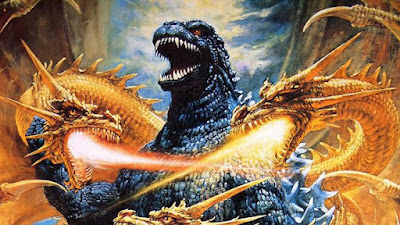
Godzilla vs King Ghidorah – Throwback 30


Originally published on Set The Tape


Following the commercial failure of 1989’s Godzilla vs Biollante, Toho was in a tough position of which route to take their iconic monster in its next instalment. Due in part to the more complex plot in Godzilla vs Biollante that children struggled to follow, and the large competition the movie faced from Back To The Future II, the studio decided that they needed to introduce more fantastical elements to the next film, as well as time travel. This was the beginning of Godzilla vs King Ghidorah.

The film begins in 1992, and sees a mysterious spaceship land at mount Fuji. Upon investigiating the strange vessel, people are shocked to find that the ship doesn’t come from another planet, but Earth’s future. On board the ship are a group called the Futurians, who have come backwards in time to warn modern day Japan that in their time, 2303, Godzilla has completely destroyed the nation. They plan to travel even further back in time to 1944, where they believe that they can prevent Godzilla from ever coming into being.

There have been reports surfacing of a strange event that occurred on Lagos Island in the pacific, where a group of American GIs were attacked and killed by a strange dinosaur-like creature. The Futurians believe that this dinosaur would go on to be irradiated by Atomic testing in 1954, becoming Godzilla. Travelling back to 1944, they’re able to locate the creature following the attack on the GIs, and transport it to the Bering Strait.


When they return to 1992 they find a Japan under the domination of the monster King Ghidorah. It turns out that the future they warned about was a lie, and that they wanted to take control of and destroy Japan to prevent it becoming a dominant superpower in the future. With King Ghidorah raging across Japan, one of the Futurians, Emmy (Anna Nakagawa) makes an agreement with a modern day scientist to try and repair the damage that’s been done.

The scientist learns that in 1977 a Russian nuclear submarine sank in the Bering Strait, and believes that this may have mutated the dinosaur into Godzilla. Travelling to the Bering Strait, they’re able to locate Godzilla and bring him back to Japan to fight Ghidorah. Whilst Godzilla is successful, killing the monster by destroying one of his heads, he then begins to attack Japan. Emmy travels into the future, returning with the mechanised corpse of King Ghidorah, now Mecha-King Ghidora, and uses it to fight Godzilla back into the sea, saving Japan from destruction.

To say the plot of Godzilla vs King Ghidorah is  bit complex is something of an understatement, as this is one of the more complicated plots to exist in any of the series. The use of time travel, the ever shifting present and alternate pasts, are definitely inspired by the more complex nature of Back To The Future II, though I’m not as sure that this film pulled off its time travel concepts as well.

One of the biggest reasons why the time travel in this film doesn’t work as well, at least for western audiences, is due to what at first appears to be a number of plot holes. After returning from the past and having moved the dinosaur that would become Godzilla, people are still aware of what Godzilla is, and it only seems to have changed certain events. Whilst this seems to be a strange plot hole in the English dubbed version of the film, this is actually playing into the more complex history of the franchise. You see, the creature whose creation they had just prevented wasn’t the creature that appeared in the very first Godzilla in 1954.


That version of Godzilla was not a mutated dinosaur, or at least not the same mutated dinosaur, and as such was still able to appear when it did and cause destruction across Japan. The creature that this film prevented the creation of was the version of Godzilla that would appear in 1984’s The Return of Godzilla, which saw a new version of the monster appearing, with the only film coming before it acknowledged being the original. As such, this film presents a closed loop style paradox, whereby the Futurians moving the dinosaur to a place where it would become irradiated by the Russian sub actually helped to create the creature they were trying to stop. Like I said, complex.

Whilst the film’s plot may have been a bit all over the place, the effects and monster fights were absolutely top notch. Producer Tomoyuki Tanaka wanted a film where there was a monster fight every 30 minutes, and that’s pretty much what we got. The sequence with the dinosaur Godzilla – dubbed Godzillasaurus – battling American troops is particularly brutal and bloody, and the two fights between the titular monsters feature some great new suits and impressive wire work.

If you can get your head around the more complex than usual plot this is a really stand-out entry in the Godzilla franchise, one that adds some interesting new elements to the lore, and has some pretty interesting designs and effects work throughout.


Buy Amy A Coffee

Go to Amy's Blog