Wednesday, 25 August 2021

The New Adventures of Sherlock Holmes: The Back-To-Front Murder - Tim Major Interview


After reading through the latest Sherlock Holmes release from Titan Books, The New Adventures of Sherlock Holmes: The Back-To-Front Murder, I sat down for a chat with the author, Tim Major. My review for the book can be found here.


What’s the process like going about writing a Sherlock Holmes book for Titan? They produce a lot of Sherlock Holmes stories from a number of authors, so was this this something that they approached you about, or did you have to pitch it to them?

I was asked by the Titan commissioning editors whether I’d be keen to come up with story ideas for Sherlock Holmes novels. At first I was daunted, as I’ve never worked with another author’s world and characters before – and Sherlock Holmes is up there with Doctor Who in terms of ‘holy grail’ writing gigs, for me. All the same, I couldn’t help but think about ideas, and in the end I worked up two full synopses, both of which were accepted. My recent projects have all had mystery plots to some degree, so I’ve been getting fairly comfortable developing narratives relying upon clues being seeded throughout, and I spent a lot of time rereading my favourite Holmes stories to better understand the sorts of plot mechanisms Conan Doyle used. It was only when I began drafting The Back to Front Murder that I had a block – capturing the tone of Conan Doyle’s prose seemed a far more difficult test than inventing plots. I read non-Holmesian Conan Doyle works to absorb something of his writing style without being distracted with the content of the Holmes stories. Eventually I managed to trick myself, telling myself that the actual tone I needed to locate was Watson’s voice – because of course he’s the author and narrator of all of the Sherlock Holmes tales – rather than slavishly copying Conan Doyle’s writing tics. 


Your story is structured very differently from a lot of other mystery stories, was it a challenge to create a narrative mystery that was, as the book describes, back-to-front?

Despite the clear reference in the title, I haven’t really thought much about this aspect, in terms of it being unusual. I suppose I have an aversion to the straightest means of telling a story – in terms of my own reading and viewing tastes, I’m drawn to twists on tropes or narrative tricks. One novel that was a big influence on mine was A Suspension of Mercy by Patricia Highsmith, in which a mystery writer imagines killing his wife, but then she goes missing and suspicion falls upon him, amplified by his sense of guilt. In The Back to Front Murder, the stakes are raised immediately as a murder has definitely occurred, in circumstances almost precisely as described in the notes of a mystery writer, so naturally the writer suspects that a copycat has been inspired by her dark thoughts. You’re right to describe this setup as a challenge, given that there are initially no suspects in the case at all, but it was a very satisfying puzzle to solve – and of course like most writers I work ‘back to front’ anyway, in order to present information in a sensible manner to lead to a conclusion that’s already known before beginning the first draft.


What kind of research did you have to do for the book, did you have to look into what paintings were in the Tate Gallery at the time the book was set, or did you have some artistic license to put whatever you wanted in there?

I wrote the novel during the first Covid lockdown, so while I would have enjoyed a trip to the Tate – or anywhere else beyond my own house, frankly – it wasn’t to be! I did work hard to determine the room layout of the Tate when it first opened, and to figure out which paintings might have been there by researching acquisition dates. I took some liberties, all of which I confess to in the acknowledgements of the novel, but in general I think there’s good sense to the paintings I chose, and the reasons for them being included. I spent a huge amount of time browsing old maps of London on the internet – the National Library of Scotland has a terrific online resource where maps of different eras can be overlaid. The plot of my novel involves Holmes and his client, Abigail Moone, re-enacting the movements of the murder victim, so it was important that the journeys and timings were plausible. 


Your story seems to challenge Watson in a way I’d not seen before, with him becoming nervous that someone could try to replace him as Holmes’ assistant and chronicler. Did you find this to be a fun new avenue to explore his character?

This was one of the biggest draws when I was pitching Sherlock Holmes novel ideas. Watson is one of my favourite narrators in fiction, but in some sequences of the original tales he’s reduced to being a ‘camera’ solely dedicated to watching Holmes. I enjoy writing strong narratorial voices, and I was interested in foregrounding him. Including a successful mystery writer as the client allowed me to examine Watson as an author, a subject that goes relatively unexplored in the Holmes stories, other than Holmes complaining about his sensationalist style. One other factor is that my novel is a great deal longer than any other single Sherlock Holmes work (the longest of the novels is The Hound of the Baskervilles, which is 10,000 words shorter than my book) – spending more time exploring characters seemed a sensible way of using the available word count.


Your story features a particularly strong female character in Abigail Moone, a woman who’s similar to both Holmes and Watson in some ways. This was often something that didn’t feature in Arthur Conan Doyle’s original stories often, did you include it to allow you more ways to challenge the characters?

Absolutely, yes! Everybody’s aware that there are few strong women in the Sherlock Holmes canon – a great deal is made of Irene Adler, who appears in only one story, though of course her character has often been made more substantial in adaptations. I mentioned Patricia Highsmith earlier as an influence, and Abigail Moone is explicitly based on her – and of course that arrogance, non-conformism and independence would have stood out far more in the 1890s than the 1950s. I think the exchanges between Abigail Moone and Watson were my favourite scenes to write, due to Watson being placed in a position in which we’d never usually see him.


What are some of your favourite Sherlock Holmes stories, and did any of them influence your writing in any way?

Having now written a Sherlock Holmes novel of my own, I’m terrified of being ‘caught out’ as a Holmes lightweight. That’s not to say I’m not a fan – I love the stories, as well as other Conan Doyle works such as his Professor Challenger stories – but my ability to retain plot details is pretty awful, whereas perhaps it ought to be encyclopaedic. Specific moments lodge in my mind rather than complete stories. I love ‘The Red-Headed League’ because of its topsy-turvy mystery, so that’s certainly an influence on the ‘back to front’ aspect of my book. I really like the sequences in The Hound of the Baskervilles in which Watson works alone, again due the bending of the usual ‘rules’ and structure. The novel The Valley of Fear isn’t much loved, but I’m a big fan of it, and I adopted a similar structure (which Conan Doyle described as ‘two parts and a coda’) for my novel.


What do you think it is about Sherlock Holmes that keeps the character going strong over a hundred years since he was first created?

Sticking with my theme, I wonder whether it’s actually Watson. Holmes is an amazing character, obviously, but it’s Watson’s adoration of him that brings the stories alive for me. I suspect that many of Holmes’s deductions would ‘land’ far less well if it wasn’t for Watson’s unfiltered amazement – he’s one of the best reader surrogates in fiction, for my money. For this reason, I think that no film or TV adaptation can ever truly capture the tone of the books, as Watson fulfils a less central role if he’s not the narrator.


Tim's novel Hope Island is also available from Titan Books.


Your other books with Titan have had either a supernatural element, like Hope Island, or have been sci-fi stories, Snakeskins, did it feel different to be writing a very down to earth book rooted in reality?

Not very different at all. I’ve really taken to writing mystery stories, and I think there’s a lot of similarities with a certain kind of SF – I suppose I’m referring to particularly British type of speculative fiction in which a single aspect of the world is changed, and everything else remains entirely familiar. Mystery plots involve constructing a single ‘trigger’ event and then the investigation has to emerge naturally from it. Maybe I’m wrong, and maybe the genres are actually very different as far as readers are concerned – but as a writer I find these types of setups similarly satisfying.


Was the process of writing the book an enjoyable one, and would you want to create more Sherlock Holmes stories in the future?

I’m writing one right now! As I mentioned earlier, Titan actually commissioned two novels from me at once, and the second one will be published in August 2022. It’s centred around a cultural phenomenon that was emerging at the peak of Sherlock Holmes’s career, but which doesn’t appear in the canon: film. I’m having terrific fun with this one and I’m enormously grateful to have been given two chances to write about Holmes and Watson. I don’t suppose I’ll be lucky enough to be allowed write more Holmes novels, but I know I’d jump at the chance.


What projects can we look forward to seeing from you in the future?

The second, as-yet-untitled, Holmes book will be my next novel, but there will be a novella in the interim – it hasn’t been announced yet, so I can’t really say anything about it. I have another novel on the go, which I’m really excited about, but it’s a secret too! Sorry to be so vague. One thing I can say is that it will tie up the genre threads of my work to date, as it’s both a speculative novel and a mystery – as was my recently-published novella, Universal Language, a locked-room murder mystery set in a dilapidated Mars colony.


Anyone interested in seeing more of Tim Major's work can head over to his website to find more.


Buy Amy A Coffee

Go to Amy's Blog

Tuesday, 24 August 2021

The New Adventures of Sherlock Holmes: The Back-to-Front Murder by Tim Major - Book Review


'May 1898: Sherlock Holmes investigates a murder stolen from a writer’s research.

 'Abigail Moone presents an unusual problem at Baker Street. She is a writer of mystery stories under a male pseudonym, and gets her ideas following real people and imagining how she might kill them and get away with it. It’s made her very successful, until her latest “victim” dies, apparently of the poison method she meticulously planned in her notebook. Abigail insists she is not responsible, and that someone is trying to frame her for his death. With the evidence stacking up against her, she begs Holmes to prove her innocence…'

I'm always up for reading new Sherlock Holmes novels, I'm more than happy to see authors trying new things with the characters and taking the iconic detective into interesting places. When I saw that Tim Major was going to be bringing out an entry in The New Adventures of Sherlock Holmes series it got my attention pretty quick. Having previously read his other work, both Snakeskins and Hope Island, I was interested to see what he'd do with Holmes. His previous work were great character led pieces that took a lot of chances, and I was eager to see that same kind of energy brought to a character I love.

The story begins with Watson returning home to his Baker Street apartment to find a new client already there, seated in his own chair no less. The young woman, Ms Abigail Moone is an author who writes mystery novels under a male pseudonym; an author that Watson himself has enjoyed reading and whose books sit upon his shelf. It turns out that Abigail has come to the famous detective and his trusty chronicler because she believes she may have helped to kill a man.

She explains to the two that in her research for her next novel she came across an interesting looking man who visited the Tate Gallery every day, a man who piqued her interest during her regular people watching sessions. After following the man and learning his routine for a few days she came up with a hypothetical way to murder him, as a kind of mental exercise to help her with her mystery stories. However, when the man suddenly drops dead, killed in the same way she came up with, she believes that she may have inspired an actual murder.

Intrigued by the unusual nat`ure of the case Holmes and Watson agree to get to the bottom of things, but this means that they're working on a case in a way that they've never done before, one that's going to require them to have to broaden their approach and come at things back-to-front.

Major takes a very different approach to his Sherlock Holmes story than a lot of other writers, and as such I found that the mystery really tested me (and Holmes and Watson too). Instead of the standard murder mystery set up of someone having been killed and there being a number of suspects in this book there are none. The mystery starts with the detectives knowing how the murder was done, but not why, and with no possible suspects. The book very much earns its name.

Because of the strange nature of the case there is a lot of backwards and forwards as Holmes and Watson try to find any kind of clue as to what could have happened to this man and who could have killed him. There are a number of interesting ideas put forward, and there are clues given early on that do point towards the answers, but with so many theories and so little information I think even the most experienced mystery reader will be left scratching their head.

What Major does give readers, however, is some interesting character moments; especially with regards to Abigail Moone. She's probably the most interesting character in the book, and whilst Major does write Holmes and Watson well I do think it's Moone who gets the most room to shine. She's an independent young woman, one who isn't afraid to go against society's expectations of her and do her own thing. Watson has always been someone who gets somewhat flustered by women, but seeing him thrown as much as he is by Abigail during the course of the book is quite a lot of fun.

She's very similar to Holmes in a lot of ways, and I think her deductive mind, her independent attitude, and her desire to do her own thing instead of what people might expect of her probably grates against Watson because he sees a lot of his friend in her. There are moments in the book where Watson is worried that Abigail is angling to replace him as Holmes' partner and chronicler, and I really liked seeing this kind of insecurity in him as it's not something that you get to see all that often.

Another thing that I really enjoyed about the book was something that Arthur Conan Doyle himself has done in a Holmes story, but I've not really seen done very often. Towards the end of the book, as we're learning the important details as to why this man has been killed we get several chapters that follow him in his past, delving into his backstory and seeing the events that led him to this point. This reminded me a lot of the first Holmes story, A Study In Scarlet, and how that book had a large section that were set in the US as we learnt the backstory of Jefferson Hope and Lucy. The later sections of this book felt a lot like that, and it was an interesting way to bring the readers up to speed on things in a different way.

Overall I really enjoyed this book, and found it to be an interesting take on Sherlock Holmes. It didn't do anything drastic to change the characters or the setting, and could very much have slotted into the original stories that Arthur Conan Doyle created, but because of how it presented the mystery it felt fresh and different in a very unique way. A great addition to my Sherlock Holmes collection.


Buy Amy A Coffee

Go to Amy's Blog

Monday, 23 August 2021

Teenage Mutant Ninja Turtles II: The Secret of the Ooze – Throwback 30


Originally published on Set The Tape


After the success of Teenage Mutant Ninja Turtles in 1990 it was generally assumed that a sequel would follow. Brought out just a year later, and with a budget almost double that of the first movie, Teenage Mutant Ninja Turtles II: The Secret of the Ooze turned out to be a very different animal to the first film, taking on a much lighter tone.

Of the three original TMNT movies it was the second one that I remember watching the most growing up. I still remember how dark the first film felt, a sentiment that is shared through much of the fan-base, and how as a kid who liked the animated show the second movie felt a lot more like that. The first film was definitely closer in tone and style to the original comics, with a grittier story and more violence, but when it became a success New Line Cinema wanted to appeal to as big an audience as possible, choosing a much lighter tone for the sequel.

The second film picks up not long after the events of the first movie, with the Turtles and Splinter living in April O’Neil’s (Paige Turco) apartment. Having lost their home in the last movie the heroes are still looking for a new place to live, though are continuing to fight crime at night. At the same time Shredder (Fancois Chau) has survived being crushed in a garbage truck, and returns to take back control of the Foot Clan.


When it is revealed that the research company TGRI may be behind a toxic waste leak that causes mutations, it’s learned that the same mutagen was responsible for altering Splinter and the Turtles all those years ago. Unfortunately, Shredder also learns of this and sets out to capture the scientist in charge of destroying the mutagen, Professor Perry (David Warner), and uses him to mutate a wolf and snapping turtle into monsters to fight the Turtles. With the help a their new friend Keno (Ernie Reyes Jr.), the Turtles battle against the Foot and their new monsters, before having to fight a mutated Shredder in a final battle.

There are some big differences between this movie and the first, and we’re not just talking about the fact that half the cast have either been removed from the film (goodbye Casey Jones), or simply recast with new actors. No, some of the big differences comes down to how this film approached the Turtles in a completely different way. In the first film the heroes were left in the dark a lot of the time, hiding in the shadows and taking down criminals with the lights out, leaving a lot of what happened up to our imaginations.

Teenage Mutant Ninja Turtles II: The Secret of the Ooze goes the complete opposite direction, choosing to have their action sequences out in the open, showcasing the Turtles in all their ninja glory. Also in contrast to the first film, the Turtles hardly used their own weapons in this film. There was some controversy around allowing children to watch a movie where the heroes wield dangerous weapons, and as such in the sequel the Turtles ended up fighting hand to hand much of the time, or using objects in the world around them to help them out. Apparently they forgot they have swords and nun-chucks on their persons. Despite that, however, the action in this film tends to be a lot of fun, even if it isn’t as impressive as the first movie.


Another big change, one that fans of the comics and animated series were not expecting, was the two ‘evil’ mutants. Tokka and Rahzar, the snapping turtle and wolf mutants, were completely new creatures created just for this movie. Most people were expecting Bebop and Rocksteady to make an appearance, and it appears that was the original plan, but thanks to an apparent disagreement with the creators Kevin Eastman and Peter Laird these plans had to be changed.

Despite these alterations and additions the sequel proved to be quite popular, especially with younger audiences. Its lighter tone definitely made parents much more willing to allow kids to see this film over the original, and that certainly helped with its success and popularity. I guess the surprise appearance of Vanilla Ice and the Turtles dancing to the ‘Ninja Rap’ as they battled the evil mutants also helped to convey that this was a very different kind of mutant animal than the original.

Teenage Mutant Ninja Turtles II: The Secret of the Ooze might not be as good as the first film from a technical perspective, it might not have as solid a script, as good action sequences, or be as close to the original, but it was a hell of a lot of fun to watch as a kid, and as such if I were to choose one of the original trilogy to throw on for a bit of fun it would definitely be this one.


Buy Amy A Coffee

Go to Amy's Blog

Thursday, 19 August 2021

Arkham Horror: The Wrath of N'Kai by Josh Reynolds - Book Review


'Countess Alessandra Zorzi, international adventurer and thief, arrives in  Arkham pursuing an ancient body freshly exhumed from a  mound in Oklahoma, of curious provenance and peculiar characteristics. But before she can steal it, another party beats her to it. During the resulting gunfight at the Miskatonic Museum, the countess makes eye contact with the petrified corpse and begins an adventure of discovery outside her wildest experiences. Now, caught between her mysterious client, the police, and a society of necrophagic connoisseurs, she finds herself on the trail of a resurrected mummy as well as the star-born terror gestating within it.'

I've been really enjoying the Arkham Horror series of novels being produced by Aconyte books, but I missed The Wrath of N'Kai when it was first released. So, whilst I had a day free from other, upcoming books to read, I decided to sit down with the first book in the set and see what I'd missed. And I was so glad that I did.

The Wrath of N'Kai follows Countess Alessandra Zorzi, possibly the coolest protagonist in the entire Arkham Horror range. An international thief who spends her time stealing strange artefact and odd trinkets for various collectors of the occult, Alessandra has been called to the city of Arkham by a new client, one who gives her her most daring mission yet. He wants her to steal an entire mummy from a museum. Not one to turn down a challenge, especially one that pays so well, Alessandra agrees to the job; little realising that it's one that could change her life, if it doesn't end it first.

The mummy in question is about to go on display in Arkham before a national tour, having generated huge buzz because it was found in the middle of Oregon. A find that could change the way people look at the history of America, the mummy is drawing attention from several parties. Unfortunately for Alessandra, one of these parties also wants to mummy, and whilst she's at the unveiling the museum is robbed at gunpoint, and the mummy stolen.

Worse still, one of the security detail, Abner Whitlock, is an investigator who recognises Alessandra from a theft in Europe. With the police suspecting her involvement in the theft of the mummy Alessandra finds herself in an impossible situation, as the people who hire her make it clear that if she doesn't recover the mummy soon they'll make her the target of their wrath. With the police, mobsters, and these frightening employers all setting their sights on Alessandra she'll have to rely on every trick she's ever learnt to complete her mission and get out with her life.

I adored this book. It was just so much fun. Unlike many of the other Arkham Horror novels, all of which have an element of mystery but really push the horror side of things, this book was actually pretty light on horror. There's a pervading sense of strangeness across the entire book, due in large part to the very nature of Arkham itself, but it never really played up on these themes. Instead, Reynolds made the mystery the focus of the story, and made it into a spooky adventure story.

There are some moments throughout the book where there are some scares, mainly when Alessandra begins to have strange nightmares and hallucinations after coming face to face with the mummy, but these moments don't override the main story. Instead, they add flavour, giving the book a little something extra, a promise of scares and horror to come that doesn't really come into play until the final few chapters of the book.

What The Wrath of N'Kai really focuses on it Alessandra. It makes her the focus, showcasing her detective skills, her bravery, and her quick thinking that she uses to get out of tight spots. She's an incredibly smart woman, one who's had to learn her skills just to survive, and who doesn't take risks lightly. She feels like a femme fatale, but one who isn't a bad person, one who will only turn her gun on you if you give her no other choice. If anything, she makes me think of characters like Catwoman, these people who should really be classed as villains, but you can't help but enjoy seeing them win.

Alessandra is joined on her adventure by Pepper, a young woman posing as a man who drives a cab around Arkham. Having quickly figured out that the man driving her into Arkham is actually a woman, Alessandra offers her the opportunity to keep working with her as her local guide, and it's a pairing that works well. Pepper has the local knowledge that Alessandra needs, and whilst she's willing to listen to her and do what she asks most of the time she's not afraid to put herself in danger too, helping out her new friend if the opportunity arrives.

With other books in the series having male protagonists it was great to see the heroes of the book be an all female pair, even if one is pretending to be a guy. It made it feel different, and showcased that the women in Arkham Horror are just as formidable and cool as the men. If anything, these are two characters that I'd be more than happy to see more of, and would read a series of books about the two of them travelling the world stealing dangerous artefacts away from villains in a heartbeat. 

As the first book in the Arkham Horror series The Wrath of N'Kai is a great introduction to this world. It shows readers how the stories will involve shadowy cults, strange groups of otherworldly beings, criminals, academics, those local to Arkham, and those new to town. It has so many elements in it that you'll see play out in the other books in various ways, but even if you've read the other books first, as I have, it'll feel fresh and new, it'll be doing its own thing and will entertain you in more ways than you'll expect. A perfect example of what makes this a great franchise.


Buy Amy A Coffee

Go to Amy's Blog

Wednesday, 18 August 2021

Final Fantasy: The Spirits Within – Throwback 20


Originally published on Set The Tape


Video game movies are still a pretty mixed bag, despite their having been some successes in the genre in recent years. Back in the far off days of 2001, however, the best there was was the ‘so silly it’s fun’ Street Fighter and a ‘so bad it might be fun to watch’ Super Mario Bros.. It was not a great time to try to bring video game properties to the big screen.

Final Fantasy: The Spirits Within tried to do something different though, in more than one way. First off is the fact that the film isn’t actually based on any video games. The Final Fantasy series is one where continuity between games is pretty much nonexistent, with each new numbered entry in the series being a completely fresh story in a brand new world. This kind of made it perfect to adapt into film, as you could come up with any brand new story, slap the Final Fantasy name onto it, and you’ve got instant fan base interest.

The other thing that the film did that was pretty revolutionary, though would ultimately lead to the downfall of both the project and Square Pictures as a whole, was that it was the first photorealistic computer generated movie. Nowadays CGI has come along in such a way that half of what we see on screen is made purely in the computer, and even some of the best performances in movies can be rendered in CGI; just look at Gollum from The Lord of the Rings. Despite this, there’s not really been an attempt to make an entire movie this way since, and it could be down to the fact that it literally led to the end of the studio, and one of the biggest financial flops in movie history.


The film’s story is set in a future Earth, where an alien invasion has all but destroyed the planet and wiped out humanity. A race of ghost-like creatures called Phantoms have forced humanity behind specially shielded walls into a handful of cities. With a single touch from a Phantom able to rip the life force from a person, and the briefest exposure potentially leading to deadly infection, people have been unable to defeat the creatures.

Scientist Aki Ross (Ming-Na Wen) and her mentor, Dr. Sid (Donald Sutherland) have discovered that there might be a way of stopping the Phantoms once and for all, but need to gather eight specific spirits from creatures around the world to do so. The story begins with them having already collected five, and Aki on the hunt for the sixth. When she comes under attack from Phantoms she’s rescued by an elite squad of soldiers led by Gray Edwards (Alec Baldwin), a former lover of hers.

Presenting her findings to the ruling council, she’s given the chance to try and collect the final spirits, with the help of Gray and his team. However, military leader General Hein (James Woods) is determined to put his own plan into the works, one that could result in even more human deaths.


The story itself is pretty standard sci-fi fare, though the film does try to do its own thing by having the Phantoms being literal ghosts of an alien race, and the life spirit of both people and the planet being an integral part of the story. This mix of science fiction and spirituality is something that had been done in a few of the Final Fantasy games, and it worked pretty well on the big screen too.

What damaged the project, however, was the sheer cost of making it. With an initial budget of $70 million, the film was already a huge undertaking, and a team of 200 workers spent years creating specialised software to create the film, and even had to spend $45 million creating a specialist studio in Hawaii. The costs of the project mounted as the team realised they needed more tech and workers to create a film that would look realistic, and in the end the project came in at close to $137 million. Despite good ticket sales and a lot of interest this would ultimately mean the project ended up with a loss of $94 million.

Despite being a financial disaster the film was received well by critics, and has developed something of a cult following over the years. Its lead character, Aki Ross, even featured on the cover of men’s magazines, and became the first fictional woman to ever end up on a sexiest women’s list.

Final Fantasy: The Spirits Within might be something of a black sheep for the franchise, and one of the biggest box office flops ever, but there’s still a lot to like in this movie.


Buy Amy A Coffee

Go to Amy's Blog

Tuesday, 17 August 2021

Star Wars Adventures: Tales of Villainy #7 – Comic Review


Originally published on Set The Tape


The current run of Star Wars Adventures comics has been giving readers a very mixed bag for era and characters. One story might be set during the height of the original trilogy, whilst another delves into the events of Star Wars: The Clone Wars, and another could jump backwards in time hundreds of years to Star Wars: The High Republic. It’s been a real treat each month waiting to see what kind of stories are going to appear, and if any familiar faces are going to feature. And this month’s offering definitely has some surprises in it.

The first story, ‘The Princess and the Bog, A Twin Tale, Part One’, by Sam Maggs, is set after the events of Star Wars: A New Hope, and sees Leia helping to find the Rebellion a new base. Having a list of potential planets, she’s divided them out between her and Luke, making sure that Luke gets the ice planet on his list (that’s gotta be Hoth right?). However, even though Luke is supposed to be in a different part of the galaxy, Leia is shocked and annoyed to find Luke on one of the planets she’s scouting out, Bogano.

Eagle-eyed fans might recognise Bogano, as it appeared in the rather excellent Star Wars Jedi: Fallen Order video game. The planet and its creatures are instantly recognisable, especially the cute little boglings that scamper around the twins. Most exciting about the inclusion of Bogano, though, is the fact that Luke says he was drawn there by the Force. Knowing what we do about the planet and the secrets it holds thanks to the video game, it’s exciting to think about what could happen in the second part of this story, and what secrets Luke and Leia could end up learning.

The second story in this issue jumps forwards in time a number of decades, taking place some time around the events of the sequel trilogy. ‘The Crimson Corsair and the Crime Lords of the Barren Rim’ focuses on Quiggold, the first mate to the pirate captain The Crimson Corsair, as Quiggold is captured by enemy forces. At first it appears that Quiggold is at the mercy of their captors, but as the story progresses we begin to discover that perhaps this is all part of the Crimson Corsair’s plan.

The characters in this story originally appeared in the pages of The Crimson Corsair and the Lost Treasure of Count Dooku, a short story written by Landry Q. Walker, who also writes this story. The Corsair and Quiggold themselves do also make brief appearances in Star Wars: The Force Awakens. What’s most interesting about this story is that it’s given the spotlight over to some relatively lesser known Star Wars characters.

As someone who hasn’t read the original short story, this comic story also led me to do some investigating into the story and wanting to go back and read it, as the comic includes a Clone Trooper. Whilst this Clone isn’t named in the comic, doing some background reading I was surprised to find out it was Kix, one of the Clones to have a major story line in Star Wars: The Clone Wars, and that the original short story detailed how he ended up in the future alongside the Crimson Corsair. For that alone this story ended up being something of a favourite of mine, and one that’s encouraged me to go and read the original short story.

Whilst the writing style and tone between the two stories are quite different, the artwork definitely reflects the same too. The first story has art from Liana Kangas and Brittany Peer, and features some relatively simple, clear line-work and a standard colour pallet, leading the story to feel like it could easily slot into the world of the films. On the other hand, the second one has bolder, almost out of place colours and some very detail oriented colours, provided by Nick Brokenshire. The artwork in this section feels less focused on realism, and instead is more set on evoking a certain mood more than anything else. Despite being so different, both styles really suit their respective stories.

Star Wars Adventures: Tales of Villainy is continuing to tell some interesting and different stories, ones that connect to parts of the Star Wars franchise that don’t always get much of a focus, and because of that it continues to feel unique and different.


Buy Amy A Coffee

Go to Amy's Blog

Monday, 16 August 2021

Birthrights by Carly Rheilan - Blog Tour


'Sometimes the perfect pregnancy is less than skin deep...A young man watches as a heavily pregnant doctor is stabbed in the street. He sees the knife, swinging down into that rounded belly, again and again, deep to the hilt.A few minutes later, the doctor has gone. Nobody believes what the man has seen.For Ana, the doctor, the incident is problematic. Back home, she peels off the damaged pretence of her pregnancy, a beautifully crafted garment, padded and slung across her abdomen. And she begins to realise that a story she has crafted with even greater care, is about to unravel. '

I've had to wait a while after reading Birthrights before I've been able to write my review. Normally I can delve into a book review pretty soon after reading it, but this book took me a bit longer because I felt that I needed the time to sit and think about it for a while. Birthrights isn't an easy book to begin to classify. I guess you could call it a thriller, perhaps even a bit of a mystery, but it's one of those books that's about something so different that you struggle to begin to place it purely in one genre.

The story follows Doctor Ana Griffin, a woman working in the mental health field. At the start of the story she's several months pregnant, giving a lecture on her approach to mental health care, one that a number of her colleagues disagree with. She's presented as a strong, confident woman, one who believes that her way is the best way of doing things, and isn't afraid to stand up for herself, as well as rocking the boat if needed.

After her lecture Ana is walking home when a former patient of hers, Robbie, attacks her. The attack is witnessed by another of her former patients, David, who sees Robbie plunge a knife into Ana's pregnant belly. The stress of the attack causes David to black out for a moment, and when he comes to Ana and Robbie are both gone, and there's no evidence that the attack took place. Ana has fled the scene, returning home; where she removes the fake belly she's been wearing to examine the damage that Robbie's knife has done to the padding.

This begins the true story of Birthrights, the main mystery of the book, and the narrative around which everything is centred. Why is Ana pretending to be pregnant? Over the course of the book we delve into Ana's past, discovering some deeply buried trauma that has resulted in her current course of action, of her paying for another woman to get pregnant and to give her the baby. Ana has been trying to maintain the illusion that she herself is the one having the baby, but thanks to Robbie's attack her carefully thought out plans are beginning to come undone.

Not only is Ana now having to contend with the colleagues that want her out of the job because of her methods, but thanks to Robbie's obsessive focus on her she's having to avoid the police, and a potential killer too.

Ana is the main focus of the book, even though we do get to see what several of the side characters are doing over the course of the story. We spend the most amount of time with her, and this is very much her story, even if it involves a number of other people. Everything that happens in the book is connected to her, and we see that it's not just the one single event that brings her carefully laid plans undone, but all of these little things together. It's the colleague that didn't keep Robbie in the hospital because he just didn't want to listen to Ana, it's the people at her work spreading rumours about her, it's the bureaucracy that slows things down and allows Robbie to keep slipping through the net. There are so many times in the book where one tiny difference could have helped prevent what happens at the end, and each and every time it's the worst case scenario that seems to happen.

The book is an interesting examination of how even if someone can feel like the centre of the world, where their story is the one that matters, it's the small connections with other people that make the difference. You can plan everything out, have scenarios in your head and ways to deal with them, but all it takes is someone you may never have met failing to pass on a message, or telling someone something a moment too late and it can cause everything you've worked for to come crashing down.

Ana is a woman that for the longest time I wasn't sure if I liked or not. She does things over the course of the book that I drastically disagreed with. She seemed cold, petty, and sometimes even downright nasty. But, the more time I spent with her, and the more I learnt of her past, the more I came to see that she was someone living with a lot of trauma, and that she was a victim more than anything else. It's rare to find a protagonist like this, one where they're not just flawed, but very human. People do strange things, sometimes seemingly awful things, but there's usually a reason for that beyond them simply being 'bad', and Ana is one of these kinds of people. 

Birthrights might not be an easy read for everyone, it deals with some heavy themes around abuse, trauma, and pregnancy that some might find hard to read; but, it's an incredibly layered and interesting story, one that will challenge you.


Buy Amy A Coffee

Go to Amy's Blog

Sunday, 15 August 2021

The Warden - Jon Richter Interview


After reading through the latest release from Jon Richter, The Warden, I sat down for a chat with Jon about how the book came about, and what it was like writing during a pandemic. My review for the book can be found here.


In the afterword for the book you talk about it being written during the pandemic, was this an idea that solely came about because of Covid and lock-downs, or was it something that you were toying with before but life kind of gave a push with current events?

The book was completely COVID/lockdown inspired, I suppose just my way of ‘processing’ what was happening around me: the sudden and bizarre cessation of huge numbers of activities and things that felt utterly and completely habitual and taken for granted, the seemingly overnight transformation of these routines into new and different habits and rituals (handwashing, face masks, Zoom calls), the spread of misinformation, the wildly different reactions of people to the whole situation… so in some ways the book is really just my form of a pandemic diary!


The story features two interweaving plots, one that follows a man in 2024 who’s being isolated from the outside world, and the other showing the start of the pandemic and the creation of the AI that controls The Tower. Why did you choose to structure the book this way?

I’ve worked as an accountant for twenty years entirely for ‘big corporates’, and for a long time I’ve wanted to set a story in that world – but a much less boring and frustrating version!  An AI character featured in one of my previous novels, and was a type of character I wanted to explore further, so I thought a ‘back story’ of its creation and how it might interact with and manipulate its cynical capitalist creators and their corporate politics and bureaucracy might be a fun way to do it… hopefully I succeeded!

I’ve also always enjoyed interesting structures for books (as opposed to single POV, straightforward chronological order) so when I realised that two story strands I’d dreamt up might actually be able to be weaved together into one weird-yet-cohesive whole, that was the impetus I needed to get going on the project!  (If anyone’s interested in a recommendation for an ingenious way to structure a novel, try Use Of Weapons by Iain M Banks: it features alternating chapters that start in the past, moving forward, and chapters that start in the future, moving backward.  We see the same character, but his future self is horribly transformed and emotionally eviscerated – the book’s climax is therefore the story’s middle, which reveals the incident that caused this devastation.)


The Warden shows a UK where people have been in one long lock-down for years, which after seeing how our own government has dealt with things might be the most fantastical element of the book. Did current Covid events ever influence your story, or make you think about changing things in any way?

The honest truth is that I naively thought, like I think a lot of us did, that the pandemic would be done and dusted within a few months!  So when I started writing The Warden around March 2020, I thought the pandemic would be a think of the past before I’d even finished the book – little did I know it would be released just over a year later in the middle of another lockdown!

I did worry that this would make the story too close to home for some people, particularly those who have suffered misfortunes or bereavements during this terrible pandemic, but hopefully the book is far-fetched and fun enough to not have that impact – it’s very much intended as an alternate ‘extreme’ take on what might happen, rather than a realistic reflection, although I agree that the shambolic performance of our government is making me wonder how unrealistic the book’s setting might actually turn out to be…


I’ve seen some people saying that no one would want to read anything that deals with pandemics or viral apocalypses at the moment, but I found this book to be such a compulsive read that I couldn’t put down. Did you find that writing a book that deals with a Covid pandemic that lasts years to be something of a tough sell?

It’s definitely been one of my more divisive books, and I do understand the people who have reviewed it negatively as a result; the once-popular setting of ‘pandemic-driven dystopia’ has suddenly become much less of a fantasy than we all could ever have imagined!  The responses I’ve had though have largely been along exactly those lines (‘I didn’t think I’d enjoy this, but it turns out I did’) and I’m very grateful to you for your kind words.  I think the key is that the story isn’t attempting to be realistic or taking itself particularly seriously – it’s just an exploration of a few (slightly mad) ideas, like most of my books are I suppose!

It is interesting to see that a lot of authors are choosing to simply ignore the pandemic in their writing, setting their books either just before the outbreak or in a sort of alternative reality where it never happened.  I think this might change over time as COVID becomes more of ‘a thing we all lived through’ rather than a still-current event, in the same way that you wouldn’t set a book during wartime years without mentioning the war, if that makes sense?


If you were in The Tower do you think you’d have been able to cope with the isolation, and what do you think you’d do to keep yourself occupied for all that time?

I suppose the honest answer is that my pandemic experience wasn’t wildly dissimilar to life in The Tower!  I worked from home throughout, making my working day a non-stop series of Word documents, Excel spreadsheets, Powerpoint presentations and Zoom calls – then I worked on my writing around that, which meant more Word documents, and finally I spent a lot of time doing the recreational stuff I’ve always enjoyed: watching movies, playing video games, listening to music and going out running to exercise!  So I think I’ve been very fortunate that (a) I was able to earn money during lockdown, and (b) my nerdy lifestyle wasn’t too badly affected by the circumstances.  For others, for example those who enjoy the outdoors and sunny holidays, I’m sure the experience has been much tougher.


One of your other books, Auxiliary: London 2039, has some similar themes to this book; a future where people have become more reliant on machines and robotics, and the sinister ways that can turn on people. Is this an idea that particularly appeals to you?

I think this future is absolutely inevitable, or at least the ‘reliant on machines and robotics’ bit.  To an extent it’s already come true – a lot of us simply couldn’t function without our laptops, TVs and smartphones, and we already rely on algorithms and other AI to support us in our daily lives.  In some ways an extrapolation of this, where the AI is able to communicate with us much more effectively than Alexa’s rudimentary Q&A, might actually feel more personal and less cold – as an example, I can certainly see the huge benefits of the proposed care robots that will keep people company in old folks’ homes.  But we certainly need to manage the technology carefully to avoid the dreaded ‘Skynet’ scenario beloved of writers like me: the tipping point is of course the moment when the learning capabilities of our creations outstrip our abilities to predict the end results.

I suppose some comfort should be drawn from the fact that a future with more technology, better integrated, isn’t necessarily a bad one – it just seems that way because we fiction writers love a bit of drama and conflict!


Was it different writing a book during a global pandemic than your normal approach?

I did experience a bit of the creative ‘brain fog’ that quite a lot of creatives talked about, where you had this increased amount of time in which to work as well as fewer distractions, and yet found your mind at times completely stifled.  I think lack of inspiration was the issue; I realised that our brains need change and stimulation, not necessarily from grand overseas travel experiences, but even from just dragging yourself out to the local sandwich shop or having a phone call with your mum or whatever.  But overall I think my creative process (shut self away in writing room with laptop, emerge several hours later with a chunk of writing done, try to remember to eat food) was pretty much the same as always – in some ways, the fact that I knew I wasn’t really missing out on anything was quite helpful!


What are you working on next, what can people look forward to seeing from you in the future?

In my usual genre-hopping way, I’ve got a couple of books in the pipeline that are a bit different: a fantasy effort I wrote recently that I’m seeking representation for, and a (weird) crime thriller I’m just starting out on.  I do have another sci-fi-ish idea up my gleaming metallic sleeve, but that might be on the back burner until next year… but the beauty of this career is that you never know when inspiration will strike, and (a bit like The Warden) I could find myself writing something completely unexpected in a few months’ time!

I also write short dark stories from time to time and am slowly amassing enough for a third collection – my first two anthologies get a bit less love than some of my more mainstream releases, so I’d be delighted if any readers would check out Jon Richter’s Disturbing Works (Volumes One and Two) for some creepy tales with unexpected twists (they’ve been described as ‘Tales Of The Unexpected meets Black Mirror’, a quote I was extremely happy with!)  You can find these, and the rest of my seven books (and other peculiar projects) at www.jon-richter.com, or alternatively just type Jon Richter into Amazon to peruse my sinister wares – you’ll find crime thrillers as well as more cyberpunk, so hopefully there’s something there that appeals to everyone.  I also host a fortnightly podcast called Dark Natter, where I chat to guests about their favourite pieces of dark fiction, which is available on all the major streaming platforms.

Thanks so much for having me as a guest on your blog; it’s great to be allowed to waffle on about my work and I hope I haven’t been too self-indulgent!  I wish you and your readers an absolutely ace rest of your day.


Buy Amy A Coffee

Go to Amy's Blog

Saturday, 14 August 2021

The Warden by Jon Richter - Book Review


'The year is 2024, and the residents of the Tower, a virus-proof apartment building, live in a state of permanent lockdown. The building is controlled by James, who keeps the residents safe but incarcerated. Behind bricked-up front doors, their every need is serviced; they are pampered but remain prisoners.

'This suits Eugene just fine. Ravaged by the traumas of his past, the agoraphobic ex-detective has no intention of ever setting foot outside again. But when he finds the Tower’s building manager brutally dismembered, his investigator’s instincts won’t allow him to ignore the vicious crime.

'What Eugene finds beyond the comfort of his apartment’s walls will turn his sheltered existence upside down. To unravel the Tower’s mysteries, he must confront James... and James takes his role as the Warden very, very seriously.'

When I was first approached to see if I wanted to read The Warden I was a bit nervous about agreeing to it. We're over a year into a global pandemic that his killed tens of thousands, and resulted in serious health conditions for many, with no real end in sight (thank you variant strains and shit government reactions), so I wasn't sure that I was going to want to read a book that actively addressed these ideas. However, having read a couple of books by Jon Richter before I was aware that he's a writer that handles issues well, and thought I'd give it a shot. And I was so glad that I did.

Set in the summer of 2024, The Warden follows the day to day life of Eugene, a former police detective who is one of the select few people to have been chosen to live in The Tower, an experimental building operated by an advanced AI that's designed to keep those inside safe from the deadly Covid virus that's making life outside impossible.

The Tower is controlled by James, an AI that's been programmed to keep the inhabitants safe and secure. It delivers their meals, it talks to them, it even supplies the inhabitants with the supplies to pursue their various hobbies and interests. It's their protector and their friend. And if things work well with The Tower more of these structures could be built; a possible solution to the years long lockdown that has been taking place.

Eugene is happy with these arrangements, even before the lockdown he was struggling to go outside his home thanks to a trauma in his past, and getting to lock himself away with everything he needs delivered to him by efficient robotic servants seems like a dream scenario. And at first everything is going well, but when the small lift that delivers his food opens up one morning with a body inside Eugene's stable new existence gets thrown out the window, and he has to fall back onto his old training and his ingenuity to try and get to the bottom of things.

At it's hear The Warden isn't about Covid, or any kind of virus outbreak really. What it is is a locked room mystery. The pandemic is simply the reason for the characters involved being unable to simply leave, to being able to run for help, or to find somewhere safe to hide. This story could have easily taken place in another inescapable location, such as at the bottom of the ocean or in the dark void of space. And because of that, this isn't a book that I found to be too depressing or awful to read because of the current real world events.

The mystery of what's happening inside The Tower, the murder, the apparent vanishing people, and the madman on the loose, isn't the only plot thread that takes up large sections of the book, however, as we get a second narrative that weaves in and out of Eugene's story. In a series of flashbacks we get to see the creation of James, the AI that controls everything.

At first I wasn't sure what these flashbacks were, as we follow a fairly powerful and at times unlikeable businesswoman who works in the company that would go on to create The Tower. But as things unfolded and it became clear that this was an origin of sorts for one of the more important characters in the main story I began to enjoy it more and more. Not only did these sections add more context to the world as we got to see how the pandemic played out and evolved, but also began to understand what James was, and what he was capable of. There were seeds being planted for answers that would be revealed in Eugene's story, as well as its own mystery that began to be just as compelling as the one in 2024.

There were times where I began to hate this shifting narrative, purely because as soon as I spent time with one I'd want to know all the answers because it was so engaging. Then the narrative would jump to the other story and I'd be frustrated that I'd have to wait to see what happened in the other, before becoming engrossed in the second one. This repeated so many times in the book that I found it hard to pick which of the two narratives I liked the most, and the constant wanting to know more kept me reading long after I should have put the book down to take a break. The Warden was responsible for a couple of very late nights, as I kept telling myself 'just one more chapter' over and over again.

Whilst I've only read one other Jon Richter novel, and a collection of his short stories, this is something that I've found in his work every time I read it. Jon is able to craft a mystery in a way that it never feels like you're being strung along or teased, yet you become so absorbed into the narrative and want to keep on reading. Because of this compulsive hold it had over me, the strangeness of the locked room mystery, and the two stories weaving in and out I almost forgot that this was a book that I was nervous about picking up. 

If you see the description of this book and think that it might not be the best time to read a story about lockdowns, pandemics, and Covid in particular I can fully understand that; but I would say just give it a go. Just try the first few chapters. Just see if this mystery piques your interest, because I can assure you it's so much more than a story about living in a world with Covid.

The Warden surprised me in a lot of way, it was so much better than I was expecting, and proved to me that stories can be set in a world that reflects our current crisis without if being overwhelming or depressing; that in the hands of a writer as talented as Jon Richter the pandemic and become a background element of a truly engaging and exciting story.


Buy Amy A Coffee

Go to Amy's Blog

Friday, 13 August 2021

Mothra – Throwback 60


Originally published on Set The Tape


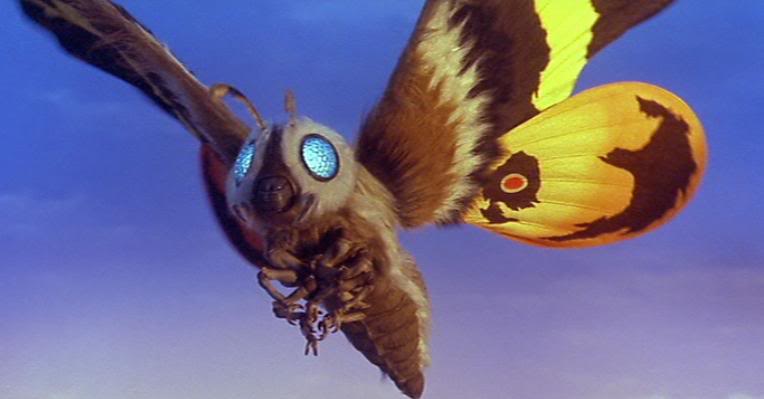
If Godzilla is King of the Monsters then Mothra is undoubtedly the Queen. Originally appearing in Mothra in 1961, this winged Kaiju would appear in many of her own films, as well as a number of Godzilla movies over the years, firmly earning her place as one of the most beloved movie monsters of all time.

Mothra begins with a ship lost at sea during a terrible storm, and a search for any survivors about to be abandoned. Luckily, the last of the search and rescue helicopters spots some of the ship’s crew on the rocky shore of Infant Island, a small atoll that had been used for atomic testing. When the survivors are brought home they tell people that Infant Island is actually inhabited, and that the people there took care of them.

An expedition is put together to travel to Infant Island to find out more about these people. The group discover a strange forest filled with giant plants, and soon locate the inhabitants. Stranger still, the island is also home to two fairies, who communicate telepathically, and seem to possess strange powers. The leader of the expedition, a shady businessman called Nelson, captures the fairies, killing several of the islanders in the process.


With the two fairies taken to Tokyo, their protector, Mothra, emerges from her egg in order to save them. This giant larva follows the expedition back to Japan, and demolishes Tokyo as she spins a cocoon around Tokyo Tower. Seeing this, Nelson takes the fairies and flees to the fictional country of Rosilica. When Mothra emerges from her cocoon she’s her beautiful, fully grown self. Now able to fly, she travels across the globe to Rosilica. Mothra attacks New Kirk City, and manages to free the fairies, whilst Nelson is killed by the police. Reunited, Mothra and the fairies return to Infant Island together.

One of the things that instantly makes Mothra stand out from other Kaiju movies is that she’s quite clearly not a villain. Other giant monster movies both before and after Mothra would centre on a creature causing havoc and destruction, even if it was down to a more friendly monster to stop them. In this film, however, the monstrous villain of the piece is Nelson, played by Jerry Ito. Representing the greed and capitalistic nature of the West, his home country of Rosilica seems to be an amalgam of both Russia and America, with New Kirk City standing in for New York.

The change to the established formula definitely helped Mothra to stand out amongst other Kaiju movies of the time, and her being a somewhat heroic figure made it a lot easier for Toho to produce more films with her, folding her into the Godzilla universe three years later when the two of them would clash; though they would eventually go on to work together to protect the earth from King Ghidorah in other projects.


Mothra also stood out due to the inclusion of a sense of whimsical fantasy, using on-screen musical numbers courtesy of the fairies, played by famous Japanese pop icons The Peanuts. Despite featuring elements that touch upon science, such as the atomic testing on Infant Island (similar to the themes in Godzilla), the film was definitely more of a fantasy movie, and audiences loved it because of this. Mothra and her fairies are not the result of atomic radiation, but are implied to be divine figures.

The film would prove to be a big hit in Japan, but also had a lot of success in other countries too. Columbia Pictures actually helped with the production of the film, and distributed it to the US, where it was similarly well received. This partnership also meant that it was one of the more lavish Toho productions, creating some of the largest miniatures special effects supervisor Eiji Tsuburaya had ever made.

There are a lot of films that are referred to as a ‘classic’ but Mothra is one where the title is very much deserved. The film had a huge budget at the time, and thanks to the dedication of the cast and crew you can definitely see it coming into play on screen. Everything looks superb, and the characters all give it their all. The film would spawn one of the most popular film monsters of all time, and with an impressive 9 million tickets sold in Japan, it was a bigger hit than the original 1954 Godzilla.


Buy Amy A Coffee

Go to Amy's Blog