Wednesday, 18 October 2017

LEGO Ninjago: 5 Other LEGO Properties That Could Be Adapted To Film


Originally published on Set The Tape

With the popularity of the LEGO films going from strength to strength, and Lego Ninjago having hit screens, what other LEGO franchises could be adapted to the next film? Here’s a list of five pre-existing LEGO properties that could make the transition.


LEGO Nexo Knights

Though a new addition to the LEGO universe, Nexo Knights has proven to be a popular one with its blend of medieval fantasy and science fiction.

LEGO Nexo Knights follows a group of five young knights, Aaron, Lance, Clay, Axl, and Princess Macy who protect the kingdom of Knighton from the evil clown Jestro and his army of lava monsters.

With a television series based upon Nexo Knights already in its fourth season a film adaptation could continue on with the story already established (much in the same way that the Ninjago movie has), or it could be something of a reboot of the franchise, retelling the origin of the Nexo Knight universe to help introduce new fans to the franchise.


LEGO Star Wars: The Freemaker Adventures

The Freemaker Adventures is the most recent addition to the Star Wars universe LEGO have made, with the series following the Freemaker family, Zander, Rowan, and Kordi (along with their old battle droid Roger).

The first season of the show saw the Freemaker family searching for the pieces of the fabled Kyber Sabre before the Empire get their hands on the weapon, and the second series had the Freemakers join with the Rebel Alliance during the gap between The Empire Strikes Back and Return of the Jedi.

With Star Wars as popular as ever, and the series now at a point between Return of the Jedi and The Force Awakens, now might be a good time to explore the events between the original trilogy and the new entries in the saga with a Freemaker movie.


LEGO City: Undercover

LEGO City: Undercover was an amazingly fun LEGO game. Playing as undercover cop Chase McCain you had to infiltrate a number of gangs in order to track down the escaped convict Rex Fury and uncover his plan.

Little would have to be done to the main story of the game in order to adapt it to the big screen, with the main plot lending itself well to a cinematic action comedy. Yes, some of the levels from the game would probably drop by the wayside for an adaptation, but it would still make for an entertaining film.

We all know that the LEGO Movie and LEGO Batman Movie had a lot of fun cameos in too, which is something that the game had already embraced, featuring the LEGO versions of Starsky and Hutch, Dirty Harry, Columbo, Cagney and Lacey, and even Arnold Schwartzeneggar in silly and bizarre moments.
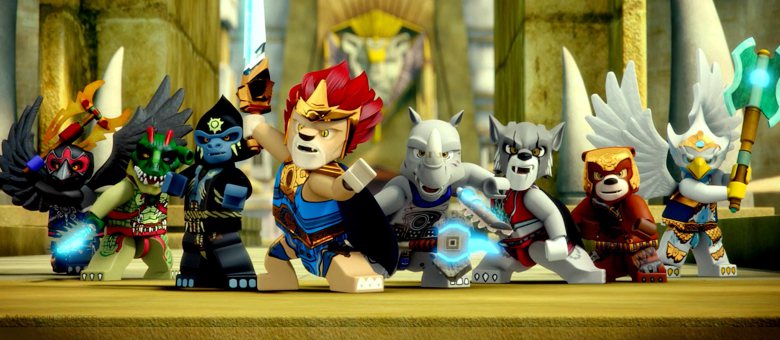

LEGO Legends of Chima

LEGO Legends of Chima is a fantasy tale set in a world inhabited by a number of different tribes resembling anthropomorphic animals, such as Lions, Wolves, and Sabertooth Tigers, who are at war with each other for a magical crystal substance called CHI.

A once peaceful kingdom falling into civil war, factions with alliances and histories, and a once beautiful land ruined by war, LEGO Legends of Chima could be the watered down LEGO version of Game of Thrones on the big screen.

With three season of television to draw upon and dozens of characters to choose from, LEGO Legends of Chima has an extensive mythology to build upon, whether continuing the story already established, or starting from scratch to tell their own version of the Chima story.


LEGO Elves

LEGO Elves is the most recent addition to the LEGO universe, and one that has been steadily growing in popularity.

LEGO Elves centres on Emily Jones, a girl from the real world who upon the death of her grandmother receives an amulet that transports her to the parallel world of Elvendale. In Elvendale Emily befriends four young elves, Azari Firedancer the fire elf, Farran Leafshade the earth elf, Aria Windwhistler the wind elf, and Naida Riverheart the water elf. Together with her friends Emily must try to find her way back home.

The concept of someone transported from one world to another could be used to fun effect in a movie, with someone from the real world being transported into a LEGO universe, actually becoming LEGO themselves. The reveal of real people in the LEGO Movie was a fun surprise, and one that could be replicated in a LEGO Elves film.

LEGO Elves is also the only LEGO property where the animated series is traditionally animated in a realistic style, rather than resembling the toys that its based upon.


Go to Amy's Blog

The Evil Within 2: Looking Back At The Original Game


Originally published on Set The Tape

Created by the father of Resident Evil, Shinji Mikami, The Evil Within is a survival horror descent into madness following police detective Sebastian Castellanos as he’s pulled through a distorted world of nightmares and monsters. Building upon many of the survival horror tropes established by others in the genre, The Evil Within is an unforgiving fight for survival in a world that barely makes sense and tests the limits of the player’s skill.

Similar in look and style to Resident Evil 4 (Shinji Mikami’s last work on the series) The Evil Within pushes the horror elements further than most games in the genre, using the fact that the game is set within a bizarre dream world in a madman’s head to create scenarios that simply could not exist otherwise. Having been called in to investigate a brutal murder at Beacon Memorial hospital, Sebastian and his partners are suddenly thrown into twisted nightmare landscape inhabited by tortured souls.


Over the course of the game, Sebastian and the player come to learn that they are trapped within a shared Matrix-like world within the mind of the mentally unstable Ruvik, connected through brain sharing technology. The game draws upon the nightmares and fears of those trapped within the device, as well as the inner demons of Ruvik himself. The back story unfolds slowly, with small looks into Ruvik’s memories and shattered psyche rather than large revelations.

Whilst there’s a lot of mystery throughout the game, one that does add to the horror of not know what is happening and why, there are a lot of questions that will remain unanswered, with some of the bigger mysteries not solved until the very end of the game; or even until the DLC.

Despite some aspects of the story remaining unresolved, or simply unexplained, the gameplay itself is incredibly solid. The environments are are varied, ranging from gothic mansions, factories, mines, and even a ruined city, yet all manage to feel connected through the solid design that permeates the whole game. There are lots of different areas, some of which feel completely unconnected, yet all feel natural to the game because of the art style and attention to detail that is put into each location.


The combat mechanic will be very similar to those who have played survival horror games previously, with a small but varied selection of weapons to use. You begin your adventure with your police issue revolver before going on to find a shotgun, sniper rifle, and even a crossbow. The crossbow is one of the more interesting additions to the game due to its varied ammunition, such as harpoons, electrified bolts, freezing arrows, and explosive rounds.

Unfortunately, the game will make you count your bullets often as you come across little ammunition during your adventure, instead forcing you to rely on close quarters combat, sneak attacks, and traps. The lack of ammunition and addition of other means of combatting your enemies does add the option of a stealth playthrough that is missing from many survival horror games, meaning that there’s more replay options as you can try different techniques in the same level.

With collectables and upgrades scattered throughout levels, there’s incentive to stick with it even when things get difficult, building your character up slowly until you can beat the game fully.

If you’ve not played The Evil Within you should definitely take the time to explore the first game before jumping into the sequel.


Go to Amy's Blog

Tuesday, 17 October 2017

Warhammer: Vermintide 2 Announced


The sequel to 2015's Warhammer: Virmintide, the co-operative first-person action game where players work together to take on the forces of the vicious rat-like Skaven, has been announced for a 2018 release. Featuring the introduction of the evil Chaos, who have allied themselves with the Skaven to plunge the world into death and decay, players will have to work together to survive.


'Vermintide is a visually stunning and groundbreaking melee action game pushing the boundaries of the first person co-op genre. The game introduces the dark and twisted Chaos as an enemy faction. Other new feature include 15 hero careers, new environments, talent trees and the proprietary Heroic Deeds System. Warhammer: Virmintide 2 is heading to PC's and consoles.

'Vermintide 2 is the evolution of the genre. If you liked the first game you'll love the second,' said the CEO of Fatshark, Martin Wahlund. 'We have listened to the community, analysed hours and hours of online playthroughs, and combined this with our passion for co-op games to bring you the very best experience possible.'


Go to Amy's Blog

Star Trek: Discovery ‘The Butcher’s Knife Cares Not For The Lamb’s Cry’ Review


Originally published on Set The Tape


With the previous episode of Star Trek: Discovery acting as something of a second pilot episode, one that established a new mission for our lead character of Michael Burnham (Sonequa Martin-Green), ‘The Butcher’s Knife Cares Not For The Lamb’s Cry’ helps to remind audiences of the threat of the war with the Klingon Empire; something that was spoken about but seldom seen previously.

With a Federation mining colony under attack from the Klingons as the main driver of this episode, it not only shows audiences how the war is unfolding, but just how different the characters in Star Trek: Discovery are from previous series.

Whilst Captains like Picard, Sisko, and Kirk would lament the plight of the people under siege, and make saving them their first priority Jason Isaacs’ Captain Lorca is much more concerned with the effect that the loss of the dilithium crystal mine will have on the war effort. Lorca isn’t the kind of captain that we’ve had before, even Captain Sisko lamented the loss of life above resources during the Dominion Wars.

Lorca goes on to use the loss of innocent life to motivate his crew to work harder, playing haunting transmissions from those under siege across the ship’s intercom, but even then it doesn’t feel like he himself cares, but is simply manipulating the emotions of his crew for his own ends. This plays out further towards the end of the episode, whereafter saving the colony, the Discovery immediately leaves, leaving the wounded to fend for themselves. He’s saved the facility; the people mean little to him.

His focus on the war ties into Burnham’s story, when we discover that room we saw at the end of the last episode is the place where he hones his study of war, complete with display cases full of weapons, the skeletal remains of a classic series Gorn, and the monstrous creature from the remains of the USS Glen.

Lorca wants Burnham to study the creature, to adapt it for use in the war; something that is at odds with the approach Burnham would take as a scientist. Over the course of the episode we begin to learn more of the creature, the gigantic tardigrade, which does take away some of the mystery and fear that surrounded it in the previous episode; though this is replace with a sense of wonder, and even sympathy.


With the tardigrade being the missing component the crew needs in order to make their spore drive engines, which will allow them to use the new technology to travel almost anywhere in the galaxy in the blink of an eye. Despite this being a hugely important step towards a way to win the war things are called into question when Burnham sees that the creature is put in pain whenever the spore drive is used.

Though not completely addressed, it’s clear that this will become a conflict going forwards in upcoming episodes, where the characters will have to question if it is right to harm a sentient creature, even if it can mean saving billions of lives. Whilst this question would be a swift “no” in other Star Trek series, it’s sure to be more complex here; and will probably be a conflict on which Burnham and Lorca will fall on separate sides after Saru’s comments that both Burnham and Lorca ‘act insincerely and without thought of the consequences in pursuit of their own goals’.

This episode also brings the Klingons to the forefront when we discover that following the battle at the binary stars, the crew of T’Kuvma’s ship have been stranded for six months and are trying desperately to survive and repair their ship.

Whilst these scenes aren’t nearly as engaging as those involving the Klingons in the first two episodes, they do establish further drama within their ranks, with Voq finding himself set upon a very different path by the end. These scenes do give us one of the most shocking, and surprisingly upsetting moments of the episode, however, when we learn that the Klingons ate the remains of Captain Georgiou. Despite no longer being on the show, this small line hits hard, and reminds audiences of just how important the character is to the story of Star Trek: Discovery, something that is reflected in the final scene.

The fourth episode of Star Trek: Discovery continues to build well upon the universe already established, and gives us some interesting looks into some of our main characters. It also begins to set up further story elements and conflicts that will be sure to play out in further episodes, and adds more fuel to the theory that perhaps the Discovery is more involved with Section 31 than the Federation.


Go to Amy's Blog

5 80’s TV Shows That Need A Reboot


Originally published on Set The Tape

Everyone loves the 80’s. From the amazing music to the unforgettable films, the decade is one that is held in high regard for its level of creativity. The 80’s is inspiring new film and television, such as IT and Stranger Things, as well as several television shows from the time being remade, such as shoulder pad loving soap Dynasty, making a return to Netflix this week.

With the return of shows such as Macgyver, Twin Peaks, Miami Vice, and Duck Tales to our screens over the last few years, we ponder what other shows could be ripe for a return…


Magnum, P.I.

Running for eight seasons, Magnum, P.I. was an incredibly popular crime drama show that could easily make a return, what with the detective genre being as healthy as ever.

The original series saw Tom Selleck playing Thomas Sullivan Magnum IV (yep, really), who lives on a private estate in Hawaii but works as a private detective. With a show that featured exotic locations, flash sports cars, and beautiful women it does at times feel like a fantasy that most people would have, but that was a lot of the appeal.

With so many serious and ‘gritty’ shows on television, a little glossy fun like Magnum popping up again would be more than welcome.


M*A*S*H

A dark comedy that followed the United States Army Mobile Army Surgical Hospital during the Korean War. A careful mixture of standard sitcom humour and frank discussion about war and death.

A reboot of M*A*S*H wouldn’t necessarily need to be a direct remake. The basic premise could be used to adapt it to a more recent and relevant setting, such as the Gulf War. With people being more politically aware than during the original run of M*A*S*H, a reboot would allow for interesting discussion on politics–both at home and globally–the nature of war, and the effects that war has on those involved.

M*A*S*H wouldn’t be the easiest of choices to bring back, but it’s one that would allow for a broad range of tone and social commentary.


He-Man and the Masters of the Universe

I’m sure that we all remember the cartoon series He-Man, and whilst it was a good show and could easily be brought back as a revamped animated series I’d rather propose that a rebooted live-action show would be much more interesting.

The live-action film, starring Dolph Lundgren as He-Man, may have been a bit of a mess, and didn’t make a huge amount of money, but has become so beloved as a cult classic in the years since that a live action show would surely have an audience.

With a little imagination and a network such as HBO or Netflix giving it a fair budget, there’s no reason why it couldn’t recreate the look and feel of the original animated series.


The A-Team

There are few shows that feel as 80’s as The A-Team; even if you’ve never seen an episode of the show there’s a good chance that you’re aware of it – it did make Mr T a household name after all. Following a group of mercenaries that were part of a military special forces unit before being framed for a crime, the A-Team take on various missions around the world, helping those in need.

Whilst the show was remade as a feature film several years ago it didn’t quite manage to recapture the bizarre magic of the original series. By bringing it back to television there’d be enough time to explore the characters and to flesh them out in a way that the film wasn’t able to.

With the improvements to television special effects and production values, a new version of the A-Team would be able to create over the top action sequences reminiscent of the original.


Quantum Leap

Okay, so this one is a little bit of a cheat as it only started in 1989, and what I’m proposing isn’t a reboot. But I think that Quantum Leap should come back!

Whilst you could easily remake the show with an entirely new cast and it would work fine, I think that Quantum Leap could come back to television as a continuation of the original show. With the original cast still alive and acting, and the end of the original run remaining open to continuation, a new series could pick up with Dr. Sam Beckett still leaping through time, helping people and setting things right.

Quantum Leap always tried to do new and interesting things, doing the best it could with its budget, but a modern version of the show could push further into the kinds of settings and locations that the original run was unable to do.


Go to Amy's Blog

Hellraiser: Pinhead and other Monsters from Pop Culture


Originally published on Set The Tape

One of the most terrifying cinematic monsters of all was given to us in Hellraiser, returning to UK cinemas this week, in Pinhead. More on him in a minute but we thought with the bald-headed beauty back terrorising people all over again, after doing so for thirty years, that this might be a good time to look at some of the best monsters in cinematic and TV pop culture.

Don’t read this one with the lights off. You’ve been warned!


Pinhead (Hellraiser Series)

Pinhead, also known as the Hell Priest, is a demonic Cenobite, and the main antagonist of the Hellraiser series.

Born a human, he solved the Lament Configuration puzzle during World War One, at which point he was transported to the dimension of the Cenobites and transformed into one of the nightmarish creatures. Pinhead appears whenever the puzzle is solved to torment the living.


Pennywise (IT)

Pennywise is a monster that comes from a time before the creation of our universe, that has come to Earth to feed off the souls of children before hibernating for 30 year periods.

Pennywise has been around throughout history, taking on the forms of its victims fears, though in recent times it often appears as a clown. Whilst its true form is unknowable to humans it does appear as a giant spider-like creature before finally being destroyed.


Pyramid Head (Silent Hill Series)

Pyramid Head may have not been in the first Silent Hill game, but he’s become so synonymous with the horror franchise since that it’s hard to think of Silent Hill without him.

Several feet tall with a knife bigger than most people and clothing made from human flesh, he’s an incredibly opposing sight, whether in a game or film.


The Thing (The Thing)

The Thing is a shape shifting monstrosity that crashed to earth more than 100,000 years ago and remained dormant in the Antarctic since. After being discovered by a Norwegian scientific expedition the alien began to replicate and absorb all life around it, able to perfectly imitate humans and animals.

It’s not clear what The Thing really is, or what it originally looked like, but its ability to hide in plain sight and to take over anyone makes it an incredibly scary monster.


Xenomorph (Alien Series)

The Xenomorph is one of the deadliest aliens to ever grace cinema. The creatures use other living beings as hosts for their young, with the hosts giving certain physical attributes to the newly born ‘chestbursters’, giving the species huge variety.

What they all share, though, is their acid blood, deadly appendages, and their thirst for killing or impregnating anything in their way.


The Gentlemen (Buffy The Vampire Slayer)

The Gentlemen are a group of demons that originate from fairytales. They come to a town, steal everyone’s voices, then search for seven human hearts that they remove from their victims whilst still alive.

With their silver toothed smiles, victorian dress, and the eerie silence that follows them everywhere, they’re some of the scariest villains to ever fight The Slayer.


Bagul (Sinister)

Bagul is an ancient Babylonian god that corrupts the souls of children before feeding on them. Bagul lives inside his own realm, able to move into our world through images of himself.

Being an invincible god that corrupts children into murdering their own families, he’s a force that’s hard to fight against.


White Walkers (Game of Thrones)

The White Walkers are an ancient race of ice creatures that control an army of the dead and bring an eternal winter that will end all life.

White Walkers have a host of weapons at their command that can kill a man with one blow, can even kill a dragon, and are immune to all weapons but Dragon Glass and the immensely rare Valyrian steel. Winter is here, and the dead come with it.


Slenderman (Various)

Slenderman began life as an internet urban legend before going on to feature in television and video games. The Slenderman is a very tall faceless man in a black suit who seeks out children to kidnap.

Many forms of the Slenderman myth say that he can cause insanity and sickness in people, teleport, and that he can interfere with video and audio recordings. Beware of Slenderman when you visit the forest.


The Borg (Star Trek)

The Borg are a collective of cybernetic beings from the far reaches of the galaxy. Their ultimate goal of perfection leads them on a quest to assimilate all other races and make them Borg. Using their superior technology they conquer entire civilisations, implanting mechanical devices within the inhabitants and stripping them of their personality.

The Borg are the perfect mixture of zombies and robots, one that makes Star Trek a scary galaxy to explore.


Godzilla (Godzilla Series)

No monster list is complete without Godzilla, King of the Monsters. A giant prehistoric creature that slept below the earth until the nuclear age awoke him.

Despite being a monster, Godzilla often fights for the Earth, waging war on creatures that would destroy all life on the planet.


Go to Amy's Blog

Monday, 16 October 2017

5 Horror Films That Need A TV Show


Originally published on Set The Tape

Horror films have always been popular, and with the improvement of television as a storytelling medium, more and more horror film franchises are making the leap to the small screen, such as Psycho, Evil Dead and The Exorcist, which this week returns for its second season in the UK, developing the mythology of William Friedkin’s original classic.

We have horror on the brain this week, consequently, especially given we’re in the run up to Halloween, so we pondered five other great horror movies and franchise that would make a strong leap from the big to small screen…


Alien

With the latest films in the Alien franchise dividing fans, perhaps now would be a good time for the franchise to make the leap to television. The Alien universe encompasses hundreds of years, and as such means that there’s ample room to be creative as to what era to set a series in, though using Aliens as a foundation seems to be a sensible choice.

You could easily create a series around the Colonial Marines, following a squad of soldiers as they find themselves fighting against the xenomorphs. This could be done in a similar way to the old Colonial Marines comics, where they’re sent to a number of worlds to fight alien threats.


Child’s Play

The Child’s Play series is one that started a with a serious tone, but over time embraced the more humorous side of itself. In this it shares a lot of similarities to the Evil Dead franchise, and much like Evil Dead it lends itself quite well to the idea of a television series.

Like Ash vs. Evil Dead, it could be a continuation of the films, focusing on what the possessed Chucky doll does between films, following him on his adventures. Hell, if Starz were to produce the series they could even do a Child’s Play/Evil Dead crossover episode or two.


The Thing

The Thing is one of the all time great horror films, not least because of the genuine horror of not knowing who you can trust in a scenario where your life is in danger. When your most trusted friend could turn out to be a monster who wants to take you over, how could you ever know who was real? This would make a great basis for a horror series.

I’d propose a show that would be more of a sequel to The Thing, rather than an adaptation. Create a show where the titular monster has made it off the Arctic. Set it in a world where the monster has managed to spread and take over most life.

Not only would this allow you to make a post-apocalyptic show, which are always popular, but a show that would be full of tension and horror as the survivors would never be able to let their guard down, even with each other.


It Follows

It Follows was a haunting film about some kind of entity that stalked people until it caught them and killed them. The entity could take on the form of any person and could only be seen by those it was following at that time.

Because the entity could be passed on to another through sex, the film was seen by some as a parable about the dangers of sex and sexually transmitted infections. By adapting this into a series it would allow more time to explore the story and delve deeper into the mythology.

It could even go on to finally explore what the entity is, whether it is actually real, if it can be stopped in any permanent way, or even where it came from.


Invasion of the Body Snatchers

In much the same way that The Thing would work as a series, so would Invasion of the Body Snatchers. Expand the narrative to give us a more complex story of infiltration and replacement. A series could take the time to show what happens on a more global scale, or even what the pod people’s end game would be.

The story could begin as the small town horror story that the original film was before expanding outwards in later seasons, showing what would happen as the invasion expanded across a country, before the whole world.


Go to Amy's Blog

Looking back at… Middle-Earth: Shadow of Mordor


Originally published on Set The Tape

Middle-Earth: Shadow of Mordor managed to surprise a number of gamers when it was released back in 2014. Up until that point games based upon the Lord of the Rings/The Hobbit were often disappointing and lacklustre, but then Middle-Earth: Shadow of Mordor arrived and showed just how amazing J.R.R. Tolkien’s world can be in this medium.

Taking place between the events of The Hobbit and Lord of the Rings, Middle-Earth: Shadow of Mordor follows Talion, a ranger from Gondor, who is defending an outpost near Mordor when the forces of Sauron return and murder him and his family. After his death Talion becomes merged with the wraith of the elf Celebrimbor, the man who forged the rings of power. Together, the two of them return to the land of the living and set out to avenge the death of Talions family.

What follows is an open world action adventure across the land of Mordor. You can choose to take on specific missions and tasks, explore the environment, or collect items scattered across the landscape that will give you additional abilities. Playing like a combination of an Assassin’s Creed game and Batman: Arkham City, Shadows of Mordor allows players to fight the forces of Sauron through stealth and fear, or through vicious combat.


The game’s combat is incredibly fluid, allowing you to have Talion fighting Orcs one on one, or in groups of a dozen or more. Whilst the game does borrow from the combat of the Batman games it adds its own feel with buckets of gore and messy killing moves that sever limb and impale enemies.

The game very much embraces its setting, with even the tiniest detail steeped in the style of the cinematic Lord of the Rings universe. Costumes, characters, ruined buildings, and weapons, all of it looks like it was taken out of the Peter Jackson films. Whilst the game itself isn’t really an official tie-in to the films this similar design does help to ground the game into a universe that many people will be familiar with.

One of the features of Middle-Earth: Shadow of Mordor that makes the game stand out from similar experiences is the Nemesis System. The Nemeses are random enemies in Saurons army that uniquely generated for each playthrough of the game. Each of these Nemeses has their own personality, and will move through the ranks of the enemy army.


These enemies will each react to Talion and his actions in their own way, whether to fight against him, to flee, or to enact some other plan. The Nemeses will also have relationships to each other, some of which work together – others you can make challenge each other until one is killed.

By defeating the enemies in the Nemesis System, or even by dying at their hands, you will have an affect on the web of enemies and alter your gameplay experience. Not only does this system make the game stand out from other open world adventure games, but means that your gameplay experience will be different each time you play the game.

Middle-Earth: Shadow of Mordor stands out amongst other action games with its unique gameplay additions and its stand-out setting. The unpredictable nature of the Nemesis system delivers a game that offers more memorable and unique battles than other games that are more scripted. Fun combat and exploration of an iconic location adds to a game that is incredibly fun and challenging.


Go to Amy's Blog

Star Wars Jedi Knight: Dark Forces 2 Review


Originally published on Set The Tape

Star Wars Jedi Knight: Dark Forces 2 is the sequel to the popular 1995 game Star Wars: Dark Forces. The game once again lets you take on the role of Kyle Katarn, former Imperial officer turned mercenary, who has now learnt that he is force sensitive and begin to train as a Jedi. Unfortunately, Kyle’s father is murdered by the Dark Jedi, Jerec, who wants to know the location of the mythic Valley of the Jedi.

Whilst the first game in the series was very much a Doom clone set within the Star Wars universe, Star Wars Jedi Knight: Dark Forces 2 introduces improvements and variety to the gameplay, chiefly with the introduction of The Force as a playable element, along with lightsaber combat. Setting the style of gameplay that would be used by Star Wars games for decades, Star Wars Jedi Knight: Dark Forces allows the player to choose how they will learn the ways of The Force, allowing you the option to customise and upgrade your abilities as you see fit.

The Force powers are split into three separate categories; Light Side powers, which allow you to heal yourself, make yourself undetectable to enemies, and to protect yourself from damage; Dark Side powers, which allow you to throw objects at enemies, choke them from a distance, or fire lightning at them; and Neutral powers, which focus on enhanced speed, agility, and other physical traits.


The different Force abilities are separated fairly rigidly, more so in the rest of the Star Wars universe, where throwing things with The Force was never seen as a Dark Side ability, and Jedi’s used the power all the time. It’s a stricter line between light and dark as the game wants you to think about the path that you’ll be guiding Kyle down, whether the abilities that you’re teaching him are leading him towards the Dark Side, or if he can remain a hero.

At the time of release the game was promoting these choices between Light and Dark as being significant for how the game would play out, yet this isn’t as stark a difference in the game as the developers led people to believe. The biggest difference to the story comes at the end of the game, where players are allowed to choose a ‘good’ or ‘bad’ ending, having Kyle join Luke Skywalker’s Jedi Academy, or having him absorb the power of the Valley of the Jedi and becoming the new Emperor respectively.

Despite this lack of diversity in the story the game still manages to be exciting and engaging, with a number of huge set pieces for the player to enjoy, such as running through a crashing cargo ship, or dodging attacks from TIE Fighters whilst on top of a space station.

The level designs help with this sense of scope and hugeness of story, as it quickly becomes clear that they are much bigger than the previous game, taking full advantage of the extra movement and agility that comes with having a character that can use The Force. Whilst not the biggest levels you’ll ever play in a video game, there is enough of a sense of freedom to them that they feel new and exciting compared to Star Wars: Dark Forces.


One of the features that makes the game stand out, and is definitely a product of the time that it was made in, is the use of full-motion video cutscenes. Whilst the prospect of live action video cut scenes set within the Star Wars universe may at first seem like an exciting idea, please bear in mind that this is mid-90’s video game acting and effects.

At the very best the acting in the cutscenes are mediocre, thoug more often than not it’s just plain bad. The actors don’t quite look right for the role, with Kyle Katarn looking more like a daytime soap character than a grizzled warrior. Despite this, there is something rather charming about these poorly acted moments that will endear them to you in a ‘so bad they’re good’ way.

Star Wars Jedi Knight: Dark Forces 2 is an improvement over its predecessor in a lot of ways, with a better story, bigger levels, and improved game design. By introducing The Force to Kyle Katarn, however, the game sets the series on a new course, one that leads to some amazing games such as Star Wars Jedi Knight 2: Jedi Outcast, and Star Wars Jedi Knight: Jedi Academy, as well as establishing Kyle as one of the most beloved characters in the old expanded universe.


Go to Amy's Blog

Friday, 13 October 2017

X-Men: The New Mutants Trailer Released


The first trailer for the upcoming X-Men film, X-Men: The The New Mutants, has been released online following a tease from the director, Josh Boone.


X-Men: The New Mutants stars Maisie Williams as Wolfsbane, Anya Taylor-Joy as Magik, Charlie Heaton as Cannonball, Henry Zaga as Sunspot (whose character last appeared in X-Men: Days of Future Past), Blu Hunt as Mirage, and Alicia Braga as Dr. Cecillia Reyes.


Go to Amy's Blog