Thursday, 18 May 2023

X2: X-Men United – Throwback 20


Originally published on Set The Tape


Whilst the modern box office is a time of comic book movies, with at least one comic book film releasing in growing frequency and attention every year since 2000, films inspired by superheroes weren’t as big business in the early 2000s as they are now, and those that did well seemed to try to divorce themselves somewhat from their bright coloured, ridiculous counterparts on the page. One series that did this were the Fox X-Men films. Despite taking inspiration from one of the more brightly coloured and eclectic teams Marvel Comics had on offer, the first film took a gloomier, more grounded approach with heroes in black leather rather than yellow spandex. With 2003’s X-2: X-Men United, however, some of the more fantastical elements began to leak through.

Despite the success of the first film in the franchise, it was criticised for a lack of action and spectacle. There were few fights in the movie, and what was there tended to be over pretty quickly. Straight out of the gate X-2 looked to be ready to rectify this, with an opening scene that depicted new mutant (not those New Mutants) Nightcrawler (Alan Cumming) breaking into the White House, using his teleporting abilities and acrobatic skills to take down secret service agents as he made his way towards the President to kill him. Thus begins a first act that would send our resident heroes out on different missions as they investigate the attack.

Professor Xavier (Patrick Stewart) and Cyclops (James Marsden) go to question Magneto (Ian McKellen) who’s been imprisoned since the first film, whilst Jean (Famke Janssen) and Storm (Halle Berry) track down Nightcrawler. This leaves Wolverine (Hugh Jackman) to look after the students at the X-Mansion. Unfortunately, a military scientist named William Stryker (Brian Cox) launches an attack on the mansion in the wake of the assassination attempt on the president, and captures several of the children. At the same time, Xavier and Cyclops are also taken into custody. With the mansion lost, and their leaders gone, the remaining X-Men have to turn to Magneto for help.


Much like with X-Men comic books, the plot of X-2: X-Men United seems fairly complex at first glance, but underneath all of the moving parts is a story that the franchise has done numerous times: humanity hates and distrusts mutants, and will do anything it takes to wipe them out. It’s a tale that fans of the franchise will recognise, and it’s one that has been covered in many different ways in the comics. And the fact that one of the main writers on this movie, David Hayter (yes, that David Hayter, Solid Snake himself!) is a huge comic nerd really translates into this movie. Whilst the film kept the more grounded tone of the first movie it added more comic book touches to it than first time viewers would expect.

The story not only touched upon the themes of humanity’s hatred towards mutants, but also explored a little of the history of several of the characters. The film introduced Stryker’s son, who was an early student of Xavier’s, and dealt with some of the early failures of the school. Stryker also had heavy connections to Wolverine, and the film began to address some of the questions that were hanging over the mystery mutant’s head.

Most surprisingly, however, the film would introduce new powers for Jean Grey, the Phoenix. Throughout the movie we’d see her powers grow, and at the end fire would begin to form around her as she made the ultimate sacrifice to save her friends, apparently drowning in the process. This set off alarm bells for comic fans, who recognised these as key story points for the birth of one of the most powerful and iconic X-Men characters. A small tease at the end of the movie set up for big things to come from a third movie (even if that third film failed to deliver).

X-2: X-Men United taking the real-world aesthetic established in the first film and introducing these more fantastical elements made it stand out amongst other comic movies at the time. Spider-Man debuted the year before, and whilst definitely being more brightly coloured and fantastical, it still played it fairly safe by making the Green Goblin a mech-suit, and moving away from the weirdness of the comics.

The only other comic movie grabbing headlines at the time was Blade, and that being horror meant that most people failed to count its bizarre elements as anything more than an extension of monster myths. X-2: X-Men United was the first step towards showing both audiences and film makers that you could include the wilder elements from the source materials in these films. Without this film it’s likely that comic movies wouldn’t have been as popular as they became, and that the landscape of the medium we have now would take a lot less risks.


Part of what really helped to sell the movie was the acting. The first film made the incredibly clever move of casting classically trained actors like Ian McKellen and Patrick Stewart in the lead roles. Mutants and people with super powers are a fairly ridiculous concept, and it’s a key one to the franchise. But having actors of that calibre in the roles helps to ground it, it helps to make it feel realistic for the audience, and it makes it feel like a real issue when the two men argue their sides.

The sequel makes a similar move in bringing Brian Cox in as the antagonist. We’ve all seen the kill-happy army general in film before, but Cox manages to not only make his feel like a threat, but brings a surprising level of pathos to the role. The scene in which he describes his son’s powers, and what he did to his mother is one of the more chilling parts of the film, and whilst it doesn’t justify any of his views or actions it does make them understandable.

Unfortunately, much of the good this film did would be undone in the third film in the franchise (and the fourth), and it would be a number of years before fans would consider another X-Men movie to be as good as X-2. Even today, there are some fans who would count this as the best outing for the X-Men to date. Whether you consider it the best or not, it’s hard to argue that it isn’t one of the best, and that however the MCU tries to bring their own version of the X-Men to the screen it’s going to end up being compared to this film.


Support Amy on Patreon

Buy Amy A Coffee

Go to Amy's Blog

Wednesday, 17 May 2023

Inferno Girl Red - Mat Groom Interview


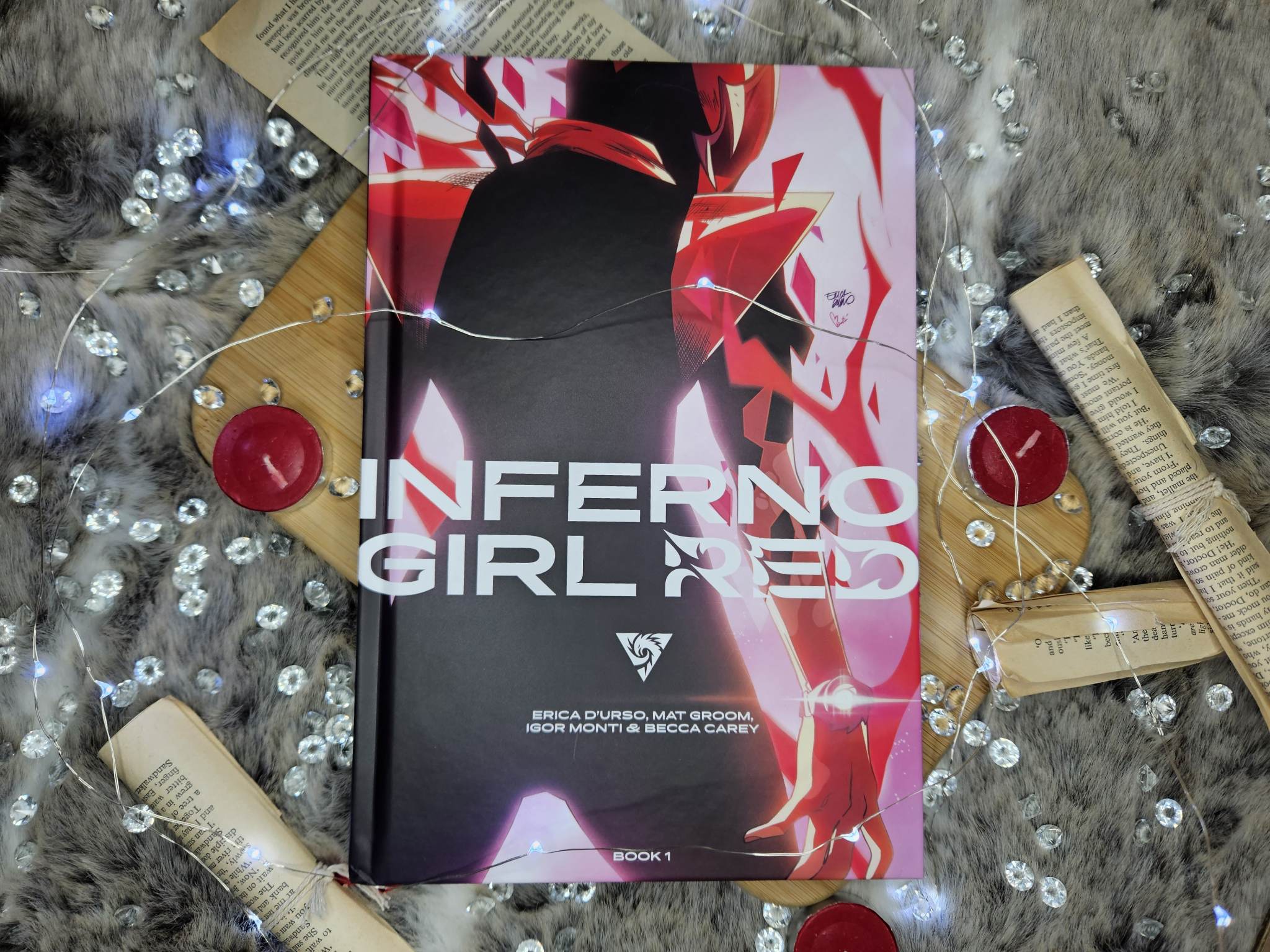
In 2021 I spoke to comic writer Mat Groom, who has worked on comics such as Ultraman, Mighty Morphin, and Self/Made, about his upcoming graphic novel, Inferno Girl . This new tokusatsu inspired series, with art by Erica D'Urso and Igor Monti, introduced readers to an exciting new world and some amazing new characters (check out my review for the book here). Having initially been released via Kickstarter, the Foundation Edition of the book was incredibly well received. However, being released via Kickstarter meant that not everyone had the chance to check out his fantastic series. Luckily, Inferno Girl Red is coming to general release as three individual issues fro Image Comics.

I got the chance to talk to Mat again about what it was like producing the Kickstarter campagin, and the journey to bringing IGR to comic shops.


Hi Mat, thank you for taking the time to answer some questions with me again. We last spoke when Inferno Girl Red was getting ready for her Kickstarter campaign; so my first question would be what was that process like? Having to organise everything yourself I’m sure there were a number of challenges you had to face along the way? 

Oh, yeah—it was all challenge! A lot of lessons learned, too. And it wasn’t just related to standard comic creation—because we had such an extensive and diverse range of reward tiers, there was lining up artists to do prints, figuring out how to get full-sized replica helmets sent around the world, figuring out how to do an ash-can mini comic… And then there was the Kickstarter element of it all, figuring out how much to share and when, to make sure backers were kept updated whilst maintaining realistic expectations, but also not giving away all of the story ahead of time. Thankfully, our community of backers was incredibly supportive and enthusiastic, which meant the world to us as we navigated the Kickstarter waters for the first time.


The Kickstarter campaign seemed to go very well for you in terms of public reaction and the number of people who took part. Were you ever nervous that the reaction wouldn’t have been as strong, and were you pleased with how it went?

Are you kidding, I was only nervous! I was 100% entirely comprised of nervousness, down to the cellular level. I think because there was so much on the line—we’d put so much work and effort in, were so invested, I think it would’ve been crushing if it didn’t work out. I think we had done everything we could have to prepare, we’d really hustled on PR (with the assistance of our friends at Superfan Promotions), I believed wholeheartedly in the book and the team… but you can never really know, you know? At a certain point, you just have to make the leap into the unknown. But I couldn’t be more delighted by (and appreciative of) the response. Hitting our funding goal so quickly took the pressure off fast, and then just the energy and enthusiasm of everyone… the fan art, the speculation, the general hype… I feel tremendously fortunate and privileged to have IGR’s journey begin that way.


When we last spoke you were singing the praises of your art team on IGR, talking about how wonderful Erica D’urso was. In the back of the Foundation Edition book there’s a lot of behind the scenes stuff with Erica talking about the various stages of designing the characters and the world of the book. What was it like working with Erica from inception to getting the book out there?

One of the best experiences of my career. That backmatter you’re referring to shows just how much work Erica put in, how many different routes we explored… and jamming with Erica on that stuff was so creatively fulfilling. I think because she’s so passionate and detail-focused, and such a deft hand at worldbuilding, it’d only take a few words from me for a whole new person to arrive fully formed and totally unique from Erica. And she brought so much of herself to it, her innate sense of style and her nuanced sense of emotion radiates from all of these characters.


We spoke a little last time about how IGR draws nspiration from Tokusatsu heroes, and since then you’ve done a six issue run on Mighty Morphin, have produced a Power Rangers story for the new collection, and made two more series of Ultraman. It’s safe to say that this is a genre of storytelling that appeals to you. What is it about Tokusatsu stories and characters that seems to keep drawing you back to them, and do you think that they offer different challenges to other comic writing?

To me, tokusatsu kind of encapsulates my favourite thing about fiction—taking big, earnest, meaningful ideas, and then expressing them in the wildest, most creative, most vivid ways possible. Obviously there’s so much style there, but to me the key is how earnest it is at its core. I’ve talked about this before, but I had a real lightbulb moment when watching KAMEN RIDER BUILD—which is a show about the inescapable consequences of developing weapons of war, no matter how pure your intentions (and doesn’t shy away from the intensity of those consequences AT ALL)… but, also, it’s a show where the hero can fuse the essence of a helicopter and a rose to become a dual rose/helicopter themed superhero. Both of those elements co-exist, and are in fact empowered by each other… and there’s no self-consciousness about it. It’s brave enough to push any and all ideas to their strange and delightful limits.

I think that relates to the challenge element you asked about, too. To me, the bad version of doing something inspired by tokusatsu is to mimic the aesthetics but not engage with how tokusatsu stories are different to Western genre narratives. Tokusatsu has so much that superhero stories in particular can learn from—including how to break way from perpetual status quos, and how to incorporate progressive ideas by infusing them with wondrous, fantastical elements. So I think the challenge is making sure that when you look to tokusatsu for inspiration, it’s not a surface-level consideration.


Inferno Girl Red is coming to comic shops through Image Comics now, offering even more people the chance to read the book. What was the process like going from independently publishing the book to being published through Image, and was the popularity of the Kickstarter something that helped with that?

We were fortunate enough to have locked down that arrangement shortly before the Kickstarter launched, which I’m sure helped us tremendously. In a lot of ways, this is the only way IGR could have existed—because we were so insistent on doing it as a graphic novel first-and-foremost, that’s incredibly hard to fund, especially for a relatively-unknown creative team. But our incredible Kickstarter supporters gave us the funding to develop the whole story, and then Image helped us with the infrastructure to get that story to the wider market. I’m so thankful to be at Image, with IGR—because Image affords us total creative control and IP ownership, which was a must for us. Erica, myself and Igor put so much into IGR, both in the book and beyond, because we know we’re the ones who benefit from whatever we put in, and we know that nobody is going to come in and tell us to do it differently. It’s our story, we’re going fail or succeed on our own merits– which means we can diverge from traditional superhero storytelling in many ways, and Image enthusiastically affords us the freedom to do that.


Image Comics is the home of the Massive-verse, which IGR is a part of. Since starting with Radiant Black it’s continued to expand, introducing other Radiant characters, as well as The Dead Lucky, Rogue Sun, and IGR. How does adding more titles to the Massive-verse come about, are there some central folks who are in charge of that universe, or is it a more collaborative process?

It’s been a quite an organic process, to be honest! In the beginning, Kyle Higgins was developing RADIANT BLACK, I was developing INFERNO GIRL RED, and Ryan Parrott was developing ROGUE SUN—initially as entirely independent entities. But then Kyle pitches us the idea of them sharing a storytelling space, and we were into it. It was important to all of us that we entirely maintained our independence– nobody in the Massive-Verse tells anyone else what to do, all of the series read totally self-contained if readers only want to engage in one story… but the worlds collide every now and then in our SUPERMASSIVE specials, where we can see what happens when these quite different books start to overlap. Since then, as you mentioned, we’ve been joined by the immensely talented Melissa Flores (with her book THE DEAD LUCKY), and there have been RADIANT BLACK spin-offs which have brought in other creators, and now Kyle is doing another Massive-Verse book with NO/ONE… so the expansion has been rapid! I think what’s held everything together is my friend Michael Busuttil, who is the editor on most of the books… we call him “Mr. Massive-Verse”, because he’s the lynchpin that holds us all together. As I mentioned, there’s nobody “in charge”, all of the books are owned and run by their individual co-creators, the creators make the final calls on their own books… but Michael helps us stay co-ordinated and cohesive (at least where we need to).


With the series coming to Image, the ever expanding popularity of the Massive-verse, and the book leaving things open for more adventures from the character, are there plans to do more with Cassia?

Yes! >.> I guess I should provide a bit more an answer there. Um. Hm. Let me say this—Team IGR is INCREDIBLY invested in INFERNO GIRL RED. We adore the character, we adore the world, we love doing the book. So we’re going to go for as long as we feasibly can… and our plans for Cássia involve things that you might expect, and some… that you may not.


What are your hopes for the character and the series going forward, are there big plans for IGR and the other Massive-Verse characters that you’d love to see come to furition, or is it more a case of taking things one book at a time?

We have a big, long-term plan for IGR. That plan allows space for mingling with the rest of the Massive-Verse when those opportunities arise, but our core focus is IGR’s story as told through graphic novels. Now that Cássia and her world is established, we’re really excited to expand our her supporting cast, get to know very important characters like Harriette and Lillian better, and start to reveal some of the secrets we’ve layered into the story…


For those who haven’t tried any of the Massive-Verse titles yet, and who might be interested in seeing what Inferno Girl Red is like, how would you describe the book to them to win them over into picking it up? 

INFERNO GIRL RED: BOOK ONE is a graphic novel that’s inspired by Western superhero stories, Japanese tokusatsu storytelling and even a little bit by boarding school dramas. It tells the story of Cássia Costa. For a long time Cássia and her mother have barely been scraping by, bouncing from city to city as Cássia’s mother looks for work. But Cássia gets a big break when she gets an invite to a prestigious and progressive school in the near-utopian Apex City. Unfortunately, Cássia’s hope about things turning around for her are yanked away when an ancient cult and their army of demons rip Apex City out of our reality and cast it into darkness. To have any hope of saving it, and getting her life back on track, Cássia must survive the worst night of her embrace a secret legacy, and find the courage to fight when all seems lost—as the blazing light of hope in the dark, INFERNO GIRL RED! 

When making this book, Erica, Igor and I were trying to imagine how comics might (or should be) a few years into the future, and we tried to make that—it’s progressive, we think it’s a much more genuine look at how teenagers actually are today and the challenges they experience, and it’s extremely accessible! Even if this is your first ever comic book, we believe you’ll be able to dive right in and you’ll be hooked right away! So we’d love for you to take a chance on IGR!


You can find more information about Inferno Girl Red here at the Image Comics Website.

Check out more from Mat at his website.


If you're interested in picking up Inferno Girl Red make sure to talk to your local comic shop, or comic website, so that you don't miss out on this exciting new series!


Support Amy on Patreon

Buy Amy A Coffee

Go to Amy's Blog

Tuesday, 16 May 2023

Dawn of DC Primer #1


Dawn of DC is well underway, with several new series already out, and more exciting new additions to the slate having been announced already. It seems like there's never been a better time to start getting into DC; but also that there's something else going on, as Amanda Waller plans her next moves from the shadows as teased at the end of the recent Dark Crisis event.

Dawn of DC Primer is a short, free comic that gives readers a small insight into what Waller might have planned, and certain things that she's after. The book is split between Waller heading to a secret, underground meeting with a host of B-list and lower villains, whilst she sends a small team of agents onto Lazarus Island.

Waller is suitably Waller in this issue, oozing threat and danger whilst being completely unarmed and surrounded by people who want her dead. Whilst this book isn't long at all, it does seem to perfectly capture what makes Waller so dangerous and appealing as a villain. She should be in danger, she should feel worried, but she's filled with confidence, handles threats quickly and efficiently, and is easily the most frightening person in the room. Making Waller the main antagonist of whatever is coming next feels like a really good move. After Deathstroke and his Dark Army, Pariah and his possessed versions of Necron, Doomsday, and Darkseid, it's nice to have a villain that isn't a powerhouse, that isn't a physical threat. Waller will be testing the heroes in other ways, using her cunning and her skills rather than outright force.

That being said, she might also pose something of a different threat as her Lazarus Island team manages to secure a very powerful artefact; the Helmet of Fate. Last seen in the Lazarus Planet comic, where it was found on the island by Dreamer, it's now in the hands of Peacemaker and Peacewrecker, who are taking it to Waller. This does leave me wondering if something happened to Dreamer, or if we're supposed to forget she went after the helmet because the writers forgot that part.

The comic is setting things in motion for future stuff, and is designed to get readers excited for the new series that are coming out. And it does an okay job of that. The book doesn't really reveal anything new in terms of new series, and the story doesn't feel that integral that you're going to get lost if you don't read it; but for those enjoying Dawn of DC who want a little bit extra, it's a pretty decent read.


Support Amy on Patreon

Buy Amy A Coffee

Go to Amy's Blog

The Legend of Zelda: The Wind Waker – Throwback 20


Originally published on Set The Tape


The Legend of Zelda is a series that has gone through some changes over the years, yet manages to stay pretty true to the feel that made the series beloved. Thanks to the cyclical nature of the series, and how most of the games put us into new incarnations of these characters and their world across their timelines (the timeline map for this series can get very complex) each game gives you a new experience, yet one that’s largely the same. You’ll play as Link, you go on a quest, you encounter Zelda, and you fight Ganondorf. Yes, there are some that don’t do this, but for the main games that’s pretty much what you get every time round.

Taking the same basic structure and overlaying it into new environments has done the series well, and it means that the creators don’t have to come up with new themes every time, and can instead focus on the world, giving players new environments and game play features in order to keep things new and interesting. After the massive success of The Legend of Zelda: Ocarina of Time (largely considered to be one of the greatest video games of all time) there was a lot of pressure on Nintendo to deliver more. As such, The Legend of Zelda: Majora’s Mask was quickly produced using many of the same assets as the previous game and acted as a direct sequel in the same kind of style. A few handheld released were made after this, but fans were still eagerly awaiting a home console game.

In 2000, at the Space World exposition, Nintendo released a short video showcasing the abilities of the upcoming Nintendo Gamecube. This video featured clips of Pokemon, Metroid, and Luigi’s Mansion, but also Link fighting Ganondorf. This clip was similar in tone and style to The Legend of Zelda: Ocarina of Time, though using much higher quality graphics. This demonstration led fans to believe that this would be the style of game the latest entry in the series would use. However, according to interviews made later on, the creative team felt like it had exhausted this idea, and needed something new to get excited over rather than becoming derivative. One of the designers on the team drew a picture of Link looking very cartoonish, and it quickly grabbed their attention.

The decision was made to create the next game in the series, The Legend of Zelda: The Wind Waker in a 3D cel shaded style, giving the game the look of a playable cartoon. Some of the producers on the game were unsure about this approach, but the excitement of the creative team eventually won them over and allowed them to create the game they wanted.


The Legend of Zelda: The Wind Waker is set after the events of Ocarina of Time following one of the three timelines that split off from the events of that game (complex stuff, we know). The game puts you in the role of Link once again, a young boy who has grown up on a small island where the boys of their village wear the same kind of clothing as the hero of legend. This is one of many islands that exist in a vast ocean, where ships are needed to traverse the environment. When Link’s sister is kidnapped by a giant bird, he ends up going on an adventure to get her back, an adventure that leads him to meet the pirate captain Tetra (a disguised Zelda), and eventually puts him on a path to fight against the evil Ganon.

Whilst much of the game play for The Wind Waker follows a similar system to previous entries, with Link exploring environments, delving into dungeons, collecting rupees, and fighting enemies with a sword and shield, the setting takes a huge departure from what fans knew, and introduced some new game play features. Instead of a kingdom, the game is set in a large ocean filled with islands. In order to fully explore and gather items Link needs to travel from island to island using his boat, the King of Red Lions. The boat needs wind in order to travel, and via the use of a magical item, Link is able to direct the flow of wind to travel wherever he wants. Players are also able to use the boat to search for sunken treasure, using Link’s grappling hook to pull things up from the deep.

When the first look at the game was released, just a year after the previous tech demo, fans weren’t sure what to make of things, having been expecting a game in the other style. The response to the design was pretty divided, with some enjoying the departure from what had come before; but others were left feeling somewhat cheated. Whilst excitement for the game would continue to build towards release, some animosity towards the game continued.


Upon release the game received almost universal critical acclaim from media outlets and reviewers. It was the fourth game to receive a perfect score from Japanese magazine Famitsu, and would go on to receive more perfect scores from outlets such as Planet GameCube, Nintendo Power, and Game Informer. The new visual style was praised by reviewers, who likened it to being able to play a cartoon, and said that it made the game feel unique amongst other Zelda games.

Unfortunately, general audiences were still somewhat divided. The game failed to sell to expectations, especially outside of Japan. The game did well in Japan, where animation inspired games were frequently produced, but seemed to struggle in America and Europe. Some would complain that the game looked too childish, and it further added to the narrative that Nintendo was ‘producing games for children’.

However, over the years, initial criticisms of The Legend of Zelda: The Wind Waker would begin to be retracted. With subsequent games taking on a more realistic style, especially The Legend of Zelda: Twilight Princess which was almost the polar opposite of The Wind Waker, fans would begin to praise The Wind Waker for sticking out. Those that didn’t like it as much to begin with would start to thaw towards the game, and began to praise it once they gave it more of a chance. The Wind Waker has now gone on to appear on a number of top games lists, as well as regularly appearing in top ten lists for best GameCube games. The increase in popularity resulted in an HD remaster being released for the Nintendo Wii ten years later.

The Legend of Zelda: The Wind Waker remains a stand out entry in the series even to this day. Thanks to both the visually distinct style, and the unique features provided by the setting, the game has continued to stick out in people’s minds and has gathered interest. Copies of the original game regularly sell for more now than they did upon their first release, and the HD version also remains sought after. With how popular the game is, it’s a genuine surprise that a digital version hasn’t been released on the Nintendo Switch, where it would be sure to make a killing. So, if you’ve got an old copy somewhere in your home gathering dust, why not fire up that old GameCube, and give this now beloved classic another try?


Support Amy on Patreon

Buy Amy A Coffee

Go to Amy's Blog

Monday, 15 May 2023

5-25-77 – Film Review


Originally published on Set The Tape


Cinema: a medium that helps to bring people together with their shared love of stories. And whilst opinions on film can often divide, with personal taste often treated like objective fact, and arguments on canon or rules leading to fights, this is just because this is a medium that people care passionately about. People fall in love with films; they watch their favourites over and over again until they can recite them word for word; they’ll try to share them with the people that they care about, and they can even become inspired by film. I think most people have that one movie that they can trace this love back to, a single film that they can say ‘yes, that’s where it all began’, and that’s what 5-25-77 is all about.

There are probably some reading this who’ve already recognised that date, who are able to track their love of film back to the movie that was released on that particular date. But this story isn’t about that film: at least not entirely. 5-27-77 tells the story of Patrick Read Johnson, a kid who goes to watch 2001: A Space Odyssey when he’s eight years old, and who comes away knowing that he needs to make movies. It creates a passion in him that would go on to eventually spawn a career in Hollywood that would lead Johnson to work on films such as Baby’s Day Out, Dennis the Menace, and to eventually create Dragonheart.

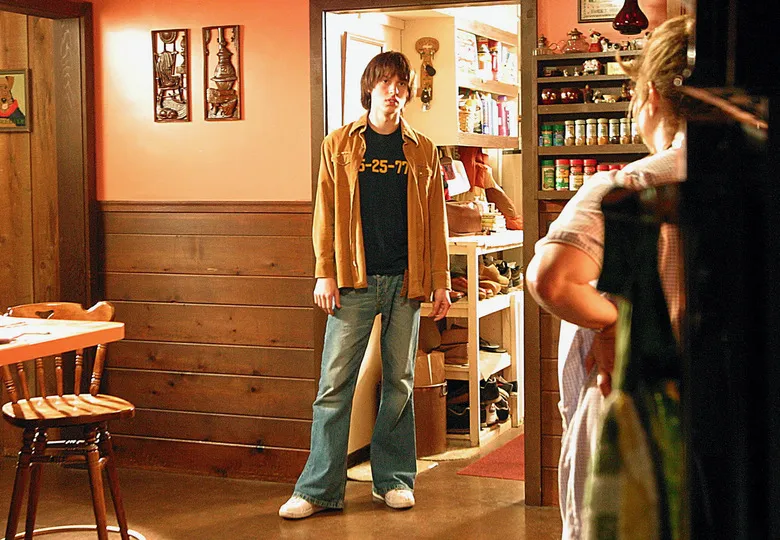
In the film, we open with the young Johnson and his family and the years they spend with him as he takes things from around the house to make his special effects movies. He steals his sister’s bike to turn the wheels into a space station, grabs the barbecue from his dad, makes masks in the kitchen oven, and even paints the horse to look like a zebra. He does all of this, in part, to deal with the mounting tension between his parents, and to deal with their divorce. Once through the opening segment we join up with a teenage Patrick, now played by John Francis Daley (the bulk of the movie having been shot between 2004 and 2006, so Daley looking young enough) as he continues with his movie making obsession.


His family have become used to his hobby, they don’t really care that the house is filled with half-created props, that the pool is filled with fake blood and a rubber shark, or that he’s spending every penny on film. His family either put up with his obsession, knowing that speaking out won’t change him, or support him in his passions. Despite working on his films, with the help of his best friend Bill (Steve Coulter), Patrick never finishes a project, with his sequel to Planet of the Apes still being worked on several years after starting. He has the passion, but no real goal in mind other than wanting to make films.

When he meets Linda (Emmi Chen) Patrick begins to find love, but not even romance can compete with his true love. Travelling up to LA to meet some special effects masters, Patrick finds himself on the set of Close Encounters of the Third Kind, where he gets to meet Spielberg, and see how the film’s effects are made. But it’s one film he visits that really sets a fire under him, one movie that he gets to see an early cut of that cements his love of movie making: Star Wars.

5-25-77 is, much like the films that Patrick Read Johnson made in his youth, a passion project. It just happens to be a passion project about passion projects. Started almost twenty years ago, 5-25-77 was filmed long enough ago that it’s almost jarring to see some of the actors in the film looking younger here than things that they’ve done in the last few years. Much of the film’s production went to addition shots and the special effects; and the special effects are one of the highlights of the film.


There are moments where old-style film making has been lovingly recreated on screen in ways that just wouldn’t be done outside of a kid in their back yard making their own film. Model shots, forced perspective shots, and props made out of household goods fill the film. But, it’s not just when Patrick is making his movies that we get these moments. There are a number of shots throughout the movie that it takes you a second to realise are models; things like cars driving from one place to another. These are shots that could easily be done normally, but they’re made in this way to give the whole film this almost unreal quality, and to act as a celebration of the art form.

Patrick’s story presented here is an interesting one, and one that feels a bit too weird and embarrassing at times to be too embellished. Patrick screws up, he makes mistakes, and he’s ultimately a very flawed person. The film could have sugar-coated things, it could have made Patrick the young genius held down by the people around him who are unable to see his vision and abilities. But it’s not that. Patrick is a normal guy, a weird guy yeah, but just a guy. This approach is kind of refreshing, especially compared to Spielberg’s own semi-autobiographical film The Fabelmans, which is a bit too polished, romantic, and sanitised to feel really true to reality in the way that 5-25-77 does.

5-25-77 is as much a story about an awkward teen trying to find a place in the world and learning to take the scary steps needed to chase his dreams as much as it is about film making. The two work well together, however, and some of the more interesting moments of the film are the ones where reality and film seem to blend together in fun ways. If you were ever one of those kids (or adults) who looked around the house at the stuff lying around, imagining how you could transform it into something fantastical with some glue, some paint, and a cool idea then 5-25-77 and Patrick’s journey will definitely appeal to you.


Support Amy on Patreon

Buy Amy A Coffee

Go to Amy's Blog

Saturday, 13 May 2023

Far Cry 3: Blood Dragon – Throwback 10


When is a DLC not a DLC? When it’s its own spin-off game perhaps. In 2012 Ubisoft released Far Cry 3, and received huge amounts of acclaim for the game that reinvigorated the series, and set the path for things to come. Less than a year later a new DLC was released for the game. Rather than adding new story, new locations, or new equipment to the base game, however, this DLC was its own entity entirely, essentially giving those who downloaded it a whole new game to play, built in the same game as Far Cry 3. Thus, Far Cry 3: Blood Dragon was born.

Having been inspired to create a DLC that does things a little differently to the main game with the success of the Assassin’s Creed 3 DLC, The Tyranny of King Washington, Ubisoft decided to create something very tonally different from the base game for Blood Dragon. The decision was made to create a game set in a sci-fi future as envisioned in cheesy 80’s action movies; and it used that inspiration heavily throughout.

The game put players in control of the American cybernetic super soldier Rex ‘Power’ Colt (Michael Biehn) in the distant future setting of 2007! Rex, along with his fellow cyborg soldier TT ‘Spider’ Brown (Phil LaMarr) have been sent to a remote island to eliminate Colonel Sloan (Danny Blanco Hall), an elite agent who has gone rogue. Unfortunately, like all good action movies where two agents go in, Sloan kills Spider, and leaves Rex for dead. Trapped on the island, Rex has to slowly work his way through Sloan’s forces, and try to prevent a scheme that will result in the end of the world.


Blood Dragon is built from the ground up to make the player feel like they’re in a badly made, cheap 80s B-Movie, right down to items in the game looking like they were made of of junk found in the props room, cheesy one-liners, and the bad graphics in the cut scenes. From the opening moments of the game, where you’re treated to 16-bit style opening that depicts the end of the world, with an electronic score reminiscent of The Terminator it’s clear that the game is going for a very specific style, and that it’s going to lean into it. Heavily.

Speaking of The Terminator, some may have already spotted a familiar name mentioned already, as the lead character is voiced by 80’s sci-fi action icon Michael Biehn. According some interviews with the creators of the game, early development was considering approaching more recognisable 80’s actors for the role, but ultimately went for Biehn thanks to his involvement in both The Terminator and Aliens, and because he could bring a weary, grizzled style to the character’s voice that fitted more with that they were wanting. Biehn sounds tired for a lot of the game, but not in a way where he’s just doing the bare minimum of voice work to cash a cheque. His character sounds done with the world. He doesn’t want to be on this mission, he’s growing weary of killing, and he absolutely hates that he has to go through the training basics at the start of the game and isn’t afraid to voice that disdain.

Rex’s bad one-liners aren’t the only thing that makes this feel like an old movie though, as the game takes the somewhat realistic violence of Far Cry 3 and throws it out of the window for over the top flair instead. As a cyborg Rex is able to move at super-human speeds, and he wields a variety of weapons that just wouldn’t exist in the real world. Quadruple barrel shotguns that fire flaming bullets, laser machine guns, and a minigun that will make you feel like Blain from Predator are all fun to use to mow down enemies, and cause massive destruction. The most over the top and enjoyable weapon in the game, however, is the Battle Armored Dragon Assault Strike System (the B.A.D.A.S.S.), one of the island’s massive laser shooting dragons that has been turned into a cybernetic, armoured creature of mass destruction.

There are times when things do feel a bit forced, such as the same one-liners or bad jokes being used more than once. which leads to a bit of boredom through repetition; that and the fact that there are times the game is designed to feel intentionally bad. An hour and a half movie in this style doesn’t tend to overstay its welcome, but a multi-hour game might begin to here and there. That being said, it isn’t too long a game, and doesn’t try to pad things out with fetch quests or collectables, and sticks to the basics. A few of the systems from the main game have been removed to make it more streamlined and quicker too, such as a very simple skill tree compared to the more extensive one in the regular game.


Upon release Far Cry 3: Blood Dragon received favourable reviews from a lot of outlets, who praised the game for its new direction, score, and enjoyable sense of weirdness. It was praised for its clever writing, and walking the fine line between enjoyable and cheesy. Ultimately, most reviewers agreed that the game was pretty charming overall, and that it would definitely appeal to those who grew up watching old VHS copies of low budget action flicks. It was reported that the game sold more than 500,000 copies within two months, exceeding initial expectations, and that it would go on to sell over 1 million copies by the end of 2013. As a result, it also boosted the sale of the base game, and raised interest in Far Cry 3.

Far Cry 3: Blood Dragon almost feels like an experiment, a test to see if a second game can be made out of the assets that have already been created, and released for a lower price to existing fans. Whilst that does seem to be the case, and the DLC did extremely well, the level of success would also lead to this not happening again in the Far Cry franchise. Instead of being released as cheaper, shorter games via DLC, spin-offs such as Far Cry Primal, and Far Cry New Dawn would be treated like main games, and would be sold on disc, at full price.

For what it is, however, Far Cry 3: Blood Dragon is a ridiculous and enjoyable experience. It’s the kind of game that rarely comes along anymore, and is often executed so poorly that it bypasses enjoyable and becomes awful (Duke Nukem Forever and High on Life being prime examples of this). Whilst it might not be for everyone, for those that grew up with over the top action movies, cheesy one liners, and ridiculous sci-fi stories this game will probably be quite enjoyable.


Support Amy on Patreon

Buy Amy A Coffee

Go to Amy's Blog

Friday, 12 May 2023

Straight Expectations by Calum McSwiggan - Blog Tour


'Seventeen-year-old Max has always been out, proud and just a little spoiled. Frustrated by the lack of romantic options in his small-town high school, during an argument with his lifelong best friend Dean, Max lashes out and says he wishes he had never been born gay.

'Max gets more than he bargained for when he wakes up to find his wish has come true - not only have his feelings for boys vanished, but so has Dean.

'With his school life turned upside down and his relationship with his family in tatters, Max sets out on a journey of rediscovery to find a way back to the life he took for granted, and the romance he thought he'd never have.'

I think that there will be quite a few queer people who read Straight Expectations who've had a similar thought to the book's lead character, that they wish they could lead an easy, regular, heterosexual life. I think that having that thought is fairly normal for anyone in a marginalised group, the desire to have it easier, to not be targeted because of your identity. I also think that it's a thought that is probably going to be shared more with older queer readers, those who grew up during Section 28 when even the very whispers of someone being gay in school was the potential to destroy your life. Whilst things are very far from perfect now, with more and more homophobic and transphobic bills and legislation being passed, the general perception and acceptance of queer people has improved a lot; especially amongst younger generations. As such, the central conflict of this book, of wishing away your homosexuality, will probably feel more shocking to the books intended younger readers.

Straight Expectations tells the story of Max, a young 17-year-old gay boy living in a small English village. Max came out at age twelve, and his best friend, Dean, has always stood beside him; largely because Dean is the only other gay person Max has known most of his life. The two of them are also friends with Alicia, a queer ally who supports the two boys at school and in their personal lives. Max seemingly has a pretty decent life, his parents are divorced, but they're happier for it and he has good relationships with them. Dean is the big star in the school drama department, and Alicia is their top artist, and Max loves helping them out and spending time with them. They're running a school LGBTQ+ club that's helping other students. Compared to a lot of young queer people Max has it good.

However, there's something that's been gnawing at Max for a long while now. He's single. There are pretty much no options for his dating circle in their small community, and whilst there is another gay boy in their school other than him and Dean, Oliver Cheng, and Max does have a massive crush on him, he's yet to work up the nerve to even talk to him. When Dean and Alicia try to engineer a meet-cute for the two of them it fails to result in a date; so they push Max into sending Oliver a message instead. But when Max is left on read and doesn't get a response his feelings finally bubble over. He snaps at his friends, he doesn't listen to them when they tell him how good his life is, he disregards their point that their lives aren't easy and great due to having to deal with racism (something Max never has to worry about). He refuses to focus on anything but his lack of a love life. 

It's then that Max makes a wish, a wish that he could have a 'normal' life, an easy life. He wishes that he could be straight instead, so that he can date and have fun. And worse of all, he wishes he and Dean had never become friends. The next day Max wakes up and finds his whole world has changed. The posters of boys on his bedroom walls have been replaced by bikini babes, the clothing in his wardrobe is different, and his parents are married. Heading to school, Max finds that his friend circle is different, that he's friends with Oliver, and that he's dating Alicia. Even weirder, the guys do nothing for him, and he's noticing every pretty girl around him. It's then that he realises what he's done, that he's changed the world around him. Thinking that making friends with Dean again will be the way to set things right he sets out to do so; but when no one knows who Dean is Max has to face the idea that he might be stuck in this new, twisted version of his life.


I have to be honest, when I first heard of the idea of Straight Expectations I wasn't sure what to think. In a world that's still incredibly hostile to queer people, where conversion therapy still happens, and people are 'cured' of their homophobia, here's a book where the lead character is able to wish away their gayness. I was worried that this book could be sending the wrong message, or that it could be promoting something less than ideal. However, my fears couldn't have been more misplaced. Yes, the book has a magical circumstance that turns a gay boy straight and changes the world around him, but it's not making that out to be a good thing. If anything, Straight Expectations is a celebration of queer identity, and of being yourself. 

One of the things that the book does that I appreciated, is that it very quickly establishes that the new reality Max finds himself in isn't better. There are parts of it that initially seem good to him, Oliver is his friend, his parents are still together, but the vast majority of things are a less enjoyable, less hopeful version of his life. Alicia's father isn't a fun loving guy who treats him like a son, but an angry father who dislikes him. His parents might still be together, but their arguing, their relationship is on the rocks, and none of them are happy. He even notices that there are less openly queer kids at school, that without the presence of Dean and the LGBTQ+ club some students haven't found the community and the support to come out. One of the saddest moments in this new reality is when he comes across one of his friends from his normal life, a trans girl who was in a loving relationship with another girl; but in this new world she hasn't come out, she's still living under her dead name, and he can see how much she's suffering because of it.

A central message of the book is that a world without the queer community is one that's lesser. Yes, there's still Oliver, who's now the only openly queer kid in school, but all of the others are gone. People feel like they can't be themselves, they don't have a community, homophobia is a little more open, and people just seem to lack the spark that made them happier in the other world. A lot of this seems to be down to the lack of Dean, a person so happy and confident in their identity that they refuse to back down or hide who they are. Dean pushed people around him to be better, to do better, and without that things are just worse. Yes, this could just be a story about how one person being missing from your life can put you on a completely different path that isn't as good, but it can also be a commentary on how if we continue to allow the erasure of the queer community we're going to make the world a much worse place.

Max's journey through this alternate world is the main focus of the book, but it's not the only thing that Straight Expectations does. Max does end up figuring out a way to go home, though he doesn't realise it. Most stories would end soon after this, they'd show the lead getting back to their own life, repairing their bridges, and moving forward in some nebulous way. But in Straight Expectations there's still a good twenty percent of the book left. We actually get to see Max taking the lessons he learned in that other timeline and applying them to his life. He makes up with his friends, he finds a new path in his own life, and he finally plucks up the courage to talk to Oliver now that he's experienced being friends with him without the nervous tension of having a crush on him. We actually get to see how this experience makes him a better person over a number of days, if not weeks, and it makes the book feel a bit more special.

Straight Expectations is billed as being a queer romance, and whilst it's definitely that it's also something a bit more special. It's a book about identity. Max's story is about learning to accept who he is, to see that the things that are issues for him aren't really that big; especially compared to some of the things that others are going through. The book asks the readers to take a think about what one simple change might actually do in the long run, how one tiny thing can have huge ripple effects, and why perhaps changing those tiny things isn't worth obsessing over.Be happy with the life you have, do what you can to change things going forward, and try to embrace the good you already have.

I had a lot more fun with Straight Expectations than I was expecting, and it ended up being a book that I struggled to put down, finishing it in just two sessions. This isn't a genre that I normally go for, and the initial description made me unsure about it, but it ended up being a hugely enjoyable experience, and one that I'm so glad I took a chance on.


Support Amy on Patreon

Buy Amy A Coffee

Go to Amy's Blog

Add Amy on Instagram 

Thursday, 11 May 2023

Spirit World #1 - Comic Review


Once a decade or so DC will do an event that tries to introduce a number of new characters into the universe with their own series, hoping that the characters will take off. We've seen it done before with things like Millenium, Bloodlines, and Dark Matter. Invariably, most of the characters introduced in these events end up vanishing withing a year or two at the most as people just fail to gravitate towards them, preferring the staples of the DC universe. There have been exceptions, however, such as Hitman and Sideways; and it feels like out of all of the new characters introduced in Lazarus Planet Xanthe might be the one that will end up clicking with the most people.

Originally introduced in the Lazarus Planet: We Are Legends issue, Xanthe begins their own series with the first issue of Spirit World. The book picks up soon after the events of the one-shot, and benefits from having a couple of established DC characters join our new spirit envoy on their adventure. In the one shot Xanthe, Constantine, and Batgirl (Cassandra Cain) were fighting Jiangshi (Chinese hopping vampires) when Cassandra was sucked into the spirit world. Now, Xanthe and Constantine are trying to find a way to access the spirit world and save her, whilst Cass has to deal with the various spirits and creatures that are hunting her.

The concept is nice and simple to get your head around, which is handy as the book will be throwing some new stuff at the readers; so the simple plot helps. Xanthe is Asian, and their magic and the creatures that they interact with are very much inspired by Asian culture; as such, the book will land differently with different readers. For some, the concepts that are introduced in this book, such as burning paper offerings to make things appear in the spirit world, will be familiar, but for others they'll be brand new. As such, writer Alyssa Wong has a tricky balancing act to do, as she has to write a story that doesn't feel like it's slowing down every five minutes to explain things, whilst also keeping those new to these ideas up to speed.

Thankfully, Wong does a fantastic job at this, and the story balances out story, exposition, and character moments really well. Even by the end of the first issue it feels like we've got a pretty solid foundation for the kind of person that Xanthe is, and that we're going to be able to build upon this in any direction that Wong wants to take them. The very first scene of the book where Xanthe uses their magic to help out a little girl in the rain will instantly win people over to them.

Xanthe is also a queer character, and is a non-binary hero who uses they/them pronouns. One of two new trans heroes who was introduced in Lazarus Planet, Xanthe hasn't received as much attention as Circuit Breaker, who featured in the new DC Book of Pride whilst Xanthe didn't, but seems to be the more interesting of the two so far. The book doesn't make a big thing out of Xanthe's identity, and if you weren't really paying attention, or unaware of some things, you could easily miss the fact that they're referred to with they/them pronouns exclusively. There's a cute moment when the kid they help in the first scene thanks them and calls them older brother/older sister. The fact that it's just a part of Xanthe's world, that there isn't a big moment that needs to explain things, but it's just there, makes it feel a lot more natural and casual.

The book does some fun things with Batgirl too, who's trapped in the spirit world. Being stuck in a world filled with ghosts and monsters would be issue enough for most people, but it's made tougher for Cass as the denizens of that plain are drawn to the life force of living beings. Luckily, she runs across some allies of Xanthe who help her out. Granny Po Po comes across as a delightful old lady who is as worried about getting Cassandra warm and fed as she is keeping the spirits away from her, and oozes grandmotherly energy. Her assistant, Bowen, neatly falls into that stereotype of kind, kind of bumbling, sort of put upon, assistant who's definitely got a of potential hidden inside them. Both characters seem to be really nice, and the outfit that they give Cass to help hide her living aura is absolutely fantastic, and I really hope we get to see a lot of Cassandra in that costume in upcoming issues.

DC, as a whole, are getting better and better with representation and inclusion. There are more and more characters, and series starring characters, who don't fall into the category of straight white cisgender men; and it's great to see. We're getting more queer stories, more trans characters, more Black leads, and more Asian inspired magical characters. I love that DC is expanding and embracing new ideas and new identities like this, and it looks like Xanthe and Spirit World are going to be bringing not just some fun and engaging new stories, but a whole new side to the magic part of DC's universe. I can't wait to see what else it does.


Support Amy on Patreon

Buy Amy A Coffee

Go to Amy's Blog

Wednesday, 10 May 2023

Green Lantern #1 - Comic Review


The Earth, and it's sector of space, have been quarantined by The United Planets, who no control the Green Lantern Corps. Never one to follow orders well, Hal Jordan has quit the Corps, and returned to Earth. The first issue of Green Lantern opens with Hal saving a group of trapped minders, using his power ring to drill down to save them. After years of adventures following Hal in space, of seeing him combat things like the various other Corps, the Blackest Night, the Third Army, the various Earth ending threats he's faced in the Justice League, it's really rather delightful to see Hal doing something rather mundane and normal like saving some people trapped in a bad situation.

But then this feels like the start of a rather mundane story for Hal (and I don't mean any insult by that). Hal has returned to Earth and is trying to make a life for himself. The biggest issue with that is that whilst Hal is a great Green Lantern, he's always been a bit of a fuck up when it comes to having a normal life. If Hal didn't have the ring he'd end up being one of those guys who tries to come across as cool, but everyone kind of pities because he can never get his life together. And I really like that about Hal. He's flawed.

We see some of this in this first issue as he comes to Carol Ferris to try his charms on her to get a job. It's pretty clear that Carol is kind of done with him at this point, and all of Hal's bluster and bravado are falling on deaf ears as Carol just wants to get away from him. However, she does give him the chance to prove himself, and offers him an opportunity. An opportunity that Hal ruins the first chance he gets. Taking control of a drone fighter Hal immediately showboats, resulting in the loss of the aircraft. The scene that follows shows how out of touch with life on Earth Hal is, not understanding that the old ways of flying are gone, and that he's not really going to be getting into a real cockpit again anytime soon. It also makes him look like a bit of a dick, as he doesn't care about the huge financial loss he's just made for Carol, treating it like a game because he was sitting in a remote control simulator. You can easily see why Carol has had enough of him.

The issue is also dotted with scenes set a month in the past, with Hal living in a small trailer outside of Coast City, where he spends his evenings drinking and staring up at the stars. I like that the art is clearly him drinking a beer, but the narration says it's a soda to help dispel the 'drunken bum' look that might form otherwise, and to excuse Hal speeding off in his pickup truck as he hears a news report of an attack in the city.

We get a nice scene with a villain that feels like something from a bygone era, some punk in armour made from Manhunter tech, who's causing chaos and destruction for their own amusement. The only issue with Manhunter tech, is that it's powered by Lantern energy, and so Hal is able to draw it out and power up. This does raise a question for me though, as it appears before this moment like Hal doesn't have his GL ring. When he goes in to fight this guy he's doing it as a civilian, and when he powers up it looks like the ring forms on his finger. The end of the last Green Lantern series was one that left a lot of questions unanswered, and mysteries hanging, to the point where it feels a little confusing going into this series now. However, I'm sure that Adams has a plan for things, and that we'll be finding out a lot of new stuff as the series goes on.

The book also features a back-up story, one that's setting up for the upcoming John Stewart series. The back up is kind of confusing too. At the end of the last GL run John was in space as the Emerald Warrior, saving some of his lost friends. He then turned up in Dark Crisis, where he got put into a pocket universe where he had turned everyone into a Lantern. Now he's back home, helping out his mother whilst he figures out what his next move is. It's obvious that we've missed a few parts of his story, and that itself isn't too bad. However, the stuff that comes next is the more confusing. We jump forward in time (possibly another universe?) where an older Guy Gardner is leading what seems to be the last squad of Lanterns in a desperate fight against some evil force.

That's about all we really get from the back-up feature, as it doesn't have a huge amount of pages to really delve into things here. It's clear, though, that this story is going to be going big. Whilst Hal's story seems like its going to be more grounded, and will focus on him putting his life together on Earth, Johns story seems to be dealing in big, confusing, galactic stuff. Hopefully as more of this is featured in upcoming issues it starts to become clearer what's going on.

Overall, this was a decent start to the new series. I've been a big fan of Green Lantern since I began reading comics, and I loved he Johns era and all of the extra titles we got for it, and the Rebirth era under Venditti. But since then it feels like the characters and their universe has been kind of floundering a bit. Far Sector was great, but was it's own thing. The Morrison run was very divisive, and very Morrison. and the last twelve issue story has made some big changes and left a ton of unanswered questions and unknown fates for a lot of fan favourite characters. It feels about time for Green Lantern to be given the care and attention it deserves.


Support Amy on Patreon

Buy Amy A Coffee

Go to Amy's Blog

Tuesday, 9 May 2023

The Mandalorian (Season 3) – TV Review


Originally published on Set The Tape


The first season of The Mandalorian came at an important time for live action Star Wars. Star Wars: The Last Jedi had been out for a while and had divided audiences, Solo: A Star Wars Story had a troubled production and failed to perform as well as it should have, and Star Wars: The Rise of Skywalker was just a few weeks away.

People felt a little unsure about live action Star Wars, and then this feeling wasn’t helped when the final film in the Skywalker Saga was released and divided fans all over again. But The Mandalorian seemed to be a glimmer of hope for a lot of fans, a jump backwards in time away from the sequel trilogy, with a whole host of new characters in some fantastically made episodes. It made a lot of people see that perhaps TV was the answer for Star Wars.

Now the fandom seems to have shifted once again. With Star Wars Celebration having just happened, we’ve received more information on the upcoming Ahsoka show, Star Wars: Skeleton Crew, Star Wars: Visions, and The Acolyte, as well as having had three new films announced, including a continuation of Rey Skywalker’s story. People are excited for what is coming, and The Mandalorian seems to be falling out of favour with some.

The second season of The Mandalorian ended with the capture of the evil Moff Gideon (Giancarlo Esposito), and Grogu leaving Din Djarin (Pedro Pascal) to go train with the legendary Luke Skywalker (a combo of actor Max Lloyd-Jones and CGI Mark Hamill). If you’d also watched The Book of Boba Fett (and why wouldn’t you?) you’d know that Grogu left the Jedi temple to return to Din’s side, and that Din needed to redeem himself in the eyes of his people to be considered Mandalorian again.


For those who watch The Mandalorian and no other Star Wars shows, the sudden return of Grogu, Din having a new ship, and the new mission, would have been jarring in the first episode, but Star Wars has been a shared universe for a long while now, and criticisms of that kind do feel a little bit forced. The shows set during this time period (The Mandalorian, The Book of Boba Fett, and Ahsoka) are all building towards a combined movie, so watching only one piece of that and not understanding the entire story is kind of on you.

But, that aside, the show begins strong, with Din and Grogu off to discover the Sacred Waters of Mandalore. Having to return to the ruins of Mandalore was something that fans speculated would be the focus of the season, the arc that Din would be going through. But by the end of the second episode Din had bathed in the waters and become a Mandalorian once again; so what was the show about now? The Mandalorian shifted from a story about bounty hunter Din Djarin, and became one about Mandalorians as a whole. The show had already shifted previous guest character Bo Katan (Katee Sackhoff) to co-lead, and the story became about what it means to be a Mandalorian.

The show began to further explore the different factions that we’d been introduced to in the past, such as the animosity between regular Mandalorians and The Children of the Watch, and asked if there was any common ground for them. Since the Empire, the Mandalorian people had become divided, scattered, and leaderless. They had lost their home, and their culture was the only thing that they had left to them. Now was the time to try to correct the damage of the past, and to return Mandalore to glory. Some fans seemed to dislike this shift, upset that the show seemed to be ‘sidelining’ Din in order to give Bo some moments to shine. Ironic considering people seemed to love the episodes of The Book of Boba Fett that shifted focus from Boba (Temuera Morrison) to Din.

Despite the criticisms from some fans, the shift from one individual to Mandalorians as a whole helped to expand this season of the show. Whilst there is still time for Din to go off on adventures, the series became about his people and their place in the galaxy, and led to some fantastic moments. I’d struggle to understand people criticising the expansion of Mandalorians when it gives us the final two episodes of the season, which are some of the best Mandalorian-centred episodes in Star Wars. The fight to give the Mandalorians an actual home tied back to things that the show had done before, as well as including some small nods and winks to Star Wars: The Clone Wars and Star Wars: Rebels. It also continued to pave the way towards the sequel trilogy, and expanded upon the return of the Emperor.


The series still makes time to include some adventure of the week style things too, and this season also sees Din and his allies fighting against pirate raiders, as well as having to investigate a potential droid uprising on a peaceful world. Both of these episodes bring different things to the table, with the latter managing to capture the feel of some of the odd adventures that you’d often get to see in Star Wars: The Clone Wars. Whilst these episodes don’t always move the main story forward in huge ways, they do offer our characters the chance to do new things, and to show off some fun action moments for the audience.

This season also manages to further explore and expand upon Grogu, the biggest break-out character of the series. Having spent some time training with Luke Skywalker, Grogu is less the vulnerable baby this season, and has begun to showcase more powerful Force powers and combat abilities. We also learn more about how he survived Order-66, in a flashback that brought back a Star Wars actor who received some incredibly unfair treatment at the hands of the fans, in a role that seems to have been universally accepted. Despite the big focus on the Mandalorians, the show manages to find time for Grogu, and cements him as being a Mandalorian himself, as well as furthering his relationship with his surrogate father figure. Plus, who doesn’t love seeing them throw that puppet around whenever the little guy does a Force jump?

This season features some amazing moments thanks to the amazing team of directors involved. Rick Famuyiwa opens and closes the season in three of the best looking episodes this year, whilst award winning and nominated directors like Rachel Morrison and Lee Isaac Chung join returning director Bryce Dallas Howard, and series guest star Carl Weather to fill out the rest of the season. The shows continues to look good, and it seems like more effort has been made this year to move away from the Volume, and to use other filming techniques. As such, this season does look a bit different to the first season in sense of tone and style, yet still manages to have some incredibly impressive moments.

There will be some who will complain about this season of The Mandalorian, who don’t like the direction the show took, or choices made with the story and characters. But as a fan of Star Wars as a whole, who’s watched everything and who’s looking forward to the things to come, I had a lot of fun with this season. The moments that leaned into the legacy of the franchise were great, the stuff that was setting up things we already know was appreciated, and the expansion of the show to be about more than just one man and his son was needed in order to keep things fresh, and to make The Mandalorian a part of the wider Star Wars universe. With big things on the horizon we’re sure to be seeing Din Djarin again, and I’m eagerly awaiting his return.


Support Amy on Patreon

Buy Amy A Coffee

Go to Amy's Blog