Thursday, 15 August 2024

Lore - Film Review


Horror is a perfect genre for the anthology format, with it taking relatively little time to frighten an audience if the creator has enough skill to do so. Because of this, there has been a large influx of horror anthology movies in recent years, often with a very thinly constructed through-line that barely impacts that other narratives on offer. Lore is the latest entry into the genre, and one that actually seems to have taken the time to try and construct an interesting overall narrative that includes every part of the movie into a more interesting whole.

The British horror sees four friends setting out for an adventure get away. Having engaged in horror experiences and escape rooms, the four of them are looking for the next thrill. This leads them deep into a remote forest where Darwin (Richard Brake), the man running the excursion, tells them to set up camp for the night. Once the tents are pitched and the camp fire is roaring he tells them of the discovery of a mass grave in the area years before, and the strange things that happen around the woods. Telling them that the veil between the living and the dead is thinnest here, he gets each of the four friends to tell a story that frightens them to call out to the spirits of the dead.

This leads up into four separate stories, each told by a different member of the group. The first is 'Shadows', and follows Daniel (Andrew Lee Potts), as he runs for his life from a couple of criminal heavies who want either money or blood. Taking refuge inside an old building, Daniel thinks he's gotten away from his pursuers, but once they come in after him he's left hiding in the shadows. However, he's not the only thing in the shadows, as something sinister begins to hunt them down. 

Written and directed by James Bushe, 'Shadows' begins as a fairly traditional horror scenario, of a remote location, a couple of key players, and the monster hunting them in the dark. And the monster design is pretty solid with some decent suit work too. However, as the story continues to unfold it becomes clear that there's something a little different happening and viewers are treated to some fun twists on the formula. Lee Potts does well in the lead role here too, and delivers a fairly strong performance.


The second story is 'The Hidden Woman', by director Patrick Michael Ryder, co-written by Christine Barber-Ryder. It tells the story of a single mother and her young son who inherit a large house when the grandmother of the family passes away. The two of them start to settle into their sprawling new home, but strange things begin to happen, including odd figures glimpsed in the dark of night, and heavy footsteps throughout the house. This is a fairly straightforward ghost story, and it doesn't really do anything new with the haunted house formula. It's fairly comfortable in the sense that you know what kind of things to expect here. However, it's absolutely the best story of the bunch. It's the scariest of the four stories, with some genuinely creepy visuals and some decent frights, and the ghost, played by Jordaine Lincoln, has some truly unnerving and creepy movement that comes from Lincoln's dance and contortionist skills. 

From a haunted house we move on to the much less creepy environment of a seedy hotel, where a lecherous husband, played by Rufus Hound, has pressured his reluctant wife into swapping partners with another couple to 'celebrate' their anniversary. However, when the kinky foreplay leads into the man being handcuffed and seemingly prepared for a sacrifice by the woman he's hooking up with, things take a twisted turn. This story, titled 'Cross Your Heart' and written and directed by Greig Johnson, is something of a comedic tale, and doesn't seem to take itself too seriously. Part of this tone absolutely comes from Hound, who's more well known for his comedic roles, and injects his character with a sense of fun despite you wanting to loathe him.

It's not all fun and games, however, as this story features a substantial amount of blood and gore as the cult takes over the hotel and rushes towards their twisted end game. The effects are pretty gnarly, and there are a few moments that will turn your stomach. Thankfully, the grosses of these borders on being a bit too over the top and so it makes things a bit easier to stomach. Overall, it's a pretty fun chapter in the movie.


The final of the four stories, 'The Keychain Man' written by Patrick Michael Ryder and Christine Barber-Ryder, and directed by Patrick Michael Ryder & James Bushe, is the lightest of the four, and feels like it's bordering on a light hearted spoof of the slasher genre that still wants to be a horror story. It tells the tale of a group of friends who head to the cinema for a midnight screening, but find themselves trapped in the building with a murderous employee who's gone on a killing spree after being fired. From the first moment we see the killer, where he's so large that his head is out of frame, and we get him having to call the manager to help with the till because he's messed it up, it's clear that this story isn't taking things too serious.

This tone follows through with a lot of the character moments, such as the guy in the front row getting angry that people are talking through a washing-up liquid advert, or the cinema employee who assumes one of the survivors is a pervert when he's hiding from the kill in the women's room, being built around having fun more than anything else. And even though this story doesn't skimp on the blood and guts it never feels gratuitous, and borders on the ridiculous, such as a character being bisected with a popcorn scoop. The segment feels like something of a cheeky love letter to slasher movies that fans of the genre will like.

The film ends with the framing narrative, in a way that will raise a few questions as to the true nature of what you've just seen. You'll want to stick around during the credits, however, as some of the lingering questions I had come the end are answered a few minutes later with a nice little coda that puts a decent little bow on things and left me feeling pretty satisfied.

Lore doesn't really do anything new or different, and the kinds of stories we have here will feel familiar to horror fans. But, it feels like the filmmakers approach every aspect of the film with the desire to deliver fun, and they largely succeed. The movie isn't too scary, it's got some humour, there are some great practical effects, and the framing narrative actually feels like an important part of the tale rather than an afterthought to justify the anthology format (a trap that a lot of other horror anthologies fall into). For those looking to have a bit of fun for a couple of hours and want to see a decent collection of British horror, Lore makes for a great choice. 


Lore will be available to stream exclusively on the IFC Channel from 26th August, will be in Select UK Cinemas from 27th September, and then available on Home Entertainment from 21th October.


Support Amy on Patreon

Buy Amy A Coffee

Go to Amy's Blog

Wednesday, 14 August 2024

I Was a Teenage Slasher by Stephen Graham Jones - Book Review


'1989, Lamesa, Texas. A small west Texas town driven by oil and cotton—and a place where everyone knows everyone else’s business. So it goes for Tolly Driver, a good kid with more potential than application, seventeen, and about to be cursed to kill for revenge. Here Stephen Graham Jones explores the Texas he grew up in, and shared sense of unfairness of being on the outside through the slasher horror Jones loves, but from the perspective of the killer, Tolly, writing his own autobiography. Find yourself rooting for a killer in this summer teen movie of a novel gone full blood-curdling tragic.'

Slashers are a popular bunch, often going on to spawn entire multi-media franchises that feature them gleefully killing teens and other victims in a variety of over-the-top ways. You just have to look at the fact that characters like Chucky, Jason Vorhees, and Ghostface get announced in projects like Mortal Kombat or Dead by Daylight as ways of bringing in players to see that slashers are big business. Part of this is that you kind of come to enjoy these costumes killers, eager to watch their antics, to see imaginative kills, or to hear them crack bad one-liners as they gut some hapless teen. But you rarely come to care for them in any real or meaningful way. I Was a Teenage Slasher changes this, however.

Set in the small Texan town of Lamesa towards the end of the 1980's, the book follows Tolly Diver, a young teen who begins the story as a pretty decent, average kid. Tolly works in the local hardware store, helping his mother out where he can. He hangs out with his childhood best friend and secret crush, Amber. He's getting by in life the best he can, neither excelling nor failing. He is, for most part, fairly normal. 

This makes things even more surprising then as Tolly is the titular Teenage Slasher, a young man who will go on to engage in a murderous rampage, killing a lot of people in horrific ways. After Tolly is the target of a cruel prank that takes advantage of his peanut allergy, things spiral out of control, and the kind, decent Tolly becomes a figure of fear.

Written in the first person, the book reads as a memoir of sorts, a confession from a young man who knows what he's done is so unusual, so bizarre and evil that he needs to leave behind an explanation for why he did what he did. Because of this fairly unique point of view for a slasher story, you come to care for Tolly a great deal; more than a murderer deserves by a long mile. There was a fairly recent horror film called In A Violent Nature, that presented a slasher movie from the killers point of view. The film was, for the most part, roundly rejected as being pretty bad. I've even seen some reviews that call it downright boring. I Was a Teenage Slasher is the kind of story that In A Violent Nature wanted to be, as it puts the killer at the centre of the narrative and makes you actually care.

This is not an easy feat, as most of the time fans of the slasher genre like their killers to be either faceless monsters who are more representations of horror than people (think Jason Vorhees or Michael Myers), or they're campy killers who revel in murder and mayhem (Chucky and Freddy Kruger instantly come to mind). Most slasher stories don't want to delve into the inner workings of these people, they don't want to tell you why or how because of the most part it tends to take away from the killer's charm. We know that Michael Myers killed his sister and spent years in an asylum, we don't need to see those years or see how broken he is. Every time a Ghostface killer is unmasked and reveals their motive a Scream film becomes a little less interesting. So, a book that's doing this the entire time probably falls into these same traps, right?

No. Stephen Graham Jones does something that I would never have thought possible, and made the slasher a character that I actually cared about on an emotional level. Tolly is a killer, he does terrible things, but you feel for him at the same time. There are points in the book that actually made me emotional, and I found myself caring for Tolly quite a bit. The book manages to juggle the meta commentary, the winks and nods of the genre, and the bloody gore-filled kills with a story about friendship, love, and family. 

I Was a Teenage Slasher is a fairly unique novel, one that puts in the villains shoes in ways that you don't expect, and gets you to reconsider the way you look at characters like this. A roller-coaster narrative that is packed full of shock and schlock, yet manages to contain a ton of heart too. 


Support Amy on Patreon

Buy Amy A Coffee

Go to Amy's Blog

Tuesday, 13 August 2024

A Sorceress Comes to Call by T. Kingfisher - Book Review


'Cordelia knows her mother is unusual. Their house doesn’t have any doors between rooms, and her mother doesn't allow Cordelia to have a single friend—unless you count Falada, her mother's beautiful white horse. The only time Cordelia feels truly free is on her daily rides with him. But more than simple eccentricity sets her mother apart. Other mothers don’t force their daughters to be silent and motionless for hours, sometimes days, on end. Other mothers aren’t sorcerers.

'After a suspicious death in their small town, Cordelia’s mother insists they leave in the middle of the night, riding away on Falada’s sturdy back, leaving behind all Cordelia has ever known. They arrive at the remote country manor of a wealthy older man, the Squire, and his unwed sister, Hester. Cordelia’s mother intends to lure the Squire into marriage, and Cordelia knows this can only be bad news for the bumbling gentleman and his kind, intelligent sister.

'Hester sees the way Cordelia shrinks away from her mother, how the young girl sits eerily still at dinner every night. Hester knows that to save her brother from bewitchment and to rescue the terrified Cordelia, she will have to face down a wicked witch of the worst kind.'

Fairy tale retellings are a popular genre. People know the original story pretty well, even if it's not something they've read for decades, thanks to it being a part of their childhood. As such, there will be times when you just want to return to a story that feels familiar, yet still does it's own thing and contains a number of surprises for you. T. Kingfisher has a brilliant grasp at this, and this isn't their first time using stories that you'll know to create her own work. Even her original tales have little nods, even if just tonally, to other writers and stories. Because of this, the normal trepidation I sometimes feel going into a retelling wasn't a factor here, as I knew Kingfisher would steer us right. 

A Sorceress Comes to Call introduces readers to Cordelia, a young 14-year-old who lives alone with her mother, Evangeline. Evangeline isn't your average single mother, however, and the book doesn't hide the fact that she's our villain. We learn that Cordelia is as much a prisoner in her home as anything else, and Evangeline abuses the poor girl at an almost constant rate. Added onto this is the fact that Evangeline has magical abilities and uses these to torture the girl. Despite the terrible conditions, Cordelia manages to find some solace in Falada, her mothers horse familiar, who provides the girl with the only companionship and freedom that she knows. 

When Evangeline makes the two of them leave their home in the middle of the night, and sets her sights on a wealthy squire, Lord Evermore, it sets into motion a series of terrible events. Fortunately, Hester, Evermore's companion, knows just what Evangeline is, and sets out to stop her from achieving her wicked aims, hoping to rescue Cordelia from her abuse at the same time. 

One of the things that I absolutely adored about A Sorceress Comes to Call is the fact that Kingfisher gives readers an older, slightly worn down, female lead, rather than putting all hope of good triumphing over evil onto the pack of some young woman. Hester is pretty no-nonsense, having this air of having been everywhere and seen everything. She gets stuff done and commands respect, and her struggling with her bad knee is the kind of tiny touch that just makes me fall in love with a character. I'll admit, I'm getting on in years, I'm not going to be the young heroine of any kind of story, especially with all of my disabilities, so having an older woman with some bad joints having to step up and be the hero was a wonderfully refreshing and unique feeling spin on the genre.

This is the kind of thing that I really love about Kingfisher's work, those moments of the unexpected, where you think the story is going to go a certain way but then things take a sudden shift. She's also great at melding different genre's together, and despite being a dark fair tale A Sorceress Comes to Call also manages to incorporate a lot of humour into the mix, with some genuinely funny moments that help to break up the tension and the sense of creeping horror. This balances well with so truly dark and twisted moments to create a story with plenty of chills and thrills, along with carefully constructed moments of peace throughout. Like I said, Kingfisher is so good at this kind of thing. 

T. Kingfisher is a writer who I love to read, and I'll pick up her books without even reading the back because I trust her to deliver a fantastic, engaging read that leaves me wishing for more. And A Sorceress Comes to Call is no exception to this. Despite the book being a decent length at 400 pages it flew by, and by the time I got the to end I wished that there was more. Yes, the story was wrapped up and things were done so there wasn't really anything else for the book to do, but I'd happily just hang out in that world following some random side character just to get more of Kingfisher's prose.

Whether you're familiar with the original fairy tale or not, A Sorceress Comes to Call will keep you not only entertained throughout, but will dig its claws in and refuse to let go. T. Kingfisher is one of the best writers out there, and you'd be an absolute fool to miss out on yet another fantastic addition to her catalogue. 


Support Amy on Patreon

Buy Amy A Coffee

Go to Amy's Blog

Thursday, 25 July 2024

Smothermoss by Alisa Alering - Book Review


'Ferns grow knee-deep along the shoulder, laced with briars and unripe raspberries, so thick they could hide a bear. Could hide anything, really.

'In 1980s Appalachia, life isn’t easy for Sheila. She endures relentless taunting and bullying at the hands of her classmates; she takes care of her great-aunt, the garden and home, and the rabbits; and forages for mushrooms in the forest, all while her mother works long, back-breaking shifts at the nearby state asylum. But it’s her peculiar little sister, Angie, who worries her the most. Angie is obsessed with nuclear war, Rambo, zombies, a Russian invasion of their community, and the ominous, tarot-like cards that she creates that somehow speak to her. As if all that weren’t enough, Sheila feels an unexplainable weight around her neck. Is it the ancient and strange mountain that they live on that casts its shadow on her, or something or someone else unknown? Unseen?

'When a pair of female hikers are brutally murdered on the nearby Appalachian trail, Sheila and Angie find themselves inexorably drawn into the hunt for the killer. As the ever-present threat of violence looms larger, the mountain might be the only thing that can save them from the darkness consuming their home and their community.'

Appalachia is a place where I'm used to seeing horror; it's a creepy setting that writers have returned to time and time again over the years. And whilst I'm used to seeing it in a historical setting Smothermoss surprised me by being a more modern Appalachian horror; though the 1980's is now classed as a historical setting and that alone feels like something that should elicit horror.

Smothermoss tells the story of two teenage sisters, Sheila and Angie. Sheila is the older of the two, seventeen years old, and lives with her thirteen year old sister Angie, their great aunt, and their mother. Whilst their mother is out working every hour she can get at the local asylum Sheila has to step up and run the household. Added on top of this, the family is poor, struggling to get by, and Sheila is the target of relentless bullying by her peers. Life isn't great for her. When two young women are murdered close to their home on the remote mountain trail, Sheila and Angie set out to find out what happened.

Despite having a relatively short length of just over two hundred and fifty pages, Smothermoss never feels light, and Alisa Alering packs a lot into the pages of her debut novel. However, there are times where there was so much happening within the book that I did on occasion feel a little lost, and wondered if perhaps I was missing some details or two. This could also be down to the fact that there's a lot of strangeness in Smothermoss, the kind of horror that blurs the lines between real and the bizarre, and leaves you questioning if what you read was real, or simply the strange imaginings of our central characters.

The book is very dark too, and there's a heavy tone to it from the very first few pages. The atmosphere is bleak, and at times outright oppressive, and despite our characters living out in the beuatiful nature of Appalachia it feels more claustrophobic than you'd think. Nature is less something of beauty here, and more of an oppressive and even brutal force that shapes the lives of all those who live within in. There are few moments to be found where our characters get a chance to smile or joke around, and the joy that does happen is so fleeting it almost feels like it doesn't happen. This somewhat plays into the imaginary worlds that play a large part in the narrative, ways in which Sheila and Angie are able to escape from the horror and misery of their everyday life.

Magic realism is a bit part of the story, and because of this it can sometimes be hard to discern if things are real or not. Is there really an invisible, magical rope around Sheila's neck that ties her to the mountains, or is this just her imagination conjuring a metaphor for her situation? The book doesn't really provide an answer, or at least one that I picked up on, and as such leaves a lot down to the readers to decide. You can come away from Smothermoss having experienced a story steeped in the magical and mystical, whilst another person can read the book and dismiss a lot of those moments as simply not being real. It's a novel that each reader is going to get something a little different from. 

The novel also has a lot of themes for growing up, for navigating teenage life, and exploring queerness and gender identity and expression. But it also feels a little like Alering was a bit reluctant to fully explore this in any great depth. Again, much like the supernatural side of things, readers can come away with different reads on the characters and their journeys, and the reluctance to take a firm stance means that some important themes can likely be easily brushed off, seen more as audience projection that actual content within the book. 

I'm still not sure exactly how I feel about Smothermoss. There are a lot of parts that I really liked, whilst there were others that I failed to connect with and didn't really understand. Despite being a short book it felt like a long, heavy read at times, and there was certainly a lot going on within the pages. Smothermoss might really connect with you, however, and the fact that it didn't with me is by no means a condemnation of it. I'm probably just not the ideal reader for it; but there will absolutely be readers out there that are going to love it. 


Support Amy on Patreon

Buy Amy A Coffee

Go to Amy's Blog

Wednesday, 24 July 2024

The Double-Crossers - Blu-ray Review


The Double-Crossers is the latest Hong Kong action movie from Eureka Entertainment to receive the Blu-ray treatment, offering fans of the genre the chance to discover this lesser known film. 

The movie begins with the brutal murder of the father of police officer Lung (Shin Il-ryong), who's found stabbed to death in his shop. Unsure of why anyone would want to kill his father, Lung is shocked when he finds a cassette tape left for him, one in which his father explains why someone would come to kill him. It turns out his father used to be a major criminal before Lung was born, that he and two of his partners were into some very questionable things. Having left his life of crime behind to be a husband and father, he's sure that one of his old partners would one day come for him. 

Angered by the news, Lung swears to get revenge against the man who ordered his fathers murder. Lung publicly resigns from the force, but secretly goes undercover as a cop turned criminal, and set out to Hong Kong to take down Wang (Chao Hsiung), his father's former partner and head of a criminal empire. With the help of a smuggler named Chang (Chan Sing), and a young woman that Lung begins to fall for, a plan is formed to bring Wang down for good. 


At the time of The Double-Crossers release, 1976, Bruce Lee was a huge cinematic draw, and everyone was trying to cash in on martial arts movies, and was trying to find the next Bruce Lee. It's not too hard to see how The Double-Crossers fits into the 'Bruce-spolitation' mould. Despite this, the film has it's own identity, and very shortly into the movie you begin to forget about the time in which it was made and simply start to enjoy it for what it is; largely due to the film just being a lot of fun.

One of the things that the film has going for it is that it moves at a pretty fast pace, and goes through a number of different plots that could in itself be their own movies. For example, there's a point early in the movie where Lung and Chang rob an armoured car filled with cash from Wang's men, posing as cops to do so, in order to disrupt his operations and get the cash they need to enact their further plans. This could easily have been the main focus of the film, a heist movie where getting the cash was the end goal to bringing Wang down. Instead, it was the warm-up act, the things to get you into the rest of the story, and to showcase our protagonists as competent. The film moves on quickly, but it doesn't feel rushed, none of the plots in The Double-Crossers does. Instead, the film feels well packed, with a number of different plots and characters that all get their chance to shine.


The cast does a great job throughout too, and Shin Il-ryong proves to be very charming in the lead role. He often comes across as quite cold and intense, trying to keep to himself whilst on his quest for revenge, but as the film progresses you see him opening up to more and more people, letting his guard down and finding moments of happiness despite everything that's happening to him. Come the end he's even laughing and joking. I can't help but feel that it's rare to see a revenge movie where the lead isn't just depressed or angry the whole time, and as such Shin Il-ryong absolutely stands out to me here. 

The new Blu-ray release features both two versions of the movie (the original Hong Kong release version, and the English language export cut) and brand new audio commentaries for both. Frank Djeng provides the commentary on the Hong Kong version of the film, and anyone who's familiar with the Eureka releases will know to expect the usual insightful and jam packed commentary from Djeng. The other commentary covers the export version, and features mainstays Arne Venema and Mike Leeder, who take on a more relaxed, conversational approach to things. Unfortunately, other than the commentary tracks the release is fairly light, and only offers a trailer to go along with things. 

Despite not having many extra features, this new release absolutely offers a lot for fans, with two versions of the movie and two in depth commentary tracks there's a lot here for fans of Hong Kong cinema to sink their teeth into. Whether you're a fan of The Double-Crossers, or this is your first time with the movie, this new release is a great experience. 


Support Amy on Patreon

Buy Amy A Coffee

Go to Amy's Blog

Tuesday, 23 July 2024

Message From Space - Blu-ray Review


Fans of Japanese science fiction movie and the tokusatsu genre will likely have heard of Message From Space, even if they've never been able to see it. As a fan of Japanese cinema I understand how hard it can be to find ways of watching some of these old films, movies that had very limited runs outside of Japan, and almost never had home media releases. Message From Space was one of the films that sat in my 'I need to see this some day' list of stuff I was never sure I was going to track down. As such, I knew as soon as Eureka Entertainment announced the new Blu-ray release that it was a film I absolutely had to get hold of.

Message From Space begins far beyond the bounds of Earth's solar system, on the distant planet of Jillucia, a peaceful world that has fallen victim to the evil, metal skinned Gavanas, whose empire has conquered their world and enslaved its people. The leader of the tribes of Jillucia gathers his remaining people and promises them that heroes will come to save them, and casts out eight magic seeds into the universe to find their promised warriors who will come and free them of the Gavans rule. The granddaughter of their leader, Princess Emeralida (Etsuko Shihomi) and her guardian, Urocco (Makoto Satō) set out after the seeds in hopes of finding the heroes.

In Earths solar system a pair of roughriders, space racers, called Shiro (Hiroyuki Sanada) and Aaron (Philip Casnoff) are flying their ships through dangerous environments, getting into trouble with the law, when their ships are damaged and forced to land. The two of them discover that their ships were harmed by strange glowing seeds. Needing to pay for their repairs they get jobs at a local club, where they comes across a low level criminal named Jack (Masazumi Okabe) and their friend Meia (Peggy Lee Brennan), who get caught up in their schemes. When they come across the Jillucian ship adrift in space, Emeralida and Urocco near death, they bring the two aliens back to their shack to recover, a shack where a retired military general named Garuda (Vic Morrow) is sleeping off his hangover. Emeralida learns that Shiro and Aaron have two of the seeds and tells them of her people's plight and how they've been chosen to help. This story prompts Jack and Garuda to come forward, each of whom have their own magic seeds. With four of the eight chosen warriors found, the group must set out to find the others and defeat the Gavanas Empire. 


You can take one look at the cover of Message From Space and the date in which the film was released, 1978, and very easily come to the correct conclusion that this is Japan's answer to Star Wars, which was released the year before (though Message From Space would beat it to the Japanese screens). The film was made quickly, made to cash in on the hype that Star Wars was generating and to put Japanese cinema on the map, but that doesn't mean that it was made cheaply, or that there's not a good movie to be found here. Yes, the film is a bit more corny that Star Wars, and doesn't take itself too seriously, but it's still a fantastic example of 70's sci-fi.

Message From Space features a fairly weird plot, one that's filled with tangents, unneeded complexity, and extra twists that bog things down in ways that just aren't a huge help. The above two paragraphs describing the set up and several characters is the first twenty minutes of the movie, doesn't include everyone important to the story, and skips over a lot of stuff that happens. The film is dense, and there are a few times you find yourself wondering if perhaps certain plots and characters could have been trimmed down or cut altogether. But despite this bloat the film has a huge amount of charm, and you find yourself continuing to watch, even if it's just to see what weird stuff they do next. 

Despite the odd plotting, the film manages to have a lot of excitement scattered throughout, scenes that use extensive special effects work to put on a bit of a spectacle. The movie has some fantastic miniature work, with the scenes of the space hot rods flying around in the asteroid fields and diving towards the planet surface showcasing the filmmakers skills (and foreshadowing the films finale in some ways). The sets are also fairly lavish at times too, with the throne room of the Galvanas command centre being spacious with dual levels in which our heroes get to fight at the end of the movie. There are even some full scale spaceships made that look pretty well put together for what amounts to background details in a couple of scenes.

Where the film feels most odd is in its marrying of the unusual and the mundane. With this being set around our own solar system the film features a lot of details that feel more recognisable than the film its aping. There are cars driving down streets, recognisable food being eaten, and the people inhabiting the nightclub we visit are either wearing over-the-top space fashion or the kinds of clothes you would expect to find in a 1970's nightclub. The effect is somewhat jarring at times, where the more anachronistic elements remind you that this isn't some remote location in the far future, but a more near future where a lot of stuff from our time still has a presence. Which certainly sets it apart from some other sci-fi of the era.


Whilst it's easy to call Message From Space a Star Wars rip-off (because it is), the film is also creative in its own way, and there are a few things that they do here that pre-date their presence in other Star Wars films. The fight between the decent Galvans warrior, Prince Hans, played by Sonny Chiba, has a sword fight with the evil Galvanas Emperor Rockseia XXII (Mikio Narita) in a large throne room with a huge window looking out into space that is strikingly similar to the Vader and Luke fight at the end of The Return of the Jedi. Another element from that film that Message From Space does first is our two hotshot space pilots flying their ships through a series or tunnels to destroy the Galvanas power source and destroy their station. The film even has the Galvanas turning the planet Jillucia into a weapon, something that would be done decades later in The Force Awakens. So whilst Message From Space absolutely steals some stuff it seems like they had enough original ideas of their own that perhaps we can say Star Wars stole some stuff in return. 

Alongside the new restoration of the film, which looks fantastic, the new Blu-ray includes a number of extra features for those who've been waiting for a chance to finally get a copy of this film for their home collection. There is both the original Japanese version of the film, and and English dub, both of which are presented well. Patrick Macias presents a short appreciation of the movie that gives some background information on the movie, as well as his lifelong love of the movie. There's an archival feature that interviews Sonny Chiba and Kenta Fukasaku, which delivers some great behind the scenes details and insights into the movie. And there's a new audio commentary by Tom Mes, who manages to pack in a ton of detail and behind the scenes information that will bring a whole new level of appreciation for the movie and proves to be just as entertaining as the film itself.

I can see why people might argue that Message From Space isn't a good film, as it certainly has its flaws and is a bit silly in places, however, it's never a boring movie. There's a lot of silliness and fun to be found in this film, and finally getting to watch it after wanting to do so for many years proves to be an absolute delight. Eureka continue to offer some amazing films for fans of cinema, and I certainly loved this addition to their catalogue. 


Support Amy on Patreon

Buy Amy A Coffee

Go to Amy's Blog

Monday, 22 July 2024

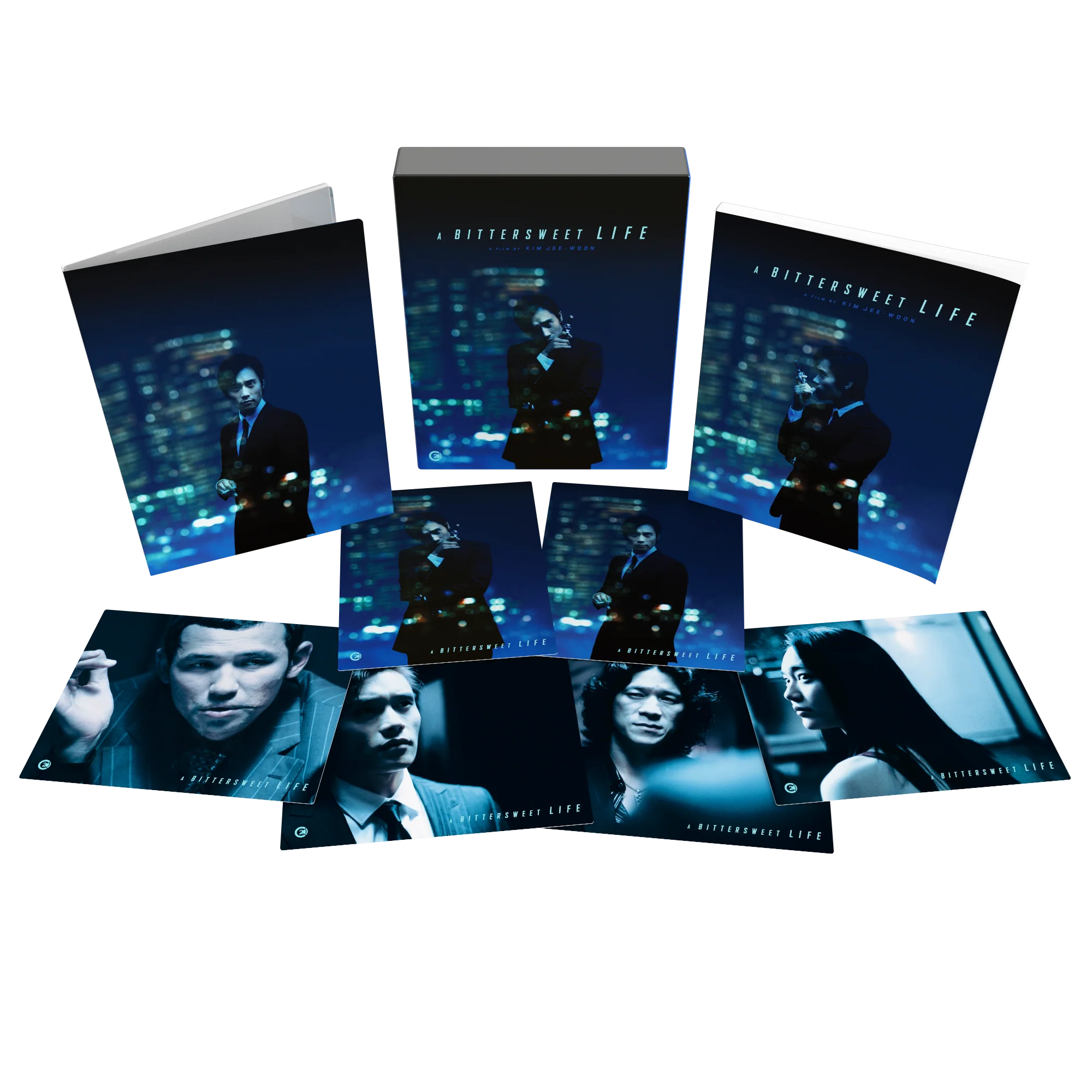
A Bittersweet Life - 4K UHD & Blu-Ray Review


I was still in my teens the first time I watched A Bittersweet Life, a time when I was expanding my movie watching beyond the realms of British and American film for the first time. I would walk into my local film shop and look through their world cinema section to see what new movie took my interest. I discovered a lot of amazing movies that way, and one that became one of my favourite films in both the gangster and revenge genres was 2005's A Bittersweet Life, directed by the renowned Kim Jee-woon. Despite having my DVD copy still on the shelf I jumped at the chance to watch it all over again with this new release, getting to experience this stunning film in a whole new way.

A Bittersweet Life tells the story of Sun-woo (Lee Byung-hun), a high-ranking mob enforcer who lives a decent, respectable life. Dressed in expensive suits, eating in fine restaurants, and doing everything his boss asks of him, he's the model gangster, even if his home life is that empty that he hasn't even unpacked the boxes in his apartment. When Sun-woo's boss leaves the city on an important business trip Sun-woo is given the important job of watching over his mistress, Hee-soo (Shin Min-ah), who he's worried might be having an affair with someone else.

Sun-woo spends time with Hee-soo, learns more bout her life, and even watches her at a music recital, where he is enthralled by her playing. He begins to develop feelings for the young woman, so when he catches her and her lover together he goes to perform his duty, attacking the man. However, when he takes out his phone to call his boss he can't bring himself to do it, swayed by Hee-soo's pleading. Having gone against his boss, however, puts Sun-woo directly in the crosshairs, and begins a brutal and bloody series of events.


The plot of A Bittersweet Life isn't the most surprising or original, and it's easy to predict early on where things are going to go. Someone tasked with guarding or watching someone they fall in love with and breaks the rules for is a classic story trope. Despite this, A Bittersweet Life never feels boring, and its sense of style, the quality of acting, and the beautiful presentation throughout make it an enthralling film.

Lee Byung-hun is the centre of the movie, and his performance is nothing short of stunning. When the film begins he's cold, detached, and stoic. It's hard to get any read off him, he keeps his cards close to his chest and presents a cool exterior that even other members of his crime family find hard to see through. However, as the film progresses we begin to see the humanity underneath. Despite his character not displaying much emotion you can see the moments where he's falling in love, you can see the subtle shift behind the eyes, the slightly lessening of the hard expression. Lee Byung-hun could easily play up these choices more, could make things more obvious, but it's the subtlety that makes him such a captivating watch.

The latter half of the film, when Sun-woo is turned on by his crime family, marks a stark shift in the almost beautiful tone of the first half. Where once we were watching a man with no real human connection learning to love and feel we see him pivot back into the violent, brutal enforcer that he used to be; albeit this time as a rogue agent out to survive and get revenge. Lee Byung-hun is frightening in these scenes, and the moment when Sun-woo quietly buttons up his suit jacket before heading to murder the people who betrayed him sends chills down the spine.

A Bittersweet Life is, as the name suggests a somewhat tragic movie. We watch Sun-woo come so close to discovering humanity, to understanding what love is, and it's brutally taken away from him. He's forced to become a brutal, even sadistic animal by a system that has shaped his entire life. And whilst you sit there watching it, urging him on to get his revenge, you can't help but feel like something beautiful has been lost. A Bittersweet Life is labelled as a ganger movie, a revenge film, and it's certainly those things, but it's also a tragedy, a film with way more heart and pathos that you first expect. Because of this, it's a movie that will appeal to so many different people. Those looking for a slick gangster movie will be happy, those wanting a brutal revenge film get that, and those who want to have an emotional rollercoaster that will leave you wanting to cry absolutely have that experience. 


The new release from Second Sight comes with both a Blu-ray version of the film, as well as a 4K UHD disc. The movie, as well as all of the extra features, are available on both formats, and the picture quality has never been better. Having watched the film on DVD before there was still a noticeable difference in quality here, and the HD version of the movie looks so much crisper and sharper. There is also a couple of audio commentaries available for the film with cast and crew, one with Director Kim Jee-woon, Director of Photography Kim Ji-y and Set Designer Yoo Seong-hee, and another with Director Kim Jee-woon and Actors Kim Young-chul and Lee Byung-hun, both of which goes into the making of the film in a ton of detail. A third commentary features Pierce Conran and James Marsh who discuss their experiences with the movie, its impact on them, and on the cinema landscape in broader terms, along with going into the careers of those involved. All three commentary tracks are informative and entertaining to listen to, and each brings something different to the table. 

Alongside the commentary tracks are archival featurettes that go into the music, sound, action, special effects, and other parts of the film that those who have had previous releases of the film will likely be familiar with. There are also a number of deleted and alternate scenes, which come with commentary too. A music video and trailers round out the rest of the on-disc extras. However, alongside this, the new release also comes with a number of new collectors art cards, and a slipcase featuring new art for the film; along with a 120 page booklet containing a number of new essays on the movie from experts in the field.  The new release is packed full of extra features and things to discover that new and returning fans will have hours of content to discover. 

It's a shame that A Bittersweet Life isn't more well known. Yes, it did exceptionally well outside of South Korea, and has a lot of international fans, but because it's a subtitled film it's still criminally overlooked by a lot of moviegoers. It deserves to be one of the most respected crime movies of all time, spoken about in the same conversation as The Godfather, Goodfellas, and Scarface. Hopefully, this new release will give more people a chance to discover this amazing piece of cinema. 


Support Amy on Patreon

Buy Amy A Coffee

Go to Amy's Blog

Wednesday, 17 July 2024

Thine Ears Shall Bleed - Film Review


Horror tends to be a genre that sticks to the present day for the most part. Horror writers often want to say something, and use horror as a way of highlighting issues in the world around them, just look at how many essays have been created about the evolving social commentary in the George A. Romero zombie films for an example of how a surface level simple horror can say so much more. As such, the only times you tend to get historical horror films is when a pre-existing work is being adapted, such as Dracula, and the works of Lovecraft and Poe. Truly original horror set in the distant past are a rarity; and often tend to be some of the more original horror films I've come across. Thine Ears Shall Bleed definitely falls into this category.

Thine Ears Shall Bleed introduces us to the Thatcher family, Reverend Ezekiel (Andrew Hovelson), his wife Sarah (Hannah Caball), his son Luke (Duke Huston), and daughter Abigail (Lea Zawada), who are travelling through the American West during the 1860's. Set within an isolated landscape, the family are travelling in their single wagon, looking for a place where they can establish a new church, one where Ezekiel can finally have his new organ, make sweet music, and spread the world of god to his new flock. The family reach a crossroads up in the mountain, and their choice of path leads them to a strange part of the forest, one with bizarre sounds in the distance.

When they lose their horses during their first night in the forest Ezekiel sets out to try and find them, following the strange noises. He eventually comes to a cliff edge, one that shows the full beauty and majesty of their surroundings. Assaulted by a noise so intense that is causes his ears to bleed, Ezekiel is convinced that he's heard the voice of God, and that this is where he is supposed to build his new church. As the family are blessed with miracles, such as Luke gaining his sight for the first time in his life, and terrors, such as the frightening visitations in the middle of the night, the family must decide if they are indeed being blessed by God, or haunted by a much darker force.


The plot of Thine Ears Shall Bleed is fiendishly simple, a small family trapped in a remote location with strange things happening to them. It's a very common story archetype yet Ben Bigelow, debut director and co-writer alongside William Bigelow, manages to inject enough originality to keep the film from feeling dull or unoriginal. The setting also helps a lot with this. As mentioned previously, it's rare to get horror in this time period and place, and the beautiful, remote locations used for filming are both gorgeous, and hauntingly isolated that even the daytime scenes with nothing overtly frightening happening leave a sense of unease within the viewer.

This is perhaps the best way to describe the horror that the film uses the most too, unease. There are moments of more overt horror, and even violence and gore to be found her, especially towards the final act of the film, but for the most part it's the rising tension that takes centre stage. The ever increasing manic belief that builds within Ezekiel, seeing him leaving his family to sit on the clifftop transcribing the 'word of God', forgoing cares like how they'll find food, or the injuries his children suffer puts you on edge as you begin to wonder when he'll finally snap. The madness that creeps over Ezekiel is hard to watch, as it's both part religious belief and part outside influence, and you begin to question where the line between madness and faith is drawn, and how little this force had to nudge him in order to push him over the edge. Hovelson is fantastic in the role, going from kindly father to madman so slowly that it's hard to pick out the point where it happened. He has an intensity about him that's surprising based on the early scenes, and it's great to see him play through a whole range during the film. 


The rest of the cast are decent too, with Caball doing a great job as the wife trying her hardest to keep her family together as the voice of reason. Her desperation feels genuine, and she seems to be the only sensible voice amongst all of them, the only one who does the smart thing of questioning the divinity of the bizarre events going on around them straight away. Lucas Near-Verbrugghe makes a surprise addition to the initial cast as a botanist stranded in the same twisting forest as the Thatcher family, and you have a hard time trying to figure out exactly who he is. His performance is very guarded, and you're not sure if he believes as Ezekiel does, whether he's agreeing with the man for fear of what Ezekiel's reaction would be otherwise, or if he sees the same 'miracles' around him. He shifts around a lot, being a figure of sympathy, interest, and worry more than once, and he plays the role well. He's an X factor thrown into the movie at the mid point that helps to keep the audience on their toes.

Thine Ears Shall Bleed has some interesting ideas, it tries some new things, and it doesn't feel beholden to the tropes and conventions of the genre. Much of the movie plays out in the bright daylight, in the beauty of nature, it plays around with time and space and becomes almost dream-like at times, and at times it doesn't even feel like a horror film. There are some fantastic moments where you feel like the rug has been pulled out from under you as you figure out what's really going on, and you become so engrossed in the mystery and the story of the Thatcher family that you want to keep watching. The performances are very strong, particularly from a largely unknown cast.

As someone who loves seeing horror stories in less common settings, particularly historical ones, Thine Ears Shall Bleed felt like an absolute treat. In a world of slasher movies and modern day haunted house films it's fantastic to find something that stands out like this, that isn't afraid to try something new and to be bold in its difference. I hope we see more films like this. 


Support Amy on Patreon

Buy Amy A Coffee

Go to Amy's Blog

Tuesday, 16 July 2024

Bury Your Gays by Chuck Tingle - Book Review


'Misha is a jaded scriptwriter who has been working in Hollywood for years, and has just been nominated for his first Oscar. But when he's pressured by his producers to kill off a gay character in the upcoming season finale―"for the algorithm"―Misha discovers that it's not that simple. As he is haunted by his past, and past mistakes, Misha must risk everything to find a way to do what's right―before it's too late.'

The phrase Bury Your Gays will mean a lot to people who spend some time learning about media, especially for the queer community. A writing trope that began thanks to the Hays Code and their mandate that all forms of homosexuality must be portrayed as evil, and those who engage in it must be punished, fiction has become filled with examples of queer characters being killed off. Even today, with very different approaches to queer representation, where you can find mainstream film, television, and other entertainment that puts queer characters and their stories at the forefront you still often find numerous examples of queer love and life being seen not only as expendable, but needing of punishment. As such, a book by a notable queer author, who has engaged in parody, pornography, and the profound across their career certainly makes you pay attention. 

Bury Your Gays is the latest book from Chuck Tingle that leaves the more humorous side of his writing behind, engaging in 'serious' writing. It tells the story of Misha, a writer who has managed to make it big in the world of LA film and television, having created a number of hit horror films, and being the lead writer of a popular television series. He's even in consideration for an Oscar for a short film he made. His star is very much on the rise, and he's a voice that the studio he works for wants to keep; as such, he's somewhat taken aback when he's called in for a meeting with the head of the studio and is told that he needs to remove the kiss in the season finale. Not only is Misha angry that he's being told what direction to take his story, but he's outraged because the lesbian love story he has spent years building to is about to be cut down. He's presented with two choices, make them straight, or out them and kill them. 

As any good writer who has a clear vision of their story and the nerve to stick to their convictions would do Misha tells the studio to go to hell, refusing to bury his queer characters. Knowing that he could face serious legal action for this due to a breach of contract, Misha has a week to either do what the studio wants, or to hold true to his heart. However, his week is not filled with opportunities to think deep on the issue or to try to write his way out of the problem, as strange events begin to happen to Misha. When people dressed as some of the monsters he's created in the past start to show up in his everyday life, tormenting him and making threats, Misha's already frayed emotional state gets worse, leading to him being smeared in the tabloids as an unstable writer. But when things become harder to explain away, when more bizarre and horrific things start happening, Misha must face up to a truly terrifying realisation, his monsters are real, and they're coming for him.  

Bury Your Gays is a number of different books rolled into one. It's a horror story about a man being chased by some truly twisted monsters, creatures that are out to kill him in terrible ways and aren't afraid of hurting others to do so. It's also a critique about queer erasure in media and how outdated values and misconceptions are still held in place by those in power in the quest for wealth. It's a story about trauma, how it shapes you as a person and how that can be transformed into art. It's about rainbow capitalism and how false support and empty representation can be meaningless. And it's a warning about AI being used in creative fields in order to replace writers and artists to cut costs and further maximise profits. All of this, wrapped up in a story about a man having to deal with his past traumas, his feelings of self doubt about being openly queer, and his desire to help others in similar situations. 

This all sounds like a lot, and it is a lot to fit into one book, especially one that's only 350 pages, and you'd expect it to feel messy and bloated, yet Tingle manages to not only make it all work, but to make it work wonderfully. Bury Your Gays is an incredibly easy read, despite the often heavy subject matter because first and foremost you're made to care about Misha. One of the ways in which Tingle does this is with a number of flashbacks to key points in his life, moments of trauma that shaped who he is today. We see him learning to understand his queerness, in a time and a community where it was unacceptable. We see how these moments caused him pain that would ripple on for decades to come. This pain not only becomes the seeds of his creativity, with creations from his career tying directly back into these moments, but it also shows why he's afraid to live openly.

These are moments that I think most queer people will recognise. There are numerous moments from my life that stick out in my mind, moments tied to having to deal with homophobia and transphobia, long before I became an openly queer trans woman. They left a mark on me because it was people around me telling me that those feelings I had were wrong, that I shouldn't talk about them, that they were something that I should feel ashamed about. It kept me in the closet for a long, long time, and I recognised a lot of that struggle and pain in Misha. It's uncomfortable, and these scenes are often more horrific than those with monsters and ghosts in them, but that's because it's true, and it's tied to a lot of real trauma. I think with Chuck Tingle having become famous for books such as My Pool Gets Me Wet in a Completely Platonic Way and Now We Are Close Friends, and This Handsome Sentient Bowling Pin Splits My Ass Also He Is A Ghost you can easily come to think of him as a writer who can only do comedy, but these scenes prove that he's more than got the skill to deliver heartfelt, hard hitting scenes too.

There's a lot more that I could say about Bury Your Gays, a lot more story and characters that I can talk about for a lot longer than I already have, but doing so would spoil a great deal of the book. Bury You Gays is a twisting narrative filled with surprises, so it needs to be experienced yourself, and as such I won't say much more about it other than if you love queer fiction, biting commentary, pop culture references, and horror, then this is absolutely a book for you. Don't miss out.


Support Amy on Patreon

Buy Amy A Coffee

Go to Amy's Blog

Monday, 15 July 2024

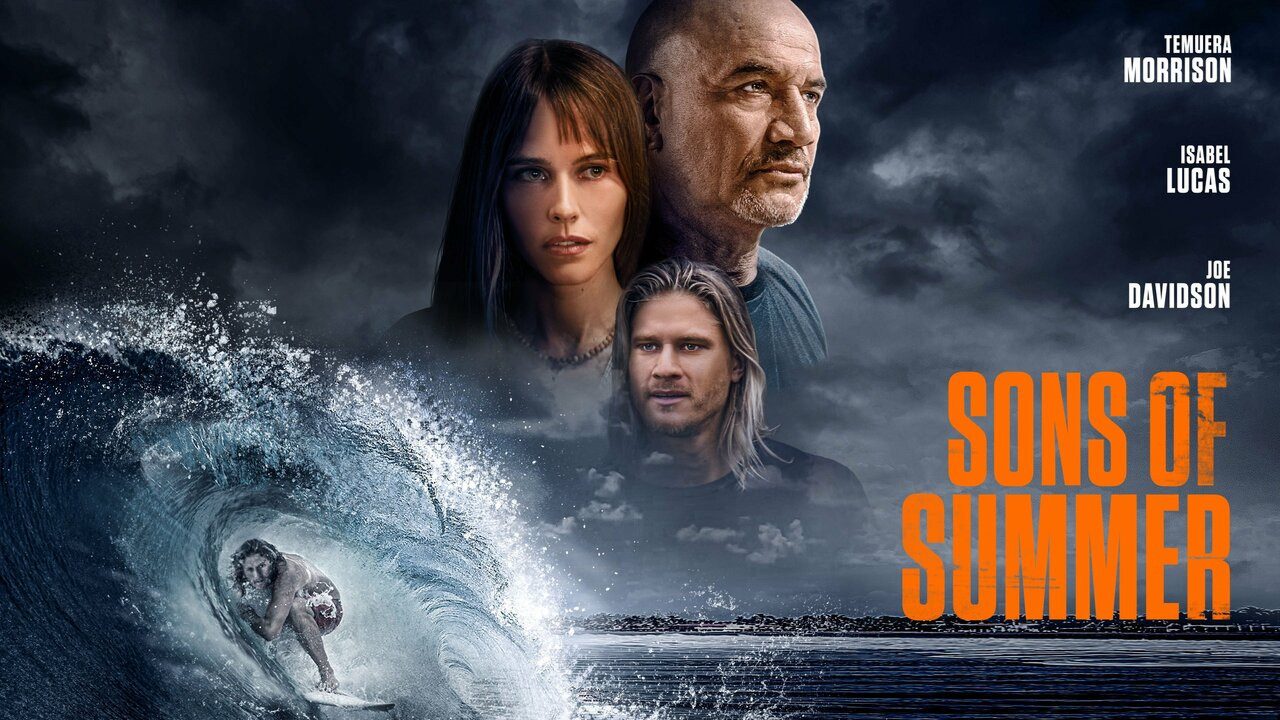
Sons of Summer - Film Review


Sons of Summer appealed to me for one reason, and one reason only, Temuera Morrison. I'm a Star Wars fan, so of course I'm going to be interested in the actor who has played numerous characters in the franchise that I adore. However, not even my love of the iconic bounty hunter could keep me entertained throughout this oddly disjointed movie.

Sean (Joe Davidson) is a surfer dude with a troubled past. His father was murdered thirty years ago, leaving a young Sean to grow up in the care system, and he's got a history of theft and petty crime. Despite this, he's trying to put his life on the right track with his new girlfriend Katie (Isabel Lucas). He's even planning to go on a surfing road trip with a group of his friends, whose fathers were all surfer buddies with his own dad. They'll be visiting all of the spots where their fathers used to surf as a tribute trip to Sean's father.

However, Sean just can't stay away from his past, as a criminal acquaintance of his, Rick (Alex Fleri), needs some help paying off a debt to Sean's surrogate father figure Pete (Steve Nation). Rick has a plan to steal a shipment of drugs from a local gangster, Dom (Christopher Pate), that will pay off his debt in full and leave some extra cash too. With Pete backing the idea, Sean agrees to sneak into Dom's house during a party and steal a car filled with drugs. However, when Dom sends his enforcer, Frank (Temuera Morrison) after the thieves it puts Sean and everyone he cares about in the crosshairs. 


Sons of Summer feels like it's trying to be two movies, one is supposed to be a heart warming movie about friends reconnecting, celebrating a father's memory, and doing some cool surfing. The other is a crime thriller filled with murder and violence. It's absolutely possible to marry two stories like this and for them to be successful, but Sons of Summer doesn't really manage that. The tones between the two stories are very different, and they can sometimes clash, such as when Frank is brutally murdering someone one minute, and the then we cut to two minutes of surfing footage and upbeat music. 

It also doesn't help that the script feels pretty lacklustre in a a lot of ways too. The plot is fairly standard, and feels more like the writer is ticking off a series of points that they want to hit that they feel are expected, rather than trying anything particularly new. The dialogue is somewhat stilted and unnatural at times, with some very clunky exposition drops and shifts in emotion that don't always work, and the delivery of this is made even worse by a cast that feel a little out of their depth. The most competent member of the cast is absolutely Morrison, yet he's still playing the arch, stereotypical henchman character, so even though he's the best in the movie he doesn't exactly shine as his is a role that's not designed to be the focus or heart of the film. 


There are also some leaps in logic that even after thinking about it after the fact I just can't really figure out. For example, Katie happens to be at the party that's going on when Sean steals the drug shipment. She's not in on it, it's just a coincidence. However, Frank finds security footage of her acting a bit odd at the party and comes to the conclusion that she's connected to the thief. Well, she is, and he's right about that, but the reason for her acting strange that way is never explained in the moment. Katie doesn't know that that's Sean stealing a car, so why is she acting odd in the moment. It's a complete random chance that this happens and puts Frank onto the right trail to go on his violent mission and it feels like the writers knew they needed to get Frank onto this thread but didn't really know how to do it. It's these kind of unexplained leaps in logic that really lets the movie down in a lot of ways, and it's clear the best way to really enjoy the movie is to never actually think about what's happening on screen.

Those coming to Sons of Summer for a fun surfer movie about friends reconnecting will likely be upset by the ganger story that takes over, those coming for a crime thriller will get bored during the several minutes of surfing montage, and those hoping to see Temuera Morrison kicking some arse and being a bit Boba Fett will likely regret taking that risk. Sons of Summer is definitely for someone, but I'm not really sure who.


Support Amy on Patreon

Buy Amy A Coffee

Go to Amy's Blog