Thursday, 11 July 2024

Herald of Ruin: The Sanford Files by Tim Pratt - Book Review


'The enigmatic Carl Sanford is the master of all things occult in Arkham, until a charismatic newcomer threatens to take everything away from him in this dark mystery set in the world of Arkham Horror.

'Carl Sanford's mastery of the Silver Twilight Lodge gives him unbridled power and influence, but unforeseen turmoil is coming to Arkham... A new occult curiosity shop in the city, opened by newcomer Randall Tillinghast, draws Sanford's ire, challenging his formerly unrivalled authority. Sanford expects to crush the newcomer like an ant and take what he wants from the wreckage, but Randall Tillinghast isn’t quite as humble and harmless as he seems. In possession of an array of magical artifacts, Tillinghast begins to subvert Sanford’s reputation in more ways than one, forcing Carl Sanford to call all the monsters and magic at his disposal to stop him. Will it be enough?'

Last year I read The Ravening Deep by Tim Pratt and found it to be one of the most engaging and entertaining books in the Arkham Horror series, with some great characters, superb world building, and a plot that kept me hooked throughout. I was surprised to find out that the book wasn't a stand-alone adventure, however, as Herald of Ruin sees the return of several of the characters that made the previous entry in the series such a delight. Whilst this return was a surprise, it was a thoroughly pleasant one.

One of the biggest changes is that this time round one of the antagonistic figures from the first book, Carl Sanford, who became something of an unwilling ally to our protagonists, steps into a lead role; forcing the audience to have to fully embrace the moral greys that make Arkham its home as you begin to root for a character you really shouldn't.

Carl Sanford runs the Silver Twilight Lodge, a secret society that makes Arkham its home, and whose study into the occult and the mystical can be considered dangerous at best, or downright evil at worst. Sanford is a man who is used to power, both in the world of men and in the world of the occult, and uses his position to gather as much as he can. As such, when a new occult book shop opens in the city it adds a wrinkle into Sanford's carefully crafted world. The shop owner, Randall Tillinghast, gives one of Sanford's followers an item that Sanford has always wanted it begins to form cracks in his carefully created kingdom. 

It's easy to paint certain characters as truly bad, especially in works of horror where people tend to fall onto one side or another in moral alignment. Carl Sanford would absolutely be evil in the hands of a lesser writer, a character who would be almost cartoonish in his quest for power and dominance. However, Pratt has managed to craft a surprisingly layered character here, one who you absolutely wouldn't trust, but one that you can enjoy spending some time with. The same can be said for another returning character, Ruby, who was on the opposite side of Sanford for much of the first book in the series. A thief by trade, Ruby has come to work for Sanford, despite knowing what kind of person he is, both for the thrill of the work and the obscene amount of money that she can make working for him.

Whilst the book spends a great deal of time making you cheer Sanford on, much to your own surprise, you also start to lose some respect for Ruby, and she does some stuff during the book that makes you wonder just how many of her morals she's going to have to go against whilst on this path. It's an interesting journey to go on, seeing a villain from the last book become your protagonist, whilst one of your previous protagonists starts to lose her way more and more. Despite this, it's still great to see both characters return, and they make for some truly enjoyable additions to the Arkham Horror universe, and now that we've had one sequel I hope that this leads to more books featuring the two of them.

Much like the first book, the Silver Twilight Lodge is a great excuse to explore some fun parts of the universe, and there are a ton of tiny easter eggs and lore nuggets scattered throughout the book that grab your interest. Thanks to Sanford being a voracious collector there are a number of times throughout the book where you learn a little about the things he has in his private collection that could be the star McGuffin of its own story and you find yourself wanting to learn more about them. It's not just Sanford who brings this wealth of lore with him, however, as Tillinghast's shop is a plethora of cool items and interesting books that make this feel like a bit of a cameo-fest in the best possible way.

Pratt doesn't just fill the pages with these small treats and hints at bigger things though, as he also crafts a wonderfully enjoyable narrative. The story has twists and turns, surprises, betrayals, and plots that feel like they'd be at home in a gangster story as much as they do here. Sanford almost operates in a world of organised crime, just with dark magic, and Pratt really seems to know how to convey this on the page. You get small mentions of things early on in the book that come to matter in big ways later on, and expected tropes get subverted in surprising ways. 

Fans of the Arkham Horror game series will get a lot out of this entry in the novel series, but it will absolutely appeal to non-gamers too. The story works well as a stand-alone too, and knowledge of the previous novel isn't vital to enjoy this one, meaning that anyone with a passing interest will be able to pick it up and have a brilliant time with it. Hopefully this won't be the last time that Tim Pratt gets to play in this universe, as he brings some fantastic things to the table when he does.


Support Amy on Patreon

Buy Amy A Coffee

Go to Amy's Blog

Wednesday, 10 July 2024

Scarred by Jon Richter - Book Review


'Scarred is an epic fantasy story set in a mist-shrouded and desolate world. The denizens of the Enclave are trapped inside their crumbling city, tormented by the terrible plague that swirls within the fog beyond its walls, utterly reliant upon the kindness of their inscrutable god for survival. But when their deity's mysterious, food-bearing emissaries cease to appear, the Enclave threatens to descend into chaos and starvation. 

'Now Freya, a brave but lowly servant, must journey across the barren landscape in search of salvation for her people. Her adventure will bring her face to face with courageous knights, terrifying dragons, monstrous giants and enigmatic wizards, and ultimately with her god himself. But nothing will prepare Freya for the truth about her scarred world - or for the shocking revelations unearthed from her own past. Evoking classic quest sagas such as The Wizard of Oz and Stephen King's Dark Tower series, with a dash of Kazuo Ichiguro's The Buried Giant and Hugh Howey's Wool, Scarred balances stirring prose with a fast pace and gripping narrative.'

Jon Richter is an author I kind of found by chance, having been invited to take part in a blog tour for one of his horror anthologies, John Richter's Disturbing Works Volume Two, back in 2020. Since then I've read several of his books, and have been impressed with his ability to turn to any genre he sets his hand to with great skill. I've read horror, science fiction, and murder mystery written by him, but Scarred presented the first time that I'd be reading a fantasy book he'd written; and I was very much looking forward to seeing what he did with the genre. And of course, as with his other works, it wasn't at all what I expected.

Scarred begins within the walls of the Enclave, a small settlement hidden behind thick walls, hiding away from the horrors and the monsters that exist out in the ever present fog that surrounds their home. Killing any who approach for fear that they might contain the deadly plague that sees those infected wither away, weakened and aged, they rely on the help of the Angels to stay alive; huge, armour clad figures who bring regular deliveries of food to the citizens. The best of these supplies goes to the highest in society, the lords, knights, and priests who keep the Enclave together. Freya is a servant to these powerful lords, living within the castle, feeding those who squander the precious supplies, forced to eat scraps to survive. 

When a murder is committed, Freya's life is forever changed as she's implicated in a wider conspiracy by those who wish to keep a tight hold on their power. As this happened at the same time that their deliveries of food stopped, it's decided that Freya can choose her punishment, tortured to death within the castle, or venture out into the disease filled fog to find answers. Choosing to leave the only home that she's ever known, Freya sets out into the deadly and dangerous wastelands beyond the walls of the enclave, hoping to survive against all odds. 

To call Scarred a fantasy story would be simple, because the book contains a number of surprising other genres, the foremost of which being horror. Richter is great at evoking disgust and disquiet in his writing, and both are very present here, especially in the early parts of the book. The description of the waste pit deep within the castle are stomach turning, and the torture that happens to those that step out of line is genuinely horrifying. Despite having been told that there are numerous horrors out in the fog it's clear that horror is everywhere in this world, that the cruel and sadistic are the ones who ultimately thrive here, and that Freya will find little escape from this in her journey.

However, Freya doesn't have to face the horror and wonder of the world beyond the Enclave walls alone, because as with any good fantasy adventure, she finds companions along the way. Whilst Freya is something of a blank slate in a lot of ways, thanks to the mysterious element of memory loss that seems to hang over many, the others that she meets along the way are all vibrant and unique. Errick, the ageing and infected knight who puts honour and duty first is a wonderful addition of kindness in Freya's world of cruelty and despair that goes on to change her heart in a lot of ways and helps her to become a better person, and is one of the best characters in the book. Victor, a character that I can't really talk about too much without spoiling a huge surprise element of the book, is a wonderful character, one who makes the core trio of characters complete.

There are other people that Freya meets along the way, some kind, some cruel, who fill this at first empty world with character and history in ways that you don't expect. The world that Richter has crafted here is an interesting one, one that you come away from the book wanting to learn more about and wish that you could spend more time in. There are wonders and horrors everywhere, and each location we visit feels like it has a ton of stories that it could tell. I really hope that this is a world that Richter returns to one day, perhaps with another anthology, this time focusing on all of the stories that shaped this world into what we find here. 

As I said, I've come to really enjoy Jon Richter's work over the last couple of years, and am delighted whenever I'm offered the chance to read another of his books. And every time I read one of his book I think to myself 'well, this is definitely the best one so far'. At the moment, Scarred is sitting on the top, but I expect that whatever Richter creates next will take over, as this is an author whose work I find hard to do anything less than love. 


Support Amy on Patreon

Buy Amy A Coffee

Go to Amy's Blog

Tuesday, 9 July 2024

Don Coppola by Amazing Ameziane - Graphic Novel Review


'Following the story of the man behind the movie, Don Coppola shows the insight behind the critically acclaimed director Francis Ford Coppola and takes a look at both the impact of his movies and his life from a cinematic narrative. Created and illustrated by Amazing Ameziane, Don Coppola is the second instalment in the author’s Cine Trilogy, illustrating the behind-the-scenes stories of some of Hollywood’s biggest hits.'

There are certain films that everyone has heard about, and that a lot of people have heard the praises of, even if they've never seen them. The Godfather trilogy falls into this category. I don't know when I first heard about the movies, but I remember being ready to watch them and having been told repeatedly that they're some of the best films ever made. My partner has never seen them, but every time we mention about needing to watch them together at some point she's super excited for it because she's heard that they're amazing. And this kind of hype is pretty well earned, as they are indeed some of the best films put to screen, and deserve all the accolades that they get. 

Amazing Ameziane began their Cine Trilogy, a set of three graphic novel biographies focused on great filmmakers, with Quentin Tarantino, a figure whose films can sometimes be divisive, but who most people will have at least one film of his in their list of great movies. Even before it was announced who else would be featured in this series it felt like something of a forgone conclusion that Francis Ford Coppola would have to be a part of it. Whilst I love Tarantino's films I'd put them on a different level to The Godfather and it's sequels. So it is perhaps fitting that Coppola goes second in this series, so that much like his iconic movies we can say that perhaps the sequel outshines the original.

The first book in the series, Quentin by Tarantino, uses some trickery and stylistic choices to tell its story, with an older Tarantino talking to his younger self at points, and an introduction with the titular director working as a barman telling stories about a strange bottle of alcohol. It fit the tone because it's the kind of unusual filmmaking that Tarantino is known for. Here, however, things take on a little bit more of a traditional structure, as the book follows Coppola through his life in chronological order, with little to no subversion or surprise taking place; and for me I think the book works better for it. 

We get some insight into the directors early life, including some interesting details about his family and their connection to cinema and performance, with his grandfather having played an important part in the development of films behind the scenes. After a childhood bout of Polio, the young Coppola began exploring his creativity, and soon decided that filmmaking would be the way that he could bring his stories into the world. It's amazing to see how he started his journey, with cheaply produced movies with scantily clad women that feel very far removed from what I picture when thinking of him. The dive into his early career proves to be really interesting, and the connections he had with other well known figures in the industry came as a surprise to me.

It's somewhat inspiring to see such a world renowned and well respected creator having ups and downs in his career, making mistakes and having to fight against a system that seemed to be against his way of doing things. Studio executives not buying into the vision and fighting a creator the entire time is something of a trope in fiction, but it seems to have become one because it's just the way that things have played out for so many others. Coppola isn't the only person to receive that treatment in this book, with even the legendary George Lucas having had the same, and it really does show that sometimes greatness can not just be overlooked, but people can fail to respect it at all until it's directly profiting them. 

A large bulk of the book deals with the making of the first two films in The Godfather series, and is likely one of the main draws to the book for many readers. These are the films that Coppola is best known for, the films that won him multiple awards and made him world famous, so of course we'd spend a great deal of time on them. The behind the scenes stories and small facts that Amazing Ameziane has managed to bring together for this book are fantastic, and you find yourself getting sucked into the making of the movie and wanting to learn every tiny detail about it. By the time the book moves on to other stages in Coppola's life you end up feeling a little disanointed because you were enjoying it so much. Thankfully, there's another epic saga he was involved in that we get to dive into after that.

Apocalypse Now is a film that you've likely heard a bad thing or two about; not the film itself, but the way the cast and crew talk about how it was made. For a film that's telling you war is hell it seems like making a film about war being hell is also hell, as the stories that we're told here are nothing short of astonishing. Military engagements with rebel forces in the same jungle as the shoot, actors being rushed to hospital, boats sinking, cast being drunk and on drugs, typhoons hitting and destroying sets, and recasts mid shoot seem to be the norm for Apocalypse Now, and it's a wonder that Coppola didn't go mad making it, let alone came out of the process with one of the most celebrated war movies ever made. Plus the most respected adaptation of Heart of Darkness too.

Things wrap up with some small segments of on both The Godfather III, and Dracula (the second of which I wanted to have much more on if I'm honest as I really do love the book) and some final thoughts from the director on the state of modern Hollywood that feel a little bit hypocritical in places (hating movies that adapt pre-existing material for example), but I also think Coppola has earned a bit of a right to be a grouchy older filmmaker who doesn't like what's being made today. 

I find it hard to describe the two books that Amazing Ameziane has put together here. They're graphic novels, absolutely, but they're not really what you think of when hear that. They're part comic, part prose, with entire pages of text sometimes present, whilst others rely on pure visuals to tell the story. The book blends a regular biography with the comic book medium to create something that feels really unique to this experience. It also helps that Amazing Ameziane produces some really interesting pieces of art. There are pages where we have some fairly standard talking heads, with Coppola addressing the audience directly, whilst others will have images recreated from his films, often incorporated into the silhouette of the director, or merging into the real world in some way. 

Ameziane isn't just trying to tell a story here, but seems to be crafting an experience. The early stages of Coppola's life are presented in black and white until we reach The Godfather as some artistic way of showing it wasn't until that point that Coppola had really made it as a director, and that his career had taken off. The art choices help to inform the story, and whilst things aren't too interpretive or weird in their presentation as Ameziane is telling a real story there's still a lot of thought and time gone into how to showcase that in interesting ways. 

I enjoy biographies and history books, I have a love for learning things, especially when its in areas that interest me. And whilst I love The Godfather trilogy they and Dracula are the only films from Coppola's catalogue that I've ever seen so I wouldn't call myself a big fan of his work by any means. He's not a person I'd go out of my way to learn more about. So I was pleasantly surprised with how invested in this story I got. I loved all of the little stories and details that filled the pages, and could have read a book twice as long to get more of them. I also came away really wanting to watch The Godfather films over again, whilst also knowing that I need to watch Apocalypse Now, a film I've never seen. And I think that's a perfect experience to have with a book like this, one that makes you want to learn more, that gives you a new appreciation for the person being talked about, and one that makes you want to go and watch some great movies.


Support Amy on Patreon

Buy Amy A Coffee

Go to Amy's Blog

Monday, 8 July 2024

Cash Out - Film Review


Sometimes it's more fun to root for the villains than it is the heroes. John Travolta headlines the cast of Cash Out, a new heist movie where things go wrong for a group of con-men and robbers when they get caught inside a carefully laid trap.

Cash Out begins with Travolta, playing the kindly criminal Mason Goddard, flying into a private jet sale along with his beautiful 'wife' Amy (Kristin Davis) on their own private plane, sipping champagne and living the high life. However, the two of them are not part of the one percent as their host believes, and they manage to talk their way into being shown their hosts private car collection. With the help of their support team, they're able to steal some hugely valuable vehicles and make a daring getaway. However, it turns out the FBI are waiting for them, and that they knew about the job because Amy is an undercover agent. Whilst the group are able to escape, the damage has been done as Amy's betrayal breaks Mason's heart after their two year romance.

Jumping forward a few months, Mason is approached by his brother Shawn (Lukas Haas), who has a plan to rob a Miami bank. Mason tells him to forget the job, but when he gets a call from another of the crew he realises his younger brother has gone ahead with things. Rushing to the bank to try and stop his crew from making a mistake, Mason and the others are forced to take everyone hostage when Shawn messes things up. Now, trapped inside the bank, they have to figure out a way to escape whilst dealing with the FBI negotiator, Amy.


There's a degree of charm to Cash Out that keeps the movie from being bad, and it's chiefly down to the interactions between its main leads Travolta and Davis. The two of them have an easy energy, a casual way of talking to each other that makes it feel like there's an established relationship between them, and you can buy that they were together for two years. The way that they slip into easy conversation despite the circumstances of the situation is almost comedic, but the film never veers into full comedy territory with it, and instead it ends up bringing a small smile to your face. This same charm follows Travolta throughout the movie in the way that he bonds with the other members of his team, as well as how he deals with the hostages. 

The downside to this easy energy is that the film often feels like it lacks any real punch. Travolta is sometimes a bit too relaxed, and almost feels like he's phoning it in at times. There's a point in the movie where he has to run down an escaped hostage to prevent them getting out of the bank and ruining everything and he never goes beyond a mild jog. Considering that losing this key hostage would potentially lead to either prison time or being shot by law enforcement you'd think he'd be running as fast as he could, but instead Mason looks like he's jogging to catch the bus rather than running for his life. 


This is something that happens elsewhere in the movie, this feeling of lack of any real tension. Things escalate towards the end of the film, with a twist in the tale that takes things from a simple bank robbery into a more dangerous territory, and we're told that the crew's lives are in more danger than ever before. But I never really felt it. We're told that it's life or death, but the film didn't really show that. Now, this does mean that Cash Out makes for some pretty easy viewing, it's low stakes and low violence for much of the time, but it also means that you never feel that the main cast are in any degree of danger, and that does neuter the film a little.

There's also a heavy use of drone filming present throughout the movie that's used to such a degree that it does feel like the filmmakers had a new toy and were desperate to use it. There's a sequence where police cars are arriving outside the bank, cops getting out the vehicles and taking up position, and the camera is flying from one car to the other, briefly zooming in on the cops, then flying off to the next vehicle. It's pretty disorienting, with the camera moving a little too fast and things looking just off enough that the main feeling in the scene was a sense of nausea. The already mentioned scene where Mason ahs to run to stop a hostage also uses some drone photography, with the camera flying around a large office space indoors that was incredibly jarring and disorienting in the moment too. Drones have opened up filmmaking in a lot of great ways, but their use here feels more like a gimmick than anything else.

Despite these flaws, the film proves to be entertaining enough for its relative short runtime, and there's nothing overtly wrong or egregiously bad to be found here. It's enjoyable, there are some cute moments with the cast, but there's nothing particularly exciting either. It's a decent film that I'm happy to watch the once, but not one that I'd be rushing back to watch again. 


Support Amy on Patreon

Buy Amy A Coffee

Go to Amy's Blog

The Shadow on the Glass by Jonathan L Howard - Book Review


'When two spiritist swindlers accidentally summon something horrific from beyond the stars, they must thwart a sinister time-spanning plot, in this first Victorian-era gaslight fantasy set in the world of Chaosium’s Call of Cthulhu. London, 1891. 

'Elizabeth Whittle and William Grant enjoy scalping London’s bourgeoise, taking on the persona of grand spiritist Cerulia Trent and her agent to connect the living and the dead. When a detective arrives, sniffing out fraud with a scientifically minded spiritualist society, the duo decides to take one last job before escaping to the continent. However, their final séance ends horrifically… and soon Lizzie isn’t Lizzie anymore. William, desperate to banish whatever monster they summoned, is soon embroiled in an electrifying eldritch mystery where he makes a deal with the devil to save his friend and stop an even greater evil from transforming the known world.'

I have a very soft spot for Victorian era fiction, especially when it involves horror or the unusual, and as such finding out that the Arkham Horror series was going to be branching out into this era made The Shadow on the Glass a book that I was absolutely going to read. 

The Shadow on the Glass takes readers to Victorian London, where we meet a pair of con-artists, William Grant and Elizabeth Whittle, who are taking advantage of the rise of spiritualism in Britain at the time to make some quick cash off of some gullible rich folks who want to contact the spirit world. With Elizabeth posing as the medium Cerulia Trent, the two of them think that they might have pushed things a little too far and need to leave the country and lay low. However, before leaving, they decide to do one last job, targeting Sir Donovan Clay, a wealthy businessman who's just returned to England from Australia, and is looking to contact his late wife.

The two con-artists put on their usual show, pretending to contact the spirit world; but when the ritual takes a strange turn it leave Elizabeth changed. Now it seems like the world of the paranormal the two of them were mocking, that they didn't believe in, has come calling, and it's ready to make the two of them pay a heavy price.

Jonathan L Howard has some experience writing in this field, having received acclaim for his Johannes Cabal series, which featured the supernatural, dark entities, and con-men. Having not read his other series, I can't say how similar the those are to this, but from my understanding it fits well within the tone of this book, including the small sprinkles of humour scattered throughout. Howard seems able to walk this wonderfully fine line between horror and humour, with a ton of great characters and interesting lore building thrown in. Just from what I read here, his work reminds me a little of one of my favourite authors, Derek Landy, who does this with younger readers in mind, but also manages to capture this kind of flavour well.

Whilst there is humour in the book this doesn't mean that this a comedy by any means, and the narrative is still very much dictated by horror with some truly spooky moments that will cause you to shudder. The dark, gaslit streets of Victorian London make for a perfect setting for the kind of horror that Howard does here, and it's also a perfect marriage for the Lovecraftian horror that the Arkham Horror series is beloved for. It's such a good fit that my mind often thinks that this is the kind of era that most of Lovecraft's stories, and the subsequent fiction that draws upon them, are set in. I often have to remind myself that it takes place decades later, but this time round I didn't have to do that, and I loved the experience. Much like the recent exploration into the Regency era for the series with Secrets & Sacrifices it seems that taking the elements of the Arkham Horror series and putting them in new locations leads to some of the more interesting and original feeling books in the range. 

For those that enjoy the Arkham Horror books but are looking for a different take on things, or who might be finding the same setting as usual a bit stale, The Shadow on the Glass makes for a wonderful refresh, a grate palate cleanser that offers something new that can reinvigorate your enjoyment of the franchise. The things that you like about these stories, the questionable characters, the evil cults, ancient gods, and unknowable horrors, are all here, and so long time fans will very much feel at home.


Support Amy on Patreon

Buy Amy A Coffee

Go to Amy's Blog

Sunday, 7 July 2024

Weekly Comic Review - 3rd July 2024


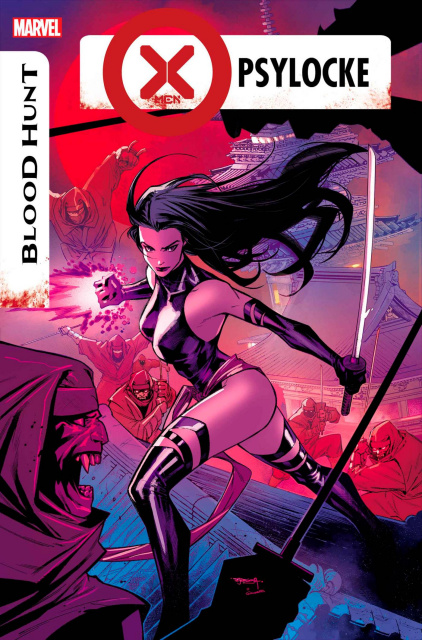
I take a look at a selection of this weeks comic releases. This week I read and review Absolute Power, X-Men: Blood Hunt - Psyclocke, Birds of Prey, and more!


Absolute Power #1

Writer: Mark Waid, Artist: Dan Mora, Colourist: 
Alejandro Sánchez, Letterer: Ariana Maher

Absolute Power has been building for a while now, slowly taking shape across multiple titles such as Batman, Green Arrow and Suicide Squad: Dream Team to name but a few. But after months of preparing it seems that Amanda Waller has finally decided to make her move. Using AI generated imagery and video, she's flooded the internet and news media with reports of the super hero community turning on the world, with the heroes now performing random acts of destruction, resulting in the deaths of many, apparently. Despite this being fake, the worlds citizens have bought into it, resulting in incidents like Animal Man and his daughter being attacked by a mob, Black Lightning and his family being put in the hospital, and the Doom Patrol having their home burned to the ground. As the heroes try to desperately react to this Waller launches the next stage of her plan, a series of Amazo robot, boosted by Brainiac Queen tech, that rob the heroes of their powers and abilities. With their powers gone or weakened, the heroes fall victim one by one, including Superman, who is shot through the chest. The world is burning, the heroes are dying, and all hope seems lost.

Absolute Power hits the ground running and does not stop for the entirety of the issue. Part of this is likely because this event is only three issues long (sort of), and so can't waste time on the smaller things. Of course, the build-up to this has been happening for a while over multiple issues, and there are a number of tie-in issues that will fill things out over the next three issues of the main title, so it's not really a three issue event; but it still feels like it's acting as one and there's not a second to breathe during the first issue. And I kind of like it. The dominos Waller has set up are falling hard and fast, and the heroes have little to no time to react before the next awful thing happens, so being on the ground with them, seeing it happen that fast, certainly adds to the tension. That being said, it's not completely perfect, as we've not really been given a full explanation as to how it's all happening, specifically in terms of the magic users. The book claims that that knowledge to access magic has been blocked or removed from the minds of magic users, but that somehow kicks the Spectre out of Jim Corrigan, meaning Waller literally beat the spirit of God's vengeance, as in THE God. Feels a bit much to me.

Of course, these are wrinkles that we may see ironed out over the coming issues as we learn more about how everything here works. As it stands though, the first issue works pretty well, even if the final page is a horrific gut-punch that you may have already seen spoiled all over social media (I loved seeing that before I even got a chance to read the book). One of the biggest draws to the title is Dan Mora, who's providing the artwork. Mora is easily one of the best artists in comics right now, and getting to see him draw not just a bunch of new characters, but some beloved icons, is a blast. We kind of get a small bit of Dan Mora doing the JLI this issue, as well as members of the Justice Society, and the Doom Patrol, which is always an absolute treat to see. ⭐⭐⭐⭐


X-Men: Blood Hunt - Psylocke #1

Writer: Steve Foxe, Artist: Lynne Yoshii, Colourist: Ruth Redmond, 
Letterer: Ariana Maher

Psylocke has become a fast favourite X-Man of mine thanks to the way that she was used during the Krakoan Era. Her time on Hellions was fantastic (as was the entire book), and seeing that she was going to be getting her own spotlight issue during Blood Hunt, and that she's be joined by John Greycrow and that she'd be fighting Japanese monsters was just a cherry on top of the cake. The issue begins with the two leads enjoying some down time between X-Men era's, with Kwannon relaxing in a hot spring whilst Greycrow keeps her company, opting to stay out of the water to prevent rust. However, when the sun goes out and the sky goes black and Kwannon begins to sense the death and fear around them, they quickly hit the streets to try and help. However, they find not just vampires waiting for them, but a host of other monsters from Japanese myth, such as the Nure-onna, and the Kuchisake-onna (the Mouth Slit Woman).

Whilst we don't know if this is going to play out into the next X-Era, the fact that Greycrow and Kwannon are still a couple here has me super happy, as I've loved their developing relationship over the last few years; and the fact that this issue discusses Kwannon's fears about abandonment and rejection only to use it to reaffirm their connection was fantastic. It felt like the perfect next step for establishing them as a long running new couple. As someone who loves Japanese horror, I was also delighted that the issue played into that, incorporating some of the monsters from Japan rather than relying on simple vampires. The Slit Mouth Woman was super creepy, and was a great foil for Kwannon in this issue, with her history and her story playing into. The issue also manages to balance the horror, character development, and action really well too, and the leads make for a great duo who we definitely need to see more of in future issues (especially as Greycrow was rocking a pulse rifle from Aliens that we never got to see him actually use).

Lynne Yoshii and Ruth Redmond provide the art, and there are some fantastic moments in this issue. Kwannon and Greycrow look amazing fighting monsters, getting to kill and maim without worrying about being careful or moral questions hanging over what they're doing. They're killing monsters, and it's fantastic. I genuinely loved this issue, and it might be my favourite of the entire event so far. Just like the Magic one-shot, this feels like an ongoing that we need on the shelves. ⭐⭐⭐⭐


Birds of Prey #11 

Writer: Kelly Thompson, Artist: Robbi Rodriguez, Javier Pina, 
Gavin Guidry, Colourist: Jordie Bellaire, Letterer: Clayton Cowles

Birds of Prey is one of those books that I was expecting to like, but never thought I'd love as much as I do. It's very quickly become one of those books that when I realise it's being published that week I get super excited to read it and it makes its way to the top of my pile. The fact that the series was only supposed to be six issues but has gotten to continue on makes it all the better, especially when compared to Green Arrow, which went through a similar extension, yet feels like a book that had to try to figure out a way to carry on, whilst Birds of Prey did so effortlessly. I'm also loving that it's giving us something different to what the title has done in the past, moving away from street level crime to more outlandish adventures.

This issue picks up where the last left off, without team of heroes and their new ally jumping through another pocket dimension portal, rebooting the universe into a new form. This time, rather than dark and gothic, or 1950's glamour, we get dinosaurs and tattered costumes as the team land in a pre-historic jungle, where they have to battle through hordes of giant dinosaurs (much to Big Barda's delight). The issue also manages to progress some of the personal stories somewhat too, with a focus on both Vixen and Sin this issue that gives some big insights into their characters and their emotional states as they deal with the stresses of their situation. 

Whilst the issue includes three artists I honestly didn't really notice whilst reading the book. Part of this might be down to having been so absorbed into the narrative that I just didn't notice, or it could be that the various artists involved had similar styles that it wasn't all that noticeable. However, it could also be down to the colouring of Jordie Bellaire. Colourists often get overlooked when talking about comic art, yet are a huge part of the process, with a book often being make or break depending on the colourist. We've all seen artists we love producing work that looks off because of the colours applied to it. This has never been more apparent to me than this series, in which Bellaire's style changes the art in huge ways. The book looks different to anything else on the shelf because of the colours and the style that it brings to the table, and I can't help but love this series for daring to be so different to everything else. I genuinely love this series, I can't wait to see what weirdness Thompson has in store next time, and I hope the book continues on forever. ⭐⭐⭐⭐


Blood Hunt: Werewolf By Night #1

Writer: Jason Loo, Artist: Adam Gorham, Colourist: Alex Sinclair, Letterer: Joe Sabino

I have to be a little honest, I went into this book expecting something different. I thought that this one-shot was going to be following the other Werewolf By Night, Jack Russell. The one-shot with him in it earlier in the year, by writer Derek Landy, was a great book that I wanted more of, and so I thought that would be what I was going to get here. Instead, we join Jake Gomez instead, as he gets caught up in a magic ritual in an abandoned amusement park that opens up a portal to hell whilst the world is dealing with the Blood Hunt.

Set out in the middle of the desert, in an old dinosaur themed amusement park, the story follows Jake as he heads out to spend the full moon letting his inner monster run around the park blowing off steam. However, he's interrupted when a group of teens and young adults he knew from school come to the park to perform a magic ritual, one that opens a door to hell for the ghost of Duke Jensen to come through into the real world. Not satisfied with just being a ghost, Duke takes over the body of his nephew and begins a reign or terror and death.

I can't help but feel that this could have been a separate one-shot, and may even have started that way, that would have worked better without being tied into the Blood Hunt event. Other than the sky going black as the Dark Force is used by Blade and his people, there's no real connection to the event here. Even the appearance of vampire cops towards the end of the story could have been done without the Blood Hunt connection. The events of this story also happen across the time of Blood Hunt, and the book kind of has to fudge the numbers a little because of that. It says that hours, maybe days go by, and never puts down a firm answer. But the fact that none of the teens running from Duke's spirit are able to escape the amusement park for maybe days does feel like a bit of a stretch. This could have been a fun one-shot issue, but having to tie into the event it's a part of feels like it really hampered a lot of the enjoyment and internal logic for me. ⭐⭐


Star Wars: Inquisitors #1

Writer: Rodney Barnes, Artist: Ramón Rosanas, Colourist:
Guru-eFX, Letterer: Joe Caramagna

The time between the prequels and the original trilogy is an era where we've not had a huge amount of exploration. There is still a lot we don't know, especially towards the start of this time. Yes, we've recently had a focus on this with The Bad Batch, but that didn't give us much, or any, info on the state of the Jedi or the Sith, something that fans are always clamouring for. With this time being the start of the Inquisitors, an order of fallen Jedi turned Darksiders who hunt their former comrades, it seems prime real-estate for exciting stories. The new mini-series, Star Wars: Inquisitors seems to want to make the most of this as we follow the Grand Inquisitor in a mission to hunt down a Jedi survivor who's upsetting the balance of the galaxy.

The first issue sees the Grand Inquisitor being given a special mission by his master, Darth Vader, who has learned of a powerful Jedi Knight names Tensu Run, who has been taking on missions against the Empire, freeing prisoners, and destroying Imperial facilities. Whilst the loss of life and equipment is annoying, the biggest issue is that Tensu Run is inspiring hope in others, and hope cannot be allowed to flourish within the new Empire. As such, the Grand Inquisitor sets out to find the rogue Jedi and end his life. This journey takes him to several worlds, and a huge ship in orbit over a remote planet that houses several Jedi, including Tensu Run's former master.

There are some people who have complained that there are too many Jedi survivors of Order 66, which is ridiculous as even if it was 99% effective there would still be more than 100 Jedi around to play with, which means more survivors turning up in stories isn't too big of an issue for me. Those that feel otherwise will likely dislike this new series, however, as we get several just in this first issue. But, this is what the Inquisitors were made for, and seeing them fight regular people just wouldn't be as fun. Ramón Rosanas has worked on Star Wars titles before, and brings a great style to the title. The characters all look great, and it very much feels like a Star Wars we've seen before, even when we get new stuff. It fits the universe well, and the new characters and locations offer something new whilst still feeling like part of the franchise. For those wanting more Jedi vs Inquisitor stories, and to explore the early days of the Empire this series will definitely scratch that itch for you. ⭐⭐⭐


Batman #150

Writer: Chip Zdarsky, Artist: Denys Cowan, Jorge Jiménez,
Colourist: Tomeu Morey, Letterer: Clayton Cowles

The latest issue of Batman, is a book split across two stories, with only one of them tying into Absolute Power as the cover suggests; so those picking up the title expecting the entire thing to tie into the current event might be somewhat disappointed. However, the section of the book that has nothing to do with Absolute Power turns out to be the best part. The main story of the issue picks up on something that was teased towards the end of an issue way back during Gotham War, an event that a lot of people disliked so might be wondering how that's affecting things now. Way back then, one of the crooks that Catwoman trained up to be a burglar broke into the home of a rich Gothamite and learned something shocking, Bruce Wayne is Batman. Now, Theodore Critchley is trying to sell that information in order to get rich and put his life back together. The only problem is, the criminals either don't want to know, or Batman is following him everywhere.

For the most part, I really liked this story, and this is something that I would actually like to see more of in Batman. We get to see a slightly different point of view on Gotham and its characters through Teddy, and learning about his family life and how it all plays out for him is actually great, especially his son's story. There's a lot in here that feels like the best kind of Batman to me, how he doesn't need to always throw a punch to frighten people, and how behind the scenes he does a lot of good for those that need help. I also loved the Two-Face scene and how he views Batman, and it really sells you on the idea that the big villains wouldn't want to know who he really is.

The back-up story is where Absolute Power comes into play, as we catch up with Batman after the events of Absolute Power issue one. Task Force VII has been unleashed and the heroes have been depowered. Of course, this means nothing for Batman, and so he's still doing his thing; this issue his thing being trying to rescue Cyborg, who would be a huge help to the heroes in this story. We also get a lot of internal monologue of how Bruce is blaming himself for this (totally fair). Weirdly, this issue also introduces the idea that the Amazon Amazo talks with a Victorian era Cockney-like accent; which is frankly a bit bizarre.

The art on the two stories are both really good, and have very different tones to them. Denys Cowan provides the art on the first story, and it gives it a more gritty, dirty, and grounded tone that fits following a henchmen through the mean streets of Gotham City. In comparison, Jorge Jiménez gives the Absolute Power story a bigger feel, it has the tone of a big event tie in, with flashy visuals and a sense of scale that works well in comparison to the previous, more intimate story. Overall, this was a decent issue, but one that was at it strongest when doing something different and not really being a part of the biggest story that Zdarsky has been building since his run began. ⭐⭐⭐


Blood Hunters #3

Writer: Erica Schultz, Josh Trujillo, Sean McKeever, Artist: Bernard Chang, Claire Roe, Lan Medina, Colourist: Romulo Fajardo Jr., Neeraj Menon, Marcelo Maiolo, Letterer: Joe Caramagna,

Blood Hunters has provided readers with tiny snapshots of the vampire take over as we've hopped from story to story, checking in on characters that don't make an appearance in the main title. It's been pretty enjoyable, though the quality of the stories varies from issue to issue depending on your own personal taste. With that being said, this third issue might be my favourite of the bunch, and was one that I really enjoyed. The first issue follows a group of Latverian citizens who are taking sanctuary from the vampires in the walls of their embassy, doing their best to survive whilst hoping that Doom will come to save them. Doctor Doom is a very interesting character, one that I've come to have strong, complex opinions of over recent years, so seeing a villain in a more heroic setting like this, being held up as a saviour, is super interesting. Especially as you're waiting for the other shoe to drop with one of the people waiting for his rescue being a traitor to Latveria.

The second story is where this issue excels, however, with 'The Fall of the House of Udder'. I feel that title alone bags this story as the best in the entirety of Blood Hunt. Speaking of the event, this story has basically nothing to do with it, and is instead a tale of a man who works for Hellcow, taking care of her farm and managing things for the vampire. Yes, it's ridiculous, yes, it's amazing. This is the kind of silliness we need more of from mainstream comics. The final story continues the multi-part 'Once More Into Darkness' that has been in the other issues, continuing to follow Dagger as she tries to find a way to help Cloak, and encounters various other female characters. This issue introduces another character in the final moments, but one that honestly fails to elicit any kind of excitement. This story is definitely the least interesting of the bunch, and I can't help but feel that if we had entirely stand alone stories each issue it would have been more enjoyable. The art across all three stories is great, though the artistic tone in the Hellcow story definitely fits that tale wonderfully, and stands out amongst the others. ⭐⭐⭐⭐


Shazam! #13

Writer: Josie Campbell, Artist: Mike Norton, Colourist: Trish Mulvihill, Letterer: Troy Peteri

There are some problems within the Shazam family at the moment. They have a new home, but can't really settle into it and become a legal family until Bill's issues are sorted out. Billy and the Captain seem to have split somewhat and aren't getting on. And the siblings who lost their powers have been a bit envious that Billy and Mary get to keep being super heroes. There are more, but these are the main points that are driving the current arc, as Mary and Freddy hit the road to try and find the Rock of Eternity and their missing brother, Billy. Whilst searching for their wayward brother the two of them come under attack from some monsters, which sees Freddy jumping into the action despite having no powers; a decision that leads him to an old villain, and a potential new path.

Josie Campbell clearly loves the Shazam family and their lore, and is not only bringing in small threads left hanging in the Waid run, but her previous New Champion of Shazam! mini-series, and older comics too. The book feels like a great mixture of classic Captain Marvel adventures, with the reintroduction of Uncle Marvel in a new role that's nonetheless delightful to see, with some brand new ideas. The story also seems to be taking Freddy in a new direction that could add some great new drama to things. He looks poised to be gaining new powers, probably from a less than reputable source, and whilst this feels like a bad idea it also feels very in keeping with where his character is at at the moment. He misses being a hero, he's jealous of his siblings even if he'll never admit that, so of course this can be taken advantage of. In a lot of ways the Shazam book feels like it's taking place in its own little corner of DC, doing things different and just having some fun; and because of that it's the kind of series anyone can pick up and have a blast with. ⭐⭐⭐⭐


Support Amy on Patreon

Buy Amy A Coffee

Go to Amy's Blog

Friday, 5 July 2024

Hundreds of Beavers - Film Review


As animation has become a more respected artform over the years it feels like the days of silly, slapstick shorts have passed. Children's television has become more advanced and ambitious, with shows that often rivel 'adult' entertainment for how engaging and creative it is. Even things like the old Road Runner cartoons and the more violent Tom and Jerry shorts have evolved into completely different shows. I mention these two in particular as they're probably the closest to what Hundreds of Beavers is trying to capture, having created a live action cartoon, with silly visual gags, weird physics, and the kind of violence that should lead to death a dozen times over but just leaves characters rubbing the lump on their head.

Hundreds of Beavers begins with a cider make, Jean Kayak (Ryland Brickson Cole Tews) who sees his business and home burn to the ground, leaving him to survive in the show covered wilderness with nothing but the clothes on his back and his own wits to get by. However, his wits can sometimes be a bit lacking, especially when the local wildlife are smart, and aren't afraid to go the extra mile to make Jean's day worse. As Jean tries to get by he meets an expert fur trapper, a mean local merchant, and a beautiful young furrier who he falls in love with. But will Jean be able to outwit the crafty local beavers and win her hand in marriage?

Made like a silent movie, though without the speech cards on screen, Hundreds of Beavers feels like a blend of the early days of slapstick, stunt filled cinema, with the work of Loony Tunes. Our protagonist spends his time wandering through a beautiful, snow covered wilderness, a location that is part real and part created as we have fake trees and cartoon snowmen pop up from time to time. The blend of reality and the fake is somewhat unnerving to begin with, but thankfully, the film's approach to its animal co-stars helps you to find your feet in this tonally weird affair.


The animals that inhabit the world, ranging from fish, to wolves, and the titular beavers, are either puppets, or people in animal costumes; and not very convincing ones at that. There are times where the film looks like a bad sport mascot convention, thanks to the fact that the filmmakers bought a load of cheap mascot suits in order to populate the movie. But instead of feeling cheap or silly it grounds the film in a weird way, it makes you realise that despite this being real people it is very much in the realm of an animated movie. Things don't make sense, there are leaps in logic, physics take a back seat a lot of the time, and you find yourself watching a story that could never come close to being real. And it's kind of a delight to slip into this child-like feeling as you just say 'okay, whatever' and sink into the story, letting it take you on this wild ride.

It helps that the film is genuinely funny too. There's a mixture of humour, and not all of it landed for me, but I think that that's a taste thing more than anything else. The film is filled to the brim with visual gags, and you often have to suspend your feelings of disbelief as a character does something that your brain has trained you not to think possible. For me, the best gags were the ones that come with a cut. There are a number of times in the film where the movie is setting up a joke, or making you think something different is about to happen, before it hard cuts to a punchline that takes you by surprise. These moments elicited the biggest laughs out of me, and some of them included a dark joke or two too, which definitely won me over. 


Hundreds of Beavers is a weird movie, it has little to no dialogue, is presented in black and white, looks faker than anything else I've ever seen, but because it's leaning into that, because it seems to know it needs to look cheap and ridiculous so as not to completely lose the views and is just going for it you can't help but overlook a lot of faults. The performances are great, with over-the-top exaggerated characters and weird personalities that the cast brings to life wonderfully. Playing like the cartoons of old, Hundreds of Beavers feels like a throwback to a type of film that's been utterly gone for many, many years, and it's lovely to slip back into that here. Whilst it is a bit dark at times, the film is never cruel or nasty, and as such feels like the kind of movie the entire family can watch together and get a good laugh out of.

A lot of low budget, independent films get hailed as imaginative, or visionary yet fail to really live up to that hype, but Hundreds of Beavers feels like it does. It's trying something different, it's going against the trends of the big studios and the creators are making something that they're going to like. More films should be like this, absolutely weird little movies that clearly has a ton of love poured into it because it's something the filmmaker wants to see on the screen; the fact that the rest of us get to enjoy it too is just a bonus. It's not everyday a film like this comes along.


Hundreds of Beavers is released in UK cinema on 9th July 2024.


Support Amy on Patreon

Buy Amy A Coffee

Go to Amy's Blog

Monday, 1 July 2024

Stopmotion - Blu-ray Review


Art and horror go hand in hand, and not just because a lot of artists explore horror, but because the story of an artist being tormented by their own creations and artistic expressions is a theme that comes up time and time again. People say that artists put a lot of themselves into their work, and this does make you wonder about the dark thoughts that must go on inside their heads to produce some genuinely twisted creations. Stopmotion plays into this story trope, blurring the lines between reality and fiction as it explores a very niche area of filmmaking. 

Stopmotion tells the story of Ella Blake (Aisling Franciosi), a young filmmaker who wants to make her own films, yet is stuck assisting her ageing mother, played by Stella Gonet, whose arthritis means that she can no longer manipulate the stop motion puppets that have made her famous. Determined to finish her final film, Ella's mother is using her daughter as her hands, puppeting through her to get the results that she wants. It's not a great relationship, and we bear witness to Ella being verbally abused, being put down, and treated as nothing more than an extension of her mother, let alone a real person. However, when her mother suffers a stroke, it gives Ella the opportunity to break out and do her own thing.

Ella, with the help of her boyfriend Tom (Tom York) rents out a small flat and moves her film equipment there. She wants to make her own films, but doesn't know what to do, so instead opts to finish her mothers film whilst she's in hospital. But when Ella meets a strange girl living inside the same building (Caoilinn Springall), it begins a twisted journey as the girl feeds her a scary story that Ella begins to bring to life. As the story of the little girl chased through the woods by the monstrous Ashman builds Ella's willingness to do more and more strange things grows. Ella leaves traditional puppets behind, crafting bizarre creations from raw meat and road kill instead. But this is only the beginning, as the lines between reality and art begin to blur.


Stopmotion explores some interesting themes, ideas that are brought up pretty early on in the film. Ella wants to break out on her own, to make her own stop motion films, but doesn't know how to do so. She has spent her time working for her mother, telling her stories, moving her puppets the way she wants to. She doesn't know how to create herself, she doesn't have that seed of a story that she wants to nurture into something more, just the desire to do so. So, it's not surprising when she falls under the sway of the strange girl who starts to give her a new story. Ella is herself a puppet, she needs that unseen hand manipulating her, telling her what to make and how to animate it because that's all she's known. The problem is, she doesn't want to be a puppet. Ella thinks she's more than that, she thinks she's a great creator, someone who sees working with an animation studio making parts as beneath her. 

What does this mean for Ella over the course of the film though? Well, it's something that can only really be talked about, I think, but talking about the ending and the 'twist' reveal done there that's actually pretty obvious very early on in the film. Skip to the next paragraph if you want to avoid spoiler talk. So, the girl that Ella meets isn't real. This seemed pretty clear the second time we see her, and within the first hour of the film it's pretty much confirmed by context clues like only Ella interacting with her and her being in places she shouldn't. Whilst the 'twist' was obvious, the way it affects the story is pretty good. As said before, Ella only really knows how to be the vehicle for other people's creativity, a puppet to be manipulated. As such, her own ideas are out of reach even to herself, and her mind, struggling with grief and a loss of identity, creates this little girl to give her what she needs. Ella is being puppetted by herself, having created this intermediary in order to tell her own story. A story that feeds into these same feelings of being a puppet without meaning.

The above mentioned themes plays heavily into the last act of the film, and I think if you're not watching the film with the willingness to do some of the work yourself it can perhaps be a harder piece to enjoy. I've seen a mixture of reviews for Stopmotion, with some saying that it doesn't make sense, or that the ending is weird. And whilst I will certainly say that the ending is indeed weird, it absolutely does make sense. This isn't a film that's going to hold your hand and explain everything to you, it isn't going to spell out exactly what's happening and why, and you're going to have to pay attention to what's going on to get it all. There's a line spoken in the middle of the film that's absolutely key to the ending, literally explaining the final shot in the movie, but if you're not taking that on board it can certainly not sit well come the closing credits.

Director Robert Morgan, and their co-writer Robin King, have constructed a piece of work that's designed to unsettle, and part of that is its lack of answers. I understood what the film was trying to do, but even with that understanding I can't tell you exactly what everything in the film means fully. And I think that's a large part of what the creators wanted. They wanted a film that left the audience feeling unease. Answers help us to make sense of things, and can help people deal with truly terrible events, so of course not knowing keeps that peace of mind just out of reach.


Another area in which the filmmakers try to unsettle the audience is with the stop motion animation that's scattered throughout. The puppets used in the film might be some of the most unsettling I think I've seen. The imagery used is fairly simple, Ella only has one set and two characters, but the way in which the puppets are designed to look are truly disgusting. Fleshy, deformed, and a little too close to human, the puppets are stomach-turning a lot of the time. This is where a lot of the films overt horror comes from, and the scenes involving the puppets are disgusting in just the right way.

Even with all of these elements, with a story with some interesting ideas, and some disgusting puppetry, the film kind of fails to really excite. It's a shame, as Aisling Franciosi is superb in the starring role. Her fall into grief and madness is subtly managed, and she brings a level of both sympathy and revulsion to her story. Often the tortured and disturbed artist story will have you afraid of that character, or coming to see them as a villain. But in Ella's case you can't help but come away feeling sorry for her. She elicits sympathy by being kind of pathetic, and whilst that makes for an interesting change on the formula it doesn't do much to draw you into the narrative, and it feels a little like Franciosi was a bit wasted in the role. 

Stopmotion is an interesting film, with some moments that will make you feel a bit grossed out, but that's about it. It's interesting, but it doesn't grab you. There's little here that got me excited during the film, and not a whole lot that I really feel was all too memorable. The concepts presented here aren't new, the characters are fairly flat and ill explored, and whilst the stop motion animation is great and adds a fun element to the movie it's not enough to carry the film or keep me truly invested. Whilst not a bad movie by any stretch, Stopmotion does feel a little like a wasted opportunity and ends up a film that I think I'm likely to forget.


Support Amy on Patreon

Buy Amy A Coffee

Go to Amy's Blog