Monday, 8 July 2024

Cash Out - Film Review


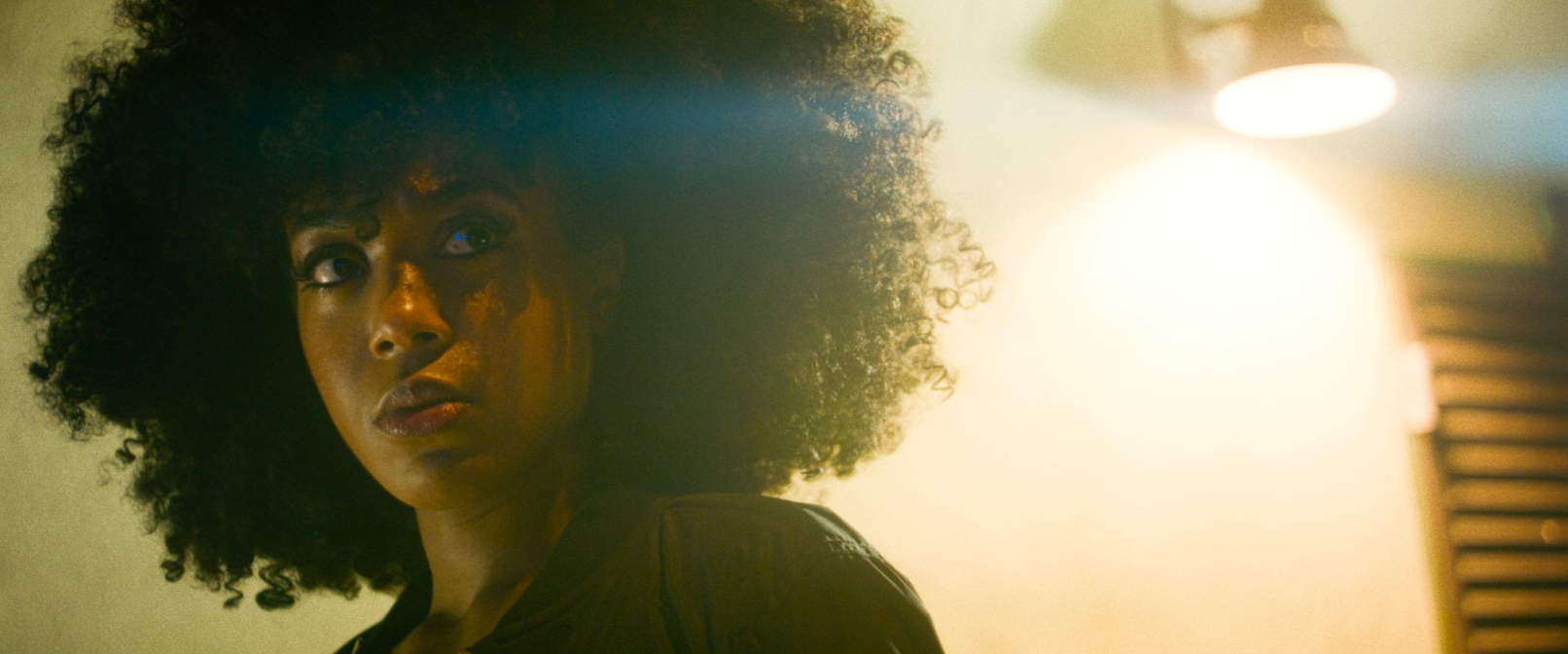
Sometimes it's more fun to root for the villains than it is the heroes. John Travolta headlines the cast of Cash Out, a new heist movie where things go wrong for a group of con-men and robbers when they get caught inside a carefully laid trap.

Cash Out begins with Travolta, playing the kindly criminal Mason Goddard, flying into a private jet sale along with his beautiful 'wife' Amy (Kristin Davis) on their own private plane, sipping champagne and living the high life. However, the two of them are not part of the one percent as their host believes, and they manage to talk their way into being shown their hosts private car collection. With the help of their support team, they're able to steal some hugely valuable vehicles and make a daring getaway. However, it turns out the FBI are waiting for them, and that they knew about the job because Amy is an undercover agent. Whilst the group are able to escape, the damage has been done as Amy's betrayal breaks Mason's heart after their two year romance.

Jumping forward a few months, Mason is approached by his brother Shawn (Lukas Haas), who has a plan to rob a Miami bank. Mason tells him to forget the job, but when he gets a call from another of the crew he realises his younger brother has gone ahead with things. Rushing to the bank to try and stop his crew from making a mistake, Mason and the others are forced to take everyone hostage when Shawn messes things up. Now, trapped inside the bank, they have to figure out a way to escape whilst dealing with the FBI negotiator, Amy.


There's a degree of charm to Cash Out that keeps the movie from being bad, and it's chiefly down to the interactions between its main leads Travolta and Davis. The two of them have an easy energy, a casual way of talking to each other that makes it feel like there's an established relationship between them, and you can buy that they were together for two years. The way that they slip into easy conversation despite the circumstances of the situation is almost comedic, but the film never veers into full comedy territory with it, and instead it ends up bringing a small smile to your face. This same charm follows Travolta throughout the movie in the way that he bonds with the other members of his team, as well as how he deals with the hostages. 

The downside to this easy energy is that the film often feels like it lacks any real punch. Travolta is sometimes a bit too relaxed, and almost feels like he's phoning it in at times. There's a point in the movie where he has to run down an escaped hostage to prevent them getting out of the bank and ruining everything and he never goes beyond a mild jog. Considering that losing this key hostage would potentially lead to either prison time or being shot by law enforcement you'd think he'd be running as fast as he could, but instead Mason looks like he's jogging to catch the bus rather than running for his life. 


This is something that happens elsewhere in the movie, this feeling of lack of any real tension. Things escalate towards the end of the film, with a twist in the tale that takes things from a simple bank robbery into a more dangerous territory, and we're told that the crew's lives are in more danger than ever before. But I never really felt it. We're told that it's life or death, but the film didn't really show that. Now, this does mean that Cash Out makes for some pretty easy viewing, it's low stakes and low violence for much of the time, but it also means that you never feel that the main cast are in any degree of danger, and that does neuter the film a little.

There's also a heavy use of drone filming present throughout the movie that's used to such a degree that it does feel like the filmmakers had a new toy and were desperate to use it. There's a sequence where police cars are arriving outside the bank, cops getting out the vehicles and taking up position, and the camera is flying from one car to the other, briefly zooming in on the cops, then flying off to the next vehicle. It's pretty disorienting, with the camera moving a little too fast and things looking just off enough that the main feeling in the scene was a sense of nausea. The already mentioned scene where Mason ahs to run to stop a hostage also uses some drone photography, with the camera flying around a large office space indoors that was incredibly jarring and disorienting in the moment too. Drones have opened up filmmaking in a lot of great ways, but their use here feels more like a gimmick than anything else.

Despite these flaws, the film proves to be entertaining enough for its relative short runtime, and there's nothing overtly wrong or egregiously bad to be found here. It's enjoyable, there are some cute moments with the cast, but there's nothing particularly exciting either. It's a decent film that I'm happy to watch the once, but not one that I'd be rushing back to watch again. 


Support Amy on Patreon

Buy Amy A Coffee

Go to Amy's Blog

The Shadow on the Glass by Jonathan L Howard - Book Review


'When two spiritist swindlers accidentally summon something horrific from beyond the stars, they must thwart a sinister time-spanning plot, in this first Victorian-era gaslight fantasy set in the world of Chaosium’s Call of Cthulhu. London, 1891. 

'Elizabeth Whittle and William Grant enjoy scalping London’s bourgeoise, taking on the persona of grand spiritist Cerulia Trent and her agent to connect the living and the dead. When a detective arrives, sniffing out fraud with a scientifically minded spiritualist society, the duo decides to take one last job before escaping to the continent. However, their final séance ends horrifically… and soon Lizzie isn’t Lizzie anymore. William, desperate to banish whatever monster they summoned, is soon embroiled in an electrifying eldritch mystery where he makes a deal with the devil to save his friend and stop an even greater evil from transforming the known world.'

I have a very soft spot for Victorian era fiction, especially when it involves horror or the unusual, and as such finding out that the Arkham Horror series was going to be branching out into this era made The Shadow on the Glass a book that I was absolutely going to read. 

The Shadow on the Glass takes readers to Victorian London, where we meet a pair of con-artists, William Grant and Elizabeth Whittle, who are taking advantage of the rise of spiritualism in Britain at the time to make some quick cash off of some gullible rich folks who want to contact the spirit world. With Elizabeth posing as the medium Cerulia Trent, the two of them think that they might have pushed things a little too far and need to leave the country and lay low. However, before leaving, they decide to do one last job, targeting Sir Donovan Clay, a wealthy businessman who's just returned to England from Australia, and is looking to contact his late wife.

The two con-artists put on their usual show, pretending to contact the spirit world; but when the ritual takes a strange turn it leave Elizabeth changed. Now it seems like the world of the paranormal the two of them were mocking, that they didn't believe in, has come calling, and it's ready to make the two of them pay a heavy price.

Jonathan L Howard has some experience writing in this field, having received acclaim for his Johannes Cabal series, which featured the supernatural, dark entities, and con-men. Having not read his other series, I can't say how similar the those are to this, but from my understanding it fits well within the tone of this book, including the small sprinkles of humour scattered throughout. Howard seems able to walk this wonderfully fine line between horror and humour, with a ton of great characters and interesting lore building thrown in. Just from what I read here, his work reminds me a little of one of my favourite authors, Derek Landy, who does this with younger readers in mind, but also manages to capture this kind of flavour well.

Whilst there is humour in the book this doesn't mean that this a comedy by any means, and the narrative is still very much dictated by horror with some truly spooky moments that will cause you to shudder. The dark, gaslit streets of Victorian London make for a perfect setting for the kind of horror that Howard does here, and it's also a perfect marriage for the Lovecraftian horror that the Arkham Horror series is beloved for. It's such a good fit that my mind often thinks that this is the kind of era that most of Lovecraft's stories, and the subsequent fiction that draws upon them, are set in. I often have to remind myself that it takes place decades later, but this time round I didn't have to do that, and I loved the experience. Much like the recent exploration into the Regency era for the series with Secrets & Sacrifices it seems that taking the elements of the Arkham Horror series and putting them in new locations leads to some of the more interesting and original feeling books in the range. 

For those that enjoy the Arkham Horror books but are looking for a different take on things, or who might be finding the same setting as usual a bit stale, The Shadow on the Glass makes for a wonderful refresh, a grate palate cleanser that offers something new that can reinvigorate your enjoyment of the franchise. The things that you like about these stories, the questionable characters, the evil cults, ancient gods, and unknowable horrors, are all here, and so long time fans will very much feel at home.


Support Amy on Patreon

Buy Amy A Coffee

Go to Amy's Blog

Sunday, 7 July 2024

Weekly Comic Review - 3rd July 2024


I take a look at a selection of this weeks comic releases. This week I read and review Absolute Power, X-Men: Blood Hunt - Psyclocke, Birds of Prey, and more!


Absolute Power #1

Writer: Mark Waid, Artist: Dan Mora, Colourist: 
Alejandro Sánchez, Letterer: Ariana Maher

Absolute Power has been building for a while now, slowly taking shape across multiple titles such as Batman, Green Arrow and Suicide Squad: Dream Team to name but a few. But after months of preparing it seems that Amanda Waller has finally decided to make her move. Using AI generated imagery and video, she's flooded the internet and news media with reports of the super hero community turning on the world, with the heroes now performing random acts of destruction, resulting in the deaths of many, apparently. Despite this being fake, the worlds citizens have bought into it, resulting in incidents like Animal Man and his daughter being attacked by a mob, Black Lightning and his family being put in the hospital, and the Doom Patrol having their home burned to the ground. As the heroes try to desperately react to this Waller launches the next stage of her plan, a series of Amazo robot, boosted by Brainiac Queen tech, that rob the heroes of their powers and abilities. With their powers gone or weakened, the heroes fall victim one by one, including Superman, who is shot through the chest. The world is burning, the heroes are dying, and all hope seems lost.

Absolute Power hits the ground running and does not stop for the entirety of the issue. Part of this is likely because this event is only three issues long (sort of), and so can't waste time on the smaller things. Of course, the build-up to this has been happening for a while over multiple issues, and there are a number of tie-in issues that will fill things out over the next three issues of the main title, so it's not really a three issue event; but it still feels like it's acting as one and there's not a second to breathe during the first issue. And I kind of like it. The dominos Waller has set up are falling hard and fast, and the heroes have little to no time to react before the next awful thing happens, so being on the ground with them, seeing it happen that fast, certainly adds to the tension. That being said, it's not completely perfect, as we've not really been given a full explanation as to how it's all happening, specifically in terms of the magic users. The book claims that that knowledge to access magic has been blocked or removed from the minds of magic users, but that somehow kicks the Spectre out of Jim Corrigan, meaning Waller literally beat the spirit of God's vengeance, as in THE God. Feels a bit much to me.

Of course, these are wrinkles that we may see ironed out over the coming issues as we learn more about how everything here works. As it stands though, the first issue works pretty well, even if the final page is a horrific gut-punch that you may have already seen spoiled all over social media (I loved seeing that before I even got a chance to read the book). One of the biggest draws to the title is Dan Mora, who's providing the artwork. Mora is easily one of the best artists in comics right now, and getting to see him draw not just a bunch of new characters, but some beloved icons, is a blast. We kind of get a small bit of Dan Mora doing the JLI this issue, as well as members of the Justice Society, and the Doom Patrol, which is always an absolute treat to see. ⭐⭐⭐⭐


X-Men: Blood Hunt - Psylocke #1

Writer: Steve Foxe, Artist: Lynne Yoshii, Colourist: Ruth Redmond, 
Letterer: Ariana Maher

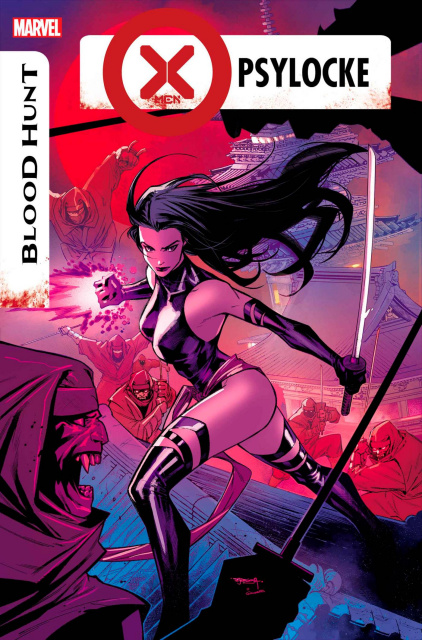
Psylocke has become a fast favourite X-Man of mine thanks to the way that she was used during the Krakoan Era. Her time on Hellions was fantastic (as was the entire book), and seeing that she was going to be getting her own spotlight issue during Blood Hunt, and that she's be joined by John Greycrow and that she'd be fighting Japanese monsters was just a cherry on top of the cake. The issue begins with the two leads enjoying some down time between X-Men era's, with Kwannon relaxing in a hot spring whilst Greycrow keeps her company, opting to stay out of the water to prevent rust. However, when the sun goes out and the sky goes black and Kwannon begins to sense the death and fear around them, they quickly hit the streets to try and help. However, they find not just vampires waiting for them, but a host of other monsters from Japanese myth, such as the Nure-onna, and the Kuchisake-onna (the Mouth Slit Woman).

Whilst we don't know if this is going to play out into the next X-Era, the fact that Greycrow and Kwannon are still a couple here has me super happy, as I've loved their developing relationship over the last few years; and the fact that this issue discusses Kwannon's fears about abandonment and rejection only to use it to reaffirm their connection was fantastic. It felt like the perfect next step for establishing them as a long running new couple. As someone who loves Japanese horror, I was also delighted that the issue played into that, incorporating some of the monsters from Japan rather than relying on simple vampires. The Slit Mouth Woman was super creepy, and was a great foil for Kwannon in this issue, with her history and her story playing into. The issue also manages to balance the horror, character development, and action really well too, and the leads make for a great duo who we definitely need to see more of in future issues (especially as Greycrow was rocking a pulse rifle from Aliens that we never got to see him actually use).

Lynne Yoshii and Ruth Redmond provide the art, and there are some fantastic moments in this issue. Kwannon and Greycrow look amazing fighting monsters, getting to kill and maim without worrying about being careful or moral questions hanging over what they're doing. They're killing monsters, and it's fantastic. I genuinely loved this issue, and it might be my favourite of the entire event so far. Just like the Magic one-shot, this feels like an ongoing that we need on the shelves. ⭐⭐⭐⭐


Birds of Prey #11 

Writer: Kelly Thompson, Artist: Robbi Rodriguez, Javier Pina, 
Gavin Guidry, Colourist: Jordie Bellaire, Letterer: Clayton Cowles

Birds of Prey is one of those books that I was expecting to like, but never thought I'd love as much as I do. It's very quickly become one of those books that when I realise it's being published that week I get super excited to read it and it makes its way to the top of my pile. The fact that the series was only supposed to be six issues but has gotten to continue on makes it all the better, especially when compared to Green Arrow, which went through a similar extension, yet feels like a book that had to try to figure out a way to carry on, whilst Birds of Prey did so effortlessly. I'm also loving that it's giving us something different to what the title has done in the past, moving away from street level crime to more outlandish adventures.

This issue picks up where the last left off, without team of heroes and their new ally jumping through another pocket dimension portal, rebooting the universe into a new form. This time, rather than dark and gothic, or 1950's glamour, we get dinosaurs and tattered costumes as the team land in a pre-historic jungle, where they have to battle through hordes of giant dinosaurs (much to Big Barda's delight). The issue also manages to progress some of the personal stories somewhat too, with a focus on both Vixen and Sin this issue that gives some big insights into their characters and their emotional states as they deal with the stresses of their situation. 

Whilst the issue includes three artists I honestly didn't really notice whilst reading the book. Part of this might be down to having been so absorbed into the narrative that I just didn't notice, or it could be that the various artists involved had similar styles that it wasn't all that noticeable. However, it could also be down to the colouring of Jordie Bellaire. Colourists often get overlooked when talking about comic art, yet are a huge part of the process, with a book often being make or break depending on the colourist. We've all seen artists we love producing work that looks off because of the colours applied to it. This has never been more apparent to me than this series, in which Bellaire's style changes the art in huge ways. The book looks different to anything else on the shelf because of the colours and the style that it brings to the table, and I can't help but love this series for daring to be so different to everything else. I genuinely love this series, I can't wait to see what weirdness Thompson has in store next time, and I hope the book continues on forever. ⭐⭐⭐⭐


Blood Hunt: Werewolf By Night #1

Writer: Jason Loo, Artist: Adam Gorham, Colourist: Alex Sinclair, Letterer: Joe Sabino

I have to be a little honest, I went into this book expecting something different. I thought that this one-shot was going to be following the other Werewolf By Night, Jack Russell. The one-shot with him in it earlier in the year, by writer Derek Landy, was a great book that I wanted more of, and so I thought that would be what I was going to get here. Instead, we join Jake Gomez instead, as he gets caught up in a magic ritual in an abandoned amusement park that opens up a portal to hell whilst the world is dealing with the Blood Hunt.

Set out in the middle of the desert, in an old dinosaur themed amusement park, the story follows Jake as he heads out to spend the full moon letting his inner monster run around the park blowing off steam. However, he's interrupted when a group of teens and young adults he knew from school come to the park to perform a magic ritual, one that opens a door to hell for the ghost of Duke Jensen to come through into the real world. Not satisfied with just being a ghost, Duke takes over the body of his nephew and begins a reign or terror and death.

I can't help but feel that this could have been a separate one-shot, and may even have started that way, that would have worked better without being tied into the Blood Hunt event. Other than the sky going black as the Dark Force is used by Blade and his people, there's no real connection to the event here. Even the appearance of vampire cops towards the end of the story could have been done without the Blood Hunt connection. The events of this story also happen across the time of Blood Hunt, and the book kind of has to fudge the numbers a little because of that. It says that hours, maybe days go by, and never puts down a firm answer. But the fact that none of the teens running from Duke's spirit are able to escape the amusement park for maybe days does feel like a bit of a stretch. This could have been a fun one-shot issue, but having to tie into the event it's a part of feels like it really hampered a lot of the enjoyment and internal logic for me. ⭐⭐


Star Wars: Inquisitors #1

Writer: Rodney Barnes, Artist: Ramón Rosanas, Colourist:
Guru-eFX, Letterer: Joe Caramagna

The time between the prequels and the original trilogy is an era where we've not had a huge amount of exploration. There is still a lot we don't know, especially towards the start of this time. Yes, we've recently had a focus on this with The Bad Batch, but that didn't give us much, or any, info on the state of the Jedi or the Sith, something that fans are always clamouring for. With this time being the start of the Inquisitors, an order of fallen Jedi turned Darksiders who hunt their former comrades, it seems prime real-estate for exciting stories. The new mini-series, Star Wars: Inquisitors seems to want to make the most of this as we follow the Grand Inquisitor in a mission to hunt down a Jedi survivor who's upsetting the balance of the galaxy.

The first issue sees the Grand Inquisitor being given a special mission by his master, Darth Vader, who has learned of a powerful Jedi Knight names Tensu Run, who has been taking on missions against the Empire, freeing prisoners, and destroying Imperial facilities. Whilst the loss of life and equipment is annoying, the biggest issue is that Tensu Run is inspiring hope in others, and hope cannot be allowed to flourish within the new Empire. As such, the Grand Inquisitor sets out to find the rogue Jedi and end his life. This journey takes him to several worlds, and a huge ship in orbit over a remote planet that houses several Jedi, including Tensu Run's former master.

There are some people who have complained that there are too many Jedi survivors of Order 66, which is ridiculous as even if it was 99% effective there would still be more than 100 Jedi around to play with, which means more survivors turning up in stories isn't too big of an issue for me. Those that feel otherwise will likely dislike this new series, however, as we get several just in this first issue. But, this is what the Inquisitors were made for, and seeing them fight regular people just wouldn't be as fun. Ramón Rosanas has worked on Star Wars titles before, and brings a great style to the title. The characters all look great, and it very much feels like a Star Wars we've seen before, even when we get new stuff. It fits the universe well, and the new characters and locations offer something new whilst still feeling like part of the franchise. For those wanting more Jedi vs Inquisitor stories, and to explore the early days of the Empire this series will definitely scratch that itch for you. ⭐⭐⭐


Batman #150

Writer: Chip Zdarsky, Artist: Denys Cowan, Jorge Jiménez,
Colourist: Tomeu Morey, Letterer: Clayton Cowles

The latest issue of Batman, is a book split across two stories, with only one of them tying into Absolute Power as the cover suggests; so those picking up the title expecting the entire thing to tie into the current event might be somewhat disappointed. However, the section of the book that has nothing to do with Absolute Power turns out to be the best part. The main story of the issue picks up on something that was teased towards the end of an issue way back during Gotham War, an event that a lot of people disliked so might be wondering how that's affecting things now. Way back then, one of the crooks that Catwoman trained up to be a burglar broke into the home of a rich Gothamite and learned something shocking, Bruce Wayne is Batman. Now, Theodore Critchley is trying to sell that information in order to get rich and put his life back together. The only problem is, the criminals either don't want to know, or Batman is following him everywhere.

For the most part, I really liked this story, and this is something that I would actually like to see more of in Batman. We get to see a slightly different point of view on Gotham and its characters through Teddy, and learning about his family life and how it all plays out for him is actually great, especially his son's story. There's a lot in here that feels like the best kind of Batman to me, how he doesn't need to always throw a punch to frighten people, and how behind the scenes he does a lot of good for those that need help. I also loved the Two-Face scene and how he views Batman, and it really sells you on the idea that the big villains wouldn't want to know who he really is.

The back-up story is where Absolute Power comes into play, as we catch up with Batman after the events of Absolute Power issue one. Task Force VII has been unleashed and the heroes have been depowered. Of course, this means nothing for Batman, and so he's still doing his thing; this issue his thing being trying to rescue Cyborg, who would be a huge help to the heroes in this story. We also get a lot of internal monologue of how Bruce is blaming himself for this (totally fair). Weirdly, this issue also introduces the idea that the Amazon Amazo talks with a Victorian era Cockney-like accent; which is frankly a bit bizarre.

The art on the two stories are both really good, and have very different tones to them. Denys Cowan provides the art on the first story, and it gives it a more gritty, dirty, and grounded tone that fits following a henchmen through the mean streets of Gotham City. In comparison, Jorge Jiménez gives the Absolute Power story a bigger feel, it has the tone of a big event tie in, with flashy visuals and a sense of scale that works well in comparison to the previous, more intimate story. Overall, this was a decent issue, but one that was at it strongest when doing something different and not really being a part of the biggest story that Zdarsky has been building since his run began. ⭐⭐⭐


Blood Hunters #3

Writer: Erica Schultz, Josh Trujillo, Sean McKeever, Artist: Bernard Chang, Claire Roe, Lan Medina, Colourist: Romulo Fajardo Jr., Neeraj Menon, Marcelo Maiolo, Letterer: Joe Caramagna,

Blood Hunters has provided readers with tiny snapshots of the vampire take over as we've hopped from story to story, checking in on characters that don't make an appearance in the main title. It's been pretty enjoyable, though the quality of the stories varies from issue to issue depending on your own personal taste. With that being said, this third issue might be my favourite of the bunch, and was one that I really enjoyed. The first issue follows a group of Latverian citizens who are taking sanctuary from the vampires in the walls of their embassy, doing their best to survive whilst hoping that Doom will come to save them. Doctor Doom is a very interesting character, one that I've come to have strong, complex opinions of over recent years, so seeing a villain in a more heroic setting like this, being held up as a saviour, is super interesting. Especially as you're waiting for the other shoe to drop with one of the people waiting for his rescue being a traitor to Latveria.

The second story is where this issue excels, however, with 'The Fall of the House of Udder'. I feel that title alone bags this story as the best in the entirety of Blood Hunt. Speaking of the event, this story has basically nothing to do with it, and is instead a tale of a man who works for Hellcow, taking care of her farm and managing things for the vampire. Yes, it's ridiculous, yes, it's amazing. This is the kind of silliness we need more of from mainstream comics. The final story continues the multi-part 'Once More Into Darkness' that has been in the other issues, continuing to follow Dagger as she tries to find a way to help Cloak, and encounters various other female characters. This issue introduces another character in the final moments, but one that honestly fails to elicit any kind of excitement. This story is definitely the least interesting of the bunch, and I can't help but feel that if we had entirely stand alone stories each issue it would have been more enjoyable. The art across all three stories is great, though the artistic tone in the Hellcow story definitely fits that tale wonderfully, and stands out amongst the others. ⭐⭐⭐⭐


Shazam! #13

Writer: Josie Campbell, Artist: Mike Norton, Colourist: Trish Mulvihill, Letterer: Troy Peteri

There are some problems within the Shazam family at the moment. They have a new home, but can't really settle into it and become a legal family until Bill's issues are sorted out. Billy and the Captain seem to have split somewhat and aren't getting on. And the siblings who lost their powers have been a bit envious that Billy and Mary get to keep being super heroes. There are more, but these are the main points that are driving the current arc, as Mary and Freddy hit the road to try and find the Rock of Eternity and their missing brother, Billy. Whilst searching for their wayward brother the two of them come under attack from some monsters, which sees Freddy jumping into the action despite having no powers; a decision that leads him to an old villain, and a potential new path.

Josie Campbell clearly loves the Shazam family and their lore, and is not only bringing in small threads left hanging in the Waid run, but her previous New Champion of Shazam! mini-series, and older comics too. The book feels like a great mixture of classic Captain Marvel adventures, with the reintroduction of Uncle Marvel in a new role that's nonetheless delightful to see, with some brand new ideas. The story also seems to be taking Freddy in a new direction that could add some great new drama to things. He looks poised to be gaining new powers, probably from a less than reputable source, and whilst this feels like a bad idea it also feels very in keeping with where his character is at at the moment. He misses being a hero, he's jealous of his siblings even if he'll never admit that, so of course this can be taken advantage of. In a lot of ways the Shazam book feels like it's taking place in its own little corner of DC, doing things different and just having some fun; and because of that it's the kind of series anyone can pick up and have a blast with. ⭐⭐⭐⭐


Support Amy on Patreon

Buy Amy A Coffee

Go to Amy's Blog

Friday, 5 July 2024

Hundreds of Beavers - Film Review


As animation has become a more respected artform over the years it feels like the days of silly, slapstick shorts have passed. Children's television has become more advanced and ambitious, with shows that often rivel 'adult' entertainment for how engaging and creative it is. Even things like the old Road Runner cartoons and the more violent Tom and Jerry shorts have evolved into completely different shows. I mention these two in particular as they're probably the closest to what Hundreds of Beavers is trying to capture, having created a live action cartoon, with silly visual gags, weird physics, and the kind of violence that should lead to death a dozen times over but just leaves characters rubbing the lump on their head.

Hundreds of Beavers begins with a cider make, Jean Kayak (Ryland Brickson Cole Tews) who sees his business and home burn to the ground, leaving him to survive in the show covered wilderness with nothing but the clothes on his back and his own wits to get by. However, his wits can sometimes be a bit lacking, especially when the local wildlife are smart, and aren't afraid to go the extra mile to make Jean's day worse. As Jean tries to get by he meets an expert fur trapper, a mean local merchant, and a beautiful young furrier who he falls in love with. But will Jean be able to outwit the crafty local beavers and win her hand in marriage?

Made like a silent movie, though without the speech cards on screen, Hundreds of Beavers feels like a blend of the early days of slapstick, stunt filled cinema, with the work of Loony Tunes. Our protagonist spends his time wandering through a beautiful, snow covered wilderness, a location that is part real and part created as we have fake trees and cartoon snowmen pop up from time to time. The blend of reality and the fake is somewhat unnerving to begin with, but thankfully, the film's approach to its animal co-stars helps you to find your feet in this tonally weird affair.


The animals that inhabit the world, ranging from fish, to wolves, and the titular beavers, are either puppets, or people in animal costumes; and not very convincing ones at that. There are times where the film looks like a bad sport mascot convention, thanks to the fact that the filmmakers bought a load of cheap mascot suits in order to populate the movie. But instead of feeling cheap or silly it grounds the film in a weird way, it makes you realise that despite this being real people it is very much in the realm of an animated movie. Things don't make sense, there are leaps in logic, physics take a back seat a lot of the time, and you find yourself watching a story that could never come close to being real. And it's kind of a delight to slip into this child-like feeling as you just say 'okay, whatever' and sink into the story, letting it take you on this wild ride.

It helps that the film is genuinely funny too. There's a mixture of humour, and not all of it landed for me, but I think that that's a taste thing more than anything else. The film is filled to the brim with visual gags, and you often have to suspend your feelings of disbelief as a character does something that your brain has trained you not to think possible. For me, the best gags were the ones that come with a cut. There are a number of times in the film where the movie is setting up a joke, or making you think something different is about to happen, before it hard cuts to a punchline that takes you by surprise. These moments elicited the biggest laughs out of me, and some of them included a dark joke or two too, which definitely won me over. 


Hundreds of Beavers is a weird movie, it has little to no dialogue, is presented in black and white, looks faker than anything else I've ever seen, but because it's leaning into that, because it seems to know it needs to look cheap and ridiculous so as not to completely lose the views and is just going for it you can't help but overlook a lot of faults. The performances are great, with over-the-top exaggerated characters and weird personalities that the cast brings to life wonderfully. Playing like the cartoons of old, Hundreds of Beavers feels like a throwback to a type of film that's been utterly gone for many, many years, and it's lovely to slip back into that here. Whilst it is a bit dark at times, the film is never cruel or nasty, and as such feels like the kind of movie the entire family can watch together and get a good laugh out of.

A lot of low budget, independent films get hailed as imaginative, or visionary yet fail to really live up to that hype, but Hundreds of Beavers feels like it does. It's trying something different, it's going against the trends of the big studios and the creators are making something that they're going to like. More films should be like this, absolutely weird little movies that clearly has a ton of love poured into it because it's something the filmmaker wants to see on the screen; the fact that the rest of us get to enjoy it too is just a bonus. It's not everyday a film like this comes along.


Hundreds of Beavers is released in UK cinema on 9th July 2024.


Support Amy on Patreon

Buy Amy A Coffee

Go to Amy's Blog

Monday, 1 July 2024

Stopmotion - Blu-ray Review


Art and horror go hand in hand, and not just because a lot of artists explore horror, but because the story of an artist being tormented by their own creations and artistic expressions is a theme that comes up time and time again. People say that artists put a lot of themselves into their work, and this does make you wonder about the dark thoughts that must go on inside their heads to produce some genuinely twisted creations. Stopmotion plays into this story trope, blurring the lines between reality and fiction as it explores a very niche area of filmmaking. 

Stopmotion tells the story of Ella Blake (Aisling Franciosi), a young filmmaker who wants to make her own films, yet is stuck assisting her ageing mother, played by Stella Gonet, whose arthritis means that she can no longer manipulate the stop motion puppets that have made her famous. Determined to finish her final film, Ella's mother is using her daughter as her hands, puppeting through her to get the results that she wants. It's not a great relationship, and we bear witness to Ella being verbally abused, being put down, and treated as nothing more than an extension of her mother, let alone a real person. However, when her mother suffers a stroke, it gives Ella the opportunity to break out and do her own thing.

Ella, with the help of her boyfriend Tom (Tom York) rents out a small flat and moves her film equipment there. She wants to make her own films, but doesn't know what to do, so instead opts to finish her mothers film whilst she's in hospital. But when Ella meets a strange girl living inside the same building (Caoilinn Springall), it begins a twisted journey as the girl feeds her a scary story that Ella begins to bring to life. As the story of the little girl chased through the woods by the monstrous Ashman builds Ella's willingness to do more and more strange things grows. Ella leaves traditional puppets behind, crafting bizarre creations from raw meat and road kill instead. But this is only the beginning, as the lines between reality and art begin to blur.


Stopmotion explores some interesting themes, ideas that are brought up pretty early on in the film. Ella wants to break out on her own, to make her own stop motion films, but doesn't know how to do so. She has spent her time working for her mother, telling her stories, moving her puppets the way she wants to. She doesn't know how to create herself, she doesn't have that seed of a story that she wants to nurture into something more, just the desire to do so. So, it's not surprising when she falls under the sway of the strange girl who starts to give her a new story. Ella is herself a puppet, she needs that unseen hand manipulating her, telling her what to make and how to animate it because that's all she's known. The problem is, she doesn't want to be a puppet. Ella thinks she's more than that, she thinks she's a great creator, someone who sees working with an animation studio making parts as beneath her. 

What does this mean for Ella over the course of the film though? Well, it's something that can only really be talked about, I think, but talking about the ending and the 'twist' reveal done there that's actually pretty obvious very early on in the film. Skip to the next paragraph if you want to avoid spoiler talk. So, the girl that Ella meets isn't real. This seemed pretty clear the second time we see her, and within the first hour of the film it's pretty much confirmed by context clues like only Ella interacting with her and her being in places she shouldn't. Whilst the 'twist' was obvious, the way it affects the story is pretty good. As said before, Ella only really knows how to be the vehicle for other people's creativity, a puppet to be manipulated. As such, her own ideas are out of reach even to herself, and her mind, struggling with grief and a loss of identity, creates this little girl to give her what she needs. Ella is being puppetted by herself, having created this intermediary in order to tell her own story. A story that feeds into these same feelings of being a puppet without meaning.

The above mentioned themes plays heavily into the last act of the film, and I think if you're not watching the film with the willingness to do some of the work yourself it can perhaps be a harder piece to enjoy. I've seen a mixture of reviews for Stopmotion, with some saying that it doesn't make sense, or that the ending is weird. And whilst I will certainly say that the ending is indeed weird, it absolutely does make sense. This isn't a film that's going to hold your hand and explain everything to you, it isn't going to spell out exactly what's happening and why, and you're going to have to pay attention to what's going on to get it all. There's a line spoken in the middle of the film that's absolutely key to the ending, literally explaining the final shot in the movie, but if you're not taking that on board it can certainly not sit well come the closing credits.

Director Robert Morgan, and their co-writer Robin King, have constructed a piece of work that's designed to unsettle, and part of that is its lack of answers. I understood what the film was trying to do, but even with that understanding I can't tell you exactly what everything in the film means fully. And I think that's a large part of what the creators wanted. They wanted a film that left the audience feeling unease. Answers help us to make sense of things, and can help people deal with truly terrible events, so of course not knowing keeps that peace of mind just out of reach.


Another area in which the filmmakers try to unsettle the audience is with the stop motion animation that's scattered throughout. The puppets used in the film might be some of the most unsettling I think I've seen. The imagery used is fairly simple, Ella only has one set and two characters, but the way in which the puppets are designed to look are truly disgusting. Fleshy, deformed, and a little too close to human, the puppets are stomach-turning a lot of the time. This is where a lot of the films overt horror comes from, and the scenes involving the puppets are disgusting in just the right way.

Even with all of these elements, with a story with some interesting ideas, and some disgusting puppetry, the film kind of fails to really excite. It's a shame, as Aisling Franciosi is superb in the starring role. Her fall into grief and madness is subtly managed, and she brings a level of both sympathy and revulsion to her story. Often the tortured and disturbed artist story will have you afraid of that character, or coming to see them as a villain. But in Ella's case you can't help but come away feeling sorry for her. She elicits sympathy by being kind of pathetic, and whilst that makes for an interesting change on the formula it doesn't do much to draw you into the narrative, and it feels a little like Franciosi was a bit wasted in the role. 

Stopmotion is an interesting film, with some moments that will make you feel a bit grossed out, but that's about it. It's interesting, but it doesn't grab you. There's little here that got me excited during the film, and not a whole lot that I really feel was all too memorable. The concepts presented here aren't new, the characters are fairly flat and ill explored, and whilst the stop motion animation is great and adds a fun element to the movie it's not enough to carry the film or keep me truly invested. Whilst not a bad movie by any stretch, Stopmotion does feel a little like a wasted opportunity and ends up a film that I think I'm likely to forget.


Support Amy on Patreon

Buy Amy A Coffee

Go to Amy's Blog

Wednesday, 26 June 2024

Miracle Fighters - Blu-ray Review


The Miracle Fighters is the latest Hong Kong martial arts film released from Eureka Entertainment, directed by the legendary Yuen Woo-ping. The film begins with a fairly dark sequence, where Ko Hung (Eddy Ko Hung), is brought before the Emperor for marrying a Han woman. The film is set during the Qing Dynasty, a time where it was forbidden for Manchu people and the Han Chinese to wed, and as such Ko is given an option, die along with his wife, or kill her and live. Ko disobeys his Emperor, and a fight breaks out in the throne room that sees his wife killed. In the ensuing combat Ko managed to take the young prince hostage, and uses him to escape. However, during the escape the young boy is accidentally killed.

Jumping forwards a couple of decades, Ko is now an older man, who has taken in an infant boy he found under a tree and raised him as his own, naming him Shu Gan, or 'Little Root' (Yuen Yat-Choh). Ko gave Shu Gan the jade necklace that belonged to the young prince, which makes Shu Gan a target when the royal sorcerer, Sorcerer Bat (Yuen Shun-Yi), discovers them. Sorcerer Bat believes that Shu Gan is the young prince, and even after learning the truth tries to pass him off as such in order to gain political advantage that he can then use to take over power. However, Shu Gan manages to escape from Sorcerer Bat, finding shelter with two Taoist priests, who agree to take him in to teach him martial arts and magic.

Despite the darker start with murder, kidnapping, and the death of a child, The Miracle Fighters very quickly descends into ridiculous comedy (and even the darker scenes in the film contain some frankly weird moments). The film is chiefly a comedy movie, one that often feels like it's embracing the fantasy genre just to be able to do the weirdest thing possible in order to get a laugh out of the audience. And it works pretty well. Not every gag landed with me, and there were times I felt a little lost at first until an explanation came a little later on, but I also suspect that's because in some cases I don't have the initial knowledge to understand the jokes. I think if you're more knowledgeable of Chinese history and mythology then certain things will absolutely land a lot better for you; which probably makes this a good film for fans of the genre.


Whilst the humour can sometimes be a little all over the place the action and stunt choreography is excellent. Because the film is also a fantasy movie it doesn't have to be restrained by the laws of physics, and there are some truly wonderful moments to be found here. Sorcerer Bat quite literally flies across the set with blade covered wings on his costume that he uses to zip around, as well as using as a weapon to try and slice Shu Gan to pieces. 

There's another character who's a bizarre cursed child-thing who lives inside an urn, whose arms and legs pop out the side. He rolls and bounces around, attacking with a paper sword in a scene that must have been a lot of fun to put together. My personal favourite is the scene where several pieces of wood form together to make a dummy man our hero has to fight, complete with wooden block testicles. The Miracle Fighters will absolutely have at least one scene showcasing something you've never seen before.

Along with the film, the new Blu-ray includes a load of extra features to keep any film fan happy. The film comes with two full length audio commentaries, one with Asian film expert Frank Djeng, and the other with Arne Venema and Mike Leeder; which will be familiar to anyone who regularly watches Eureka's releases. Djeng does his regular thing of going into the making of the movie, the careers of the actors and crew, and will even go into detail explaining some of the things that non-Chinese viewers might not understand in order to give more context and understanding. 


As with any of Djeng's commentaries, it feels like a must watch as he crams his time with insightful and useful facts that has the viewer coming away really feeling like you've learned something. Leeder and Venema, on the other hand, have a much more conversational approach, and chat throughout the film about the movie, as well as personal anecdotes that relate to it from their personal experiences working with members of the cast and crew. 

There is also an archival interview with director Yuen Woo-ping, in which he talks about his career in general rather than the film specifically. There are also interviews with Fish Fong, and John Kreng. Alongside this is the original trailer, and a booklet that contains brand new writing about the movie. 

The Miracle Fighters is a bizarre, almost fever dream-like movie, filled with weird set pieces, slapstick humour, high stakes, violence, magic, and a ton of snakes. If you're a fan of the genre it's definitely a movie that you're going to want to check out, and whilst it might not be the most normal of movies it's definitely both a memorable and entertaining one. 


Support Amy on Patreon

Buy Amy A Coffee

Go to Amy's Blog

Tuesday, 25 June 2024

Marvel Studios’ The Infinity Saga – The Avengers: The Art of the Movie by Jason Surrell – Book Review


When the MCU was first starting having an interconnected universe was a huge novelty, and the small scene at the end of Iron Man where Nick Fury dropped the word Avengers felt like a long, impossible dream. However, only a few years later a group of super heroes would come together to form a team on the big screen for the first time. Yes, we'd had team movies before, such as the X-Men and Fantastic Four films, but this was the first time the team was coming together from different places, a crossover event of the ages. And whilst the first Avengers film has become fairly quaint for how small and simple it keeps things it's still a special moment in cinema; one that Titan Books are celebrating with their next entry in the Marvel Studios’ The Infinity Saga art book series as Jason Surrell dives into the making of the movie. 

The opening line of the book sums up comic book movies well, 'The Marvel Cinematic Universe is a world whose foundation is based in art', and understands why the visual side of things is hugely important for a universe drawing from a visual media. The Avengers are a big name now, but have had a rough history in comics, and have not always been the crowd drawing book that you would expect. Historically, the team has often been a showground for characters that either cannot support their own book, or have low sales. Whether that's characters like Hawkeye and Captain America, or Vision, Jack of Hearts, Wonder Man, and the Two Gun Kid. Whilst their roster might not have been the best, it had some great people working on it, and getting to see a lot of characters who usually work alone come together was a great look.

This is what the MCU was going to have to imitate, the wonder and joy of seeing characters that we'd become used to being solo stars sharing a scene together. The opening of this new art book spends some time going over this, giving readers a rundown of the films that came before it, a comprehensive timeline of the MCU up to that point, and showcasing a stunning piece of art that necessitates folding out a page to fit it all on. It's great stuff, and recaptures some of the hype from the time of seeing this all come together. 

Whilst other books in this collection have split the art of the film into easy to define segements, such as a huge chapter dedicated to Iron Man's armour, another on the villains of the film, and another showcasing sets and environments, this time things are done slightly differently as there's a lot more to cover here than in times previous. There are three main chapters to the book, with each of them covering the film in chronological order. The first chapter, 'Incident in the Desert', covers the start of the film, the part that establishes the reason why the Avengers need to come together. The second chapter, 'Avengers Assemble', handles the Avengers, their new designs, and the scenes where they're introduced, along with places like the Helicarrier. The third chapter, 'A Common Threat', deals with the films climax, showcasing the designs of the enemies, and the battle of New York.


©2024 MARVEL

'Incident in the Desert' takes us behind the scenes of the start of the film, showing us how the world of S.H.I.E.L.D., only really background players in the other films, came to be. Key characters like Nick Fury and Maria Hill have several versions of the their outfits, some of which skew more towards the comic looks with uniforms that involve more blue, and feature the white highlights, gloves, and boots that readers have been used to for decades. It's a shame that the film went for a more realistic approach, as some of these designs absolutely pop on the page, and you find yourself wondering how different the film would look if it embraced its origins a little bit more. 

This chapter also gives us our first look at the first Avenger we meet in the movie, Hawkeye. Whilst Hawkeye did feature briefly in the Thor art book we didn't really see much of him, and this time we get several different costume designs for him, as well as a detailed look at his weaponry; including a couple dozen trick arrow heads that we sadly barely get a chance to see in any detail on the big screen. The introduction of the film also brings back another important character from Thor, Loki, as the film's antagonist. As such we get some pages dedicated to him, including some costume variants and a few alternative designs for the sceptre that he carries with him across the course of the film. 

The second chapter, 'Avengers Assemble', takes some time looking at each of the other heroes in the order that they appear in the film. The first up is Black Widow, who has a few costume designs that are more variations on her appearance in Iron Man 2 and play with bringing her more in line with the other S.H.I.E.L.D. agents in the movie than making her more like the comic. We then get brief introductions to Bruce Banner, Steve Rogers, and Tony Stark, but as the film doesn't showcase any new looks for them at this point these pages go by pretty quickly as we keep moving through the film and instead get a number of pages given over to important locations like Stark Tower, as well as vehicles such as the Quinjet and Helicarrier; the latter of which went through several designs it seems as the film tried to settle on how realistic or fantastical to make it. 

From here, however, our heroes start getting into costume and we get some new designs for Captain America, several of which I actually prefer to the one used in the movie. Thor goes through a few costume costume tweaks too, though like other returning heroes there's nothing too revolutionary or different here than what came before. One of the largest character sections actually goes to the Hulk, who gets a big redesign in this film since the recasting of the Bruce Banner character. Due to rights issues surrounding the Hulk I assume that's the reason why we don't have an art book dedicated to that film (and why the Hulk keeps appearing in other movies and doesn't get one of his own). As such, this is the first real look we get at the character in the series, and it's super interesting to see the various ideas the filmmakers went through to bring the character to life on screen. 


©2024 MARVEL

The third chapter showcases some new armour designs for Iron Man as he has to upgrade in the latter part of the film, and shows how the falling into new armour scene was planned out and executed. The rest of the chapter is dedicated to the Chitauri designs. Originating from the original Ultimate Universe, the Chitauri were that world's version of the Skrulls, characters that couldn't be used in the MCU at this time thanks to Fox owning the rights to the Fantastic Four. You can see some hints at the Skrull origins in the Chitauri designs here and there, such as the ridges on the chin for The Other, but it seems for the most part that this is the area in which the design team got to try something completely new and as such there are some incredibly interesting pieces of concept art included here. 

These were the first completely alien, almost wholly original creations for the MCU, and whilst the designs had to work in universe with the rest of the tone and style they are also able to push the boundaries a little more. I particularly liked one of the Leviathan design that was much thinner, almost serpentine, and looked more like a Chinese dragon that would have looked incredibly different had the film gone that route. The rest of the chapter is given over to huge pieces of art that cover the entire page, depicting the Avengers in battle with the alien invaders that wonderfully capture the tone and flavour of the films finale. 

The Avengers felt like a huge event, and covering that in book form was not going to be an easy task, but Surrell manages to do that here. The book showcases the process for bringing things together, of how these characters who existed alone were redesigned and tweaked slightly to make them work in the same frame, and how the carefully constructed world that was being built in the background of the other films served as the perfect backdrop for it all. It also, however, opened the universe out into new and interesting directions, furthering the work done in Thor and taking the MCU into a bigger, wider galaxy. With this barely being the start of the shared universe to come reaching this point felt like a milestone, but it's also a key foundational one too, and anyone interested in filmmaking or the MCU will want to pick up a copy. 


Support Amy on Patreon

Buy Amy A Coffee

Go to Amy's Blog

Monday, 24 June 2024

Jade - Film Review


There are certain times where you look at the people involved in a film and think 'oh that's absolutely going to be something I'm going to love'. Jade was one of these situations for me. Director James Bamford is someone that I'd been aware of since his days as the stunt coordinator on Stargate SG-1, and had followed his move over to Arrow, where some of the best action in the entire series was done in episodes he'd directed. Shaina West, the British stunt performer and actress, came ton my attention on Instagram, where she frequently uploads videos of herself performing amazing weapons drills, and I've regularly watched her stuff. I've known Katherine McNamara from both Arrow and Shadowhunters, and Mickey Rourke and Mark Dacascos are both just huge names who are always great in whatever they're in. I was primed to really enjoy Jade; yet that enjoyment never really came. 

Jade opens with a snazzy animated sequence that gives us the important background details for our titular main character, played by West. Born in London, she and her brother moved to the US after their parents were killed, but ended up taking part in criminal gangs. This unfortunately led to an incident in which Jade accidentally killed and shot her brother. The why of it all are not really covered as the details don't really matter, but this is a bugbear that will continue throughout the rest of the film. 

In the present, we meet Jade as she's given a hard drive by a friend from her gang days, which immediately results in a shoot out and Jade having to run for her life. Barely a few minutes into the film and our heroine is already running around, trying to avoid the gangsters on her trail. This kind of pacing is indicative of the movie, and it goes from action piece to action piece very quickly, with brief moments of story and character scattered between them. It turns out that local gangster, Tork (Mickey Rourke) is after the hard drive, and is willing to kill Jade to get it. All Jade wants to do is to make it through the night, and to protect Layla (Katherine McNamara), the pregnant girlfriend of her dead brother. 

As an action fan, I was looking forward to seeing what Bamford put onto the screen, but one of the biggest issues I had with Jade is that it doesn't seem to know what kind of tone it's aiming for. There are times where the film is brutal and bloody, yet others where it's almost comedic. At one point in the film Jade throws her afro comb, which impales a man through the eye. I'm no expert on afro combs, but it looked very plastic on screen, so it being able to pierce the skull seemed a bit too much for me. But this is something that Jade does a lot, where the film seems to prioritise style over substance. We get a kill count on the screen, blood splashes and the word Fatality on the wall during one kill (with voice over announcement).


The dialogue seems to play out the same way, with characters trying to compete with each other for who can say the wittiest one liner, leading to most of the people in the film feeling like flat caricatures and ill thought out stand-ins for real people. Whilst West does have a lot of charm to her, and delivers some of these cheesy moments with a flair she seems to be the only person in the film who actually wants to put any real effort in. Mickey Rourke delivers his lines like he's bored, and his expression barely changes from blank throughout the film. There are some decent actors amongst the cast, so I don't know if it's a case of them not having the right material to work with, or simply not wanting to be there, but West often feels like the only actor who's actually invested. 

But, this is an action film, so there's never a guarantee that the the acting is what's being focused on. The action is a big part of things, and whilst the action does take centre stage in Jade it too varies in quality a lot. There are some parts of the action where Bamford lets the camera hang back a little, giving West the chance to really show off her combat skills. These are the best parts of the film, as the audience get to see that it's really her performing, and that she can do longer takes without making mistakes or looking bad. However, there are times when Bamford throws unneeded cuts, jumps, close-ups, slow motion, and other editing tricks into the action that really breaks the flow and makes it feel less impactful. The use of CGI for muzzle flashes and blood splatter also made the film look and feel cheap in places. Digital bullet impacts were happening around West, but after the initial impact the environment was left untouched and intact, showing that no bullets were actually being fired at her. Practical effects would have gone a long way to making things feel real, and would have helped prevent a lot of the sense of falseness that movie had. 

As a showcase reel for Shaina West Jade is great, it showcases her physical abilities and her stunt work well, and there are even hints of someone able to step more into the spotlight too. But, as an entertaining piece of film Jade just kept falling short for me. It's not a long film, sitting at 88 minutes, but I kept checking my watch to see how long it had been going for. I was left bored more times than not, and an action film should be doing the exact opposite to that. I wanted to like this film, I wanted to love this film; it has so many names attached to it that I like, yet it failed to entertain me. Perhaps it was me, maybe I just didn't click with it, but sadly Jade ended up being a movie that I just can't recommend. 


Jade is released digitally on 24th June 2024.


Support Amy on Patreon

Buy Amy A Coffee

Go to Amy's Blog