Sunday, 9 June 2024

Weekly Comics Review - 5th June 2024


I take a look at a selection of this weeks comic releases. This week I read and review Shazam!, The Ultimates, Birds of Prey, Batman, and more!


Batman #148

Writer: Chip Zdarsky, Artist: Jorge Jiménez, Colourist: Tomeu Morey, 
Letterer: Clayton Cowles

I've had some ups and downs with the Zdarsky run on Batman. I enjoyed the first 'Failsafe' arc, but have struggled with it since with its use of Zur-En-Arrh and some of the choices that have been made regarding Bat Family relationships. It seems, however that things may have come to something of a conclusion in this issue as Batman defeats Zur and Failsafe, ridding his city of the robotic threat; though with Zur being involved with Amanda Waller and the Absolute Power event I'm not entirely convinced that he's completely done.

The issue has two main focuses, the first being Bruce and some select members of his family preparing for their confrontation with the robot, whilst the other centres on Damian, who is being held hostage by the Zur-En-Arrh Robin. Fans have been theorising over who this new Robin may be for the last month, and we get a pretty wild answer this issue as it's revealed to be a clone of Bruce. The heroes attack Zur, in a fight that leads to Jason Todd being killed by the machine in order to restore the original Failsafe program, thereby overwriting Zur. Batman then simply deactivates the unstoppable machine now that he's figured out a solution to that previously impossible task.

Despite the villains being defeated, Jason coming back to life, and a few of the heroes ending the book posing for the audience in a moment of triumph the book feels a bit rushed, scattershot, and lacklustre. The solution to beating Zur does tie back to the very beginning of Zdarsky's run, but the idea that Bruce can then just turn the robot off feels kind of cheap. The death and immediate resurrection of Jason does little and seems to have zero weight or consequences. And the fact that the members of the Bat Family that have been left out, relegated to the background and don't even get to be part of the final picture, are Cass, Steph, and Duke; and Zdarsky doesn't even seem to know who Steph is, calling her Spoiler even though she's been Batgirl for years. It feels kind of bad to leave these popular characters out, and for those who already feel like these three get shoved to the side lines too much it's going to be very noticeable. I'm also very curious to see if  Zdarsky has any plans for this crazy child clone version of Bruce, or if this is one of those things that's never going to come up again. 

If I was to sum up the issue in one word it would be rushed. Things feel rushed here. Lots of stuff gets resolved super fast, challenges that were insurmountable before are put to bed in a page. I don't know if perhaps Zdarsky had to wrap things up quickly in order to have certain things in place in time for Absolute Power, or if he simply just couldn't make things resolve well, but as it stands Batman has become one of the weaker books for me every month, and I often find myself wondering why I'm still reading it. ⭐⭐


X-Men #35

Writer: Kieron Gillen, Al Ewing, Gerry Duggan, Chris Claremont, Gail Simone, Jed MacKay, Artist: Sara Pichelli, Stefano Caselli, Jerome Opeña, Leinil Francis Yu, Mark Brooks, Walt Simonson, Luciano Vecchio, Lucas Werneck, Joshua Cassara, Phil Noto, John Romita Jr., Scott Hanna, Salvador Larroca, Javier Garrón, Colourist: Laura Martin, Matt Wilson, Sunny Gho, Sonia Oback, Phil Noto, Matt Hollingsworth, David CurielRomulo Fajardo Jr., Marcio Menyz, Morry Hollowell, Letterer: Clayton Cowles

There are a lot of names attached to this title, a lot of pages, and a lot to cover as the First Krakoan Age comes to an end. The threats from Orchis, the evil AI's, and Enigma have been dealt with, so what's left for the X-Men? It's time to say goodbye to Krakoa and to those left behind. Things kick off when the other half of Krakoa, the piece left inside the White Hot Room reappears inside regular reality beside the other island. It turns out that time moves somewhat differently inside the WHR, as fifteen years have passed for them. In that time the mutants there have flourished, the fifteen million mutants killed in Genosha have been brought back, and mutants finally have peace and hope for a future. However, not everyone wanted to stay, so they've built up enough power to come back for a single day, to drop some folks off, and to reassure the heroes of Krakoa that they didn't fight for nothing, and that they did good.

Of course, things don't go completely smoothly, and Apocalypse starts acting like a jerk and needs dealing with. There's also a large part of the issue that deals with Charles Xavier. The first is an opening in which we see him and Magneto get to have a chat, which establishes where each of the men stand for the coming new era. There's also a segment at the end that sees Charles, inside a prison cell, projecting him mind outside of it to see where his X-Men are. This part gives you a little glimpse into each of the key players for the From the Ashes initiative, and lays the groundwork for their books. Accompanying this is a separate story by Claremont that sees Nightcrawler, Mystique, Destiny, and Rogue spending some time together to deal with their family situation and past trauma.

Krakoa has been divisive, some have adored this era, whilst others have been counting the days until it's done and the next thing comes along. For those that did love it, this book will be somewhat bittersweet as it puts most things to bed completely. It's nice to get certain answers, such as how the mutants in the WHR fare, and seeing the joy in Emma's face when she realises all of the dead Genoshan children have returned is genuinely magical. There's a sense that things are moving on, but in a way that doesn't put down this passing era. There are hints that Krakoa may return in some form in the future, and gives those that loved it hope for what's to come. Some of this is somewhat hampered by the number of artists on the title. The artwork changes frequently, and for the most part there is no narrative reason for it. When we're checking in on different people, or going into different stories it's fine, but seeing the art shift a dozen times when the X-Men are fighting Apocalypse is a little too much, and threw me out of the book more than once thanks to how jarring it was at times. Overall, this felt like a pretty decent end to things. The book could have been longer, it could have focused a little more on some of the characters that really got a chance to shine in this era, such as Synch, who's relegated to being a background cameo, but as it is it's still a good way to bring things to a close. ⭐⭐⭐⭐


Kneel Before Zod #6

Writer: Joe Casey, Artist: Dan McDaid, Colourist: David Baron, 
Letterer: Troy Peteri

We've witnessed something of a fall for Dru-Zod since the start of this series. He was the ruler of an entire world, he had a son, a wife, and a child on the way, he was a military power and was respected by the United Planets. Now, he's scarred, hallucinating one of his greatest enemies, and is in charge of a battered old prison ship filled with inmates who are following him through fear. He's not exactly at rock bottom, but he's not far from it either. However, Zod is never one to let a bad hand keep him down, and is consolodating the little power that he actually has. This involves trying to figure out who or what is being kept inside the two maximum security cells in the heart of the ship. The answer to this mystery is somewhat surprising; at least to him, if you've seen the cover you probably already know.

One of the things that I've liked about this series is that you don't really know where it's going. I wouldn't have guessed from the first issue that Zod was going to fall so far, or that he'd end up in the position he's now in. Likewise, I can't predict where the next issue is going to go. Is Emerald Empress going to be an ally for him, is she going to be a challenge that he's going to overcome with force, or could she perhaps replace Ursa as a new paramour for him? I genuinely don't know, and I kind of like that about this book. Sometimes it's fun to follow the bad guy, and by being out in space away from Earth Zod can actually be something of a villain, he can do bad things, he can clash with other bad people and lose on occasion, and you're never expecting a hero to come crashing in to stop him. Because of that, this is the kind of series that can get away with being a little bit different. ⭐⭐⭐


Ghost Rider: Final Vengeance #4

Writer: Benjamin Percy, Artist: Danny Kim, Colourist: Bryan Valenza, 
Letterer: Travis Lanham

Before this series it had been a while since I dipped into Ghost Rider, so I was quite surprised to find that this time around the Spirit of Vengeance had found itself a new host, and that it was a character I knew; Parker Robinson, the Hood. This series has been very different to what I expected, but has been fairly entertaining. I've recently come discover Benjamin Percy with his work on the X books, and enjoy pretty much everything I've read so far, and this book is no exception. It's been different, enjoyable, and has kept me guessing at every turn.

The latest issue shows us some more of Johnny Blaze and Zebadiah's journey towards Chicago, a journey that sees them dealing with possessed civilians, and questioning if re-joining Johnny and Ghost Rider is the best option, or if destroying the entity altogether might not be better. Meanwhile, in Chicago, The Hood continues his mission to take over the underworld, using his new powers and his alliance with the local vampire coven to take over more territory and businesses, all whilst trying to make a real life for himself and his estranged family.

I wasn't sure what to expect with this series, especially when the freed Spirit of Vengeance decided to settle on The Hood, but the last few issues have drawn me in much more than I thought they would, and I've been finding the deeper dive into who The Hood is as a person has been a big draw for me. I also really like the Ghost Rider version of him, even if it does at times make me think of Spawn with a flaming skull. It's a cool design, and Percy is having him do some cool stuff, so it's all a winner really. The art on the book looks great, and every moment when the new Ghost Rider is on the page is a stand out, I love the way that Danny Kim and Bryan Valenza brings him to life, and am very looking forward to seeing what they create for the inevitable confrontation between him and Blaze. ⭐⭐⭐⭐


Aliens: What If...? # 4

Writer: Hans Rodionoff, Brian Volk-Weiss, Story By: Hans Rodionoff, 
Brian Volk-Weiss, Adam F. Goldberg, Leon Reiser, Paul Reiser,  Artist: 
Guiu Vilanova, Colourist: Yen Nitro, Letterer: Clayton Cowles

Aliens comics have been something of a mixed bag over the decades because it seems to be the medium in which writers aren't afraid to try something a bit weird with the titular monster, and we've had some very odd stuff over the years as a result (such as an android that looks like the Xenomorph smoking a cigar whilst firing a pulse rifle - which is fantastic). Aliens: What If...? is doing something similar, by blending together the seriousness and horror of the franchise with a more comedic approach that's generally been working pretty well.

This issue sees Carter Burke rushing to his daughter, Brie, in order to get her off their asteroid home as an alien queen has been born, and there's little time to escape before all hell breaks loose. Finding her post-coital with Hiro Yutani, the son of one of the big bosses at Weyland-Yutani. Instead of getting away in their ship, however, the three of them decide it's worth trying to save everyone else if they can, and load into mining suits and set out to hunt down the juvenile Alien Queen.

As with the previous issues, the fourth part of this story follows the traditional beats of an Aliens story, this part covering the 'try to beat the monster' segment where the heroes think they have the means and skills to take the creature down. But, as with previous chapters it does so in a way that subverts expectations at a number of turns, and makes use of some good comedic timing and visual gags to inject a great deal of humour into the situation. I've always maintained that doing humour in comics can be hard, and marrying it with genres like horror only adds to that difficulty. But here the creative team manages to do it well, creating some moments that made me laugh out loud (a first for an Alien comic). The art team do a great job with this too, as there are times where the art does some of the heavy lifting for certain gags. The attention to detail in character expressions is a bug part in the jokes landing too, and the team manage to pull it off wonderfully. This series has managed to turn Carter Burke from a complete douche we were glad to see die into a bumbling loser who you kind of feel sorry for, and who I'm actually genuinely interested in seeing if he manages to live or die by the end. ⭐⭐⭐


Wolverine: Blood Hunt #1

Writer: Tom Waltz,  Artist: Juan José Ryp, Colourist: Guru-eFX, 
Letterer: Cory Petit

The world has fallen to darkness, and vampires have turned the planet into an all you can eat buffet, so of course it wouldn't be long before one of the deadliest killers in the Marvel universe stepped up to put an end to things. Logan, however, knows that despite being able to kill hundreds of vamps on his own it's not something he can keep doing forever, nor will it help to save the day. As such, Logan's reaching out to some allies to help him along the way, including CIA agent Jeff Bannister and Louise, the vampire hunter turned vampire who's still fighting on the side of good. Logan and Louise meet up in a dive bar in the middle of nowhere, but soon discover that there are a lot of vampires coming after Logan.

It wasn't until I reached the end of the issue that paid any attention to the creators involved in this book and realised that this wasn't a Benjamin Percy title. This series is drawing on the previous Wolverine series a lot, brining in multiple characters from it, and referencing events that happened there; and this is fantastic. One of the worst things with comics for myself is when a new series or creator will ignore what came before, or we have characters that never come back after becoming a part of the lead's life because the next person in charge doesn't want to use them. Tom Waltz, who's writing his first Marvel title here, clearly has a lot of respect for what's just come before, and effortlessly slips into the role of writer that I was surprised it wasn't Percy himself. I'm already convinced that Waltz knows how to write Logan, and captures his voice brilliantly. If he doesn't get more work for the character after this it's criminal. ⭐⭐⭐⭐


The Ultimates #1

Writer: Deniz Camp,  Artist: Juan Frigeri, Colourist: Federico Blee, 
Letterer: Travis Lanham

It's a little unusual that we've had to wait the longest out of all of the new Ultimate titles to get one that bears the name The Ultimates, with Spider-Man, Black Panthter, and X-Men all coming before and kind of doing their own thing, with Spider-Man being the only story that really feels like it's touched upon the overarching plot for the universe. But despite this wait, it kind of feels worth it as this might be the best opening issue in all of the new Ultimate series.

Having jumped forwards in time six months in order to avoid the deadly attack from the Maker's council, our team of mismatched heroes decide to come up with a plan to try and give themselves an edge on the villains who are ruling the planet with an iron first. Doctor Doom and Iron Lad come up with a plan to use the items they stole from the Maker's vault to send out care packages to all of the people they can recruit to their cause. These contain messages that tell them the world is wrong, provides information on the heroes they're meant to be, and contains both a super-suit and the thing that's supposed to give them powers. 

We've seen this in Ultimate Spider-Man, as the orb that gives Spidey his powers. Unfortunately, barely anyone has become a hero in that time, with a few trying it and losing their lives (Spidey aside). Instead, the team, now joined by a dethawed Captain America, decide to try recruiting the old fashioned way. Tracking down Janet Van Dyne and Hank Pym, the team talk to them, appeal for them to become the heroes that they were born to be. But when Captain Britain and his forces attack the two of them have to make the choice of whether to embrace their destiny there and then. 

The Ultimates has a great vibe to it. It's loads of fun watching the heroes try to figure out their next move, sending the care packages back in time a few months, waking Captain America up, him learning America is gone. It's great stuff. And getting to know these versions of Janet and Hank is great. The shock of what they've been called in to kill as exterminators was horrific, as was learning the worlds stance on the subject. However, we see that despite the more cruel world around them they're still good people, and it's this innate goodness, and a fear of hurting his wife that has kept Hank from stepping up for so long. The slap gets brought up a lot in comics, to a degree that there will be very heated debates over it and if the 616 Hank Pym should ever be forgiven for hitting his wife, so to see it brought up here, but done in this way is actually really good, and shows straight away how this version of the character is very different to what we have in 616.

The book also looks fantastic, and Juan Figeri does an amazing job at bringing these characters to life. They all look amazing, the costumes for the new heroes are cool looking, and the emotion we get on the characters faces makes it easy to get inside their heads and understand them. This is not the Ultimates we've had in the past, this isn't a group of complete assholes, this isn't racist Cap, violent Hank, or super cops that are working for the government, this is a group of freedom fighter, people who're being labelled as terrorists by those in power, who are not only fighting to make a better world, but would actively have the previous Ultimate universe version of the team. This is a title that I'm going to be eagerly awaiting each month. ⭐⭐⭐⭐⭐


Get Fury #2

Writer: Garth Ennis,  Artist: Jacen Burrows, Colourist: Nolan 
Woodard, Letterer: Rob Steen

After the set-up for the mission in the first issue, Get Fury issue two gets Frank Castle into enemy territory so that he can begin his mission to stop the Vietcong from getting classified information out of Nick Fury. However, getting Frank behind enemy lines is far from easy or bloodless. The scene in which Castle enters the country, ejecting out of an F-4 during the middle of a bombing mission, is a dramatic opening to the book, one that takes a moment to reflect upon the deaths that occur in war, as the pilot who knows he's not making it back from the mission asks Castle if his death will at least be worth it. It highlights that these are not just background players being killed in the service to Castle and Fury's stories, but in the real world it's real people who die in wars never even knowing if their deaths actually matter.

The rest of the issue introduces some more wrinkles into the story, though it does so in a way that doesn't necessarily make it clear what's going on. A CIA operative reveals that there's been an illegal operation to export drugs from Vietnam inside bodies of dead soldiers, and that three CIA agents that were part of this were killed and dumped behind a brothel. They think it's Fury, but when they realise that Fury knew the three men were gay it means he wouldn't have dumped them behind a brothel, and so it's vaguely implied that Castle did it. It's also heavily hinted that the belief that Fury knew about the drug operation is why his death was ordered. But maybe that's not what's going on. Ennis leaves a lot unsaid, with characters speaking in sentences that never quite finish, leaving big revelations implied rather than spoken out loud. This in itself isn't necessarily a bad thing, but depending upon the execution it can leave the reader feeling a little lost; and sadly that's how I ended up feeling by the end of the issue. Thankfully, there is a lot of other stuff in here to keep me entertained enough to read the next issue. ⭐⭐⭐


Shazam! #12

Writer: Josie Campbell,  Artist: Emanuela Lupacchino, Mike Norton, 
Colourist: Trish Mulvihill, Letterer: Troy Peteri

'Moving Day' comes to a close this issue as Billy Batson has to face past trauma as his mother comes into his life, at the same time that The Captain, his heroic alter ego, seems to be fighting against Billy by messing with his memories and keeping secrets from him. One of the things that this arc has done is managed to make The Captain feel a little sinister, especially with him doing things without Billy's knowledge. There was a little bit of an edge to him, and it felt like the story could very easily try to shift into him being somewhat villainous. However, this final issue in the arc makes it clear that The Captain was trying to protect Billy, and whilst he may have chosen a bad way of doing it he's still very much a good guy.

I loved that the focus of this issue is Billy, and his journey to go and meet his mother was the highlight of the book. I was wondering where things were going with it, as it was clear that there was going to be something there that would hurt Billy, and I was almost convinced it was going to connect his mother to the villains in some way. However, the choice that Josie Campbell made instead was so much better. The amount of pain and trauma that Billy goes through in learning that his mother had another child, and that they have a happy life is heart breaking. Billy has gone through a tough childhood, he felt abandoned and unloved, and now he's feeling like he's the reason why his mother couldn't make her life work, because now that he's gone she's managed it. The amount of pain he's put on himself is horrible, but completely believable; and I love that Campbell has chosen to take a much more grounded and human approach to the story, and dealing with the fallout from that is going to be interesting going forward. 

The issue features two artist in Emanuela Lupacchino, and Mike Norton, with each of them beginning the issue focusing on one of the two stories going on. This makes the art changes make sense to a certain degree, however, towards the latter half of the book the changes start to come at different times, with characters that were being handled by one of the artists then being done by the other. This is where the art change is the most start, and begins to become noticeable. Despite the book using the same colourist throughout it also seems like the colours were done slightly differently for each artist, which only highlighted this change. Whilst not a huge problem it does take you out of the book a little. However, both artists do a great job throughout. ⭐⭐⭐⭐


Ms. Marvel: Mutant Menace #4

Writer: Iman Vellani, Sabir Pirzada,  Artist: Scott Godlewski, Colourist: 
Erick Arciniega, Letterer: Joe Caramagna

The end of the current X-Men era also means the end to the current Ms. Marvel mini-series, as this book firmly entrenches Kamala into the hated and feared category all of our mutant heroes find themselves in. We join up with Kamala this issue with the Inhumans, who are helping her with her glitching powers that have been plaguing her since her resurrection. We find out that her problems stem from the mutant resurrection process recreating her Inhuman powers without actually using Terigenisis to do so, and now her body is rejecting it. This appears to be the first real negative effect from the process that we've seen, and this may be because of Kamala's unique situation. It does raise some questions as to is this may happen with other characters in the future though.

After getting her powers fixed, in a rather touching scene involving the spirit of her grandmother, Kamala comes face to face with the person who's been sending undead X-Men to fight her, and who's now using Kamala's own dead body against her. This undead Ms. Marvel is attacking her own community, using purple hard light powers, her apparent mutant gift awoken (I think we all saw this piece of MCU synergy coming a mile away). In all honesty, this issue kind of reinforces why I was a little dubious about the comics following the films and making Kamala a mutant. The forcing in of having both powers even though they still haven't explained how it works, those powers being the movie ones which as shown in the comic just make her a stretchy version or Armor, her supporting cast and standing within the world being messed around. It all feels a bit off. I'm not the biggest reader of the character, and still need to go back and do a lot of her stuff, but I can imagine this has left some long time fans feeling a bit put out. It's a big shift for the character that's going to change a lot for her in the coming years. ⭐⭐⭐


My Adventures With Superman #1

Writer: Josie Campbell, Artist: Pablo M. Collar, Colourist: Nick Filardi, 
Letterer: Lucas Gattoni

My Adventures With Superman is a great series that has been giving viewers a fun new interpretation of the Superman mythos and universe. Filled with humour, heart, and some great moments, it's a series that has found a vocal and dedicated fanbase and has secured itself a second season. Set between the two seasons, the new comic series manages to capture a lot of what works with the show. Taking place around the holiday season, Jimmy and Lois are planning the perfect first Christmas in Metropolis for Clark as he's unable to go home to see the family and they want to make sure everything is special for him. However, their holiday plans are disrupted when a deadly new foe appears in the city, one capable of copying and absorbing Superman's powers.

Josie Campbell manages to capture the voices of the show perfectly, and everyone feels like they've leapt off the screen onto the page. These aren't the versions of the characters that regular comic readers know, and they have their own quirks and unique traits that makes this version feel a little special, and Campbell keeps to that tightly, and it's impossible to read the issue without hearing the actors speaking the lines. The art, by Pablo M. Collar, also brings the show to life on the page in great ways. This looks like the show, yet also feels different enough that it's clear it's a comic and not just a series of stills taken from the episode. The art married traditional comics with the series, and there are some really great visuals to be found in here too. I particularly like the design of the person I'm assuming is their version of Amazo (surely right?), and am looking forward to reading what happens next. ⭐⭐⭐⭐⭐


Birds of Prey #10

Writer: Kelly Thompson, Artist: Robbi Rodriguez, Gavin Guidry, 
Colourist: Jordie Bellaire, Letterer: Clayton Cowles

The previous issue of Birds of Prey was enjoyable, but somewhat confusing as it felt like it was lacking a bit of context, luckily, this issue clears that all up as we get an explanation to what that was all about, and get a dangerous new villain to threaten our team in an interesting new environment. One of the things that I'm really loving about this latest run is that it's not just playing it safe. Kelly Thompson could have easily had our team of heroes fighting street level threats, with the occasional big bad, and it would have felt like a lot of previous stories for the title. However, we've had time travel, goddesses, the Amazons, and now super power created pocket dimensions. It's taking huge swings, and is delivering some amazing stories.

Having jumped through a portal at the end of the last issue our characters leave the creepy gothic world behind and find themselves in a 1950's inspires place. However, we learn that it's all the same pocket dimension, but the portals basically reskin it into different looks based on who jumped through first; giving us a wonderful excuse to the a variety of cool new designs for our characters. And this issue is no exception, as Big Barda's love of the the 1950's aesthetic gives the team some cool new looks. Vixen and Black Canary are somewhat less exciting, looking more like regular clothes, but both Batgirls have a very cool classic comic vibe to them. Barda, however, looks absolutely stunning in her new outfit, and it's a costume that I'd be more than happy to see her wear on a regular basis. The explanation for all of this gets provided this issue too, and whilst it's a bit high concept it makes a certain amount of sense and works for the story being told.

The art on this book has always been great, and this issue is no exception, beyond the new looks for the team there's a new character introduced who also looks fantastic, and there's one panel of her standing beside a huge wolf that looks absolutely gorgeous. The art and the colours work perfectly together, and whilst the book doesn't have the standard comic look to it that most DC and Marvel books have it's one that I'd love to see more and more of. ⭐⭐⭐⭐⭐


Friday, 7 June 2024

Small Town Horror by Ronald Malfi - Book Review


'Five childhood friends are forced to confront their own dark past as well as the curse placed upon them in this horror masterpiece from the bestselling author of Come with Me.

'Maybe this is a ghost story... Andrew Larimer thought he left the past behind. But when he receives a late-night phone call from an old friend, he finds he has no choice but to return home, and to confront the memories—and the horror—of a night, years ago, that changed everything. For Andrew and his friends, the past is not dead, and the curse that has befallen them now threatens to destroy all that they've become. One dark secret...'

Secrets will come out, the past will haunt you, and you can never really escape your home in the latest book from Ronald Malfi that sees a group of childhood friends reuniting and having to deal with the things they did years before; things that no one can ever know about. 

Small Town Horror tells the story of Andrew Larimer, a successful lawyer in New York City. He's married, and is expecting his first child. Things are going great for him. However, when he receives a phone call from his childhood friend, Dale, telling him that his wife has gone missing and begging Andrew to come back to his hometown to help. Andrew makes some lies to his wife, and heads out to the town he never wanted to go back to, where he reunites with Dale and his other friends, Meech, Tig, and Eric. The five of them have come together to try and help find Dale's wife, and to deal with the curse hanging over them. You see, the five of them did something terrible when they were younger, something that has left a stain upon them, and it's coming back to haunt them now.

Starting Small Town Horror I was immediately struck by the similarity to Black Mouth, Malfi's previous novel, which also played upon the trope of a group of childhood friends reuniting years later to deal with a dark secret. The two of them are also strikingly similar to Stephen King's IT not just because they use this trope, but because they use the double narrative, where we see things play out across two time periods that build the story in a way that gradually unfolds the mystery. Whilst making use of this structure that was made famous with IT, this in no way feels like a copy, as Malfi manages to make it distinct in its own ways, and instead it feels more like a love letter to that kind of story, a small nod to similar horror books that have come before.

Small Town Horror is a slower read than some, and instead of putting the horror up front Malfi slowly builds the dread and tension, focusing instead on the narrative and the characters. The central group are an interesting bunch, each of them with their own distinct flavours, with their own quirks and flaws that seem to stem from the terrible event in their past. Each of them is clearly haunted in some particular way, whether it's running away from what they don't want to face up to, or losing themselves in drink and drugs, each of them feels like a study in both trauma and suppression.

Malfi also does a wonderful job with the feel of the locations. I loved the town that he built, and whilst it's not a place that I'd want to live in, it serves the story well and is filled with that creepy, small town horror that the title promises. The cover sets up the feel for the book wonderfully, and the remote lighthouse in the cold, hard environment lays the groundwork for what you'll find within the pages. The clifftop over the sea, the old houses, and the flooded basement all bring a particular feel to mind that makes a cold chill go down your back, even though the book is set during the height of summer. Malfi is able to take the ordinary, the unremarkable, and make it chilling in a way that I adore. 

Whilst the book spends much of its time building, it eventually has to reach a peak, a point in which the rising tension must break, and when it does it's all the more shocking. I think that Small Town Horror has one of those endings that people are going to remember, one that's so shocking to read, so horrific that you find yourself gripping your book all the tighter whilst reading, and once you've reached the final word you realise you were holding your breath for too long. It might not sit well with everyone, and it may be a little too much for some, but it's the kind of ending that shows why Malfi is such a deft hand at horror, and why you should be keeping an eye out for his name on the shelves. 


Support Amy on Patreon

Buy Amy A Coffee

Go to Amy's Blog

Wednesday, 5 June 2024

Death at the Dress Rehearsal by Stuart Douglas - Book Review


'In 1970, on the set of downmarket sitcom 'Floggit and Leggit', leading man Edward Lowe stumbles across the body of a woman, apparently the victim of a tragic drowning accident. But there's something about her that rings the faintest of bells in Edward's head and, convinced the woman has been murdered, he enlists the help of his co-star John le Breton to investigate further. Crossing the country and back again during gaps in filming, the two men uncover both a series of murders in the modern day, and links to another unfortunate death during the War. As the body count mounts, Edward and John face a race against time to save the innocent victims of a serial killer...'

Crime fiction has existed for hundreds of years, and likely as long as human history when you count things like verbal stories in which tales of murder and mayhem would be passed on in the form of gossip and campfire stories. Humans are drawn to the world of crime because it's something so alien to many of us; especially murder. After all, the kind of people who commit murders are so unusual, so against the norm that it becomes fascinating, and we want to understand why it happens. 

But not everyone is drawn to real world stories of murder, and instead choose to indulge this fascination via the medium of fiction because at least then you know no one actually got hurt. Cosy crime fiction is a sub genre that has long been popular, where the sex and violence happen off screen, and with the events happening in the quieter, more rural settings. And more often that not, those solving the crimes aren't police, instead being amateur detectives, or people who happen to get pulled into the mystery. It's the kind of crime story that you expect to find on television on a Sunday evening that all the members of the family can watch together. Death of the Dress Rehearsal not only fits into the genre, but feels like both a love letter to it, and a pitch for a TV series. 

The story takes place in the 1970's, where the stars of a sitcom television series are on location to film their latest episode. The show, which follows a duo of antique store owners and the various antics they get up to with the local villagers, feels very much like something you've seen on TV before, and the older cast and laid back attitude the show seems to have is very reminiscent of Last of the Summer Wine. Things begin with a murder, told through the eyes of a victim, a young woman running through the dark countryside, trying desperately to escape from the person chasing them to their deaths. Sadly, she fails in her escape, and thus begins our mystery, as the next day actor Edward Lowe stumbles upon her body whilst on a location shoot. 

Whilst the local police are happy to rule this as a tragic accident, claiming that the woman simply died whilst drunk, there's something about it that doesn't sit right with Lowe, and he can't just let things be. Accompanied by his dashing co-star, John le Breton, he begins looking into the woman. Soon, the two of them become certain that this was not only no accident, but that they have a killer on their hands. As they try to investigate further, more bodies begin to mount. Can the two of them solve the case before the killer claims any more victims, or before they themselves fall victim too?

One of the things that I liked the most about the book is that Stuart Douglas has a very easy writing style, and I found myself getting lost in the story very quickly. It's the kind of read that sucks you in, where you've read several chapters when you only mean to read the one, and you realise that finishing the book is going to be more of a fight to pace yourself than a struggle to get to the end. Cosy mystery is often used to describe the setting and the characters, but it can very much be used to describe the writing style too, as it it just a very comfortable read. I read it in a cabin in the woods, with a log fire and a thick blanket, and it was honestly one of the best ways to read this. It's the kind of book that you can curl up with in the winter with a hot drink and lose yourself in, or the kind of novel you can take to the beach or the pool and devour whilst laying back soaking up the sun. It's relaxing, despite the heavy nature of the material; which is no small feat. 

The other thing that I really loved about the book were the lead characters. I was told before starting it that they were loosely based upon Arthur Lowe and John Le Mesurier from Dad's Army, but even without that little tip is became immediately obvious that's who our lead characters were. Yes, the names were definitely a big hint, but the way in which Douglas absolutely captures their essence from that show and puts it into his lead characters is nothing short of frightening. I was imagining the two of them with almost no effort, hearing their voices and their intonation during the dialogue. This is why the book felt in a lot of ways like the perfect material to make into a TV series, because it felt like it already was one. It had its two lead actors, and they were doing fantastic in every scene. I'd honestly love to see this book adapted for the screen, but if it was it definitely needs the best impersonators for Loew and Le Mesurier because I just would not accept anyone else in these roles. 

Douglas paces the story incredibly well, and there are several twists and turns and sudden surprises in the narrative that will keep the end of the book hidden for the longest time; and I genuinely didn't see the ending coming. He's able to create a story that not only fills its pages to the brim, but leaves you wishing there was even more despite the fact that it's already four hundred pages long. I'm really hoping that the book finds its audience, that it gets the praise that it deserves, and becomes popular enough that we end up getting several sequels (or even more if Douglas has the desire to make one of those twenty plus mystery book series).

Before I finish my review of Death at the Dress Rehearsal, the first entry in the Lowe and Le Breton Mysteries series, I do want to make something of an admission. I was sent an advance copy of the book to review a few months ago, which in itself isn't too unusual for reviewers such as myself. However, this wasn't the regular review process, as I was asked if I wanted to blurb for the book. I accepted, excited for my first opportunity to do it, and as the book happened to arrive the day before I went away for a small week break I took it with me, thinking that I would perhaps get started on it. I read the entire thing in two nights as I couldn't put it down. 

I genuinely loved reading the book, and have since loaned my copy of the ARC to my mother, insisting that she needs to read it. So, if you happen to pick up a copy of the book and notice my blog's name on the inside, singing its praises please be assured that whilst I was sent a free copy from the publisher it in no way coloured my opinion on the book, and it has earned its spot as my favourite read of the year entirely on its own merits. It's the kind of mystery story that I'll happily read again and again, and I'll be eagerly awaiting the news of the next one in the series.


Support Amy on Patreon

Buy Amy A Coffee

Go to Amy's Blog

Tuesday, 4 June 2024

Crimson Peak (2015) – Limited Edition 4K UHD Review


Originally published on Set The Tape


Guillermo del Toro is one of those filmmakers whose work has a very specific flavour to it. Quite often when you sit down and start watching one of his films you’re able to tell it’s his even if you didn’t see the credit on screen, thanks to the visual flair that seems to seep into all of his work.

Sometimes it’s not as strong as others, with things like the first Hellboy film or the television show The Strain being much more grounded and realistic in its tone (mostly). But even then the world of the fantastical manages to bleed through. However, there are some films, like Pan’s Labyrinth, or the second Hellboy, that are such dark and twisted fairy-tale-like creations that even looking at a single frame tells you it’s del Toro’s work. Crimson Peak is one of these kinds of movies; a film that’s so utterly del Toro that no other director could have made it quite like this.

Perhaps one of his more divisive works, Crimson Peak seems to have people either loving it or feeling indifferent or even fed up. Even I will admit, despite my love for del Toro’s work, Crimson Peak is perhaps one of my least favourite of his pieces – or at least it was when I first watched it. Thanks to the passage of time, sitting down to watch the new Arrow Video UHD release has somewhat changed my outlook on the movie, and made me re-evaluate my first impression of it.


Crimson Peak tells the story of a young novelist named Edith (Mia Wasikowska), the daughter of a wealthy businessman, who falls in love with the dashing baronet Thomas Sharpe (Tom Hiddleston). Thomas wants Edith’s father to invest in a machine that would allow him to revitalise his family’s ageing clay mine. However, Edith’s father refuses to assist him. When some strange facts about Thomas and his sister, Lucille (Jessica Chastain) come to light, Edith’s father forces him to leave, breaking Edith’s heart. However, when her father is murdered, Edith and Thomas reconcile, and marry. Travelling to England, Edith moves into the huge mansion where Thomas and his sister live, and finds herself caught up in a world of conspiracy, murder, and ghosts.

Crimson Peak is, in one word, Gothic. Perhaps one of the finest examples of the classic Gothic horror that’s been put onto screen in the last twenty years, the film ignores many of the more modern horror tropes and isn’t afraid to do its own thing. Apart from the early acts of the movie, which are set in the US, the rest of the film is confined to the grand halls and elegant rooms of the Sharpe estate, where Edith is trapped in her strange marriage. Because of this, the environment becomes a character in itself, and a huge amount of care and craft has been given over into making the mansion one of the more interesting and bizarre locations in a del Toro film. Those familiar with the Gothic horror genre will know that isolation is a key component, and thus viewers are treated to multiple scenes of Edith searching through the rooms of the mansion, alone.


Perhaps this is one of the factors as to why the film has been somewhat mixed in its reception, with those who are fans of horror with jump scares and gore feeling somewhat disappointed with the slower, more thoughtful approach that Crimson Peak takes. And whilst it doesn’t rely on things suddenly bursting from the shadows or loud musical jumps to frighten the audience it doesn’t mean that it is devoid of horror. The ever increasing sense of foreboding and the twisted, bizarrely beautiful environment gets under the skin and makes the viewer uncomfortable throughout. And of course, there are ghosts aplenty to be found too; brought to life with shocking suit work and clever performances from the del Toro mainstay Doug Jones.

The new 4K release offers a stunning visual presentation of the movie, and really showcases the wonderful level of production design that went into it, allowing the best look at the intricate sets and costumes we’ve had to date. The film also comes with a full length audio commentary from del Toro, who (as anyone who’s listened to any of his commentaries before will know) offers a great companion piece to the film, giving listeners insight into all of the various stages of production. Accompanying this is a feature length documentary, several interviews, deleted scenes, video essays, and behind the scenes featurettes, including a set tour with star Tom Hiddleston. Accompanying the Limited Edition is a double sided poster, postcards, and an 80-page hardbound book featuring writing about the film, production design art, and interviews that makes this a key release for fans of the film.

Having come back to this film for the first time in almost a decade, and with a greater understanding of and appreciation for Gothic horror, Crimson Peak has become one of my favourite examples in modern cinema. With so many newer horror films going for the biggest jump scares, the wildest plots, and blending elements like action and comedy into the mix, Crimson Peak very much feels like a love letter to the cinema of old, and to authors like Edgar Allan Poe.


Support Amy on Patreon

Buy Amy A Coffee

Go to Amy's Blog

Monday, 3 June 2024

The Last Deal - Film Review


The legalisation of marijuana in certain parts of the world has brought some huge changes to many people's lives. It's made the drug easy to access, which has been of extreme benefit to many disabled people (still waiting for it to happen here), and has helped to reduce crime in many ways. However, there are some people whose lives were made a lot more difficult by the legalisation of the drug, such as those making huge amounts of money from it as illegal dealers and suppliers. The Last Deal tells the story of Vincent (Anthony Molinari), a black market dealer who's been hit hard by the changes, and tries to make one last big deal before cashing out of the business. 

Based on a true story, The Last Deal starts with an introduction into the world of drugs in Los Angeles, showing how Vincent runs his business, where the drugs are grown, how they're brought into the city, and who distributes it for him. It shows you a much more sanitised and even civilised version of the world of crime and drug dealers that most films portray, and you very quickly come to see Vincent more as a businessman than a criminal. As such, when the legalisation happens and his life is disrupted, and you see him trying to work within the system where possible, you've kind of already become invested in his struggle.

With funds running low, and with the government breathing down his neck and making going legit more difficult than it has to be, Vincent is considering quitting altogether. However, his partner, Bobby (Mister Fitzgerald) brings him a deal that sounds too good to refuse. Some guys have a literal truckload of marijuana that they want to sell, and Bobby thinks it's the best way for them to make a ton of cash. However, the deal will cost them $100k; money Vincent doesn't have. Vincent goes to The Boss (Sala Baker), one of Bobby's shady bosses he does collection work for, and agrees on a loan for the cash. Hoping that they'll be able to sell the weed in a week and not only be able to pay The Boss back but make out with hundreds of thousands of dollars themselves, they make the deal. But when the deal goes wrong Vincent finds himself in extreme danger as The Boss comes calling for his money, with Vincent's life hanging on the line.


The Last Deal is one of those films where you know something bad is coming. The first part of the movie lays out the potential dangers of Vincent's situation, of how precarious this deal might be for him, but also makes a point of telling you over and over that they can do it, that they can get the money back quickly, and that there's nothing to worry about. Of course, you know it's not going to work out that way, and so you end up waiting for the other shoe to drop and bring things crashing down. And when it does it takes the movie in a whole new, incredibly tense direction. 

One of the things that makes The Last Deal feel different from a lot of other films in the genre is that Vincent isn't a career criminal. He's trying to keep honest and play by the rules, and as such there are some big red flags that fans of the genre will spot early on that Vincent just doesn't see. As such, it's the story of a man digging himself into a deeper and deeper hole without realising he's heading for danger with no way out. And you can't help but worry for him during this, largely due to how well Molinari plays the part. 

Vincent is a nice guy, you feel for him, and you want things to go well for him. Vincent's descent into desperation in the latter half of the film is an incredible turn from Molinari, and the scene in which he deals with intense trauma, stumbling through the city, barely holding it together one moment, throwing up and crying the next, being almost zombie-like in another, it one of the best on screen depictions of shock and trauma that I think I've ever seen. It felt incredibly real, and it humanised the character to no end.

This is one of the things that I was hugely impressed by across the board, as so many members of the cast went on to impress me. With this being a film with no names on it that I recognised, I wasn't sure what to expect from it as far as acting quality went. There are some good actors who are relatively unknown for sure, but often films with a lower budget and little to no star power tend to be a bit forgettable. The Last Deal was the exact opposite of this. The lead cast were fantastic. Alongside Molinari, Mister Fitzgerald was fantastic as the kind of wheeler dealer type character, a guy who thinks he knows everything and is adept at spinning multiple plates, yet this façade instantly falls to pieces when things go wrong. In some ways his character is one that I blamed for a lot of the events of the film, but the charm that Fitzgerald brings to the role stops you from hating him and makes you see him more as a man who has just lost control of his life. 


The actor who stood out the most to me, however, was Sala Baker as The Boss. The Boss is clearly incredibly sinister the first time you see him. He is a character you don't want to mess with, and exudes menace. However, he also comes across as incredibly normal too. He has a sense of charm to him, he talks softly, he doesn't make threats, and he's often incredibly reasonable. Until he isn't. Baker manages to walk a very fine line with the character, but when he needs to he's able to make him into a very intimidating villain, one that you love to see on screen but also fear every time he's there. Looking through Sala Baker's credits, it's shocking that he's not had more prominent roles before, having mostly played background roles, or uncredited parts; though I did discover that he played both Sauron and the 'man flesh' Uruk in The Lord of the Rings, and I can't help but respect him even more because of that.

Jonathan Salemi, who both wrote and directed the film, does a great job throughout, and manages to make the film look more expensive that it is. This is a small movie, yet it never looks that way. Shots are composed well, colours pop on the screen, and the music works fantastically throughout. Salemi has clearly kept a tight control on all of these factors. The outdoor shots have a sense of scope and scale that make it feel like a bigger Hollywood film, whilst interiors are kept tight, almost intimate, making the most of the environments, using them to help enhance the story being told. This is Salemi's first real film, with him having made episodes of television and a documentary film in the past, but you wouldn't know that to look at the movie. The Last Deal feels like a film from a director who's been crafting excellent movies for years, and because of that I can't wait to see what Salemi will do in the future. 

The Last Deal might not be getting the same attention as the big blockbuster movies, and it could easily slip into the background and be overshadowed by movies with gigantic budgets and big stars attached to them, but it's also one of the best films that I've watched this year. From the writing, to the directing, and the acting, everyone involved in this film seems to be giving their all, leading to a movie that you can't help but get swept up in and that will grab your attention very early on. The Last Deal might be one of those movies that will gain a bigger cult following in the future, so don't miss out on discovering it now.


Support Amy on Patreon

Buy Amy A Coffee

Go to Amy's Blog

Thursday, 30 May 2024

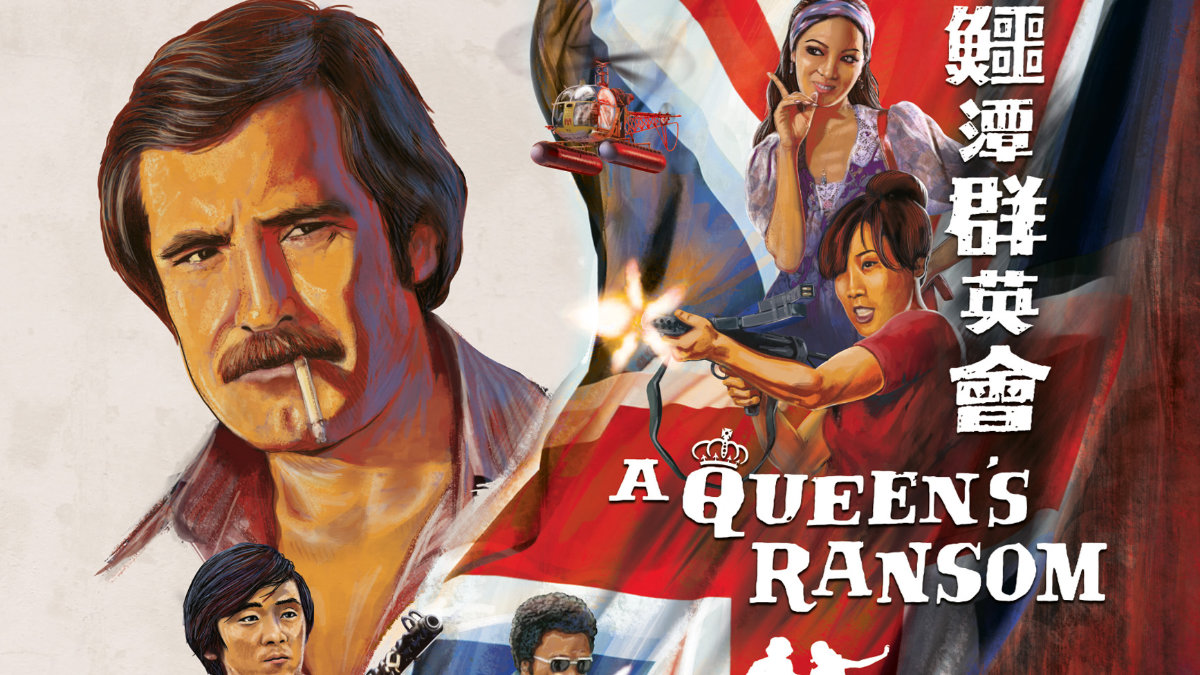
A Queen's Ransom - Blu-ray Review


Having been known for serving on Her Majesty's Secret Service, protecting Queen and country, I'm incredibly surprised to learn that there was a time when James Bond actor George Lazenby once plotted to kill her. 

A Queen's Ransom sees Lazenby playing IRA terrorist George, a man who's in Hong Kong putting together a team of crack killers and skilled mercenaries in order to assassinate Queen Elizabeth II during her visit in 1975. Joining him in his mission are Bolo Yeung, Judith Brown, Pei-Shan Chang, and other familiar faces, playing a variety of folks including diving specialists, explosive experts, and even a criminal swordsman. The eclectic group begin planning their attack on the Queen, but when the authorities learn of the assassination attempt things become more complex.

On the surface, A Queen's Ransom is a pretty simple and straight forward film, a group of bad people want to kill the Queen, the cops are trying to catch them. And the film does stick to this plot for a while, with the audience following both groups as they work towards these goals. But there's a strange sub plot happening involving a third group renting out a remote building to store some chests in, and cracks begin to form within the assassins group that leads to some tension and even a double cross or two. It's when the film gets towards it's final act, however, that we find out the audience has been duped, and that the assassins have a whole other scheme going on that's been kept secret from us; and it's this point the film goes from being decent, to being ridiculously fun.


I'm not going to spoil the final act of the movie, but it's one that I didn't see coming, despite the movie laying the groundwork for it quite well in the early stages. The film subverts your expectations, and you get so absorbed in the various plots and changes of plans (the gang seems to have so many of them), that when the rug gets pulled out from under you you're taken by complete surprise. 

The action scenes in A Queen's Ransom are pretty arch, and go over the top where they can despite not having a huge budget or lots of resources. A lot of the actors go big on their death scenes, and the violence has a strange mix of being quite shocking, yet also a bit pantomimish too. It keeps things from becoming too serious, and it ends up leaving the viewer with a smile on their face. And that's perhaps one of the best things the movie does, it takes a story that could have been very grounded and gritty and it injects just the right amount of silliness. It's not enough to make A Queen's Ransom a comedy film, but it is enough that you know not to take things too seriously and to just enjoy the ride.

Some of the best scenes involve the criminal gang, and there are a number of recognisable faces amongst them. Lazenby manages to steal a lot of the scenes that he's in, swaggering around as the top dog in the pack. He seems to be enjoying playing the villain rather than the hero, and his thick 70's moustache and bad Irish accent (dubbed rather poorly too) make him a character that instantly stands out amongst his compatriots. Other than Lazenby, the most recognisable is Bolo Yeung, who most people will recognise from Bruce Lee's Enter the Dragon. As with most cast's he in, Yeung dwarfs most of the other people on screen thanks to his physical size, and he uses his presence well here, getting to have a number of scenes where he and the other gang members get into some heated moments with each other. 


The new release from Eureka Entertainment, the first time the film has been released on Blu-ray I believe, comes with both the English language export cut of the film, and the original Hong Kong theatrical cut of the movie. Alongside both versions of the film is a new audio commentary by Asian film expert Frank Djeng, and another from Mike Leeder and Arnie Venema. Folks who've been watching the Eureka releases will be familiar with all three of these guys, and will know that they offer very different things on their commentary tracks, with Djeng going into the careers of those in front of the camera and behind the scenes, as well as talking about the impact of the movie, whilst Leeder and Venema take a much more laid back, conversational approach where they will bounce off each other a lot. There is also a collectors booklet with some new writing on the movie too.

For fans of Hong Kong cinema this is an enjoyable film, one that has a lot of charm thanks to the twisting and unexpected plot, and which uses the real world visit of the Queen to springboard off of to create a movie that's more enjoyable than you'd expect. It's also one of the few times that Queen Elizabeth can say she's been in a Hong Kong action movie, thanks to the film making use of footage from her visit the year before it's release. That alone should get you considering giving it a watch. 


Support Amy on Patreon

Buy Amy A Coffee

Go to Amy's Blog

Wednesday, 29 May 2024

Prison Walls: Abashiri Prison I-III - Blu-ray Review


There's this thing that seems to happen whenever a much loved film gets a sequel, where people who enjoyed it will roll their eyes at the idea and claim that filmmakers have run out of ideas, or are trying to milk something for all its worth. We're in an age of franchises, where it's not hard to find series with multiple entries, or entire film universes. But this is nothing new, films have been doing this for a long, long time. And Japan loves a good sequel. As long as there has been cinema in Japan there have been sequels, with some of their biggest hits and most enduring characters being part of multi film epics. And despite what you might think looking at the cover of Prison Walls: Abashira Prison from Eureka Entertainment, this series is not a neat and tidy trilogy; there are eighteen films in this series.

Collecting together the first three of these films into one neat package, this new release offers film fans a chance to discover an enduring and much loved series from Japanese cinema. The seventh instalment was the highest grossing film in Japan in 1966, so these weren't cheaply made and quietly released movies. Having never heard of this series before this release, I was incredibly surprised by how many films there were, but having thoroughly enjoyed the first three I can see why audiences kept coming back for more.

The first film, based on a novel about someone's real life experience in the remote Abashira prison, tells the story of Shinichi Tachibana (Ken Takakura), a young member of the yakuza who is sent to the titular prison for a light six month sentence. However, Shinichi is worried about spending even such a short time in prison as his mother is gravely ill, and he worries that she may pass before he returns home to her. Because of this, and with him being a model prisoner, Shinichi is working towards an early release. However, when working on one of the chain gangs in the cold of winter, Shinichi finds himself tied to the hardened criminal Gonda (Kôji Nanbara) as he enacts an escape attempt, forcing him to go along. 


Because of the lack in studio trust in the movie, the first entry in the series was made in black and white, and stands out from the others because of this. However, the black and white does lend the film a certain extra weight, and makes it feel like a film worth paying attention to. Perhaps it's being alive in a time where black and white tends to be an artistic choice in modern cinema, but knowing that Abashira Prison was made in black and white in a time where other films were in colour does make it feel like more of a thematic choice. The black and white also looks great in the snow covered environments too. 

The movie is pretty straight forward, and it manages to get you on board with its lead thanks to flashbacks that flesh out his character and makes you see him as someone to sympathise with despite being a character you probably shouldn't. Those who've watched The Defiant Ones will notice some big similarities, but the film does enough new in itself to not feel like a rehash or a cheap knock off. 

The second film, now shot in colour thanks to the firsts popularity, shows Shinichi as he attempts to re-join society after the events of the first film have been resolved. But, luck is not on his side. A group of thieves have robbed a bank, stealing a cache of diamonds. The thieves hide the diamonds inside an algae ball, carried around by a fake nun (you can tell the tone has shifted somewhat here), but one of the balls manages to find its way into Shinichi's keeping. This puts our protagonist in the sights of both the law, and the criminal gang. Shinichi embarks upon a mission to clear his name, and avoid another prison sentence. 


Another Abashiri Prison Story is something of a change in tone from the first film, and it take on a much more light hearted approach. The change from black and white to colour coupled with this tonal shift does make the change feel a bit stark when watched alongside the first; however, the two happening at the same time does kind of work too, with the lighter themes and different approach to the material ushering in literal colour into this world. The change from the cold, snowy environs of the first film to the bustle and excitement of the big city also marks this as a big change for the series; but one that I think allows for more room for the sequels, as eighteen movies of Shinichi in the same prison just wouldn't work. 

Abashiri Prison: Saga of Homesickness is the third film in the set, and returns to the more serious tone of the first, by completely ignoring the events of the second film. Having been released from prison, Shinichi makes contact with his yakuza boss, played by Kanjūrō Arashi. We see the fallout of Shinchi's actions, and learn how things have changed for his entire yakuza gang whilst he was away. The film is quite melodramatic in places, and has the twisting narrative that a lot of Japanese crime dramas have. It questions whether it's actually possible to leave the criminal life, as Shinichi and others try to go straight but are forced by circumstances to break the law once again. It posits the idea that once you start down the criminal path it is impossible to ever be fully off it. 

The film also contains a sub plot about a young girl with a mix race heritage, being both Japanese and Black. The movie tries to do commentary about race and racism in Japan, but is hampered a great deal by the fact that the actor is in Blackface the entire time. This was a different era, sure, but it still feels like it shouldn't have been impossible for the filmmakers to find a young actress who could play the part without the need to putting on makeup. Eureka do include a small warning about this before the film, which is appreciated, and whilst it may be distasteful to many viewers it is also a piece of film history, and should be noted at least for how the portrayal of Black people was handled in Japanese cinema at the time. 


Each of the films gets its own audio commentary, with different contributors to each; Tom Mes handles the first film, Chris Poggiali covered the second, and Mike Leeder and Arne Venema come together to talk about the third. Each of the commentaries offers additional insight into their respective movies, as well as the series as a whole, Japanese cinema at the time, and the careers of those involved. As with every Eureka commentary track, they end up being hugely informative, and gets you interested in the small details of the movies. There are also some trailers, and a couple of features, including an interview with critic and Asian film expert Tony Rayns, and a video appreciation with Jasper Sharp and Mark Schilling; both of these last around thirty minutes and goes into the making of the movies and other behind the scenes info. All in all, the special features end up being a great addition to the films, and showcases a ton of expert knowledge. 

Whilst sequel fatigue is a phrase that some throw out about films (usually either those who dislike films made to be fun, or those that are just grouches) cinema will always embrace certain stories and characters and will return to tell stories of them time and time again. It's easy to see why this series became popular in Japan, and with the first three films here showcasing different tones and styles, and making some decent swings in terms of story, it's fascinating to think about the other fifteen films in the series and what they might have done. Hopefully this set will prove to be a success, and Eureka will release the other sequels in the future.


Support Amy on Patreon

Buy Amy A Coffee

Go to Amy's Blog

Tuesday, 28 May 2024

Sorry, Charlie - Film Review


There's often a fine line between horror and thriller, and you'll often see thriller movies popping up on lists of great horror films (Silence of the Lambs does this a lot), and as such it can sometimes be hard to know which category a film falls best into. Sorry, Charlie is one of these films, one that straddles the line so well because it feels like the kind of scenario that can happen in real life, and that makes it so much more frightening.

The film starts with a chilling telephone call to 911, where a woman tells the operator that she can hear a baby crying outside and questions if she should investigate or not. Despite the urges from the operator to not go out, the woman does, and we hear her attacked. From here we meet Charlie (Kathleen Kenny), a young woman who has just moved into a house that she has inherited from her grandmother and is in the process of renovating. When she hears the sound of a baby crying she heads outside to check it out, and falls victim to The Gentleman, an attacker who lures women outside with the sound of a crying baby in order to rape them. 

We jump forward in time nine months, catching up with Charlie, who's become a shut in, staying inside her home, working as a helpline call operator. She has no interaction with people other than over the phone, choosing to keep herself safe from the outside world. We also learn that The Gentleman's rape left Charlie pregnant. In the time between the attack and now a man has been arrested for the assaults and murders, but Charlie is convinced that they have the wrong man, and believes The Gentleman is still out there. As the night progresses, Charlie's fears that her attacker is watching begin to be proved right as strange events start to happen. 


Sorry, Charlie is perhaps one of the best examples of a low budget movie that I can think of off the top of my head. The film is short, around and hour and fifteen minutes long, shot on one location, with only two cast members on screen in the form of Charlie and The Gentleman, with other characters appearing only as voices over the phone. It's a small, contained story set in a small, contained environment, but it never feels like it's lacking. There's no sense that the filmmakers have been constrained by a lack of funding, that they had to keep the cast small for behind the scenes reasons. Perhaps there were some limitations that dictated aspects of the film, but it doesn't come across that way, and instead Sorry, Charlie feels like a film with a clear vision of what it wants to achieve.

With the film being so focused, much of it rides on the back of lead actor Kathleen Kenny, who dominates every scene she's in. The film is with her constantly, told through her eyes, and for the majority of the runtime she's acting to no one, either on her own or speaking on the phone. This feels like a tough situation to be in, but Kenny absolutely shines here, keeping the viewer engaged at every turn. She brings such life to the character. You get drawn into her situation, her isolation, and become invested in her incredibly quickly. Kenny does fantastically throughout that you almost forget that there's going to be another character on the screen with her at some point, and you just get lost in following her everyday life.


But, it's not just a film about Charlie, as her attacker makes his presence known. The Gentleman is an interesting creation. There are absolutely shades of Scream here, especially as he talks to Charlie over the phone a lot, and does the Scream killer thing of pretending to be someone else when first talking to her. And whilst he has a very real physical presence in the film, acted by Travis William Harris, it's the voice that brings the character to life and fills him with personality. Voiced by Connor Brannigan, The Gentleman has a ton of presence. Brannigan has a voice that's both smooth and charismatic, yet also comes across as sinister. It feels like the perfect kind of voice for a character like this, and there are times when he's speaking where he absolutely steals the spotlight from Charlie and becomes the star of the show. Looking at Brannigan's IMDB credits, it's absolutely criminal he's not done more voiceover work as this is a voice that needs to be in animation and games.

There's a lot to enjoy about Sorry, Charlie, and the acting and interesting script will make the run time absolutely fly by. There are some great twists and turns along the way that keep things from being dull, and even if there are points during the film you start to gripe at Charlie for making typical horror film mistakes it all comes together wonderfully at the end. Kathleen Kenny really makes a great case here for why she should be playing final girls in movies, and if we don't see more of her in horror after this it's going to be a huge shame.

If you're looking for something short but sweet that will entertain you from beginning till end Sorry, Charlie is a fantastic choice. It might be looked down upon as a b movie because of the relatively unknown cast and the small scope of the story, but it's better than a lot of big budget films that get the spotlight.


Support Amy on Patreon

Buy Amy A Coffee

Go to Amy's Blog