Saturday, 27 May 2023

Sons of Ashgard: Ill Met in Elmgard by Chad Corrie – Graphic Novel Review


Originally published on Set The Tape


Historical fiction isn’t a genre that you often see in comics. If you do, it tends to be versions of history with a twist on them, where history has diverged at some point in some unusual way, or it has some kind of fantastical element like magic or the supernatural added into the mix. Sons of Ashgard: Ill Met in Elmgard doesn’t do either of those things to make its Norse inspired story. Instead it makes the rather bold and cute move of making all of the characters small furry animals.

The story centres on Erick Redfur, a red squirrel who begins the tale on a ship travelling to a distant land named Elmgard. Erick has been forced to leave his lifelong home, and everyone he knows, after being accused of murder. Rather than being sentenced to death, Erick is banished from the land he once called home, and branded with the name Bloodhand. Hoping that he can escape his past in Elmgard, Erick is seeking out a second chance at life.

Erick spends some time settling into the small coastal village of Old Shore, visiting the local tavern where he meets Gorm, a huge guy who makes coin by arm-wrestling the men of the village. That night, the village comes under attack by Skraelings, a clan of vicious chipmunk warriors. As the village deals with their wounded and dead after the attack, Erick is brought before the Jarl, who wants Erick to join up with a small scouting team tasked with going after the Skraelings, finding where they live, and striking back if possible. Whilst Erick refuses, the Jarl uses the secret of Erick’s crime to force him to cooperate. Now Erick and a group of warriors and trackers have to head out into the wilderness, and danger.

At its heart Sons of Ashgard: Ill Met in Elmgard is an action adventure story in the same vein as The 13th Warrior or Beowulf. If the book had humans rather than animals it would be an intense story, one where a small band of fighters are facing off against dangerous odds, going up against vicious killers who can’t be reasoned with, having to kill just to stay alive. And there are times where the book does feel a bit like that, but as soon as the characters are switched out for animals it suddenly becomes an all ages story. The violence, which does include death, loses its edge, and it feels like you’re reading a mature children’s story rather than a violent historical epic. And ultimately, that choice also makes the book stand out.

I’ve read a lot of comics, and a lot of books try to go violent, perhaps hoping that the ultra-violence, the blood and guts and swearing, will end up with the book standing out amongst its competitors. And yes, this does make very violent books immediately different from your standard superhero comics like Superman and Batman, but after a while they all tend to bleed into each other, and it becomes hard to recall any of them. In comparison, I’m going to remember Sons of Ashgard: Ill Met in Elmgard precisely because it didn’t go with a ‘realistic’ approach. I’m going to remember the squirrel warriors, the chipmunk people attacking a village, and the more cutesy aesthetic of the book.

While the book goes for a more all ages approach visually, it doesn’t feel the need to dumb things down for the readers. The characters are flawed, they have complex emotions and motivations, and they have some pretty adult conversations. The story and script could be given to human characters with relatively little change and it would still work well. And that is another thing that the book has working in its favour. It feels like anyone can pick it up and enjoy it without feeling left behind, or like they’re too smart for it; which is a very tough thing to pull off.

I’ve spoken a bit about the fact that the book stands out because of the characters being animals, and I have to take some time to sing the praises of Matt Wendt, the artist on the book. Every single page looks absolutely fantastic, from the backgrounds, to the locations, to each and every character having their own unique look, a lot of effort seems to have gone into making the book stand out from a visual point. Each of the main characters who make up Erick’s team, Gorm the large guy who uses his fists, Henrik the cocky swordsman, Rolf the mysterious tracker and bowman, Bruna the fierce shield maiden, and Soren the city guard tasked with keeping them on mission all have their own personalities that come through in the designs. You can tell each of them apart in a second, thanks to their unique looks and styles, and it helps in keeping track in the large fight scenes and the chaos that comes later in the book.

I can see some readers passing over Sons of Ashgard: Ill Met in Elmgard, thinking that it might be a children’s book, thanks to the bright colours and animal characters. But whilst it will be a fun book for younger readers that doesn’t mean that adults should miss out on it too. Whether you’re reading it with your kid, or if you’re not even a parent, there are a lot of fun, entertaining moments to be found in this book and it’s worth giving a try if you’re able.


Support Amy on Patreon

Buy Amy A Coffee

Go to Amy's Blog

Friday, 26 May 2023

Metro: Last Light – Throwback 10


Originally published on Set The Tape


First person shooters are a very common genre in video games. Ever since Doom took the world by storm (and is still one of the most ported games ever made), the first person shooter has been not only a staple of gaming, but one of the most popular ones. Over the years, as technology improved, the FPS genre only got better, and it’s hard to argue that its peak wasn’t around 2010 when games like Call of Duty: Modern Warfare 2 were dominating the charts. At a time when military and squad based shooters were all the rage it was hard to find a first person shooter that dared to try something different, that risked low sales in order to try something bold. However, the Metro series did just that.

Metro 2033, the first game in the series, was released in 2010, and ended up being a commercial and critical success, despite generally going under the radar of a lot of people. Based upon the post-apocalyptic novel by Russian author Dmitry Glukhovsky, the game stripped down a lot of the big, bombastic action elements that were dominating the FPS genre, and instead created a dark, survival horror shooter. Thanks to the success of the first game a sequel was given the go-ahead, and whilst it would end up expanding on the scope of the first game in a number of ways, Metro: Last Light would continue to be a more story driven, darker themed action game that would stand out amongst its competitors.

Whilst the first game took a lot of inspiration from the novel it shares a name with, the sequel would take a departure from the books, and would not be following the events of Metro 2034 as fans anticipated. Instead, the studio decided to take the story in its own direction, following on from the ‘bad’ ending of the game, as they considered it to be the more interesting of the two to launch into a sequel with. Despite moving away from the books, original creator Dmitry Glukhovsky was involved in the story process, and wrote much of the dialogue for the game.


Metro: Last Light takes place one year after the events of the first game, and players once again get to take control of Artyom, who has now become a fully fledged Ranger. The Rangers have moved into the massive underground military bunker, D6, which players discovered at the end of the last game, and are trying to keep peace amongst the citizens of the Metro, whilst also keeping the location of D6 a secret. When news reaches the Rangers that one of the Dark Ones, the mysterious creatures killed at the end of the first game, are still alive, Artyom is sent out to find it and kill it, along with Ranger sniper Travelling up to the irradiated surface, players navigate their way through the ruins of the old world until they find the Dark One, who turns out to be a child. Thus begins a series of events that will see Artyom having to battle against Nazis, Communists, and hordes of mutants as he tries to prevent a war, and protect the Dark One that he believes could be the key to bringing lasting peace for the remnants of humanity.

Whilst the story of the Metro series is one of its key selling points, the main area in which the game stands out, especially amongst its competitors at the time, is in the realism that it tries to bring to the game play. The first game was praised for its stealth elements, and this was taken to heart in the sequel. A bigger emphasis was given over to stealth, and the option for players to go through the entire game without killing a single human enemy, opting instead for sneaking and non-lethal take-downs. In order to assist players with their stealth approach the levels were made a little less linear, with multiple routes through environments for players to choose from. Players can also use darkness to assist them, turning off lights and blowing out oil lamps as they go to create darker areas in which to hide.

While it’s possible to play through the entirety of Metro: Last Light without killing a single human enemy (you will still have to kill mutant creatures) the game doesn’t force this on you, and if you wanted to take a more action approach to things you’re able to do so. That being said, the game is incredibly aware of its setting, and making an immersive story and environment are key; as such, players will still need to weigh their options carefully in regards to what weapons to use and how to source ammunition. Supplies aren’t that limited in Metro: Last Light that you’d feel at risk of running out of ammunition, but there’s always the possibility you might have to make a mad dash through a hail of gunfire to grab more bullets if you’re not careful.


The developers wanted the players to feel as immersed in the setting as they could, and one of the ways the game does this is by removing any kind of heads up display. There are no cross-hairs on the screen to show where your weapon is pointing, and you either have to fire from the hip and hope for the best, or aim down the gun’s sights. There’s no ammunition counter on screen, and you either have to keep track of bullets in your head, or watch your magazine where you will see your bullets going down with each shot. Things like timers for your gas mask filers are done on your watch, and players have to make the character bring their arm up to check it. And there are no way-points or objective markers, and you will have to use your compass to know your direction; something else that you need to actively bring up. These choices not only make it feel like you’re in a much more real environment, but also make the game feel a bit more challenging than your average shooter, where everything is displayed on screen for you.

Whilst the game is a first person shooter that deals with the fracturing and infighting between humanity after the end of society, there’s more to it than that. The first game was heavily praised for the horror elements that it included, and some of the more memorable segments of that game are the most frightening ones. The sequel would continue to bring these elements of the supernatural and the horrific into the second game. Whilst the game would use the mutants for this, with huge bestial creatures springing out of the dark at Artyom, there are also elements of the game that are a bit more unusual, and harder to explain away. Whether it’s ghostly visions or things that don’t quite make sense in the real world, the Metro series is happy to stray close to out and out horror in order to make the experience more varied and interesting.

The Metro series is one that has gained more and more attention over the years; both of the first two games have received remastered versions that have been released on later generation consoles, as well as on the Nintendo Switch, and the third game in the series, Metro: Exodus, is one of the best games of its generation. It may have had a more humble beginning, being a weird horror shooter based on a book, made by a small team that a lot of people didn’t hear about at the time, but over the years it’s continued to grow and gain more and more fans. Amongst a seas of tactical shooters, military simulators, and run and gun gore-fests, the Metro series continues to stand tall as a unique series; one that does its own thing, makes its own world, and embraces what makes it different. If you’ve never picked up the series before you’re doing yourself a disservice.


Support Amy on Patreon

Buy Amy A Coffee

Go to Amy's Blog

Thursday, 25 May 2023

The Dead Hour (Season One) – TV Review


Originally published on Set The Tape


Horror is one of the best genres to fit into the anthology format. Ever since people started telling each other scary stories around camp fires it hasn’t taken much to make people afraid; and some of the most memorable spooky stories can be told in a few minutes. Horror anthologies can be found everywhere, from books, to television, and even film, and now horror fans can add another anthology to the ever expanding collection, with the new twelve part series The Dead Hour.

Produced by Terror Films, the series premieres worldwide on digital platforms on the 12th of May. The series creators, Daniel B. Iske and Scott Coleman, have described the series as having been inspired by events in the world today, and that it acts as something of a commentary on many of the issues in today’s world. Having been given access to the first two episodes of the season, it does seem like the duo, who also direct and write the series, are indeed drawing inspiration from issues that viewers may be facing, although it doesn’t seem like they’re really saying much.

The first episode ‘Donor’ follows a man who has been laid off from his job, and is keeping it secret from his wife as he searches for more work. Whilst he’s been struggling to find work he’s been using their savings to keep them afloat, and has also found a new way to make some money: selling blood to a shady guy who works on the waterfront. The man has been selling his blood for a while, and the doctor tells him that he can make more money by selling other things, such as organs and skin. When his wife reveals that they’re expecting a baby, the man makes the plunge and starts to sell off other parts of his body.


I can see how this episode might be making a statement about how hard it is to find work, and how increasing debts can quickly mount up and cause people to take desperate action, so I’m willing to give the creators credit on that one. However, if you don’t read interviews with them you’d likely not come away from the show having picked up on this, as some meta knowledge is definitely needed. The episode itself feels quite cheap and poorly produced, and those points are what stand out the most.

The episode looks rather drab throughout, with poor lighting and dull, murky colours. There’s one scene where the man and his wife are talking whilst in their car, and it looks pretty awful. The lighting on the actors’ faces is dull and murky, and never changes, and it doesn’t match what’s on the other side of the windows at all. It’s also painfully clear that the background has been composited in, as some parts have bright white lines around them where the effect hasn’t been put in properly, and every time the female actor moves her head her hair pops in and out of the background. There’s another point in the episode where a weird blur effect has been used on the man’s arm instead of just having him shake his arm, and it looks blocky and pixelated, and more like he’s being sucked into a computer than anything realistic.

The second episode suffers from less technical issues than the first, yet manages to feel even less connected from the statements about real world issues. Entitled ‘Alcoholic Vampire’, the story does exactly what is says on the tin. It introduces viewers to a vampire that gets women drunk, takes them home, then kills them and feeds on them. It later transpires that the man, who is able to go out in the daylight yet has fangs, so is likely an actual vampire, drinks in order to handle killing his victims. That being said, the story does little to prove that that main character actually feels that way. He makes an impassioned speech at AA telling people he needs to drink to deal with how he lives, yet he seems to display no guilt anywhere else, and even takes quite a bit of pleasure in the killing.


This episode has very few effects to get wrong, though there are a few moments that come across as being cheaply produced, such as the blood he keeps in his fridge looking more like red dyed water thanks to being incredibly thin and washed out, and the blood stains around the corners of his mouth being thick, crunchy, and black, like the fake blood was thickly applied hours before and left to dry. Much like the first episode, however, it looks visually bland and flat throughout, and feels as though little effort or thought went into the lighting of the episodes or the composition of the shots.

This lack of visual creativity is made even more stark when you see the intro sequences, which feature a glamorous radio show host introducing each of the stories. These segments feel like they’ve got the colour and contrast turned right up, and feature some halfway decent angles and shots. It’s incredibly clear that these segments were shot at on a different date than the others, and almost feel like they have come from another production entirely.

When first reviewing The Dead Hour I was a little disappointed that I’d only been given access to the first two episodes of the season. However, having now watched those first two episodes I’m glad that I didn’t have to force myself through any more of it. There might be some halfway entertaining things to find in this series, but if so they’re not to be found in the first two episodes. Hardcore horror fans who’ll watch anything might be able to put up with it, but everyone else would probably be best avoiding The Dead Hour.


Support Amy on Patreon

Buy Amy A Coffee

Go to Amy's Blog

Tuesday, 23 May 2023

Star Wars: Visions (Season Two) – TV Review


Originally published on Set The Tape


Some have argued that the Star Wars brand has suffered under the leadership of Disney. This mainly comes from the fact that the old Expanded Universe (which had its own tiered system of canon that varied from project to project and would often be changed or ignored) was swept into a pile and labelled as Legends, and made non-canon.

There’s also a lot of anger at the franchise becoming more diverse, but many of the haters will deny that as a reason. But to claim that Star Wars has suffered under Disney feels very disingenuous. There have been five movies under them, with more to come, several live action TV series with more to come, and several animated series, also with more to come. The brand is still incredibly popular, but it also feels like it’s never quite been as creative either.

Star Wars: Visions began in 2021 as a series of nine animated shorts, outside of the main canon, where different animation studios could coma along and put their own spin on a galaxy far, far away. The show was incredibly well received, and a second season was soon announced. Whilst the first season played it safe, having all nine of the episodes made by Japanese animation studios, the second season adds a lot more variety into the mix, bringing together animation studios from across the globe to create the most diverse and entertaining season yet.


The first episode of the season is ‘Sith’, and is created by El Guiri Studios, an animation studio based in Madrid. It opens the season with a bang, delivering an animation style more interesting and unique than anything in the first season. At times the episode looks three dimensional, at others it’s like a moving oil painting. It’s hard to pin down exactly the best way to describe it, but watching it feels like you’re discovering a whole new way of animating something. The story focuses on a woman living on a remote planet with her droid for company. She spends her days trying to embrace the light within her, and visualises the Force as a form of painting, a way of illuminating and colouring the universe around her. Unfortunately, as a former Sith, she’s also running from her old master, who has tracked her down. It’s a pretty simple story, but the way it’s presented makes it a fast paced, action-packed episode that feels perfect for opening the season.

Next up is ‘Screecher’s Reach’ by Cartoon Saloon, an Irish team who have made some of my favourite animated movies in recent years. The story follows a group of kids who live in a workhouse, who dream of a better future. One day they sneak off, stealing some speeders, and decide to head to Screecher’s Reach, a place that’s said to be haunted. One of the girls is determined to reach it, motivated by an unusual necklace that she wears. This is my favourite episode of the season. The animation style is absolutely gorgeous, and suits this story so well. It’s part childhood adventure, part horror, and it features one of the more frightening people created in Star Wars. There are moments where it almost feels like you’re inside someone’s nightmare. The music in this episode is also wonderful, and the ending is one that will stick with you long after it’s done.

‘In The Stars’ is created by Chilean based studio Punkrobot, and makes use of stop motion animation. It tells the story of two sisters trying to survive on an Imperial occupied world that has been transformed into a barren, toxic waste-filled land thanks to the theft of its resources. Having heard tales of how their mother, a Force user, led a rebellion against the Empire, and died, the younger sister is determined to fight them herself. The animation in this episode is wonderful to watch, and it takes a while to realise that it’s stop motion rather than CGI animation (the studio has done both styles in the past). It’s the way the characters move, and some of the model sets and backgrounds that eventually give it away, though the animation is produced so fluidly and deftly that it’s easy to believe it’s being created by computers. The episode has a visual style unique to itself, and features some truly memorable character designs.


‘I Am Your Mother’ is a short that British fans will immediately recognise, and get excited about, thanks to the episode being made by British claymation studio Aardman Animations. Seemingly set some time after the original trilogy, it introduces viewers to a young girl named Anni (Charithra Chandran),  attending the Wedge Antilles flying school on the day of the big family flying race. Unfortunately, Anni’s too embarrassed by her mother and their junky old ship to enter the race. But then her mother finds out, and becomes determined to win. This episode is nothing but silly, all ages fun, packed full of cool background characters, nods to every corner of Star Wars, and even contains some Aardman references too.

‘Journey To The Dark Head’ is the one episode this season that feels like it could have fit nicely into the first season thanks to the animation style. Produced by Korean Studio Mir, this episode has a much more anime style and tone to it than the rest of this season. It tells the story of a planet where two giant statues, both connected to the Force but one Dark Side and the other Light Side, help to reveal visions of the future. With the Jedi fighting, and losing, a war against the Sith, a mission is proposed to travel there and destroy the Dark Side statue to help sway the course of the war. However, a powerful Sith is hunting the Jedi sent there. This episode has some really cool designs, and some moments that really impress, and I wanted to like it more; unfortunately, when compared to every other episode it doesn’t really feel distinct enough to stand out.


In 'Spy Dancer' French animators Studio La Cachette puts a very French spin on Star Wars, as it takes viewers to a planet under Imperial occupation, where a small resistance group spies on the Empire from inside their night club. The story very much reminds one of the work done by the French Resistance against the Nazis, which is a perfect fit for Star Wars’ story about fighting against fascism. The episode takes a hand drawn approach to the animation, and features big, thick lines and very well done flowing animation style that lends itself incredibly well to the story being told. Despite being the most simple looking of the episodes at first glance, it ends up being one of the best of the season.

‘The Bandits of Golak’ is the episode that I saw the most buzz around leading up to the release, and after watching it it’s easy to see why. Created by the Indian animation studio 88 Pictures, this story draws a lot off inspiration from Indian culture, and looks absolutely phenomenal because of it. The episode tells the story of a boy and his younger sister, who have been forced to flee their home and head to the settlement of Golak. Along the journey, the girl uses her Force powers and is seen by a member of the public, who reports her to the Empire. Upon arriving at Golak, they’re approached by an Imperial Inquisitor, but luckily for them a Jedi is hiding at Golak, and comes to their aid. Not only is this a really well executed story, with some fun moments and some great character beats, but it also has some fantastic design elements. The Inquisitor is the best looking one we’ve had yet, with some stand-out visual flair to it. The episode also features some of the best fight choreography in the series.

Taking a leaf out of the first season, ‘The Pit’ is created by the Japanese animation studio D’Art Shtajio, and features a style that will feel familiar to anime fans. It tells the story of a group of Imperial slaves forced to dig a deep pit in order to mine Kyber crystals. After years of digging they hit the bottom, and the Empire no longer needs them, and so they leave them trapped in the bottom of the pit. One of the slaves decides to climb his way out, and heads to the nearby town hoping to get help to save everyone else. This episode has some pretty dark moments, and takes a fairly realistic look at slavery and the abuse that people do to each other. I don’t feel like it’s a coincidence that the slaves in this episode are mostly portrayed as people of colour, and the Imperials are in glimmering white. This episode might make some feel uncomfortable, but it works well.


The final episode is ‘Aau’s Song’, produced by South African studio Triggerfish. This episode is nothing less than adorable. The woolly, felt-like animation style is utterly unique, and is one of the most visually impressive episodes of the season. The story feels like it could easily slip into canon, and does some interesting things with both Kyber and the Force in the way that Aau uses her connection to it. The character designs are not only unique, but very quickly endear you to them to the point where you’d want to give them a big fuzzy hug. This episode feels like it moves the fastest, and it comes to a close all too soon, bringing an amazing episode, and an amazing series to an end.

The first season of Star Wars: Visions was an interesting project, one that offered some fun stories, but stories that never felt like they made much of an impact. There were one or two episodes that were memorable, and that have lived on beyond the show (for example the Ronin episode), but many of them are ones I struggle to remember.

In comparison, the second season feels like a massive increase in quality. The concept of giving different studios the chance to play in this universe really feels like it’s found its feet here, and the stories on offer this season have very quickly become some of the best Star Wars stories I’ve experienced. It won’t be for everyone, and those fans who are so caught up on canon that they don’t let themselves just have fun will surely hate it. But those willing to take the stories on their own merit will absolutely love it.


Support Amy on Patreon

Buy Amy A Coffee

Go to Amy's Blog

Saturday, 20 May 2023

Aliens – Life as a Fan


Originally published on Set The Tape


Something that always seems to raise eyebrows with people when I tell them a bit about my love for the 1986 sci-fi horror blockbuster Aliens, is that it’s one of the first things that I can ever remember watching. Thanks to a childhood with some very laid back uncles who never really cared what videos I ended up borrowing from their rooms whenever I was around my nan’s house growing up, I ended up watching some stuff on TV that was way above my age range. My mother likes to remind me of how I wouldn’t go near windows after the sun went down for months when I was three because ‘Freddy Monster’ (Freddy Krueger from A Nightmare on Elm Street) was going to get me. But that’s a film my young mind successfully removed from my memories. One that never went, however, was Aliens.

I don’t know what it was about that film that grabbed me the way it did, whether it was the story, the craftsmanship of the movie, or simply the Xenomorph itself, but there was something that prevented my young mind – way too young for a film such as that – from putting it into the same secure lock-box as Freddy. As such, when I remember my childhood viewing habits whenever I stayed around my nan’s on a Saturday morning it’d be watching cartoons like 90’s Spider-Man and X-Men, followed by watching Aliens again. I knew that this wasn’t something that ‘normal’ kids were doing, that no one else my age I knew was watching Ripley (Sigourney Weaver) and the Colonial Marines every week, but it was something that, for some reason, meant a lot to me.


Luckily, my parents not only allowed this, but were fine with it, and it soon just became my thing. Not only that, but this began to expand out into other areas, and I was soon watching Predator with a regularity too, and I remember the joy when I’d come down for breakfast one morning and my mum would tell me that Predator 2, or Alien 3 had been on the night before, and that she’d taped them for me, expanding my love for both franchises. My nan came home from the charity shop one day and presented me with an old Alien Queen figure – complete with tail whipping action, and a thing you could squeeze under her carapace to make her inner mouth shoot out – with a huge sense of achievement because she knew I’d love it; and I did, and still own it to this day. I remember when we were round the house of a family friend and some movie show on TV was going behind the scenes of the upcoming Alien Resurrection and the other adults in the room were shocked to see this ten-year-old get super excited for it.

Alas, ten was far too young to convince my parents to sneak me into a showing of Alien Resurrection, so it was another film that I had to wait for a parent to record off television for me. As the years went by and I grew, up my love for the franchise, and the second film in particular, only grew. Even when I finally got to watch the original film, the last of the four main entries I saw, it failed to unseat Aliens as my favourite. The film would also go on to inspire a love of both science fiction and horror throughout my young life, and they became two genres that would go on to mean a lot to me. I would absorb anything I could get my hands on, and ended watching a lot of geeky TV because of it. It’s not hard to trace so many of the things I love now to that one film, and the effect that it had on me.


Despite being a very gifted reader as an adult, both my reading and writing skills into my early teens were not great, and I would have a lot of extra help in that regards as I fell behind my peers in relation to reading and writing ability. One of the things that’s hard about needing that extra help at that age is that you don’t want to be seen as needing it. It’s hard to hide the fact that you’re being taken out of class for what were labelled as ‘Special Needs’ lessons, but you could try and play it down by not reading books designed for primary school kids in order to practice your reading skills.

The peer pressure around fitting in, and the desire not to become a target for bullies mean you can often neglect the best things to do to help you. So, I didn’t want to read the ‘kids books’ my teachers were advising. But then I discovered something that would help my reading: graphic novels. My small town didn’t have a lot of variety in its shops, but there was this fantastic discount book shop that used to be there that had some amazing graphic novels in it. The ones that, of course, took my eye, were the Aliens ones being published by Dark Horse. I bought whatever I could from there, even getting in trouble for spending my money a time or two, and would go over those books again and again. And reading those comics helped; it helped my reading skills, and it helped spark a love of reading that would never leave me. I was ready to give up, to consign myself to never being able to read and write properly, but the Aliens comics helped to change my life.


Over the years my love of Aliens would continue, and I’d snap up the new releases as they came out. I remember when the four films were collected together onto DVD for the Alien Quadrilogy box set, which came with alternate versions of each film, and around three to five hours of extra features each. This box set was a blessing because it not only helped to stop the VHS copy of Aliens from wearing out to nothing, but it allowed me to delve into the making of the film.

I would watch those behind the scenes interviews and features more times than some other movies I owned, and I loved hearing the stories about the production, and seeing how they brought the film to life. Not only was I now able to recite every line of the movie, but I cold tell you stories about what was used to make the sets, how the props people came up with the vehicles and guns, and stories about things that the actors did on set. I absorbed it all in a way that I was never able to with other films.


Despite all of this, despite watching the film hundreds of times (not an exaggeration), watching the behind the scenes stuff, playing the video games, reading the comics, reading the novels, owning the toys, there was one thing that I’d never done which was always hanging in the back of my mind; I’d never seen the film in the cinema. There were times that I’d see it playing in small, independent cinemas, but these showings would often be on the other side of the country, in the middle of a large city late a night, and getting to them was always impossible. It felt like something that would just never happen. But then it was announced that it would be releasing for this year’s Alien Day, and I thought I finally had my chance. Then I saw that the times didn’t line up well for my partners’ schedules, and I was going to miss out again. Then they added a second day’s showing.

And this is the entire point of this article, the thing I’ve been building towards, me finally getting to watch my favourite film, a movie I’ve been watching over and over my entire life, in the cinema for the first time. We booked the tickets for the Saturday night following Alien Day, and I began counting down the days. A nervous excitement began to build inside me, and on the day I found myself clock watching more than once. When the time arrived I sat down in the seat, and had to fight back some tears as the film opened. I don’t know why it felt so emotional to me, but it felt like this was the ultimate end goal for this film for me, that I’d achieved something I’d become resigned to never happening. And it stirred emotions in me.


Having watched the film so many times I was expecting to get something of the same experience watching it on the big screen, but it made the entire thing feel like a fresh experience. I was picking out details that would have either been too small on TV screens to be noticed, or that had just blurred into the background for me because I’d not watched the movie with such focus in years. But it was the sound that got me too. The music had never sounded better, the chime of the motion tracker was never as sharp and scary, and I could feel the rumble of the gunfire and explosions for the first time. I’ve heard film fans say that certain films are made for the big screen, and have never really understood it until now. Aliens was meant to be seen in the cinema, and after more than thirty years of watching it in the wrong way, I finally got to see it done right. Despite coming out of the film at midnight, and having sat in a small, uncomfortable chair for so long my disabled body felt it was breaking, I was more awake and more happy than I’d been in a long time.

I have spent so many hours of my life absorbed in this franchise, and this one film in particular, that it feels like there are huge parts of my life and personality that are tied to it. I don’t know if I’d have fallen in love with the things I have if it weren’t for this movie, if my tastes would have been completely different without it. I don’t know if I’d have become the reader I am today, nor the writer I am, if it hadn’t have helped me through those challenges. Aliens isn’t just a film to me, it’s a part of my life, and it’s a part of my life that I got to experience in a whole new, wonderful way by seeing it in the cinema. It’s easy to scoff at people who talk about film as an experience, as something more than just entertainment, but something that matters; but I think we’ve all got that one film that means something special to us, that’s more than just a movie.


Support Amy on Patreon

Buy Amy A Coffee

Go to Amy's Blog

Friday, 19 May 2023

Survival #1 – Comic Review


Originally published on Set The Tape


The new horror comic series from Dark Horse, Survival, is marketed in promotional material as ‘Red Dawn meets 30 Days of Night‘, and one issue in this feels like both an accurate and wildly inaccurate description, to the point that it makes you wonder what might be coming later in the series. However, this first issue proves to be an interesting and engaging read that makes you want to come back next month to find out more.

Survival begins with a news report, talking about an incident in Russia, where rebels have taken over a military base on the Chechen border. Over the next few days of reporting it becomes clear that a serious incident has taken place, following a world-wide media blackout, and a nuclear reactor meltdown. From here we travel to Talkeetna, Alaska, a real world town a few hours outside of Anchorage with a population of just under 1,200 people.

A small plane has crashed into the woods outside of town, and a couple of teens are heading out there to check it out. Upon arriving at the crashed plane the two kids head inside to try and see if they can find anything cool. However, what they come across is a dead body, strung up and mutilated, with a shirtless man with clawed, bloody hands, covered in Cyrillic tattoos.

Whilst this is happening, Emma Reed, a young woman in the army, is driving home with a couple of friends from her training. Emma’s father is a hardcore former Green Beret, who lives in the woods and ticks a lot of the boxes for ‘crazy former army dude’ stereotypes. The three of them are heading to an annual armed forces meet up that happens around Talkeetna, where Emma’s father will be waiting for them. The trio have barely arrived at the gathering and made introductions when the girl from the plane comes rushing in, crying for help, and the gathering comes under gunfire from the woods.

Survival feels like a bit of a mystery story so far. There are small clues scattered throughout this first issue as to what might be going on, but so far there’s nothing really concrete to go on. And that aspect of the story is really enjoyable. It’s nice to be on the same page as our protagonists, to not know what’s happening or the reasons why. We get possible hints at the start, with the news reports about the events in Russia, but is that connected, is it just background flavour, is it being included because that’s stuff the characters will know and might draw conclusions from? We don’t know yet, but I found myself going through the book a second time looking for possible clues trying to figure it all out.

There are answers to be found; looking at the solicitations for the next two issues you can get some more information on what’s going on in this series, and what’s to come. And whilst I’m not going to reveal any of that here, it does raise some more questions, thanks to some of the language and names used. There are hints here of something more than the normal going on, with it not just being an outside force armed with guns as the invading men unleash a zombie-like creature in their assault. But it seems like the series is going to be putting a unique new twist on the monster story in upcoming issues.

The characters introduced here vary in level of depth and characterisation. Emma and her father are given the most time out of all of the characters. As Emma and her friends are driving to meet her father we get small flashback panels that show that her father was not always a kind and caring man, that his time in the military has made him into a stern, demanding figure. This has clearly had an effect on Emma, and she seems to be carrying a lot of unresolved trauma around with her. You get a sense in this first issue that her relationship with her father is going to be a big focus of the book, and that the other characters might not get as much attention. This issue feels like a prime example of that, with there being a handful of other characters who get names and things to say, but the story never really treats them as more than just background characters.

The art on the book, by Bryndon Everett, and Natalie Barahona, looks really good, and there are some really cool moments to be found in this first issue. There are some splash pages that look absolutely fantastic, such as a flashback page regarding Emma’s mother, and the final moment of the book, that really help to sell some of the bigger moments in the story, and hammer home some shocking points.

The best thing about the art, however, is the character design. Every character looks really good in this book. The art team are great at presenting age, and where in other books characters can look relatively similar even with decades between them, here you can see the different age groups and generations. Emma and her army buddies look fresh faced, and barely out of their teens, with Emma in particular having tons of great detail in her face. Meanwhile, there are men who look old enough to be her parents, and others older still. Even the child characters look like teens, clearly distinct even from the younger adults. It might not sound like much, but having read a lot of comics where distinct ages seems to be forgotten about and you only ever really get child, adult, elderly, it’s great to see this spectrum presented here.

Survival looks set to be an interesting read, one that has a very solid foundation with this first issue, and could end up going off in a lot of different directions. Now that a lot of set-up has been done I’m looking forward to seeing how much the book leans into the horror, and if it can end up feeling more like 30 Days of Night than Red Dawn.


Support Amy on Patreon

Buy Amy A Coffee

Go to Amy's Blog

Thursday, 18 May 2023

X2: X-Men United – Throwback 20


Originally published on Set The Tape


Whilst the modern box office is a time of comic book movies, with at least one comic book film releasing in growing frequency and attention every year since 2000, films inspired by superheroes weren’t as big business in the early 2000s as they are now, and those that did well seemed to try to divorce themselves somewhat from their bright coloured, ridiculous counterparts on the page. One series that did this were the Fox X-Men films. Despite taking inspiration from one of the more brightly coloured and eclectic teams Marvel Comics had on offer, the first film took a gloomier, more grounded approach with heroes in black leather rather than yellow spandex. With 2003’s X-2: X-Men United, however, some of the more fantastical elements began to leak through.

Despite the success of the first film in the franchise, it was criticised for a lack of action and spectacle. There were few fights in the movie, and what was there tended to be over pretty quickly. Straight out of the gate X-2 looked to be ready to rectify this, with an opening scene that depicted new mutant (not those New Mutants) Nightcrawler (Alan Cumming) breaking into the White House, using his teleporting abilities and acrobatic skills to take down secret service agents as he made his way towards the President to kill him. Thus begins a first act that would send our resident heroes out on different missions as they investigate the attack.

Professor Xavier (Patrick Stewart) and Cyclops (James Marsden) go to question Magneto (Ian McKellen) who’s been imprisoned since the first film, whilst Jean (Famke Janssen) and Storm (Halle Berry) track down Nightcrawler. This leaves Wolverine (Hugh Jackman) to look after the students at the X-Mansion. Unfortunately, a military scientist named William Stryker (Brian Cox) launches an attack on the mansion in the wake of the assassination attempt on the president, and captures several of the children. At the same time, Xavier and Cyclops are also taken into custody. With the mansion lost, and their leaders gone, the remaining X-Men have to turn to Magneto for help.


Much like with X-Men comic books, the plot of X-2: X-Men United seems fairly complex at first glance, but underneath all of the moving parts is a story that the franchise has done numerous times: humanity hates and distrusts mutants, and will do anything it takes to wipe them out. It’s a tale that fans of the franchise will recognise, and it’s one that has been covered in many different ways in the comics. And the fact that one of the main writers on this movie, David Hayter (yes, that David Hayter, Solid Snake himself!) is a huge comic nerd really translates into this movie. Whilst the film kept the more grounded tone of the first movie it added more comic book touches to it than first time viewers would expect.

The story not only touched upon the themes of humanity’s hatred towards mutants, but also explored a little of the history of several of the characters. The film introduced Stryker’s son, who was an early student of Xavier’s, and dealt with some of the early failures of the school. Stryker also had heavy connections to Wolverine, and the film began to address some of the questions that were hanging over the mystery mutant’s head.

Most surprisingly, however, the film would introduce new powers for Jean Grey, the Phoenix. Throughout the movie we’d see her powers grow, and at the end fire would begin to form around her as she made the ultimate sacrifice to save her friends, apparently drowning in the process. This set off alarm bells for comic fans, who recognised these as key story points for the birth of one of the most powerful and iconic X-Men characters. A small tease at the end of the movie set up for big things to come from a third movie (even if that third film failed to deliver).

X-2: X-Men United taking the real-world aesthetic established in the first film and introducing these more fantastical elements made it stand out amongst other comic movies at the time. Spider-Man debuted the year before, and whilst definitely being more brightly coloured and fantastical, it still played it fairly safe by making the Green Goblin a mech-suit, and moving away from the weirdness of the comics.

The only other comic movie grabbing headlines at the time was Blade, and that being horror meant that most people failed to count its bizarre elements as anything more than an extension of monster myths. X-2: X-Men United was the first step towards showing both audiences and film makers that you could include the wilder elements from the source materials in these films. Without this film it’s likely that comic movies wouldn’t have been as popular as they became, and that the landscape of the medium we have now would take a lot less risks.


Part of what really helped to sell the movie was the acting. The first film made the incredibly clever move of casting classically trained actors like Ian McKellen and Patrick Stewart in the lead roles. Mutants and people with super powers are a fairly ridiculous concept, and it’s a key one to the franchise. But having actors of that calibre in the roles helps to ground it, it helps to make it feel realistic for the audience, and it makes it feel like a real issue when the two men argue their sides.

The sequel makes a similar move in bringing Brian Cox in as the antagonist. We’ve all seen the kill-happy army general in film before, but Cox manages to not only make his feel like a threat, but brings a surprising level of pathos to the role. The scene in which he describes his son’s powers, and what he did to his mother is one of the more chilling parts of the film, and whilst it doesn’t justify any of his views or actions it does make them understandable.

Unfortunately, much of the good this film did would be undone in the third film in the franchise (and the fourth), and it would be a number of years before fans would consider another X-Men movie to be as good as X-2. Even today, there are some fans who would count this as the best outing for the X-Men to date. Whether you consider it the best or not, it’s hard to argue that it isn’t one of the best, and that however the MCU tries to bring their own version of the X-Men to the screen it’s going to end up being compared to this film.


Support Amy on Patreon

Buy Amy A Coffee

Go to Amy's Blog

Wednesday, 17 May 2023

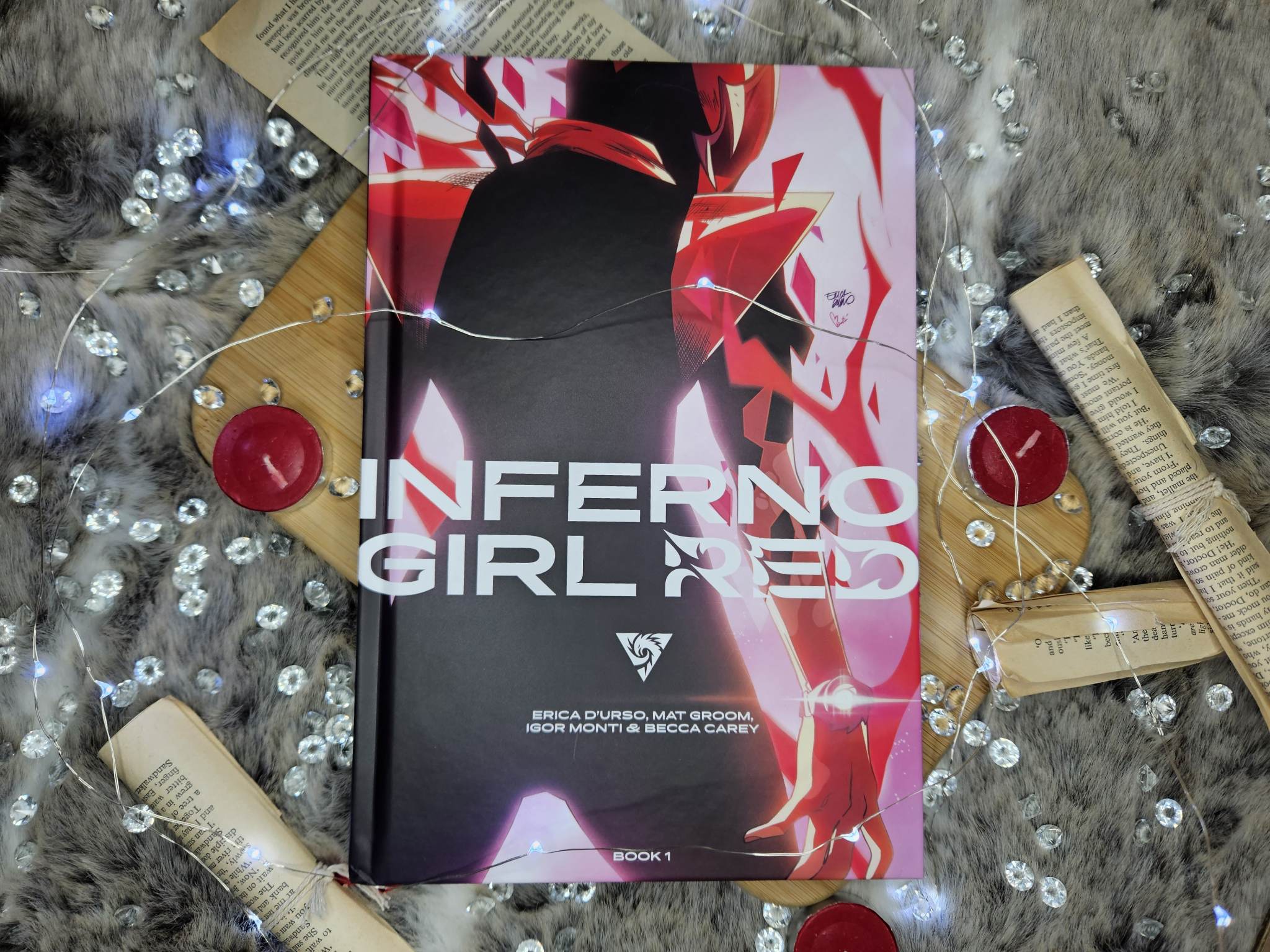
Inferno Girl Red - Mat Groom Interview


In 2021 I spoke to comic writer Mat Groom, who has worked on comics such as Ultraman, Mighty Morphin, and Self/Made, about his upcoming graphic novel, Inferno Girl . This new tokusatsu inspired series, with art by Erica D'Urso and Igor Monti, introduced readers to an exciting new world and some amazing new characters (check out my review for the book here). Having initially been released via Kickstarter, the Foundation Edition of the book was incredibly well received. However, being released via Kickstarter meant that not everyone had the chance to check out his fantastic series. Luckily, Inferno Girl Red is coming to general release as three individual issues fro Image Comics.

I got the chance to talk to Mat again about what it was like producing the Kickstarter campagin, and the journey to bringing IGR to comic shops.


Hi Mat, thank you for taking the time to answer some questions with me again. We last spoke when Inferno Girl Red was getting ready for her Kickstarter campaign; so my first question would be what was that process like? Having to organise everything yourself I’m sure there were a number of challenges you had to face along the way? 

Oh, yeah—it was all challenge! A lot of lessons learned, too. And it wasn’t just related to standard comic creation—because we had such an extensive and diverse range of reward tiers, there was lining up artists to do prints, figuring out how to get full-sized replica helmets sent around the world, figuring out how to do an ash-can mini comic… And then there was the Kickstarter element of it all, figuring out how much to share and when, to make sure backers were kept updated whilst maintaining realistic expectations, but also not giving away all of the story ahead of time. Thankfully, our community of backers was incredibly supportive and enthusiastic, which meant the world to us as we navigated the Kickstarter waters for the first time.


The Kickstarter campaign seemed to go very well for you in terms of public reaction and the number of people who took part. Were you ever nervous that the reaction wouldn’t have been as strong, and were you pleased with how it went?

Are you kidding, I was only nervous! I was 100% entirely comprised of nervousness, down to the cellular level. I think because there was so much on the line—we’d put so much work and effort in, were so invested, I think it would’ve been crushing if it didn’t work out. I think we had done everything we could have to prepare, we’d really hustled on PR (with the assistance of our friends at Superfan Promotions), I believed wholeheartedly in the book and the team… but you can never really know, you know? At a certain point, you just have to make the leap into the unknown. But I couldn’t be more delighted by (and appreciative of) the response. Hitting our funding goal so quickly took the pressure off fast, and then just the energy and enthusiasm of everyone… the fan art, the speculation, the general hype… I feel tremendously fortunate and privileged to have IGR’s journey begin that way.


When we last spoke you were singing the praises of your art team on IGR, talking about how wonderful Erica D’urso was. In the back of the Foundation Edition book there’s a lot of behind the scenes stuff with Erica talking about the various stages of designing the characters and the world of the book. What was it like working with Erica from inception to getting the book out there?

One of the best experiences of my career. That backmatter you’re referring to shows just how much work Erica put in, how many different routes we explored… and jamming with Erica on that stuff was so creatively fulfilling. I think because she’s so passionate and detail-focused, and such a deft hand at worldbuilding, it’d only take a few words from me for a whole new person to arrive fully formed and totally unique from Erica. And she brought so much of herself to it, her innate sense of style and her nuanced sense of emotion radiates from all of these characters.


We spoke a little last time about how IGR draws nspiration from Tokusatsu heroes, and since then you’ve done a six issue run on Mighty Morphin, have produced a Power Rangers story for the new collection, and made two more series of Ultraman. It’s safe to say that this is a genre of storytelling that appeals to you. What is it about Tokusatsu stories and characters that seems to keep drawing you back to them, and do you think that they offer different challenges to other comic writing?

To me, tokusatsu kind of encapsulates my favourite thing about fiction—taking big, earnest, meaningful ideas, and then expressing them in the wildest, most creative, most vivid ways possible. Obviously there’s so much style there, but to me the key is how earnest it is at its core. I’ve talked about this before, but I had a real lightbulb moment when watching KAMEN RIDER BUILD—which is a show about the inescapable consequences of developing weapons of war, no matter how pure your intentions (and doesn’t shy away from the intensity of those consequences AT ALL)… but, also, it’s a show where the hero can fuse the essence of a helicopter and a rose to become a dual rose/helicopter themed superhero. Both of those elements co-exist, and are in fact empowered by each other… and there’s no self-consciousness about it. It’s brave enough to push any and all ideas to their strange and delightful limits.

I think that relates to the challenge element you asked about, too. To me, the bad version of doing something inspired by tokusatsu is to mimic the aesthetics but not engage with how tokusatsu stories are different to Western genre narratives. Tokusatsu has so much that superhero stories in particular can learn from—including how to break way from perpetual status quos, and how to incorporate progressive ideas by infusing them with wondrous, fantastical elements. So I think the challenge is making sure that when you look to tokusatsu for inspiration, it’s not a surface-level consideration.


Inferno Girl Red is coming to comic shops through Image Comics now, offering even more people the chance to read the book. What was the process like going from independently publishing the book to being published through Image, and was the popularity of the Kickstarter something that helped with that?

We were fortunate enough to have locked down that arrangement shortly before the Kickstarter launched, which I’m sure helped us tremendously. In a lot of ways, this is the only way IGR could have existed—because we were so insistent on doing it as a graphic novel first-and-foremost, that’s incredibly hard to fund, especially for a relatively-unknown creative team. But our incredible Kickstarter supporters gave us the funding to develop the whole story, and then Image helped us with the infrastructure to get that story to the wider market. I’m so thankful to be at Image, with IGR—because Image affords us total creative control and IP ownership, which was a must for us. Erica, myself and Igor put so much into IGR, both in the book and beyond, because we know we’re the ones who benefit from whatever we put in, and we know that nobody is going to come in and tell us to do it differently. It’s our story, we’re going fail or succeed on our own merits– which means we can diverge from traditional superhero storytelling in many ways, and Image enthusiastically affords us the freedom to do that.


Image Comics is the home of the Massive-verse, which IGR is a part of. Since starting with Radiant Black it’s continued to expand, introducing other Radiant characters, as well as The Dead Lucky, Rogue Sun, and IGR. How does adding more titles to the Massive-verse come about, are there some central folks who are in charge of that universe, or is it a more collaborative process?

It’s been a quite an organic process, to be honest! In the beginning, Kyle Higgins was developing RADIANT BLACK, I was developing INFERNO GIRL RED, and Ryan Parrott was developing ROGUE SUN—initially as entirely independent entities. But then Kyle pitches us the idea of them sharing a storytelling space, and we were into it. It was important to all of us that we entirely maintained our independence– nobody in the Massive-Verse tells anyone else what to do, all of the series read totally self-contained if readers only want to engage in one story… but the worlds collide every now and then in our SUPERMASSIVE specials, where we can see what happens when these quite different books start to overlap. Since then, as you mentioned, we’ve been joined by the immensely talented Melissa Flores (with her book THE DEAD LUCKY), and there have been RADIANT BLACK spin-offs which have brought in other creators, and now Kyle is doing another Massive-Verse book with NO/ONE… so the expansion has been rapid! I think what’s held everything together is my friend Michael Busuttil, who is the editor on most of the books… we call him “Mr. Massive-Verse”, because he’s the lynchpin that holds us all together. As I mentioned, there’s nobody “in charge”, all of the books are owned and run by their individual co-creators, the creators make the final calls on their own books… but Michael helps us stay co-ordinated and cohesive (at least where we need to).


With the series coming to Image, the ever expanding popularity of the Massive-verse, and the book leaving things open for more adventures from the character, are there plans to do more with Cassia?

Yes! >.> I guess I should provide a bit more an answer there. Um. Hm. Let me say this—Team IGR is INCREDIBLY invested in INFERNO GIRL RED. We adore the character, we adore the world, we love doing the book. So we’re going to go for as long as we feasibly can… and our plans for Cássia involve things that you might expect, and some… that you may not.


What are your hopes for the character and the series going forward, are there big plans for IGR and the other Massive-Verse characters that you’d love to see come to furition, or is it more a case of taking things one book at a time?

We have a big, long-term plan for IGR. That plan allows space for mingling with the rest of the Massive-Verse when those opportunities arise, but our core focus is IGR’s story as told through graphic novels. Now that Cássia and her world is established, we’re really excited to expand our her supporting cast, get to know very important characters like Harriette and Lillian better, and start to reveal some of the secrets we’ve layered into the story…


For those who haven’t tried any of the Massive-Verse titles yet, and who might be interested in seeing what Inferno Girl Red is like, how would you describe the book to them to win them over into picking it up? 

INFERNO GIRL RED: BOOK ONE is a graphic novel that’s inspired by Western superhero stories, Japanese tokusatsu storytelling and even a little bit by boarding school dramas. It tells the story of Cássia Costa. For a long time Cássia and her mother have barely been scraping by, bouncing from city to city as Cássia’s mother looks for work. But Cássia gets a big break when she gets an invite to a prestigious and progressive school in the near-utopian Apex City. Unfortunately, Cássia’s hope about things turning around for her are yanked away when an ancient cult and their army of demons rip Apex City out of our reality and cast it into darkness. To have any hope of saving it, and getting her life back on track, Cássia must survive the worst night of her embrace a secret legacy, and find the courage to fight when all seems lost—as the blazing light of hope in the dark, INFERNO GIRL RED! 

When making this book, Erica, Igor and I were trying to imagine how comics might (or should be) a few years into the future, and we tried to make that—it’s progressive, we think it’s a much more genuine look at how teenagers actually are today and the challenges they experience, and it’s extremely accessible! Even if this is your first ever comic book, we believe you’ll be able to dive right in and you’ll be hooked right away! So we’d love for you to take a chance on IGR!


You can find more information about Inferno Girl Red here at the Image Comics Website.

Check out more from Mat at his website.


If you're interested in picking up Inferno Girl Red make sure to talk to your local comic shop, or comic website, so that you don't miss out on this exciting new series!


Support Amy on Patreon

Buy Amy A Coffee

Go to Amy's Blog

Tuesday, 16 May 2023

Dawn of DC Primer #1


Dawn of DC is well underway, with several new series already out, and more exciting new additions to the slate having been announced already. It seems like there's never been a better time to start getting into DC; but also that there's something else going on, as Amanda Waller plans her next moves from the shadows as teased at the end of the recent Dark Crisis event.

Dawn of DC Primer is a short, free comic that gives readers a small insight into what Waller might have planned, and certain things that she's after. The book is split between Waller heading to a secret, underground meeting with a host of B-list and lower villains, whilst she sends a small team of agents onto Lazarus Island.

Waller is suitably Waller in this issue, oozing threat and danger whilst being completely unarmed and surrounded by people who want her dead. Whilst this book isn't long at all, it does seem to perfectly capture what makes Waller so dangerous and appealing as a villain. She should be in danger, she should feel worried, but she's filled with confidence, handles threats quickly and efficiently, and is easily the most frightening person in the room. Making Waller the main antagonist of whatever is coming next feels like a really good move. After Deathstroke and his Dark Army, Pariah and his possessed versions of Necron, Doomsday, and Darkseid, it's nice to have a villain that isn't a powerhouse, that isn't a physical threat. Waller will be testing the heroes in other ways, using her cunning and her skills rather than outright force.

That being said, she might also pose something of a different threat as her Lazarus Island team manages to secure a very powerful artefact; the Helmet of Fate. Last seen in the Lazarus Planet comic, where it was found on the island by Dreamer, it's now in the hands of Peacemaker and Peacewrecker, who are taking it to Waller. This does leave me wondering if something happened to Dreamer, or if we're supposed to forget she went after the helmet because the writers forgot that part.

The comic is setting things in motion for future stuff, and is designed to get readers excited for the new series that are coming out. And it does an okay job of that. The book doesn't really reveal anything new in terms of new series, and the story doesn't feel that integral that you're going to get lost if you don't read it; but for those enjoying Dawn of DC who want a little bit extra, it's a pretty decent read.


Support Amy on Patreon

Buy Amy A Coffee

Go to Amy's Blog