Friday, 10 February 2023

Lazarus Planet: Alpha #1 - Comic Review


Originally published on Patreon


The Lazarus Planet events are spinning directly out of the events of Batman vs Robin, which were building upon the first story arc in Batman/Superman: World's Finest so it's fair to say that this is perhaps something that writer Mark Waid has been working towards for a long while.

With many of the worlds magic users and artefacts having been stripped of their power, the magics have ended up becoming part of a huge explosion involving a volcano filled with Lazarus resin. The result is a magic fuelled global event where the powered resin is causing massive storms, huge damage, and has altered the way both magic and technology are working.

Knowing that the Demon Nezha and his son, King Fire Bull, are behind it, Damian Wayne gathers together what heroes he can find at the Hall of Justice, and heads up a mission to try and put things right. With Batman heavily wounded, all eyes fall to his so to lead the heroes to victory.

One of the things that I instantly love about this book is Damian having to take on the role of leader. This isn't the first time that he's done this over the years, but it's one of the first times where he's giving orders to members of the Justice League and Justice Society, people more powerful and experienced than him, and they're listening to him with respect. There's no arguing, griping, or people refusing to listen to a child or ordering him to prove himself. Batman says to listen to him, and people do.

Because there's no drama around Damian taking on this role it feels like one that actually works really well for him. He instantly understands the strengths and weaknesses of his assembled heroes (except for Monkey Prince) and knows how best to use them. His tactical mind and his eye for strategy come through here, and it's a role that I hope we see more of in the future. Damian in charge of a team would be a nice step in his evolution. 

Speaking of his team, it's a pretty weird mix of characters; but again, I kind of love it. Supergirl and Power Girl bring some much needed Kryptonian muscle to the mix, whilst Blue Devil, Shazam, and Zatana are the magic users, and Cyborg and Blue Beetle cover the tech side of things. Talia al Ghul and Batman are in the mix too, though Bruce is heavily wounded, and Black Alice and Monky Prince are held in reserve. It's a mixture of heroes that don't normally work together, and their inclusion in the book makes this feel like something a bit different because it's not the normal roster you'd expect to see as the leads in a big event.

The issue spends much of its time establishing the scale of the problem facing the Earth, and how much trouble the heroes seem to be in. Heroes are missing, magic attacks are happening all over, the dead have risen, and people's powers are going haywire. By the end of the issue it's clear that the bizarre nature of the magic event, and the alteration of peoples powers, is making this something where the normal rules and expectations don't really apply. And that's kind of exciting to see.

The books art is really nice, and the different style of the more hand drawn quality, with more lines and shading done by hand rather than just with colour, gives the book a bit of a grittier feel to it. This helps the tone a lot, and it feels like a dark, stormy, and frightening time for most of the comic. The characters all look really good, and whilst there are times Robin looks a bit older than he did in Batman vs Robin the book doesn't fall into the trap of drawing him like a muscled 20 year old (some of the art on Dark Crisis: Dark Army was terrible for this!).

The back-up story for the issue sees Monkey Prince talking to a tiny clone of Pigsy, who fills him in on the history between the Monkey King, Nezha, and Fire Bull. More in the style of the Monkey Prince comic than the rest of the issue, the tone and feel are very different to everything else; but it does add some context to stuff that we're seeing now. And for those who've been reading Monkey Prince it's a nice addition to that mythology.

This seems like a really interesting start to an event that looks to be trying to do something a bit different. With this being the culmination of things that have happened across multiple titles, with big changes for established heroes, and new characters on the way, this is a great way for DC to start 2023.


This article, and many others, can be read a month early on my Patreon for as little as $3 a month!


Support Amy on Patreon

Buy Amy A Coffee

Go to Amy's Blog

January – Film Review


Originally published on Set The Tape


What is January? I’ve watched the film through, I’ve read other people’s views on it, and I’ve waited twenty four hours before writing this because that simple question seems to be eluding me. How can I begin to explain just what this film is in order to write about it? I don’t think that this is down to me being unable to grasp what January is, but down to the film itself being almost unknowable.

January, which is based upon the play by Yordan Radichkov, begins by introducing audiences to The Porter (Samuel Finzi), a man living in a small shack beside an old, abandoned soviet era school in the middle of nowhere. He, and his companion The Old Man (Iossif Surchadzhiev), fill their time cracking walnuts, doing the crossword, and giving alcohol to a caged raven they have. Their friend, Petar Motorov, is left in the horse sleigh in the early hours, and the heavy snow has covered his tracks, leading to them to suspect he may have headed into the forest (something they say is best avoided in January).

As the film slowly (and I do mean slowly) unfolds, the two of them are visited by various people. First there’s a pair of twins whose plough has broken down. When the sleigh comes back, pulled by the horse, but missing its driver, the group discovers a frozen wolf tied to the back. One of the visitors heads out into the forest, heading towards the city, and the sleigh returns again, with another frozen wolf on the back. Later a priest arrives, looking for Motorov, then a group of costumed men who chase off bad spirits. As each one leaves on the sleigh, it eventually returns without a driver, and with a frozen wolf on the back.

The characters in the film raise questions about what might be going on, with some implication that there might be otherworldly forces at work. The name ‘tenetz’ is given, with the talk about how this force infects people, puts them into a strange dream-like state that will slowly move on to others, bringing more and more people into a dream too until the whole world is dreaming. Other characters talk about believing that they’re already dead, or that they’re stuck in some kind of nether existence. But these are only theories, brought up briefly, and soon forgotten by the narrative as it moves on to the next bizarre event.

The sad truth of January is that if you like being able to figure things out, if you want to go away with answers and know what happened, then this is not the film for you, because it doesn’t seem to really care about those things itself. The film doesn’t focus on trying to figure things out, and instead enters this strange space where it does almost feel like you’re in a dream. Strange characters come and go, they talk about odd things that barely make sense, and there’s no reason for any of it. Whilst this will work for some, it will leave others frustrated.

It’s a disappointment that the film goes this way, as the acting feels much better than the story (or lack thereof) deserves. Each of the characters, all unnamed, feels wholly unique, each one bringing something new and interesting to things. The Porter feels like a tired and weary man who just wants to get through his day the best he can. The Old Man seems to have a hidden weight to him, he’s haunted by his years, and the times when he speaks about things deeper than the crossword feel like the few moments of the movie that begin to shed light on what’s happening. Of The Twins, only one ever reveals his face and speaks, and he brings a level of threat to the film that tempers over time as the mystery deepens. He delivers one of the better monologues of the film, in a shot that goes on and on, forcing the actor to do it in a single take. The actors manage to do something impressive with a script that barely feels there, and I feel that some great performances will end up overlooked because of the overall quality of the story.

The film is shot in black and white, and this does add to its visual flair. The dull and drab environments of the run down soviet school and the old shack end up having a stark beauty to them, and the exterior locations of the snow-covered landscape are so white that they’re almost oppressive, driving the characters back inside whenever they dare to venture out. The camera likes to make the most of the scenes too, and there are more lingering shots and slow movement in January than in most other movies. This, along with the slower pace of the story and the almost tired quality of the acting leads to a movie that feels incredibly slow. Things take their time, shots linger, scenes drag on past where you’d expect them to end. The result are moments that begin as strangely beautiful, but end up going on so long that they begin to have a very different quality to them.

January is a film that will divide audiences. It’s taking a medium that works very differently to film and translating it as best it can, focusing on a small group of people in one location. And whilst that has worked in other stories, the lack of any real explanations, of a coherent plot or characters that make sense leads to January feeling like a disjointed, almost pointless mess of a movie. It’s visually impressive, and it does have a sense of unease to it that saves it from being a complete write off, but I suspect that only a small selection of those into odd arthouse films will come away satisfied.


Support Amy on Patreon

Buy Amy A Coffee

Go to Amy's Blog

Thursday, 9 February 2023

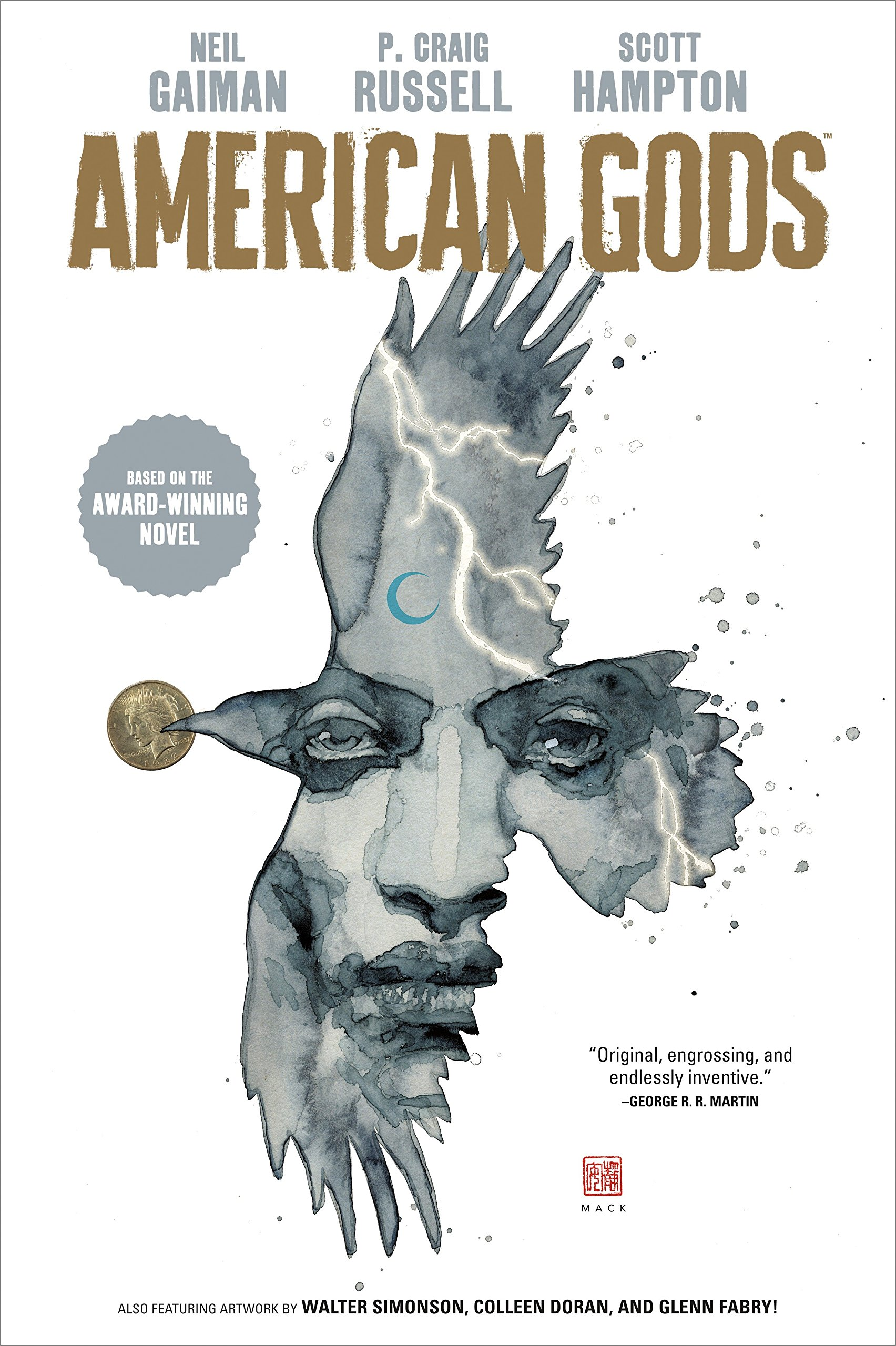
American Gods – Volume One: Shadows – Graphic Novel Review


Originally published on Set The Tape


Neil Gaiman is a name that will instantly bring certain stories to mind, even if he’s not a writer whose work you’ve read. Thanks to the popularity of titles like Neverwhere, American Gods, and Good Omens, and their multiple adaptations over the years, he’s a writer whose work has seeped into the public consciousness.

He’s a writer that I’ve always intended to actually read at some point, having experienced his work through other mediums, such as his episodes of Doctor Who, or the TV adaptation and graphic novel of Neverwhere, but I’ve not actually picked up one of his books and read it yet. When I saw that a new adaptation of his book, American Gods was being produced by Dark Horse, I was interested in trying it out in the hopes that it might push me more towards his prose work.

American Gods, which received a television adaptation in 2017, tells the story of Shadow Moon, a man who has been in jail for the past three years. Building towards the end of his sentence, he’s a quiet and well mannered prisoner, keeping out of trouble and trying to just survive as best he can. His release is coming up at the end of the week, his wife Laura is waiting for him, and his best friend has a job lined up for him. He looks set to get his life back on track. However, when he’s called into the warden’s office a few days early he gets told that he’s being released there and then – because his wife has died.

Leaving prison, alone, confused, and grieving, Shadow starts his journey back home where he can attend Laura’s funeral. Along the way, however, he meets the mysterious Mr Wednesday, who wants to offer Shadow a job. At first he refuses, but when he learns that his best friend died in the same car crash that killed Laura, and that there is no job waiting for him, he agrees to help the odd man. And thus Shadow finds himself being dragged into a strange and unusual world, where ancient gods still exist, and a war between the old and the new is on the horizon.

People tend to look at comics and books and think that they’re very similar things. They’re both things you read in order to obtain the story, so people assume that a lot of books can easily be translated into comic form. And whilst this can work, it does take a certain level of care and skill. Things that work in prose form, long conversations, moments of deep character introspection, and tangents onto other subjects that help build up the world, can flow quite naturally in prose form, and most people wouldn’t even really notice or care that the moment that should have been a five minute conversation takes dozens of pages to make. But when those moments come into comics it can leave things feeling slightly off. And this is one of the issues I had with this adaptation.

American Gods doesn’t seem to be a very visual story, at least none of the things that are collected in this volume are anyway. Much of the book is people talking, people travelling from place to palace, people sitting around and eating, drinking, and playing games. There’s not a huge amount here that grabs at you, and as such the moments of deep description and slow introspection that work in pure text form feel drawn out, dull, and fairly lacklustre when put into comic form. There were multiple times when reading the book where I felt my attention begin to wander, where I started to not really care about what was happening, and I began to wish I could start skipping through things or skimming the book.

Part of this is also down to the fact that because of the way Gaiman’s stories have entered the public consciousness I knew Mr Wednesday’s identity, and that Shadow was entering a world of gods and magic when the character didn’t. I was waiting for that revelation to happen, I was hoping it was coming soon so that I didn’t have to listen to Shadow questioning who this man was or what was happening for the tenth time. The story felt too slowly paced for the now well known revelation to matter, as the book began to drag. And whilst the artwork is nice enough, the fairly muted colours, the soft lines, and the depictions of the normal meant that there were few moments that make you stand back in awe of what’s on the page.

There were several times whilst reading the graphic novel where I felt like I’d enjoy what I was reading more if it was the prose version. I could see what these moments would be like in the original novel, and it felt like a much better fit. This is a decent and entertaining story, but one that feels slightly misplaced in this form. Perhaps for those that are familiar with the book the experience would be different, that they’d see how these characters and this story have been transplanted to this new medium and appreciate the work done on it; but perhaps they’d be left wondering why it has been done when the original book is there instead. I don’t know how this reads to a fan, but as someone coming to it brand new, it was not the experience that I was hoping for.


Support Amy on Patreon

Buy Amy A Coffee

Go to Amy's Blog

Tuesday, 7 February 2023

The Joker: The Man Who Stopped Laughing #4 - Comic Review


Originally published on Patreon


I've been singing the praises of this series since it began, having become quite interested in the mystery it's been building, and enjoying some of the character interactions. Sadly, this is the weakest issue yet, and it feels like a bit of a dip in quality; even though it's still a very good issue.

The entirety of this issue takes place in the hospital where the last one left off, with the Joker having had the bullet removed from his brain and having been stitched back up. Unfortunately for him, the hospital is surrounded by cops, and Red Hood is on the scene looking to get some revenge. 

This issue sees the Joker running round the hospital, hiding out in various rooms, and trying to escape. And it's fine. And fine is about all I can say really. This issue doesn't feel like it really adds a whole lot. 

The scenes where the Joker is trapped in a room with dying children feels a bit off, though it does give an apparent explanation for the back up features in the series (they're in universe comics that are made about the Joker and other heroes and villains). This issue also explains why when given the opportunity to kill Jason Todd over the years why he doesn't (he doesn't like telling the same joke twice). Again, it doesn't feel like a huge amount happens here, and I guess time will tell if his exploits in the hospital will have any baring on events, or if this was an issue that could have been skipped.

The backup feature, which we now know exists in universe as fiction, seems to follow the same pattern as the previous ones; weird stories that might be giving hints and clues and possible explanations for things. This one sees Joker trying it on with Zatana, offering to start a baby with her. She uses her magic to tell him that no one else will ever have his baby. The next day Joker wakes up heavily pregnant. He eventually vomits up living clay, which transforms into a tiny version of him. This, along with the cover that depicts Clayface, could be hinting that the shape changing villain might be involved in the two Jokers. Or it's another red herring and it doesn't actually mean anything.

This issue might not be the best of the series, but it's still an entertaining read with some interesting moments. The artwork is pretty solid, and there are some decent visual moments scattered throughout. People seem to be getting angry online about the pregnant Joker bit, most of them not having read the actual book; but people need to get over it, see it as the throwaway joke it was, and go along with it.


This article, and many others, can be read a month early on my Patreon for as little as $3 a month!


Support Amy on Patreon

Buy Amy A Coffee

Go to Amy's Blog

Monday, 6 February 2023

Inferno Girl Red: Volume One - Graphic Novel Review


'Apex City is a globally-recognised hub of progress and beacon of hope - until it's ripped out of our universe by an ancient cult and its army of demons. The only one who can save it is its newest resident, teen Cássia Costa, after a magical dragon bracelet rockets into her life - but the bracelet is powered by belief, and a life of hardship has left Cássia with little of that to spare.'

If you're a fan of Power Rangers you should be listening to the Ranger Danger podcast, a show that's been going for several years now where a group of friends sit down and watch their way through the Power Rangers franchise from the beginning. At the time of writing this they're on Power Rangers Ninja Storm! Having been listening to it for several years it's been lovely seeing the people behind the podcast becoming involved in comics, with one of the hosts, Mat Groom becoming a comic writer who's worked on DC projects, Marvel's UltraMan series, and Power Rangers itself. But now there's a new hero on the block; an entry in the ever growing Massive-Verse. Inferno Girl Red.

Originally launched as a Kickstarter, the book is now being released in individual issues; but having backed the Kickstarter when it first launched I'm lucky enough to have received the entire first volume in one gorgeous hardcover set. So, after waiting for the book for a few years now, how does it stack up against expectations?

Inferno Girl Red tells the story of Cássia, a teenager who's moving to the high-tech Apex City to attend one of the most prestigious and respected schools in the world. Her mother, Ana, has come along to join her, looking for a new job in the city as a reporter. However, Ana is finding it hard to get a job thanks to her past, reporting on the super hero Inferno Girl Red; who a lot of people still think never existed in the first place. Despite this, the two of them are looking forward to starting a new life in Apex City.

Shortly into starting her new life at Helix Campus Cássia's life is thrown upside down when the entire city is pulled out of place, materialising in a distant part of the universe. Thankfully, the advanced technology of the city saves everyone as a force-field comes online. But it's not fast enough to stop some dark entities from coming through. With monsters attacking the city a new hero is needed; luckily Cássia comes across a strange artefact, a magically powered bracelet, that allows her to become the new Inferno Girl Red. Now Cássia must learn how to harness her new powers, and will have to figure out who's behind the strange events before everyone in Apex is killed.

Inferno Girl Red is a book that's designed for fans of tokusatsu shows like Kamen Rider, Super Sentai, and even Power Rangers. It wears that influence proudly, sticking genre conventions such as heroes in helmets, shouting your transformation catchphrase, having special moves to deploy, and villains sending henchmen one at a time. If you're not into that kind of thing you might not love the book as much, but there's still a ton of wonderful stuff here to get your teeth stuck into no matter how much of a fan you are.

Cássia makes for a really good protagonist. She's clearly a smart person, having earned her place at Helix, but she's also full of nerves and is unsure of herself. She feels like she hasn't really earned her place at Helix, she worries that she's not going to fit in, and she feel bad for her mother relocating to be near her. This helps to keep her somewhat grounded, and stops her from becoming some kind of overconfident showoff when she gains her powers. Other people would revel in being a super hero, they'd want to show off, to receive the adoration; and after a few wins they'd probably start thinking that they could take on anything. Cássia keeps it pretty level though. She feels like she's becoming comfortable and confident one step at a time throughout the book, getting used to her new abilities and responisbilities slowy rather than just diving in head first.

A big part of the reason Cássia does well at becoming a hero is her mother. We learn almost straight away that Ana knew the old Inferno Girl Red, though never knew who she was behind the mask. She was the Jimmy Olsen to her Superman, and it's a really great relationship that's painted in this book. Ana is a bit more Lois than Jimmy, and her passion and drive makes her the hot headed of the team; but her expereince with the former IGR helps her to guide her daughter and give her advice. If it weren't for Ana Cássia wouldn't have even been able to transform the first time. 

The mother/daughter relationship is the central one of the book, and it's great to see a familial relationship be given the focus over a romantic one. It helps the book to feel different from other super hero type tales; especially as the mother character is also the mentor, and the person who sometimes needs saving. That being said, it doesn't feel like the book is completely without romance. Maybe I'm reading into things that aren't actually there, but there are a few times when Cássia seems to have a special connection with her roommate, Harriette. There are several panels in the book where the two share looks that feel full of romance, and there's a time or two where it felt like the next panel could have been a kiss and it wouldn't have been out of place. I don't know if this is just my queer eye seeing what it wants to, but I really hope that this is something that happens in future books; as I'd love to see another queer hero leading their own title.

The book is also filled with action though, and fans of tokusatsu will enjoy what's on offer here. There's no giant monsters or mecha, but there's plenty of regular sized monsters, martial arts moves, and energy attacks to keep the moments of action feeling fresh and exciting. I absolutely loved the monster designs on offer here, as they each felt unique, but very clearly all connected. They have a style to them that's creepy and beautiful at the same time, and it feels like a design concept that has a lot more life in it yet, and that future volumes can introduce many more. The main villain also has a pretty cool design to them, and whilst looking visually different to IGR it seems to fit the kind of look that this universe is going for. 

Speaking of designs, the artwork, provided by Erica D'Urso, Igor Monti, and Becca Carey, is wonderful to look at. The book is gorgeous. There's not a moment where you're left looking at a panel wondering what the hell it's supposed to be or who people are. Everything is crisp, clear, and well defined throughout. All of the characters look distinct and unique, the environments are gorgeous, and the action scenes are filled with energy and a sense of scale. There are a lot of times I read a comic and come away loving the story but feel let down by the visuals, but Inferno Girl Red is one of those times where everything comes together perfectly. It's the kind of book where you'll find yourself flicking through it after you've read it just to spend time looking at the pictures, soaking in more of the art.

Whilst those collecting the issues as they release, and the eventual graphic novel will be able to enjoy all of that, the Kickstarter edition of the book comes with some fancy exclusive extras. There are several pages that show the various stages of character development and the designs that went into creating Inferno Girl Red, as well as the characters around her. It's always interesting to see behind the curtain like this, and to see some other possibilities put onto paper. Some of the unused designs are really good, but it's interesting to look through them as none of them feel quite right; and it's only when you see the first sketch of what will become the final design that it hits you that somehow this character was always meant to look like this.

There's also a break down of script to final page, with each stage being laid out for audiences to see, as well as a art gallery that contain some amazing images from new artists, as well as industry mainstays. If you were generous enough to pay in more to the Kickstarter you may even have these as prints.

Overall, Inferno Girl Red was a thoroughly enjoyable read. It introduces everything new to the reader, new characters, new world, new lore, and does it all without it feeling bloated or too complex. The characters all work well, the action is entertaining, and there are enough mysteries and clues for things to come that you'll find yourself eagerly anticipating the next volume.


You can check out an interview I had with Mat when the book was first announced here.


Support Amy on Patreon

Buy Amy A Coffee

Go to Amy's Blog

Sunday, 5 February 2023

Dark Knights of Steel #9 - Comic Review


Originally published on Patreon


So this might be the best issue of this series yet. As the two armies come together on the field of battle outside the cast of the El's things come to a dramatic breaking point when Lara uses her heat vision to cut Queen Hippolyta down, murdering her in front of her family and army. 

This issue picks up where the last issue ended, with the two armies having watched one of the queens die. As you can imagine, this sparks the battle that has been brewing for the entire series. The battle begins even as Kal-El arrives, hoping to prevent disaster, as super powered beings and regular humans clash. 

Whilst all of this is happening Lara flies off to the castle and begins killing the powered prisoners in the dungeons. This allows Oliver and Dinah a chance to break free, but raises questions as to why Lara is doing all of this. Indeed, this issue makes you question a lot of what we've seen before. Characters realise that they've been manipulated and lied to, it appears that Kal-El has no idea about the betrayal that Bruce is talking about, and double crosses seem to be coming out of nowhere.

Well, we finally get an answer to it all. The White Martians are here. The reveal that Lara is actually a White Martian was a genuine surprise, as even when I was going through all of the possible reasons and explanations in my head they didn't pop up. It's a dramatic moment, but it didn't have the same impact as the final moments of the issue, where Alfred reveals why he knows about the White Martians. I was losing my mind before the final page, having realised it was coming, but still yelled out loud when it happened. Alfred is Martian Manhunter!

This kind of thing is why I absolutely love these kinds of Elseworld stories. They're able to do things that the regular comics could never do in a million years. They can throw wild ideas out there and do the unexpected because there are no rules. And to be fair, the book had already set up this kind of idea, as it had combined Joker, Lex, and GL into one character; so why not these two too?

The art on the book is really fantastic too, with the huge battle scenes filling large panels on the pages. They're packed with people, full of action and movement. It really sells the scale and the chaos of the war that has just broken out. The art team on this series has always managed to deliver some fantastic things, and this issue might be some of the best.

With the disappointment that was the final issue of DC Vs Vampires I'm really hoping that Dark Knights of Steel manages to stick the landing, and was worried going into this issue that it might start to lose its way; but now I'm so hyped for the next issue. This is my first comic read of 2023 and it had me yelling out loud and left me with a huge smile. Hopefully more like this will come in the future.


This article, and many others, can be read a month early on my Patreon for as little as $3 a month!

Support Amy on Patreon

Buy Amy A Coffee

Go to Amy's Blog

The Executioner Collection – Blu-ray Review


Originally published on Set The Tape


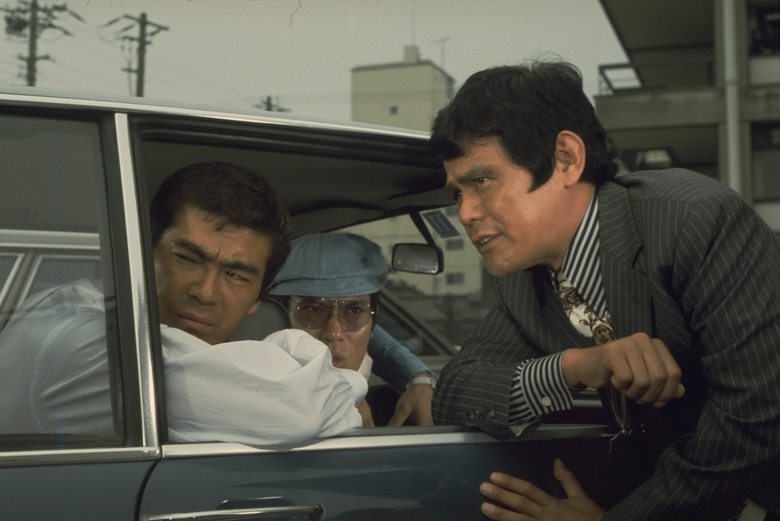
Sonny Chiba is a name that will be familiar to those who enjoy Japanese cinema. One of the bigger stars in Japan for his martial arts abilities, he would go on to become known throughout the world when his films found fan bases in multiple countries, due in large part to his 1974 film The Street Fighter, an intense, violent action movie that would become Toei’s first big success in the US. That same year, however, Chiba released a couple of action comedy movies that might not have reached the same level of fame, but are well worth the watch.

The Executioner is the more serious of the two movies collected together in this new Blu-ray set by Arrow Video, and seems to have received the most attention out of the two, with it being the only one to have both an English language dub from its original US release, and a new audio-commentary.

Chiba stars as Ryuichi Koga, the latest in a long line of ninja masters, who has been training to become the perfect ninja assassin since he was a child. He’s hired, along with a disgraced former cop named Hayabusa (Makoto Sato) who performs contract killings directed by his own strange moral compass, and a renegade martial arts master Sakura (Eiji Gō). The three unusual men are brought together to help steal a cache of drugs from the mafia, who are using diplomatic immunity and political connections to bring their product into the country.


But the three of them aren’t exactly good guys. All of them agree to do it for the cash, rather than to help people, and all of them are trained killers. Sakura is even introduced into the story whilst in prison for rape, and we get a sequence where Koga has to use his ninja skills in order to break him out. Once assembled, however, the team become a bickering trio of weirdos. They are either incredibly good at their jobs, or are pretty comically bad depending on the scene, and often act like toddlers trying to play tricks on each other and end up on top. The tone is not what you’d expect from the title or the trailer, and is closer to something like the second Lethal Weapon movie than your typical hardcore action-fest.

But this is a tone that works surprisingly well for the film. The characters end up being quite charming, and you forget that they’re a group of people who should probably be locked away. They manage to get you invested in their plight, and you end up rooting for them. Which is a good thing, because there are times where the odds end up pretty stacked against them. There are several fight scenes scattered throughout the film, with Chiba usually taking the lead in them, that are a lot more intense than the rest of the movie would have you believe. Chiba really excels in these scenes, and it’s easy to see how he became such a well respected action star through these moments.

Whilst The Executioner manages to walk the line between action and comedy well, the quickly produced sequel (released that same year) The Executioner II: Karate Inferno really leans into the comedic aspects, and it ends up much more of a comedy film.

Having been recruited once again, after managing to survive the events of the first movie, the three anti-heroes are brought together to pull a heist. This movie has far fewer action sequences, and none of them really stand out as much as those in the first one (apart from one moment where Chiba literally rips a man’s liver out and then hits his head around 360).


The moments that shine in this film are the comedic ones. Moments like one of the team getting set on fire and Chiba pissing on him to put it out, or Sakura’s hand getting glued to a table which results in him having a block of wood stuck to his hand for the rest of the film, give you an idea of the level of humour the film goes for. It’s silly and slapstick, but the team absolutely pull it off, and the movie ends up being incredibly charming, and possibly more fun than the first.

As mentioned earlier, there is a commentary on the first film, which brings together film experts and authors Chris Poggiali and Marc Walkow, who offer insight into the making of the movie, its impact, the state of Japanese cinema at the time, and the life and career of Sonny Chiba. It’s an interesting commentary track, and you do come away having learned something from it. There’s also a thirty minute documentary piece about Chiba, which talks to experts and some people who know him, to further round out the talk about his career.

For those who are fans of martial arts action movies, The Executioner Collection offers a pair of movies that are a lot of fun to watch. Neither really takes itself too seriously, and the aim of both of them seems to be to entertain the audience and have the viewer leave with a smile on their face. And in that regards, both of these movies achieve that goal.


Support Amy on Patreon

Buy Amy A Coffee

Go to Amy's Blog

Saturday, 4 February 2023

Splinter Cell: Dragon Fire by James Swallow - Book Review


Inside North Korea, veteran Fourth Echelon agent Sam Fisher finds himself on the run when a top-secret covert mission goes fatally wrong. Betrayed by his allies, hunted by his adversaries, and disavowed by his own agency, Sam is stranded deep inside hostile territory – and his only chance of survival is to uncover a murderous plot that reaches into the heart of the hermit state, and beyond. Meanwhile, Fisher’s estranged daughter Sarah risks everything to assemble an off-the-books effort to find her missing father before his luck runs out – but the conspiracy that framed Sam goes deeper than either of them realise… 

Splinter Cell: Dragonfire continues the story of Fourth Echelon agent Sam Fisher and his daughter, Sarah, that was begun in last year's Splinter Cell: Firewall, as our heroes face one of their toughest challenges yet when they find themselves caught up in a plot to push the world to the brink of war in order to destabilise a global power.

Splinter Cell: Firewall was a tech heavy book. It was about shady businessmen creating a powerful piece of technology that they wanted to turn to evil ends. In contrast, this new book feels like a much more back to basics action thriller, and with a few teaks it could easily work in any recent decade due to not having to rely on cutting edge technology to drive the story forward. This results in the book feeling like a perfect companion piece to the other, with both of these books showing the versatility of these characters and the world originally created by Tom Clancy; now continued with such flair by James Swallow.

Splinter Cell: Dragonfire sees veteran agent Sam Fisher being sent on a top secret mission into North Korea in order to assassinate a dangerous figure. Deep behind enemy lines, Sam has been told that his target has control of a weapon of mass destruction, and that millions of lives and global stability are on the line. However, moments before pulling the trigger Sam realises that he's been set up, and that he's been tricked into killing an important political figure. Despite stopping the assassination in time, Sam is caught and it looks to the world like the US is trying to kill one of the most important figures in North Korea.

A prisoner of the insular nation, Sam is cast off by his government and left alone to not only fight for his freedom, but to try and get to the bottom of the conspiracy that almost saw him kill the wrong man. Fortunately for him, his friends and family refuse to abandon him, even if his government has, and his daughter Sarah sets out to save her father.

Splinter Cell: Dragonfire might be the best of the Splinter Cell books that I've read due to the fact that Swallow has stripped away a lot of the high-tech gadgetry and tech wizardry that tends to go with these kinds of stories. Sam is no longer kitted out with the best weapons and devices, he doesn't have a tech genius talking in his ear, and his back-up isn't hacking their way into secure systems for him whilst he takes out bad guys who don't even know he's there. This time the tables have been turned. Sam is alone, he's scavenging weapons where he can, he's taping books to himself to use as body armour, he's stealing cars, and he's kicking in doors. He's been reduced to simply being a man; and yet he manages to still be one of the most frighteningly efficient and skilled men around.

I'm sure that there will be those that love the parts of the series that this book seems to do away with, and might even be upset that they're missing here; but I think it makes the story better. We're getting to see Sam Fisher in a new way, it's impressing upon the reader that it's the man, not the weapons and gadgets, that makes him who he is, and it shows how Splinter Cell doesn't have to just sit in one particular box.

The book also continues to expand upon the relationship between Sam and Sarah that was built in the last book, with Sarah having joined Fourth Echelon as a field agent. At the end of that book Sam asked his boss to try and keep Sarah away from the field, and danger, as much as possible; and here we see the result of that. Their relationship is strained, even close to breaking; but when things go wrong and her father is in danger she's willing to come to his aid. It's a nice continuation, and their development here fits perfectly with what was done in the last book.

Splinter Cell: Dragonfire feels like a bold departure from what people expect of the series. It takes some risks, does things different, and ends up being all the more enjoyable for having done so. More stories like with this Sam Fisher are a must to keep things interesting.


Support Amy on Patreon

Buy Amy A Coffee

Go to Amy's Blog

Thursday, 2 February 2023

The Broken Dragon by Karen McCombie - Book Review


'Tyra's really happy to move in with her nan. But starting at a new school can be tricky, and Tyra is worried about fitting in. Then Nan surprises Tyra with a beautiful china snow dragon, and Tyra has an idea. She'll take the dragon into school. The other children will love it - and maybe it'll make them like Tyra too! But disaster strikes and the beautiful dragon is smashed. Can Tyra find a way to repair Nan's special present and make some new friends along the way?'

The Broken Dragon tells the story of Tyra, a young girl who's recently had to move in with her nan, though for an undisclosed reason. She and her nan get along really well, and even though her nan isn't able to afford everything, and the two of them often go round the charity shops together, she always treats Tyra as much as she can, and the two of them have a happy life together. However, things are set to change as the new school year is starting, and Tyra has to go to her new school for the first time.

On her first day Tyra turns up in one of her favourite dragon shirts, a rainbow beanie, and bright tie-dye shorts. She loves to dress bright and fun, and is clearly an outgoing and boystrous person. But some of her new classmates are unsure of how to act around her, and she begins to feel lonely. When one of the mothers invites Tyra and her nan to come to a birthday picnic with the rest of the class Tyra learns that one of the other girls, Yasmeen, likes dragons too. So the next day Tyra decides to take her new, very delicate dragon statue into school to try and bond; but as the title suggests, this isn't set to go well.

One of the things that I really liked about The Broken Dragon is that the book makes it very clear that it's okay to be different, what some folks might even say is 'weird', without actually saying it. At first Tyra doesn't fit in with the other children, she dresses wilder than them, she's very loud and gets excited easily, and she isn't afraid to show the world her love of dragons. She's a very free-spirited girl, and one who isn't ashamed of who she is. With so many children being told that they need to fit in, told how to act, told how to conform, it's a wonderful breath of fresh air to have a book where the lead doesn't have to change or act differently in order to make friends of become popular. She just has to be herself.

It's not stated in the book, but there seems to be a reason for Tyra coming to live with her nan that she doesn't want to speak about, and it did make me think that it was indicating some kind of personal tragedy in her past; possibly losing her parents. Whilst the book doesn't go into this there's enough hints that it shows kids that non-traditional home lives, and guardians who aren't your parents are perfectly fine and valid. As long as you have a guardian who loves you, cares for you, and treats you well it doesn't matter who you live with.

I also got the impression from the book that Tyra might even be autistic, thanks to the way she acts in social situations, her hyper fixation on dragons, and the fact that a lot of her dialogue is in bold because she tends to be quite loud and excited when talking. Again, this is something that the book doesn't directly address, and I think that's a really good thing. Neurodivergent readers will be able to look at Tyra and might see some connections with her, and neurotypical readers can read it a come away seeing her as just a bit of an excitable kid. It enables all kinds of readers to be able to see different things in Tyra, to connect with her in different ways, and to feel included without having to make clearly defined labels or boxes in order to do so.

There's a lot of positive message in The Broken Dragon, and I think that young readers will come away from the book with some decent impressions about being yourself, about making friends, and how just because something is broken it doesn't mean it's ruined forever. 


Support Amy on Patreon

Buy Amy A Coffee

Go to Amy's Blog

Wednesday, 1 February 2023

Next To Alice by Anne Fine - Book Review


'At first Ben doesn't want to sit next to Alice. He thinks she's scary. She tells him off for sloppy drawing and careless handwriting. She even complains about his table manners! But when Ben starts to take Alice's advice he sees a few changes.Maybe sitting next to her isn't as bad as he feared. So what will Ben do when he gets the chance to go back to his old seat?'

School can be a difficult time for kids, not only do you have the pressure of trying to learn and proving how well you've learned through tests and assessments, but you also have the trials and tribulations of making friends, interpersonal drama, and the often quite nasty attitudes that kids get around each other. Any one of these things can be bad, but when all clumped together school can become a minefield. As such its understandable that kids just want to keep their heads down, avoid drama, and get it over with as quickly as they can.

Unfortunately for Ben, his carefully crafted school life it thrown upside down when a broken window means he needs to move, and he gets put next to Alice. Alice scares Ben, and he doesn't want to sit with her. She criticises his drawing and makes him redo it, she tells him his handwriting is bad and how to improve it, she even complains about how he eats his food at lunch time. And whilst these things might be annoying, or even seen as bullying, Alice never seems to do it out of malice, and goes out of her way to tell try and get Ben to try harder, to do better, and to slow down more. And he's shocked when he begins to see positive results. His work is singled out as being better, and he enjoys his lunch more when he slows down and savours it.

As the day wears on the two of them begin to like being around each other, they start to bond, and Ben even comes to like Alice. So when he's told that he can return to his regular spot the next day he comes to reevaluate what he really wants.

At its heart, Next to Alice is a story about not judging people too quickly. Ben thinks that Alice is bossy and scary, but she's just a bit direct. She sees things a certain way, sees what might be the best, most practical solution, and tells people to do it. But not because she's mean, because she wants what's best. From an outside perspective you can understand why Ben might not want to be sat next to her, but just like him, the more you're around her the more you realise she's actually pretty cool. Too many people make snap judgements about people based on next to no information, and teaching kids from a young age that you should really give kids a chance is a lesson that needs to be taught.

The book isn't a hard lesson though, as there's quite a bit of humour and a few jokes thrown in that make the book quite enjoyable to read. A lot of this comes from people being scared of Alice; such as when another student turns round to mock Ben, but quickly changes his mind when Alice gives him a 'you sure you want to?' kind of look. These jokes work well because they're often accompanied by really lovely illustrations. Gareth Conway provides the art on the book and it complements the story beautifully. The small expressions on the kids faces, the way their body language puts across what they're feeling, really helps to land a lot of the humour, and you start to really visualise a lot of what makes Alice a fun character because of that.

Anne Fine is an author who has received huge amounts of praise for her children's literature, and whilst Next to Alice is a short read it really does illustrate why Fine is considered one of the best children's writers around. Next to Alice is such an enjoyable and engaging read that I was honestly disappointed that it was over so quickly.


Support Amy on Patreon

Buy Amy A Coffee

Go to Amy's Blog