Wednesday, 9 March 2022

Black Cat: Discord, A Marvel Heroines Novel by Cath Lauria - Blog Tour & Interview


'Legendary super-thief Black Cat takes on some of Marvel's most renowned heroes and mob secrets in this electrifying heist novel from Marvel Heroines.

'Felicia Hardy always puts her own interests first, but the appearance of a mythical golden apple in New York has everybody with a hint of power scrambling for it. And who’s everyone’s number one choice to nab it for them? The Black Cat, of course. Yet that isn’t the only job on Felicia’s radar. When a smart-aleck kid turns up demanding her help, Felicia finds herself caught between the mob, her morals and some very insistent supervillains. It’ll take all nine lives to wriggle out of this one intact, but Felicia has more than one trick up her sleeve.'

One of the best things about the Marvel novels coming out of Aconyte Books is that characters that have often been in supporting roles are being given the spotlight. Characters that pop up from time to time in other people's books, or as part of a team, but never really get given the chance to headline their own title are being thrust into the spotlight; and the results have been fantastic.

The latest character to get this star treatment is Felicia Hardy, the anti-hero thief known as Black Cat. Often paired up with everyone's favourite wall-crawling hero Spider-Man, this time we follow Felicia as she discovers a strange series of events, bumps up against heroes out to save the day, and decides to help a girl find her missing father. 

The book begins with Felicia attending the Met Gala, an event filled with the rich and famous of New York City; and an event that gives Felicia the chance to scope out some stuff that might be worth stealing. Whilst scoping the place out she comes across a Golden Apple, one of a series of strange, magical artefacts that have begun appearing all round the world. These apples are able to grant the person possessing it anything they wish; and whilst you might first think this would be the perfect thing for someone like Felicia, she sees it and has to get out of there.

Unfortunately, thanks to having been near the Apple and having ran out of the Gala as fast as she did, people assume that she must have it, making her the target of the press and those who want the Apple for themselves. If that wasn't bad enough, that same night someone breaks into Felicia's home; a teenage girl named Casey who needs Black Cat's help to find her missing father. It turns out her father was in witness protection, but returned to New York to give evidence against the son of mob boss Silvermaine, until he went missing. Casey is sure that Felicia was the last person to see her father before he was kidnapped, and begs the thief to help her get him back.

Before this book my main experience with Black Cat came from the 90's Spider-Man animated series, where she appeared in more than twenty five episodes of the show. Other than that, I'd seen her in a few comics where she would appear for a few pages to help or annoy Spider-man. As such, this was my first real chance to spend some time with the character and really get to know her; and knowing what author Cath Lauria did with Elsa Bloodstone, I was super excited to see how she would tackle such an iconic character.

One of the things that I immediately liked about the book was that Lauria didn't have Black Cat going solo, instead giving her a small team in the form of her tech specialist Bruno, and explosive expert Boris. Having been used to seeing Black Cat working on her own in the past I thought that it was a great choice to give her this small team to work with. Yes, she might go out on jobs on her own, breaking her way into places and stealing things without someone there with her, but it absolutely makes sense that she would need someone helping her scope places out, making equipment, and being ready to drive the getaway van if things go wrong.

The addition of these two characters immediately made things feel a lot more realistic, and grounded some of the more fantastical elements in what people are used to seeing in heist movies and novels; a team of people coming together to pull of the perfect crimes. It also helped that both Boris and Bruno were an absolute delight in every scene they were in, often acting like bickering children that Felicia had to manage. It brought some fun energy into proceedings.

The best new character, however, has to be Casey, the fifteen-year-old kid with a massive chip on her shoulder and enough skills to make her dangerous. Casey is the kind of character that seems like she's designed to push Felicia's buttons. She's loud, arrogant, full of herself, and clever enough to not just get rid of right away. It's clear that Felicia sees a lot of herself in this kid, and understands her motivations and her drive; and that's a big part of why she agrees to help the girl.

Some of the best scenes in the book are the smaller moments where Felicia and Casey are interacting with each other, whether that be Felicia trying to teach Casey how to be a thief, or Casey acting like a teen around a woman with no time for kids. The two of them butt heads a lot, but the moments where you see them winning the other over are an absolute delight, and come the end of the book you really do believe that the two of them will genuinely miss each other, and that a real bond has formed between them.

These relationships give the reader a lot of insight into Felicia and how she ticks, and they played a big part in how I came away thinking of the character. But I felt like I also learnt a lot about her from the other costumes heroes that appear in the book too. There are a few times where Felicia's path crosses with some big name heroes, and it was interesting to see how they interacted with her, and how different characters would react to this woman who so often walked the line between reluctant hero and criminal. But it wasn't just how they reacted to her that told us a lot, but the way she saw them too.

Whilst her thinking of Toy Stark as something of a stuck-up dick isn't exactly new, the fact that she reveals to the reader that you can get on his good side by giving him a puzzle to solve showed that she had an insight into him that most don't. She also sees Danny Rand, the Iron Fist, as a loveable goof who's too kind to ever get mad. She thinks that Daredevil is a bit of an arrogant prick at times. And she can't help but love everything about Spider-Man, from his kindness to his heroic nature. She sheds new light on heroes that you think you've already got a good handle on thanks to her unique interactions with them; and this shows us just how different her experiences in this kind of world are to other costumed heroes.

The book isn't just filled with brilliant character interactions, however, as it also manages to pack in a good deal of action. There are moments when Black Cat has to go up against famous villains, engages in high speed car chases, and has to escape exploding buildings; which are kind of all in a days work for a character like this. despite managing to pack a lot of action into the book Lauria never lets it feel dull, and it's always varied and interesting whenever it happens. The best of the exciting bits might be the heists. There are a few moments in the book where Felicia, Cases, and the crew have to infiltrate a place, steal some info, and pull off a con; and these are a genuine delight.

With super hero stories so often focusing on big fights, world ending stakes, or interpersonal drama it was was lovely to see something different for once. Here we get our characters doing something that requires a whole different skill set, and means that it's not all about throwing punches or dodging bullets, but reading people right, bluffing the right thing, and formulating daring plans. I loved it each and every time the characters got the chance to do these things, even if it was just Casey proving she has what it takes by trying to break into Felicia's bedroom multiple times. I'd happily read an entire series of books that are just one heist after another with this group.

I came into Black Cat: Discord knowing very little about the character, and didn't know what to expect from her headlining a solo adventure. But not only was a hugely delighted by what I got, I think that it might be one of the best books that Aconyte and Marvel have done together. The book was filled with great character moments, exciting actions, and wonderfully delightful scenes that could only ever work for Black Cat. An absolute pleasure to read from start to finish.


I got the chance to sit down and have a chat with Cath Lauria, the author of Black Cat: Discord, to find out what it was like writing such a wonderful character, and what else might be on the horizon.


Were you a fan of Black Cat before writing the book, and if so how did you find yourself introduced to the character, and do you have any favourite stories or moments with them?

I didn’t know much about Black Cat before I started looking for someone to focus on this time around. I knew the sort of person I wanted to write, though, and quickly narrowed the list down to her and a few other notable badasses. Then I pitched the list, and Black Cat rose to the surface since 2022 is the 60th anniversary of the creation of Spider-Man, and she’s a big part of his universe.


This isn’t the first Marvel Heroines novel that you’ve written with Aconyte Books, having previously written for Elsa Bloodstone. Was it a challenge to come back and write for another character, or did you find that working on Elsa’s book helped with this one?

Elsa’s book was special because it was my first, and because she’s an archetype UF-style heroine, which I love. There was also a huge learning curve associated with her book though, since every editor/house has different requirements for what they want in a project. Having gotten a lot of the growing pains out of the way with Elsa, writing for Black Cat was quite a bit easier. And in my personal writing, I’m all over the place with my work, so switching from one perspective to the next wasn’t too mentally taxing for me.


One of the things that I really liked about Black Cat: Discord was that it wasn’t just Felicia running solo, but that she had a crew working with her. Was it difficult coming up with the right kind of characters to surround her with, and were there any ideas that you had for her team that didn’t make it into the book?

Her crew is amazing! I love them so much, omigosh. I’ve been collecting her comic run, and Boris and Bruno are just *chef’s kiss.* It’s one of the things I like about Felicia—that she’s not afraid to work with others, and in fact she welcomes it. It made for quite a difference from writing Elsa, for sure. Plus, the potential for cameos and crossovers is HUGE, as you note I took advantage of 😉


In this book Felicia takes on a more motherly, or big sister role to Casey. In your Elsa Bloodstone book there was also a big focus on female relationships. Is this a theme that appeals to you?

The female relationships in my own life are really important to me, and I like reflecting that in my writing. I enjoy writing women getting along, working together, and being friends without fighting over the same boy or the same job or being in constant competition. I also enjoy women beating the shit out of each other, but variety is what I’m going for here.


The book isn’t your average super hero story, and is more of a series of heists and cons than big world saving fights. Did you do any specific research for this, such as reading about con artists or famous thieves, in order to inspire you or to get certain details?

I did! Apart from reading up on Felicia and her mentor Black Fox, I also did quite a bit of research into famous museum heists and watched a lot of YouTube featuring pickpockets and street magicians. It all comes down to team work, which again—Felicia is so good at making that happen.


The book references a number of recent events that happened to Black Cat, such as her becoming a crime boss, and her helping to fight symbiotes. Was this information provided to you by Marvel, did they give you a big stack of comics to read, or was this stuff that you incorporated yourself from your own knowledge?

I wish Marvel gave me a bunch of comics! I had to do my own research, and while a lot of comics are digitized and fairly readily available, I just don’t have the resources to buy everything I want in the name of research, so I trawled a lot of Wikipedia too. Black Cat’s recent comic run was the best resource ever, though. The tone, the art, the sass—it set the stage for Discord, for sure.


One of the most recent additions to the Black Cat character was her coming out as bisexual last year. This is something that you included a couple of times in the book, and was actually the place I learnt of this. Was including this something that you knew you wanted to do?

I was so, so happy to find out that Black Cat was bisexual. That was my “I have to write her” moment. I absolutely knew I wanted to let that shine, because Felicia herself would never tuck it away and make it a tiny sidenote in her life’s story. I thought it was so well-developed in her comic book series, too, and I wanted to continue that.


The book features some appearances from other well known characters such as Spider-Man, Iron Fist, and the Fantastic Four (and I believe both Elsa and Mihaela make a cameo too). Which of these additional heroes and villains was your favourite to write?

I actually enjoyed writing Daredevil the most, probably. He and Felicia have a “romantic” history, plus they’ve got very strong but very adversarial personalities, plus…he’s just a snarky guy. I love snark. That said, I fought hard for cameos in this book—I mean, it’s set in New York City, where else could I cram so many superheroes into one story? Iron Man, Iron Fist, Doctor Strange, all super fun—and yes, Elsa and Mihaela cameos! Mihaela would absolutely love to go to the Met Gala, and Elsa would begrudgingly oblige her. 


With two Marvel heroes under your belt now are there any characters that you’d like to write for in future books?

Too many! Every time I finish one book, a dozen ideas spring up for another! I’ve actually got a pitch in right now that would place one of the heroines I’ve already written in a strong supporting role, which would be AMAZING to write. Plus someone recommended I look into doing a League of Monsters book, and now my brain won’t shut up about it. I love it when readers tell me who they like and what they’re obsessed with, so find me on Twitter and let me know!


And finally, if people enjoyed this book is there anything that we can look forward to seeing from you in the future, and where can they check out your other books?

I’m on the verge of signing a contract to work with a new-to-me IP on a novel that…I can’t even explain it. There are all sorts of weird and wild and horrific and terrifying things going into it, and if I could do a better job talking about it I would because I’m SO EXCITED to write it, but I can’t give any real details away yet. It’s science fiction, I’ll throw that out there. I love writing science fiction, so I’m thrilled to get going on this one. And please check out my books on Aconyte’s website! I hope to add many more to the list!


Support Amy on Patreon

Buy Amy A Coffee

Go to Amy's Blog


About Marvel Entertainment

Marvel Entertainment, LLC, a wholly-owned subsidiary of The Walt Disney Company, is one of the world’s most prominent character-based entertainment companies, built on a proven library of more than 8,000 characters featured in a variety of media for over eighty years. Marvel utilizes its character franchises in entertainment, licensing, publishing, games, and digital media.

For more information visit marvel.com. © 2022 MARVEL

Tuesday, 8 March 2022

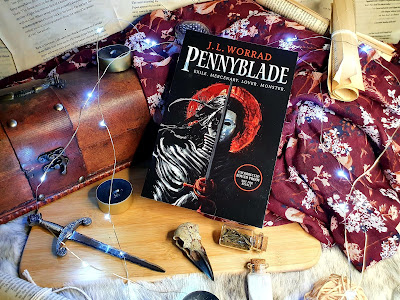
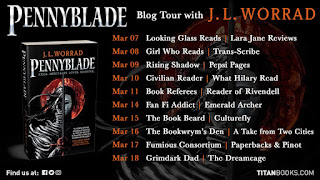
Pennyblade by J.L. Worrad - Blog Tour & Interview


'Exile. Mercenary. Lover. Monster. Pennyblade.

'Kyra Cal’Adra has spent the last four years on the Main, living in exile from her home, her people, her lover and her past. A highblood commrach—the ancient race of the Isle, dedicated to tradition and the perfection of the blood—she’s welcome among the humans of the Main only for the skill of her rapier, her preternatural bladework. They don't care which of the gleaming towers she came from, nor that her grandmother is matriarch of one of Corso’s most powerful families.

'But on the main, women loving women is a sin punishable by death. Kyra is haunted by the ghost of Shen, the love of her life, a lowblood servant woman whom Kyra left behind as she fled the Isle.

'When a simple contract goes awry, and her fellow pennyblades betray her, Kyra is set onto a collision course with her old life, and the age-old conflict between the Main and the Isle threatens to erupt once more.'

Often when fantasy stories involve elves they're portrayed as regal beings, ancient creatures whose society is so old and so wise that they look down upon humanity and see us as nothing more than savage children; it's the classic Tolkein elf. And whilst the elves in Pennyblade are ancient, are more advanced, and do look down upon humanity, we quickly learn that they are just as savage, just as decadent, and just as corrupt as us. And I absolutely loved it.

The story of Pennyblade is split across two different times, set a number of years apart, in a twisting narrative that follows Kyra Cal'Adra, a high born commrach. In the present day narrative Kyra is living on the mainland, the human territory. She's left her home to live on the road, travelling from one small town to the next putting her skills as a sword fighter to good use to become a pennyblade, a hired mercenary. We quickly learn that despite being good at her job she's hated by most of the people around her. People distrust her because she's a pennyblade, they hate her because she's not human, and they despise her because she loves women.

Kyra's been travelling with a small group of pennyblade's, taking work wherever they can find it; but when a simple mission to kill a man who's been coming to a small town, forcing the inhabitants to hand over women and girls to him for him to sleep with, goes wrong her life on the mainland is changed. Suddenly she's alone, unsure if she can trust anyone, and when she passes out from exhaustion running from an angry mob she wakes inside a local church. Unfortunately, the church didn't take her in out of the kindness of their heart. Instead, they plan to force Kyra to work for them. With no way to escape her captors, and with the threat of execution hanging over her head, Kyra's forced into even more danger.

Whilst reading this we also alternate between Kyra's past, to the time where she was still living on The Isle, the homeland of the commrach. Here we see a much different version of Kyra, where she lives a life of luxury with her twin brother Kyran as part of one of the ruling houses of their nation. Here Kyra is something of a spoilt brat, and she's trying to rage against a system that she's expected to be an active part of and uphold for future generations as her scheming grandmother attempts to plan out the futures of Kyra and Kyran. These chapters not only give us further insight into the commrach society, but also fills in the gaps explaining how Kyra ended up living on the mainland as an exiled mercenary.

One of the things that I absolutely loved about Pennyblade, something that I'd seen other people talking about before I got this book, is how awful so many of the characters are. J.L. Worrad doesn't seem to be concerned about creating a story where you'll instantly like the protagonist. You might go for the entire novel not even standing her; but what he does do is to create a group of characters that I adored in spite of the fact that they're all complete bastards.

The Kyra on the mainland is bitter, resentful, out only for herself, and is willing to screw over most of the people around her if it gets her ahead. Thrown into this is Sister Benadetta, a member of the Pilgrim's church who ensnares Kyra into working for her. She considers Kyra to be without a soul, she hates her for being a lesbian, and she uses her position to hurt people. There's also Shortleg, a mercenary who's a womaniser, a homophobe, and generally unlikable in every way; and Nail, a Caliban, a human commrach half-breed, who seems to hate everyone, who lies and cheats, and seems thoroughly untrustworthy. And this is our group of heroes. This is the noble band that is going out into the world to stop an evil cult and save everyone.

But despite all of these flaws, despite every single one of them being terrible in some way, you can't help but like them. You slowly see connections begin to form between them. They start to trust each other, they begin taking risks for each other, and they start bringing the best out in each other. By being forced into this situation none of them actually want to be in they get to grow and evolve, becoming fairly decent people. By the end of the book I was loving spending time with them, to the point where I was sad to see the book end because I wanted more time with the weird little dysfunctional family. They'd come a long way, and I wanted to see them grow more, to become even better and realise that they were actually pretty good people now.

About half of the book is set in the past, a few years before the main story, when Kyra was still living with her people. The Kyra we see here isn't a good person either, but is a very different one nonetheless. This version of Kyra sees herself as better than most. She's grown up in a position of extreme wealth an priviledge, of never really having to worry about not getting whatever she wanted. And this is where the main drive of her story in this era comes in. Kyra is finally being told what she can and can't do, and she's raging against that.

Kyra comes across a young woman, Shen, who challenges her in ways she's never seen before. Shen comes from a small town, outside of the city of Corso. She doesn't like the system that The Isle has, she doesn't like the way their society is, and she refuses to fit into it the way everyone expects. This intrigues Kyra, draws her in, and when she realises she loves Shen it sets her on a new path from the one where she thought she'd spend her days drinking, playing, and sleeping with any woman she desired. Her life is also disrupted in other ways as her grandmother has arranged for her to marry a man from a rival house, despite Kyra having no interest in men. Now Kyra is trying to work a way out of it, having to engage in plotting and politics in ways she's never had to before; and it pushes her abilities to the limit.

This Kyra is a schemer, but also a dreamer. She thinks that if she can just figure out the right plan, come up with a clever enough play she can outwit her grandmother's machinations. Despite only being set five years before the main events of the book this Kyra feels so much younger, and it shows how much her time on the Mainland has changed her. But these sections aren't just an insight into her, but her people as a whole.

The human world of Pennyblade is very similar to our own history in a lot of ways, albeit a world with magic and the existence of elves. The commrach society, on the other hand, is very different. Whilst the human world is ruled by capitalism and religion, with the poor forced to live in squalor, and queer peopl persecuted, the commrach have none of this. There might be different levels in their society, but none are left on the streets to survive on their own. They aren't ruled by puritanical thinking, and sex and queerness aren't seen as anything to be ashamed of or hidden away at all. The vast majority of elves seem to be open to all genders, with the odd exception being those born twins, where they're born homosexual. And the elven society even has trans people, who are never treated as anything but their actual genders, and not what society believes them to be.

But that doesn't mean the commrach are perfect, as there's a lot in their world that seems brutal, or even openly sadistic at times. Worrad hasn't just created a race of people who are humans with long lives and feelings of self importance. The commrach feel completely alien in a lot of ways. They're a society so unlike the human one, shaped not just by their long different history, but by the fact that they're so different to us biologically too. It's one of the most interesting take on elves I think that I've ever seen, and it makes for a fantastically compelling read.

Pennyblade is a book filled to the brim with amazing, interesting ideas, with characters that are flawed and awful, yet so wonderful at times too. There are no big fantasy hero archetypes here, just imperfect people in an imperfect world, trying to balance the scales out a bit by doing a little good whilst they can. Whilst this book is a perfect story all on its own, and I loved every moment of it I truly hope that this is a world that Worrad revisits in the future, as I'd love to see more.


I got the chance to ask the author some questions about Pennyblade, the world that he created, and any plans for the future.


You’ve previously published science fiction work, but Pennyblade seems to be your first foray into the world of fantasy. Was it a big change to go from writing sci-fi to fantasy, or did you find certain similarities between the two genres?

It was no way near as big a leap as I thought it would be. That said I may not be the typical genre-slider. Science fiction is often called the ‘literature of ideas’ whereas fantasy—and I’m generalising here—has greater focus on character. Thing is, all my SF ideas tend to involve the mind and personality.The idea behind my Feral Space books, for instance, is of humans culturally raised from birth to be several people, so my SF ideas require a focus on character. So it seems I can wear both looks.

A big difference I’ve noticed, and I’m surprised no one ever mentions this, is that in medieval fantasy you constantly have to explain the light source. Is there a candle? A hearth? Is daylight pouring through stained glass? What about shadows? Whereas in sci-fi you can just say there’s a room or whatever and the reader will happily screw in a lightbulb for you. The flip side is in fantasy you can really play with the imagery of light in a scene, embrace your inner Rembrandt.     


The human world of Pennyblade seemed very similar to our own at times, and it felt easy to see the parallels between The Main and our own history, were there any real places or events that inspired your world building at all?

Given the commrach realm, the Isle, was so strange I thought it was vital to make the Main as recognisable a fantasy construct as possible:  a quasi-European medieval world. It gives the reader something to cling to. So I went in with near-zero worldbuilding: the Main emerged through Kyra’s eyes as I was writing her. 

But it couldn’t stay 100% generic for too long:  my eccentricities leaked in. Hoxham and Hosshire took on elements of where I live, Leicester and Leicestershire. The vein of folk-horror emerged from that because Leicestershire has some spooky corners. 

I had to dream up the mainland’s religion on the hoof. It’s essentially an alternative history where the Cathars--a Christian movement persecuted out of existence in Medieval France--became the ‘true church’ instead of Catholicism. ‘Perfecti’ was a real title in Catharism. A bit of Odinism got in there too. Not sure why…


Whilst I really liked The Main, I found The Isle to be absolutely fascinating. The culture of the commrach was really intriguing and I’d have loved to have seen more of it. Was there anything about them that you wanted to include in the book, but it just didn’t make it in?

The day-to-day life of the common citizen. We never see much of that because we’re with the aristocrats. The metalworkers and artisans have interesting stuff going on, what with their magical touch. Also, commrach civilisation has never developed agriculture in the classic sense. I liked the idea of a city feeding itself on hunter-gathering and wilderness cultivation. Nice concept, but it would have been worldbuilding for worldbuilding’s sake and would have slowed this particular plot. But it might not be in another plot. 


The commrach seemed to be a very open society when it came to things like sexuality and gender, and seemed hugely ahead of the humans in this book as far as acceptance went. They’re also quite different from other ‘elves’ I’ve come across. What drove you to create them the way they did, was there a desire to make a race so completely different from what readers would expect?

Commrach civilisation is partly a critique of the classic elves trope, its creepy master race undertone, whereas the biological side is more a simple thought experiment, or at least was when I started. Their open sexuality comes down to the fact that, due to their breeding cycle, no one can get pregnant for eleven months of the year. The physical liberty we’ve enjoyed since the contraceptive pill got invented they’ve had a taste of since time immemorial. Add to this the fact the commrach (like many species of birds) have no sexual dimorphism. All sexes having equal physical strength would, I suspect, stop patriarchy and all its symptoms from ever occuring. 

I think—and as a cis person I may be wildly off target here--that such a breeding cycle would give cultural breathing space to gender expression. All the genders that are becoming part of public consciousness in the last couple of decades in our world the commrach have had words before they had even invented fire. 

Really I’m not creating different elves so much as messing with the dials, turning up the contrast. They’re beautiful and sexually liberated but they’re also inhuman and vaguely, well, fascist. That’s all already there in the modern elven trope.   


Throughout the book we learn more about the commrach through the flashbacks to before Kyra leaving, but because they were written from the point of view of someone who knows their society she didn’t feel the need to explain much, as such we only got small glimpses into what they’re like. Are you able to tell us more about them? For example, I was super interested in the hints that they evolved from cats, and the small revelation towards the end that they’re incredibly long lived. 

The cat thing is pretty fun isn’t it? That, again, emerged as I wrote and elves and cats are both nimble. A week into the first draft I was having a conversation with a pal and I pointed out that, if humans had a breeding season then we wouldn’t celebrate birthdays so much as celebrate a birth month for almost everyone. It would be a public holiday (This was another thing I didn’t get to explore!). On the way home from my friend’s I thought ‘screw it, let’s put a breeding season in there, see what happens’. I’m glad I did because from thereon Pennyblade grew thematic teeth.  

There’s a bit of a paradox though. The commrach seem to have feline ancestry but at the same time they can reproduce with an ape:  humans. So really commrach should have some closeness to humans like Neanderthals or Denisovians did. It makes no evolutionary sense. Clearly some magical shenanigans went on in the forgotten past. I just don’t know if anyone in-world is in any position to discover what though. 


I loved how the main group in the present time were a quartet of really unlikeable people, folks who lie, cheat, insult each other, and aren’t afraid to kill people. But as the book went on they all seemed to soften to each other, and seemed to really like each other by the end. Was it a hard line to avoid making them too unlikeable?

I think I crossed it with some readers! I appreciate not everyone is going to gel with Kyra and the others. So far I’ve found readers either joyfully embrace them or they bail in absolute disgust. Which is kinda gratifying for an author:  I’ve evaded ‘meh’. 

Personally I love dark, ‘difficult’ characters. If Frodo does something good we take it for granted. If Gollum does something good it’s a slap to the reader’s expectations and emotions, because he’s defeated his own awfulness. A candle shines brighter in the dark.   

Plus unlikeable characters make me work harder. I’ve heard a few musicians swear that playing a crappy guitar, one that goes out of tune fast and hurts the fingers to play, brings out your best songwriting and I totally get what they mean. The moments when Kyra reaches out to someone with honesty and empathy are scant but they’re everything and they took all my ability. They had to be absolutely right or the book would be a cynical pit. 


There’s a lot of action spread over the course of Pennyblade, including some sequences that are more unusual than some folks would expect. Did you have to do much research into weapons and combat training in order to craft such detailed and convincing fights?

It’s very gratifying to hear they’re convincing. I’m no sword officionado, so I read up lots and watched a load of YouTube vids (Swordtube is a friendly place, I’ve found). It was one of the first things I did because my starting point was Kyra herself and swords are her job. I went in not even knowing what kind of blade Kyra used and, after talking with my friend and eternal sounding board, Matt, decided on a rapier. Commrach magic makes things super-sharp so a rapier- the greatest pointy-end ever devised- was the natural fit. Such magic makes armour anathema to the Commrach. That informs the fighting style, which is dodge-or-die. 

As for the human mainland, I went for a 12th century warfare vibe but with one major omission. I won’t say what because no one’s pointed it out yet and I’m interested to see if anyone ever does. 


The book ends in a way that made it feel like a solid conclusion, that this was a good end to the stories for the characters, but it also felt like it could be the start of a new life for several of them. Do you have any plans to come back to this world or write more for these characters?

If Titan Books asked I write a sequel nothing could stop me from leaping at the keyboard. I love hanging out with many of these characters and I love the dialogue they come up with when we do a scene. Of course it all depends on whether Pennyblade finds its audience. I remain optimistic.  

I keep writing bits of a short story that’s a whole chapter of Pennyblade but is instead seen from the eyes of a minor character- Poppi Simmuns- rather than Kyra. Poppi has a whole interior world and outlook that really speaks to me. So maybe that will appear somewhere some day. 


You’re a big fan of science fiction and fantasy, according to your author bio. What are your favourite works in these genres, and what stories have influenced you the most of the years?

Iain M. Banks was the real gateway drug. His imagination and humanity showed me what genre could do. My golden age of genre-reading happened when I was periodically unemployed periodically for almost a decade. I could only afford second hand books and thus I’m very 60’s-70’s influenced: LeGuin, Dick, Ballard, Delaney, John Brunner, Frank Herbert. All those cats explore inner space as much as outer. A special shout-out to Cordwainer Smith who is utterly, utterly unique and deserves a renaissance. He wrote my favorite short story: The Ballad Of Lost C’Mel.

This is an embarrassing admission but I’ve not read as much fantasy as I have SF, something I’m remedying. I owe George Martin and Joe Abercrombie a hell of a debt, no argument there. Ellen Kushner’s Riverside novels are a massive influence on Pennyblade, so too Peter McLean’s Priest Of Bones. Clark Ashton Smith’s fantasies delight me, his poetic imagery lingers in my mind. 


Are you working on anything at the moment that fans of Pennyblade can look forward to seeing from you in the future?

I’ve another novel set in the same world which should be out next year or so. It’s a wider canvas, more character viewpoints and intrigue and the like. The main character is a foppish, friendly sort, decidedly more agreeable than our dear Kyra. But I’ll say no more. 


And if people enjoyed this where can they find out more about your work?

My blog is jamesworrad.com (where you can also sign up for my newsletter) and I’m on Twitter as @JLWORRAD

Thanks for the questions. They’ve been a pleasure to answer!


Support Amy on Patreon

Buy Amy A Coffee

Go to Amy's Blog

Monday, 7 March 2022

Gallant by V.E. Schwab - Book Review


'Everything casts a shadow. Even the world we live in. And as with every shadow, there is a place where it must touch. A seam, where the shadow meets its source.

'Olivia Prior has grown up in Merilance School for girls, and all she has of her past is her mother’s journal—which seems to unravel into madness. Then, a letter invites Olivia to come home—to Gallant. Yet when Olivia arrives, no one is expecting her. But Olivia is not about to leave the first place that feels like home, it doesn’t matter if her cousin Matthew is hostile or if she sees half-formed ghouls haunting the hallways.

'Olivia knows that Gallant is hiding secrets, and she is determined to uncover them. When she crosses a ruined wall at just the right moment, Olivia finds herself in a place that is Gallant—but not. The manor is crumbling, the ghouls are solid, and a mysterious figure rules over all. Now Olivia sees what has unravelled generations of her family, and where her father may have come from.

'Olivia has always wanted to belong somewhere, but will she take her place as a Prior, protecting our world against the Master of the House? Or will she take her place beside him?'

I made a pretty big mistake when I started reading Gallant, I assumed that I'd be able to read a chapter or two in bed before falling asleep and that that would be it; but when it came to it I just kept reading and kept reading until I was halfway through, it was two in the morning, and I'd dropped the book on my face because I was so tired. I should have known that this would happen, as I can't remember a time I've read any of Victoria Schwab's work and it hasn't demanded to be read in a single sitting. Gallant is one of those books that you're going to have a lot of problems putting down.

Gallant tells the story of Olivia, a young girl who has spent her life growing up in the Merilance School for girls, a place where orphans and poor girls can train up to become maids, cooks, and housekeepers. Olivia has been there as long as she can remember, and the only thing she has that can tell her of her life before Merilance is a battered old journal that belonged to her mother, a book filled with strange writing and beautiful but strange illustrations.

Olivia can't speak, and has spent much of her time in Merilance alone and isolated from the other girls. They see her inability to talk as something strange about her, that sets her apart from the others. Little do they know, Olivia does have a secret about her that sets her apart as different. Olivia can see ghosts, odd shades of half formed people that she refers to as Ghouls. Despite their disturbing appearance, these creatures have never caused Olivia harm, and she's since learned to live with them.

When a letter arrives at Merilance one day, from her long lost uncle, Olivia finds herself having to say goodbye to the only home that she has ever known. Now she's being shipped off to go and live with her family in their remote estate, Gallant, a place that Olivia has seen written about in her mothers journal in warnings. Upon arriving at Gallant Olivia is shocked to learn that her uncle has been dead for a year, and that her last living relative is her cousin, Matthew, who wants nothing to do with her. As Olivia settles into her new home she starts to uncover strange truths about Gallant, her family, and the dark things that are lurking just out of sight.

At its heart Gallant is a story about a girl trying to find a home, a young woman who has grown up alone and isolated, dreaming of a family that she can call her own, finally getting the chance to have that. Whilst this on its own would be a harrowing enough experience, it's the dark secrets that Olivia finds waiting for her at Gallant that really push her to her limits. 

Olivia is a strong character, someone who's grown up the target of mockery and abuse thanks to her inability to talk. She's had to grow tough just to survive, and this makes her surprisingly adept at handling all of the strange, terrible things that she encounters over the course of this story. She finds a cousin who wants nothing to do with her, who demands that she be sent away from Gallant as soon as possible. This is the family that she's been dreaming of for years, the connection to her long lost mother; but instead of allowing this reaction to break her, to have it crush her hopes and dreams, she refuses to give in. Olivia has an inner strength that allows her to keep on going, to refuse to be cast aside by Matthew and pursue the thing she wants.

Unfirtunately, it's partly down to this refusal to give in that leads to some of the issues in the book, along with the fact that Matthew refuses to fill Olivia in on everything she needs to know. So, Olivia doesn't know how dangerous certain things in Gallant are, and ends up getting into heaps of danger. I'm sure that there will be some people who look at this and say that it's a trope of the dark and spooky YA genre, that if only Matthew had talked to Olivia things could have been avoided; but as someone who loves these kinds of tropes, who really enjoys these stories, I think it works brilliantly here. Schwab isn't just relying on the idea of the characters getting pissed at each other, of refusing to communicate out of anger and spite in order to push the plot forward. Instead, Olivia's inability to communicate with Matthew on a practical level plays a part of this. Olivia can't speak, Matthew can't read, and whilst she can use sign language he doesn't understand it. This means that Olivia can't just ask him questions, but has to find creative ways of getting across the idea of what she's saying.

One of the ways in which Olivia manages to communicate is by drawing. Art is something that's an important part of Gallant. Olivia's mothers diary is filled with strange illustrations that she's spent years looking at, trying to decipher. These images end up playing an important part in the story, and once we learn the truth about them we're able to start picking meaning out from their abstract qualities. These images aren't just simply described in the book though, we get to see them. Thanks to the amazing work of Manuel Sumberac these images have been lovingly brought to life, and readers get to see them in all their glory throughout the book.

These artworks are absolutely gorgeous, and look like a wonderful mixture of ink painting that reminds me of Rorschach tests, where you're left to pick out shapes and assign them your own meaning. And this is something that you'll be able to do as you read the book, and the first chance you get to do so you'll probably come to some conclusions about the art that will later get challenged the second time they come around, when we have more context and things suddenly seem to mean something a lot different. I was lucky enough to receive one of the ARC's for the book, which came with art cards featuring the images; and they're a work of art. Sumberac has gone above and beyond with these pictures, and they make a big difference to the story actually being there.

I absolutely adored Gallant as I read it. It was a book I read very quickly because the story kept making me read on, telling myself 'just one more chapter' over and over again. Schwab has proven time and time again that she's a writer who can turn her hand to both adult and children's fiction to deliver amazing work; and this is no exception to that. I think long time fans of her work are going to love Gallant, and those coming to her afresh will find a deeply engrossing and wonderfully creepy read.


Support Amy on Patreon

Buy Amy A Coffee

Go to Amy's Blog

Sunday, 6 March 2022

The Tide Singer by Eloise Williams - Book Review


'As a terrible tempest rages through her town, Morwenna is left to take care of a stranger washed ashore. The storm is just another of many that have plagued the area for years, and locals blame the tide singers - legendary sea people who are said to charm storms with their singing.

'Morwena has never believed these tales, but left alone with the stranger, she realises this is no ordinary girl. Can the stories be true? And if so, can Morwenna save her from the anger of the local townspeople seeking revenge?'

The Tide Singer is the new children's book on offer from Barrington Stoke Books, and it's absolutely filled with creepy atmosphere, wonderful world building, and some great characters.

As soon as the story begins we get a good sense of the mildly creepy tone that the book will have, as Morwenna introduces us to her family in the most delightful way. 'Our family have owned the funeral parlour in Carregton Crow and been cemetery keepers for as long as history can remember. It's an important job. The town is small and everyone knows each other, so we all feel the loss when someone dies.' If that description doesn't set a mood for the rest of the book I don't know what does.

The Tide Singer is a dark story, one where most of the events happen at night, or in the darkness of rainstorms and cloudy days. It feels like the kind of story where the cold and the dark are closing in around you, waiting to find a way inside your cosy home and give you chills. It's the kind of book that you'd want to read on a cold day as the rain comes down outside.

The story follows Morwenna, a young girl who lives with her father in the small coastal town of Carregton Crow in the year 1895. Her family are the undertakers, and as such, when not attending to a new death they sail their small boat out to the island cemetery, tending to the graves and replacing the old candles with fresh ones. Morwenna has grown up living in a home filled with the dead, and doesn't fear those who have passed on, and even spends her time on the cemetery island saying hello to each of the graves, and speaks to the coffins as they travel to the island, giving their occupants company as they travel to their final resting place.

Morwenna is used to a hard life, though one filled with love thanks to her wonderful father. But one day things change when a fierce storm rolls into town. The storms have always been a way of life at Carregton Crow, but now they seem to be getting worse. When a fishing boat goes missing everyone in town has to go out to help, including Morwenna's father. When he returns home, however, he brings with him a strange young girl, found in the stormy waters. He leaves the girl with Morwenna, heading back out into the storm once again.

When the girl wakes Morwenna does her best to be friendly with her, and manages to make the girl feel comfortable, but she finds it strange that the girl cant speak, and that no matter what she does her hair stays wet. Soon Morwenna comes to a startling realisation, that the girl is a Tide Singer, a magical creature that lives beneath the sea, and can use her singing to change the tides and calm storms. Morwenna knows that she needs to keep this realisation quiet, that the townspeople might try to harm the girl if they find out; but when Morwenna tries to copy the girls singing she sets into motion a series of events that will put everyone in danger, and could forever change the lives of everyone in Carregton Crow.

The Tide Singer is a delightful story, one that shows children that sometimes the things we've been told, the stories that get passed down over the generations and that people see as fact, can sometimes be wrong. The villagers of Carregton Crow think the Tide Singers are evil creatures, that they want to bring people harm, but Morwenna soon learns that that's pretty far from the truth. The girl that she befriends is a gentle person, one who only want to live in peace and harmony with the people of the town.

Over the course of the events of the book Morwenna learns that she has to stand up to the people of the town, that she needs to be brave enough to tell the adults around her that they're wrong. This is something that any child would find frightening, and it's a big thing for her character to do; but it's also an important lesson that children need to learn. Sometimes those in positions of authority are wrong, and you need to act whenever than happens.

The book also has some wonderful illustrations by August Ro, whose art works wonderfully at creating a sense of atmosphere. Whilst the cover is in full colour, and looks wonderful, the interior art is in black and white; yet this adds to the sense of darkness that looms over the book. It feels like the town is gloomy and storm ridden thanks to the art, and there are some wonderful images that help you feel like you're in this storm-swept town too. But there are also some really beautiful images too, images that how how beautiful it can be as well.

The Tide Singer is a book that is rich in atmosphere, full of interesting ideas, and some wonderful moments. It's got some important messages to tell, and uses this dark fairy-tale-like narrative to do so. An absolute delight from start to finish.


Support Amy on Patreon

Buy Amy A Coffee

Go to Amy's Blog

Saturday, 5 March 2022

Deadly Games – Blu-ray Review


Originally published on Set The Tape


When we think of slasher movies we often imagine masked killers chasing lusty teens, often after said teen has done some drugs or engaged in some kind of sexual activity. It’s become so baked into the genre that when I began watching Deadly Games I was very surprised when it turned out to be a very different kind of film; one that felt like more of a Giallo style thriller than a slasher movie.

The film begins with a young woman alone at home in the dark of night, feeling like someone is watching her from the shadows. After receiving a creepy telephone call someone breaks into the house, and she ends up being thrown through a window, falling down a steep cliff to her death. The following day the woman’s sister, Keegan (Jo Ann Harris), returns to town. Despite having moved away a while ago, and not really liking her sister, Keegan feels like it’s her duty to come home and try to spend some time with her family.

She also begins to reconnect with some old friends, including Roger Lane (Sam Groom), who’s married to one of her friends and is the cop investigating the murder. As Keegan begins to settle back into her old life she learns that many of her friends have fairly open marriages, and it seems like most of the people in town are sleeping with each other; thus, she doesn’t feel too bad when she and Roger begin to grow closer. But when another murder happens it becomes clear that there’s a serial killer at work.


Deadly Games feels pretty different from a lot of 80’s slasher films, a lot more mature in certain ways. The cast is older, with the main characters all being in their late twenties or thirties, there’s a lot less of an emphasis on gore and imaginative kills, and more of the run time is given over to the relationships between the characters than any actual killing. After the first murder, which happens within the opening scene, the next doesn’t happen until half way through the film.

Instead, Deadly Games focuses on the people, and we follow Keegan as she returns to a life she left behind and begins to try to navigate the intricate lives she finds once back. Characters tend to feel rather dubious at best, with most of the people we meet cheating on their partners, lying, and sneaking around in some way. It’s hinted at that some of the dalliances that happen are done so with the consent of their married partners, but definitely not all of them. If anything, the film feels more like a soap opera than a slasher at times, and the fact that a number of TV and soap stars appear definitely help with that impression.


But the film is a slasher, and there are killings that happen. Whilst most of them are fairly tame, and the killings aren’t the most creative part of the film, the fact that it kept me guessing about who the killer was through most of it was the more entertaining aspect. The two main suspects are pretty well crafted, with Roger being a big contender, as well as Billy (Steve Railsback), an injured Vietnam veteran being set out to be a possible murderer. Both actors play their parts well, and I found myself going back and forth over who it could be more than once. The mystery at the heart of the film was easily the best part, and what I think pushed it more into the thriller genre than horror for me.

As well as presenting the movie in a newly restores 2K restoration from the original camera negative, quite easily the best looking the film has ever been, the new release from Arrow Video comes with a full length audio commentary by The Hysteria Continues, a podcast that specialises in slasher movies. Alongside this there’s a new interview with actor Jere Rae-Mansfield, and special effects and stunt coordinator John Eggett. There’s also an image gallery, with never before seen behind the scenes photos, and the original trailer. And if you access the BB-ROM content you can check out the original script, which includes a number of scenes that were cut from the film.

Deadly Games is an odd movie, one that feels like it’s mislabelled as a slasher, but makes for a pretty good thriller. With some good performances from the cast, and an interesting take on small town American life, it very much feels like the kind of film you wouldn’t get today, and anyone interested in cinema history will find a lot to enjoy here.


Support Amy on Patreon

Buy Amy A Coffee

Go to Amy's Blog

Friday, 4 March 2022

Skinny Tiger and Fatty Dragon – Blu-ray Review


Originally published on Set The Tape


Buddy cop movies were big business in the 80s and 90s, and you couldn’t go for long without a movie star trying the genre at least once. Hong Kong cinema was no exception to this. 1990 saw Hong Kong legend Sammo Hung coming together with Karl Maka, a big star in his own right, to team up as cops to take down drug dealing gangsters.

The plot of Skinny Tiger and Fatty Dragon isn’t the most straightforward, and there are times where it seems to go on meandering tangents that don’t add much to the overall story, but serve to showcase the comedy of the script, and the acting talents of the two leads. The basic plot sees our two cops, Fatty (Sammo Hung) and Baldy (Karl Maka) foiling a jewellery robbery, and discovering that the gang involved are also part of a scene to hand off some drugs.

Learning that the criminals are going to be dressed as a woman, with drugs shoved down their bra, the two set out to find the crook, but end up getting in trouble for starting a fight in a women’s changing room. Determined to keep on the case, despite the warning from their boss, the two of them end up getting deeper into the triad’s schemes; but thanks to a fight smashing its way through the wedding of the Deputy Police Commissioner, they are both taken off the case. However, when the triad sends assassins to kill the two cops and their families, Fatty and Baldy hatch a daring plan.


Skinny Tiger and Fatty Dragon feels a lot like it’s trying to emulate the biggest name in buddy cop movies, Lethal Weapon, though at times it does come across a lot more like National Lampoon’s Loaded Weapon thanks to its weird humour; but this isn’t a slight on the movie in any way, as this ends up being an incredibly entertaining take on the formula.

Sammo Hung and Karl Maka clearly have some great chemistry when on screen together, and their characters complement each other well. Maka’s Baldy is a bit of a player, a fast talker who easily gets himself into trouble, and likes to play around with the ladies. Fatty, on the other hand, is the quieter of the two, the guy who’s too shy to tell the girl he likes that he wants to go out with her, and is often left in dangerous situations thanks to Baldy’s plans. However, where things take an interesting turn is that despite being the more gentle of the two on the outside, when things hit the fan Fatty is absolutely deadly in a fight.

There are a number of times during the extras on this release that people refer to this movie as being Sammo Hung’s Bruce Lee film, and you can really see that influence here. Having seen Hung fight in other films I’d seen him do some amazing things, and some of the stunts he’d performed were very impressive; but I’d have said he was closer in style to someone like Jackie Chan than Lee. Here however, Hung does his best Lee impression, making fight sounds that are instantly familiar to Lee fans, thumbing his nose, and tackling some moves that wouldn’t have been out of place in something like Enter The Dragon.

The mix of silly, almost ridiculous comedy, the chemistry between the two leads, and some really impressive fights, makes Skinny Tiger and Fatty Dragon one of the better buddy cop movies from the era. It might not have had the recognition in the west like some of the other big names in the genre, but it’s a movie that I think could have easily been a hit around the world; and one that deserved a sequel or two.

This new release from Eureka Entertainment comes with the original Cantonese audio, so that you can watch it in the original language with subtitles, or you can try it out with the English dub. It’s worth noting, if you play the English dub with the newly translated subtitles you’ll find that quite a few of the lines don’t quite line up together; leading to a unique experience where you get two slightly different translations of the film.


There’s also a pair of audio commentaries along with the movie. The first features Asian film expert Frank Djeng (who has appeared on several of Eureka’s releases) and martial artist and actor Robert ‘Bobby’ Samuels. The two of them offer a lot of interesting insight into the movie, and Djeng is a fount of information as always. The second commentary features cinema experts Mike Leeder and Arne Venema, and is the less enjoyable of the two, as Leeder and Venema spend much of the runtime of the commentary lamenting ‘political correctness’ making it hard to make films like this anymore.

In addition to the commentaries there’s a new interview with stuntman Mark Houghton; a pretty long archival interview with director Lau Kar-wing; and a decent archival interview with stuntman and action choreographer Ridley Tsui. There’s also an extended cut of the final fight scene with deleted moments restored that’s a lot of fun to watch through. The second disc also comes with the feature length documentary I Am White Tiger, which takes a look at martial artist Mark Houghton, his journey from watching martial arts movies in England to being in them, as well as the various trials and tribulations along the way. This documentary is an incredibly eye-opening experience, and features some stories that are absolutely shocking. And if you’re lucky enough to get the Limited Edition there’s a great collector’s booklet packed full of new writing about the movie.

Skinny Tiger and Fatty Dragon is a fun movie, and this new release really packs in the extras, making this one of the best ways to experience it, and even long time fans of Hong Kong cinema will come away from this new release having learnt something from the tons of extras that come with it.


Support Amy on Patreon

Buy Amy A Coffee

Go to Amy's Blog

Thursday, 3 March 2022

Demigod – Film Review


Originally published Set The Tape


Cults have always been easy fodder for horror films. Cults by their very nature are strange things. They act weird, they often worship shifty and unusual things, and there are recorded cases of cults ending in death and horror. As such, it’s not really a surprise that they appear in horror films frequently. Demigod is the latest film to include a frightening religious group, but in this case it’s the thing they pray to that’s more of a threat than the cult itself.

The story of Demigod follows Robin (Rachel Nichols) and her husband Leo (Yohance Myles) as they travel from the US to Germany following the death of Robin’s grandfather, Karl (Jeremy London). Robin has been given everything her grandfather owned, and as such the two of them have journeyed out to his remote forest home to go through his things and see what they’re able to do with his estate.

Shortly after arriving at the remote cabin the two of them run into local hunter Arthur (played by the film’s writer and director Miles Doleac), and his daughter Amalia (Rachel Ryals), who tells the young couple stories of the things that haunt the forest, of how people sometimes go missing and are never seen again. This information puts the two of them on edge, and encourages Robin to tell Leo of some of the strange things her grandfather used to do, and the reason why her parents moved away and never let him talk to Robin again.


That night, the cabin comes under attack from a group of strange women who kidnap Robin and Leo. The next day the two of them wake up in the woods, tied to trees, alongside a group of other victims; including Arthur and Amalia. The group learns that the group who took them worship the ancient hunter god who lives within the forest, and that they are to be the sacrifice to him. Let loose out into the forest, the group must try to survive as the cult’s god stalks them one by one.

Demigod feels like a strange film to try and figure out to begin with. When the film starts we get a strange scene where this odd cult is performing a ritual over a pregnant woman, a woman who was trying to escape their clutches. As the film builds it seems more and more like this cult is going to be the focus, especially when they invade the cabin and take Robin and Leo prisoner. It begins to feel like this is going to be some grindhouse-like flick, where our victims are going to be chased through the forest by the villains, and that them worshipping some ancient god of the hunt is just the justification for this rather than the old trope of ‘strange cannibal family’.

But Demigod does something I wasn’t expecting, and the god shows up. This film – that feels very grounded and real, thanks in part to it not being hugely polished, and feeling grimy – takes a sudden shift into the fantastical when a cow-headed man begins to chase people down. At first I was thinking it was perhaps a man in a costume, but no, the film fully embraces the notion that the forest is actually the home of an ancient god and just runs with it.


Outside of the strangeness of the plot the main draw would be trying to work out what happened with Robin as a young girl. We get hints through stories, and dream sequences, and because of this Robin ends up being the only really developed character across the course of the movie. Leo gets some interesting moments, and Arthur is a morally grey character who adds some drama into the mix, but they never feel more than just simple archetypes. Plus, the other people who are being hunted alongside the main four are so forgettable and brief that I’m not even sure if they’re named in the movie.

Demigod is not the kind of movie that I was expecting from the marketing, and it seems to have taken two very different types of horror genres and smashed them together to try and do something interesting and new. Unfortunately, thanks to not really developing any of the characters in any real way, and the lack of any real tension over the course of the movie, I never felt connected with the characters, and wasn’t really that invested in seeing if they lived or not.

For horror fans looking for something to throw on for a few hours Demigod will be worth a go, but if you’re looking for something that will surprise you, that will break boundaries, or will get you invested, this probably won’t be ticking any of those boxes for you.


Support Amy on Patreon

Buy Amy A Coffee

Go to Amy's Blog

The Raven Riddle by Vashti Hardy - Book Review


'Best seller Vashti Hardy returns with another heartfelt and action-filled addition to the Griffin Gate series.

'Grace’s family are wardens of the Griffin map, using its teleport technology to fight crime across Moreland. And now there’s someone new on the team: Tom Eely, who has been training hard to become a warden.

'Grace and Tom reckon they’re ready to tackle a mission together, but they’re disappointed when Mum sends them to a quiet mountain village where ravens have been pestering the locals. Surely there won’t be any opportunities to use their exciting gadgets or combat skills there?

'But as the pair investigate, the situation becomes more puzzling. Why does it seem like the ravens are protecting something? And are the villagers’ tales of a mountain witch really to be believed? Grace and Tom will have to use all their wit, skill and courage if they want to solve the raven riddle...'

The Griffin Gate series has proven to be an enjoyable, and often action packed series of adventure books for young readers, and now the young hero Grace gets to return for a third outing, joined by her new friend Tom.

Having began reading this series with the second book in the series, The Puffin Portal, I was familiar with how Tom had recently come to become part of Grace's family as well as joining their team. The book begins not long after the events of the last book, with Tom having gone through several weeks of training to get him used to being a Warden. He's a capable kid, and is as eager as Grace to get out into the world and start working some cases.

When Grace's older brother, Bren returns from a case in the village of Brook Hollow to collect some equipment. However, when an emergency call comes in Bren, and Grace's mother, are have to leave. This means that Grace and Tom get to take over Bren's mission; even if it is just looking into some misbehaving Ravens.

Arriving in Brook Hollow, the two teens get reports of flocks of Ravens that have been harassing the townspeople, and scaring them away from the nearby forest. Setting out to investigate, the two of them are surprised to find a strange cabin out in the forest, and get even more freaked out when the building gets up and starts walking about on legs. Were the villagers right, could there be a witch in the forest behind all the trouble?

I really enjoy how the Griffin Gate books presents the readers with a pretty unusual, but not too weird, mystery to begin things, something that Grace and Tom can be sent on as younger, less experienced Wardens. But very quickly it becomes clear that there's more going on than you first think, and that the mystery has a number of elements you wouldn't be able to predict. This time it being a big house that can get up and walk around.

Whilst the last book was about a mystery, this one isn't so much though. Pretty soon after the discovery of the strange house Tom and Grace get presented with an explanation, and it seems like the situation can be put to bed. This comes when there's still half the book left, so there has to be something else going on right? Absolutely, it's at this point that Vashti Hardy switches gears and it goes from a strange mystery story into an adventure story, as a huge flood threatens to destroy everything and everyone in the area and the kids have to try to find a way to save the day.

The sudden shift into a disaster story was pretty unexpected, but was absolutely wonderful to read. It made this book feel very different from the previous one, showing that big, exciting things can happen in this series. It also gave both Grace and Tom moments to shine, they got to step up and be heroic, and they bonded even further, proving themselves to be an incredibly effective team.

The book also features some fantastic illustrations by Natalie Smmillie, who provides the interior and cover art for the book. Whilst the cover is in full colour the interior art is in black and white, but this doesn't do anything to diminish how great the art is. The illustrations really help to bring the story to life in fun and exciting ways, showcasing some of the bigger moments of the book. There's a full page illustration close to the end where Tom gets to make his big hero moment, and it's absolutely fantastic.

The Raven Riddle is the perfect addition to this series. It shows how things have evolved since Tom joined the team, how he makes for a perfect addition and works really well with Grace. And it's also a great jumping on point for new readers as it doesn't punish you for not having read the previous books, giving you everything you need to know to get up to speed and dive straight in. If your kids love fun adventure stories this is one they'll definitely want to check out.


Support Amy on Patreon

Buy Amy A Coffee

Go to Amy's Blog

Wednesday, 2 March 2022

Fagin's Girl by Karen McCombie - Book Review


'Fagin’s infamous gang comes to life once again in this exciting Oliver Twist-inspired adventure from bestselling author Karen McCombie.

'Orphan Ettie Shaw is penniless and homeless on the streets of London when she is spotted by her older brother Joe.

'Joe has fallen in with a notorious pickpocket gang run by a man called Fagin, and Ettie has to disguise herself as a boy so she can come back with him to Fagin’s lair.

'At first Ettie is able to help out with mending and other domestic jobs, but when one of the other boys falls ill, Fagin demands that Ettie go out pickpocketing with Joe and everything goes horribly wrong …'

Fagin's Girl is one of the new releases from children's publisher Barrington Stoke, one that takes some inspiration from the famous Dickens novel Oliver Twist to tell a surprising tale.

The book begins in London in 1936, where we meet Ettie Shaw. Ettie is a young girl who lives in a small one room apartment with her mother, and older brother Joe, and is struggling to get by following the death of her father. The family are doing what they can, having moved to a smaller home, and everyone is pitching in to help. Ettie and her mother make fake flowers to sell, whilst Joe works as a table boy at a local brewery.

However, when Joe reveals that the owner of the brewery was beating him, showing the huge bruises that cover his back, he admits that he left the job over a week ago. When he refuses to admit to his mother what he's been doing since, and how he's been getting money for the family an argument breaks out and Joe leaves.

With Joe gone, and with even less money coming in, Ettie and her mother have to move once again, and tragedy soon strikes. Suffering from arsenic poisoning, Ettie's mother passes away, leaving Ettie completely alone in the world. She tries to make it on her own for a while, sleeping rough and trying to earn pennies as a road sweep, but just when all hope seems lost she finds Joe once again. Joe tells her of a man, Fagin, who gives him work and a place to sleep. Joe and Ettie come up with a plan to disguise Ettie as a boy, convincing Fagin to give her a job. But now Joe has to try and hide the truth of just what it is he and Fagin's other boys actually do.

Karen McCombie doesn't hide things from her younger readers with Fagin's Girl, she puts the harshness and cruelty of this era at the forefront of things, showing how children would grow up in poverty, barely surviving, watching parents and siblings die. It's a shocking opening to a book, sure, but it's one that isn't hugely far from the truth of things. And that's something that I always like about Barrington Stoke's historical novels, and McCombie's work, such as The Girl With Her Head In The Clouds, they might be telling fictitious stories but they're very much grounded in reality.

That being said, this book does draw from some more fictitious places, as the name suggests. The book features Fagin, the famous figure from Charles Dickens' novel Oliver Twist, which was first published in the same year that Fagin's Girl is set. Fagin is very much the same character here as in the Dickens book, though I did get the sense that this is him when he's still getting used to his system. He has less children working for him, there's no characters like Dodger there, and it very much seems to be his early days. And I really liked that approach. I think if the book did feature more characters from the original novel it would have felt a bit too much, a bit pastiche, but McCombie manages to walk a perfect line where it feels enough of a nod to the other boo, without going too far.

One of the things that surprised me the most, and this is a spoiler for the ending, so skip ahead if you don't want to know, is how the book shifted gears suddenly at the end. In the penultimate chapter of the book Ettie and Joe are caught pick-pocketing, and thanks to Joe's quick thinking only he gets in trouble for the crime. The next chapter then jumps forward 150 years to 1988, where a young schoolgirl in Australia is giving a talk to her class. It turns out that what we'd been reading the story about how this girls family came to Australia, as Joe was her ancestor. This whole thing was a bit of a shock, a twist I didn't see coming, but it actually worked really well, turning the book into more than a simple Georgian/Victorian era historical piece.

The book also comes with a number of illustrations scattered throughout the narrative, provided by Anneli Bray. Bray's work features on the front cover in colour, and looks absolutely wonderful, showing Ettie playing above the streets of London as the sun sets in beautiful oranges. But from here the artwork takes a darker turn, mostly due to being printed in black and white in the book itself. Now, I really liked this choice to not have the art in colour, as it fit with the narrative. Ettie's life is so hard, and the events so awful that there often feels like there's very little joy in her life, and the gloomy, black and white illustrations really highlight this, as they don't let the reader escape into brightness or bold colours.

Fagin's Girl ended up being an interesting look into life as a poor, downtrodden child on the streets of London in an era where no one would care is you lived or not, where survival was a daily battle. These can be topics that are hard to approach with younger audiences, but McCombie does it wonderfully, making it accessible, whilst not shying away from the awfulness. 


Support Amy on Patreon

Buy Amy A Coffee

Go to Amy's Blog

Tuesday, 1 March 2022

Call of Duty: Vanguard – Collectibles Review


Originally published on Set The Tape


Gamers love merchandise. As someone who’s been playing video games for as long as I can remember, and who lives with two other people in the same boat, my house is filled with models, action figures, and random knick-knacks from various games, to the point where we’ve had to add new rooms onto the house. Finding something to display from a game that you love can be a great feeling, showing off your support for a franchise that has brought you countless hours of entertainment.

But there are some games where it’s harder to find such things, and Call of Duty has often seemed like one of these. You can find t-shirts and hats that feature Call of Duty inspired logos and artwork, but this isn’t quite the same; not least because whilst wearing a t-shirt you’re not normally the one who gets to see the designs. Koyo seems to be trying to rectify this lack of merchandise with their newly released Call of Duty: Vanguard products.


The first of these new products is the Call of Duty: Vanguard Patch Set. This set comes with three embroidered fabric patches featuring designs inspired by the different game modes, and include the Snake Bite patch, which features a bold, severed snake head on a bright yellow background, the Death Run patch, which has a skeletal faced pilot on it in nice muted orange colours that look very pumpkin-like and Halloween inspired, and the Dog Fight patch, which has a very animated looking dog wearing a pilot’s cap and boxing cloves squaring up for a fight.

These patches are actually really nice, the artwork that they feature is very bold and cartoonish, and definitely looks like the kind of art you’d expect to find painted on fighter planes or adorning the side of a chopper. The embroidery feels really well done too, and it seems like a decent amount of care and attention has been given over to them; they don’t feel like they’re going to start falling apart any time soon. One of the best bits is that they come with Velcro backs, so you don’t have to permanently attach them to things. This means that they can easily be removed, moved, or attached to pre-existing spaces on other items without you having to use the backing that comes with it. This level of flexibility of use is definitely a plus, and means that they don’t need to be displayed on one specific thing.


The second pack I received was the Call of Duty: Vanguard DIY Pin Badge Set. Now, I’m honestly not sure where the DIY element comes in here, as the badges are fully made and don’t feature any customisation; but I assume it could be in reference to the fact that the artwork on these badges are inspired by the hand painted nose artwork that fighter pilots would put on their vehicles.

The three badges all have a very punky feel to them, and wouldn’t look out of place emblazoned on the back of a biker’s jacket. There’s the Royal Corps badge, that features red and blue art of a snake wrapping itself around a bomb, the black and white Flying Assassins logo that has a knife stabbing through a winged skull, and my personal favourite the Stinger badge, which has a really cool looking wasp dude in a pilot’s hat in a lovely yellow and blue colour.

Due to coming in a three pack these badges are a bit smaller than the other badges on offer from Koyo, and as such they’re fairly light feeling too. The benefit of this is that you would definitely be able to wear all three without it starting to weigh you down too much or pulling on your clothes. They are all made from pretty decent material though, and feel pretty solid in your hand. The colours are nice and bold too, and my only real complaint is that it can be hard to see the white on the silver for the Flying Assassin badge on occasion, depending on your angle.


The next item I was sent was the Call of Duty: Vangaurd Logo Pin Badge. This badge is pretty plain from a design point of view: it’s the game’s title presented in badge form, and as such there’s not a great deal that can be done from a design perspective to make it flashier. However, the badge itself is really well made. It’s a decent size, the metal is pretty weighty and doesn’t feel cheap at all, and the black and red of the logo are nice and bright with a decent level of gloss on them. It works pretty nicely, and looks good on display.


Speaking of logos, Koyo are also offering a keyring featuring the logo. This is a big, chunky piece made from pretty thick metal, and is about twice the size of the logo pinbadge. The chain and loop at the end of the keyring aren’t small either, and it really does seem to be a piece designed to take some wear and tear, and I can’t see this being one of those keyrings that’s easily going to fall off or go missing. However, due to the size of it, I don’t think you’d be able to have many keys on there with it before it starts to get too big for your pocket.


My personal favourite item from the new line is the Call of Duty : Vanguard Bar Blade. Now, being someone who hasn’t been out to a bar in a long time I’d simply call this a bottle opener, but I do get that there are some differences and that some people might be looking for one of these specifically; but, even as a simple around-the-house bottle opener this is really, really good. From a design perspective it’s pretty nice. One side has a simple, flat silver with the logo for the game embossed into it and filled with a nice glossy black and red paint. The other side of the bald features a camo pattern in greens and brown for if you need that bottle of beer on the battlefield.

What I liked most about this item, however, was something that most people might not consider: it was really nice to use as a disabled person. The blade is a decent size to hold in my hand, and I was able to grip it well without any difficulty even when my hand wasn’t working right. The length of it also meant that I didn’t have to apply too much pressure when opening the bottle, which helped with my bad wrist. I know this isn’t designed as a disability aid, but it’s honestly the nicest bottle opener I’ve used in a good, long while.

Overall, I was really impressed with the items on offer from Koyo, they were well designed and well made, the quality felt really good, and it was really nice to see stuff like artwork from the game being used on merch rather than just the logo every time. If you’re looking for something to get to show your love of the game, some nice new pin badges, or even a disability friendly bottle opener, these might just be worth your time.


Support Amy on Patreon

Buy Amy A Coffee

Go to Amy's Blog