Wednesday, 24 November 2021

Exposure - Louis Greenberg Interview


After reading through the latest Titan Books release, Exposure, I sat down for a chat with the author, Louis Greenberg. My review for the book can be found at Set The Tape.


Exposure deals with an alternate Britain where the National Health Service no longer exists, and there seems to be more anti-immigration sentiment. What made you choose to use these elements for your story, was it purely to help with the narrative, or are these issues that you think are relevant in everyday life?

Whenever I start a book, I like to think of some social issue that moves me, and can help motivate my characters. As a fairly recent resident in the UK, I recognise just how precious and special the NHS and the UK’s other post-war social services are and what a pity it would be if they were sold off. Britain’s libraries, state schools, public parks, arts funding, and so on are such an amazing social good and it feels like they are deliberately being squeezed; maybe it takes living without those resources to really appreciate them. My little hobbyhorse this time around would be to encourage readers to recognise what they stand to lose and to resist losing them. That all said, the politics is very much background colour in the novel, not a thematic issue.


The book focuses a lot on identity, and how people can treat you differently depending on how they perceive you, whether it’s Petra who’s living in the UK after moving there from South Africa, Vincent being seen as less legitimately British because he’s Black, or Sooki trying to distance herself from her rich family. What is it about identity and the way it shapes perception that appeals to you?

I am an utter mongrel, never comfortably in my space. I grew up in the weirdness of apartheid South Africa, with three grandparents who were first-generation immigrants from different countries, but I because I was white, I was allowed to belong in my suburbs more than the people whose land we were on. Add to that mix layers of different religions and colonial affiliations and it probably makes sense that I’m still trying to unpick the knots of identity and belonging.


You grew up in South Africa, as did the main character Petra. Are there certain aspects of Petra that are similar to you, whether it be her experiences in Britain, or the way her mother is; or is she more disconnected from your own experiences?

Petra’s actually quite unlike me. She’s far more upbeat and relaxed, for one thing. I modelled her mother on an artistic friend of my own mother, so there’s not really much biography there apart, perhaps, from her initial reactions to living in England: that sense of delight and wonder in the seasons and the beauty and trying very hard not to let the more mundane reality seep in at the edges.


Your previous book with Titan, Green Valley, dealt with reality and how what we might perceive not always being real through the use of virtual reality; Exposure seems to do similar things with the inclusion of the Metamuse shows and how it gets into the heads of the audience and messes with them. Is reality and how we see the world something that influences your writing a lot?

I’ve always loved film and fiction that disorients my sense of reality, recalibrates and shifts subtly. At the same time, it can’t be a fantasy free-for-all where anything goes, because then you lose your connection to the world and it doesn’t leave you with that uncanny feeling. It’s a fine balance and my favourite work manages to get it right. I always try to write the sort of book I’d like to read, so I try to aim for those effects.


Was it difficult to craft the Metamuse shows that feature in the book? They seem very otherworldly at times, and really test the people viewing them, was it a challenge to try and create something like that that translated well into the written word?

It was difficult! I was so inspired by the real shows I had seen and read about but quickly realised I couldn’t translate the effect directly. As characters say in the book, you have to experience it for yourself. So I eventually came up with the idea of describing most of the shows obliquely or through reviews, which hopefully allows you to imagine the shows and recreate some of the experience in your mind.


What was it that initially inspired you to create Exposure, and did those ideas change over time or did the central themes and ideas for the book stay pretty consistent? 

The seed of this book was in the first manuscript I ever finished, twenty years ago (!). I changed that a lot and then left it behind, and then when I saw Punchdrunk’s The Drowned Man in 2015, I knew that their sort of immersive theatre would be the perfect vehicle for the story. Then I had to finish various other projects before I could get onto Exposure. I’m glad I waited, because the story found its best form in the end.


Exposure deals with themes of loss and death in a number of ways, was it difficult to do this, and as a father was it hard to write a character who had lost a child?

I generally keep my characters’ losses separate from my own life – otherwise I wouldn’t be able to write the sort of books I do. I can empathise with loss from my own experience, of course, so I hope that can add some depth to the characters’ reactions.


What made you choose to set the book in the Leamington Spa area?

This is my neighbourhood at the moment. I’ve set most of my books in the place I live (apart from Green Valley 😊); I like to gather inspiration for locations and environmental description and characters from the places around me. I think if I set an unusual scene against a very realistic background, it can be more surprising than if it’s in a thinly made-up world. I like to blend detailed realism with somewhat warped reality.


You’ve got a Masters degree in vampire fiction, as well as a doctorate in post-religious apocalyptic fiction; what is it about these fields of fiction that appeals to you the most?

I grew up docile and uncritical and Catholic in the straitened context of apartheid education, so it was mind-blowing to be confronted by the heady topics of sex and religion and monstrosity and psychology and feminism and queerness at university, all at the incredible moment when South Africa turned to democracy. I had some great teachers who showed how all these things applied to Victorian and modern horror, and that more than any other course opened my mind for the rest of my life. In many ways, I had an adolescent awakening a few years late, in my early twenties, when I knew better what to do with it.


What kinds of books do you enjoy reading yourself, and do you find that any of these have helped to influence your work over the years?

As above, I’ve always enjoyed books that play with style and genre, that do unexpected things with your mind. I like writers like earlier Paul Auster and Jonathan Lethem, Scarlett Thomas and Ali Smith, David Mitchell, Michel Faber, Haruki Murakami, etc. etc.. I’m as inspired by visually interesting and genre-busting TV and film these days: Better Call Saul of course, I Hate Suzie, Giri/Haji, Russian Doll, Midnight Mass, etc. etc. If something’s particularly stayed with me as I start a draft, I might keep it mind as a mood calibrator. I gather moods and style swatches from inspiring work, probably, more than story ideas.


What can people look forward to seeing from you in the future, do you have any other projects currently in the works?

This is the first time in twelve years that I haven’t had a book on the go, so I’m enjoying a bit of time off to follow other pursuits between paid work. I’m currently brushing up on my computer programming, but I don’t expect that to thrill many readers. Next up, I have some good characters and storylines that need to go into a screenplay.


Anyone interested in seeing more of Louis Greenberg's work can head over to his website to find more.


Buy Amy A Coffee

Go to Amy's Blog

Tuesday, 23 November 2021

JK Rowling Wasn't Doxed, But She Did Praise Transphobes Who Do


JK Rowling, a once beloved children's author who has now become the face of a hate movement, went to social media on 22nd November 2021 to state that her home address was doxed by trans activists. 

In her tweets Rowling claimed that her home address had been released to the public by 'trans activists', and that this was a breach of her privacy. She seemed most distressed by the fact that the people who took photos of themselves outside her castle, yes, a literal castle, had her address visible in the photograph. In any other circumstances this would indeed be doxing.


Doxing, for those unaware, is the act of searching out private, identifying information, and making that visible. This can be revealing the legal name behind a social media account, revealing someone's place of work, or releasing details of a persons home address. If these three people had indeed released information about where Rowling lived, they had indeed doxed her.

But the thing that makes this situation a bit different is that Rowlings addresses, for her multiple huge mansions and castles, have been public knowledge for years.

The home in question for this event, Whitehouse Castle, is a very publicly known location. You can google the name, and not only does it bring up the location on Google maps, but there are multiple tourist websites that will give you the full postal address, co-ordinates for the house, and even list Rowling as the owner. As such, it's hard to see just how three people taking a photo in front of this castle, and sharing it to social media, is revealing new information.


The first thing to come up on Google image search for this house is a photograph of her home, with the house number clearly on display; the same thing that Rowling was angry was in a photograph with trans people.

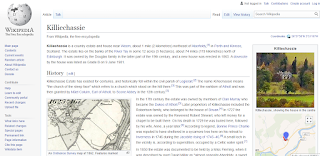
Another or Rowling's giant homes, Killiechassie house, is also a public location. It has its own Wikipedia entry, and is even listed as a place of interest for tourists. You can even leave reviews for the house on Google, which is not something that can be done for most homes, and certainly not private residences.


So if your homes are listed as places of public interest, have Wikipedia entries, are featured on travel and tourist websites, are featured a number of times in news articles, and seem to generally be pretty public knowledge, how is a single photo of the house doxing? That's not a rhetorical question. I genuinely want to know what seems to make this incident doxing, whereas all of that other information, and Harry Potter fans taking photos outside her castle, isn't? Because if there isn't some kind of explanation as to why this is different it seems like the only issue Rowling has is that it was trans people, a group she seems to hate, were near her home.

I'm sure some of you might say that because they were there on the Trans Day of Remembrance, a day to mark and remember the hundreds of trans lives lost over the last year (due in large part to the spread of transphobia and misinformation being spread in the world today) it became a protest, and is therefor wrong. But there have been a lot of times in the past the people have protested outside homes, and these get described as protests, but never as doxing. Was it doxing when people protested outside Jeff Bezos' home in 2020. Is it doxing when people protest outside The White House, or Buckingham Palace, both locations that are well known tourist locations, like Rowlings homes?

I'm sure that Rowling was upset that three people from a minority group she's been saying awful things about were outside her home, making it clear that they believed she was a transphobe and adding to the harm against trans people. But being annoyed does not make this into doxing. These were people behind a huge gate, a giant hedge, and separated from her by her round the clock security personnel. She was never in any danger, and I'm sure she wouldn't even have known they were there is she just went to the other side of her giant, literal castle.

But perhaps even more hypocritical of Rowling was when in the same twitter thread that she claimed she was doxed she mentioned other transphobes, people who have actively engaged in the harassment of trans people. She held them up as being poor victims, people who had been targeted because they 'refuse to uncritically accept that the socio-political concept of gender identity should replace that of sex'.

First of all, I'm having to point out yet again that Rowling is making an argument about something that is just not real. Trans people are not trying to replace sex with gender. The idea that we want to, that we don't understand the difference, or that we're trying to replace what it means to be male or female is ridiculous. I can assure you, trans people very much understand that sex and gender are not the same. It's kind of a big part of understanding ourselves as people whose physical sex and gender don't quite line up. It appears that Rowling is simply having to make these false claims because she can't just openly say 'I hate trans people', and needs to manufacture a false fight in which she can seem like the rational mind battling for what's right.

But even with that aside, these people she's talking about, Allison Bailey, Raquel Sanchez, Marion Miller, Rosie Duffield, Joanna Cherry, Julie Bindel, Rosa Freedman, and Kathleen Stock, aren't coming under fire for no reason. They have made it their mission to eradicate trans people, and that's not really a good thing to dedicate your life to. But also, some of these people she has named have literally engaged in doxing, an act that Rowling apparently finds appalling.

Marion Miller, who Rowling named, appeared in court because she engaged in harassment of trans people online, as well as doxing by revealing home addresses. Home addresses that aren't tourist location castles. Information on her doxing can be found here.

Rosie Duffield, a sitting Labour Party MP who appeared on television to spread transphobic lies on Trans Awareness Week, has come under criticism from her staff for her transphobic and anti LGBTQ+ views, and one staffer said that she tried to dox them by revealing their personal details on social media. Information on her doxing can be found here.

Rosa Freedman received an email regarding her increased attacks on the trans community. In response to this Freedman released the personal details of the person to her social media following. Information on her doxing can be found here.

Whilst that is only some of the names Rowling mentioned, the other people she talked about have engaged openly in transphobia. Allison Bailey claimed that trans people were trying to murder her dog with chocolate, and has recently lamented that young girls transition to trans men because it means people won't get to touch their breasts.


Joanna Cherry, a member of Scottish parliament, has spoken out against banning conversion therapy, as she believes conversion therapy would be fine to use against trans people and doesn't want that option taken away from her. She has also spoken in parliament to try and harm LGBTQ+ organisations such as Stonewall.


And there's Kathleen Stock, who recently quit her job at Sussex Universtity after a protest their at her anti-trans views. Despite the university deciding to back her, Stock left her position, and has since appeared in numerous publication, radio shows, and TV programmes to talk about how she was 'cancelled' simply for having anti-trans views. It should be noted, however, that Stock signed a declaration, the WHRC Declaration on Women’s Sex-Based Rights, that calls for the complete removal of all rights and protections of trans people, leaving them with no legal protections or rights.

And it appears that even Rowling herself has engaged in doxing. In her own twitter thread. She, a mulit-millionaire who lives in castles with round the clock security protection and 13 million twitter followers, included the twitter accounts of the three people who took a photo outside her home. She showed her supporters, a lot of whom are openly violent and harassing transphobes, where they could go to find these people and take their anger out on them (I removed their names from Rowlings tweets shown in the article).

These accounts have been deleted, most likely by the owners as Rowling sharing them would guarantee that they would receive harassment and abuse. And I believe Rowling was very aware of that fact when she did so.

Rowling was not doxed. Her home address and location are open to the public, and have been for many, many years. But as seems to be the case with people who campaign against trans people Rowling has claimed that she is the victim, and has tried to silence those she doesn't like. This isn't new, as Rowling has used the threat of legal action to have articles removed in the past, and part of me expects that this article here could go the same way.

Rowling was not doxed. She was not put in any danger. She praised people who have engaged in doxing. Don't believe her claims. Rowling is once again trying to harm the trans community. Don't let her get away with it.


Buy Amy A Coffee

Go to Amy's Blog

Dark Souls: Complete Collection – Comic Review


Originally published on Set The Tape


I’ve played Dark Souls and enjoyed it. I’ve found that the intimidating difficulty at the beginning of the game definitely rewards perseverance and grinding your way to victory, so as someone who is happy to keep on trying, keep on building up experience and getting stronger, it kept me entertained. But one area I found lacking was the engagement with the lore of the game. There’s a lot to be found in the game through item descriptions and such, but I was never really able to connect with the world and the setting very well this way. As such, when the Dark Souls: Complete Collection graphic novel came along I was excited to delve into it and learn more about this fascinating world.

This huge new book contains the four separate comic series previously produced by Titan Comics, putting them all together in one volume. The first story in this collection is ‘The Breath of Andolus’ by George Mann, the first Dark Souls comic produced by Titan back in 2016, which was simply called ‘Dark Souls’ when it was first released. The story begins with a warrior named Fira awaking alongside a a man called Scryer, who convinces her that he’s her friend despite her memory loss. Fira learns that she’s on a quest to retrieve three legendary artefacts tht will allow her to rebirth the dragon Andolus.

The story sees Fira and Scryer fighting their way through a variety of locations that fans of the series will find familiar, and features some characters and monsters from the game, including Solaire the Sun Knight. Despite this, the story does contradict certain parts of the game, and it’s not completely clear where in the timeline it’s supposed to sit. Despite a few moments that might not line up perfectly the story is enjoyable enough, and the artwork by Alan Quah is very nice throughout. The characters look great, and some of the environments are stunning; the crystal caves stand out as a particularly good.

The second part of this collection is ‘Winter’s Spite’ by George Mann, which tells the story of the warrior Andred, who has left his home and travelled into the frozen wastes to track down the man who has stolen his ancestral sword. The story sees Andred fighting for his life in a frozen arena, being captured by the undead, and fighting to reach an isolated mansion home to a powerful woman. The story is definitely an improvement over the first, and the more personal story, and I felt that I was able to get to know Andred more as a character than I was the lead in the first story. ‘Winter’s Spite’ also has what I’d say are more interesting set pieces for the action, and a more engaging environment for the story thanks to the snowy locations.

The art on this story, provided once again by Alan Quah, is probably my favourite in the book. Quah is great at capturing both the people and the monsters that inhabit the Dark Souls world, but I think the different environment helps here too. He captures the strange empty beauty of a snow covered landscape, and this landscape in turn helps the characters and the action to stand out. The scenes in the ruined manor are also incredibly well done, and he’s able to bring a sense of beauty to these ruined places.

‘Age of Fire’ by Ryan O’Sullivan is the third book in this collection, and the one that interested me the most. This is the story that actually goes into the backstory of the game, that really explores the history of the world and goes into details in ways that I wished the game did more. Beginning in the Age of Ancients, the story shows the war waged between the dragons and the gods, before moving forward in time to show the beginning of the undead plague, the fall of the Sliver Knights, and the end of Gwyn.


That being said, I really struggled with this part of the book. The story covers a lot of events, events that people who have delved deep into the game lore will be familiar with, but for someone with relatively little knowledge like myself it was quite confusing at times. The story jumped from one event to the other without really explaining what was happening, and it was often hard to tell characters apart when they’re in full armour and wearing helmets. It seemed to be acting more like it was filling in gaps for people who already knew the broad strokes, rather than telling a complete story of its own.

The artwork on this story, by Anton Kokarev, also gave me mixed feelings. It has a look to it that’s very reminiscent of digital paintings, and at times it’s incredibly beautiful to look at with some gorgeous moments. However, much like with the story there are times where I was finding it hard to know what I was looking at, and who was who. The action sequences here were also some of the dullest in the book, with very few dynamic panels or fun action moments on display. Sadly, between the disappointing story and art this ended up being my least liked of the whole collection.

The final part of the collection, ‘Legends of the Flame’, is an anthology collection of short stories set across various parts of the Dark Souls universe. The stories are framed as tales being told to a traveller who meets a mysterious figure at a campfire. The stories tell of people who lay traps for those cursed with the undead plague; how a city became a trap-filled labyrinth to keep out monsters; how a man is made to fight in an arena again and again, dying and being reborn time and time again – and many more.

These stories have a mixture of writers and artists on them, and it’s honestly the best part of the entire book. The stories are short but incredibly creepy. They cut out all of the stuff that isn’t needed and tell the core story in ways that do feel reminiscent of hearing a story around a campfire at night. And the art styles, which vary from story to story, fit each of the tales well, complimenting the dark and spooky tone.

Overall, there are some good parts of the Dark Souls: Complete Collection, some excellent parts that I loved, and some parts that left me feeling disappointed. For anyone that comes to this without knowing a lot of the lore of the universe you’ll probably have a similar experience of it being a fairly mixed bag, but for those who already know a lot about this universe and its history you’re going to find a lot here to interest you.


Buy Amy A Coffee

Go to Amy's Blog

Monday, 22 November 2021

Attending A Trans Day of Remembrance Service


I've never felt welcome in church. Even when I was growing up and hadn't figured out certain aspects of my identity there was something about it that never felt right; and since becoming a queer trans person engaged in a relationship that involves three people instead of the 'traditional' two I've believed that I'd become the kind of person who would never be welcome in a church. I'd half expect to be so unwanted there that I'd set on fire like some glorious queer vampire.

But over the weekend I saw someone on Twitter share the news that church in Leicester, St. Nicholas Church, would be having a service to mark the Trans Day of Remembrance, and to honour those members of the trans community lost. Not only that, but that they'd be doing things over the weekend, such as allowing people to light candles for those who had died, tie prayer cards up for them, and even make their own trans coloured rosaries. 

I'd spent the majority of the Saturday, the actual Trans Day of Remembrance, making an extensive tweet thread on my account, one where I shared each and every life lost that we knew about. I spent close to twelve hours, even going into the early hours of the morning, listing the names (where they were known), sharing their photos (where we had them), and reading about the awful, frightening ways in which they were killed.

Whilst I'd always marked this day in my own way each year this year it hit hardest. This was the year that we'd had the highest reported deaths on record. And now I knew their stories. I'd read all the names. I'd seen the faces. I'd cried more than once upon learning what happened to them. I wanted to do something a little more. My wife was the one who suggested we attend the church service, even though none of us are religious.


Upon arriving at the church we found a room full of people. Not jam packed, but struggling to fit everyone in with social distancing for sure. We were greeted openly and warmly, were given a programme of service, though not one each as they were having to ration them because they didn't expect so many people to attend the event.

I sat in the very back row, tucked up against the radiator to try and lessen the pain I was in, and I watched the service take place. Whilst I've never been religious I did attend a religious school for a few years, and been to events in church, so recognised a lot of the things that were happening, but it was the things I didn't recognise that astonished me. Because the church were doing things to not only include the trans community, but to centre it. The altar had a trans flag across it. The choir was from the local LGBT Centre, and sand songs about being yourself and love, and the passages they chose from the Bible could easily relate to the trans experience.

It felt so odd to be able to sit in a church and hear people speak about people like myself with love and care. It was something that I never expected to experience. As wonderful as it was, I don't think it would ever encourage me to adopt faith, or at least this kind of faith. Jay Hulme, the young man who gave the sermon, who I learned about the event through, spoke about how he'd collected the names of those who had been lost. He spoke about the hours he spent learning about them, and about the awful things they went through. It was something I understood extremely well. But whist seeing those awful things had filled me with pain, and reinforced the idea in my mind that a god couldn't exist whilst such things happen in the world, he said that it still gave him faith in the love of god. 

I honestly didn't understand this. I don't know how that kind of thing works. I don't think I'm the kind of person who can have religious faith. But I can see how that kind of faith helps others, how it comforted Jay in that moment. And I could see the church supporting him, the community around him putting trans and queer voices first and showing them love. And that gave me a little hope that perhaps things could get better.


One of the things they'd done at St. Nicholas was a candle lighting station. They'd laid out 375 matches, one for each of the lives lost that we know about. Each match had the name of a person, their age, and their location listed. My family and I light a candle for three of them there. We also took three of the matches home with us, to light candles later and remember them, and all those lost. I'm saddened to say that I recognised the names of the three women we light our candles for. As soon as I saw those names I could tell you that two of them were shot to death, and that the third was dismembered. I brought up their photos on my phone, we looked at their faces, and we light candles in their memory.

This year has been one of the bloodiest on record for the losses of trans lives. Of those lost so many were trans women of colour. And so many of them ended in violent ways. More needs to be done to protect the trans community. With transphobia becoming more and more pervasive, with trans rights in more danger now than ever before, trans people and their allies need to keep on fighting; otherwise that list of the lost will continue to grow each year.

Thankfully, there are people who are doing things to help. And whilst the voices of our haters and oppressors might be the loudest they are without a doubt not the most numerous. I have to hope that things will get better, and things like the St. Nicholas Church taking the time to honour and acknowledge our dead helps me to have that hope. Thank you to everyone there who held that service.


Buy Amy A Coffee

Go to Amy's Blog

The Hills Have Eyes (1977) – Limited Edition 4K Ultra HD – Blu-ray Review


Originally published on Set The Tape


The Hills Have Eyes is an iconic film. Whether you’ve ever seen it or not, you’re sure to have either heard of it, or will be familiar with the iconic poster featuring star Michael Berryman. It’s one of the few classic horror films that I’d never actually seen, so when I saw that Arrow Video were releasing a new 4K Ultra HD edition of the movie I snapped up the chance to finally see it.

The film follows the Carter family as they travel through the Nevada desert on the way to Los Angeles for a vacation. Upon stopping for gas at a remote gas station the family ask for directions to an old silver mine that they want to check out. Being advised to stick to the main road and forget about the mine, the family ignore the warning and head out into the desert. When an accident forces them off the road and damages the car they’re forced to try going for help on foot.

However, someone is up in the hills around them, watching them through a pair of binoculars. Thus begins a game of cat and mouse, as the twisted family that lives there starts to hunt the Carters down one by one, forcing the suburban family to face their worst fears and embrace their rage and will to survive.


Having heard so many stories about how extreme The Hills Have Eyes was, with having seen it being held up as one of the best horror movies of the 1970s, and a high point in director Wes Craven’s career, I was a little disappointed when I finally watched it. Perhaps it’s being more used to the horror films that have come since, but it didn’t feel like a huge amount of stuff actually happened. A lot of the action of the movie took place around the broken down camper van the Carter family was travelling in, and most of the stuff that happened elsewhere happened in desert locations that didn’t have any distinctive features or visual flair. As such, once the awe at the vastness of the desert had worn off there was very little visual stimulation in the movie.

This wasn’t helped by a threat that never really felt that threatening. I understand that the hill family was of course threatening, and did some awful things, but there wasn’t much to them beyond odd people living in the hills. They didn’t really have any flair to them. They weren’t as disturbing or as iconic as Leatherface and his family, and other than the distinctiveness of Michael Berryman’s look there’s nothing about the group that I could really describe other than ‘evil desert people’. I said earlier that I hadn’t seen this film before, but I had seen the remake when it first came out, and despite not having seen it in a decade the look and feel of that film is something I can conjure in my mind quite easily, yet I’m struggling to do so with the original just days later.


Whilst the film itself never really went beyond being okay for me, the extras that come with the film are a lot more interesting and entertaining. The disc includes a ‘making of’ documentary that lasts almost an hour, and features key members of the cast and crew, including the late Wes Craven. The story of how the film got made was, for me, more interesting than the film itself, and it was great to see the folks involved in bringing it to life talk about their experiences making the movie.

In the same vein, the trio of audio commentaries offer a similar kind of insight into the film, especially the one by academic Mikel J. Koven, who’s able to offer broader insight about the film beyond simply the making of the movie, and is able to explore the world in which it was made and released, as well as the impact that it had on film and horror. The set also has a couple of interviews, and an alternate end that doesn’t really feature anything different, but simply changes round the order of the final scenes.

Perhaps this set would appeal more to a fan of the film, someone who has a lot of love for the movie. But even as someone who has never seen it before the set was pretty entertaining, even if the film didn’t set my world on fire. For those with an interest in film history and horror, the extras are definitely worth a watch even if you’re not that interested in revisiting the film itself.


Buy Amy A Coffee

Go to Amy's Blog

Friday, 19 November 2021

Giallo Essentials (Red Edition) – Blu-ray Review


Originally published on Set The Tape


Note: We were only supplied with digital versions of the films in the Giallo Essentials set, without any of the extra features.

After spaghetti westerns the Giallo is probably the most famous Italian cinematic export: a genre beloved the world over thanks to its focus on tight mystery stories, twisting and intriguing tales, and violence and gore that are sometimes so over the top that it borders on horrific. Thanks to the extensive catalogue of well liked Giallo movies on offer, Arrow Video are able to bring a lot of these films to new audiences with updated Blu-ray releases, starting with the first in a new series of box sets, Giallo Essentials: Red Edition.


The first of the three films offered in this set is The Possessed (1965), a black and white mystery story from writers/directors Luigi Bazzoni and Franco Rossellini. The story follows Bernard (Peter Baldwin), a successful writer who travels to a small lakeside town in the north of Italy for his winter holiday. The last time he’d visited, Bernard had become involved with a local girl named Tilde (Virna Lisi), who worked as a maid at the hotel he stayed at. Upon arriving at the hotel he begins to search for Tilde, but soon discovers that she died by suicide months before. However, when he learns that some in town believe that Tilde was actually murdered, Bernard starts to look into events.

The Possessed is the one film in this set that feels the least like the Giallo films I am used to. It being from the mid 1960s is probably a big part of this. The film is shot in black and white, the story is quite slow and there aren’t really any big action scenes, and thanks to parts of the story where Bernard gets sick and starts to hallucinate you’re not always sure if what you’re seeing is real, a memory, or completely fabricated. Despite all that the film is very engaging, and you soon begin to become as interested in Tilde’s fate as Bernard. Thanks to the setting of a winter in northern Italy the film has a look and feel to it that makes it stand out from the other movies in this set, and it’s a good introduction to Giallo for first time viewers.


The second movie on offer here is The Fifth Cord (1971), also directed by Luigi Bazzoni. Unlike Bazzoni’s previous work on The Possessed, The Fifth Cord is much more of what I’ve come to expect from Giallo films. It’s bright, colourful, filled with vicious kills, and a plot so twisting and complex that it’s easy to get lost in. The story begins with a New Years Eve party that ends in tragedy when a member of a group of friends is attacked on his way home.

The next morning one of the group, Andrea (Franco Nero), learns of the attack from his bosses at the newspaper. Deciding to investigate the incident, Andrea begins to question witnesses to try and find out who hospitalised his friend. When another member of the group is attacked and killed in her home Andrea begins to think that the two cases are linked, and that something more is going on than first believed. As the bodies begin to mount Andrea has to race against time to find the killer.

The story for The Fifth Cord isn’t the easiest to follow, and there are a lot of red herrings and intentionally confusing clues given across the course of the film. Obviously it’s being done in an attempt to keep the viewer from being able to guess the killer’s identity too easily, but there are times where I was struggling to keep up with the large cast of characters and everything that was happening. The film’s climax, however, is pretty well done, and features a rather alarming scene with a child being put in danger before a daring last minute rescue that culminates in a long chase scene and a fight high up in a construction site.


The final film in this first set is The Pyjama Girl Case (1977), written and directed by Flavio Mogherini, that draws inspiration from the real life mystery surrounding the murder of Linda Agostini in Australia in the 1930s. This fictionalised version of the story finds a young woman’s body being found on a Sydney beach, her face ruined beyond recognition, with only a set a silken pyjamas and a cloth sack with a few grains of rice as the only clues.

Whilst the more modern and forward thinking members of the police force try to figure out the woman’s identity, a retired police inspector volunteers to help on the case. This begins one of the central clashes of the movie as the old rubs up against the new. The retired inspector dislikes the modern way of doing things, and the men investigating the case dislike the inspector acting on hunches and making leaps of deduction.

This film also feels a little different from other Giallo movies I’ve seen. Other Giallo films almost revel in moments of violence and spend time lingering on images of sex and female nudity; and whilst this film does these things too, it also does something when it comes times to trying to identify the victim. As with what happened in the real case, the police put the body on public display to try and get people to come forward. The naked, embalmed body of the brutally murdered woman is put on full display in a shopping centre, where the public are allowed to come and stare at her, ogling her naked form and her ruined face from every angle. It’s a pretty grim scene, and one that pushes the absurdity and horrificness of this idea, almost challenging the audience about their enjoyment of the murder and nudity on offer in the film.

The Pyjama Girl Case at times feels like it’s trying to make some kind of point, that the scene in the shopping centre, the conflict between the old and new policing, and a brutal and off-putting sex scene towards the climax of the film (no pun intended), seem to be challenging the normal tropes of the genre. Unfortunately, it never really feels like it’s decided on what point it’s trying to make, and as such the film just comes off as very unsettling.

Alongside the films, this new set comes with a host of special features, including full length commentaries on each movie by critics and film historians, and interviews with cast and crew from the films. These are the kinds of extras that I enjoy, and often give a lot more insight into the films and how they fit into the history and culture of Giallo and cinema. However, as I was only supplied with digital versions of the film I can’t speak to how in-depth or informative these extras are.

Giallo Essentials: Red Edition is an interesting set with three films that all feel very different from each other, giving the viewer insight into how broad and different Giallo can be. With so many other films in the genre on offer I’m certainly interested in seeing how the rest of this series will continue, and what other films we’ll be treated to.


Buy Amy A Coffee

Go to Amy's Blog

Thursday, 18 November 2021

Call of Duty: Modern Warfare 3 – Throwback 10


Originally published on Set The Tape


The Call of Duty franchise was always a successful series of games, a brand that fans of first-person shooters could rely on for decent game-play and a good time. However, it wasn’t always the huge thing it is now, and it wasn’t until the release of Call of Duty 4: Modern Warfare. Until that point the series was based securely in World War Two, a historical action series that wove its stories and characters into real world events. When they took the gamble to bring the series up to the modern day no one could predict just how successful it was going to be.

Four years after the release of Call of Duty 4: Modern Warfare the story started there came to an end in Call of Duty: Modern Warfare 3, Thanks to the hype around this game it became the largest game launch of all time, selling 6.5 million copies within the first 24 hours of release in just the US and the UK. To say that it was a juggernaut hit is an understatement.

The game put players back into the role of its series protagonists, Captain John ‘Soap’ MacTavish (Kevin McKidd) and Captain John Price (Billy Murray), who have had to go on the run following the events of the last game, where they killed the corrupt US general who was orchestrating a war with Russia. Whilst the heroes of the series do what they can to try and track down a Russian Ultranationalist leader in the hopes of bringing this new world war to an end, the rest of the US is busy repelling Russian invaders from its soil.


Thanks to the global scale of the conflict in this third entry of the series, players get the opportunity to battle across levels in locations such as New York City, London, Paris, Hamburg, Prague, Berlin, and the United Arab Emirates, making this one of the most global games in the entire Call of Duty franchise, with massive destruction and action that was compared to big, cinematic disaster movies.

The comparisons to big budget films was actually pretty fair, as this game went above and beyond what people were expecting. The previous games had featured some cool set pieces, but Call of Duty: Modern Warfare 3 outdid many of these. You’d be flying around New York skyscrapers in a helicopter shooting enemies; driving speedboats between huge battleships and the water exploding around you; shooting your way through air-planes as they broke apart; chasing underground trains on a jeep; watching as the Eiffel Tower crashes down in a hail of destruction. And those are just the parts I can remember off the top of my head. The game gives you little breathing room as the player is thrown from one action moment to the next. Add into this a cast of voice actors that included names like Tony Curran, William Flichter, Craig Fairbass, Timothy Olyphant, Bruce Greenwood, and Idris Elba, and the game made you feel like you were the star of an action epic.

This was a sentiment that was shared by a lot of people, as the game quickly garnered high scores and positive praise from critics. The Daily Telegraph reviewed the game, describing it as an “exceptional entry in the series” living up to the hype surrounding it. Similarly, video game focused publications such as IGN and Eurogamer gave positive reviews, with Eurogamer calling it a “ferocious and satisfying game that knows exactly what players expect, and delivers on that promise with bullish confidence“.


Despite these accolades there was one thing that fans and reviewers noticed about Call of Duty: Modern Warfare 3. Despite the bombastic nature of the single player campaign, it felt like a lot less time had been given over to it than previous entries in the series. This seemed to coincide with a bigger focus on the game’s multi-player elements. Its multiplayer was given a lot of attention both in the development and in the marketing, and there was a sizeable contingent of fans who jumped straight into the online mode as soon as they had the game; forgoing the single player experience entirely.

This is something that many have come to accept as a big part of the Call of Duty franchise over the years, that less time is given over to the single player campaign than is to the multi-player; and with the introduction of paid loot-boxes in more recent games this has only gotten worse. Sadly, despite how fun and engaging Call of Duty: Modern Warfare 3 was, it really did feel like the beginning of this trend in the series, and the last point where the single player experience was given any sense of care.

Call of Duty: Modern Warfare 3 was a fun, bombastic finale to this chapter of the franchise, a chapter that boosted the popularity of the series and broke the developers away from their focus on World War Two. Sadly, it was also the beginning of some of the worst aspects of the series.


Buy Amy A Coffee

Go to Amy's Blog

Wednesday, 17 November 2021

Doctor Who: Once, Upon Time - TV Review


The third episode of Doctor Who: Flux certainly piles the revelations upon its audience as it begins to answer a lot of the questions raised in the first couple of episodes, yet manages to keep an air of mystery going into the second half of this shorter series.

The episode begins by introducing a new character, Bel, played by Thaddea Graham, who is surviving in the ruins of a universe wrecked by the Flux. We see that whilst he Flux has created destruction on a scale we've never seen before it's not erased reality itself, which seemed to be the implications early on in the series, but left few alive and much of the universe in ruins. We keep going back to Bel over the course of the episode as she makes her way from planet to planet, trying to find a way back home, dodging some of the bigger Doctor Who enemies along the way.

These breaks from the main story are great, they show us what's happening in the universe, how bad things have gotten because of the Flux, and why it's important that the Doctor saves everything. It feels like the final days of reality, and that those who remain are fighting to be crowned rulers of the dust before it all goes away. This also means that we get an appearance from the Daleks, as well as a couple of scenes with the Cybermen. If these prove to be the only moments with these iconic villains this series I'm absolutely fine with that. They got to make an appearance, their inclusion showed the impact of the story as a whole, and their scenes were good. This is how you get certain monsters into the series without it feeling too bogged down.


Outside of Bel's story the main focus of the episode turns to the Doctor and her companions. We pick up where the last episode left off, with Swarm about to pour the full power and fury of the time-stream through the mouri and into Yaz and Vinder. In order to save her friends and buy them more time the Doctor throws herself and Dan into the time-stream too, allowing her the opportunity to try and fix things.

This begins a series of scenes that were really interesting. Things essentially become dreamlike from here on out, as the four good guys get thrown through their own timelines, pasts, present, and futures, to hide from the villains. But because time is broken things don't run quite right. Scenes can change suddenly mid sentence as they find themselves in new places, people from their memories have been replaced with other people they know, and they're able to try and challenge and change what was said and done. Rather than being simple flashbacks, they play out like nightmarish dream sequences; though ones that matter as we learn a surprising amount from them.

Yaz is probably the one least served in these scenes, possibly due to the fact that we've already gotten to know her so well over previous series. Instead of getting insight into her we get to see her being slowly pursued by a Weeping Angel that has invaded the time-stream. These make for some fun, and tense moments, and help build towards the final moments of the episode. 


Dan, in contrast, gets a little bit more character development, as we learn more about his relationship with Di; getting to see him chatting with her and the growing romance between the two. This really helps to reinforce that the two of them were close, as we only got them in one scene together at the start of the first episode, which helps us to understand his reaction to learning she's a prisoner at the end of the episode. We also get some insight into things to come as Dan finds himself in the Williamson tunnels with Joseph Williamson shooting a laser gun at some unseen foe. With these moments all being from people's timelines this is pretty much telling us that this scene is something we're going to get in a future instalment.

The character who gets the most work out of the three companions is Vinder, someone who began as a pretty blank slate, but who feels very well rounded and fascinating by the end of this episode. We get flashbacks of him on his home world, as a reckless but heroic pilot who gets the opportunity to go and work alongside The Grand Serpent, played wonderfully by Craig Parkinson. Whilst at first this seems to be a respectable promotion it very quickly becomes apparent that The Grans Serpent is a ruthless and evil man, one who genuinely oozes threat in every scene he's in. Having been witness to corruption and a plot to murder innocents Vinder chooses to do the right and honourable thing to report The Grand Serpent's actions. This is what led him to be in that remote space station at the start of the series.

Thanks to these insights into Vinder he's quickly grown to become one of the more intriguing cast members, and once his connection to Bel is revealed it becomes pretty clear that despite how things might seem at the end of the episode this surely won't be the last time we see either of them. I doubt that so much time and attention would be given to building either character up this much if they're never to return.


The biggest revelations of the episode, however, come with the Doctor, and her jaunts through her timeline. We find her, along with her three friends, preparing to assault the Temple of Atrapos, presumably to take the fight back to Swarm and Azure. However, the fact that her friends are all dressed like Division operatives, and armed with Time Lord weaponry gives away that this isn't what we first think; and we soon learn that the Doctor is living through the first assault on the temple in one of her forgotten lives. And it's an absolute joy when we discover which one it is. That's right, she's back.

The Doctor sees her reflection in the mirror and realises that the version of her in this memory is non-other than the Fugitive/Ruth Doctor. I was genuinely over the moon to see Jo Martin back, even if it was for some very brief scenes. However, this begins to fill in a lot of the details for stuff that we need to know. We discover more about what that version of the Doctor was doing, see her connection with Karvanista, Swarm, and Azure, and we learn more about the very nature of this conflict and what the villains are trying to do.

And that's what this episode is really all about, giving the audience a lot of answers. This is probably one of the most lore heavy episodes in a long while, and easily the most lore heavy one this series. And I kind of love that. I like that the first episode was non-stop things happening that didn't give you a chance to think, that the next episode slowed down the pace and told a good stand-alone feeling episode that still moved the plot forward, before jumping into a big revelatory episode that addressed a lot of the plot. It seems like the next episode will be taking a similar approach to the second, slowing down the main plot a bit to focus on some bad guys, allowing the stuff we've learned here to sink in a bit before moving towards the conclusion; and I'm down with that approach.

Obviously, there are still a lot of questions that need answering, there's a lot of stuff that we still don't understand, and this episode did throw more mysteries into the mix; but it's clear now that this entire story is going to be attempting something big, something that is tied to the history of this universe, and the Doctor, and that's hugely exciting. 


Buy Amy A Coffee

Go to Amy's Blog

Tuesday, 16 November 2021

Star Wars: The High Republic Adventures – The Monster of Temple Peak #3 – Comic Review


Originally published on Set The Tape


One of the things that’s been really enjoyable about Star Wars: The High Republic Adventures – The Monster of Temple Peak has been the way that the story has been unfolding. Cavan Scott has been giving readers small glimpses of the bigger story at play, both in the present and the flashback scenes, to that you feel like you’re getting a good grip on what’s happening, whilst leaving enough of a mystery that you know there’s more going on. This is even more the case in the third issue as we get some pretty big reveals that just lead to even more questions.

The main bulk of the issue continues to follow former Jedi padawan Ty Yorrick, as she and her new Segredo companion Derwen make their trek further up the mountain searching for the Gretalax. Along the way they get into a spot of trouble with the treacherous mountain path, and this actually reveals some interesting things about Ty: the fact that even when using the Force would be easier for her she chooses not to do so. With the reason for her split from the Jedi still being a secret to readers, this gives us some insight into that, and even suggests that perhaps it’s not just a case of her having an ideological split from the religion, but perhaps there’s something deeper going on that makes her less willing to use her abilities.

As with the previous issues, this one takes us back in time to show us a little about Ty’s past, and what I’m assuming are the events that led to her leaving the Jedi order. The flashback in this issue is the most intriguing one so far, but does end on something of a cliffhanger moment. Whilst I like this from the point of view that it’s got me excited for the next issue I am a little upset that I’m going to have to wait to find out what this all means, as Ty’s backstory is easily one of the most engaging parts of the narrative.

This issue also sees Ty finally coming face to face with the Gretalax, the monster that she’s been hired to track down and kill. I won’t say what happens, but the fact that there are still issues of the book to go should indicate that there’s more going on than a simple monster hunt, and that the story definitely gets more intriguing than I was expecting at this point in the story.

As with previous issues, the art on this issue of Star Wars: The High Republic Adventures – The Monster of Temple Peak is provided by Rachael Stott, Vita Efremova, and Nicola Righi, who come together to craft one of the best looking books that is on offer in the Star Wars Adventures line right now. The line work is gorgeous, with the characters, creatures, and environments avoiding feeling cartoonish and having a great sense of reality to them, whilst the colours are on top form throughout. With the book taking place through a number of environments, all of which have their own lighting and colour changes there’s a good variety on display here, and some really visually dynamic moments.

Star Wars: The High Republic Adventures – The Monster of Temple Peak has been one of the books I most look forward to reading every month, and with the developments that happen this issue and the things it seems to be hinting at and setting up it seems like the team behind the book are going all out to deliver a great experience for their audience.


Buy Amy A Coffee

Go to Amy's Blog

Monday, 15 November 2021

Star Wars The High Republic: The Edge of Balance Vol 1 by Shima Shinya & Justina Ireland - Book Review


'It's the era of the High Repubic and expansion across the stars is at its height. As trusted guardians of peace, the renowned Jedi protect the Republic and shine their light on those exploring the darkest reaches of the galaxy.

'In the aftermath of the Hyperspace Disaster, young Jedi knight Lily Tora-Asi is assigned to help displaced civilians relocate to Banchii, a newly inhabited planet in the Inugg system far in the outer rim. Banchii is the site of a new Jedi temple led by Master Arkoff, Lily's Wookiee mentor, who imagines the temple a place of peace for new inhabitants and for those who are travelling beyond. While balancing the arrival of incoming settlers with the strange mysteries of this remote outpost, Lily wonders if she's doing enough to bring peace to the galaxy. But when hidden dangers begin to emerge, the young Jedi will face her greatest challenge yet...'

This isn't the first time that a Star Wars story has gotten the manga treatment. There have been a number of stories that have been adapted over the years, but this is the first time that a new story has debuted as a manga, with a whole new story and new characters being introduced. Instead of taking a story readers are familiar with and simply giving it a new visual style we're treated to a story that feels very much made to be a manga, rather than just a new twist to something that already exists. As such, the story, its structure and the way things play out have an energy that feels unique and special.

The story follows Lily Tora-Asi, a young Jedi knight who is assisting a group of refugee's displaced after the Great Hyperspace Disaster. Travelling with them on a small ship, she and her former master, the Wookiee Arkoff, are bringing them to make a new life for themselves on the beautiful and untouched world of Banchii.

Lily is being haunted by nightmares about the Disaster, but is looking forward to returning to Banchii and the peace that will bring her, even if it does mean that she'll once again have to begin training her padawan, Keerin, as well as the two younglings Nima and Viv'nia. Whilst Lily isn't the most comfortable around children, she understands that it's important to pass her wisdom onto the next generation of Jedi, as well as learning to become a better Jedi from teaching them.

Shortly after settling back into daily life at the temple, training the young Jedi, Lily's routine is disrupted when they discover destruction deep within the forest, as well as one of the farmers having been turned into wood. They've barely got time to process this before the settlement comes under attack from the monstrous Drengir. Now Lily and the others will have to fight to protect their new home.

I really enjoyed this story, it feels like a great introduction to a new batch of heroes, ones who feel very different to some of the others in the High Republic series. These aren't big important Jedi like Avar Kriss, or Stellan Gios who are making huge, far reaching decisions in the fate of the galaxy. They're not travelling around space learning to become Jedi from Master Yoda like in the High Republic Adventures comics. These are just regular Jedi. They're the kind of Jedi who do the small jobs, who help people and live a relatively quiet life. As such, when things started to go wrong on Banchii it felt really bad, because this didn't seem like a group of big heroes left to face it, but folk who like a quiet and simple existence.

Speaking of a quiet and simple existence, I really liked Master Arkoff, the Wookiee teacher who spends his days watering his garden and imparting knowledge upon the younger members of the temple. I've got a soft spot for Wookiees, and Wookiee Jedi are definitely thing I want to see more of. But even then I like how different he is to ones we've had before. Gungi from Star Wars The Clone Wars was impatient, and struggled with the Jedi teachings; Burryaga in the High Republic is older, but is still very much learning to be a Jedi, and is at times worried and overly sensitive. Arkoff, in comparison to both, is full of calm confidence. He's grown into the role of being a Jedi, he's found an inner peace and strength that shows what a Wookiee can accomplish once their training is complete; and he's an absolute delight to read.

Whilst the book has connections with the wider High Republic series this is very much a story that feels like it can exist on its own, a book that someone who's not read anything else in the series would be able to pick up and enjoy. Other than a brief appearance by Stellan Gios, every character in the book is new, Banchii is a place we haven't seen before, and the Drengir are given enough of an explanation to not feel confusing to new readers. Because of this, the book feels like its going to be the most accessible of any of the other titles; which I suppose is a big part of the aim here, to attract people who may not pick up a comic or a novel set within the High Republic

I've seen some people complaining that Star Wars was making manga, that it was trying to draw in fans of the medium into a story that isn't suited for manga, and whilst I'm sure a big part of the aim of this book is to draw in new fans I don't think its a bad thing in any way. Star Wars has always had strong connections to Japanese culture, especially their entertainment. George Lucas was heavily inspired by samurai stories, and other creators in the Star Wars universe over the years have been as well. The franchise is so obviously inspired by Japanese entertainment that it feel strange that its only really been in recent years that we've gotten manga, as well as anime in the form of Star Wars Visions.

The art on the book, provided by Mizuki Sakakibara is wonderful, and everything looks so great. The characters are all distinctive and immediately jump out of the page, they manage to make Banchii look like a beautiful and peaceful world, and the action scenes are wonderfully drawn and look dynamic. Everything here looks perfect. I loved how the Jedi temple looked, and think that it's one of the best ones I've seen, and Miziki's take on the Drengir is so different from the rest, yet so obviously still the Drengir, that they add a fresh take on the creatures.

Star Wars The High Republic: The Edge of Balance has some brilliant new characters, ones that I very quickly became attached to and want to see more of; Arkoff and Viv'nia need to be in my life more! The story unfolds at an enjoyable pace, and the characters use their inteligence and their spiritual connection with the force to help them win the day. Plus, the extra story at the end is so incredibly cute and fun, I want more of that in the future. I was deeply impressed with this first volume, and can't wait to see what happens in future ones.


Buy Amy A Coffee

Go to Amy's Blog