Tuesday, 2 March 2021

The Girl With Her Head In The Clouds by Karen McCombie - Book Review


'1904 - Alexandra Palace, London. When sixteen-year-old Dolly Shepherd is offered the chance to take to the sky in a hot-air balloon, there's no way she's going to turn it down. Even though the pilot actually plans for her to jump out of the balloon and plummet back to earth using just a flimsy parachute.

For Dolly, it's the start of a sensational career. But the life of an aeronaut is as dangerous as it is daring, and there will be many narrow escapes along the way...'

The Girl With Her Head In The Clouds tells the story of the real life pioneer parachutist Dolly Shepherd. I was only vaguely familiar with the name Dolly Shepherd before reading this book thanks to having looked into pioneering women, but didn't know a huge amount about her; meaning that I was very excited to get to read this book and learn more.

The story begins with Dolly when she is a teenager, just getting ready to leave school and enter the adult world. Straight away we learn that Dolly wasn't a typical young woman of her time, as we see her on the roof of a barn, ready to jump off with nothing but an umbrella to help slow her fall. We also discover that she was expelled from school for throwing a pot of ink at her teacher when he hit her brother in the face and caused him to bleed, something that her parents were secretly proud of her for. Straight away I knew I was going to like Dolly. Her willingness to challenge authority, to stand up to bullies and protect others made me like her straight off the bat. 

Despite her love of life and wanting to do something different Dolly is sent off to work in her aunts business in the city once she reaches sixteen, and despite making some friends with the other girls who worked there, she often comes into conflict with her aunt, who wants a 'nice' and 'respectable' niece, not the fun loving daredevil that Dolly is.

Continuing to sneak off at the weekends to visit Alexandra Palace and see the shows. One day she manages to get herself hired as a waitress so that she can get in to watch a performance from composer Philip Sousa. Whilst there, she overhears another performer talking to one of the managers and hears that his show can't go ahead as his wife is sick. Dolly quickly volunteers, only to find herself on stage having an egg shot off her head by a blindfolded man. Well, this just makes Dolly fall in love with daredevil antics even more.

When she's offered the chance to go up in the air on a balloon and jump off with a specially designed parachute she signs up straight away. With the blessing of her parents, Dolly begins to jump from balloons every weekend, building a name for herself as a female daredevil and aeronaut. But she has a few mishaps and dangerous accidents along the way, all of which are covered in the book.

I honestly had no idea how dangerous and how amazing Dolly's life was, how often she put her life at risk in methods that no one today would use. The stunts she performed were not only impressive by the standard of the turn of the twentieth century, but even today. Yet despite that danger, despite the things that go wrong, and the injuries that Dolly receives, she can't help but keep going, to keep jumping.

The Girl With Her Head In The Clouds has a pretty clear message, I think, that when you find something that you love, that brings you joy, you should pursue it. Find a passion, find something that gives you a zest for life, that brings you and others happiness, and live for it. There are so many times in this book that Dolly could have backed down, or was told to stop, yet she always stayed true to herself. She did what she wanted to, she stopped when she was ready, and she helped to inspire others to do similar.

Dolly was the first person to perform a mid-air rescue, she went on to take part in World War One as a part of the Women's Emergency Corps, she became a fire marshal during the Blitz,  and even inspired her daughter Molly to follow in her footsteps and become a parachutist. She helped to pave the way for others, and never lost her love for life, and is just the kind of person kids need to read about and emulate.


Buy Amy A Coffee

Go to Amy's Blog

Secrets of Camp Whatever Volume One by Chris Grine - Book Review


'Perfect for fans of Lumberjanes and Brain Camp, there’s more than mosquitos at Camp Whatever and Willow will need to face truths about herself and her family as summer camp dread goes head to head with the supernatural.

'Eleven year-old Willow doesn't want to go to her dad's weird old summer camp any more than she wants her family to move to the weird old town where that camp is located. But her family—and fate itself—seem to have plans of their own. Soon Willow finds herself neck-deep in a confounding mystery involving stolen snacks, suspected vampires, and missing campers, all shrouded in the sinister fog that hides a generation of secrets at Camp ... Whatever it's called. '

Secrets of Camp Whatever follows Willow and her family, who have just moved to the fog shrouded town of Nowhere after inheriting their grandmother's house following her death. Unfortunately for Willow, they've arrived in town just in time for her to be sent to the local summer camp, Camp Whatever, so she is shipped off the the strange island in the middle of the local lake whilst her family settle into their new home.

Not only is Willow down about having to move to a whole new town, but she's even more unhappy about going to the camp, despite encouragement from her father, who went to it when he was a kid. On the way to the camp Willow learns that there are a lot of local legends about the island it's on, claiming that it's home to a host of unusual creatures from myth and legend. Despite not believing this, once she arrives on the island Willow has to admit it's pretty strange, and that there are some weird things going on it the foggy forest.


Secrets of Camp Nowhere is one of those great books that's clearly aimed at a younger audience, but doesn't treat the readers as stupid, talking down to them or being overly silly, so adults will get a lot of enjoyment out of reading it too. I found it to be instantly memorable of books from my childhood, like Goosebumps, and I was quickly put at ease that this was going to be an enjoyable read. I was also hugely impressed that its lead character was deaf, and that the book didn't use this as something to try and make people feel sympathy or pity towards Willow. In fact, there's only really one person who treats her as any different, and it's obviously made to make him look like a fool for doing it.

Willow is never held back by her disability, and even refuses to see it as such. One of my favourite moments with her in regard to her deafness was when she gets into a confrontation with a bit of a bully, who then lets her go stating 'I don't hit disabled kids', causing her to respond with 'I'm not disabled. I'll disable your face'. This was the moment I fell in love with Willow as a character. She's strong, confident, and doesn't let her disability define her or hold her back. More representation like this!

The book has a ton of other great characters in it too, and Willow is quickly surrounded by a core group of friends each of which are distinct and different enough from the other to be bringing something great into the mix themselves, and could easily be leads in their own series. This really shows that Chris Grine is great at establishing characters, and can make each of them feel fun and unique in a relatively short period.

These aren't the only characters in the book, however, as there are a number of interesting and unique characters inhabiting the island that Willow gets to meet, though I won't say much about who or what they are so as not to spoil, only that I loved seeing them and hope to spend more time with them again.


The plot is pretty standard middle-grade horror mystery stuff, with the characters trying to find out what's going on and trying not to get caught by authority figures or monsters whilst doing it, but it never once felt like it was just retreading old ground. It was constantly engaging and entertaining, and genuinely one of the most enjoyable graphic novels I've read this year.

The art is bold and clear, with distinct and easy to identify characters, and it always looked great. The way the book drains some of the definition from panels to show off the foggy nature of the town and island was really good too, and it really felt like I was looking at things through a layer of fog and mist. Monsters and creatures were also presented in some cool new ways, with some great takes on things that I've seen in other books, but done so in a way that felt unique to this book.

I loved reading Secrets of Camp Nowhere, and the larger pager count went by so fast because of how much I enjoyed the experience. I'm sad that the book came to an end, because of how great it was, but I'm equally happy that it's a first volume, because that means that there's going to be more from these characters and this world; and I can't wait.


Buy Amy A Coffee

Go to Amy's Blog

Monday, 1 March 2021

The Last Hawk by Elizabeth Wein - Book Review


'Nazi Germany is a dangerous place for a girl with a stammer - and although her father tries to keep her safe, Ingrid can't help feeling like she's let him down. But in the air, soaring high as she pilots her beloved glider planes, Ingrid is free and incredibly talented. When she gets the chance to fly in a propaganda tour alongside her hero, Germany's daring female test pilot Hanna Reitsch, Ingrid leaps at the chance. But through Hanna, she will learn some dangerous truths about Germany's secret missions and the plans that could change the course of the war to secure victory for the Nazi regime. When everything is at stake, Ingrid must decide where her loyalties lie ...'

Writing a children's book set in Nazi Germany is no easy feat. You want a book that kids will understand, one that will be close to the truth of how things were, yet I imagine there is a sense of wanting to hide some of the less favourable aspects for fear of disturbing the readers. I remember that my childhood books never touched upon this area of history, so was not only surprised that The Last Hawk was completely set within Germany, but also didn't try to shy away from presenting the less savoury sides of what the Nazi Party were doing.

The story follows Ingrid Hartman, a young woman living in the small mountain town of Ulmenhain. Her father is the education administrator for the area, and as such has to deal with a number of Nazi officials, people whom he's trying to keep away from his daughter. He's doing this because Ingrid has a stutter. This might not seem like much, but Ingrid and her family are fiercely aware that this could very well put her life at risk. Right at the beginning of the book Ingrid acknowledges to the reader that before her mother died she saw first hand the cruelty of the Nazi's, of how she was ordered to stop caring for the children at the Youth Hospital, children who weren't learning fast enough for the Nazi's to consider them 'normal'. Eventually these children were taken away, along with others from the town, such as the mayor's deaf son, and that soon after people in the town received massages that these children had all died of pneumonia. 

Straight away the book has told children about the horrible eugenics of Nazi Germany, of how the Nazi's would take children from their families and kill them. Okay, there's no mention of the concentration camps and the exterminations at this point, but the characters make a point of showing how suspicious it all is, how these death notices for pneumonia all happened at the same time. They know the Nazi's are lying about what's really happening; and they know that Ingrid could very well be taken away too.

This seems to become more of a possibility when a Nazi official labels Ingrid as a 'disgrace to Germany' for failing to act the way he expected. With this fear hanging over her that she could be taken Ingrid pushes herself to be seen as useful to the Nazi's. Luckily, Ingrid is an accomplished glider pilot, and has been helping out at the local flying school. She uses this as an opportunity to secure a position as a trainee instructor so that she can be seen as a patriotic and useful member of society, hoping that it will keep her safe.

Eventually her work at the school seems to pay off when she attracts the attention of Hanna Reitsch, a famous and beloved female pilot. Hanna recruits Ingrid into helping with her work, to join her in putting on glider displays for young pilots to encourage them to do their part for the war effort. At first Ingrid is over the moon about this, not only is she getting the chance to prove without a doubt that she's doing some good work for her country, but she'll get to fly with one of her heroes. And at first it is a dream come true for her, but things begin to sour when she learns that Hanna is trying to recruit young pilots for a suicide programme, and when her childhood friend, a recon pilot named Emil, begins to talk about camps where people are forced to work as slaves, and thousands are killed every day in gas chambers.

I was pretty invested in this story from very early on, in part thanks to the previously mentioned acknowledgement of Ingrid's stutter and her possible targeting by the Nazi's had me caring about her character with very little work having been done; possibly due in some part to me knowing that as a queer, transgender, disabled woman I myself would be one of the first marched into the gas chambers. I cared about Ingrid because I understood how much danger she was in, and knowing that she wasn't a real life character like Hanna Reitsch meant that she never felt safe, that the book really could end with her being taken away by the Nazi's and that had me worried throughout.

However, the book hooked me even more when Ingrid began to learn more about what was really going on in her country, when she learned that her hero was not only happy to recruit young men to blow themselves up, but was proud of it. She saw the ugly, hidden side of Nazi Germany first hand, saw how a woman she idolised was doing something awful; and then she began to hear about the death camps. The sudden shift of Ingrid feeling proud of what she was doing, of feeling happy in her role, to suddenly understanding that she was helping a regime that was monstrous was such a shift, one that made the book a lot more interesting.

I was honestly shocked that the book made it so clear how dangerous and deadly Nazi Germany was, and used that level of peril in its narrative, but I'm so glad it did. There's no point in hiding away from these things, even in a children's book. It's important to acknowledge the awful things the Nazi's did, especially in a time where fascism and Nazi's are on the rise once again.

The Last Hawk was an amazing read, a book with more depth, character growth, and peril than I was expecting. It's a book that's designed for younger readers yes, but one that I honestly believe that readers of all ages will enjoy, and that a lot of people should read.


Buy Amy A Coffee

Go to Amy's Blog

Rogue Planet by Cullen Bunn - Book Review


'Salvage vessel Cortes tracks the Lonely Orphan, a planet with no star system to call its own. Somewhere on this hostile rock is a payload fit for a king. To attain it, though, the crew of the Cortes must brave razor rock, poisonous vapours, treacherous footing, and… the most mind-numbing horrors imaginable. Struggling to stay alive, they are beset at every turn by horrors from their own nightmares. Now, they have discovered that they are not alone on the planet, and the other inhabitants welcome them… as sacrifices to an elder god.

'Stranded on a vicious, murderous, seemingly intelligent planet, the crew of the Cortes must reevaluate what it truly means to survive, and what they are willing to do in order to spare their own lives.'

The cover of Rogue Planet sets a tone pretty quickly with this book, it's one that is going to freak you out a little, and is definitely not one for the faint of heart.

The book starts on this lone rogue planet, where a race of alien beings are worshipping before a giant monument made from flesh and bone, a living, writhing monolith. A father reassures his son not to be afraid, before slitting his throat before this mass of flesh and organs. This first scene makes it clear that this is a book that will go to uncomfortable places, will push the readers to the point were you kind of want to put the book down because of how disturbing it gets at time, yet there is this central mystery as to what's happening that's raised in these first few pages that drives you on.

After this the focus shifts to the crew of the salvage vessel Cortes, who have discovered this rogue world thanks to a distress beacon from a crashed ship. Thinking that there might be some valuable salvage, the crew sets down on this strange new world and several members set out to go find the source of the transmission. However, the crew discover horrible creatures made from mangled flesh, and dozens of crashed ships, their former crews now part of the horrific creatures that seem to be stalking them across the planet.

Rogue Planet feels like a mashup of The Thing and Event Horizon and that's not a bad thing as I love both of those movies. I've seen some other people make the comparison to Alien, but other than being drawn to a planet because of a signal there's not much here like that film, and being drawn to an unknown place by a signal is not something that's unique to Alien by any means.

Instead of being beset by alien lifeforms the crew of the Cortes have to contend with disturbing body horror and their fellow crew members are twisted and transformed into awful abominations, or they have to deal with their own nightmares coming to life in front of them. This second part is the one that interests me the most, and its actually set up a lot earlier in the book than you think, with hints at what's really going on being given thanks to the appearance of snow on board the vessel. I'd have liked to have seen this gone into in more detail, however, as the idea of these people having to confront the manifestation of their fears was an interesting prospect. Sadly, the story moves at quite a fast pace, so we don't really get much time to go into things in any great detail.

Whilst this fast pace is great for keeping the pressure on the Cortes crew as they try desperately to get off planet, it does mean that the readers don't really get much time to get to know these people before something awful happens to them. There is a little bit of character development here and there, there's one crew member who recites a list of all the women he's slept with when he's afraid, and another who has a husband left on earth who's going into suspended animation whilst they're away so that they can age at the same rate, but despite these little nuggets of character I still didn't feel like I really knew any of them; and couldn't name a single member of the crew for you now. This is my biggest gripe with the book, as everything else was great. I can't help but feel that perhaps the book would have benefited from another issue or two, just so that Bunn could have had more room to fit in some of these character moments and flesh out the crew.

The art on the book, provided by Andy MacDonald and Nick Filardi, looks great, and they manage to make the book feel of decent quality, thanks in large part to the level of detail they give things. I've seen horror comics that have tried to hide things in shadow, or left some panels mostly empty voids, and whilst this can sometimes work it does at times feel a little cheap and lazy; here, however, the book never scrips on on the art, and every panel feels like there's something there for you to spend time looking through, whether that's the interior of the Cortes or the alien planet itself.

Rogue Planet isn't perfect, but its pretty damn good, and one of the few horror comics that I've read recently that has actually felt scary in places. 


Buy Amy A Coffee

Go to Amy's Blog

Sunday, 28 February 2021

Host – Blu-ray Review


Originally published on Set The Tape


2020 was not a great year for cinema. A lot of films scheduled to come out were delayed; some were released onto new platforms such as streaming services to avoid cinema releases, and others were put on hold altogether, as a deadly pandemic swept its way across the globe. So to not only create a film in that year, but to incorporate the restrictions and safety precautions into the actual story and make it a part of the narrative is not just bold, but pretty smart too.

New horror film Host follows a group of friends who are currently living in lock-down during the pandemic, and decide to not let that get in the way of their plans to do things together. Instead of doing something stupid and dangerous like getting together in person they use Zoom to hang out, and to take part in a seance.

The woman who leads the seance, Seylan (Seylan Baxter) informs them that she’s never tried this over the internet before, but she gives it a go. Unfortunately, when she drops out of the call for a while due to technical difficulties things begin to go wrong, and it soon becomes apparent that by messing around and mocking the spirits something has come across from the other side, something that seems to want to punish the people on the call. Thus begins a series of events where these people are stalked in their homes by an otherworldly presence.

The premise of this film initially made me think of other movies that have used connecting up via the internet, things like Unfriended, however unlike those films this one makes a whole lot more sense, due in large part to the reason that it’s happening online. In other films there’s a suspension of disbelief as to why people don’t just simply run away when scary things start happening, and why they stay on Zoom, but here there’s a really good reason for it. There’s nowhere for them to go. You can’t just run out of your house and go to a public venue, or run to a friend when it’s not safe to leave your home.


The film also uses the notion of something haunting them to much better effect than some other ‘techy’ horror films, and there are some very subtle moments of tension and creepiness as you begin to notice that things aren’t right, before the film ramps things up and goes into full on horror mode. One of the best things about this, however, is that the people in the film react really well to what’s going on, due in large part to the fact that sections of the script were held back from them in order for pre-recorded things to happen to elicit real fright from them. Not only is this very evil of the director, but it makes for some moments where the characters react in some very realistic ways!

Perhaps the biggest thing the movie has going for it though is its length. Instead of pushing things to a full 90 minutes and trying to pad the story the film is less than an hour long, and uses its time really well. It gives time to characters, so that you can get to know them before things start to go wrong, and can care for them, and has some slower moments to allow tension to build, but it still goes really quickly. There are other horror films that take place in real time, but often these feel badly paced, or have unnecessary things thrown in to make the film longer. Host simply turns up, tells the story it wants to tell, and goes. It doesn’t hang around running up the clock so that it can hit a certain run time, and it makes it all the better because of that.

The Blu-ray comes packed with a host of special features that add extra life to the home release, including some fun and informative commentaries from both the director and producer, as well as one from the film’s cast, as well as a number of behind the scenes interviews and Q&As that go into the making of the movie. There are also a couple of short films, and some prank videos included for anyone who wants even more content from Rob Savage, all of which are really good too.

Host is an entertaining and punchy horror film, one that uses the limitations of both the time it was filmed in and the format it chose to tell its story, delivering a really well made film that doesn’t take up a whole load of time.


Buy Amy A Coffee

Go to Amy's Blog

Saturday, 27 February 2021

Pulse (1988) – Blu-ray Review


Originally published on Set The Tape


In a world where we’re so used to technology, where it’s so much a part of our everyday lives that we probably don’t even think about it too much, we don’t stop to consider that there was a time where having a microwave in the home might be a cause for worry, or where a VHS player was a strange box with unknowable workings. Yet this is the world in which Pulse lives, one where technology was new, and in some ways scary. 

The film follows David (Joey Lawrence), a kid who’s moved to California to spend some time with his father and his new girlfriend. He’s leaving behind his mother and his quiet rural life in exchange for the big city, a place where there are bars on the windows and the neighbour kids are just kind of mean. Shortly before he arrives the neighbourhood is rocked by a strange event when one of the neighbours smashed up the inside of his house, before being killed by a live electrical cable.

However, David soon comes to believe that there is something inside the man’s home, something that lives inside the electrical systems and moves from appliance to appliance, something that wants to kill David and his family. Now he has to try and get people to believe the unbelievable, and try to survive in a world where every piece of technology around him could be trying to take his life.


There’s not much explanation for what’s really going on in Pulse, the identity of this mysterious force is never really explained, and the only real origin that gets suggested is towards the start of the film when a strange bolt of electricity lands, but even then this doesn’t really clear much up. Is this some kind of alien entity? An escaped experiment? A ghost that lives in the wires? We don’t know, and it seems like writer/director Paul Golding doesn’t care to know either.

The reasons behind what we’re watching don’t matter though; this isn’t a story about a creature or entity terrorising this family, it’s more a story about how a family copes when under a strange threat. We get to see how all three members of this family learn about this thing, and how it affects them. David believes it straight away, and is the voice crying out to be listened to, Ellen (Roxanne Hart) is in denial at first but once she believes it is the one who’s most afraid and quickly finds herself at the end of her rope, and there’s Bill (Cliff De Young) who denies it right until the end, until the point where he’s presented with irrefutable proof and has to believe. The film spends its focus with these three, and takes an interest in the slow torment of the family and watches how they react.


It surprised me how much the film was about the family and their emotional breakdown. I was expecting a film that would be focusing on the ‘evils of technology’, like similar films from the time where technology causes havoc, yet it never seemed to be taking the stance that technology is bad. It never felt preachy or trying to push a message, and I could see the story working in a very similar way if the terrorising presence was using some other means to harm the family.

Despite being interesting, the film never wowed me, mainly due to the fact that nothing much really happened. There’s a death at the very start of the film, and no one else dies after this. The possibility of these elaborate deathtraps, similar to Final Destination, never really came to be, and the moments where the house turned on the family were pretty lacklustre until the big finale. There’s very little sense of tension, and the film didn’t really build on suspense. By the time stuff starts to happen at the end of the film it comes more as a relief because you’ve been sitting waiting for more than an hour.

The disc is fairly light on content too, with a trailer and video essay to watch through, as well as an audio commentary from author and film historian Amanda Reyes. The commentary is pretty interesting, and offers some good insight into the film, not just from a production point of view, but one that comes with a lot of historical context too.

Pulse has gained a cult following over the years, and if you’re a fan of the movie this new release will be really up your alley. If you’re coming to this having never seen it before, you might not be completely entertained by this slow, and strange horror story.


Buy Amy A Coffee

Go to Amy's Blog

Friday, 26 February 2021

Bernice Takes A Plunge by Ann Harth - Blog Tour


'Bernice Peppercorn’s imagination fills her mind and her notebooks with adventure and intrigue. She sees crimes where there are none and races to the local police station daily to fulfil her civic duty. When a real robbery is committed in town, Bernice dives into detective mode and stumbles across vital clues that could help find the thieves. No one believes her except Ike, a one-legged fisherman who lives down at the wharf.'

There's a level of fun to children's books that just seems to be missing from adult books, a sense of whimsy where even the most mundane thing is exciting or amusing that goes away as the target audience gets older. This is one of the things that's just so refreshing and enjoyable about Bernice Takes A Plunge, the silliness, the earnestness, and sheer joy that permeates almost every page.

The story follows the adventures of Bernice Peppercorn, a girl who's obsessed with mysteries. She wants to write mystery stories, having been inspired by the local celebrity Crystal Bell, who stars in a number of blockbuster mystery adventure films. She uses her everyday life to inspire her stories, coming up with ideas for adventures by the things she sees, unfortunately, her desire to find an interesting story can sometimes get her in a bit of trouble.

Bernice is known to the local police, not for being a trouble maker though, but for the exact opposite, for thinking everything she sees is part of a bigger mystery, and that there's always a crime afoot. We see this first hand a couple of times when she thinks that someone is trying to detonate a car bomb when she sees a young man with a remote control in the car park (he's just playing with a remote control car), and when she gets the police to investigate when a local woman goes missing and her house is a mess (she was just in the garden at the time). Bernice's heart is always in the right place, but she doesn't always seem to slow down and think before jumping in to save the day.

Fortunately for her, a real crime does happen when Crystal Bell's mansion is broken into and her jewellery is stolen. Now Bernice has a real crime to investigate, something that she knows isn't just her imagination. But who could possibly be behind the crime? Her first suspect, the strange new fisherman Ike who has just recently moved to town.

One of the things that I love about Bernice is that she's a little all over the place. Her mission is to try and find these stolen objects and solve the mystery, but boy does she get distracted a lot. Even when she's investigating her suspect Ike she goes a little off track. She sees he's got a wooden leg, and starts wondering what it would be like to walk around on it, so ends up strapping her leg up behind her and sticking a plunger on her knee so that she can walk around on a peg leg. This isn't the only time that something like this happens either, and it quickly becomes clear that Bernice is always getting distracted, forgetting things, and making silly mistakes.

I don't know if it was written this way purposely or not, and I'd love to ask Ann Harth about this, but the way Bernice acts reminds me a lot of ADHD. The way she has hyper fixations on certain things, yet can't seem to keep her focus on stuff, failing to read instructions fully because she just wants to get things done, losing stuff because she can't remember where she put it; it all reminds me of ADHD. In a lot of ways she's very similar to my wife, who has it, and I loved seeing a neurodivergent lead character, especially in a kid's book.

Like I said, I don't know if she was intentionally written this way, but even if she wasn't I'd like to think that people with ADHD, both adult and kids, would be able to read this book and see a bit of themselves reflected in Bernice. Everyone should get the chance to feel represented in media, and to have a lead with these kind of traits, who isn't treated as different and is able to solve the mystery and save the day is definitely a great thing.

Bernice is a really engaging and fun lead character, one that I enjoyed spending some time with. I loved her sense of wonder at things, of her desire to ask questions and to try new experiences. She seemed to have a lust for life and an energy that a lot of leads don't have, and it was enjoyable reading a character who's just having fun. I hope that this won't be the last we see of Bernice, and that we can get to see her tackle some more mysteries in the future.


Buy Amy A Coffee

Go to Amy's Blog

Thursday, 25 February 2021

Daughters of Night by Laura Shepherd-Robinson - Book Review


Originally published on Set The Tape


'London, 1782. Desperate for her politician husband to return home from France, Caroline 'Caro' Corsham is already in a state of anxiety when she finds a well-dressed woman mortally wounded in the bowers of the Vauxhall Pleasure Gardens. The Bow Street constables are swift to act, until they discover that the deceased woman was a highly-paid prostitute, at which point they cease to care entirely. But Caro has motives of her own for wanting to see justice done, and so sets out to solve the crime herself. Enlisting the help of thieftaker, Peregrine Child, their inquiry delves into the hidden corners of Georgian society, a world of artifice, deception and secret lives.

'But with many gentlemen refusing to speak about their dealings with the dead woman, and Caro's own reputation under threat, finding the killer will be harder, and more treacherous than she can know...'

Daughters of Night is the latest historical murder mystery novel from Laura Shepherd-Robinson, and is a loose sequel to her first book, Blood and Sugar.

Set in London in 1782, the story follows Caroline (Caro) Corsham, the wife of the lead character in the previous book, who is given centre stage here. With her husband Henry away on important business Caroline finds herself in a web of danger when she discovers a woman dying in the bowers of the Vauxhall Pleasure Gardens.    

Caroline is there to comfort the woman in her dying moment, as she bleeds to death from several wounds, and hears her last words – ‘he knows’. Caroline believes the woman to be a wealthy Italian countess she had met a few times years before, but when it is revealed to her that she was actually a sex worker named Lucy Loveless, and that because of who she is no investigation will be made, Caroline sets out to find the killer herself.

She employs the help of a thief-taker called Peregrine Child, who her husband spoke highly of. Together, the two of them begin investigating Lucy’s murder, an investigation that will lead them to the brothels of London, a secret society, a master artist, and a conspiracy that could topple the entire country. With Caroline facing threats on all sides, and discovering that her recent affair has led to her becoming pregnant, she has to decide how far she wants to take this investigation, even if it means that she could lose everything.

I’ve read a few historical mystery books in my time, but this is one of the few that I’ve read that takes place within Georgian London, an era that seems to get overlooked. Despite being unfamiliar with this era beyond a basic knowledge of the style of dress and the gin craze, I never felt like I was lacking in information, as Laura Shepherd-Robinson manages to evoke such a clear sense of this world. She builds the atmosphere perfectly, providing enough information without overwhelming that you feel like you have a strong picture of what this old version of London looks like, as well as the people who inhabit it.

That being said, the people are where the book really excels, and Shepherd-Robinson manages to create a wonderfully varied, and expansive cast of characters. Whether it’s people we spend a lot of time with like Caro and Child, those we begin to suspect of the murder, or people we see only the once over the course of the investigation, these people feel very real and well crafted. It would be easy to make caricatures of some of these people, they’re from a very different time to ours, with very different societal norms, and it would be easy to paint all the sex workers as the same, or as one dimensional; instead, they get personalities, motivations, and dynamics that vary. They get treated like real people who you can empathise with and whose motivations you understand. Considering some writers fail to see any kind of sex workers as real people the fact that the author breathes so much life and personality into so many here, and ones from hundreds of years ago, is a truly pleasant surprise.

We also get some good insight into the inner workings of ‘higher’ society of the era too, and get to see that despite some people being assumed to be ‘betters’ simply because they have wealth and a title they can be worse than those who have nothing. The book plays with expectations on class and station in ways that I wasn’t expecting. Even those who aren’t connected to the crimes who hold high positions are shown to be flawed, greedy, and ruthless, whilst those who have to live in squalor, who are looked down on by ‘good’ society have compassion and caring, and choose to do the right thing. Much like with the portrayal of the sex workers, it would have been easy to fall into easy stereotypes here, yet the author instead chooses to paint a much more balanced and truthful depiction of society.

The central mystery is what really sells the book though, and it has some wonderful twists and turns to it. There was more than once that I thought I’d come across the right answer, or had figured out an important part of the mystery, only to find out that I was wrong. Even right until the end when I thought everything had been revealed Shepherd-Robinson managed to throw some final revelations and unexpected moments in that I never felt like I could let my guard down. It tested my deductive powers in a lot of fun ways, and that’s something not every mystery novel can say with confidence.

Whether you’re a fan of historical mystery or not, and whether you’ve much experience in this setting, Daughters of Night is a book that will hook you quickly, take you on a journey with unexpected twists and turns, and provide you with a compelling group of characters. An absolutely wonderful experience to read.


Buy Amy A Coffee

Go to Amy's Blog

Wednesday, 24 February 2021

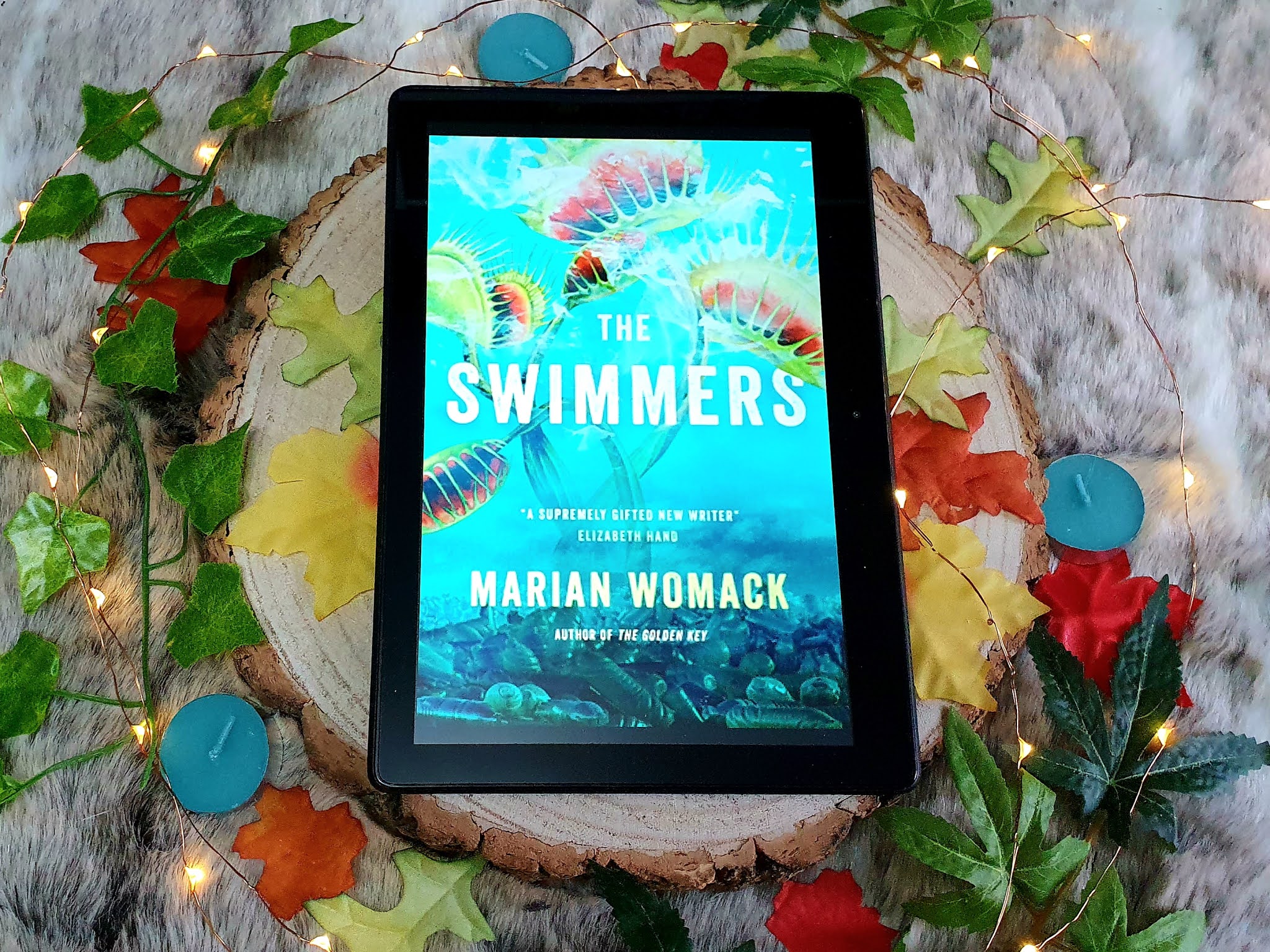
The Swimmers by Marian Womack - Book Review


Originally published on Set The Tape 


'After the ravages of global warming, this is place of deep jungles, strange animals, and new taxonomies. Social inequality has ravaged society, now divided into surface dwellers and people who live in the Upper Settlement, a ring perched at the edge of the planet's atmosphere. Within the surface dwellers, further divisions occur: the techies are old families, connected to the engineer tradition, builders of the Barrier, a huge wall that keeps the plastic-polluted Ocean away. They possess a much higher status than the beanies, their servants.

'The novel opens after the Delivery Act has decreed all surface humans are 'equal'. Narrated by Pearl, a young techie with a thread of shuvani blood, she navigates the complex social hierarchies and monstrous, ever-changing landscape. But a radical attack close to home forces her to question what she knew about herself and the world around her.'

The Swimmers is the latest novel from Marian Womack, and much like her previous book, The Golden Key, it has a strange, dreamlike quality that makes reading it a  unique experience.

The narrative follows Pearl, a young woman who’s grown up in a world of the far future, where the earth has been completely altered by climate change and out of control terra-forming, creating a place that’s almost unrecognisable for readers.

Following global warming the world has been transformed, covered in a vast, always changing jungle, filled with mutant animals. There are three groups of people surviving in this future: those who get to live high above the Earth in the huge ring that surrounds the planet; the Techies, old families who were once responsible for the construction and upkeep of the large barriers that keep out the deadly seas, but have to live on the surface; and the Beanies, a recently freed group of people that were once slave and servants, working in the Techie homes and growing food in the jungles.

Pearl is a Techie, and has grown up in a remote estate in the jungles, but after her father leaves her life after apparently killing a child, Pearl’s childhood takes a turn she didn’t expect. Eventually her mother remarries, and the family get to move to one of the last towns left, where she begins to learn more about the world around her, and starts to uncover some secrets about her family and their past.

I mentioned at the start that The Swimmers has something of a dream-like quality to it, and this is mainly due to the fact that the narrative is told from Pearl’s point of view, and that the book is written less like someone experiencing a series of events and recounting them to the reader, and more like someone looking back on their life. The narrative comes across more like a flow of consciousness than a more thought out telling of a story.

Pearl hasn’t rehearsed what she’s telling people, she isn’t writing it down in an easy to understand way, editing what’s there until it’s clear and easy to follow. Instead it will jump from point to point, with the time-frame of events moving around. She’ll start talking about one thing, but it seems to remind her of something else, so she switches her focus and talks about that for a bit, before going back to her original point. Because of this the book can at times feel pretty disjointed, and even hard to follow, however, it gets readers deeper into her mind than a normal first person perspective would normally manage.

The strangeness of the writing style, and of Pearl’s thoughts, are magnified in sections where another voice takes over, and we get parts written from another point of view. These segments feel more like a traditional first person perspective, and are closer to what most people would probably be used to experiencing. These segments help to give further context to Pearl’s story, showing events from different vantage points, and allowing deeper understanding of what’s going on, things that Pearl couldn’t possibly know. They also help to explain the conclusion of the book, something that if we were just following Pearl’s story alone would take a very sudden turn and conclude almost out of nowhere; yet together these two narrative types seem to work, and craft a mostly complete and satisfying narrative.

I say mostly, because there was so much about this world that I wanted to learn more about, yet readers were never really given that opportunity. Over the course of the book we learn a little about how the world ended up this way, but it feels like this was just the tip of the iceberg for the most part. We never really went deep into how things got to this point, who was responsible for the dramatic changes to the planet and its wildlife. We got tiny glimpses into the creatures that now inhabit the jungles and vast, plastic filled oceans, but only occasionally when an animal we’ve never seen or heard of before is mentioned in Pearl’s story. I really wanted Womack to go into this in more detail, to really show the weirdness and horror of this new Earth, yet it never happened.

I’d recommend The Swimmers to people who want to read a strange and multilayered story, one that will get you thinking and filling in the gaps, but if you’re not a fan of complex weaving narratives and opaque storytelling it might leave you wishing for something a little easier to digest.


Buy Amy A Coffee

Go to Amy's Blog

Tuesday, 23 February 2021

Power Rangers #4 - Comic Review


It takes a lot to make me feel sorry for Drakkon, a character that's been pretty irredeemable since he was first introduced several years ago, and has well and truly earned his place as a villain worthy of hating, but, there's something about this issue that makes me feel a little bit sorry for him.

The issue starts with the Omega Rangers and Drakkon arriving in the strange dreamworld like construct that Drakkon was imprisoned in at the end of 'Shattered Grid', a place that was supposed to allow him to live out the rest of his days in relative comfort and peace. Those who were able to read the FOC covers that showed the destruction of the Red Emissary will be a little familiar with this place, as they saw it then, when it had been Drakkon's prison for a while.

Now, however, the place is falling apart. Having been modelled on Angel Grove, it's now a ruin, with pieces of the reality broken away and floating in the sky above our heroes. It seems that in the destruction of the Emissary reality itself has begun to fall apart here. If that wasn't dangerous enough, those giant spirit animals left to protect the prison still remain, and are more than willing to fight the Omega Rangers for trespassing there.


This issue not only gives writer Ryan Parrott a great opportunity to show readers a little bit of what was going on inside Drakkon's head, with glimpses into the ideal world he wanted to create, but also allows artist Francesco Mortarino a chance to do some weird and wonderful things with the environment. Thanks to the way it's drawn, and the colours provided by Raul Angelo, the whole thing look suitably weird. It's not simply a ruined version of the Ranger's home town, but a place where the line between dream and reality is skewed, and the art really reflects this.

It also becomes apparent that despite being able to fill the world with fake versions of the people he knew, Drakkon was still very much alone here, and that this definitely had an effect on him. We see some of the things he came up with to provide a much needed sense of company and reality, and it's one of the least healthy coping mechanisms you could come up with. I'm sure there are some who will say that Drakkon got what he deserved at the end of 'Shattered Grid', perhaps even that he got of light, but it's clear that things definitely had an affect on his mental state, and have played a large part in the way he is now. It's not just the fear of the Empyreals that caused his mental health issues, but the place he was locked away in too.

We end the issue with the team collecting the pieces of the remains of the Red Emissary, and them learning that they could put those pieces back together to revive him; unfortunately, it seems like the Empyreal that killed him took one of those pieces with them. At least now the Rangers have a goal and something to go after. Though it does raise the question of whether they could go and gather the pieces of the Blue Emissary since Kiya killed him too.


Buy Amy A Coffee

Go to Amy's Blog