Thursday, 31 May 2018

Star Trek: The Next Generation: Through the Mirror #4 – Comic Review


Originally published on Set The Tape


Finally, Mirror Picard’s plot is revealed! It’s Enterprise crew versus Enterprise crew, with the fate of a galaxy hanging in the balance!

Publisher: IDW Publishing
Writers: Scott Tipton & David Tipton
Artists: J.K. Woodward & Carlos Niet
Pages: 32

Finally, readers of Star Trek: The Next Generation: Through the Mirror get to find out what the mirror universe Captain Picard’s plans are; and they’re much bigger than I was expecting.

The previous issues had made it clear the the I.S.S. Enterprise and it’s crew were stealing technology and resources from the prime universe in order to fill their ship stores, and to act as bartering supplies to help them win favours with other Imperial ships. Whilst I thought that they were targeting the U.S.S. Enterprise in order to steal something from them, probably something unique to the ship itself, I was completely wrong; they wanted the entire ship.

Having modified the Martorelles Array to act as a giant transporter, capable of bringing an entire star-ship through universes, the crew of the I.S.S. Enterprise intend to claim the ship as their own, with the eventual goal of each of their command crew having their own Galaxy Class ship to command; making them an unstoppable force.

Not wanting to bring across the entire crew and ending up with a thousand or more hostages, the mirror universe gang have come up with a plan to trick the people off the U.S.S. Enterprise. This is the part of the mission that Inquisitor Troi was tasked with, that we never got to see in the previous issue.

Thanks to some sheer luck of Commander Riker wanting to find their Troi at the same time the Inquisitor is on the ship, they discover that there are two Diana’s, and that one is sabotaging the ship. It’s a fun little moment as Riker and Data realise that the computer isn’t malfunctioning, but rather they’ve been infiltrated, and it’s a good way for the plan to go wrong without having one of the mirror universe crew having messed up in some way.

Thankfully, being aware of the sabotage the U.S.S. Enterprise crew manage to undo it, and even beam across to the mirror univers themselves, bringing Captain Picard face to face with his double on board the I.S.S. Enterprise for a confrontation that is sure to be explosive and dramatic.

The fourth issue moves with a brisk pace, and there’s almost no time to stop and think about what is happening, but with so little time left in which to tell the story this fast pace is needed in order to get all of the pieces in place for the final issue. Thankfully, this faster pace isn’t a detriment to the story in any way, and the reader is still given some small character moments to enjoy, such as the alternate Barclay and his anger over how the U.S.S. Enterprise crew treats his counterpart.

The art, as always, is on fine form, and you’re instantly able to tell who is who without any difficulty, something that is always good when your characters are supposed to look like real people. The best art in the issue, however, still falls to the B story by J.K. Woodward. The wonderful hand painted style gives these few pages a lot of gravitas. The darkness of Data and Spock’s surroundings doesn’t just feel like a dark mass, but has texture and depth. The recreation of the actors here is also spectacular, with the actors faces being near spot on in every single panel.

The B story also finally offers some more insight into the past of Emperor Spock, and the reformed Terran Empire that he created following the mirror episode on the original series. As this not only ties into the story being told in these Star Trek: The Next Generation comics, but also plays a part into the history of the mirror universe seen in several Star Trek: Deep Space Nine episodes, it’s a nice inclusion.

With only two issues left of Star Trek: The Next Generation: Through the Mirror in which to wrap up its story both Scott and David Tipton keep the story moving with pace, but never make it feel rushed. It gives us small character moments, and big scenes filled with exposition. It manages to keep the reader entertained throughout and move all of the pieces into place for what is sure to be a dramatic conclusion.


Go to Amy's Blog

Tuesday, 29 May 2018

Star Wars: Death Troopers by Joe Schreiber - Book Review


Originally published on Set The Tape


When the Imperial prison barge Purge–temporary home to five hundred of the galaxy’s most ruthless killers, rebels, scoundrels, and thieves–breaks down in a distant, uninhabited part of space, its only hope appears to lie with a Star Destroyer found drifting, derelict, and seemingly abandoned. But when a boarding party from the Purge is sent to scavenge for parts, only half of them come back–bringing with them a horrific disease so lethal that within hours nearly all aboard the Purge die in ways too hideous to imagine. And death is only the beginning.

The Purge’s half-dozen survivors–two teenage brothers, a sadistic captain of the guards, a couple of rogue smugglers, and the chief medical officer, the lone woman on board–will do whatever it takes to stay alive. But nothing can prepare them for what lies waiting aboard the Star Destroyer amid its vast creaking emptiness that isn’t really empty at all. For the dead are rising: soulless, unstoppable, and unspeakably hungry.

Publisher: Del Rey Books
Author: Joe Schriber
Pages: 304
Price: £5.99

After the Disney purchase of Star Wars one of the biggest concerns of fans became what was and wasn’t canon anymore. The stories that came after Star Wars: Return of the Jedi were pretty much assumed to be going as this was the area that Disney would be wanting to make films about, but the pasts of the characters was something that could still draw upon the stories that are now considered Legends. Solo: A Star Wars Story is set to fill in some of these gaps for the beloved character of Han Solo, but the Legends stories are full of interesting histories, one of which is a strange departure for the Star Wars universe. Star Wars: Death Troopers.

Set before the events of Star Wars: A New Hope, Star Wars: Death Troopers tells the story of Han and Chewie as prisoners of the Empire aboard the prison ship Purge. It being a prequel, and Han and Chewie being free men in the first film, it’s clear that the two of them won’t stay prisoners for long. But if you’re expecting a daring prison break story you’re very much wrong. This book is a pure horror story.

The book introduces the audience to the stark reality of the Imperial prison ship through two of our main characters, the teenage Kale and Trig Longo, prisoners of the Empire. We see the brutal conditions that they have to survive in; the sadistic nature of Jareth Sartoris, the guard responsible for their fathers death; and Zahara Cody, the ships medic that isn’t really cut out for a life in the Empire thanks to having a heart.

Things begin to go wrong when the Purge suffers from engine failure, leaving the ship in desperate need. Thankfully, they come across a Star Destroyer, however, it’s just floating in space. After bio-scanning the ship they discover that there are only 10 life reading aboard; on a ship designed for 10,000. Sending a team onto the Star Destroyer looking for parts they inadvertently bring back an infection that turns everyone but the Longo brothers, Sartoris, Cody, and a handful of other into what can only be described as zombies. Yes, Star Wars: Death Troopers is a zombie horror.


Freeing the two uninfected prisoners in the maximum security cells, Han Solo and Chewbacca, the survivors must try to find a way to escape the thousands of flesh eating monsters that now infest both ships.

Star Wars: Death Troopers is a big departure for any other Star Wars book I’ve read, and it may not be to everyone’s tastes, but it’s a surprisingly interesting and engaging mix of the sci-fi fantasy universe we’ve come to know and love, and traditional horror story scenarios. The survivors creeping their way through the tight, dark halls of the disabled ships whilst trying to avoid the ravenous undead is surprisingly tense, and the lack of any Force users makes the story feel a lot more grounded and real.

It’s not just tense corridor creeping though, there are moments of face paced action as hordes of hundreds of infected come charging at the desperate survivors, leading to some interesting and inventive moments. One particular part of the story that stood out was the zombie Wookies, that’s definitely something that isn’t in any other Star Wars story.

Whilst it might not be to everyone’s tastes Star Wars: Death Troopers is an interesting an unique Star Wars book, and a odd look into what was once a part of Han Solo’s back story. With Alden Ehrenreich apparently signed on for more Star Wars films, maybe we’ll get to see Han Solo fight zombies on the big screen one day – though I wouldn’t put my money on it!


Go to Amy's Blog

Friday, 25 May 2018

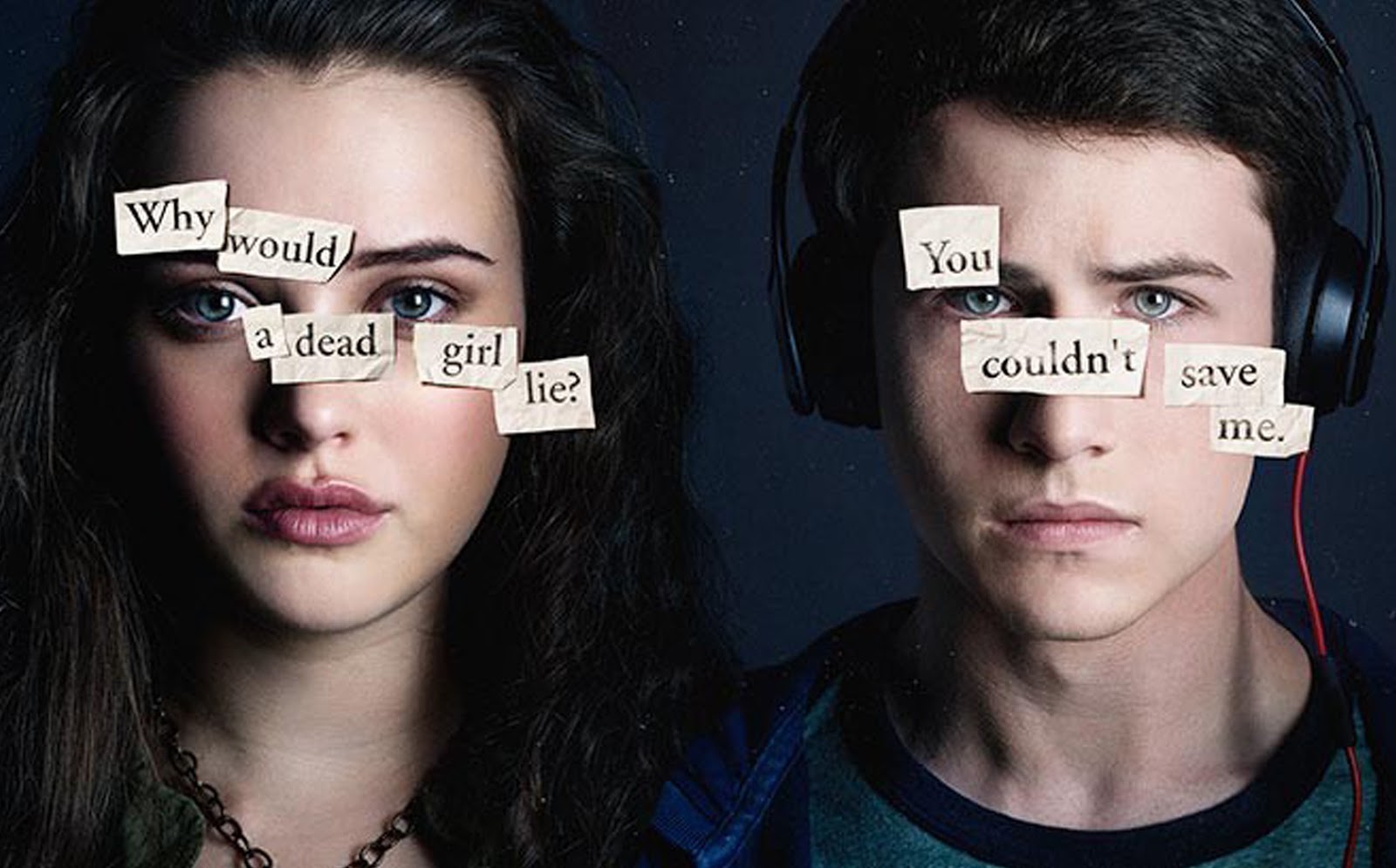
13 Reasons Why: Is the series irresponsible?


Originally published on Set The Tape


Even if you’ve not watched 13 Reasons Why, you’ve probably heard of the Netflix series adapted from the Young Adult novel that focuses on the suicide of Hannah Baker (Katherine Langford). Having taken her life, it’s revealed that Hannah has left behind a series of tapes to tell the people in her life how they contributed towards her suicide.

Whilst the show was praised by many viewers as a source of entertainment, not everyone liked what it did narratively. Some members of the mental health community and suicide prevention groups spoke out about the show as being problematic, reported here in the Guardian. Returning for a second season this week, the discussions about 13 Reasons Why and its potential to impact people with suicidal feelings have arisen once again.

The biggest issue is that the story appears to glorify suicide, making the act seem like something dramatic that can be used as a form of revenge against those who do you wrong.

The series is about a suicide, yet has very little to say about the reality of the act, particularly the psychology behind it. The audience don’t know the real Hannah Baker, they didn’t get to see her before everything fell apart for her. Suicide is a result of a culmination of events, but 13 Reasons Why doesn’t tell us this, it just shows the end result.

The danger that Netflix must mitigate against in the second season is that it can appear to some viewers as if suicide is the one and only response to the issues that Hannah faces. Young people suffering from depression and suicidal thoughts may see the way the series paints suicide as the ultimate act of revenge, which isn’t how suicide works at all. Suicide does affect those people left behind, yes, but not in the ways that the show portrays. 13 Reasons Why is a fantasy and has very little semblance on reality.

Hannah believes that people have done her harm and responds to this by forging a plan to get her own back against them by taking her life, reinforcing the notion that suicide is often undertaken for selfish reasons. In reality, people with suicidal thoughts often feel more hopeless and burdensome instead of crafting elaborate plans for revenge. Personally, I find it hard to believe that someone who is that close to suicide would have the energy or motivation to craft such an elaborate plan.

There are many factors that lead to suicide, including prior attempts, substance and drug abuse, mental illness, and family history, but the show only focuses on interpersonal stressors between Hannah and her friends. It is important to highlight to viewers that although the series tries to paint a straight line between bullying and sexual assault and suicide, it isn’t that simple in real life.

13 Reasons Why doesn’t just romanticise suicide, but it fails to inform viewers clearly enough about the warning signs during the episodes, which paints suicide in a very dangerous and irresponsible way.


Go to Amy's Blog

Trailblazers – Video Game Review


Originally published on Set The Tape


Trailblazers is a fresh new co-operative racing title with an innovative on-track game mechanic: paint the track, boost on your colour and work as a team to win!

Take control of high-speed racers in unique 3v3 team races across a series of colourful circuits. Paint the track as you race, capturing key areas to dynamically change the racing line, then boost on your team’s colour to dominate the race!

Platforms: Playstation 4, Xbox One, PC, Nintendo Switch (later this year)
Developer: Supergonk
Publisher: Rising Star Game

I’ve never been into racing games. I often find them quite repetitive and dull. One of the racing games that I did enjoy, however, was the F-Zero series, probably thanks to the fast paced racing style and unique vehicles. With it having been years since the last F-Zero game, Trailblazers manages to to recapture some of this magic and combines it with the bright, colourful fun of Splatoon.

Trailblazers borrows from the vehicles of F-Zero with the painting dynamic of the Nintendo shooter. Zipping around the twisting tracks whilst laying trails of pain, you have to work with your team mates in order to win, using the pain trails to boost your way to a victory. Your team paint trail lets your vehicle boost, and you can chain these boosts up to even greater speeds, hurtling you around the track at incredible speeds.


The pain mechanic isn’t just a simple boost feature, however, as you can pain over the opposing teams trail in order to give your team a boost whilst denying them one, as well as firing your pain ahead of you to stun enemy racers that might be in the lead. These features give the game a more tactical aspect, as you have to keep an eye on your trails, choose where to pain and where to get rid of the other teams paint, and can even be offensive when need be. Coupled together with some multi-route tracks and races that happen across multiple levels, it makes Trailblazers a racing game that is more tactical than most.

The locations in Trailblazers are brightly coloured and visually impressive. There’s the orange desert location, the bright green jungle world, the blues and purples of the futuristic city; with all of the tracks being bright and distinct from each other.

The design aesthetic of the game isn’t just limited to the tracks, as all of the racers and their vehicles are hugely different. Some ships look like beaten up pick-up trucks, others are sleek and new, and some even look like classic cars turned into sci-fi vehicles. Whilst the vehicles have similarities to many modern and historic cars, the racers are a much more varied bunch, with a cast that includes humans, robot, and aliens. My personal favourite is the little blue frog-man.


Trailblazers is immediately accessible, with the basics covered in just a couple of races, but thanks to the options available through different racers with their own abilities, tactical racing, and multiple vehicles, it’s a game that also has a lot more depth to it; one that can take a lot longer to master.

Thanks to a lengthy story campaign that lets you try out each of the racers, with multiple medals to unlock and a cross-platform multiplayer that allows you to play against real people at any time, Trailblazers is a game with a huge amount of life in it. I’m very much looking forward to its future release on the Switch, as it’s the perfect game to play on the go.


Go to Amy's Blog

Star Trek: The Next Generation: Through the Mirror #3 – Comic Review


Originally published on Set The Tape


It’s interstellar espionage aboard the Enterprise-D when the Mirror Universe crew infiltrates Captain Picard’s ship! What are they up to? The answers are here!

Publisher: IDW Publishing
Writers: Scott Tipton & David Tipton
Artists: J.K. Woodward & Josh Hood

The third issue of Star Trek: The Next Generation: Through the Mirror, the follow-up to the popular Star Trek: The Next Generation: Mirror Broken, finally begins to answer some of the questions raised in issues one and two.

It appears that the I.S.S. Enterprise-D, the mirror universe version of the Enterprise, has been using their transporters to send members of their crew across into the main universe in order to steal supplies and equipment, things that are in very short supply to them due to blockades set up by the Klingon and Cardassians.

The thefts aren’t just to help the I.S.S. Enterprise, however, but are being used as bargaining chips in order to gain favours and alliances with other ships in the Terran Empire. It appears that the mirror Picard has bigger plans than simply filling his cargo bays.

One of the big parts of his plan appears to involve the U.S.S. Enterprise, and requires them sending a member of their own crew onto the Enterprise in order to trick them into going where they want them to be. This is what makes the third issue stand out from the others, it feels more like a heist story, with Reg Barclay training for his mission on the holodeck, the sneaking through the ship, sending false messages and knocking out guards.

It took me a while when first seeing Barclay’s practice run to realise what was going on, despite several clues throughout, such as crew members being dressed in the early season uniforms. It’s a subtle touch that you don’t even pick up on straight away, but makes perfect sense within the context of the story.

Despite some slight mishaps, such as Barclay beating the crap out of Enterprise crew members because he didn’t like that they said, it appears that the crew of the I.S.S. Enterprise have succeeded in their task of luring the Enterprise into a trap.

In the back up story, ‘Ripe For Plunder’, which is done in the same gorgeous art style as Star Trek: The Next Generation: Mirror Broken, Data has continued in his search for the missing Emperor Spock, finding him hiding on a jungle planet under heavy guard. Despite all the intrigue in the main story, I’m actually more interested in finding out what’s going to happen between Data and Spock in the next issue.

With more of the plot and motivations being revealed it finally feels like Star Trek: The Next Generation: Through the Mirror is stepping up in pace and excitement. Hopefully the title will continue to deliver on this quality in the upcoming issues, and will end up being as good as the previous story.


Go to Amy's Blog

Tuesday, 22 May 2018

New Horizons by Christopher Webster – Book Review


Originally published on Set The Tape


Kids call it The Compound – an endless wilderness enclave where teens rule and every day is a fight for survival. A world out-of-time where an elaborate culture has arisen out of the violence and scarcity, and all live under the thumb of unseen masters who have ultimate control.

15 year-old Marcus Riley is The Compound’s latest enrolment. A delinquent, kidnapped from his inner-city apartment; he wakes up alone in the wilderness. Left with nothing but the clothes on his back and a cryptic note in his pocket, it seems only his wits will keep him alive… but for how long?

Publisher: StoryFix Media
Author: Christopher Webster
Pages: 295
Price: £8.99

Young Adult books are an interesting genre, often telling coming of age stories. You tend to find that they’re either stories of romance and young love, or stories of survival and overcoming overwhelming odds. Whilst New Horizons does have a small amount of teenage love within its pages, it very much squarely falls into the latter category.

Taken from his normal life and thrust into a strange place, forced to survive whilst some unseen group monitor and manipulate from behind the scenes, at first New Horizons had something of a Maze Runner vibe to it. What sets this apart though, is the fact that it’s taking place today, in the modern world.

There’s a strange facility/compound that’s being run by a shady organisation, like in other YA books yes, but it isn’t some dystopian future where such things can be waved away as ‘how the world works now’. The Compound exists in an America that exists now, in a society that seems to be pretty much exactly like ours. And this is one of the most intriguing things about this book.

The characters are from the ‘real world’, as it were, they’ve been to high school, they talk about music and fashion, they reference social media and popular television shows, and this makes the book more refreshing than you’d initially think. It’s not a world ravaged by disease or global disaster, or a society ruled by the elite whilst the regular people live in despair; this is us as we are now, which makes the way the characters react and interact more relatable and interesting.

The lead character, Marcus Riley, is an interesting hero for the story. You see, unlike other YA stories that are in a similar vein, I absolutely hated him to begin with. Unlike characters such as Katniss Everdeen in The Hunger Games or Thomas in The Maze Runner, Marcus begins the story as an arsehole.

With his parents having recently divorced, he hates his father, constantly lashes out at his mother, acts as a spoilt brat, and generally is the kind of kid you’d never want to have yourself. The worst part is when he becomes responsible for putting another kid in hospital, potentially dying, his response is that it’s not fair on him.

I honestly thought that I was going to dislike the book because of how much I really hated Marcus, but Webster manages to have the character grow and evolve over the course of the story in a very believable way, almost to the point where you’ve not realised how much he’s changed until he steps up to be the selfless hero. His level of growth makes him stand apart from other YA leads, who tend to start off as fairly good, heroic people.

The story itself has plenty of twists and turns in it to keep it interesting, and whilst it does have some degree of mystery around what is happening you don’t feel cheated come the end when you get a lot of answers, yet still have questions needing resolution.

New Horizons is the first part of a trilogy of books, yet ends in such a way that it could have been a one-and-done self contained story. However, this isn’t a bad thing by any means. It actually opens the scope for the second book in exciting ways as I genuinely have no idea where the story is going to go next.

With interesting and well crafted characters, a story that feels very fantastical yet grounded in a recognisable and real world, New Horizons is an interesting first instalment in a new series of Young Adult stories that I’m sure will prove to be very popular.


Go to Amy's Blog

Wednesday, 16 May 2018

3 Hours Until Dead – Movie Review


Originally published on Set The Tape


Starring: John Hennigan, Michelle Taylor, Eric Etebari & Joseph Gatt
Directed by: Steven LaMorte

Rick Rainsford is trapped on a deserted island with his reluctant companion, Anna. While attempting to save another gravely injured survivor they find themselves hunted by Zaroff, a sociopathic ex-KGB Agent long with his partner Ivan. In spite of their differences Rick and Anna must work together to disarm Zaroff’s deadly traps, survive his assistant’s brutal attacks, and escape the island alive.

3 Hours Until Dead (or Never Leave Alive as it is known in the United States) is a film where the concept is very good, having taken inspiration from classic stories of man hunting man such as The Most Dangerous Game by Richard Connell, or even the Jean Claude Van Damme film Hard Target, in putting its heroes in a deadly fight for survival.

Unfortunately, the execution of this concept is never anything above average, with a plot that feels fairly stale and uneventful, and a cast of actors who are never anything above mediocre.

John Hennigan certainly looks the part as Rick Rainsford, the reality television star and celebrity hunter, his huge physique and flowing hair certainly making him stand out as heroic, particularly in the films final act. Unfortunately, the former WWE star is no leading man. Yes, he has the fight training to fall back on, and even has a history of parkour, but his ability to lead a film falls short of what is needed here.

He is able to portray the swagger and pigheadedness of a television celebrity who feels that the world should be revolving around him, but once it’s time for him to step up and be the hero he can’t quite manage to pull it off. Sadly, he doesn’t even get the chance to show of his physical abilities as the film doesn’t really make use of his skill set in the action sequences, with many of the films fight sequences feeling quite dull and slow paced. These problems are even more apparent as his character has to go from an un-likeable drunk, to someone we’re rooting for; a task that feels beyond him with his limited acting abilities and poor scripting choices.

An easy solution to a main star who isn’t quite up to the task of leading the movie would be to make sure that the other actors around them are much stronger, using them to elevate their acting.

Whilst Michelle Taylor appear to be competent enough an actress, the script doesn’t seem to know what to do with her character of Anna. One moment she’s Rick’s equal, with skills and a drive to survive, the next she’s a shrieking damsel in distress who needs Rick to rescue her. Combined with a ‘mysterious past’ and she feels more like multiple character archetypes all rolled into one part with no coherent character or personality.


Sadly, not even the villains get to be more than standard two dimensional tropes. Eric Etebari plays Zaroff (a clear nod to General Zaroff in The Most Dangerous Game), the former Russian Colonel living on his own private island with his assistant Ivan, played by Joseph Gatt (and yes, this is another thing taken from the original story).

Despite some hints that Zaroff has a shady past that involves war crimes, why he is on the island, how he came to know about Rick and his plans, how he sunk a ship, and how he got Rick onto his island after he was thrown into the sea by an explosion all seem to be secondary concerns to the writer and director, who seem feel that any form of explanation would bog down the action.

Zaroff, and Ivan, barely manage to be more than template villains, with Ivan being the only character in the film to show any level of development (though the reasons for his change of heart are never explored).

The film should feel a lot more exciting than it does, and should be fairly faced paced, but Zaroff never feels like much of a threat, and Rick and Anna have a lot a quite moments in the wilderness to just sit and chat, something that you probably shouldn’t do when you’re being hunted. The lack of any real urgency lets the film down a lot, as there never feels like there’s any tension or danger for the main characters.

3 Hours Until Dead has a solid idea at its foundation (albeit one it did not come up with itself) but never succeeds in living up to it. With a cast of actors who are never anything more than average, the film lacks any real excitement or sense of danger. Whilst not an awful film, it’s not something that it going to stand out or even stick in your memory after viewing.

Unless you’re a huge fan of any of the cast there’s not much here to draw you in to watch, unless it’s the only thing on television that night, in which case there are worse ways to spend 90 minutes.


Go to Amy's Blog

Tuesday, 15 May 2018

The Rig by Roger Levy – Book Review


Originally published on Set The Tape


Welcome to the system. The concept of god has been abandoned and a new faith pervades: AfterLife. AfterLife is a lottery system that offers a random selection of people the chance to avoid death itself. Placed into suspended animation at the point of demise they wait in the sea of the planet Bleak until technology is able to cure them of the cause of their death.

But there’s a catch, every living person has an organic chip implanted in their brain at birth. These neurids record every second of their Lives, and now billions of subscribers will watch this unfold, voting on which Life gets a second chance at life. Everyone can judge and be judged, everyone can be offered resurrection or death. In the age of social media who needs god’s judgement when everyone is watching?

The Rig is not what I expected from the book at all. With the description of the book putting so much focus on AfterLife, on the concept of people voting on who would come back from the dead using mass social media I thought that this would be a story that would focus on that; the idea of faith, life after death, or how social media and mass opinion shape what people perceive as real. This wasn’t what the book gave me, however.

Whilst there are elements that examine faith in the future, looking at how the lives of those with religion differ from those who have abandoned it as an outmoded concept, and there is a certain amount of depth to the AfterLife system and the other services that work around it and in tandem with it, this is a mystery story at its heart. The Rig is a vast, multi-layered conspiracy story, a story of two men trying desperately to out manoeuvre each other, a game of chess that plays out over more than one lifetime.

I won’t go into too much detail about these elements of the plot, as giving away too much detail could spoil a number of surprises and some brilliant reveals, but I will say that for the third of the book it appears to be a very straight forward story, yet nothing is as it appears. The clues that something is amiss are there straight away, but are so subtle and well hidden that it never registered with me at the time, and wasn’t until I went back and looked over some of these early moments that I could see them for what they were.

There are four main stories involved in The Rig, one that is a recounting of the life of a troubled yet brilliant many Alef, and three others that appear separate, but become interconnected through the greater mystery; the journalist/storyteller Razer, the washed up police officer Bale, and the loner Tallen.

Once the book hits its second third the underlying mystery begins to become apparent as Razer, Bale, and Tallen are drawn into an extraordinary series of events that intertwine their lives and puts all three of them in incredible danger. Whilst it at first appears to be some kind of conspiracy story it isn’t until the book reaches the last third that you realise things are much bigger than even that, with ramifications that could go on to effect billions of lives.

Despite the vast scope of the story, and having to build a completely new and fantastical universe, the story is still very human, and manages to spend its time establishing very real, very flawed characters. There are very few, if any, purely ‘good’ people in this story. It isn’t a good vs evil tale with clear distinctions between heroes and villains. Instead, it’s a story driven by human desires and motivation. Yes, some of these do become twisted and lean more towards the ‘evil’ side of the spectrum, but you can see why people begin down certain paths and understand their reasoning’s.

This is something that helps to keep The Rig engaging and encouraged me to read on. Whilst some science fiction books will spend so much time developing their future world, or create such fantastical futuristic settings and technology to the point where it becomes difficult to connect with the characters and the story, here it is very much different. The world of The Rig has amazing and fantastic technology, and it’s set in a future where humanity has long left Earth behind, but these are background elements, and never feel overly intrusive.

The first chapter of the book, however, was a little difficult to get through. Being set on one of the worlds that if still ruled by religion, and using strange and unusual language, I did feel a little lost more than once in the first few pages. But, this passed quickly, and I was soon drawn into what became a very engaging and well written mystery tale. So, if you pick up the book and find yourself struggling through the first chapter, please, stick with it because it doesn’t stay that way for long, and the end result is well worth it.

The Rig is a science fiction story set within a universe vastly different from our own, with new language, new forms of government and entertainment, and a way of life that is fantastical, but it’s a story about people, about what they’re willing to do to achieve their goals, and what prices are worth paying to do so.

With a very human tale wrapped inside a well crafted and layered mystery, The Rig is a book that is sure to appeal to a much wider audience than simply those that enjoy science fiction.


Go to Amy's Blog

The Strangers: Prey at Night – The True Crimes Behind The Film


Originally published on Set The Tape


The 2008 horror film The Strangers terrified audiences on its release a decade ago. Drawing upon very real and relateable fears about home invasion and isolation, the film relies on atmosphere and tension to frighten the viewers.

Perhaps the most terrifying thing about the film, however, are the real life events that it drew inspiration from, which we at Set The Tape decided to take a deeper, darker look at…


The Keddie Murders

Cabins in the woods have always filled people with dread, and often make for a setting in numerous horror films. The Keddie Murders are a real life horror story, one that is more frightening than many horror films, and has helped to inspire several.

In the tiny community of Keddie in California, a small cabin, Cabin 28, was being rented by single mother Glenna Sue Sharp (known as Sue), who had begun living in the cabin with her children five months before the murders took place. Sue lived with her five children, John (15), Sheila (14), Tina (12), Greg (10), and Rick (5).

On the night of 11th April 1981, Greg and Rick were sleeping in their upstairs bedroom with their friend Justin (12), John was in his basement room with his friend Dana Wingate (17), whilst Sue and Tina were asleep upstairs. Sheila, however, was spending the evening with her friend in the cabin next door.

On the morning of 12th April 1981 Sheila returned home, and found horrors awaiting her in her cabin. Inside the living room she discovered the bodies of her mother, John, and Dana. All three of them were bound with electrical cable, their hands behind their backs. Covered in blood, it was impossible for her to tell how they had died, but later medical examinations would reveal that they had been strangled, stabbed, and bludgeoned to death.

Sue had been hit repeatedly with a claw hammer, as well as stabbed with at least two different knives in her torso and throat. She had also been bludgeoned with a weapon that was later determined to be the butt of a Daisy Powerline 880 BB air rifle. She was found under a yellow blanket, wearing a robe, with her underwear shoved into her mouth, along with a ball of tape. The items were held inside her mouth by an extension cord that was also tied to her legs and feet.

John had also been hit with a hammer, as well as stabbed, though his throat had also been cut. Dana was determined to have been killed via strangulation, despite suffering several bludgeoning with a hammer that did not match the one used on Sue and John.

Sheila discovered that, despite the horrific scene in the living room, her two younger brothers, Greg and Rick, and their friend Justin, were still alive and well in their room, without any wounds. With the help of the neighbours, Sheila was able to remove the three boys from the cabin. Unfortunately, no sign of Tina could be found. It was later put forward by police that Tina was taken from the cabin rather than being killed there for the purposes of rape.

When police arrived on the scene they found several bloodied weapons within the cabin, including a knife that had used with so much force that it was bent at a twenty-five degree angle. Despite people staying in another cabin near by having been woken by what they determined to be muffled screams, the three boys left alive reported that they had slept through the entire attack.

Several suspects were named in the case, including Martin Smartt, Justin’s step-father, a former bank robber John Boubede, and Jim Rini, a former mob enforcer. Unfortunately, there was no evidence that indicated conclusively who committed these crimes, and no charges were made against anyone. Despite searching the surrounding area with police dogs, Tina wasn’t found. It wasn’t until three years later in Butte County, ninety-five miles away, that fragments of a child’s skull were discovered, which were later identified to be Tina.

Interestingly, police received a telephone call following the discovery of the remains in which the caller told them that they were Tina’s. This call was received before any testing had been completed, and before the police knew the identity. It is unknown who the caller was.

The cabin was demolished in 2004 along with several others after falling into disrepair. To this day the identity and motives of the killers remains a mystery.


The Tate-LaBianca Murders

The Tate-LaBianca Murders are one of the most shocking and brutal murders in the world, one that is known by thousands, though possibly not by that name. The Tate-LaBianca Murders saw the brutal killings of seven people (one of whom was pregnant) under the orders of Charles Manson.

Before the events of the Tate-LaBianca Murders, Manson, who was an aspiring musician, had attempted to enter into a recording contract with record producer Terry Melcher. Melcher had refused to work with Manson, something that left Manson feeling insulted.

On the night of 8th August 1969, Manson ordered four members of his commune, the Manson Family, to go to ‘that house where Melcher used to live’ and instructed them to ‘totally destroy everyone in it as gruesome as you can’. This was despite the fact that Melcher had moved two months previous and the current residents had nothing to do with what had happened.

Tex Watson, Susan Atkins, Lina Kasabian, and Patricia Krenwinkel travelled to Melcher’s former home, 10050 Cielo Drive, intent on killing anyone they found. At the house at that time were film actress and model Sharon Tate, wife of film director Roman Polanski, who was eight and a half months pregnant. She was joined by her friend Jay Sebring, a friend of her husband Wojciech Frykowski, his partner Abigail Folger, and Steven Parent, who was leaving the property after visiting the caretaker.

Arriving at the house, Watson and the others cut the telephone cables to prevent anyone from calling for help. As the four of them approached the house Steven Parent was leaving in his car. Watson stepped out into the driveway, forcing him to stop. Steven was slashed with a knife and shot four times, killing him on the spot.

At the house Watson cut away the screen from one of the windows and climbed inside the house, letting the others inside via the main door. Wojciech Frykowski was asleep on the living room couch and hear the intruders. When he asked them who they were Watson said ‘I’m the devil, and I’m here for the devil’s business’, before kicking him in the head.

Everyone in the house was gathered together in the living room, where Sharon Tate and Jay Sebring were tied together with rope. When Sebring complained about the treatment that the pregnant Sharon was being put through he was shot by Watson. As he lay wounded he was stabbed several times.

Frykowski managed to get himself free of the towel that had been used to bind his hands and ran from the house. As he made his way across the lawn Watson caught up with him and hit him over the head with the butt of his gun multiple times, breaking the grip of the gun in the process. Watson then proceeded to stab him fifty one times, before finally shooting him twice.

Whilst her boyfriend was being murdered on the front lawn Abigail Folger made a break for freedom, running out of the rear of the house to the pool area. She was pursued by Krenwinkel, who tackled her to the ground and stabbed her. When she was joined by Watson, who had now finished murdering Frykowski, the two of them stabbed Abigail 28 times, killing her.

In the house Sharon Tate pleaded with the attackers to let her live long enough to give birth to her baby, even offering to go with them as a hostage in exchange for the life of her child. Atkins and Watson ignored her pleas and proceeded to stab her 16 times. One of her breasts had been cut off, and an X carved into her pregnant stomach. The word pig was written on the front door in Sharon’s blood.

As the public reeled from the events at the Tate residence Manson was said to be displeased by the events, having found them to be ‘too messy’. Deciding that he needed to show his followers how he wanted things done, he joined them that night to perform another set of murders. Travelling through the neighbourhoods of Los Angeles, the group looked for a potential target. They eventually decided upon the home of Leno and Rosemary LaBianca. A choice that was made completely at random.

The next day police entered the LaBianca home to discover both occupants dead. Leno was found in the living room, he had been stabbed twelve times, had several wounds caused by a fork, and had a knife lodged in his throat. The word ‘War’ had been carved on his stomach. Rosemary was found in the bedroom, with multiple stab wounds to her neck and chest. ‘Death to Pigs’ was written on the living room wall in blood, and the words ‘Helter Skelter’ were found on the fridge.

Despite being arrested for unconnected crimes several weeks later, evidence eventually came to light revealing Manson’s involvement in the murders, and he was eventually imprisoned, where he remained until his death.


Home invasion is one of the most frightening things that can happen. It’s the ultimate invasion of a space that’s supposed to be safe, of a place that gives you comfort. Whilst home invasions are often targeted, as you’ve seen here sometimes they can be completely random, with nothing more than chance leading those inside to suffer the ultimate horror.

This is what The Strangers draws upon. In that film there is no explanation, no reason. The killers appear and subject their victims to a living nightmare before murdering them simply because it gives them enjoyment. This is what makes the film so scary for a lot of people, the randomness of it, the chance that it could happen to anyone.

Whilst some would turn around and say that ‘it’s just a movie’ or ‘it’d never happen in real life’, the sad and frightening fact is that it has happened before in real life, and the cases described above are far from the only times. Perhaps this is why The Strangers still stands out as an incredibly dark and disturbing film, because it shows a frightening scenario that could actually one day happen to the viewer.


Go to Amy's Blog

Friday, 11 May 2018

TV Flashback… Power Rangers Zeo


Originally published on Set The Tape


In the third part of our ongoing series to celebrate the 25th anniversary of the Power Rangers franchise, we take a look at Power Rangers Zeo.

Immediately following on from the events of the final season of Mighty Morphin Power Rangers and Mighty Morphin Alien Rangers, Power Rangers Zeo saw a huge change to the Power Rangers franchise.

Despite the success of Power Rangers: The Movie, and the show continuing to maintain the number one ratings in it’s time slot, Saban were concerned that the franchise was close to losing its popularity, in part due to a decline in merchandise sales. The company knew that a change was needed.

With the added difficulty of trying to adapt new Super Sentai shows around the original costumes, something that had caused issues during the second and third seasons of Mighty Morphin Power Rangers, Saban decided that cosmetic changes would help, by abandoning the original costumes and using those of the next Super Sentai series. This would both negate a lot of the production issues that had plagued the series, as well as allowing them to release a whole new range of merchandise.

As such, Power Rangers Zeo was devised. Adapting Choriki Sentai Ohranger, the show would introduce new costumes, new Zords, and for the first time, new villains.

With the previous show ending with the apparent destruction of the Command Centre, Power Rangers Zeo sees the de-powered Rangers getting a new base of operations, the Power Chamber, as well as a whole new set of powers from the Zeo Crystal. The crystal turns Kat (Catherine Sutherland) into Zeo Ranger 1 Pink, newcomer Tanya (Nakia Burisse) into Zeo Ranger 2 Yellow, Rocky (Steve Cardenas) into Zeo Ranger 3 Blue, Adam (Johnny Yong Bosch) into Zeo Ranger 4 Green, and Tommy (Jason David Frank) into Zeo Ranger 5 Red.

Bearing geometric shapes on their helmets that related to their numbers, the Zeo Rangers felt more cohesive than they had in previous seasons, where their dinosaur costumes bore little resemblance to their animal Zords. Here, however, their number and shape motifs would be repeated throughout the season.

As well as changes to the Rangers, the first story also saw a major shift in the shows villains, with Rita Repulsa (Carla Perez) and Lord Zedd (Robert Axelrod) being driven off their base on the moon by a larger, more powerful force. The Machine Empire, a race of mechanical beings, set their sights on Earth after conquering a whole series of galaxies.


These new villains not only up the ante on previous seasons, with a huge empire backing the main villains, but also give a coherent theme to the monsters of the week, as they are all robots. Whilst there were never many serious complaints about the violence in the show in the past, it was a lot easier for Saban to justify the Rangers destroying robots than organic monsters.

The Machine Empire were also a lot more complex than Rita and Zedd, bringing with them a history that seemed to be lacking from the previous shows. There was King Mondo (David Stenstrom), Queen Machina (Alex Borstein), and their son Prince Sprocket (Barbara Goodson); but over the course of the season this dynamic would shift as Mondo would be destroyed, replaced by a usurper called Louie Kaboom (Lex Lang) who took over the Empire.

Later episodes would then bring in Prince Gasket (Douglas Sloan), the elder son of Mondo who returned to the Machine Empire after giving up his title in order to dethrone Kaboom and take his fathers place. It was very much like a Game of Thrones for kinds, with double dealings, secret pacts, and political intrigue.

Over the course of the season a sixth Ranger would be introduced, the mysterious Gold Zeo Ranger, whose identity would be teased across several episodes. Eventually, the original Red Ranger, Jason (Austin St. John) would be brought back into the show to take on the powers of the Gold Ranger, a decision that excited numerous fans of the original series and helped to increase ratings a lot.

The series would also introduce Tommy’s brother, played by his real life brother Erik Frank, revealing that Tommy was adopted as a child. Whilst Erik would appear across a handful of episodes, and would be one of the red herrings for the identity of the Gold Ranger, he wouldn’t return to later incarnations of the show due to his untimely death.

Power Rangers Zeo would also mark the last appearance of Billy Cranston (David Yost) the last remaining original Power Ranger. Despite not receiving new Zeo Ranger powers Billy stayed a part of the show, worming at the Command Centre as the Rangers support and tech person, helping them to complete their missions and even developing their new Zords.

Unfortunately, Yost would leave the show abruptly, meaning that stock footage and a voice actor would be used in his final episode. Despite claims from Saban that he quit the show over pay disputes, it would later emerge that he left due to intense homophobic bullying on the set from members of the crew, something that had been going on for years.

The first time that the show would undergo a major cosmetic shift, changing the costumes, Zords, and villains, this move not only helped to secure the popularity of the franchise, but created a formula that would continue on for decades. Whilst this may not be cited as a favourite show of every single Power Rangers fan, it was immensely important in securing a lasting legacy.


Go to Amy's Blog