Thursday, 10 May 2018

Marvel’s Runaways – The Comics


Originally published on Set The Tape


Marvel’s Runaways is the latest television offering drawn from the pages of Marvel Comics. Despite being a book that many people will not have heard of, Runaways has been around for over a decade, debuting in early 2003 to critical acclaim.

Created by Brian K. Vaughan, best known for comic series such as Y: The Last Man, Ex Machina, and Saga, with art by the talented Adrian Alphona, the book tells the story of a group of teenagers who discover that their parents are more than they appear, being part of the super villain group ‘The Pride’.

Alex Wilder is the son of Geoffrey and Catherine Wilder, and the first member of the group introduced in the book. He’s the one that suggests the kids spy on their parents, which leads to them discovering their bad guys after witnessing them sacrificing a girl, and organises their runaway. Over the course of the books Alex becomes obsessed with the Abstract, a mysterious book belonging to their parents, and doesn’t really integrate into the team. Over the course of the series Alex is revealed to have his own sinister plan for the Runaways.

Chase Stein is the son of Victor and Janet Stein, the scientific members of The Pride. Brash and rebellious, Chase went against his parents even before he found out that they were villains. Failing to get the grades his father wanted in his studies, and rejecting their desire for him to go into the sciences, Chase was often physically abused by his father. As a part of the Runaways he’s often the most reckless of the group, charging into danger using his parents tech as his weapons.


Gertrude Yorkes is the daughter of Dale and Stacey Yorkes, who are revealed to both be time travellers. Already disliking her parents even before discovering their true identities, she quickly accepts the life as a Runaway. Whilst she doesn’t have any physical attributes or powers herself, she does possess a psychic bond with a velociraptor called Old Lace, which she can command to attack people.

Karolina Dean is the daughter of famous Hollywood actors Frank and Leslie Dean, who the Runaways discover are actually members of the alien Majesdanian race. Discovering that she herself is alien, and the medic alert bracelet she wears actually hides her powers, she removes it and unlocks the ability to absorb and radiate solar energy. Over the course of the series it is revealed that Karolina is a lesbian, and even enters into a number of relationships with other heroes.

Molly Hayes is the youngest member of the Runaways at just 11 years old, and is the daughter of Gene and Alice Hayes, who she discovers are mutants with powerful psychic abilities. Having inherited her parents mutant genes, her powers manifest, giving her super strength and invulnerability. Despite being the youngest member of the team she often displays emotional maturity, and is always willing to put herself in danger for her friends. She’s so strong that she was named the fourth toughest female character in the Marvel universe behind She Hulk, Rogue, and Miss Marvel.


Nico Minoru is the daughter of Robert and Tina Minoru, who were dark sorcerers. Using the Staff of One, stolen from her parents, Nico begins to practice magic, and eventually becomes the leader of the Runaways. Standing out in her ornate Gothic wardrobe, Nico is one of only a few Japanese-American super hero team leaders.

Over the course of Runaways the team have to deal with betrayal from within, time travel villains, their future selves, vampires, and alien engagements, as well as all the stress and difficulty of being a teenager.

The series forces the Runaways to not only confront the sins of their parents, but also to look at the kind of people they are, and who they want to be. Personal and romantic relationships shift, outlooks change, and some are even lost to death.

Runaways might seem like a book for teens, focusing on a group of kids, but it has a lot more layers than that. It displays surprising maturity and complexity, and connects to numerous parts of the Marvel Universe.

It’s not clear how closely the series is going to remain to the books, there have already been some big changes within the backstories and personalities of the team itself, so if you do enjoy the show but want to see some different stories with the characters, and to see them interact with people like Wolverine, definitely go and check out the books.


Go to Amy's Blog

Wednesday, 9 May 2018

Tales of the Teenage Mutant Ninja Turtles Omnibus, Vol. 1 – Book Review


Originally published on Set The Tape


Dive deep into the Turtle’s expanded universe with this collection of stories from the original Mirage Comics. Short, one-issue stories are presented in the Tales of the TMNT series that gave readers an in-depth look at Leonardo, Michelangelo, Donatello, Raphael, Casey Jones, and Splinter, but also spent time delving into the stories of background characters like Nobody, Rat King, and Savanti Romero.

Publisher: IDW Publishing
Writers: Kevin Eastman, Peter Laird, Jim Lawson, Ryan Brown, Steve Murphy, Rick Remender, Eric Talbot, Dan Berger
Artists: Jim Lawson, Dario Brizuela, Rick Remender, Chris Allan, Dan Berger
Pages: 508
Price: £26.99

With over five hundred pages, the Tales of the Teenage Mutant Ninja Turtles Omnibus Volume One is a hefty book, and one that gives readers a broad experience. Collecting together all of the original run of the series, published from 1987 to 1989, and the first eight issues of the second run that started in 2004; which would go on to have 70 issues. Having the original volume, plus the start of the second, provides readers with very different content, from the original works of the Teenage Mutant Ninja Turtles creators Kevin Eastman and Peter Laird, to the series as it would evolve over the next sixteen years.

Fortunately, despite this huge jump in the middle of the book, it doesn’t feel like a huge change, and still reads as one cohesive style. The main indicator that things have progressed to the second volume is the modernisation of the art styles. Both volumes of the title have the same opening splash page, the same one-shot style, and the line ‘let me tell you a story’ in the introduction. It shows that despite the writers and artists having changed, despite the comic industry having evolved, the people behind the title share the same love, passion, and dedication as the original creators.

The book itself doesn’t have a connective narrative between the issues, other than one story that is told across two parts all of them are single issue stories. Whilst this may not be to everyone’s taste, it does mean that we get lots of different looks into the Teenage Mutant Ninja Turtles universe, with different characters getting the spotlight, crazy adventures, and some drastically different art styles.

Many of the stories in the book are fairly standard tales, grounded much more in the more normal reality and tone of early TMNT. The first story, ‘A Tale of the Teenage Mutant Ninja Turtles’ sidelines the Turtles themselves, instead giving readers a look into the family history and personal life of their long time ally Casey Jones; ‘Nobody’s Fool’ has the Turtles team up with an vigilante cop who has gone outside of the law to track down a gun runner; and `Leatherhead’ shows the introduction to the mutant crocodile Leatherhead, who would go on to be a staple in the TMNT universe.

The book does, however, also showcase some of the more bizarre elements of the Teenage Mutant Ninja Turtles comics. ‘Complete Carnage and Radical’ tells the story of the super villain Complete Carnage, a gargoyle like creature, and his mission to destroy the super hero Radical, a story that barely features the Turtles; ‘The Return of Savanti Romero’ has the Turtles travel back to the Cretaceous period to stop history from being altered; and ‘Darkness Weaves’ tells the story of a pop star that is using her music to enchant her fans in order to make them drink her cursed blood in order to turn them into werewolves (yes, that one is particularly strange).

Whilst most of the stories collected within this massive volume are fun little stories that make a nice distraction, there are a couple that stand out as particularly brilliant.

‘Blind Faith’ tells the story of Leonardo having to fight against a blind ninja who holds a vendetta against him. Being blinded by a poison early on in the fight, Leo is forced to rely on his other senses to do battle. The issue depicts this brilliantly, with the panels being all black, and the action in stark white silhouettes. The issue immediately stands out, it’s art style vastly different from anything else within the book. Coupled with a devastating conclusion that ends on a complete down note, it’s easily one of the best issues of the book.

There’s also ‘Scars’, which tells the tragic story of a man whose life is brutally torn apart, and the lengths that he is willing to go in search of justice, which eventually becomes a warped quest for revenge.

The art styles of the early issues remain relatively similar, though they do begin to vary as the book enters the second volume. One thing that remains constant throughout all the stories, however, is that all of the turtles are wearing red bananas. I know this is how the characters began, and have seen a number of images of them all in red, but this is the first time that I’ve actually read a book with them without their iconic mixture of colours. Whilst it if fun to see the older style, unfortunately, it did lead to some confusion as to which turtle was which on more than one occasion.

Collecting together a large number of issues that tell a huge variety of stories, the Tales of the Teenage Mutant Ninja Turtles Omnibus Volume One is a great read, one that is sure to appeal to both long time fans of the franchise, and to new readers alike.


Go to Amy's Blog

Monday, 7 May 2018

Marvel’s Runaways – What Could Be Adapted Next?


Originally published on Set The Tape

The Marvel Cinematic Universe continues to expand, adding more television shows to its roster with the addition of Marvel’s Runaways, based upon the popular series created by Brian K. Vaughan and Adrian Alphona.

With television proving to be one of the more popular mediums for telling superhero stories, what comics could Marvel adapt next?


Young Avengers

Comics are often about legacy, with heroes changing and evolving over the decades that they’re produced,  with new characters coming in to take on the mantles of older heroes, or to carry on their legacy in some form. Young Avengers is a book all about this.

Originally a 12 issue limited series, it proved so popular that the characters have been features across multiple titles ever since. The most popular version of the team consists of Patriot/Elijah Bradley, a descendent of a super soldier from World War 2 who carries a shield similar to Captain America’s first one, and dresses in a costume reminiscent of Bucky Barnes; Hawkeye/Kate Bishop, a young woman with incredible archery skills that took on the mantle of Hawkeye following the death of Clint Barton.

There is also Stature/Cassie Lang, the daughter of Scott Lang/Ant-Man, she has the ability to shrink and make herself larger at will; Wiccan/Billy Kaplan, a magic user that is also the son of Scarlet Witch; Speed/Tommy Shepherd, a speedster and twin brother of Billy; and Hulkling/Teddy Altman, the son of the original Captain Marvel, he is a shape-shifter with enhanced strength and healing.

The Young Avengers are essentially a teenage version of the Avengers, and whilst this might put some people off, it would be an interesting area to explore. As the Marvel Cinematic Universe gets older and certain actors want to leave having legacy characters that can take over similar roles is a good way of both continuing the universe and having it evolve naturally. The fact that many of the characters have connections to existing heroes within the MCU it would be interesting to see.


Blade

Ever since Marvel had the rights to Blade return to them fans of the vampire hunter have been wanting to see him back on the screens. Whilst the previous Blade series was less than successful, introducing him into the Marvel Universe as it stands now would allow the MCU to explore the mystical side further, an area that has only briefly been touched upon with Doctor Strange and the appearance of Ghost Rider in Marvel’s Agents of S.H.I.E.L.D..

Blade could easily be introduced through Agents of S.H.I.E.L.D. in a similar way to Ghost Rider, before moving off into his own series. Then again, the universe has been established enough now that he could star in his own series without an introduction. Thanks to the success of the Wesley Snipes films he’s become a popular and recognised character that many people would already be familiar with him, and those who are not could have his backstory easily explained over a few episodes.

Putting Blade on television as a series would also allow the series to be a lot closer to the darker, more adult source material, embracing more of an R-rated horror vibe than it could as a motion picture.


X-Factor

The X-Men have fallen back under Marvel’s control, and whilst this may one day mean that we can see characters like Beast and Wolverine serving in the Avengers, mutants need to be introduced into the MCU first. Rather than jumping straight into an X-Men film, why not bring mutants in using television first instead?

X-Factor would be ideal for TV. Whilst a lot of other X-Men teams are regular super hero teams, X-Factor are, instead, a detective agency. Run by Jamie Madrox, who has the ability to duplicate himself, the team consisted of several ‘lower tier’ X-Men.

With the potential to connect into a larger X-Universe, a cast of characters that could evolve and change, and a format that lends itself well to a story-of-the week style series of investigations, X-Factor could be the perfect way of bringing the mutants into the wider Marvel Cinematic Universe.


Isaiah Bradley

A darker side of the Marvel Universe, taking inspiration on a very real and shameful aspect of American history, Isaiah Bradley was one of a group of black soldiers that was experimented upon during World War 2 in an attempt to recreate the Super Soldier Serum that created Captain America.

Bradley was the only survivor of the experiments, and went on to steal a duplicate of the costume worn by Captain America, leading an unsanctioned mission to destroy German research into creating their own super soldiers, a mission that would take him into a concentration camp.

Adapting Bradley’s story into a series would allow Marvel to cash in on the popularity of Captain America, without having to step on the toes of any of the films. The series could be set entirely during World War 2, could utilise the war setting to make itself stand out, and it could also make some very important and valid commentary on both the racism of the time, and that of today.

With the popularity of Black Panther in film, and Black Lightning on television, another black led superhero franchise could only be a good thing.


Fantastic Four

The ‘First Family of Marvel’, the Fantastic Four are a huge part of the Marvel Universe in the comics, and now that their film rights are back with Marvel Studios it’s only a matter of time before we see them again. But with two fairly lacklustre films, and one really awful one, bearing the name, is film the best place for them to make their return?

I would say that television would be better. It would allow them to spend the time establishing the characters and their interpersonal relationships, it could take longer to explore the results of their accident and subsequent transformation, and it could allow them to become a team more naturally over time rather than in a rush at the end of a two hour film.

More importantly too, it would allow Marvel to reintroduce Doctor Doom, and to do so in a good way. Spend a whole season setting him up, working behind the scenes as an unseen ‘big bad’, or even over more than one season. Give him the room to become what he really is, one of the biggest and most powerful villains in Marvel, rather than the two previous poor incarnations we’ve already been subjected to.


Go to Amy's Blog

Friday, 4 May 2018

Dungeons and Dragons: Evil At Baldur’s Gate #1 – Comic Review


Originally published on Set The Tape


I’ve played some casual Dungeons & Dragons in the past with some friends, but never delved deep into the lore of the universe, and despite being familiar with the name Baldur’s Gate have never played any of the video games. As such, I was very excited to begin reading the comics.

Sadly, the first issue of Dungeons & Dragons: Evil At Baldur’s Gate is fairly light on the world building, and as such I still don’t have a great deal of a sense of what the world or characters are like.

We’re briefly introduced to a group of adventurers, though we only get to spend any real-time with one of them, Minsc the Mighty. There’s little to compare him against in terms of the rest of his group, as each character quickly splits off to do their own thing after entering the city of Baldur’s Gate; but I do get a sense that he’s the fighter of the team, but is somewhat lacking in the brains department.

I don’t know if Dungeon & Dragons: Evil At Baldur’s Gate is supposed to be comedic, as some of the things that Minsc says are clearly supposed to generate humour, but something about the delivery fails to actually entertain. Rather than being funny, lines such as “I like making ugly people make ugly angry faces”, comes across more annoying and childish than anything else.

However, the people around Minsc appear to be written fairly straight, which could indicate that Minsc himself is just an idiot, rather than the book trying to have ‘silly’ humour. It’s something that I’m more curious to learn in the second issue.

The action in the issue is competent enough, though little stands out as particularly spectacular or noteworthy, though the design of the Oni creature that Minsc fights is interesting. Whilst the monster gets to show off some of his moves against the group of bandits that he fights, some of which is pretty good, the fight against Minsc himself is a little disappointing. They throw each other through a window, performs one ice spell, and then the Oni gets stabbed. It’s very short and anticlimactic more than anything else.

With the second issue set to focus on a pair of thieves, hopefully the story will have a bit more excitement and variety to it over a large man wandering around talking like a fool. The second issue needs something more, some kind of story or character development, more engaging dialogue, or some flashier action, in order to keep interest.

A fairly disappointing start to the story, Minsc the Mighty may not have been the best character to focus on first, but fingers crossed the story will get better.


Go to Amy's Blog

Avengers: Infinity War – Comics To Check Out


Originally published on Set The Tape


Avengers: Infinity War is the biggest comic book event ever, bringing together all of the heroes of the Marvel Cinematic Universe to fight for the survival of reality itself. If the film has you excited for more Avengers action, or wanting so see more of Thanos, here’s 10 comics that are definitely worth checking out.


Avengers Disassembled

A crossover event bringing together the Avengers, Fantastic Four, Captain America, Spider-Man, and Thor, Avengers Disassembled saw the start of Brian Michael Bendis’ run on Avengers, with the destruction of the team.

Running at a fast pace, the heroes have to deal with the destruction of Avengers Mansion, Ultron robots, a rampaging She-Hulk, a Kree invasion, and the deaths of several members of the team.

Whilst too much about why this is happening can’t be said without spoiling the story, the reasons why everything is happening, and the loss of lives, lead this to be both an incredibly action packed but also hugely emotional story; one that would shape not just the Avengers, but the landscape of the Marvel universe for years to come.


The Infinity Gauntlet

A major part of the upcoming Avengers: Infinity War, the Inifnity Gauntlet is seen for the first time in this story, and contains many elements that are sure to either appear in, or inspire, the movie.

When Thanos, the alien warlord, manages to locate the six Infinity Stones, he attaches them to his gauntlet, creating the Infinity Gauntlet. With their combined power he becomes a god level threat, and sets out to win the love of Mistress Death, the living embodiment of death in the Marvel Universe.

Thanos uses this power to kill half of the living beings in the universe, prompting the heroes of Earth in a desperate fight to stop him and save what’s left of existence.


Dark Avengers

Following the universe wide events of Secret Invasion (a book also worth checking out), the Avengers are disbanded by the government, with the defence of Earth being handed over to the man who saved the planet from the Skrull invasion, Norman Osborn.

With the former Green Goblin in charge of H.A.M.M.E.R. (a new version of S.H.I.E.L.D.) he forms his own version of the Avengers. There’s the Iron Patriot, a suit of Iron-Man armour painted to resemble Captain America which he himself pilots; Spider-Man, who is really the villain Matt Gargan wearing the Venom symbiote; Hawkeye, who is the Daredevil villain Bullseye; Miss Marvel, who is the villain Moonstone; Ares, the god of war; The Sentry, an all powerful god being manipulated by Osborn; and Wolverine, who is actually Wolverine’s murderous son Daken.

This team of villains posing as heroes take the spotlight in the public as the Avengers, whilst behind the scenes Osborn has his own dastardly plans. Another huge shift in the Marvel Universe, Dark Avengers gives a very different but unique version of the team that we’ll probably never have on screen.


The Infinity War

A book which shares the name of the new film was definitely going to end up on this list. Infinity War acts as a direct sequel to The Infinity Gauntlet. When the powerful hero Adam Warlock has his evil side separated from him, becoming the villain Magus, the Earth’s heroes must unite against him with Thanos in order to stop him from conquering the whole universe.

Infinity War expands upon the mythology of not just Thanos, but the Infinity Stones themselves, exploring their origins and their powers, as well as other cosmic entities that act as gods of the Marvel Universe. A definite must read for those wanting to learn more about the Infinity Stones.


The New Avengers

Following the events of Avengers Disassembled, and the destruction of the Avengers, a new team is brought together following the mass break out of villains from prison. Comprising of classic Avengers such as Iron-Man, Captain America, and Spider-Woman, the book also introduces new members of the team such as Luke Cage, Spider-Man, and Wolverine.

Over the course of the series run the team roster would also include the Bucky Barnes version of Captain America following the Civil War story and the death of Steve Rogers, the godlike Sentry, and the ninja Ronin. Whilst subsequent versions of the title would see other iconic heroes join the team The New Avengers was at its best when written by Bendis.


Annihilation

A multi-volume epic, Annihilation focuses on the the cosmic side of the Marvel Universe, bringing together characters such as Thanos, The Guardians of the Galaxy, Silver Surfer, Nova, Galactus, Ronan the Accuser, and more as they fight against the Annihilation Wave, a deadly fleet of ships that will destroy anything in its path.

Annihilation ignores the heroes on Earth but gives the readers more of characters that they’ll be familiar with from Guardians of the Galaxy, such as Star-Lord and Drax the Destroyer, as well as some that movie audiences will be less familiar with, like the Super Skrull. A must read for fans of Guardians of the Galaxy, and people wanting to see more of Thanos.


Young Avengers

Whilst we may never get to see legacy heroes on the big screen in the Marvel Cinematic Universe (though never say never) the comics are a great place to see the next generation of heroes, and the inspiration that the Avengers have on them. Young Avengers is a prime example of this.

Set between the events of Avengers Disassembled and The New Avengers, Young Avengers sees a group of teenagers come together to form a new team in the vacuum that was left behind by the loss of the Avengers in order to defeat the time travel villain Kang the Conqueror.

Consisting of Patriot, the grandson of a world war two super-soldier; Hawkeye, an incredible young archer who wants to prove herself; Stature, the size changing daughter of Ant-Man Scott Lang; Wiccan, the magic wielding son of Scarlet Witch; his brother Speed, a speedster; and Hulkling, a shape-shifting alien, the team prove to be worthy of the title Avengers through their adventures.

Despite a relatively short run, the Young Avengers prove to be so popular that they have appeared across multiple Marvel titles.


Infinity

Whilst Captain America is leading most of the Avengers into space to fight beside an alliance made up of friends and former enemies, such as the Skrulls and the Brood, Thanos sees an opportunity to carry out a personal vendetta on Earth, and he unleashes a full scale planetary invasion that Tony Stark and the other members of the Illuminati try to lead the defence against.

Collecting together two stories, one of intergalactic destruction, the other of Thanos tearing up Earth, Infinity is a vast sci-fi epic, one that has some surprise reveals about Thanos himself, and the reasons for his coming to Earth beyond something as simple as revenge.


Avengers: The Children’s Crusade

Bringing together the Avengers and Young Avengers, as well as Magneto, Avengers: The Children’s Crusade acts as a sequel to Avengers Disassembled, finally addressing the issues around the Scarlet Witch, and revealing the real reasons for the events behind the destruction of the Avengers.

Whilst I can’t say much without revealing the revelations in this story, or spoiling Avengers Disassembled, the coming together of the adult and teen teams is a great story, one that felt like years in the making that delivers an incredibly satisfying conclusion.


Thanos Rising

Whilst many of the comics featuring Thanos would deal with his conquests, his quest for the Infinity Stones, and his occasional alliances with heroes to defeat bigger villains, it wasn’t until 2013 that his origin story was finally told.

Going right back to the very birth of Thanos, Thanos Rising charts the young life of the man who would go on to become The Mad Titan. It shows him as a child, with a much different demeanour and passive nature, before becoming corrupted by Lady Death, showing the beginnings of his obsession and love for her.

A fascinating insight into the origins of one of the biggest villains in the Marvel Universe, Thanos Rising helps to fill in some of the blanks that other books had yet to explore.


Go to Amy's Blog

Monday, 30 April 2018

Vicious Rumer by Joshua Winning – Book Review


Originally published on Set The Tape


‘The dark wants to eat me. I’ve spent long enough in dark places to know. I’m underground, buried deep, soil cramming into my mouth. The nightmare I’ve had since I was a kid. All I have to do is choke it down, fight the clawing panic, surrender to the shadows, but that would mean giving in, and Rumer Cross is no fucking coward.’

Vicious Rumer is an upcoming crime horror book from author and film journalist Joshua Winning.

The book is written from the point of view of Rumer Cross, a nineteen year old girl living in London. Rumer begins the book working for a detective agency, where she is employed to follow people around, catching evidence of her targets cheating on their wives, screwing over their employers, or generally just being jerks.

Rumer had bounced around between foster homes and the streets growing up, which has made her into hard and cynical young woman. Along with this, she has also had to deal with the legacy of her long dead mother, a mob assassin and criminal known as the ‘Witch Assassin’, responsible for some of the most bloodthirsty crimes the country has ever seen.

When Rumer is kidnapped by a vicious crime lord who believes that she’s hiding a bizarre occult relic Rumer’s simple life is thrown into turmoil. On the run and hunted by criminals and killers Rumer must try to find out who is after her, what it is they’re after, and how to stop them. Along the way Rumer must also confront the possibility that she might be cursed; a horrific legacy left behind by her occult obsessed mother that kills anyone who becomes close to her.

Vicious Rumer manages to combine real world elements of crime thriller and the occult in interesting ways to create a story that feels like it belongs in the real world, yet also skirts into the mystical with little difficulty. Two of the main story threads of the book concern the mysterious artifact that the bad guys are after, and Rumer’s apparent curse, both of which are recurring narratives throughout the book.

Despite there being such a heavy focus on the occult and magic, Killing Rumer never makes anything overt. There are no people practicing black magic, there isn’t anyone throwing spells at each other or anything like that, but come the end of the book you’re left wondering if magic and the occult actually do exist in this universe.

It’s a clever and compelling tightrope that the author treads, managing to make numerous situations that support the idea that the supernatural does exist, whilst also offering very real world explanations that makes the whole thing seem ridiculous. Even the very last moments of the book manages to throw in one last complication that makes you question the events that you’ve just read, and what might actually be real.

Rumer is an interesting and very human character, one that has her fair share of flaws and makes mistakes throughout the story. Whilst at first she comes across as someone a little too cold as the story progresses and you learn more about her and her past it becomes easy to understand how she ended up being the person she is.

She feels vulnerable beneath her hard exterior, a young woman desperate to find her place in the world and to be able to be happy, yet struggling against the fears and insecurities of her troubled past. This makes her a very real and relatable character, one that you’ll find yourself very invested in.

Vicious Rumer is an engaging mystery story that incorporates several other genres in interesting ways, creating a unique experience. A must read.


Go to Amy's Blog

Thursday, 26 April 2018

Legion: 10 X-Men Comics To Check Out


Originally published on Set The Tape


Legion returns to our screens, bringing the popular X-Men series back for a second season. Telling the story of David Haller (Dan Stevens), the son of X-Men founder professor Xavier, and a troubled young man diagnosed with schizophrenia but possessing mutant powers with a number of psychic abilities, Legion proved to be an engaging and interesting look at the X-Men universe.

With several X-Men films, Deadpool, Legion, and The Gifted, there’s a lot of film and television for fans to choose from. Whilst it may be easy to pick out a film to watch where do you start if you want to read some of the source material? Well, here’s a list of great X-Men comics to check out if you enjoyed Legion.


Days of Future Past

The basis for the popular film of the same name ‘Days of Future Past’ tells the story of a future world where the Sentinels have taken over, killing thousands of mutants and herding others into internment camps. The few surviving members of the X-Men form a plan to send the mind of Kitty Pryde back into her younger body in order to stop a mutant from assassinating a US Senator, thereby preventing the rise of the Sentinels.

Though a short story, originally published across just two issues, ‘Days of Future Past’ is widely considered a classic, and has been adapted across many different incarnations including the live action film, the 90’s animated series, Wolverine and the X-Men, Hulk and the Agents of S.M.A.S.H., and Ultimate Spider-Man.


The Dark Phoenix Saga

Another classic story from legendary X-Men writer Chris Claremont, ‘The Dark Phoenix Saga’ is another story that has been used across multiple X-Men media, and is the basis for the upcoming new film.

Returning from a mission to space, Jean Grey is exposed to deadly radiation and transforms into the cosmic entity known as the Phoenix. Unfortunately, this makes her a target for the Hellfire Club, a group of evil mutants, who manage to manipulate her mind, corrupting Jean into becoming the Dark Phoenix. Travelling into space, Dark Phoenix commits acts of planetary genocide, forcing the X-Men into a confrontation for not only Jeans soul, but her very life.

Though there would be some revisions of this story over the ensuing decades, with some ret-conning being made in order to change the Phoenix into a separate entity in order to absolve Jean of genocide, it remains a monumentally important story in X-Men lore, not only inspiring adaptations and imitations, but a number of follow-up adventures.


House of M

Though not strictly an X-Men story as it encompassed the whole of the Marvel Universe, the heavy involvement of X-Men characters and the effect it would have on all X-Men titles for years makes this a hugely important book for those wanting to read more about them.

Following the mental breakdown of the mutant Avenger Scarlet Witch, which resulted in the deaths of several heroes, the X-Men and the Avengers meet to discuss what should be done with her. When the option of killing her is put on the table her brother, Quicksilver, convinces her to alter reality, making them and their father, Magneto, the rulers of mutant led world.

Whilst everyone else in this world has no memories of the real timeline, Wolverine not only remembers, but recovers all of his lost memories. Determined to put things right, Logan recruits a group of heroes and unlocks their real memories in order to fight against Scarlet Witch and restore reality. While they do succeed in this, there are disastrous consequences as Scarlet Witch utters the words ‘no more mutants’, de-powering most of the mutant population, leaving barely more than 200 mutants left in the entire world.

The loss of most of the mutant population changed the landscape of Marvel for years, and changed the X-Men from a group of superheroes fighting for acceptance, to an endangered species fighting against extinction as their enemies closed in around them. A hugely important story in the X-Men story.


Astonishing X-Men

Written by Joss Whedon, ‘Astonishing X-Men’ was an ongoing series that told a number of important stories. It dealt with the fallout of the death of Jean Grey (which would remain in place for many years, the character only recently having returned to life), the blossoming romance between Cyclops and Emma Frost, and the return of Colossus after his death years before.

The Whedon run introduced a number of characters that would go on to remain a part of the X-Men universe, such as Blindfold, Danger, Armour, and Dr Kavita Rao. The first story arc, dealing with a potential cure for mutants, not only won the 2006 Will Eisner Award, but was also part of the basis of X-Men: The Last Stand cure subplot.


God Loves, Man Kills

When investigating into the deaths of two murdered mutant children it is revealed that Reverend William Stryker is responsible, an extremist who not only murdered his own wife and son when his mutant son was born, but wants to exterminate all mutants. Kidnapping Professor Xavier and hooking him up to a machine that will use his mental abilities to kill every mutant, the X-Men have to team up with Magneto to stop their extinction and save their mentor.

The basis for the second X-Men film, ‘God Loves, Man Kills’ showed a much darker side to the X-Men universe, one where people are willing to go to extremes to not only kill the X-Men, but an entire race. It inspired a number of stories over the years that painted the X-Men as a group of not just superheroes, but people fighting for the very right to exist against overwhelming hate.


Messiah Complex

Following the events of ‘House of M’, ‘Messiah Complex’ deals with the first new mutant since Scarlet Witch decimated the race. When a new mutant signature is detected the X-Men enter a race against time to locate and protect the mutant before the various factions intent on their destruction find them and kill them.

Encompassing a number of X-books, the story brought together several teams as they worked together to find a way to save their own future. It showed the lengths that their villains were willing to go to destroy the mutant race, including wiping out an entire town of civilians, and introduced Hope, a character that would have a major impact upon the X-Men books for years to come.


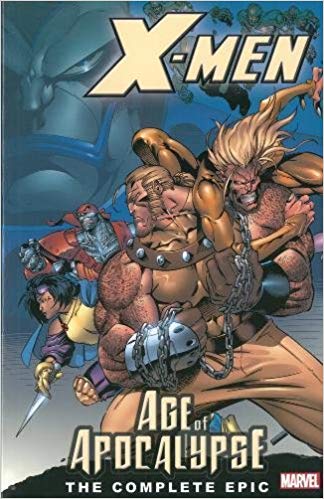
Age of Apocalypse

A series of books taking place within an alternate timeline, ‘Age of Apocalypse’ became an incredibly popular event, and would be revisited numerous times over the years. When David Haller, Legion, travelled back in time to kill Magneto he accidentally creates an alternate timeline when he kills Professor Xavier by mistake.

The ancient mutant Apocalypse ends up attacking the world 10 years sooner than he should have, leading to his victory. Apocalypse rules the entire Earth with an iron grip, and has a number of corrupted heroes working for him and his mutant empire. A number of mutant factions, including a team of X-Men led by Magneto, fight against him and try to undo the events that led to the death of Professor X.

Despite being a limited time event, ‘Age of Apocalypse’ proved so popular that it would return a number of times, and even some characters from that timeline would become permanent residents in the regular Marvel Universe.


New X-Men

Written by Grant Morrison, ‘New X-Men’ ran for a number of years and encompassed several story arcs. Shifting the focus away from the X-Men as a superhero group, and instead taking a look at the running of the Xaviers School, the series would introduce a number of characters that would remain part of the X-Men series for years, including Cassandra Nova, Beak, Quentin Quire, and Fantomex.

The series would deal with a number of story lines, including the outing of Professor Xavier as a mutant, the destruction of Genosha, Emma Frost joining the team, and the return of Magneto.


Mutant Massacre

The X-Men would become used to death and disaster over the course of their run, probably more than any other Marvel book. ‘Mutant Massacre’ is a prime example of a story where even when the heroes stop the villains, they don’t really win.

When the villainous Marauders attack the mutant community of the Morlocks the X-Men and X-Factor teams rush to their aid. Whilst they manage to stop the Marauders many Morlocks are killed, a a number of heroes severely wounded as a result; Colossus is left as a quadriplegic, Kitty Pryde is trapped in her phased form which almost kills her, Nightcralwer was put into a coma, and Angel was literally crucified, which eventually led to him losing his wings to gangrene.

A dark and sobering look at the X-Men universe, and one that would play into a lot of future stories.


Second Coming

A follow-up to ‘Messiah Complex’, ‘Second Coming’ tells the story of the return of Hope Summers and her adoptive father Cable, following their previous escape to the future. The return of the first new mutant acted as a beacon for the various X-Men factions to rally behind, whilst becoming a target of their enemies.

Hope’s return brings a number of villains out of hiding, including Bastion, the Purifiers, William Stryker, and Bolivar Trask to name but a few. Every mutant must come together and fight to the death in order to secure their future in this event that involved every X-book. Whilst they do manage to defeat their enemies, several heroes are injured, and even killed doing so.


Go to Amy's Blog

Doctor Who: The Terror Beneath – Book Review


Originally published on Set The Tape

‘The Twelfth Doctor grapples with two deadly small towns in this brand-new collection, kicking off year-three! It’s the return of fan-favourite comics companion, space bassist Hattie, as the Doctor takes her for the best fish and chips in the galaxy. But there’s something ancient and unknowable beneath the waves of the 1970’s seaside town where they end up – something that weaves itself into Hattie’s dreams and drags itself up onto the land in mounds of shambling seaweed!’

The latest Twelfth Doctor Adventures Doctor Who: The Twelfth Doctor – Time Trials Volume 1: The Terror Beneath sees the Doctor stumble across two small towns with very strange events happening.

The first story sees the Doctor once again teaming up with Hattie, a young woman from the future space colony The Twist, who shares the Doctors love of music and uses her adventures with him to inspire her songs; as the Doctor takes her away from her new found fame and success, letting her spend some time in a quite English seas-side town in the 1970’s.

As with typical Doctor Who fashion, however, things aren’t quite as they seem in Seaton Bay, as a strange psychic presence is sending creatures made of seaweed into the town, resulting in dozens of residents falling into comas.

The story feels a lot like classic episodes of Doctor Who, probably in large part to the quite British town setting, something that happened a lot in the old stories. The sleepy seaside location and 1970’s settings instantly brings to mind stories like ‘The Daemons’, ‘The Android Invasion’, and ‘The Curse of Fenric’, all of which used their locations to great effect.

The seaweed monsters also bring to mind images of the Sea-Devils emerging from the ocean in the Jon Pertwee stories, with monsters emerging from the sea something that has gone on to become iconic for the franchise.

The second story, which has the Doctor travelling alone, sees him land in a small American town of Sweet Haven, where reality has warped out of all recognition. The towns people have become raging maniacs, dark clouds blocking out the sun, and a giant smile hanging in the sky.

Things only become stranger when the Doctor locates the source of the mysterious events, an old farm house that has been transformed into something that resembles a clown’s nightmare home, psychedelic colours, weird angles, and the same type of smile that’s hanging in the sky.

Despite some early promise in this story, with the inhabitants of Sweet Haven turning into a ravenous horde that has trapped a few besieged people in the police station, the story feels like it lacks any real big conclusion, with the Doctor defeating the enemy with almost no effort at all. Whilst the Doctor is an incredibly smart person, and can win against overwhelming odds, it can be a bit dull to see him solve a problem within seconds without having to really try.

The art styles of each story differs greatly too, with the first story having a very elegant, almost painted style, whilst the second has a much rougher hand drawn style, which enhances the bizarre and almost crazy events. The art styles are nothing alike, and stand out starkly against each other, but both of them complement their respective stories and work well to create certain feels.

Whilst I personally found the second story to be weaker than the first, both stories had interesting plots, complete with diverse supporting characters, and small town locations that will be instantly recognisable to most readers. A good pair of stories that highlights how different and diverse Doctor Who can be when making use of ‘a small town’ as its main setting.

A well told pair of stories, with some beautiful art from Mariano Laclaustra, Doctor Who: Time Trials – The Terror Beneath, is a book that will appeal to fans of classic Doctor Who as well as new fans.


Go to Amy's Blog

Wednesday, 25 April 2018

Anything: Why Matt Bomer Playing A Trans Woman is Problematic


Originally published on Set The Tape

Due for release in the US one month hence, Anything tells the story of the blossoming romance between a transgender sex worker Freda and her widowed neighbour Early. What makes Anything jump out is that the role of Freda is played by Matt Bomer.

The reason this makes Anything jump out is that yet again I see a cisgender man playing a trans women; and it’s instantly wrong to me. However, to most people, this will seem like just another film with a transgender character, because almost every film or television show with trans characters are played by cis actors.

As a trans woman, I very quickly came to learn that most people in my life only knew about trans people from what they saw in film and television. Whilst some of this includes documentaries, the vast majority of people who found out I’m trans only had entertainment to draw upon.

In the best case scenario this would be examples like Maura (Jeffrey Tambor) in Transparent, but they would often include sex workers or killers, like Sleepaway Camp, Ace Ventura: Pet Detective, and Silence of the Lambs. This would more often than not lead to misconceptions about who I was, or what I would be like as a trans person. The most common thing I encountered is that because trans women are so often portrayed as sex workers, people assume that I must be a sex addict that’s willing to hook up with anyone.

However, the worst thing about the way media depicts trans women is that 90% of the time, they’re played by cis men. I was told once by a friend that they “hear trans and think a bloke in a wig”. That’s what films are telling people. Films like Anything.

No matter how well the intention behind the film, or how much those involved say they are allies to the trans community, continuing to cast cis men as trans women is not only insulting, but potentially dangerous.

Hollywood has trans actors, and trans people go for trans roles all the time, but a result I have seen time and time again from trans actors who don’t get these roles is that they “don’t look trans enough”. Hollywood wants people to be instantly seen as transgender, and for them this means men dressed as women.

From Jared Leto in Dallas Buyers Club, to Eddie Redmayne in The Danish Girl, and now Matt Bomer in Anything, Hollywood seems determined to reinforce the idea that trans women are just men.

Trans actress and activist Jen Richards auditioned for a role in Anything, but was told that Bomer was pre-cast in the film, meaning that no other actor was considered for the role of Freda. Especially a trans actor.

She said: “I’m a filmmaker. I hold freedom of art sacred, but I also recognize its power as a responsibility. We shape perception, we are culpable.”


“Dear @MarkRuffalo & @MattBomer: if you release this movie, it will directly lead to violence against already at risk women,” she added.

Following the outcry online from numerous members of the trans and LGBT+ community, executive producer Mark Ruffalo responded on Twitter: “To the Trans community. I hear you. It’s wrenching to you see you in this pain. I am glad we are having this conversation. It’s time.”

Despite this, many people were still unhappy as Ruffalo went ahead with the project, keeping Bomer in the lead role, seemingly sympathising with the trans community and our struggle, despite adding to it.

Any time that a cis man is cast to play a trans woman, there are those that defend that decision. Some will say that the best people for the role get cast, some say that there aren’t any or enough trans actors to play trans roles; and some claim that films won’t get the recognition or acclaim they deserve with trans people in roles.

Whilst all of these arguments are quite clearly laughable (trans people have won Oscars for their work), there are other arguments that are even worse.

“Men are cast to play trans women because they’re just men anyway.” It’s an argument I see every time. People jump into discussions or comment sections to make known their opinion that “trans women are men”. Views that are only reinforced by casting men in these roles.

It would be easy to equate cis people playing trans roles as being akin to blackface, and whilst some people do make that argument, it’s not quite the same, but it does come close in a lot of ways. It others a marginalised community, it makes caricatures out of a group of diverse people with varying life experiences and personalities, it takes jobs away from people in those minorities, and reinforces poor stereotypes and public perception.

Sadly, any argument like this will tend to come down to personal opinion. Those who feel the same will support me, whilst those who feel different will never have their minds changed. They’ve had this view pushed on them time and time again, and it’s become entrenched.

I’ve been told that I’m a freak, that I’ll never be anything other than a man. I’ve been treated like dirt, and I wholeheartedly believe that films like Anything are a big part of this problem. Fortunately, I’ve been a lucky one. I’ve been threatened but never assaulted. I’ve been harassed but never raped. I have a happy home and a family that loves me. I survived my suicide attempt. But not every trans person is as lucky.

To a lot of people Anything is just another film, and any words against it will just be seen as trans people making a big fuss over nothing, but it can have very real, very dangerous results. Hollywood has a problem, one that desperately needs to change.


Go to Amy's Blog

Star Trek: New Visions #21 – Comic Review


Originally published on Set The Tape

‘The enemy of my enemy… is not my friend. But Kirk and Kor find themselves forced to work together against a common foe. Alliance, or a chance for deadly betrayal?’

Star Trek: New Visions brings back a classic character, the Klingon Kor, to team up with Captain Kirk in an uneasy alliance as the two of them must escape from the powerful Vrotti, a race of huge lizard-like aliens.

With the two captured they are told by the Vrotti that they each have a chip implanted within their chest that will make their hearts explode if they get more than 10 meters apart, forcing the two enemies to work together in order to get away from their captors.

Whilst the initial set-up is good, and the idea of the two of them having to put aside their differences is intriguing, the story fails to live up to the potential. Kor has been a part of the Star Trek universe for decades, originating back in the original series, and appearing again in Star Trek: Deep Space Nine multiple times, he was always an entertaining and engaging character.

I appreciate that there is a limited number of pages that can be used to tell this story, but it felt like Kor wasn’t given any room to be his character, and that his animosity towards Kirk wasn’t anything more than an average Klingon. The fact that we’re following Kirk and Kor seems to be an after thought, this could have been any pair of characters.

Sadly, this lack of characterisation or connection makes the story feel very flat and lacking any real depth.

The second story in the issue goes backwards in time, telling a story centred around the Enterprise before Kirk, with Pike as the captain. Whilst the shift in look and style of this story is interesting, and makes a change of pace from the usual, the narrative itself is very slow and, dare I say, dull. Finding a ship from 1901 floating in space, the Enterprise crew discovers a man who’s supposed to be a fictional character. Any kind of mystery or drama is soon forgotten as we get a very dull explanation for how and why this person is here, then he just goes on his way.

The art style of Star Trek: New Visions doesn’t help either story either. In the first tale feels very disjointed, mixing together brand new creatures and ships with existing images from episodes. Unfortunately, as Kor was in very few episodes of the original series there’s not a great deal of options for images to use, as such Kor often feels out of place, with expressions and poses that don’t really work for what’s happening in the story.

The second story is also let down by this art style as the character of Cavor very clearly has CGI glasses and a beard stuck to his face, which makes him incredibly distracting whenever he’s around.

Star Trek: New Visions continues to tell stories within the Star Trek universe but fails to capture the quality of the original series in both storytelling and visuals.


Go to Amy's Blog