Tuesday, 24 April 2018

Rampage: 5 Great Video Game Movies… And 10 Not-So-Great


Originally published on Set The Tape


Video games are a great medium for telling stories. They’re not limited by the run time of a film, or even a television series, and can tell an unfolding story over anything from several hours to several games. They let the player feel immersed in their worlds and feel like a part of the story. Perhaps this is the reason why many video game movies fail to capture the magic of their source material.

However, there are those times when not only do video game movies live up to expectations, but they actually happen to be really good films. Before the arrival of the latest entry into the mixed genre of video game films, let’s take a look at five of the best video game movies, and ten of the worst.

The Best:


Street Fighter (1994)

It’s easy to make fun of this film. The live action Street Fighter movie isn’t perfect, far from it. Blanka looks terrible, Dhalsim does practically nothing, and the story isn’t anything like the game. There’s not even a fighting competition.

What it does do, however, is embrace the spirit of the game. It plants its tongue firmly in cheek and makes a colourful, over the top, and at times downright silly film about an insane tyrant and the group determined to stop him from taking over the world.


It works because it doesn’t try to be serious, and because the action is actually quite competent and entertaining. It also made the brilliant move in casting Jean-Claude Van Damme in the role of Guile, giving the lead hero some action move pedigree; and in the casting of Raul Julia as M. Bison. Not the first person to come to mind as the villain to go up against Van Damme, Julia is absolutely brilliant in the role. He’s campy and over the top in just the right way, and has such amazing presence when on screen.


Resident Evil: Afterlife (2010)

The fourth entry in the Resident Evil film series is still, for me, the best. The first film since the original in which Paul W.S. Anderson returned to direct, it ditched a lot of the baggage from the previous films, deciding not to try to take itself too seriously, or make a film that was too gritty. It embraced a lot more of the fun elements of the series and decided to just be an enjoyable popcorn movie, making it the first really entertaining entry in the series.

It also added more elements from the games, such as the Majini type infected, and the Executioner, but it was the inclusion of Wentworth Miller as Chris Redfield and Shawn Roberts as Albert Wesker that really helped.

Wesker was played to the perfect mix of evil and camp villain that was so popular form the fifth game, and the film even went so far as recreate a fight between him and Chris from that game shot for shot. As a fan of the game series it was a brilliant moment to see parts of the game come to life on the big screen in such a way, and actually game me a lot of hope for the continuation of the film series.


Pokemon: The First Movie (1998)

Your age probably determines whether or not this film will appear on your list, but being the prefect age when this film hit the UK I was swept up in the hype of the first Pokemon cinematic outing. Giving fans a look at where the television show would go next with the inclusion of a few generation two Pokemon, it also dealt with a plot thread that had been teased across a number of episodes, the appearance of Mew-Two.

The original must catch Pokemon of the first games, Mew-Two was beefed up to become a super powered global threat, one that the shows heroes and villains would have to team up to fight against. Not only did the film deliver some great monster v monster action, it also went a lot deeper than viewers were expecting, with such famous quotes like: “I see now that the circumstances of one’s birth are irrelevant. It is what you do with the gift of life that determines who you are.” Quotes like this prove that the franchise has some deeper messages to tell its young audience.


Silent Hill (2006)

Video games do horror really well, mainly because it puts you into the horror itself and makes you face the monsters, rather than being an observer. The Silent Hill franchise was always one of the most successful, and proved to be one of the better film adaptations.

Taking inspiration from the first game, but mixing things around, the film sees a mother taking her adopted daughter to the town of Silent Hill to try to solve the mystery of the nightmares that plague her, only to discover hell on earth.

The film captures the atmosphere of the games brilliantly, both in the fog shrouded town and the terrifying hellscapes. It looks like it came straight out of the game, recreating locations, creatures, and even camera shots perfectly to make fans feel right at home. A film that embraces its source material and delivers a film that audiences who haven’t played the games will enjoy, Silent Hill is a brilliant example of how to translate games into film.


Mortal Kombat (1995)

Another Paul W.S. Anderson entry, the first Mortal Kombat film is still the best of the franchise, mixing over the top action, strange fantasy, and cheese to great effect. Following a group of mismatched heroes as they fight against an otherworldly threat in order to protect the earth, it actually stays surprisingly true to the story and the spirit of the fighting game.

With a relatively unknown cast, Christopher Lambert is the biggest name in the credits as the lightning god Lord Rayden, and feels slightly out of place here, but manages to walk that fine line between entertaining and utterly ridiculous.

Whilst Mortal Kombat might not be the best video game movie it’s surprisingly well but together, entertaining, and has the best song of any film on this list. Seriously, go listen to it. It’s brilliant.


The Worst:


House of the Dead (2003)

How do you turn a story about a mad man about to unleash an army of zombies and mutants upon the world, opposed only by a group of secret agents into an entertaining film? How about turning it into a story about teenagers attending a rave on an island that has a zombie priest from the 18th Century hiding on it? Yeah, probably not the best idea.

House of the Dead has nothing in common with the game it shares a name with, other than zombies anyway. A poorly put together film with an awful script, terrible acting, and no connection to the game. One to definitely be avoided.


Max Payne (2008)

Based upon the popular action game series about a cop whose whole family were brutally murdered, the Max Payne film fails to capture a lot of the gritty and downbeat emotions of the game. Where the game offered great action it also had a lot deeper story and character development, giving players a main character that was deeply hurt, emotionally battered, and suffering from PTSD.

The film, on the other hand, gave a rather lack lustre action film about a cop stopping a drug conspiracy. It could have been a lot better than what it was, and whilst not awful in itself, it fails to live up to the Max Payne name. Plus, the casting of Mark Wahlberg in the main roles is definitely a misstep.


Doom (2005)

One of the greatest games of all time, Doom inspired an entire genre and has been ported to almost every console ever made (even being modded into other video games as a playable extra). With a simple premise of a soldier fighting against the forces of Hell on Mars, it should have been fairly simple to create a half decent film out of it.

With the inclusion of The Rock, Karl Urban, and Rosamund Pike in the cast it looked like the Doom movie was going to be a success. Unfortunately, the film made some missteps with the plot, dropping the whole plot about harnessing energy from Hell into a mutation that brings out ‘the evil gene’ instead.

Despite good performances from the main cast, The Rock playing a villain, and a fun sequence filmed in first person, the film falls short of the action and energy of the source material.


Hitman (2007)

Based upon the popular stealth series of the same name, Hitman saw Timothy Olyphant take on the iconic role of Agent 47. Despite being a financial success the film received incredibly poor reviews. Thanks to some fairly poor dialogue, and a plot that not only fails to live up to the game series, but also makes little sense and falls all over the place, Hitman became such a disaster that the film franchise was rebooted several years later with Hitman: Agent 47 in 2015.


Alone in the Dark (2005)

Another video game film directed by Uwe Boll (alongside other flops like House of the Dead and BloodRayne), Alone in the Dark is based upon the supernatural survival horror series of the same name, but bears very little resemblance to the source material.

Not even the star power of Christian Slater, Tara Reid, and Stephen Dorff could help a film that was so poorly received that it is often credited as ‘one of the worst films ever made’ on many lists. Strangely, a sequel was made a few years later, though it actually ended up being a better film.


Street Fighter: The Legend of Chun-Li (2009)

Failing to capture any of the success of the 1994 film Street Fighter: The Legend of Chun-Li focused on one of the more popular characters from the franchise, chronicling her early life and rise to becoming a fighter, eager for revenge against M. Bison for his crimes against her family.

Despite a plot that sounds like it should work, the film suffered from a terrible script, lack lustre fight sequences, and poor casting choices. Added into the mix was the fact that the film took itself far too seriously, lacking any of the humour or charm of the previous live action Street Fighter film.


Prince of Persia: Sands of Time (2010)

Based upon the popular game series, Prince of Persia: Sands of Time combined together elements of several of the games in the franchise to deliver an action adventure series about a sword wielding prince who sets out to stop a villain after a magic dagger.

The film wasn’t especially terrible, and had a decent budget and cast trying to make it a success, but thanks to the poor decision to whitewash the main characters the film was extremely poorly received, despite becoming the highest grossing video game adaptation of all time (before losing that title to Warcraft in 2016).


Double Dragon (1994)

Two brothers in possession of half of a magical ancient Chinese amulet become the target of a crime lord who has the other half, and wants to join them both together to gain absolute power.

With a plot that barely resembles the games it was based upon, poor special effects, and dialogue that even the worst video game would be ashamed of, Double Dragon was a huge flop upon release, though it did find some cult following over the years, mainly due to being seen as ‘so bad it’s good’.

Despite the film being pretty awful the trailer is actually pretty fantastic, and is definitely worth a few minutes of your time to track down on YouTube.


Lara Croft: Tomb Raider – Cradle of Life (2003)

Following the success of the first Lara Croft: Tomb Raider starring Angelina Jolie in the lead role a sequel was quickly put into production to try to recapture the magic. The film received a lot of criticism for not being as good as the first film, though it wasn’t hated by many.

Paramount blamed the films financial failure in large part on the release of the then-latest game in the series, Tomb Raider: The Angel of Darkness, which was rushed into stores in time for the film’s release, unfinished and full of bugs.


Super Mario Bros. (1993)

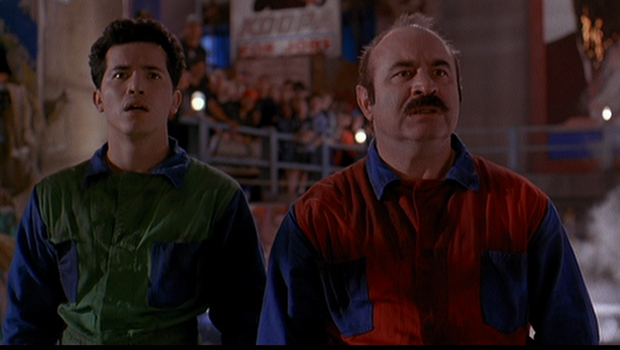
Widely considered one of the worst video game films of all time, and one of the worst films in general, the Super Mario film saw Bob Hoskins don the role of Mario Mario as he travels to a dystopian parallel world with his brother Luigi Mario, played by John Leguizamo, to try to save a princess from an evil ruler.

Sharing nothing in common with the game series other than the name, any of the fun, bright colours, or character design was lost in the translation to the big screen. Instead of being a fun adventure film for the whole family, it was dark, dreary, and dull. Easily the worst part of the Super Mario franchise.


Go to Amy's Blog

Monday, 23 April 2018

Supernatural Season 13 – The Road So Far


Originally published on Set The Tape

Supernatural, the long running show about the monster hunting brothers Sam (Jared Padalecki) and Dean (Jensen Ackles), is back for–yes–a 13th season. No, we can’t believe it either.

Before we delve back into the world of ghosts, demons, and vampires, here’s a quick look back at the epic journey the two of them have been on…


Season One (2005-2006)

After the mysterious death of their mother Mary (Samantha Smith) when they were just children, Sam and Dean are raised by their father John (Jeffrey Dean Morgan) to be Hunters, and fight the forces of evil. After Sam leaves the family to go to college he gets called back in when John goes missing. When the investigation into his disappearance leads to the death of Sam’s girlfriend, he joins his brother on his quest to fight evil and find their father.

Along the way the two of them encounters ghosts, vampires, and shape-shifters, before discovering that their mother was killed by a demon names Azazel (Fredric Lehne). Teaming up with their father to fight Azazel, Sam finds out that he’s a part of the demons plans, and that he has been given strange psychic powers.


Season Two (2006-2007)

Sam and Dean continue their quest to kill the demon Azazel following the death of their father. They find new allies along the way, including the old hunter Bobby Singer (Jim Beaver), and John’s old friend Ellen (Samantha Ferris) and her daughter Jo (Alona Tal).

Azazel furthers his plans by bringing together several people with psychic abilities, including Sam, to fight each other until only one is left. When Sam is killed Dean makes a deal with a Crossroads Demon in order to bring him back. Despite having Sam back, they fail to stop Azazel opening a portal to Hell, which unleashes hundreds, if not thousands of demons. Thanks to some help from the spirit of John, they are finally able to kill Azazel and close the portal.


Season Three (2007-2008)

Thanks to the deal Dean made to bring Sam back to life he only has a year to live before he’s killed and sent to hell. As the two of them try to find a way of breaking the deal they come across a ‘good’ demon named Ruby (Katie Cassidy), who claims to be able to help them.

The two of them also make an uneasy alliance with a con artist names Bella (Lauren Cohen), who is able to track down the demon holing Dean’s contract, Lillith (Sierra McCormick). The first demon ever made, Lillith is incredibly powerful, and despite their best efforts they’re unable to stop her, leading to Dean’s horrific death.


Season Four (2008-2009)

After four months, Dean suddenly wakes up in a coffin alive and well he discovers that he was saved from Hell by an angel names Castiel (Misha Collins), who was sent to save Dean before he slipped over to the dark side and unwittingly broke the first of the 66 seals. Unfortunately, Castiel was too late and Dean tortured other souls in hell in order to save his own.

With the first seal broken, the Winchesters have to work to stop 65 others from being destroyed, as this will lead to Lucifer (Mark Pellegrino) being freed from his prison. Working alongside angels, and Ruby, who is now in a new body (Genevieve Cortese), they fight against various threats, including renegade angels, ghost sickness, and even a giant living teddy bear.

Unfortunately, Ruby has been feeding Sam’s dark tendencies, literally, by making him drink demons blood to increase his psychic powers. Convincing him that he has to kill Lillith in order to stop the end of the world Sam manages to kill her, inadvertently breaking the final seal and unleashing Lucifer upon the Earth.


Season Five (2009-2010)

With Lucifer unleashed upon the world, the apocalypse has begun. The Winchesters find themselves being sought after by both sides, as Hell wants Sam to become Lucifer’s vessel, and Heaven wants Dean to let the archangel Michael take him over. As Lucifer builds his forces, including the Four Horsemen of the Apocalypse, Sam and Dean gather their allies and formulate a plan to try and kill Lucifer.

Sadly, Lucifer proves harder to kill than expected, leading to the deaths of Ellen and Jo as Lucifer released Death himself on the world. As Sam and Dean grow apart over the course of the season Sam finally agrees to allow Lucifer to use him as his vessel, pitting Dean against his own brother.

Dean, Castiel, and Bobby manage to trap Lucifer back in his prison, though fail to get him out of Sam’s body. With his brother seemingly lost forever, Dean quits being a hunter and reforms his relationship with his old girlfriend Lisa (Cindy Sampson).


Season Six (2010-2011)

When Sam mysteriously returns from Lucifer’s cage, Dean is drawn back into the world of hunting once again. Discovering that Sam is working with their resurrected maternal grandfather Samuel (Mitch Pileggi) and his group of hunters, the Winchesters work alongside him to capture Alpha Monsters, the first of their races.

During the course of the season Dean finds out that Sam is acting stranger than he used to because his soul is still trapped within the cage. Making a deal with Death, Dean manages to restore Sam to his true self.

When it comes to light that Samuel is hunting the Alpha’s for the demon Crowley (Mark Sheppard), who is working alongside Castiel, the brothers have to fight against their former friend, who is trying to gain access to the monster souls in Purgatory in order to win an angel civil war. Despite trying to get through to their friend, Castiel absorbs the purgatory souls, declaring himself the new God.


Season Seven (2011-2012)

After absorbing the souls from Purgatory Castiel sets out to declare himself God and punish the wicked. Unfortunately, he soon discovers that he has absorbed the Leviathan, ancient creatures so powerful and evil that they were sealed away. The Leviathan break free from Castiel, apparently killing him in the process.

With the Leviathan taking hosts all over the world, and being near impossible to kill, they fall under the leadership of Dick Roman (James Patrick Stewart), who has plans to turn humans into their food source whilst they take over the world.

During their fight against Dick, Sam and Dean find a resurrected Castiel, and even form an alliance with Crowley, but lose Bobby when Dick shoots him in the head. Having lost their surrogate father, Sam and Dean take the fight to the Leviathan, managing to kill Dick, though Dean and Castiel end up being sucked into Purgatory in the process.


Season Eight (2012-2013)

After being gone for a year, Dean manages to return from Purgatory, though without Castiel. As Sam and Dean try to find a way to close the gates of Hell permanently using the Demon Tablet, Castiel is rescued from Purgatory by an angel named Naomi (Amanda Tapping), who brainwashes Castiel into being her agent.

When Sam and Dean’s paternal grandfather Henry (Gil McKinney) travels from the 1950’s to the modern day, pursued by a powerful Knight of Hell Abaddon (Alaina Huffman), they learn that they are descendent of the Men of Letters, a secret society that studied the supernatural. Despite losing their grandfather, Sam and Dean inherit a fortified bunker filled with supernatural lore and weapons.

Whilst Sam and Dean fail to seal the gates of Hell, as doing so would kill Sam, Castiel is tricked into performing a spell that he believes will seal the Angels in Heaven, though inadvertently ends up casting all the Angel down to Earth instead.


Season Nine (2013-2014)

With the Angels having fallen to Earth, Castiel has lost his grace and been left as a human. In order to save Sam’s life after his attempt to seal the Gates of Hell, Dean makes a deal to let an Angel, Ezekiel (Tahmoh Penikett) inhabit his body to heal him. Unfortunately, Ezekiel eventually betrays the Winchesters, killing their friend Kevin (Osric Chau) in the process.

With Crowley in the possession of the Winchesters, Abaddon takes over Hell. In order to stop her Dean takes on the Mark of Cain in order to wield The First Blade, the only weapon that can kill a Knight of Hell.

As Castiel manages to restore his own grace and is asked by a number of Angels to lead them against the renegade angel Metatron (Curtis Armstrong), Dean manages to kill Abaddon. When Sam and Dean agree to help Castiel deal with Metatron, however, Dean is killed in the process, which causes Dean to become a demon thanks to the Mark of Cain.


Season Ten (2014-2015)

After being resurrected as a Demon, and joining forces with Crowley, Sam and Castiel have to track him down in order to cure him and make him human again. Thanks to a ritual using sanctified blood, they are able to restore Dean back to his former self, though he is still affected by the Mark of Cain.

As the Mark fills Dean with a blood-lust, causing him to black out and commit several brutal murders, Sam searches for a way to remove it with the help of their friend Charlie (Felicia Day), and the witch Rowena (Ruth Connell). When the Mark is removed, however, the Winchesters accidentally unleash The Darkness, an ancient primordial evil.


Season Eleven (2015-2016)

After being released The Darkness manifests itself into a human body, born into baby called Amara. As the baby grows up she is taken in by Crowley, who attempts to use her for his own gains, though it also becomes clear that she has a mysterious connection to Dean.

As an adult, Amara (Emily Swallow) reveals herself to be the sister of God, who trapped her away in order to create the universe. Now free, she is more powerful than any angel or demon, and intends to destroy everything. Knowing that they are no match for Amara, the Winchesters form an alliance with Lucifer, Crowley, Rowena, and their old friend Chuck (Rob Benedict) who reveals himself to be God.

Despite throwing everything that they have against Amara, the group are unable to stop her, and are only able to prevent her from destroying the world when Dean convinces her to resolve her problems with her brother. As a reward for helping her, Amara thanks Dean by bringing his mother Mary back to life.


Season Twelve (2016-2017)

With Mary Winchester back from the dead she works alongside Sam and Dean in their fight against the supernatural, whilst also trying to form a meaningful relationship with her sons. Unfortunately, the British chapter of the Men of Letters arrives in America, intent on making the American hunters either work with them, or killing them.

Thanks to the fight against Amara, Lucifer is now free on Earth once again, and goes through several vessels with power and influence before managing to enter the body of the President of the United States. Whilst in the President, Lucifer manages to impregnate a woman called Kelly Klein (Courtney Ford). Whilst the Angels fear how powerful Lucifers son may become, Castiel believes that the child can be a force for good, and decides to protect Kelly.

After defeating the British Men on Letters, the Winchesters help Castiel deal with Lucifer, along with some help from Crowley. As Kelly goes into labour, the power of the unborn child tears a hole in reality, opening a doorway to another dimension where the apocalypse still rages.

The Winchesters manage to lure Lucifer through the portal, where Crowley performs a spell in order to close the doorway, killing himself in order to do so. Before the doorway can close, however, Lucifer manages to come back through and kills Castiel. Protecting her sons, Mary pushes Lucifer back through the portal, but gets dragged through with him.

Supernatural Season 13 premieres on E4 from Tuesday 17th April at 10pm.


Go to Amy's Blog

Tuesday, 17 April 2018

A Quiet Place’s John Krasinski and The Office’s Best Pranks


Originally published on Set The Tape

A Quiet Place is a sharp contrast for many fans of actor John Krasinski. A horror film set in a post-apocalyptic landscape, it puts the actor/writer/director in a very different environment from what many fans are used to, having fallen in love with him during his time in The Office.

Before we head into the frightening landscape of A Quiet Place, let’s take a look back at some of his best moments from The Office.


10. Quad-Desk

After returning from paternity leave Jim (John Krasinski) discovers that Dwight (Rainn Wilson) has converted their desk clump into a three desk structure called ‘Megadesk’. Desperate to keep ‘Megadesk’ Dwight tries to manipulate Jim into taking more time off to spend with his new family. Unfortunately it falls flat for him when he enters the office to find that Jim has created ‘Quad-Desk’, a pyramid like structure made from three desks.

It’s not just the loss of ‘Mega-Desk’ that upsets Dwight, but also the fact that Jim has named it ‘Quad-Desk’ when it is made of three desks instead of four, plus the fact that he has to crawl under the desk to answer his own phone.


9. Vending Machine Prank

We discover that Jim is friends with the office vending machine maintenance man, which leads Jim to the perfect chance to pull a prank of Dwight, putting all of his desk objects in the vending machine, including his name plate, office supplies, and even his beloved bobble-head.

Dwight doesn’t feel too put out by the prank, however, as he vows to just buy back his own stuff. Until he realises that his wallet is also in the machine. Luckily for him Jim is on hand to give him a giant bag of nickles to help his get to work buying his stuff back from the machine.


8. Velcro Suit

A beautifully simple and quick prank, Jim learns that Dwight gets his suits dry cleaned and purchases an identical suit made from tearaway Velcro. Convincing the dry cleaners to switch suits, Jim waits for Dwight to arrive for work and then pulls his suit off in one motion, leaving Dwight standing in the parking lot in his vest and pants.


7. Pavlov Experiment

Jim is always willing to do the long con, and spends several weeks on this particular prank, taking inspiration from the classic conditioning exercise to train Dwight. Every time Jim boots up his computer he offers Dwight a mint when the log-in chime sounds.

Over the weeks Dwight comes to expect a mint when he hears the noise, automatically holding out his hand. Eventually, when Jim doesn’t give him a mint Dwight is left stunned and confused, ad finds his mouth suddenly tasting unexpectedly bad.


6. The Red Wire

When Dwight discovers a mysterious red wire attached to the back of his computer that he’d never seen before, and that no one else has on their computer, he becomes determined to figure out where it leads. He follows the wire around the office and eventually leaves the building.

It’s then that we learn that Jim bought the wire with the express purpose of messing with Dwight, a revelation that comes as we see Dwight scaling a telephone pole in the background. That Jim not only saw the wire on sale and knew exactly how he could mess with Dwight not only makes this great, but the fact that he himself scaled a telephone pole on the other side of the street just to set it up shows his determination to a prank.


5. ‘It Was Dwight’

When some of the members of the office get sent on a business trip to Florida, Jim is determined to prank Dwight whilst away. When Dwight and Erin (Ellie Kemper) enter Jim’s room they find the furniture tossed around, a rope made of sheets hanging over the balcony, and an open briefcase full of cash.

Dwight is distraught when he sees a message scrawled on the wall saying ‘It was Dwight’, protesting his innocence. He reads the instructions left behind to ‘find Luwanda at the alcohol club’, just before a ‘dead’ Jim falls out of the closet.


4. Messages From Future Dwight

When Jim moves to another branch he decides to take a box of Dwight’s personal stationary with him, using it to pull pranks on him from across the country. He uses Dwight’s stationary to send him faxes, from himself, from the future.

When Dwight receives a message from himself saying ‘Dwight, at 8AM today, someone poisons the coffee. Do not drink the coffee. More instructions will follow. Cordially, future Dwight.’

Seeing Stanley (Leslie David Baker) about to take a drink of his coffee Dwight sprints across the room, screaming, before smacking the mug from Stanley’s hand in a shower of liquid.


3. Christmas Desk

Not even Christmas time gives Dwight a break from the pranks, as he enters the office to find his desk, chair, computer, and everything on his desk individually wrapped in paper.

Confident that he can unwrap the whole thing in minutes, saying it’s a poor prank, Dwight takes a seat, only to find that everything is made from cardboard, collapsing under him.


2. Asian Jim

The best Jim pranks are always one’s that go that extra mile, and none are more elaborate than Asian Jim. When Dwight notices an Asian man he’s never seen before doing Jim’s job, dressed as Jim, and acting as Jim he immediately calls him out as an imposter, stating that Jim was never Asian.

Not only does the fake Jim claim to have always been Jim, praising Dwight on not noticing race, but the whole office is in on it. Jim’s wife Pam (Jenna Fischer) kisses him and tells him about their dinner plans, causing Dwight to warn her that he’s not the real Jim. Grabbing the photo on her desk to prove it to her he sees that Pam and Asian Jim are together in the photo, with their new children.

Dwight is left visibly shaken as he tries to work out if it’s all an elaborate prank, or if Jim really has been Asian for the past decade.


1. Best Man

In the final episode of The Office we get to see Dwight marry his long time partner Angela (Angela Kinsey), with Jim as his best man. Throughout the course of the episode Jim pulls a few pranks on Dwight, but none are better than his final prank.

Moments before the ceremony Jim tells Dwight that the priest has told him he can’t be Dwight’s best man, because best men have to be older than the groom. Dwight is unsure if this is true or not, but Jim tells him he can’t be there for him on his big day.

Dwight turns around and finds Michael (Steve Carell), who has been gone from the series for two seasons, is standing there, ready to take over for Jim. It’s a beautiful moment, one where all three characters are brought close to tears. Jim’s comment that it’s the ‘best prank ever’ rings true for the audience, who are just as delighted as the characters to see Michael back.


Bonus Prank – Dwight Destroys Jim

Jim makes Dwight the target of multiple pranks over the course of nine seasons, with many of them possibly considered cruel and unusual. Thankfully, the two of them are such good friends that many of these can be forgiven; but Dwight also manages to get some revenge of his own during one of the Christmas episodes.

When Jim throws a snowball at Dwight in the middle of the office the two of them agree to have a snowball fight to settle the argument. Over the course of the episode Dwight begins to harass Jim with snowballs, setting up presents that fire them at Jim, disguising himself as Pam to get close to him, and even hiding inside a snowman in order to launch a surprise attack.

The constant surprise attacks and tricks take their toll on Jim, and he eventually breaks down when he leaves for the day to find the parking lot filled with snowmen, any of which could be a trap. As Jim attacks the snowmen, having descended into a fear induced madness, Dwight watches from the rooftop at his broken foe.


Go to Amy's Blog

Thursday, 12 April 2018

Doctor Who: Branches - Book Review


Originally published on Set The Tape

‘The Doctor and Alice must finally face up to the Sapling’s true nature… but has their influence managed to calm his destructive instincts? Or will they find themselves at his terrifying mercy? With The Scream hot on their tail, intent on using the Sapling for his own nefarious purposes, The Doctor and Alice must make an impossible choice… Meanwhile, the Doctor has possibly found another Time Lord!’

Whilst I’ve been a fan of Doctor Who for years, and love how the comics have continued his adventures, every now and then the comics will tell a story that you don’t get in the series. Sometimes this is a massive cross-over, sometimes it’s epic visuals that could never be produced by the BBC, and sometimes it’s a story that’s so bizarre that it would never be made into an episode. Unfortunately, the latest instalment in the Sapling story is one of those kinds of stories.

Due to the very nature of the Sapling, a being that is born from the stolen memories of the Doctor and his companion Alice, things were guaranteed to get strange at some point, but when you throw The Silence into the mix too, a species that messes with memories, it was a forgone conclusion.

Thanks to an ancient Time Lord weapon developed during the time war, similar in style to the one used by the War Doctor during the 50th anniversary special ‘The Day of the Doctor’, the Tardis and the crew find themselves on the verge of destruction. Thanks to a last second plan the Sapling and The Scream, a deranged Silence, merge into one, trapping the Doctor and Alice inside a strange other world made from their memories.

Sadly, I wasn’t able to find this story line engaging or entertaining at all. It relied too much on weirdness and the bizarre, with disjointed events and jumps in logic that weren’t given any real explanation other than ‘physic’ stuff, and ‘memories’. Even come the end of the story I couldn’t really tell you what happened, or why what did happen actually happened.


High concept science fiction tends to be something that I don’t always get on with, and whilst it can work in certain franchises it always feels slightly out of place with Doctor Who instead of their standard run and stop the monsters approach.

Whilst the story isn’t necessarily to my taste, the book’s art is well executed, able to depict previous monsters and characters clearly enough to be instantly recognisable without needing much explanation. The planet made of memories is a particularly good part of the book for sneaking in little nods, such as buildings made to resemble various versions of the sonic screwdriver.

I was disappointed with this particular volume of the Eleventh Doctor Adventures I’m sure that there will be some fans who will thoroughly enjoy the story.


Go to Amy's Blog

Tuesday, 10 April 2018

Doctor Who: The Lost Dimension Book Two – Book Review


Originally published on Set The Tape

‘The universe is collapsing, swallowed up into the void – and the people of Earth have turned against the Doctor, forcing him to team up with his past and future selves! The unprecedented crossover between all thirteen Doctors continues, as the secret of the void is revealed, the Fourth Doctor and River Song play crucial parts in the survival of all Time and Space, and the final, spectacular conflict is engaged!’

Doctor Who has always done good cross-over stories. Since ‘The Three Doctors’ back in 1972 fans have enjoyed seeing multiple Doctors working together against a major threat, and is something the series has done multiple times over the years; usually to celebrate a milestone in the franchise.

The biggest draw-back of these crossovers is that it’s sadly become impossible to have many of the older Doctors appear due to the actors having aged or passed away; this, however, isn’t a problem when it comes to comic books.

Doctor Who: The Lost Dimension is a very ambitious crossover, with every single Doctor appearing, including a younger version of John Hurt’s War Doctor, as well as several companions, side characters, and monsters from the 50 years of the franchise.

Picking up where the previous volume left off, the final part of the story features the Ninth, Tenth, and Twelfth Doctors facing off against an army of mind controlled humans as they struggle to find a solution to the universe wide destruction that faces all of time and space.


The multiple Doctors interact brilliantly, each with their own reactions to meeting their past and future selves, and they quickly develop a working shorthand that shows that despite the differences between them all, they’re very much the same hero we know and love.

Things are made further interesting with multiple companions getting to interact not just with each other, but other versions of the Doctor; and the return of Jenny gives the adventure an injection of excitement and energy.

The story works well, unfolding slowly to begin with as further details are added through two side stories focusing on the Fourth Doctor and River Song, that whilst their own separate tales do add a lot to the main events. It’s towards the end of the book that the writing really improves, however, with the reveal of what is actually happening, and every single Doctor coming together to save all of reality.

The art styles in each chapter differ too, from very traditional comic art, to beautiful hand painted artwork in the last issue, that manages to capture the likenesses of all of the characters perfectly. This art style also makes the scenes of space and the distortion of reality look truly stunning.

Doctor Who crossovers are always grand adventures, and Doctor Who: The Lost Dimension delivers this in spades, telling a story that could never be done on screens. With a story that manages to draw from stories from across the entire five decades of the franchise, and even goes on to add more information to the history of Gallifrey and the creation of the TARDIS it’s a story that all Doctor Who fans should make the time for.


Go to Amy's Blog

Monday, 9 April 2018

'Acts of Violence' Film Review


Originally published on Set The Tape

‘Three Midwestern brothers, a crime lord, and an incorruptible cop are on a deadly collision course when the youngest brother’s fiancée is kidnapped by human traffickers. To save her, the MacGregor boys call on their military training – and the strength of family – to fight the most important battle of their lives.’

With action movies relying more and more on big budget effects or choreographed fight scenes that make the heroes look near superhuman, sometimes a more realistic approach can feel new and refreshing. Acts of Violence goes against these modern action films, with little to no visual effects and short, economical action sequences.

Following a trio of brothers and their foster sister Mia (Melissa Bolona), who is now marrying the younger brother Roman (Ashton Holmes). The family is fairly close and portrayed as relatively normal, though there is some inner drama injected with the eldest brother Deklan (Cole Hauser) being a veteran suffering from PTSD.

When Mia is kidnapped by local sex traffickers the brothers turn to local cop James Avery (Bruce Willis) for help, but his hands are bound by the law, forcing the brothers to fall back on their military training to save their family.


It’s a very simple plot, with clear lines between the heroes and villains, and solid end goal. Whilst other action films would try to add sub-plots and plot twists to try to bulk out the film Acts of Violence works well without them, relying on simplicity and a face pace to move the story forward.

Whilst this doesn’t lead to a lot of room for character development the film doesn’t really need it. We get to know the characters pretty well during the short 80 minute run time, with each of the brothers having room to be clearly defined and nuanced enough to be interesting. Because the film is fairly short, and the action takes place over a relatively small period of time, it would feel more jarring if the film did stop the story to spend time delving into character.

Despite the short run time, the film manages to include several action sequences. Simple and grounded in how they’re choreographed and shot, the action scenes feel like something from the 70’s. There’s nothing over the top or spectacular about what happens, and it actually works a lot better for this. For a film that is taking a very real and grounded approach the action fits perfectly, adding to the sense of realism.

A lot of this is helped by Cole Hauser. Where the other brothers are becoming emotional and distraught over the loss of Mia, he’s calm and collected, falling back on his military training to lead the group. He’s not over the top or larger than life, he’s just a regular soldier, albeit one who’s fighting for his family rather than his country.


The film very much feels like a throwback to the 70’s grindhouse pictures, focusing on people going up against organised crime, drug lords, and human trafficking. Thankfully, the film doesn’t go as dark as the films of the 70’s, and doesn’t focus too hard on the horrors of the sex trade; it doesn’t play up the violence of women being kidnapped and forced to become sex workers. This is a good thing, as it stops the film going too dark. The characters and the audience both know how bad things will be for Mia if she’s not rescued, so it’s good that we’re not forced to see it.

Despite a short run time Acts of Violence manages to pack a lot in, keeping the story moving at a brisk pace. It has enough action, story, and character development to stay interesting and engaging without being boring. Yes, it’s a cheap action film made relatively quickly (the film was shot over two weeks), but is well made, competent, and entertaining. Which isn’t something every film can say.


Go to Amy's Blog

Monday, 2 April 2018

Pacific Rim: Uprising – A Look At The History Of Kaiju Movies


Originally published on Set The Tape

Pacific Rim: Uprising hit our screens this weekend with it brought back the giant fighting robot Jaegers and their monstrous Kaiju foes. The latest in a long line of films to feature giant monsters, the Pacific Rim sequel is far from the first to make use of giant monsters to entertain its audience.

The term Kaiju is distinctly Japanese, and instantly brings to mind film franchises such as Godzilla this is not actually where giant monsters in cinema started, though it would be where it found its home.

Arguably the first Kaiju film came back in 1933, with the release of RKO Pictures’ King Kong. Though when people say the term Kaiju, it brings to mind creatures such as the monster from Cloverfield, Kong very much is one too. He’s been reimagined many times over the decades since his creation, varying in size dramatically depending on the version of the film, but he’s always been a creature that could never exist in the real world; an ape of such huge proportions that he has fought dinosaurs, giant robots, and is even due to face Godzilla in 2020 in Godzilla vs. King Kong.

King Kong stunned audiences on its release, and changed the way that films could be made. Using unique camera tricks, an all original musical score, the first ever animated central character, and Magnascope screenings, King Kong was unlike anything at the time, and helped to elevate what could easily have been a schlocky monster film to a cinematic masterpiece; one still celebrated almost 100 years later.


The success of King Kong meant that others were quick to try to recapture the magic, leading to a number of films that featured giant monsters, such as Mighty Joe Young (which featured another giant gorilla), Them!, and The Beast From 20,000 Fathoms. Whilst these films did celebrate some success, with Them! going on to attain cult status, it wasn’t until the release of Gojira in 1954 that Kaiju films became big business.

Tomoyuki Tanaka, a producer for the Toho film company, originally conceived of the idea of creating a monster movie when another project fell through, and said that he was in part inspired by The Beast From 20,000 Fathoms. After creating an outline with a working title of ‘The Giant Monster from 20,000 Leagues Under The Sea’, the project was approved.

Thanks to the events of World War Two and having suffered two Atomic bombings, Japan was still dealing with the horrors that had been unleashed upon their country. These themes became intricately entwined within Gojira. Tanaka said: “The theme of the film, from the beginning, was the terror of the bomb. Mankind had created the bomb, and now nature was going to take revenge on mankind.”

These sentiments were also echoed by director Ishiro Honda, who added: “If Godzilla had been a dinosaur or some other animal, he would have been killed by just one cannon ball. But if he were equal to an atomic bomb, we wouldn’t know what to do. So, I took the characteristics of an atomic bomb and applied them to Godzilla.”


Because of these deeper themes, a well written script that was taken seriously at all times, and wonderfully crafted effects, Gojira became a success. Two years later the film went on to be released in America under the title Godzilla, King of the Monsters! Whilst the film was a huge success with US audiences, it was not the film that was originally made, with close to twenty minutes of footage having been removed, any political, social, or anti-nuclear themes gone, and new scenes inserted to make Canadian actor Raymond Burr the lead. Despite being very different from the original’s tone, it introduced Godzilla to western audiences, and helped to start a love affair that would last decades.

Kaiju became a genre that was not only a commercial success, but also garnered mainstream appeal. Dozens of films followed over the next decade, such as Attack of the 50 Foot Woman, The Deadly Mantis, The Beast of Hollow Mountain, and Rodan.

Monster movies began to lose their appeal in the US as the 50s moved into the 60s. Less films such as Tarantula were being produced, but those who still wanted to experience Kaiju films were drawn to Japanese productions, where the genre was still going strong.

Over the next few decades Japan would embrace Kaiju, creating a number of successful series’ such as Gamera and Mothra, though Godzilla would remain the most successful with 30 films having been produced so far (with more still on their way).


Kaiju proved popular in film and also became successful on television in Japan during the late 1970s, largely due to the release of Spider-Man. The Toei produced Spider-Man series shared the look of the Marvel Comics character, but differed drastically; his powers, origin, and story were completely different. One of the main differences was that Spider-Man would make use of a giant robot called Leopardon to fight giant Kaiju-like versions of the show’s monsters. An approach that was be adopted for the Super Sentai franchise.

Thanks to the adaptation of Super Sentai into Power Rangers in the early 1990s, Kaiju were introduced to a whole new audience who eagerly tuned in each week to watch their heroes battle giant creatures using their huge robots. It’s surely no coincidence that within a few decades of American children being exposed to Japanese monster shows, there has been an influx of films such as Cloverfield, Megashark, and Lake Placid vs. Anaconda.

The Kaiju genre began a long time ago, and has gone through many changes over the decades, thanks to different cultural, political, and social influences. They have played a part in translating the fears of the film-makers, whether it’s been atomic war, pollution, or nature turning on humanity, and have sometimes just been for the sheer enjoyment of watching giant things beating each other up.

Whether it’s high production pieces such as Pacific Rim, Ramapage, and Godzilla, or cheap b-movies like Sharktopus and Piranhaconda, Kaiju films have become a genre unto itself; one that wall continue to evolve with its audience, becoming as enduring and unkillable as the creatures it presents.


Go to Amy's Blog

Friday, 30 March 2018

Dracula: Rise of the Beast - Book Review


Originally published on Set The Tape

Dracula is an icon, a name that instantly brings to mind vampires; and often a very specific idea of vampires. Thanks to the black and white movies of the 1930’s with Bela Lugosi, and then Christopher Lee’s appearances in the Hammer films, Dracula makes people think of a regal count, resplendent in his finery, his hair slicked back, his cape draped around him as he stalks beautiful young women.

Whilst vampires have evolved over the years and gone in new directions, many times things always come back to Dracula, the vampire that inspired all the others. And in Dracula: Rise of the Beast we learn more about this figure through five short stories.

These tales tell the reader the story of the rise of Count Vlad to the vampiric monster Dracula as seen in the original Bram Stoker novel. The stories are spread across multiple time periods, and are told not from the point of view of Dracula, but of those who intersect with his life, often discovering the mystery of the Count and investigating his true nature.

Whilst each of these stories does add to the overall telling of Dracula’s past, they don’t always feel interconnected, taking on the form of separate moments from his life rather than forming one cohesive whole. Whether this was intentional on the part of the book, I don’t know? But it does lead to a sometimes disjointed read. Being able to jump through the life of a character like Dracula to focus on certain events may at first glance appear to be a good way of telling his story, but it does on occasion let itself down.

Sadly, this also extends to the format in which the story is told. As with the original Dracula novel, Dracula: Rise of the Beast tells its story in the form of letters, reports, and even blog posts.

As with jumping to different time periods to allow a focus on certain events, telling the stories through these framing devices allows the writer to focus solely on those aspects of the story that is important. They can skip over long descriptions and back and forth dialogue, instead giving a quick and concise narrative of events.

This means that the book does move with some degree of pace a majority of the time (though the first segment of the book did at times feel very slow), it ends up feeling like it lacks any real depth. It feels less like I myself am experiencing a story, and more like someone else has had that experience and is simply telling me about it. Which is never as satisfying as experiencing it first hand.

Whilst the premise for the book itself is very interesting and works great in concept, the execution is unfortunately somewhat lacking. Perhaps it is a personal preference, but the format of the book made it very difficult to enjoy it as fully as I wanted to, and often drew me out of it. A good read for fans of vampire fiction and Dracula, but perhaps not to everyone’s tastes.


Go to Amy's Blog