Wednesday, 15 November 2017

The Flash ‘Elongated Journey Into The Night’ Review


Originally Published on Set The Tape

The Flash introduces another DC hero (and member of the Justice League), whilst also pitting Cisco (Carlos Valdes) against ‘the scariest person I’ve ever seen’ when Gypy’s (Jessica Camacho) father, Breacher (Danny Trejo) comes to Earth-1 for a visit.

As eagle-eyed fans may have noticed from the episode title, Elongated Journey Into The Night’ introduces a recognisable face from the comics to the television universe, Ralph Dibney, the Elongated Man, played excellently by Hartley Sawyer.

Having previously been name dropped way back in season one, this is the first time that we actually get to meet the character, one that in the books has a very strong connection to Barry Allen (Grant Gustin). We very quickly learn that despite it being Ralph’s first appearance, he and Barry actually have a back story with each other already, with Barry being responsible for Ralph being thrown off the police force. This not only means that the two characters can jump straight into a confrontational relationship, but also means that we get to see Barry question some of his own morals and the choices that he has made over the course of the series.

Ralph was thrown off the force because he planted evidence that would have led to a man going to prison for murder. It didn’t matter to Barry that this man was guilty of murder, or that he was a bad guy; to him, Ralph planting evidence was wrong and needed to be stopped. Whilst the episode begins very much on Barry’s side, it flips the argument around when Barry addresses the fact that he and the team have held meta-humans prisoner in Star Labs, without any lawful right, or trial.

This is one of the first times in the series that the characters have actually addressed that what they are doing, whilst right, might not be legal or morally correct. From here we begin to see a very different side of Ralph, one where you can see why he did what he did, and why he’d hate Barry for stopping him.

It’s a complex relationship, and one that isn’t completely solved by the end of the episode, even after Ralph finds out that Barry is the Flash and agrees to work together with him. How these two will develop over the course of the season is an intriguing prospect. This very different type of relationship and a different set of powers may go on to make the Elongated Man a better sidekick to Barry than Wally was.

The way that the episode showcases Ralph’s powers is great and leads to some brilliantly comic moments, including the first thing Joe’s (Jesse L. Martin) seen that’s made him sick. It’s also thanks to these powers that Cisco’s story is brought into the main narrative in the final act.


With the relationship between Cisco and Gypsy becoming more serious, her father, Breacher, decides that it’s a good time to travel to Earth-1 to meet his daughter’s boyfriend. Unfortunately for Cisco, Breacher appears in his bedroom right when he and Gypsy are about to have some special time. If he had arrived five minutes later, then Cisco would probably have been murdered on the spot; so small victories, I guess.

Breacher is played wonderfully by the legend that is Danny Trejo, who plays the character just as you’d expect. Deadpan and menacing throughout, Breacher is an absolute joy to watch as he terrorises Cisco, before making the decision that he’s going to hunt him.

Watching Cisco sneak around, trying to stay one step ahead of Breacher and genuinely fearing for his safety are some of the funniest moments the show has given us, and is one of the best ways it could have used its guest star. Always cast in roles where he’s there to scare people, Danny Trejo is perfect as the overprotective father.

Thankfully, Cisco manages to face his fears and stand up to Breacher in order to save Ralph in a moment that actually feels earned. We’ve see Cisco building himself up as a hero for the past two seasons, so to put his life on the line to protect someone he hardly knows is a great hero moment. I’m keeping my fingers crossed that we may see Breacher again in the future, possibly showcasing him as a bad-ass ally of the team.

‘Elongated Journey Into The Night’ doesn’t feature any special villains of the week, instead choosing to focus on giving its new characters the spotlight, providing them with very strong first appearances. Mixing together dramatic moments, questions of what’s ethically right, and some genuinely great comedy moments, this is easily the best episode of season four to date.


Go to Amy's Blog

5 Potential Predator Movies


Originally Published on Set The Tape

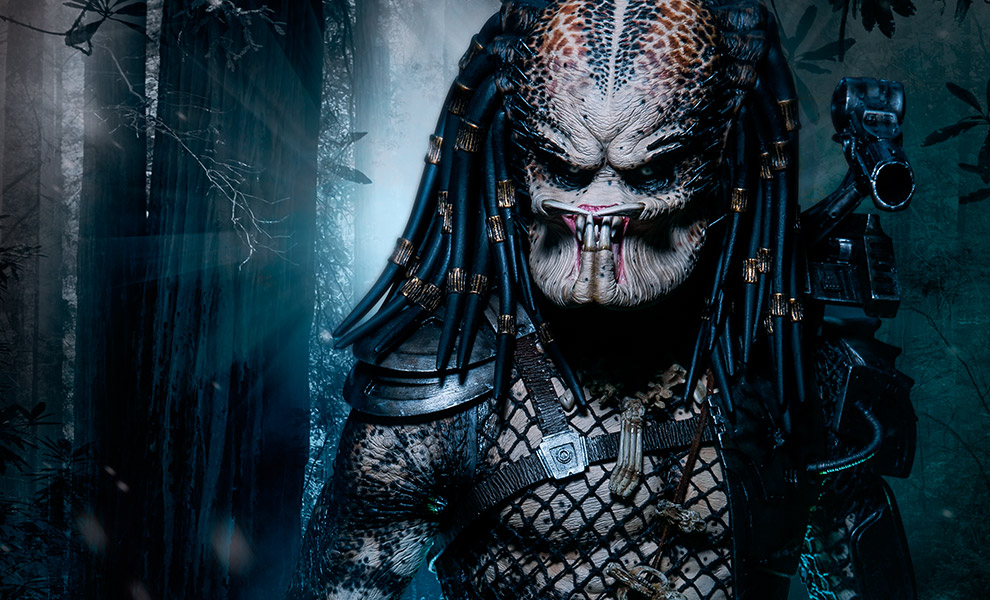
With the Predator franchise celebrating its 30th anniversary, and a new film coming in 2018, the popularity of the series could once again be on the climb. Where could the series head to next? Here are some of our ideas for five potential Predator movies.


Predators vs Vikings

The Predator franchise has explored historic settings within their comics on a quite frequent basis, often pairing up the predator against interesting opponents such as medieval knights, samurai warriors, and pirates, to name but a few. Whilst these are all great ideas for a film, one of the historic pairings that I’d like to see the most is vikings.

There have been a lot of great films and television that have demonstrated how awesome vikings are as a setting, from the fairly accurate television series Vikings, to the spooky 13th Warrior (also directed by the 1987 feature’s helmer, John McTiernan), and even the cheesy Outlander, vikings have entertained for decades.

Dropping a predator in the middle somewhere such as Denmark or Norway to hunt some of the fiercest warriors in history just makes a lot of sense. It gives the predator series a location that it hasn’t yet explored, and puts the human protagonists at a distinct disadvantage of not having firearms to rely upon.

The film could follow a group of warriors on their way to/from a raid, or the predator could be targeting  viking community, stalking and picking off individual members. With a lack of technology and concepts like aliens this setting would lend itself well to making the scariest Predator film yet, would the vikings think the creature some kind of demon come to kill them all, and how would they be able to bring down a monster so far beyond them they can’t even begin to comprehend what it is?

Yes, this kind of scenario would work with many historic settings, but I will maintain that the location and culture of the vikings makes them the best choice for a historic piece.


Predator: Big Game

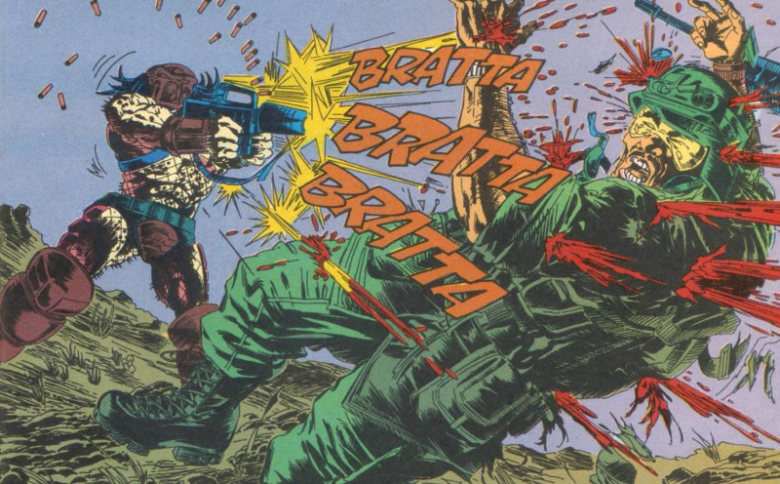
Predator: Big Game was a four issue comic series produced by Dark Horse in the early 90’s, written by John Arcudi. The story of Predator: Big Game sees the titular monster in the southwest of the united states hunting personnel from the local military base.

When the predator crosses paths with Corporal Enoch Nakai, the young soldier finds himself the focus of the creature. After the destruction of his base he has to go on the run from the military, who want him for what he knows, whilst trying to kill the predator before it kills him.

One of the best Predator comics produced, Big Game would give us a new desert environment in which to see the predator, as well as allowing the studio to introduce some more diversity to the series by casting its first Native American lead.


Vietnam War

The Predator series is most at home with a group of soldiers in the jungle, with both the first and third film using this set up. Where these films had experienced soldiers and mercenaries, the Vietnam War setting would allow you a more diverse pool of characters. You can have your career military, but you can also have your average person that was conscripted, those who don’t want to be soldiers.

You can even use the setting to create two converging storylines, with both the American forces and the Viet Cong being hunted by one or more of the predators, believing the other side is responsible for the deaths, before having to come together to fight their common foe.

Whilst it would be a historical setting, and would be earlier in the series than the first film, it would still be able to take advantage of fairly modern technology, technology that would be recognisable to many filmgoers.


Colonial Marines

The Alien vs Predator films were bad. Even people who found some enjoyment in them have to admit that they’re not good films. The comics that they were based upon, however, were very good; and it may be possible to try a crossover universe again, though doing so in a subtle way.

Forget the xenomorph, keep it out of the film, don’t even mention it. Instead, use the Colonial Marines as the protagonists for the predators to hunt. The weapons and technology would instantly be recongisable to fans of the franchise, allowing people to enjoy it as a shared universe piece whilst still allowing it to be a Predator film.

You can then set the film literally anywhere in the universe. You can create any kind of alien world on which the action can take place. You can begin to explore the predator culture more, possibly even including their real name (Yautja to those not in the know).

This setting would allow probably the most creative freedom, and can even be the basis for another attempt doing an Alien vs Predator film well in a sequel or spin-off.


The Return of Arnold Schwarzeneggar and Danny Glover

Probably the least likely film to be made of all those on the list, mainly due to the age of the two actors, but it would be great to see the stars of the first two films come back for a sequel.

Arnold has almost returned a number of times, both in Predators (his part ultimately being rewritten for Lawrence Fishburne) and most recently for The Predator, though these plans fell through on both occasions.

Whilst it would be amazing to have the two of them back, as the only people on earth that we’ve seen beat the predators, it would be more likely that they’d have smaller, cameo roles; but even so, I know I’d love to see that.

Ideally, have to two of them working together as new predators come to earth to target them as a matter of restoring honour for their fallen brothers. Nothing would be more awesome than seeing Arnie fighting predators whilst Danny Glover mutters that he’s ‘getting too old for this shit’.


Go to Amy's Blog

Power Rangers Super Legends - 10 Years On


Originally Published on Set The Tape

‘The future Omega Ranger discovers that Lord Zedd has reverted to his evil form. Zedd has discovered the Time Crystals that allow him to travel through time and form alliances with Rangers’ foes from several different eras. The Omega Ranger is confined to the Hall of Legends, the repository of all Power Ranger history, and must enlist the help of other Power Rangers to defeat Lord Zedd and save the universe.’

Power Rangers Super Legends was released on both the Playstaion 2 and PC, as well as having a slightly different version on the Nintendo DS, as part of the 15th anniversary celebrations.

Despite a set up that promises to explore the entirety of the Power Ranger franchise, Power Rangers Super Legends doesn’t cash in on this, with characters from Power Ranger Zeo, Power Ranger Turbo, Power Ranger In Space, Power Ranger Lightspeed Rescue, and Power Ranger Dino Thunder missing as playable characters. In addition to this, those series that do appear in the game only have two or three Rangers from each version playable, often missing out half the team or more.

Whilst the game may be lacking on the number of characters on offer, it does at least allow you to play through a number of different eras of the Power Ranger franchise, with levels set in Angel Grove, Terra Venture, and the Wind Ninja Academy. The levels all manage to look different from each other, and vary the aesthetics, with the Power Rangers Ninja Storm levels looking particularly pretty.

The game play itself is a very standard side scrolling beat em up, letting players fight through hordes of enemies alone or in two player co-op. Each iteration of the Rangers that appear in the game get two levels to play through before the action shifts to another time period and a new group of Rangers.


Luckily, each Ranger plays exactly the same as the others, meaning that you don’t have to lean a whole new way of playing each time the action shifts to another Power Rangers series. Other than a cosmetic change, the Rangers do differ in their super attacks, big finisher moves that destroy most enemies on the screen whilst the Rangers perform their iconic poses in front of coloured explosions, much like on the show. Again, this is purely cosmetic, but it’s nice that the developers took the time to give each Ranger their own poses to differentiate them a little.

The game also includes a variety of monsters from throughout the Power Rangers mythos, with Putties and Stingwingers making up standard enemies, whilst also featuring some of the more iconic villains such as Trakeena, Goldar, and Icthior in boss roles at the end of levels.

At the end of each level the game shifts the action as you find yourself in control of the iconic Megazords. Whilst this might sound like an exciting proposition, this is the place where the game drops the ball, completely ruining the action as it removes control of the Megazords. Instead of being able to control these giant battle robots in the same way that you were able to the Rangers, you’re given button prompts and quick time events in order to execute attacks.

Whilst the game still presents Megazords fighting giant versions of the monsters it lacks any real punch and spectacle as it feels more like watching a cut scene rather than taking part in the game.

Power Rangers Super Legends is not a perfect game, it actually falls quite far from that title. However, it is a competent and enjoyable game, which isn’t something that can be said of every Power Rangers game on the market. Whilst they didn’t include every Ranger in the game, it still has enough variety that it will keep players entertained and engaged as they fight through hordes of Power Rangers villains as some of their favourite heroes.


Go to Amy's Blog

The Walking Dead 'Some Guy' Review


The latest episode of The Walking Dead focuses on Ezekiel (Khary Payton) and Carol (Melissa McBride) following the dramatic final moments of the previous episode, where the members of The Kingdom come under machine gun fire from the Saviours.

Whilst not a great deal happens in this episode in terms of action, it does spend a lot of time taking a look at the leader of The Kingdom, possibly more so than previous episodes have.

The Walking Dead has always depicted its leaders as people that inspire faith in their followers, whether it's Ricks (Andrew Lincoln) bravery, Maggies (Lauren Cohen) compassion, the fear that Negan (Jeffery Dean Morgan) commands, even way back in season three with the duplicity of the Governor (David Morrissey). As such, it was something of a question mark when Ezekiel showed up, a man acting like an over the top pantomime king that inspired the love of his people. How could he capture peoples hearts so well? Other than having a tiger, that is.

Whilst this episode doesn't go the whole way to explaining how Ezekiel inspires his people so much, it does show us that his people understand that him being a king is an act, but they don't care. The moment when Ezekiel tells Jerry (Cooper Andrews) that he doesn't have to call him majesty anymore, only for Jerry to respond with 'Dude, yes I do' is quite touching. Ezekiel is a man with charisma, he inspires his people through the force of who he is, and the love that Jerry clearly has for him shows through.

He's even able to convince Carol to abandon her mission to come and save him, something that she would not do for everyone. Carol has always put the greater good of her group first, so to let the guns she needs to secure go in order to save Ezekiel and Jerry shows how much she has come to care for them, how much she sees them as part of her group now.


The character arc of Carol has easily been one of the best in the show, if not one of the best on television. Her transformation from a frightened and beaten wife to one of the strongest survivors has been dramatic, her resourcefulness and willingness to go to any lengths to protect those she cares about makes her a force to be reckoned with, so it only makes sense that where every other member of the Kingdom's forces are taken out of action she continues on alone, and comes close to succeeding in their mission.

Whilst Carol is usually the highlight of any episode where she is given the spotlight she looses out due to the tragic demise of Shiva. Anyone who knows how expensive creating a fully CGI tiger is would know that her time on the show would be short, simply to save money, her death still comes as a shocking, and upsetting moment.

I know that she's not a real animal, but the sight of her being torn apart by walkers as she protects the person who means the most to her in the world is genuinely upsetting, and makes this one of the more memorable episodes of the new series.

The lack of action in this episode, and a focus on quieter character moments actually helps the episode. Whilst some fans may enjoy the prospect of 'all out war', these quieter moments help with the overall narrative and give quiet moments to appreciate the story and characters. Hopefully the series will incorporate more of these types of episodes before the end of the season.


Go to Amy's Blog

Tuesday, 14 November 2017

The Silence Of The Lambs Review


Originally Published on Set The Tape

The Silence Of The Lambs is an iconic piece of cinema. Having won 5 Oscars in the year of its release, including Best Picture, Best Director, Best Actress, and Best Actor, it has been lauded by critics and cinema-goers alike for decades. Often cited as inspiration for writers and directors, parodied and copied across film and TV, The Silence Of The Lambs has permeated so much of popular culture since its release that sometimes it’s easy to forget just how much of a masterful film it is.

Often taking place in people’s minds as a film about horror icon Hannibal Lecter (Anthony Hopkins) due to the power of his performance, a lot of people can be forgiven for forgetting that this film is about Clarice Starling (Jodie Foster) first and foremost. Yes, Lecter is a major part of this film, if not in time on screen than by what his presence does for the characters and the story, but he’s a secondary character there to drive forward Clarice’s narrative.

Clarice Starling is an important figure for many reasons, not least because she’s a very real role model for women. Fiction has a lot of strong female heroes, film especially, but whilst people like Sarah Connor or Ellen Ripley are bad arse for facing horrific monsters and becoming action heroes, Clarice Starling does things within the realm of the real world. She faces sexism at work, she has to prove herself time and time again, she has to fight to make herself heard, she has to overcome the mundane even in the quest to overcome the horrific.

Over the course of the film we see that Clarice is less physically intimidating than her fellow FBI colleagues, beautifully illustrated in her early scene when she’s in an elevator surrounded by large men, yet she’s shown tackling assault courses, she’s on the shooting range, and she defeats the films antagonist singlehandedly. She’s smart, so smart that she’s brought on to an active case for her insights before she’d even graduated. She manages to hold her own with Hannibal Lecter, no small feat, whilst still able to acknowledge her vulnerabilities and past trauma, using it to make her stronger in his presence rather than weaker.


Clarice Starling drives the film forward. She’s the character we enter into this world of cannibals and murderers with. She guides us through this mystery and brings us out alive at the other side. It’s no wonder that she’s gone on to inspire such strong female icons like Dana Scully from The X-Files.

Despite only being on screen for a scant 20 minutes, Hannibal Lecter is as much an important part of the story as Clarice, and the relationship that develops between the two of them in intensely interesting. The two of them are similar in a lot of ways, which makes the respect they build for each other all the more convincing. Similar childhood trauma (clarice having lost both parents and Lecter a victim of abuse), both feeling like they lack the power they should have (Clarice struggling in a workplace filled with sexism and Lecter in a literal cell), both highly intelligent but often ignored (Clarice for being a woman and Lecter because he’s seen as nothing more than a mad man).

The relationship between the two of them that forms slowly over the course of the film is one built on respect. Clarice shows him respect throughout, at first because she believes that it is the best way to get what she wants from him, but by the end because she truly understands that he’s an intelligent man that deserves respect even in spite of his past crimes.

Hopkins manages to make a character that should be detestable quite likeable. He plays the part in such a way that you feel, like clarice, that you come to understand him in some ways. He eats people yes, but he’s not a ‘monster’ in the traditional sense. Clarice treats him with respect, as such you believe her when she states that she doesn’t think Lecter will come after her at the end of the film. A sentiment that is echoed in Hannibal by Barney, for similar reasons. Lecter is a killer, but he doesn’t kill without rhyme or reason, and if you treat him well and prove to be interesting he’d probably end up becoming a good friend. It’s this kind of complexity and character that is often mission from films, and from antagonists especially, that makes Hannibal Lecter stand out as something different.


Whilst Lecter manages to be charming and polite to the point of being friendly, Buffalo Bill (Ted Levine) is chilling and disturbing. The role of Buffalo Bill has been criticised over the years as being homophobic and transphobic, with many people upset with the portrayal of him as both bisexual and transgender, something that has resulted in both the writer and director refuting in interviews, clarifying that the character is neither of these things; despite this, he is easily one of the most disturbing killers in film.

He comes across as loathsome in every scene he’s in. He comes across as less a ‘monster’ in the grand sense that Lecter does, but more a pathetic and failed man. This is part of what makes him so disturbing. Lecter is the embodiment of a fictional serial killer, whilst Bill feels a lot more real, and thus, frightening. There are a lot more people in the real world like Buffalo Bill than Hannibal Lecter, and that makes him scary.

The scenes he’s in become disturbing not just because we know what will befall his victims, but because he plays them in such bizarre and disturbing ways. He’s so upsetting that by the time Clarice is able to finally dispatch him it comes as a sense of relief for the audience.

The Silence Of The Lambs is a film that gets under the skin. It doesn’t present jump scares or masses of gore, because it knows that the slow buildup of tension is more important. It conveys more horror with a girl trapped in a well than any film with ghosts or aliens could. Presenting very real fears and horrors in a way that will stick with you, and providing two of cinemas greatest characters, The Silence Of The Lambs deserves it’s place at the peak of filmmaking.


Go to Amy's Blog

Supergirl ‘The Faithful’ Review


Originally Published on Set The Tape

Supergirl has been a good show for its protagonists. It’s given us one of the most genuine and heartwarming heroes in Supergirl (Melissa Benoist). It’s provided us with depth with Martian Manhunter (David Harewood), and it’s given us personal discovery and growth with Alex (Chyler Leigh). Where the show often falls down, however, is with villains that just don’t stand up well against such a strong cast.

Whether it’s a villain of the week or an overarching nemesis, the bad guys of Supergirl are often the weakest element, leaving the show to rely on character development and growth to keep the audience entertained. Thankfully, ‘The Faithful’ seems to have stumbled upon not just a great villain of the week story, but one of the better superhero stories that we’ve seen in the whole of the CW DC Universe. Religion.

We’ve seen religion come into play in the previous episode, ‘Far From The Tree’, with it being a huge part of M’yrnn’s (Carl Lumbly) story of how he survived for centuries of torture. Whilst his faith did initially blind him to realising his son was still alive, it did give him the strength to survive. Here we see faith in another way, one in which it can be used to twist someone’s view of the world, even convincing them to do awful things in the name of their faith. Whilst never really delving into the realms of religious terrorism, the cult led by Thomas Coville (Chad Lowe) do put people in danger to reach their goals, ultimately making them bad guys.

However, by the end of the episode it’s very easy to see how they reached the point where they would worship someone like Supergirl. The story we hear at the cult’s meeting, where a young woman tells the group that she got drunk and fell off a roof at a party, only to be saved by Supergirl is genuinely heartfelt and effective, with the moment where Kara says she remembers saving them all being particularly strong.


The conversation she has with James (Mehcad Brooks) later in the episode, where he describes the first time that Superman (Tyler Hoechlin) saved his life has a lot of weight to it, and it’s easily one of the best scenes the two of them have shared together since season one. The way James describes the event, that he prayed for someone to save him, and then his prayers were answered by Superman goes a hell of a long way to convincing me that people would begin to see him and Kara as gods. This is easily one of the more complex and compelling bad guy of the week stories the show has done, and explores a very important aspect of the superhero mythology that is rarely examined.

The episode also manages to pack in some additional content with both Alex and Samantha (Odette Annabele). Samantha seems to be very much a part of the ladies club in Supergirl now, and whilst it initially felt very sudden to have her as part of the group, with all of the others wanting to her cool aunts to her daughter, she fits in very well. We learn more about her struggle this episode, not just as a CEO, but as a single mother.

It’s this look at Samantha’s motherhood that gives way to more development for Alex and her impending marriage to Maggie (Floriana Lima). We’ve known for a few weeks now that Alex and Maggie have had different views of children and being parents, but this is the first time we really see just how much it means to Alex. The scene where she breaks down in tears whilst talking to Kara, describing all of the experiences that she wants to have as a mother but knows she can’t is really tough to watch, not least because it’s becoming clear that this is an issue that’s going to lead to he end of her relationship.

It’s a shame that her and Maggie aren’t going to go on to remain a couple, and a very visible lesbian couple on television, but the series is making an effort to craft a very real, adult relationship. A lot of television relationships end over silly things, or with one side of the relationship being unfaithful or dieing. Whilst it’s good that the series isn’t going to be using one of these tropes, it’s also a good thing that it’s using a very real world issue as a catalyst for their end.

Supergirl is continuing to embrace the fact that it can tell complex and emotional stories without having to shoehorn in a wacky alien of the week for the heroes to fight, instead taking the time to make our heroes emotional journeys the main focus. With the Alex and Maggie story coming to a boil, hopefully this is a trend that will continue on in coming episodes.


Go to Amy's Blog

Silent Hill: Origins - 10 Years On


Originally Published on Set The Tape

Silent Hill: Origins was originally released on the Playstation Portable, before later being released on the Playstation 2, and is one of the best horror titles on the PSP device.

A prequel to the original Silent Hill, released on the Playstation in 1999, Silent Hill: Origins takes place several years before the events of the first game. The player takes on the role of Travis Grady, a truck driver with a troubled past who suffers from nightmares, as he searches through the eponymous town looking for information about a girl that he rescues from a burning house.

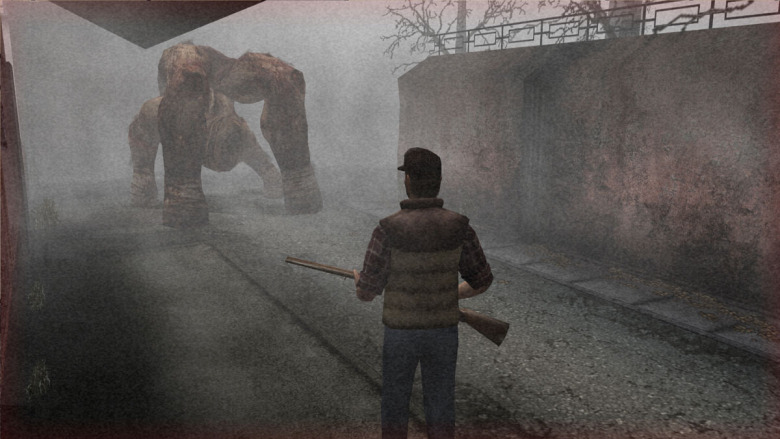
Using the third person perspective and fixed camera angles that are a staple of the series, Silent Hill: Origins follows many of the conventions and gameplay of the past games, though it manages to introduce some new and interesting features.

The set-up for Silent Hill: Origins does feel somewhat lacking to begin with. Unlike previous protagonists, such as James Sunderland or Heather Mason, Travis doesn’t have a personal reason to come to Silent Hill. There’s nothing driving him towards the town. He simply passes by in his role as a truck driver.

Thankfully the story does develop from what could be considered a weak beginning to become quite involved with the overarching narrative. Going on to interact with Alessa Gilespie, her mother Dahlia Gilespie, Michael Kaufmann, and Lisa Garland, Travis plays an important role in the series mythology, collecting together pieces of an ancient artefact, the Flauros, that allows Alessa to split her soul and manifest that half of her spirit into a newborn baby. As fans of the series will realise, this baby would go on to become Cheryl, the daughter of Harry Mason, the protagonist for the first game.

Perhaps it’s this connection to the larger mythology that makes makes Silent Hill: Origins one of the more successful newer entries. Whilst other games such as Homecoming and Downpour were set in and around Silent Hill, they felt like more separate and contained stories; ones that didn’t really make up part of the overall narrative, which is something that Silent Hill: Origins manages to do well.


The game also included many new additions to the gameplay, one that worked well to craft a new Silent Hill experience, whilst still staying true to the spirit of the franchise. The game moved away from the combat heavy focus of the initial design, which was poorly received by critics, and shifted to include more puzzles and exploration.

With the new puzzles requiring players to explore all the areas carefully (including the ghastly otherworld), the game forced you to slow down and take your time; a choice that increased the tension. Silent Hill: Origins also allowed players to shift between the real world and the otherworld at will, simply by touching mirrors placed around the environments. This was the first time the series allowed players to do this. Rather than removing fear of the otherworld, it actually forced players to travel to the nightmarish landscape in order to progress the story.

Origins also introduced a limited-use melee weapon system, allowing the player to pick up a huge variety of weapons from around the environments, including hospital drip stands and televisions. Where previous games in the franchise allowed you to use melee weapons indefinitely, here they would wear down and break over time, with some only giving you a single use before they were damaged beyond repair. This forced you to scavenge for weapons and resources, and to plan your combat before jumping in, weighing up your options carefully. Instead of making the game frustrating, this made the survival element of the survival horror genre all the more prominent. There was always the fear that you could run out of weapons at any point during an enemy encounter, especially against bosses, that meant that even the weakest opponent could pose a threat.

Silent Hill: Origins is one of the last good entries into the series; one that focused on the mythology of the series and introduced some new elements to the game-play that forced players to deal with the game in a new way. A great addition to the Silent Hill franchise, and one of the best horror games on the PSP.


Go to Amy's Blog

Power Rangers Ninja Steel ‘Helping Hand’ Review


Originally Published on Set The Tape

Is this really how Power Rangers Ninja Steel is going into its season finale? I’ve not been kind when talking about this season of Power Rangers, and I’ve often scored it very low; but it’s been a real struggle to find good things to say about the episodes.

‘Helping Hand’ is the penultimate episode of the season, leading straight into the finale, but other than two minutes at the very end could have been any episode anywhere else in the season.

With the Rangers needing to find an extra credit assignment for shop class, Sarah (Chrysti Ane) tries to improve upon her flying hoverboard, which has been experiencing some difficulties with its battery. This gives the audience an insight into her home life, and introduces her mother, Jackie (Jodie Rimmer). Much like Sarah, Jackie is an inventor, however, where Sarah is creating actual flying hoverboards and holographic clones that can act independently and interact with the world (remember how ridiculous that episode was?), she’s a bit of a disaster.

Attempting to help improve Sarah’s battery she ends up creating a super-charger that gives the battery so much power that it goes flying out of control. This plot point then takes a back seat for a while as the Rangers have to deal with this week’s monster, Forcefear (Darren Young).

When the monster proves to be too tough for the Rangers to defeat by conventional means they have to produce a new ninja star with the very last piece of Ninja Steel in order to combine all of their Zords. This is where the two stories meet, as the super-charger that Sarah’s mother made is used to charge up the new ninja star before it’s thrown into the Ninja Nexus Prism, something that has never needed to be done before in 20 episodes.

With this new ninja star they are able to create the Ninja Ultrazord, one of the most god awful looking Zords ever. The Ninja Ultrazord consists of the RoboRed Zord sitting inside the Ninja Megazord, sitting inside the Lion Fire Zord. Whilst the blame for this creation lies with Super Sentai rather than Power Rangers, it’s still awful.


Defeating Forcefear, Sarah learns that her mother was only trying to help her, and he two of them reconcile. Just when you think that the episode is over, however, Victor (Chris Reid) and Monty (Caleb Benit) show up to accidentally obtain all of the ninja power stars (minus the morphing stars that the Rangers have on them all the time) using their super magnet extra credit project.

This is where Galvanax (Richard Simpson) shows up and claims the power stars, before declaring to the buzzcam in a fourth wall breaking moment that the upcoming season finale will be ‘one to remember’.

So after months of watching Galvanax, the most powerful and feared warrior in the galaxy, try and fail to obtain the ninja power stars, Victor and Monty succeed; two characters that are so awful they make the original series’ Bulk and Skull look like Shaft and Han Solo.

Any threat or gravitas Galvanx has just been thrown out of the window. Rather than having him working on some kind of scheme for weeks that culminates in him achieving his goals he simply stumbles upon a pair of idiots that have managed it.

It’s this kind of this kind of thing that makes Power Rangers Ninja Steel so bad, there’s literally no season arc. There’s no character development, there’s no story, there’s no personality.

Normally I’m looking forward to a season finale, especial one that would put the Rangers in such a dire situation, but here I’m just desperate for it to be over; and hoping against all indications that Saban get their shit together so that they don’t ruin Power Rangers Super Ninja Steel for the franchise’s 25th anniversary.


Go to Amy's Blog

The Walking Dead ‘Monsters’ Review


Originally Published on Set The Tape

The Walking Dead continues to plod on through their ‘all out war’ as the latest episode tries to force in a discussion about morals, does nothing with the previous episodes cliffhanger reveal, and kills another LGBT+ character.

I’ve complained about The Walking Dead having a lack of action in the past, that the series can at times feel slow and boring, but I’m starting to believe that the introduction of a gunfight every episode is not the way to resolve this. I know that the series is trying to push the idea that our heroes are at war, but they need to do something more interesting with the concept, because a season of this is going to get very old very fast.

Picking up where the last episode left off, we find Rick (Andrew Lincoln) facing off against Morales (Juan Gabriel Pareja). It’s come as little surprise that Morales and the rest of the Saviours have come to view Rick as a villain, in the same way that they think about Negan (Jeffrey Dean Morgan). The Saviours don’t see themselves as bad guys (just look at what they call themselves), and of course Negan would be telling his people that Rick is a Monster.

What the episode tries to do with this, however, is to have the characters question if they are actually monsters, if they’ve moved beyond the characters that they started as. Well, yes, of course they are. Let’s not forget, the war between the Saviours and Ricks people started because the ‘good guys’ murdered a load of saviours in their sleep. That’s not something that good people do so easily. Perhaps it’s a good question to have our heroes ask, but it feels like it’s come a few seasons too late. It would have worked much better back during the conflict with the Governor, but it just falls short of the mark here.


This question echoes with some of the rest of the cast though, with Jesus (Tom Payne) still arguing with Morgan (Lennie James) and Tara (Alanna Masterson) about whether they should be taking Saviours prisoner or killing them. Whilst I can understand Jesus’s desire not to just kill everyone they come across there are so many problems that taking people prisoner raises.

Where will they keep their prisoners? Will they have to remove people from the fight to guard them? How much resources such as food and water will they lose on keeping them alive? What happens if they break out? It’s too big of a problem to be practical.

Unfortunately, this disagreement over how to handle the prisoners leads to conflict between Morgan and Jesus, with the two of them literally fighting over it. Whilst the fight between the two of them is visually interesting, and goes to show off just how good Jesus is at hand to hand combat (something we’ve not seen in a very long time), it feels without purpose, especially as it resolves nothing.

The episode also sees Eric (Jordan Woods-Robinson) dieing as a result of the wounds he received in the previous episode, bringing to an end the shows last surviving visible gay couple. Whilst the episode tried to elicit emotional impact from the moment, concentrating on Aaron’s (Ross Marquand) reaction, because we hardly knew Eric it had little impact. Though what it is sure to do is annoy many LGBT+ fans of the series as it yet again destroys an openly gay couple.

The Walking Dead seems to want to deliver top quality action every episode this season, but hasn’t even delivered it once yet, instead giving us the same bland gun fights again and again. Sadly, the series has lacked any kind of character development or growth either, with people appearing to just be going through the motions. Hopefully the series will begin to improve soon, otherwise ‘all out war’ could very quickly become ‘all out bore’.

Go to Amy's Blog

Face/Off - 20 Years Later


Originally Published on Set The Tape

Question: Nicolas Cage, good actor or bad actor? The answer: Yes.

Face/Off is the third American made John Woo film, behind Hard Target and Broken Arrow, and sees John Travolta playing FBI Agent Sean Archer, a man obsessed with capturing the criminal Castor Troy, played by Nicholas Cage.

With a fairly standard beginning to the film, an FBI Agent gone mad with stopping the man responsible for his son’s death, the film takes a sharp turn into the extraordinary after Castor Troy is captured but ends up in a coma. With a bomb set to detonate somewhere within L.A. and the only other person who knows its location being Castor’s brother Pollux (Alessandro Nivola) Archer takes desperate measures to get the information, having his face surgically removed and replaced with Castor Troy’s.

With the film suddenly shifting its hero and villain actors Face/Off gives one of the most unique action film experiences around. The characters stay the same, but the actors switch roles for the majority of the film. With the roles first being intended for Harrison Ford and Michael Douglas when the script was first penned, then Arnold Schwartzenegger and Sylvester Stallone, it’s surprising that the roles eventually went to Cage and Travolta. Despite this, the two actors play their dual parts so well that it’s hard to see another pairing doing the film in the same way (although I would love to see the Arnie/Stallone version).

Face/Off gives both of its actors room to embrace their crazy side when playing the villainous Castor Troy, and whilst no one else quite does crazy as well as Nicholas Cage, Travolta managed to demonstrate just how good he can be when playing the creepy bad guy; something that he would go on to do again after Face/Off in roles in Swordfish, The Punisher, and his 2015 Oscars moment with Idina Menzel.


Looking into the making of the film I discovered that both John Travolta and Nicholas Cage spent two weeks together before filming began, working with each other to to figure out how their characters would talk, the way they would mover, and the little expressions they would make. Perhaps this is something that helps to sell the switch between the two of them, that they’re not just trying to play each other, but are playing characters that they both had a hand in creating. Whilst this comes across in how they both play Archer, there are some subtle differences in their depictions of Castor Troy, though this could be because they’re both trying to out crazy the other.

Whilst the acting is great throughout, including some brilliant performances from its supporting cast, it’s the directing from Hong Kong legend John Woo that really makes the film something special. With a directing style that many have tried to replicate over the years, Woo has a way of bringing beauty and spectacle not just to action scenes, but even the most ordinary and banal moments.

Throughout the film we are treated to some of the best staples of John Woo directing, including an aeroplane chase that crashes into a hanger, a boat chase that crashes into a pier, and a shootout set to ‘Somewhere Over The Rainbow’. Executed with more flair than his previous Hollywood films, it’s clear that he’s been given more room to direct in his usual style.

A great example of what a director can accomplish with the help of some very talented actors when they’re left alone by the studio, Face/Off still remains one of the best action films ever made. With a great performance from Nicolas Cage, and a great turn at a villain from John Travolta, this unlikely duo work ridiculously well together on screen.


Go to Amy's Blog