Monday, 13 November 2017

Were The Alien vs Predator Movies That Bad?


Originally Published on Set The Tape

I’ve loved both of the Alien and Predator franchises since I was a kid, having watched the films almost every weekend when I stayed around my grandparents house. As such, I was hugely excited for the Alien Vs Predator films when they were announced. It probably won’t come as a surprise to say that I, like many others, was disappointed with the films, but were they really that bad?

The first film in the Alien vs Predator franchise is easily the best of the two films, with almost all fans agreeing that it wins out over the sequel. Set on modern day Earth, the Weyland Corporation discovers an ancient pyramid deep beneath the ice of Antarctica. Assembling a team of specialists, they investigate the structure, only to find themselves caught between two warring alien races.

Now, this isn’t a great film, not by any margin, however it does have a lot of good elements to it that work well when taken separately. The concept of the Predators using Earth to hunt Xenomorphs is good. The fight scenes are well choreographed. The effects are good for the time. Unfortunately, the film never really works. Perhaps this is because much of the story feels rushed, with very little sense of time passing during the events of the film. One moment a character is being attacked by a facehugger, and then five minutes later they’re giving birth to an Xenomorph.

These two events may be happening hours apart, but the film fails to give any sense of this. As a result, things escalate very quickly, and a conclusion happens before you realise you’re at the end of the film. This quick pace not only makes the story feel disjointed, but destroys any sense of tension, as there’s never a slower moment for the film to build suspense.

Whether this short run time was a studio decision, or simply the original story as written is unknown, but it’s definitely a major factor to the films poor reception. If the film had been given more room to tell its story, get to know its characters, and to build tension it would have been much better received.


Where the first Alien Vs Predator film was a collection of good moments poorly presented, there is little to nothing redeeming about the sequel, Alien Vs Predator: Requiem.

Following on almost directly from the first film, the sequel follows the Predator/Xenomorph hybrid, Predalien, from the finale as it causes a Predator scout ship to crash just outside a small American town. As the Predalien is a queen it begins to infect people across the town, creating its own hive. In response to this the Predators dispatch an experienced alien hunter to destroy the creatures.

Whilst the idea of having the Xenomorphs spread through an average town might initially seem like a terrifying thought it quickly becomes apparent that the aliens just don’t work in the real world and look totally out of place. There are a few moments in the film that have some good action, with the Predator hunting Xenomorphs in the sewers being particularly impressive, many of the other scenes in the film feel like a letdown in comparison.

The human characters also have very little going for them, with none of the characters feel particularly likeable. The ex-con and his kid brother are dull, with the younger brothers story of dealing with school bullies and winning over a girl falling flat on its face. The mother returning from war and reconnecting with her daughter is clearly supposed to be trying to evoke the same kind of relationship as Ripley and Newt from Aliens, but there’s so little characterisation or time given to them that I often forgot that the woman even had a daughter.


Whilst the film does embrace the R-rating of the films it’s based upon blood and gore don’t make up for a lacklustre plot and boring action sequences. The creature effects don’t feel as good as the first film either, perhaps because the Xenomorphs are now inside peoples homes and running down streets, which does kind of take something away from the horror of them.

The Alien Vs Predator films aren’t great cinema. They’re not going to be remembered as groundbreaking, or as a classic. The first film is still a competent and entertaining movie, however, though one that suffers for its quick pace. Unfortunately, because of just how utterly terrible the sequel is it often gets remembered as worse than it was. If you want to mindless monster fun the first film will scratch that itch, but the sequel is still best avoided.


Go to Amy's Blog

Call of Duty 4: Modern Warfare - Ten Years On


Originally Published on Set The Tape

Call of Duty 4: Modern Warfare marked a turning point in the Call of Duty franchise. The first game to shift its setting away from World War Two, it would spark a change in direction that would ultimately turn the franchise into a sci-fi series. Whether or not that’s something that is a good thing, and fans are still debating that, it’s impossible not to acknowledge Call of Duty 4: Modern Warfare as a literal game changer.

Set in the future, at the time, of 2011, Call of Duty 4: Modern Warfare sees a radical ultranationalist leader begin a conflict that would go on to span the globe, including Russia, the Middle East, and the United Kingdom. Taking on the roles of both a United States Force Reconnaissance Marine, and a British SAS commando, the player gets the opportunity to switch between these two characters, getting to see multiple parts of the conflict, as they hunt down the ultranationalist leader.

Whilst later games in the series would go on to take a frantic, almost over the top pace, Call of Duty 4: Modern Warfare has a slower, grounded pace to it, one that helps to give the player weight. You’re not jumping around locations or dashing about using mech suits, you’re just a simple soldier, fighting for your life.

The gameplay gives enough variety of action that it doesn’t feel like it repeats itself too much over it’s five hour camplain. Some levels have you assaulting enemy held compounds, other will see you sneaking your way into Pripyat in a level where stealth is the only way forward, and some will have you piloting massive bombers, reigning destruction down from high above the battlefield.


The game can feel frantic and faced paced, yet manages to fit in some slower moments that help to break up the pace. This is something that later games in the series would fail to do, relying on spectacle and explosions to keep players interested.

Thankfully, this variety, and some interesting characterisation, keep you interested enough to play through the game multiple times, something that the game actively encourages you to do so with the inclusion of Arcade Mode. Arcade Mode is a feature that only appeared in the Nintendo DS version of Call of Duty: Black Ops and Call of Duty: Modern Warfare: Mobilized outside of this game, and helps Call of Duty 4: Modern Warfare to stand out amongst the other games in the franchise.

Allowing players to replay through the game with a running countdown, earning points for completing levels before time runs out, and for killing enemies in creative and accurate ways, Arcade Mode challenges you to play the game over and over, trying to beat your previous score. I lost count of the number of times that I played through Arcade Mode over the regular campaign simply because it felt more rewarding to see your points racking up on screen.

Call of Duty 4: Modern Warfare also offered a strong multi-player element, including many features that would go on to be series staples, such as kill streak rewards, character and player ID customisation, and ‘Prestige’ mode. With multi-player levels built out of campaign maps, and some specially created just for multi-player, the online mode became a huge draw for many fans, with some even skipping the single player experience totally in order to play it.

A game that would go on to be a template for the Call of Duty games that we have today, and with some features that still let the game stand apart from other entries in the series Call of Duty 4: Modern Warfare is one of the stronger games in the franchise. With a new, remastered version of the game now available on XBOX One and Playstation 4, it’s still a great time to experience the game, whether as a new player, or someone that played it the first time it came out.


Go to Amy's Blog

Legends of Tomorrow ‘Zari’ Review


Originally Published on Set The Tape

Legends of Tomorrow ditches the adventure of the week format to build upon their season arc and introduce a brand new member of the team. Sadly, this episode does drop many of the comedic elements that have been in place in the previous episodes, much to the detriment of the story.

Set within the dystopia of Seattle 2042, where Metahumans and religion have been banned, the episode feels kind of flat. There’s little about this time period or location that jump out as being memorable, especially in comparison to some of the other future time periods they’ve visited, such as the future Star City in season one.

Thankfully, events are kept entertaining enough by the arrival of Kuasa (Tracy Ifeachor), who has been sent to kill the titular character Zari (Tala Ashe). Thanks to her nifty water powers and her silent demeanor, the episode plays a lot like The Terminator, with some obvious comparisons to Robert Patrick’s T1000. Thankfully, the episode acknowledges this, even having Nate (Nick Zano) deliver the line ‘come with us if you want to live’.

This is the first time that the series has introduced a new character to the crew that doesn’t really have a reason to be there, Amaya (Maisie Richardson-Sellers) joined to find the Reverse Flash (Matt Metscher) and Nate joined to help rescue the team, so it was always going to be a tough sell. However, by the end of the episode you genuinely feel like Zari would join the team just to get away from the awful time period she was living in.


Zari herself only gets the most basic of character development in this episode, where it tells you a small amount of her backstory but offers little insight into who she is as a person. Hopefully this will be something that will be rectified over the course of the season, especially with her apparent connection to the season’s big bad.

Unlike her comic book counterpart Isis (despite hating it when shows change a character’s name, I can really understand why they couldn’t call a Muslim superhero Isis on television at the moment), Zari appears to draw her powers from a totem, in a similar way to Amaya and Kuasa. The CW DC Universe has mentioned Kahndaq in the past, so I’m keeping my fingers crossed that they will somehow tie Zari to the mythology of Shazam and Black Adam before the season finishes.

Despite the grim and gritty time period dragging down the amount of comedy the episode could use, the episode does manage to keep being it’s ridiculous self thanks to a sub-plot involving Nate and Amaya drinking hallucinogenic tea in order to go on a vision quest to try and find a solution for Amaya’s problems with her totem. Whilst Amaya did manage to go on a vision quest and talk to her ancestors, Nate just got very, very high. This lead to one of the worst rescues the show has ever had, and Nate getting very close to getting his arse kicked by Sara (Caity Lotz).

Only time will tell how Zari will fit in with the rest of the cast, and whether her inclusion on the team will be a temporary, story driven thing in the same way as the Hawks in season one, but hopefully she will bring a fresh perspective and energy to what has become a very well bonded group.


Go to Amy's Blog

Star Wars Rebels ‘Heroes of Mandalore Part 2’ Review


Originally Published on Set The Tape

Following the vicious assault from the Empire using a weapon of Sabine’s (Tiya Sircar) own design, the Mandalorian resistance must find a way to destroy the devastating weapon before it can be used on more of their people.

In the first few seasons of Star Wars Rebels we didn’t really get a sense of who Sabine was, but during season three we learnt that she ended up doing some very questionable things for the Empire, and now we get to see the consequences of those actions. Despite undoing some of the gravity of the final moments of the first part of this story by revealing that Sabine’s mother and brother survived the attack, the episode still manages to maintain some heavy emotional impact.

We learn that the weapon that Sabine designed was made to target the materials that make up Mandalorian armour, superheating those materials and essentially cooking those inside until they’re reduced to ash. It’s moments like this that really separate Star Wars Rebels from other children’s shows and embraces some of the darker elements of the Star Wars universe. Thankfully the show is able to balance these darker moments with some lighter scenes to deliver a series that can appeal to a wider audience.

Sabine’s past with the Empire worked very well with the return of Bo-Katan (Katee Sackhoff) and her reluctance to lead Mandalore against the Empire. Both of the characters went through a lot of growth during the events of the episode, with Sabine having to face responsibility for her past actions and ensuring that something good would come it, whilst Bo-Katan came to accept that she could lead Mandalore without having to be her sister.


The scenes where Sabine and Bo-Katan are being tortured by Tiber Saxon (Tobias Menzies) reflects the scenes from Return of the Jedi, where Luke is being tortured by Emperor Palpatine’s force lightning in order to get him to switch sides. Whether intentional, or just something that is purely by chance, it gives the scenes some extra weight.

The episode manages to pack a lot of action and emotion into its short runtime, with the assault on the Imperial facility being one of the best action sequences that the show has produced in a long time. The moment when Ezra (Taylor Gray) opens the hangar doors to find a full blown battle going on between Mandalorian warriors and the Imperial forces, complete with walkers, is a pretty spectacular moment. With such a major focus on Sabine this episode, and a lack of characters like Hera (Vanessa Marshall) and Zeb (Steven Blum), hopefully these characters will be given a chance to shine as the series progresses.

Despite only focusing on a small part of the the fight against the Empire, and putting one member of Phoenix Squadron in the main role, the episode manages to build a strong platform for the tone of the rest of the season.


Go to Amy's Blog

Friday, 10 November 2017

Arrow ‘Next of Kin’ Review


Originally Published on Set The Tape

Arrow explores new relationships within the team this week as a major status quo takes effect with Diggle (David Ramsey) taking over the mantle of Green Arrow.

At the end of the last episode, when Oliver (Stephen Amell) handed over his bow to Diggle it was a surprise twist, and one that I think we all know won’t last forever. Thankfully, it’s lasted more than just a single episode and looks set to be a major factor for the season going forward. Diggle stepping into his new role is the main drive of the episode, with Oliver’s developing relationship with William (Jack Moore) taking up the B plot, but finally getting some room to develop.

For the most part, Diggle’s story was a fairly formulaic and predictable one. He’s stepped into Oliver’s shoes (or hood), finds that he doubts his abilities to lead, restores his faith in himself, and leads the team to victory. Thankfully, a surprise moment at the end of the episode and some visually dynamic action moments elevate what could have been a very dull passing of leadership story.

Just like Oliver has so many times in the past, Diggle puts a lot of blame on himself during the episode, even leading to a moment when Oliver confronts him from brooding in the bunker. Sadly, much like Oliver, Diggle makes a decision that is sure to come back and bit everyone later on in the season, as the final scene in the episode shows him buying drugs to deal with his nerve damage.

This seems like a stupid decision. Why wouldn’t Diggle just talk to Oliver and tell him he’s not well? Thankfully, the episode goes a long way to explaining that when we see Diggle acknowledging that Oliver needs to step away from being the Green Arrow for his son. Any lingering doubts about taking over would easily then be quashed in a rather touching moment when Oliver tells Diggle that he’s the reason he was Green Arrow to begin with.

Calling all the way back to the first season, Oliver tells Diggle that without his friendship and guidance he’d have stayed a killer, a man simply crossing names off a list. It’s an interesting change to the Green Arrow mythology, but one that works well within the universe that the CW has created. It also makes the alternate future we saw in Legends of Tomorrow where Diggle’s son was the Green Arrow feel a lot more meaningful.


Whilst it’s always interesting to see Oliver playing the Mayor, and this episode has some interesting developments with the anti-vigilante bill, his role as a father is less interesting. I appreciate that the series hasn’t made William’s intergration into Olivers life easy, that would feel too cheap, but some of the tension between the two of them is starting to wear a little thin.

Thankfully, Felicity (Emily Bett Rickards) is on hand to be an important neutral party for William, someone with whom he doesn’t have that kind of emotional baggage and can just be a friend for him. The scene with the two of them doing math together was actually rather sweet, and the kind of thing I hope that we’ll see more of in future episodes.

The episode also found a little time to give its supporting characters time to do something outside of a fight scene this week. The episode further developed the relationship between Diggle and Dinah (Juliana Harkavy), thankfully moving them away from some of the antagonism that hung between the two of them in the previous two episodes. Instead, Dinah gets on board with the new status quo and gives Diggle her support. Whilst it did take the whole episode for Diggle to really earn this, her background as a police officer made her shift here more believable; she is a woman used to following orders after all.

The moment when Rene (Rick Gonzalez) goes behind Diggles back to Oliver is actually handled remarkably well. He and Diggle are friends, and Diggle understands that he only went to Oliver from a place of concern for the team and the mission. Where the show could have blown this up into an argument, or even a division between the two of them, it takes a very grownup approach to the situation.

With some interesting character development, some of which will surely develop into important stories later in the season, and some creative fight sequences (the limo fight is one of the best the series has done in a while) ‘Next of Kin’ ushers in a new era for Arrow.


Go to Amy's Blog

Thursday, 9 November 2017

Telltale's Batman Coming To Comics


The Batman: The Telltale Series story is coming to comics in February 2018 in a new limited series comic set within the narrative of the games.

Batman: Sins of the Father will be written by Christos Gage and feature art by Raffaele Ienco, and will be set between the first two seasons of the game. The story will focus on the titular hero as he discovers that his father was part of a criminal conspiracy.

'I love the bold choices the Telltale Games folk made in their approach to Batman, by having Bruce Wayne discover his father was part of a criminal conspiracy.' Said series writer Christos Gage. 'I'm excited to contribute to this world and I can't wait for fans to see Raffaele bring the story to life. He is a great match to the visual style of the game, while adding his unique, hard-hitting take to it.'

BATMAN: SINS OF THE FATHER #1

Written by CHRISTOS GAGE • Art and cover by RAFFAELE IENCO • Video game art variant cover

Based on the acclaimed video game series from Telltale Games, this new digital-first comic tells the story of events between the first and second seasons. Someone is killing people associated with Arkham Asylum during the time Thomas Wayne was forcibly committing people there. Suspicion falls on the families suing Bruce Wayne to pay for the harm caused by his father. Batman has other ideas, but his investigation leads to him becoming the target of a deadly assassin.

Batman: Sins of the Father goes on sale February 21st 2018.


Go to Amy's Blog

5 Other FPS Games If You Love Call Of Duty


Originally Published on Set The Tape

Call of Duty is one of the most popular First Person Shooter game series, offering players a variety of experiences from historical settings, to hard science fiction. But what other games can people try out if they’ve played all of the Call of Duty titles and need something else to scratch that itch? Here’s a list of five first person shooter games to try…


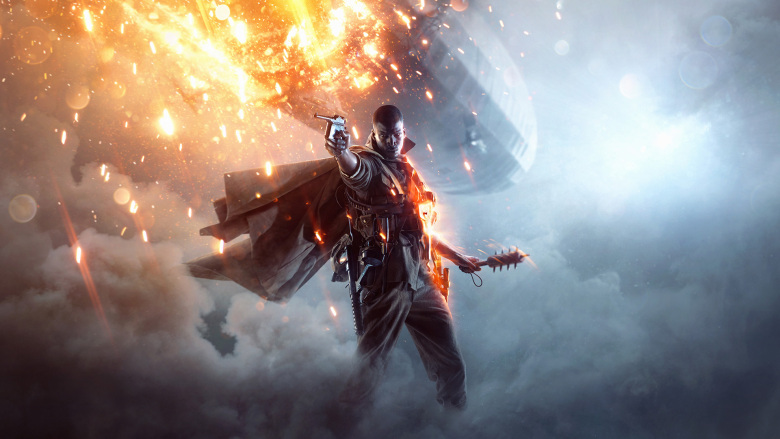
Battlefield One (PS4, Xbox One, Nintendo Switch, Windows)

After a number of games set within the modern era Battlefield One turns back the clock to World War One, lending its iconic large scale style to the vast battles of the first world war.

Not being known for providing great single player campaigns, Battlefield One manages to capture the struggle and tragedy of the setting in some unique moments. Rather than following one single narrative, the game instead uses a number of smaller stories to paint a picture of the war on a whole.

It’s multiplayer is where the game shines, however, with several game modes available, ranging from the standard Team Deathmatch and Domination modes, to the unique War Pigeons. The game manages to balance small, intense combat with massive battles in a satisfying way.


Wolfenstein: The New Order (PS3, PS4, Xbox 360, Xbox One, Windows)

A sequel to the 2009 Wolfenstein, Wolfenstein: The New Order is set in an alternate universe where the Nazis won World War 2. Once again thrown into the role of William ‘B.J.’ Blazkowicz, who awakens after fourteen years in a coma to find the allied powers have fallen, and the Nazis now rule America.

What follows is an intense shooter that blends futuristic elements and world war two technology as players fight as part of a desperate underground resistance. Despite having no multiplayer experience the game makes up for this with a great single player game, filled with huge action sequences, as well as tiny details that build a well rounded gameplay experience.


Star Wars Battlefront (PS4, Xbox One, Windows)

From a game with no multiplayer, to one that is nothing but multiplayer, Star Wars Battlefront is an online shooter that features a variety of gameplay modes, all set within the Star Wars universe.

Players can choose from smaller scale combat such as Hero Hunt, which sees players take on the roles of iconic characters like Luke Skywalker, Darth Vader, and Han Solo; massive scale battles like Walker Assault, which sees the Empire trying to destroy a Rebel base with AT-AT walkers; or even air combat in Fighter Squadron, where players put TIE Fighters and X-Wings against each other.

Despite criticism for a lack of single player campaign Star Wars Battlefront still offers an amazing shooter experience. Fortunately, the upcoming sequel seems to have responded to these criticisms by adding a canonical single player campaign.


Metro 2033 (PS4, Xbox 360, Xbox One, Windows)

Based upon the popular book by Russian author Dmitri Glukovsky, Metro 2033, is a survival horror first person shooter set in a post apocalyptic world, where survivors of the nuclear apocalypse dwell in the Moscow Metro tunnels.

Taking on the role of Artyom, the player must navigate their way through the tunnel system, fighting bandits, Nazis, and communists, as well as horrible mutant creatures, all the while trying to discover the mystery of the supernatural Dark Ones.

Metro 2033 mixes intense first person combat with stealth and horror sections in a setting that is truly unique amongst the genre. With a HD remaster having been released on Playstation 4 and Xbox One, along with the sequel, Metro: Last Light, and a third game on the way, now is a perfect time to get into a great FPS series.


Resistance: Fall of Man (PS3)

One of the first games released on the Playstation 3, Resistance: Fall of Man is the first game in the Resistance series, a game that blends historic action with science fiction elements.

Set in a world where the alien insect race known as the Chimera invaded our world during the early 1900’s. Having taken over Russia and Europe by the 1950’s, the American forces have engaged the monstrous Chimera in the remains of Britain.

What follows is a mixture of World War 2 era combat and science fiction mystery as you fight not only for survival, but to uncover the mystery of the Chimera.


Go to Amy's Blog

DuckTales #2 - Comic Review


Originally Published on Set The Tape

‘Woo-oo! Two stories of adventure, involving chickens, sheep, and … Vikings?! Oh my! Donald, Scrooge, the Nephews … and a very special NEW character quest for unimaginable riches and treasures untold.’

IDW has always been good at capturing the feel of the licenses that they have, especially those based on children’s television series. Much like these other titles, such as My Little Pony, DuckTales manages to not just look like it’s taken straight from the show, but also feels like an episode, managing to recreate the fun and sense of humour that makes the show so entertaining.

The two stories on offer in this month’s issue sees Donald and Scrooge joined by Della Duck, Donald’s sister, and mother to the triplets Huey, Dewey, and Louie. We know from information in the series that Della used to accompany Donald and Scrooge on their adventures in the past, and to actually get to see some of these adventures means that the comic can tie directly into the new show, without having to worry about the ongoing narrative.

In the first story, the three heroes travel deep into the South American jungle, searching for a lost temple from which the great Monteplumage ruled a mighty kingdom. Entering the temple, the three of them discover a golden chicken, which comes to life and grows to giant size when removed from its cage. Luckily, Scrooge and Della are able to find a way of shrinking it back down, though they do accidentally shrink Donald down in the process.

The second story has the three of them searching for an explenation for the mysterious appearances of sheep all over Duckburg inside fridges and refidgerated trucks. Trecking deep into the desert, they discover a group of Vikings. Descended from a group of Vikings that became lost and ended up in the desert, the group have been surviving thanks to their magic sheep, who can produce ice and cool the air. Unfortunately, the sheep need recharging, and so the Vikings have been shoving them in people’s freezers to try and refill them with their icy magic.

Agreeing to help the group, Scrooge provides the Vikings with large industrial freezers that allow them to fully recharge their sheep. Donald, however, gets caught up in the machinery and frozen into a block of ice. The adventures on offer in the issue are fairly short, each on taking up a dozen or so pages, yet are able to be entertaining enough. Possibly lacking on any real narrative progress or characterisation, the book may have been better served telling only one story and giving it time to breathe.

That being said, each of the characters are well enough written, and act just like they would on the show. With accompanying artwork that captures the style of the series, I even ended up hearing Scrooge’s voice as that of David Tennant, who voices him in the series. Whilst the stories are entertaining enough, having them both told as flashbacks does take away a little of the surprise, as we get to see Donald’s fate before the story even begins in earnest. Whilst this doesn’t take much away from events, it does remove the potential for a comic reveal.

A good book that translates the show well to the comic medium, with great artwork and some genuinely fun moments.


Go to Amy's Blog

Wednesday, 8 November 2017

Teenage Mutant Ninja Turtles/Ghostbusters 2 #1 - Comic Review


Originally published on Set The Tape

‘It was all because of a simple accident. Whilst testing teleportation technology, the Teenage Mutant Ninja Turtles found themselves in another dimensional New York – the New York City of the Ghostbusters.

‘Together, they fended off Chi-You, a member of the Pantheon that had been meddling in the affairs of the Turtles’ earth for centuries. They also constructed an interdimensional portal in the Ghostbusters firehouse, a device the Turtles then used to return home, and something that the Ghostbusters have been experimenting with ever since.

‘And that was it … Until now.’

Teenage Mutant Ninja Turtles/Ghostbusters 2 reunites the two iconic teams as the Turtles run into trouble on their way back from Dimension X (as seen in the events of Teenage Mutant Ninja Turtles #75) and must turn to the Ghostbusters for help.

The first issue of this crossover event spends a lot of time setting the stage for the action to come, having to not just include the events of the previous crossover, but also address the ongoing events of both individual books. Instead of allowing this to bog things down, the book manages to keep a steady pace and feel very accessible, even to a reader that has only a passing knowledge of the previous team-up.

This time around, the spirit of Darius Dun, a crime lord assassinated under the orders of Splinter, enlists the aid of the demonic entities The Collectors to track down and capture the Turtles and spirit them away as a punishment for Splinter. Donatello is able to escape from The Collectors long enough to reach the Ghostbusters’ dimension, calling on the team for help. Unfortunately for Donatello, The Collectors follow him and are able to drag him back to their ghostly purgatory alongside his brothers.

The rest of the book is given over to the daring plan thought up by the Ghostbusters, a plan that sets up the issues to come, and teams up one Turtle and one Ghostbuster across various dimensions.

Not a great deal happens in this first issue, but that’s because the author needs to pack in a lot of information, particularly in the last few pages, which outlines our heroes’ plan and the story to come. The artwork is gorgeous throughout, and the looks of both the Turtles and the Ghostbusters work well together despite their very different styles.

However, we do get a very brief glimpse at some of our characters entering different dimensions, complete with brand new art styles that affect even our heroes. How this will play out in coming issues, and the kinds of art we’ll see is anyone’s guess, but from previous experience of the Ghostbuster multiverse, it’s sure to be interesting.

With a strong basis that manages to bring together the ongoing mythology from two books, Teenage Mutant Ninja Turtles/Ghostbusters 2 #1 looks to be an interesting event series that will have heroes we know and love experience new and interesting adventures.


Go to Amy's Blog

The Flash ‘Luck Be A Lady’ Review


Originally published on Set The Tape

The fourth season of The Flash continues to push for a lighter and more comedic tone as it brings back a familiar face to rejoin Team Flash, and sets Barry (Grant Gustin) against one of the more interesting villains of the week the series has given us.

‘Luck Be A Lady’ has two main focuses, that of its villain of the week Hazard (Sugar Lyn Beard), and getting Harrison Wells (Tom Cavanagh) back on the team; thankfully, the episode manages to nail both of these stories and is only let down by some minor moments.

With Tom Cavanagh having previously played a different version of Harrison Wells each season thanks to the series making use of parallel worlds, it became a question of who he would be playing following the death of HR Wells at the end of season three. Would it be a Wells that we’ve already met, or would he be yet another version from an Earth we’ve not seen before.

Whilst the show could have had a lot of fun with introducing yet another version of the character (the scene from the previous season where we saw steampunk and cowboy Wells still stands out as particularly fun) the continued introduction of new Wells’ could have become boring over time. As such, the series makes the better choice of having Harry Wells of Earth-2 return.

Thanks to spending a whole season with Team Flash previously, and visiting multiple times during last season, this version of Wells has a lot of history and shorthand with our characters to draw upon, making him fit in almost immediately. We get to skip the set-up of ‘what kind of person is this Wells’, or any question about if he can be trusted, and go straight to having him as a fun addition to the series.

The scene where he attempts to deliver a Break-Up Cube (why is that not being developed in the real world?) to Wally (Keiynan Lonsdale) is so awkward and weird that it hits the perfect tone for the series. Thankfully, this shift to humour isn’t limited to just Wells, but also follows the villain of the week around like a lost puppy. With powers that affect the luck of those around her, Hazard is one of the funniest, yet more sympathetic, villains the series has given us.


Spending the whole of the opening scene with Becky, showing how bad her life was before she got her abilities, means that you never really see her as a villain, more a person who is taking advantage of their immense good luck to try and enjoy their life for once. The fact that she never intentionally goes out of her way to hurt or threaten anyone helps a great deal with this. Her luck based powers also means that the writing staff get to have a lot of fun whenever they send Barry up against her, beginning with him slipping over on a pile of marbles, and culminating in him falling down, accidentally cuffing himself with power dampening handcuffs and getting trapped under a big flashing sign.

These moments are so slapstick and over the top that they shouldn’t really work, but manage to fit so well in the episode because the characters know that these moments are ridiculous and acknowledge that. Whilst Hazard is enjoyable as a villain that challenges Barry and the team in a way that we’ve never seen before, her defeat because of a science loophole feels very much like an easy solution to a difficult corner that the writers put themselves in.

This episode also goes a long way to revealing some important answers as to where these new villains are coming from (something that I thought the show would hold back for a few more episodes at least). It turns out that the new metahumans were accidentally created by a burst of dark matter hitting a bus when Barry was released from the Speed Force in the first episode.

Whilst not the first time that the team has created it’s own villains, it does feel different enough in a way for it to still be interesting. Hopefully, this won’t result in Barry or the other members of the team going on to blame themselves for the event of the season. Having just moved away from a season much darker in tone it would be a shame to accidentally slip backwards.

The main stumbling blocks this episode had, however, were the strange scene in which Iris (Candice Patton) and Barry decide to get married on the spot, which feels out of place for the characters and has some jokes that don’t quite stick the landing; and the sudden departure of Wally West. Despite the sudden ending of his relationship at the start of the episode there’s been very little this season to suggest that Wally doesn’t feel a full and integral part of the team as Kid Flash, so it feels out of place at the end of the episode when he chooses to leave town.

Whilst the show was always going to struggle with an additional speedster in the main cast, it’s not an impossible problem to get around, and could be good with some creative storytelling. Instead, Wally has been sidelined because the writers don’t know what to do with him. Hopefully he’ll get the treatment he deserves in future episodes, perhaps even making the leap over to Legends of Tomorrow as some fans have suggested, where he may get better development as part of their ensemble cast.

A fun and enjoyable episode that manages to pack in some great character moments and laugh out loud comedy, The Flash continues to prove to be one of the more enjoyable series in the CW DC Universe.


Go to Amy's Blog