Wednesday, 25 October 2017

Kid Lobotomy #1 Review


Originally published on Set The Tape

Kid Lobotomy is a new ongoing series from IDW’s new mature reader imprint, Black Crown. Written by comics veteran Peter Milligan (Shade The Changing Man, Red Lanterns, and Justice League Dark) and illustrated by Tess Fowler (Rat Queens), Kid Lobotomy is a horror series that focuses on a dysfunctional family that run a hotel filled with ghosts and other strange creatures.

Described by the series creators as ‘Kafka meets King Lear by way of Young Frankenstein’, Kid Lobotomy mixes horror, madness, and the mind.

The main character of the book, the titular Kid Lobotomy, is a failed rock star, medical school dropout, and the reluctant manager of his family hotel. The book also stars his volatile older sister, Rosebud, and his businessman father, Big Daddy. Outside of Kid Lobotomy’s family is the hotel maid Ottla, who appears to be more than she seems.

The first issue of Kid Lobotomy has a broken narrative thread, jumping backwards and forwards as it tells it’s story. In this first issue we learn a lot of Kid Lobotomy’s past, his failed rock career, his time in a psychiatric hospital, and his eventual experimental lobotomy. With all of this we begin to see some of the strange plans that his sister Rosebud is putting into play, as well as Kid’s attempts to ‘cure’ a hotel guest of his neural disorder.

Kid Lobotomy uses this broken narrative structure to help build a sense of unease and mystery. Along with the events in the story it’s hard to know exactly what is and isn’t real, if things are a part of Kid’s broken psyche, or if the supernatural and paranormal exist. Even in recent interviews Peter Milligan has said that not everything in the book can be trusted, but nor should the bizarre be ignored out of hand.

The book establishes questions, yet gives no real answers. Who is Kid and his family? Do monsters and the supernatural exist? How much is actually happening and what’s just in Kid’s head? Having read Milligan’s work in the past, these are sure to be questions that will take a lot of issues to be answered, and even then the answers will probably feel flimsy, and subject to change.

The art in the book is superb, with great character design and small touches within the panels that help to build the world around Kid and the hotel. With the way the book is structured I wouldn’t be surprised if in future issues we begin to learn more about these unusual characters and pieces in the background of panels in the first issue.

Kid Lobotomy is not just the first issue of its own series, but the first book in the Black Crown imprint, a shared universe where all of its stories not only happen in the same world, but on the same street, so it takes a lot of time to set the tone for this new comics world. An intriguing and bizarre introduction that messes with the mind and reader’s expectations. An excellent beginning to a brand new world.


Go to Amy's Blog

My Little Pony: Legends of Magic #7 Review


Originally published on Set The Tape

My Little Pony: Legends of Magic has been slowly revealing the secret history of Equestria, delving into the myths and legends that surround the magical kingdom. Whilst the first six issues of the title established the mystical heroes of Equestria, such as Rockhoof and Flash Magnus, issue #7 is the first part of a multi-issue story that will bring these heroes together into a team. Yep, this is the Avengers Assemble of My Little Pony.

When a young unicorn studying sea creatures heads to the beach one autumn morning he discovers three Sirens, Adagio, Sonata, and Aria; known as the Dazzlings. Adagio asks the young scholar to bring them to the townspeople so that they can perform their music for them.

When the pony tells the Dazzlings that he’s not sure the townspeople would want to listen to the Sirens they become angry, demanding that the town’s people ‘power them’. Managing to run away from the Dazzlings, the pony researches the myths surrounding them and discovers stories that suggest Sirens are very dangerous creatures.

Later that evening the Dazzlings appear in the centre of town, ensnaring the town with their music, draining the magic from them. Knowing that he cannot stop them himself the young pony flees the town to find a hero from legend to stop the Sirens. Travelling far the young pony comes to a town beneath a volcano. Falling inside a deep hole, the young pony finds himself staring up at the shadowy form of the hero Rockhoof.

Issue #7 of My Little Pony: Legends of Magic sets an interesting stage in which to draw its heroes together. The lead character, whilst unnamed, is interesting; a young pony who craves knowledge and enjoys pouring over books. It’s a similar template the to Twilight Sparkle at the start of the television series, and much like the series I’m expecting the unnamed pony to go on to become a hero in his own right. The fact that we never see the pony’s cutiemark, don’t hear his name, and he’s trying to bring together the ancient heroes of Equestria all come together to make me wonder if he may be a young Star Swirl the Bearded (pre-beard).

The Dazzling are a unique group to make the foes of the story, having appeared in small roles previously in past stories, both on screen and in comics, it’s nice to see them being given the spotlight. Whilst only the first part of the story, we’re given a solid base for more issues to come, and promise of excitement in the future. Hopefully the quality of the series will remain strong through to the conclusion of the adventure.


Go to Amy's Blog

Tuesday, 24 October 2017

Supergirl ‘Girl of Steel’ Review


Originally published on Set The Tape

Following the events of the Season Two finale and the Daxxamite attack on Earth, things have taken a darker turn for Kara (Melissa Benoist), as she has lost herself in her work as Supergirl.

Having lost Mon-El (Chris Wood), Kara has focused on rebuilding National City, and reducing crime to the lowest the city has ever seen. Unfortunately, it seems that she’s more interested in her role as a superhero than being herself, neglecting her friends and her family because of her grief.

This isn’t the first time that we’ve seen a hero from the CW’s DC Universe take this kind of character journey, but it is the first time that we’ve seen Kara act this way, and it’s such a contrast to her normal happy and bubbly self. Thankfully, this isn’t something that will continue on past this season premier, as more than an episode or two of a darker Supergirl would harm the spirit of the show.

Whilst things for Kara do return to a relative sense of normality it’s nice to see how the other characters react to the changes in her attitude. J’onn (David Harewood) understands how powerful grief can be due to his own history, and gives Kara space to grieve. James (Mehcad Brooks) tries to force Kara ou of her grief by making her focus on her work, something that backfires spectacularly when she quits her job.

One of the best parts of the change in Kara, however, is how it affects her relationship with her sister, Alex (Chyler Leigh), who is busy preparing for her wedding to Maggie Sawyer (Floriana Lima). The relationship between the two sisters is incredibly strained, and whilst Alex wants to give her sister the room to grieve it’s obvious that not having her sister there to celebrate her coming wedding hurts Alex deeply.


The loss of family, and the idea that family can be chosen as much as being who you are related to are the core themes of this episode, and it leads to some of the best scenes; Kara and Alex fighting about Kara’s new attitude, Alex telling Maggie that she can’t have her father at her wedding and how much that hurts her, and Alex asking J’onn to walk her down the aisle. All of these moments lead to an episode that packs a great emotional punch.

Outside of this, the episode introduces Morgan Edge (Adrian Pasdar) as a new antagonist for our hero. A corrupt businessman, one who is willing to steal alien technology in order to launch a strike on the poorest parts of National City so that he can redevelop the area; he feels very much like a rehash of Maxwell Lord from Season One, though lacks much of Lord’s charm.

Thankfully, this episode also begins to establish the new ‘big bad’ of the season, Reign. A character that debut in the Supergirl comics after the New 52 relaunch, Reign proved to be a powerful alien adversary for the girl of steel. Surprisingly, the character is introduced in the very first episode as the human Samantha Arias (Odette Anabele). Changing Reign into a human woman who is undergoing some kind of transformation into the villain from the comics is an interesting change from the source material, one that the show will hopefully be able to make compelling and interesting as the series progresses; unless they end up doing another Doomsday from Smallville.

With some well crafted and emotionally weighty character moments, genuine development, and the chance for Kara to shine as a hero (lifting the sub out of the ocean being particularly spectacular) ‘Girl of Steel‘ is a great beginning to the third season of Supergirl.


Go to Amy's Blog

The Flash ‘The Flash Reborn’ Review


Originally published on Set The Tape

With the conclusion of the third season of The Flash ending with Barry Allen (Grant Gustin) becoming trapped in the Speed Force forever in order to stop the destruction of Central City, Season Four has a dramatic starting point in which to explore a world without the Flash. Unfortunately, as with every other season openning of The Flash, it fails to live up to expectations, or promise. Much in the same way that the first episode of the third season resolved the Flashpoint timeline before the closing credits, here the lack of Barry Allen is resolved in episode one. This is easily the biggest disappointment of the episode.

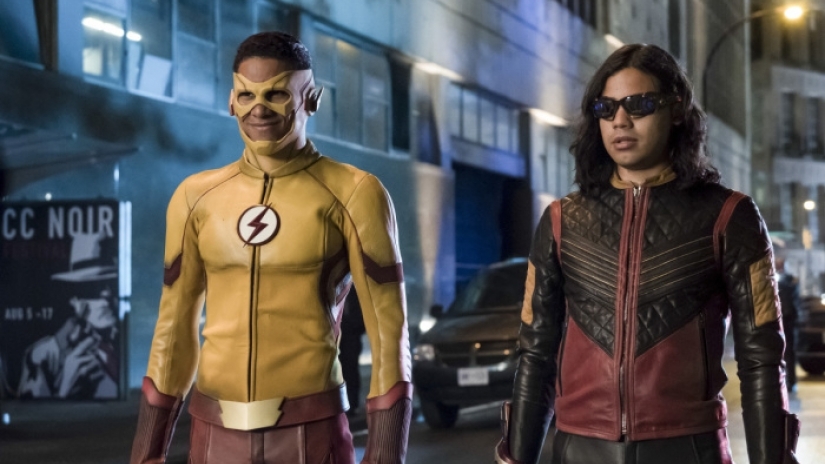
With Barry gone Central City is left under the protection of Wally West (Keiynan Lonsdale) as Kid Flash, and Cisco Ramon (Carlos Valdes) as Vibe and Steel (Nick Zano), though we only learn this in Legends of Tomorrow. This new status quo could have been something that the series could explore over a number of episodes, it could have given these secondary heroes the chance to step into the spotlight and show the audience that they were heroes in their own right, not just Barry’s back-up band. We all knew that Barry would return at some point this season, this was never in question, but the show could have at least pushed this back even by a week to give the other characters a chance to shine.

Instead, Cisco returns Barry to the real world to help fight a threat that he and Wally can’t go up against alone, a robot samurai. When Barry returns he’s not the man they remember, unable to understand what’s going on around him, speaking in gibberish, and writing on walls in a language that we’ve never seen. Yet again, this is something that the show squanders, as Barry is once again himself by the end of the episode, snapping out of his situation when he hears that Iris (Candice Patton) needs saving.


Getting Barry back could have easily taken two or three episodes, and his bizarre mental state upon his return could have also had a whole episode to itself, instead, the show condenses what could have been three or four interesting episodes into one. Don’t think that the episode is all bad, however, as the show is still filled with it’s usual charm and spectacle that these are only minor issues. Yes, the show could have done more with the story in this first episode, but it still manages to be a hugely enjoyable episode.

Getting to see Wally and Cisco working together, alongside Joe West (Jesse L. Martin) and the CCPD, to stop crime across the city is great, and the characters work really well with each other. The scene where they use their differing powers to stop a teleporting metahuman go on to showcase just how creative and exciting the action sequences in the show can be.

The episode also manages to squeeze in the return of Caitlin Snow (Danielle Panabaker) after her time as Killer Frost in the third season. Like most seasons of the show, Panabaker is given a slightly different version of Caitlin to play, this time being quite different due to having spent some time as her evil counterpart in the last season. With a tease towards the end of the episode that her and Killer Frost may not yet be done, it does leave a certain amount of mystery and excitement for the rest of the season.

The emotional heart of the episode, though, is Iris and how she’s been dealing with the loss of Barry. She’s become a harder version of her character, though not one that has completely shut herself off from those around her. She’s still part of the team, still leading everyone in protecting the city, but she’s dealt with her grief by giving Barry up as gone forever. Whilst everyone else is hoping that Barry will one day return, or actively trying to get him back like Cisco, she’s resigned to the idea that he’s not coming back. This leads to some friction between the team, particularly when they believe that their attempt to rescue Barry has failed. Ultimately, this does give us some very touching moments at the end of the episode.

The season premiere of The Flash has some story elements that feel a little rushed, and that could be spread out over a number of episodes, it manages to deliver an exciting and emotionally satisfying opener.


Go to Amy's Blog

Looking back at… South Park: The Stick of Truth


Originally published on Set The Tape

South Park: The Stick of Truth is not the first time that South Park has made the leap to the video game medium, but it’s easily the best available. With a story written by the series writing team, and an art style that seamlessly fits with the show, The Stick of Truth is like playing through a season of the show.

Using story beats established in the series most recent to the release of the game The Stick of Truth sees the children of the town playing a huge LARP game, allowing the game to intertwine traditional fantasy tropes into the South Park we all know and love.

Creating a brand new child that has just moved to town, you have the choice to join Cartman’s Humans, or Kyle’s Elves, all dressed in bad cosplay outfits. You even get to choose what class you want to play as: Fighter, Thief, Mage, or Jew. From here the game goes wildly out of control, featuring aliens, zombie Nazi’s, Underpants Gnomes, Crab People, and an 8-bit excursion to Canada.

The game’s combat plays like a typical RPG turn based game, though at times with characters reminding each other mid battle that they have to wait their turn to attack. The combat may be simple, but it’s a style that has worked well for decades within games, and it fits perfectly within this game. The usual turn based fighting tropes are all present, with class specific attacks, summons, and magic (fart attacks).


Despite a large number of attack options, classes, and quick time events the game is incredibly easy to get to grips with, though with enough differences and options available in the class systems to be able to try something different on a second, third, or even fourth playthrough. The basics are quick to learn but with enough options that you can tailor your character to your own way of playing.

The game even allows you to customise your character via unlockable armour, weapons, hairstyles, and accessories that allow you to make your character unique, though players wanting to make their character female do have to wait until a mission where you’re sent to infiltrate the girls in order to unlock female clothing and hair options.

The town of South Park itself is also well recreated within the game, allowing the player to explore iconic locations such as the school, the kids homes, and the park. Each area is lovingly recreated to look just like the show, and exploring the town is genuinely enjoyable.


A well made and surprisingly competent game, South Park: The Stick of Truth manages to recreate the look and feel of the show so well it’s a surprise that it took seventeen years to make a good game out of the franchise. The game isn’t perfect, there are some occassions where the controls don’t feel as good as they could do, but the flaws are small in comparison to everything that the game does well.

Fans of the show are sure to have a great time playing one of the most ridiculous games around.


Go to Amy's Blog

Throwback 20 – Turbo: A Power Rangers Movie


Originally published on Set The Tape

Turbo: A Power Rangers Movie is the second Power Rangers film, and acts as a bridging gap between Power Rangers Zeo and the Power Rangers Turbo television series.

On a distant planet the wizard Lerigot is being hunted by the villain Divatox, a space pirate who wants Larigot’s magical key. Divatox plans to use this key to open an interdimensional gateway to the Nemesis Triangle, where she will find the mystic island home of the demon Maligore, who she intends to wed. Lerigot flees to Earth to seek help from Zordon and the Power Rangers. Unfortunately, Divatox kidnaps their friends and former Power Rangers Jason Lee Scott and Kimberly Hart. Lerigot hands himself over to Divatox in the hopes that she will release her prisoners.

When Divatox betrays the Rangers and heads to the Nemesis Triangle the Power Rangers must use their new Turbo powers, along with their new member Justin, to follow her and save their friends.

Whilst Turbo: A Power Rangers Movie is the second film to feature the Power Rangers, it’s the only one that is actually within the series canon. As such, Turbo: A Power Rangers Movie draws upon elements established within the previous series, Power Rangers Zeo, and sets up major elements for the next series of the show, Power Rangers Turbo, such as new powers, new villains, and a new Ranger.


Because the film has four seasons of television to draw upon it feels like there’s a lot more to it than a stand alone film has, even with the inclusion of small background elements that most casual viewers wouldn’t pick up on. Whilst this might seem frivolous, the inclusion of Earnie in the background of the martial arts competition, Lieutenant Stone appearing for two minutes, and the return of previous Power Rangers Jason and Kimberly helps to make it feel like part of a larger universe.

The story isn’t the best, sadly, with many pieces of Power Ranger mythology appearing here for the first time, and as such not being given a great deal of focus. Some of this may be largely due to the original script for the film changing due to actor availability, such as David Yost quitting the series due to homophobic bullying from the crew, and an original cut run time of three hours having to be cut down.

Some of the cut scenes, which have been described in detail by various members of the production but never released, would have added more to the experience. The original cut featured an underwater fight scene between the Zeo Rangers and Divatox’s minions, which would have resulted in the Rangers suits in ruins, explaining the need for improved powers. Without these scenes the Rangers simply receive an upgrade for vague reasons of ‘because Zordon could’.


Perhaps a longer run time would have allowed for more character development and for a more comprehensive story. As it is there are certain elements of the film that feel underutilised. Whilst the Turbo series will go on to explore a number of these elements in greater detail it does leave the film feeling weaker in certain places. Turbo introduces a new Power Ranger to the mythology when the character of Rocky DeSantos is injured during training. Unfortunately, the new Ranger is possibly one of the least liked in Power Rangers history: Justin Stewart.

Justin is a twelve year old boy who is selected to be the new Blue Power Ranger simply because he happened to discover who the Rangers are. Whenever Justin morphs, however, he transforms into an adult, though we still hear a child’s voice coming out of his helmet. Whilst this may have been a Captain Marvel style attempt at making children think that even they could become Power Rangers, it’s one of the most ridiculous decisions the franchise has made.


Other than these small issues the film is generally very good, with higher production values than the series at the time, making it stand out from the show. With the larger film budget they’re also able to film some scene on location and on sets that are much bigger than they are used to, giving the episode a sense of scope that is often missing from the Power Rangers franchise.

Though not perfect by any means, Turbo: A Power Rangers Movie is a competent leap to the big screen for the franchise, one that respects the series and builds upon what has come before.


Go to Amy's Blog

Power Rangers Ninja Steel ‘Monkey Business’ Review


Originally published on Set The Tape

Power Rangers Ninja Steel actually manages to deliver one of the best episodes of the season so far as it pits Hayley (Zoe Robins) and Calvin (Nico Greetham) against each other in their school election.

Having two Power Rangers competing against each other in a school president election isn’t a new storyline – Kimberly and Tommy did the same thing in the second season of Mighty Morphin Power Rangers. Whilst in the classic series the two Rangers fell under a spell to bring out their competitiveness, Power Rangers Ninja Steel actually has the two of them just compete against each other; and this makes the episode so much better for it.

Calvin and Hayley are one of the few examples of a pair of Rangers in a relationship, and the first to be dating before becoming Rangers, and this episode we actually get to get a feel the kinds of people they are and how their relationship works. Plus, for a franchise that normally plays down any kind of attraction or relationship, it’s incredibly refreshing to see people actually look like a real couple.

The election shenanigans are exacerbated by the arrival of this week’s monster, Phonepanzee (I kid you not, he’s a mix between a phone and an ape). Able to sample and replicate people’s voices, Phonepanzee uses this ability to sow discord between Calvin and Hayley during their election campaign, before using it to lure the Rangers away one by one to steal their power stars.


Even the Sentai sequences feel a little special as we get to see the individual Zords do stuff before transforming into the Mega-Zord, with Hayley’s Kodiak Zord using its wolf howl to combat Phonepanzee’s powers. The episode even manages to sidestep the children’s television convention of having both of them win, by having Hayley and Calvin have a grown-up conversation and decide to both step down as their relationship is more important to them.

Whilst the other Rangers do get relegated to supporting roles this episode, it’s not a bad thing as each of them do get something to do, plus it gives two characters that haven’t been given much of a focus the chance to shine. Sadly, one character that appears to be receiving poor treatment lately is Mick (Kelson Henderson). Since having used up the last of the Ninja Steel it seems like the writers don’t quite know what to do with Mick anymore. He’s not helping to train the Rangers, he’s not making new equipment for them, he’s not even being shown being a teacher.

Instead, his new role appears to be turning up five minutes from the end of the episode to give some kind of moral lesson to a select Ranger or two so that they can resolve the story by learning about friendship and such. With Mick being one of the characters with better potential on the show, hopefully the series will rectify this before the end of the season and actually give him something to do.

Overall, ‘Monkey Business‘ is still one of the best episodes of Power Rangers Ninja Steel to date, with great character moments, fun and genuine interactions, some engaging action sequences, and a story that actually works. More episodes like this for the remainder of the season please, Saban.


Go to Amy's Blog

Monday, 23 October 2017

Red Dwarf: Who’s Who in Series 12?


Originally published on Set The Tape

Red Dwarf has just returned for a 12th series, with the crew of the Red Dwarf back to mess up history, fight mutants, and kick some smegheads.

But who are the crew of the Red Dwarf?


Dave Lister (Craig Charles)

Third Technician Dave Lister was the lowest ranking crew member on Red Dwarf before the accident that killed all of the crew, except for Lister, who was in stasis at the time. The last human left alive in the universe, his adventures on Red Dwarf have led him to alternate universes, the distant past, and to become his own father.

Lister is very slobish and lazy, preferring to lounge around on the ship drinking larger and eating vindaloo rather than performing his duties. In recent years he has become focus on finding his lost love Kristine Kochanski, who went missing between seasons.


Arnold Rimmer (Chris Barrie)

Arnold Judas Rimmer was Lister’s supervisor on Red Dwarf before being killed along with the rest of the crew in a radiation leak. After Lister awakes from stasis, Rimmer is brought back as a hologram to keep him company.

Over the years on Red Dwarf, Rimmer has been resurrected by nanobots, met and become a heroic alternate universe version of himself, and has met the biblical figure he shares his middle name with.

Rimmer is a stickler for the rules, and will often enter arguments with Lister. Seen as a coward and a smeghead by the other members of the crew, he has on occasion performed acts of heroism.


Cat (Danny John-Jules)

Cat is the last known member of his species, felis sapiens, who evolved on Red Dwarf in the 3 million years that Lister was in stasis from Lister’s pet cat Frankenstein. Cat has no name, and is simply referred to as Cat by the rest of the crew.

Focused on his own interests, and maintaining his level of style and coolness at all times, Cat is incredibly vain, always putting himself before his companions. During his adventures on Red Dwarf it has been revealed that Cat’s greatest love is himself, and his biggest fear is becoming geeky loser version of himself, Duane Dibley.


Kryten (Robert Llewellyn)

Kryten 2X4B 532P is a Series 4000 mechanoid, who acts as something of a maid for the crew of Red Dwarf as well as their science officer. Originally the personal servant of the crew of the Nova 5, Kryten was rescued from the crashed ship by the Red Dwarf crew, where he joined them on their adventures.

Kryten is very neurotic for a robot, obsessed with cleaning and tidiness, often seen cleaning up after the crew, even in emergency situations. Through his experiences on Red Dwarf, and with the assistance of Lister, Kryten has managed to break many of his protocols and programming, becoming more of an individual.


Holly (Norman Lovett)

Holly is the artificial intelligence on board the Red Dwarf with an IQ of 6000, the same as 6000 PE teachers.

Unfortunately, after 3 million years alone his IQ degraded to just 68. Able to depict itself as either male or female, Holly has assisted the crew with their adventures over the years, though occasionally causing several of their problems too.


Kristine Kochanski (Chloe Annett)

Kochanski was the navigational officer on the Red Dwarf, but was killed along with the rest of the crew. Years later, the crew of the Red Dwarf interacted with a parallel universe in which Kochanski survived the destruction of the original crew. This Kochanski ended up joining the crew on their adventures.

Despite initially struggling to fit in with the crew, Kochanski eventually became a valued member of the group. Between seasons, Kochanski left the Red Dwarf to travel on her own. Her whereabouts are currently unknown, but Lister is determined to find her again one day.


Go to Amy's Blog

Loving Vincent: Other Animated Movies Made For Adults


Originally published on Set The Tape

Cartoons are great, don’t you think? They’re an awesome way to tell stories and to entertain in a way that live action just can’t do. Whilst animation is a medium that is often used in children’s entertainment, it’s easy to forget that there are some animated films that you should definitely not let the kids watch (we’re looking at you, hentai!).

As Loving Vincent goes on general release, taking an animated palette to a serious adult biographical drama, we take a look at ten other animated movies best suited for an adult audience…


Grave of the Fireflies (1988)

Grave of the Fireflies is a film that tells the story of two young siblings as they try to survive in the final months of World War 2 in Japan.

The film tells an incredibly human story, one that doesn’t shy away from the horrors of war. It hammers home that it’s not just those on the battlefield that suffer, but innocent people, women and children. It tells a story about war that can only be told by people who have suffered at its hands.

Bleak yet beautiful, Grave of the Fireflies will emotionally break you and stay with you long after the credits have finished rolling.


Ninja Scroll (1993)

Ninja Scroll blends beautiful animation with a story of sex, sorcery, and swordplay in a story that follows a wandering Ronin as he battles a team of ninjas with supernatural powers that are trying to overthrow the shogun.

Filled with brutal violence and amazingly choreographed action sequences, Ninja Scroll is a samurai story as good as any other that has been put on screen. The film would go on to have a lasting legacy with a sequel, animated series, and comic series following its success.


Fritz the Cat (1972)

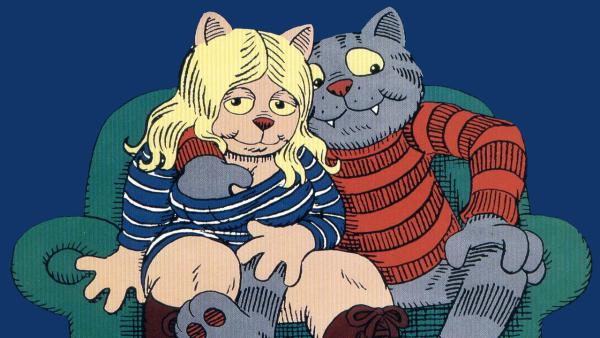
Fritz the Cat has the honour of being the first animated film to receive an X rating in the United States, and follows the title character in his quest for sex, drugs, and social revolution; a bizarre look into the social movement of the 1960’s, examining free-love, the drugs lifestyle, racism, and politics.


Waltz with Bashir (2008)

Waltz with Bashir is an animated Israeli war documentary, depicting the director Ari Folman searching for his lost memories of his experience as a soldier in the 1982 Lebanon War.

Taking a look at some of the atrocities that took place during the war, and people’s desire to try to forget what happened, Waltz with Bashir doesn’t shy away from the true horrors of the world.


South Park: Bigger, Longer & Uncut (1999)

Following the success of the South Park television series the first (and to date only) big screen adaptation is a bizarre mix of comedy, social commentary, and musical that takes a typical South Park style look at censorship and freedom of speech.

Whilst the animation is dated, even in comparison to later episodes of the show, it still manages to make relevant points about the world.


Perfect Blue (1997)

Based upon the novel ‘Perfect Blue: Complete Metamorphosis’ by Yoshikazu Takeuchi, the film follows a young pop idol who wants to quit music and pursue acting. What follows is a thriller that explores fame, obsession, and a descent into madness.

Often compared to the works of Dario Argento and David Lynch, Perfect Blue is a film that uses animation to create a film that warps reality and messes with the mind in a cinematic experience that will stick with you long after viewing.


Heavy Metal (1981)

An anthology film of science fiction and fantasy stories adapted from the Heavy Metal magazine.

With a mixture of animation styles and tones the film can at times feel somewhat disjointed, but for fans of rock music there’s an amazing score from various artists such as Blue Oyster Cult, Journey, and Black Sabbath.


A Scanner Darkly (2006)

Based upon the Philip K. Dick novel, A Scanner Darkly was filmed as a live action film before each individual frame was animated over, creating a unique animation style. The film is set in the near future, where an undercover cop develops multiple personalities due to a drug called Substance D when trying to infiltrate the supply chain.

With a story that explores the drug trade and psychological and mental health, A Scanner Darkly is definitely not a film for children.


Persepolis (2007)

Persepolis is a French-Iranian film based upon the autobiographical graphic novel of the same name by Marjane Saltrapi. The film charts the coming of age story of a young girl in Iran during the Islamic Revolution.

The film may use a simplistic black and white animation style, yet manages to create a moving and emotionally engaging film that manages to be funny, dramatic, and hard hitting.


It’s Such a Beautiful Day (2012)

It’s Such a Beautiful Day is a black comedy-drama animated and produced by individual man, Don Hertzfeldt. The film follows a stick figure character named Bill, who is struggling with a degenerative condition that causes memory loss and strange visions.

Despite the small theatrical release, It’s Such a Beautiful Day received huge critical acclaim for its humour, as well as it’s emotion.


Go to Amy's Blog

The Flash: The story so far…


Originally published on Set The Tape

The Flash is racing back to our screens for it’s fourth season to continue the epic saga of the scarlet speedster, so we thought we’d bring you up to speed on what happened in the series so far.

Move fast to avoid spoilers!


Season One (2014-2015)

The first season of The Flash focuses on Barry Allen (Grant Gustin) becoming the titular hero, and his quest to discover the secret identity of the evil Reverse Flash in order to free his father from prison.

When the particle accelerator at Star Labs explodes, Barry is hit by lightning during the resulting energy wave, knocking him into a coma for six months. Upon waking he discovers that he has developed the ability to move at superhuman speed.

Working alongside the staff at Star Labs including Cisco Ramon (Carlos Valdes), Caitlin Snow (Danielle Panabaker), and Dr Harrison Wells (Tom Cavanagh), Barry takes on the identity of The Flash in order to fight crime and stop other meta-humans who are using their abilities for evil.

Over the course of the season, Barry discovers that Dr Wells is actually the evil speedster, The Reverse Flash, who comes from the far future and is responsible for the murder of Barry’s mother fifteen years before. When The Reverse Flash tries to return to his own time, Barry stops him, resulting in his death, which tears a breach in reality.


Season Two (2015-2016)

The second season of The Flash deals with the repercussions of the first season, with the breach in reality opening a doorway to an alternate Earth, home to the monstrous speedster Zoom.

After the opening of the breach in reality Caitlin’s husband, the metahuman known as Firestorm (Robbie Amell), closes the singularity at the cost of his own life. Despite having saved Earth from destruction, this results in a number of breaches between Barry’s reality and another Earth, Earth-2.

The evil speedster Zoom begins to send metahumans through to Earth-1 in order to challenge Barry in order to weaken him so that Zoom can steal his speed for himself. Encountering evil versions of people they know, and even themselves, the team manage to defeat Zoom’s minions.

Desperate to achieve his goals, Zoom comes to Earth-1 and murders Barry’s father (played by original TV Flash, John Wesley Shipp), who has since been released from prison. Having to break the rules of time travel to defeat Zoom, Barry works with another version of himself to beat the villain, resulting in Zoom being dragged into the Speedforce to become the zombie like Black Flash.

After losing his father to Zoom, Barry decides to travel back in time to stop the loss of his parents, going back to the night his mother was killed and stopping The Reverse Flash, changing the timeline forever.


Season Three (2016-2017)

Season Three of The Flash sees Barry having to live with the consequences of changing the timeline and having to fight against the speedster Savitar (Tobin Bell) in order to save the woman he loves.

Living in a new timeline where his parents are alive and he’s no longer The Flash, Barry soon learns that things aren’t better in this new world, known as Flashpoint, and tries to put reality back into place.

Barry succeeds in undoing the events of Flashpoint, but doesn’t get things completely back to normal, resulting in the death of Cisco’s brother, Caitlin developing powers, and the appearance of the villain Dr Alchemy.

After learning that Dr Alchemy is in fact working for Savitar, who claims to be the god of speed, Barry finds himself outmatched and has to work alongside his new partner Kid Flash in order to stop him.

When Barry accidentally slips into the future he sees Savitar murder his fiancee Iris (Candice Patton), and makes it his mission to change these events. Succumbing to her new powers, Caitlin become the villain Killer Frost and works with Savitar to defeat The Flash.

Discovering that Savitar is in fact an evil version of Barry from the future, the team manage to change events and are able to save Iris, though at the loss of one of their own; H.R. Wells, who gives his life for the cause.

Getting Caitlin back to her true self, and along with the help from speedster allies from other world, they are able to defeat Savitar once and for all. Due to his manipulations of the timeline and his misuse of the speedforce, however, Barry is drawn into the speedforce, apparently lost forever.


Go to Amy's Blog