Monday, 23 October 2017

Loving Vincent: Other Animated Movies Made For Adults


Originally published on Set The Tape

Cartoons are great, don’t you think? They’re an awesome way to tell stories and to entertain in a way that live action just can’t do. Whilst animation is a medium that is often used in children’s entertainment, it’s easy to forget that there are some animated films that you should definitely not let the kids watch (we’re looking at you, hentai!).

As Loving Vincent goes on general release, taking an animated palette to a serious adult biographical drama, we take a look at ten other animated movies best suited for an adult audience…


Grave of the Fireflies (1988)

Grave of the Fireflies is a film that tells the story of two young siblings as they try to survive in the final months of World War 2 in Japan.

The film tells an incredibly human story, one that doesn’t shy away from the horrors of war. It hammers home that it’s not just those on the battlefield that suffer, but innocent people, women and children. It tells a story about war that can only be told by people who have suffered at its hands.

Bleak yet beautiful, Grave of the Fireflies will emotionally break you and stay with you long after the credits have finished rolling.


Ninja Scroll (1993)

Ninja Scroll blends beautiful animation with a story of sex, sorcery, and swordplay in a story that follows a wandering Ronin as he battles a team of ninjas with supernatural powers that are trying to overthrow the shogun.

Filled with brutal violence and amazingly choreographed action sequences, Ninja Scroll is a samurai story as good as any other that has been put on screen. The film would go on to have a lasting legacy with a sequel, animated series, and comic series following its success.

Fritz the Cat (1972)

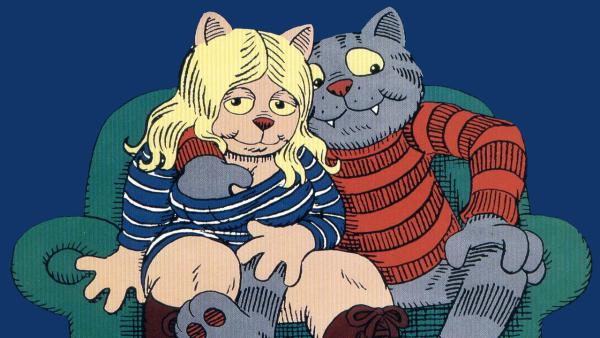
Fritz the Cat has the honour of being the first animated film to receive an X rating in the United States, and follows the title character in his quest for sex, drugs, and social revolution; a bizarre look into the social movement of the 1960’s, examining free-love, the drugs lifestyle, racism, and politics.


Waltz with Bashir (2008)

Waltz with Bashir is an animated Israeli war documentary, depicting the director Ari Folman searching for his lost memories of his experience as a soldier in the 1982 Lebanon War.

Taking a look at some of the atrocities that took place during the war, and people’s desire to try to forget what happened, Waltz with Bashir doesn’t shy away from the true horrors of the world.


South Park: Bigger, Longer & Uncut (1999)

Following the success of the South Park television series the first (and to date only) big screen adaptation is a bizarre mix of comedy, social commentary, and musical that takes a typical South Park style look at censorship and freedom of speech.

Whilst the animation is dated, even in comparison to later episodes of the show, it still manages to make relevant points about the world.


Perfect Blue (1997)

Based upon the novel ‘Perfect Blue: Complete Metamorphosis’ by Yoshikazu Takeuchi, the film follows a young pop idol who wants to quit music and pursue acting. What follows is a thriller that explores fame, obsession, and a descent into madness.

Often compared to the works of Dario Argento and David Lynch, Perfect Blue is a film that uses animation to create a film that warps reality and messes with the mind in a cinematic experience that will stick with you long after viewing.


Heavy Metal (1981)

An anthology film of science fiction and fantasy stories adapted from the Heavy Metal magazine.

With a mixture of animation styles and tones the film can at times feel somewhat disjointed, but for fans of rock music there’s an amazing score from various artists such as Blue Oyster Cult, Journey, and Black Sabbath.


A Scanner Darkly (2006)

Based upon the Philip K. Dick novel, A Scanner Darkly was filmed as a live action film before each individual frame was animated over, creating a unique animation style. The film is set in the near future, where an undercover cop develops multiple personalities due to a drug called Substance D when trying to infiltrate the supply chain.

With a story that explores the drug trade and psychological and mental health, A Scanner Darkly is definitely not a film for children.


Persepolis (2007)

Persepolis is a French-Iranian film based upon the autobiographical graphic novel of the same name by Marjane Saltrapi. The film charts the coming of age story of a young girl in Iran during the Islamic Revolution.

The film may use a simplistic black and white animation style, yet manages to create a moving and emotionally engaging film that manages to be funny, dramatic, and hard hitting.


It’s Such a Beautiful Day (2012)

It’s Such a Beautiful Day is a black comedy-drama animated and produced by individual man, Don Hertzfeldt. The film follows a stick figure character named Bill, who is struggling with a degenerative condition that causes memory loss and strange visions.

Despite the small theatrical release, It’s Such a Beautiful Day received huge critical acclaim for its humour, as well as it’s emotion.


Go to Amy's Blog

The Flash: The story so far…


Originally published on Set The Tape

The Flash is racing back to our screens for it’s fourth season to continue the epic saga of the scarlet speedster, so we thought we’d bring you up to speed on what happened in the series so far.

Move fast to avoid spoilers!


Season One (2014-2015)

The first season of The Flash focuses on Barry Allen (Grant Gustin) becoming the titular hero, and his quest to discover the secret identity of the evil Reverse Flash in order to free his father from prison.

When the particle accelerator at Star Labs explodes, Barry is hit by lightning during the resulting energy wave, knocking him into a coma for six months. Upon waking he discovers that he has developed the ability to move at superhuman speed.

Working alongside the staff at Star Labs including Cisco Ramon (Carlos Valdes), Caitlin Snow (Danielle Panabaker), and Dr Harrison Wells (Tom Cavanagh), Barry takes on the identity of The Flash in order to fight crime and stop other meta-humans who are using their abilities for evil.

Over the course of the season, Barry discovers that Dr Wells is actually the evil speedster, The Reverse Flash, who comes from the far future and is responsible for the murder of Barry’s mother fifteen years before. When The Reverse Flash tries to return to his own time, Barry stops him, resulting in his death, which tears a breach in reality.


Season Two (2015-2016)

The second season of The Flash deals with the repercussions of the first season, with the breach in reality opening a doorway to an alternate Earth, home to the monstrous speedster Zoom.

After the opening of the breach in reality Caitlin’s husband, the metahuman known as Firestorm (Robbie Amell), closes the singularity at the cost of his own life. Despite having saved Earth from destruction, this results in a number of breaches between Barry’s reality and another Earth, Earth-2.

The evil speedster Zoom begins to send metahumans through to Earth-1 in order to challenge Barry in order to weaken him so that Zoom can steal his speed for himself. Encountering evil versions of people they know, and even themselves, the team manage to defeat Zoom’s minions.

Desperate to achieve his goals, Zoom comes to Earth-1 and murders Barry’s father (played by original TV Flash, John Wesley Shipp), who has since been released from prison. Having to break the rules of time travel to defeat Zoom, Barry works with another version of himself to beat the villain, resulting in Zoom being dragged into the Speedforce to become the zombie like Black Flash.

After losing his father to Zoom, Barry decides to travel back in time to stop the loss of his parents, going back to the night his mother was killed and stopping The Reverse Flash, changing the timeline forever.


Season Three (2016-2017)

Season Three of The Flash sees Barry having to live with the consequences of changing the timeline and having to fight against the speedster Savitar (Tobin Bell) in order to save the woman he loves.

Living in a new timeline where his parents are alive and he’s no longer The Flash, Barry soon learns that things aren’t better in this new world, known as Flashpoint, and tries to put reality back into place.

Barry succeeds in undoing the events of Flashpoint, but doesn’t get things completely back to normal, resulting in the death of Cisco’s brother, Caitlin developing powers, and the appearance of the villain Dr Alchemy.

After learning that Dr Alchemy is in fact working for Savitar, who claims to be the god of speed, Barry finds himself outmatched and has to work alongside his new partner Kid Flash in order to stop him.

When Barry accidentally slips into the future he sees Savitar murder his fiancee Iris (Candice Patton), and makes it his mission to change these events. Succumbing to her new powers, Caitlin become the villain Killer Frost and works with Savitar to defeat The Flash.

Discovering that Savitar is in fact an evil version of Barry from the future, the team manage to change events and are able to save Iris, though at the loss of one of their own; H.R. Wells, who gives his life for the cause.

Getting Caitlin back to her true self, and along with the help from speedster allies from other world, they are able to defeat Savitar once and for all. Due to his manipulations of the timeline and his misuse of the speedforce, however, Barry is drawn into the speedforce, apparently lost forever.


Go to Amy's Blog

Friday, 20 October 2017

Supergirl – Who’s Who in Season 3?


Originally published on Set The Tape

Next week sees the return of Supergirl, ABC’s superhero series about the ‘Woman of Steel’ and cousin of Superman, for a third season of world-saving and running around in a big, red cape.

Before she reappears, we thought we’d take a look back at the characters in this DC-TV Extended Universe tie-in, to remind ourselves who’s who…


Kara Zor-El/Kara Danvers/Supergirl (Melissa Benoist)

Kara is Superman’s cousin, who grew up on the planet Krypton before its destruction when she was twelve. Fleeing in a pod, she travelled to Earth, though she becomes trapped in the Phantom Zone during her journey and arrives years later once Superman has grown up.

Working with the D.E.O., Kara has embraced her identity as Supergirl, fighting alien threats and protecting the innocent. Working at CatCo Media as a journalist, she fights for justice even in her civilian life.


J’onn J’onzz/Martian Manhunter (David Harewood)

The last of the Green Martians, J’onn fled to earth following the destruction of his people. Having taken on the identity of Hank Henshaw, the evil leader of the D.E.O., J’onn made the organisation a force for good before his true identity was revealed.

J’onn remains the leader of the D.E.O. and will even assist Supergirl in the field thanks to his amazing abilities.


Alex Danvers (Chyler Leigh)

Kara’s foster sister, Alex is a bio-engineer and the top agent at the D.E.O., working alongside her sister and J’onn to protect earth. A capable fighter, Alex has gone toe to toe with some of the shows strongest foes, including Kryptonians.

Alex recently came out as gay and is in a relationship with police officer Maggie Sawyer.


James Olsen/Guardian (Mehcad Brooks)

Superman’s best friend, James Olsen moved to National City to work at Catco. Media, where he has since become the acting CEO.

Inspired by Kara’s heroics, he has gone on to adopt the vigilante identity of Guardian, using an armoured suit and gadgets to fight crime.


Winn Schott (Jeremy Jordan)

Winn is the son of the villain Toyman. Becoming friends with Kara when working as a programmer at Catco. Media, Winn would go on to help Kara become Supergirl and assisted the D.E.O. on a number of cases before officially joining them.


Mon-El (Chris Wood)

Mon-El is the prince of Daxam, a planet close to Krypton. When Krypton was destroyed Mon-El managed to escape in a Kryptonian pod, crashing on Earth. Initially wanting a normal life he became inspired to become a hero, and even fell in love with Kara.

When Mon-El’s parents attacked Earth with a Daxamite fleet he fought to stop them, before becoming poisoned and forced to leave Earth.


Maggie Sawyer (Floriana Lima)

Alex’s girlfriend and police officer in the National City Police Department’s Science Police, Maggie is used to working with aliens.

She has worked alongside Alex and the D.E.O. on a number of occassions.


Lena Luthor (Katie McGrath)

Adopted sister to Lex Luthor, Lena is the head of L-Corp since Lex was sent to prison.

She is a good friend to Kara, and has helped Supergirl on more than one occasion, though she is unaware that they are the same person.


Eliza and Jeremiah Danvers (Helen Slater & Dean Cain)

Kara’s foster parents, and Alex’s biological parents, the Danvers’ took Kara in when asked to by Superman; the two of them having helped the hero in the past. Jeremiah worked for the D.E.O. under the real Hank Henshaw, and helped to save J’onn J’onzz’s life.

Since then he was kidnapped by Project Cadmus, who want to destroy all aliens, and has been forced to help them.


Cat Grant (Calista Flockheart)

The former C.E.O. of CatCo. Media, Cat worked alongside Clark Kent and Lois Lane at the Daily Planet before moving to National City to launch her own company.

Cat gave Kara her first job, and would go on to coin the name Supergirl in the media before deciding that she needed to leave National City for a while to reconnect with her son.


Clark Kent/Superman (Tyler Hoechlin)

Kara’s cousin, Superman is the son of a Kryptonian scientist who sent his infant son to Earth before the destruction of his home planet. Superman put Kara in the care of the Danvers, and has kept a close eye on her progress as a hero ever since.

He fought alongside Kara during the Daxamite invasion, praising her heroics after the event.


Lillian Luthor/The Doctor (Brenda Strong)

Lillian Luthor, the mother of Lex Luthor, is the head of the anti-alien group Project Cadmus.

Lillian has worked to destroy Supergirl and other aliens, having released a deadly virus, the villain Metallo, and turned Hank Henshaw into Cyborg Superman.


Hank Henshaw/Cyborg Superman (David Harewood)

The original Hank Henshaw was taken in by Project Cadmus and enhanced with cybernetics to become Cyborg Superman.

Working alongside Lillian Luthor, he has made it his mission to destroy all aliens.


President Olivia Marsdin (Lynda Carter)

President of the United States, Marsdin pardoned J’onn for assuming Henshaws identity and appointed him head of the D.E.O., as well as extending an official amnesty to all aliens on Earth.

It was later revealed that Marsdin is secretly an alien shapeshifter, a Durlan, with a plan of its own for the planet and Supergirl, though none of our heroes know this.


Go to Amy's Blog

Back To The Future #23 Review


Originally published on Set The Tape

Issue #23 of the ongoing Back To The Future comic continues the story started in the previous issue, with Marty and Marcus having travelled back to 1972 to find out just why Marty’s uncle Joey ended up in prison all those years ago.

With the DeLorean missing, Marcus has teamed up with a group of hippies to try and find the missing vehicle, whilst Marty has tracked down his uncle Joey, who is trying to impress Biff Tannen. Telling Biff that he’s the son of Calvin Klein, the identity he used in 1955, Marty is allowed to join Joey, who is about to break into the home of Doc Brown’s mother to steal a secret stash of money.

The mystery of Marty’s uncle Joey was always something that was left unanswered in the Back To The Future films, one of those small background elements that helped to flesh out the universe, but didn’t need much explanation. The fact that it’s a mystery that’s never been explained to fans, and is so closely connected with Marty, it’s a situation that’s ripe for the comics to explore.

It also means that we also get to encounter yet another version of Doc Brown, one between the two we got to know in the films. This leads to a number of hijinks during the attempted robbery, especially as Marty can’t allow the Doc Brown from the 1970’s to see his face, knowing that he’d instantly be recognised.

Over the course of this issue we learn more about Joey, and just why he ended up falling in with Biff and his gang, why he turned to a life of crime. We learn that it’s a desire to live in what he sees as a more romantic time, a time when criminals looked out for each other and had a sense of brotherhood.

As such, it’s kind of sad when Joey is betrayed by Biff, and then willingly lets himself be caught by police in order for Marty to get away. He makes the noble sacrifice, knowing that he’s doomed, because for him, there is honour amongst thieves; even if Biff and his gang have none.

The realisation that Joey gets arrested, and then spends over a decade in prison, because he was giving Marty enough time to get away is a welcome surprise, and is something that will sure to have ongoing ramifications for Marty in the next issue.

Will Marty allow history to continue on it’s path, knowing that he was meant to be there and be the cause of Joey’s incarceration? Or will he alter the future and save his uncle from years behind bars? I can’t wait to the next issue to find out.


Go to Amy's Blog

In Defence Of… Terminator: The Sarah Connor Chronicles


Originally published on Set The Tape

Terminator: The Sarah Connor Chronicles was the first (and so far only) television series to be based upon the popular sci-fi franchise, Terminator, and ran for two seasons from 2008 to 2009 before its cancellation. The series follows on from the events of Terminator 2: Judgement Day, ignoring Terminator 3: Rise of the Machines and Terminator Salvation, which was released during the series run.

The show begins in 1997 with the titular Sarah Connor (played by Game of Thrones actress Lena Headey) and her son John Connor (Thomas Dekker) living below the radar, trying to avoid authorities whilst she prepares him to be the future leader of the resistance. When the Terminator Cromartie arrives in John’s school and tries to kill him, he discovers that his new friend Cameron (Summer Glau) is also a Terminator, though one sent to protect him. Sarah, John and Cameron use technology set up by members of the future resistance to travel forward through time to 2007, where they hope to track down the beginnings of Skynet and destroy it.

From here the series would go on to explore the relationships between the lead characters, introduce new elements to the mythology, and expand upon the world in new and interesting ways. Unfortunately, due to low ratings the series was cancelled after the end of its second season, leaving the show on a cliffhanger that will never be resolved. But was it really as bad a show as people made it out to be?

One of the show’s major criticisms is that it wasn’t what viewers were expecting, especially as it is a series based upon a film franchise filled with explosions, shootouts, and robot fights. Terminator: The Sarah Connor Chronicles had all of these things, but it spaced them out over its seasons. It took the time to focus on character and story rather than the violence and action; and a lot of people didn’t like this direction.

By shifting the focus away from action, the series was able to devote more time to the characters than the films ever could. It went deeper into Sarah Connor’s psyche, making her more than just a woman obsessed with protecting her son. She had her flaws, she doubted herself, and the show even showed her weak and human at times.


Sarah Connor is easily one of the best female action heroes of all times. Linda Hamilton played her wonderfully, but Lena Headey brought a whole new depth and intricacy to the character that made her more interesting. She was still the bad-ass action hero, quick to pull out a shotgun and put herself between her son and a killer robot, but now she felt more real and well-rounded.

John Connor was also a massive improvement with the show focusing on showing the progress from whiny teen into a young man who would go on to lead humanity. It took the time to evolve him over the course of its two seasons to the point where he was willing to step up and become a hero, even going against his mother at the end of the series. He ends so far from where he began that it has to be the best depiction of the character the franchise has given.

The series also added a new and interesting element to the mythology. It explored the idea that the future resistance was sending back more people than just those who were assigned to protect John Connor. Throughout the course of the show we would discover small cells of resistance fighters who were sent back to help develop tech to fight the Terminators, including some who were there to gather intel, and others who were tasked with trying to stop the machines.

The show expanded this even further in its second season with the introduction on Shirley Manson’s Catherine Weaver; a liquid metal Terminator sent back in time to develop an A.I. to fight against Skynet. With glimpses to the future war, it’s revealed that the liquid metal Terminators are more self aware than the regular machines and can go against their initial programming to choose to fight alongside humanity. Sadly, this was a brilliant plot thread that was never concluded due to the cancellation.

Terminator: The Sarah Connor Chronicles ended on an amazing cliffhanger as John and Weaver travel into the future war to save Cameron, only to find themselves in a time where John Connor was never there to lead the resistance. Season three would have explored these exciting new developments, but sadly never can now.

Despite ending on a cliffhanger that will leave you angry that the show never got to finish its story, Terminator: The Sarah Connor Chronicles is still an amazing series worth checking out.


Go to Amy's Blog

Thursday, 19 October 2017

Hellraiser Review


Originally published on Set The Tape

STARRING: Doug Bradley, Sean Chapman, Andrew Robinson, Clare Higgins, Ashley Laurence

DIRECTED BY: Clive Barker
WRITTEN BY: Clive Barker

Hellraiser, the film that would make Pinhead a household name and cement the career of horror writer Clive Barker, is being re-released in cinemas to celebrate the 30th anniversary of its release.

Clive Barker is a British novelist who had previous bad experiences of his writing being adapted to film. So much so that the 1987 adaptation of his novella The Hellbound Heart turned out to be his directorial debut. Hellraiser was made in England for the relatively small budget of $1 million. Despite no previous experience as a film director, and the low budget, Barker was able to deliver Hellraiser as a phenomenal success, and one of the stand out horror films of all time.

Hellraiser follows the Cotton family, beginning with Frank Cotton (Sean Chapman) tracking down the mysterious Lament Configuration, a puzzle box that is supposed to grant pleasures unknown to those who solve it. When Frank solves the puzzle hooked chains emerge from inside and tear him apart. Later, when Frank’s brother Larry (Andrew Robinson), his wife Julia (Clare Higgins), and Larry’s daughter Kirsty (Ashley Laurence), move into the old family home in England, the spirit of Frank is awoken when Larry cuts himself, leading to a drop of his blood falling on a piece of Franks remains beneath the floorboards. Frank returns to the world of the living as a ghastly creature, devoid of flesh, who enlists the help of his former lover and sister-in-law Julia to return him fully, having her lure victims up to the attic so that he can kill them and drain their body of what he needs.

Meanwhile, a group of interdimensional creatures known as the Cenobites, monsters that mix pleasure and pain, “angels to some, demons to others”, are searching for Frank, who has escaped their confines within the Lament Configuration. Drawn into the horrors that unfold, Kirsty must fight for her life against her undead uncle, and the demonic Cenobites.

Hellraiser isn’t a long film; its run time is barely over 90 minutes. However, it’s a film that understands that horror isn’t something that can be just thrown into people’s faces. It needs to build over time, slowly unfolding as tension builds. Because of this, the film feels like it’s a lot longer than its short run time, though in a good way. It gives the audience a chance to get to know Frank, Julia and Kirsty by creating its own world within the confines of the Cotton family home, before the introduction of the monsters from another world.

Hellraiser deals with a number of themes, none more obvious than the idea of pleasure and pain being linked, with clear allusions to the S&M community reflected in the black leather and PVC costumes of the Cenobites. Whilst this may be the most obvious of the film’s themes, and can be disturbing to many people as the line between sexual pleasure and torture blurs, the film also deals with obsession, infidelity, betrayal, and even incest.

It makes sure that even before the Cenobites arrive – even before Frank returns as a rotting corpse – the film feels slightly wrong. We see through flashbacks that Julia was unfaithful to Larry, that Kirsty and Julia don’t get along, and that the family isn’t in the best place in their lives. As such, audiences aren’t given time to feel comfortable before the horror begins; this isn’t a happy family that gets dragged into horror, but a family with some very rotten apples within it.

The human cast may not be the best actors as the producers were unable to afford A-list stars, but they manage to do a good job with the roles that they are given. Clare Higgins immediately stands out as the thoroughly unlikeable Julia, a character that audiences loved to hate so much that she returned for the first sequel of the franchise. The most iconic cast member, though many people wouldn’t be able to recognise him out of costume, is Doug Bradley as Pinhead, the leader of the Cenobites. Despite having less than 10 minutes of screen time, Pinhead would go on to become one of the most iconic horror movie monsters of all time.

Though a little rough around the edges, you can see the lack of budget and the lack of directorial experience from Barker, but despite this he works wonders. It uses practical effects that still look disturbing today, makes use of a confined set to build tension, and has some small touches in scenes that once you notice them make things even better than you first thought.

Inspiring a generation of horror fans, filmmakers, eight sequels, and multiple comic series, Hellraiser remains one of the most iconic and interesting genre films of all time. If you’ve never seen it before, make good use of the re-release and book tickets for an experience you’ll not soon forget.


Go to Amy's Blog

Teenage Mutant Ninja Turtles Universe, Volume 2: The New Strangeness Review


Originally published on Set The Tape

Teenage Mutant Ninja Turtles Universe Volume 2: The New Strangeness collects together issues #6 – #10 of the ongoing Teenage Mutant Ninja Turtles Universe comic published by IDW, featuring four exciting stories.

The book’s first story, ‘The Rot In The Shell’, written by Nick Pitarra and John Lees, focuses on Michelangelo as he discovers a new foe, Wyrm. Though he has never appeared in the IDW comics before, Wyrm appears to be a recreation of the original character based upon the 1991 action figure.

A mass of mutant worms that come together to form a horrific monster, filled with junk tossed into the sewers, Wyrm is a visually striking character, one that can shift its limbs into deadly weapons, and can incorporate objects into body parts, such as his saw teeth, and rubber duck eye.

The Wyrm story is a strange affair, and whilst it does put Michelangelo to the test as a lone hero it feels like he’s the best of the turtles to go up against the monster. Wyrm is insane and wacky in a way that Michelangelo could never be, and it forces him to be the straight man of the pairing, something that’s nice to see the character do for once.

The second story, ‘What Is Ninja’, written by Brahm Revel, looks at both the turtles and the Foot Clan whilst exploring the history and nature of the ninja way. Whilst interesting, this single issue feels like it’s lacking in a way that the others don’t, chiefly because the narrative doesn’t follow any one character, and doesn’t focus on any one particular set of events. Because of this, this chapter feels somewhat weak when weighed up against the others, all of which have some emotional stake within their stories.

The third story, ‘Metalhead 2.0’ by Ryan Ferrier, is easily the best in the book, and takes up two issues. Following on from previous events within the IDW series where Donatello was injured and inhabited the robotic turtle Metalhead, when fixing the machine Donatello discovers that a copy of his conscious still resides inside the memory banks.

What follows is an engaging and emotional story that looks at the emotional distress that Donatello went through when he almost died, and looks to address what it means to be a real living person (turtle).

As this is a comic, and because nothing ever goes well for the turtles, things soon go out of hand, leading to a somewhat devastating conclusion that leaves the story open to continue in future issues, something that I hope the series will do.

The book’s final story, ‘Toad Barron’s Ball’ by Sophie Campbell, is probably one of the weirdest comics that I’ve ever read (and I’ve read a lot of Grant Morrison!). Leaving the turtles and New York behind, we join Angel Bridge and Alopex; a character that has to be a favourite of furry fans.

When the two of them are swallowed by a giant toad they find themselves in the court of the mystical Toad Barron, who wants them to join his never ending party. What follows in one of the trippiest stories that I’ve seen.

Teenage Mutant Ninja Turtles Universe Volume 2: The New Strangeness feels less coherent than the first volume, which had a story that encompassed the majority of the book, allowing time for more character development and intrigue. Thankfully, the ‘Metalhead 2.0’ story captures a lot of this feel; otherwise this volume would simply be a collection of unconnected one-shots.

Despite feeling more like a standalone book there are a number of story elements introduced in this book that remain unresolved by the end of their individual issues, leaving the possibility of future exploration in the future.


Go to Amy's Blog

What is… LEGO’s Ninjago?


Originally published on Set The Tape

Ninjago is the latest Lego franchise to be produced into a new feature film following The LEGO Movie and The LEGO Batman Movie. Whilst former featured a lot of characters from pop culture to ease audiences in, and Batman was just a wackier version of the character we all know and love, Ninjago is something that many people will never of heard of before, or will have little knowledge of.

So, what exactly is it?

Ninjago is a line of LEGO products that has been running since 2010, with over 100 sets having been released in addition to a popular children’s animated series. The Ninjago universe is a mixture of the modern world, ancient villages, mythology, and robots.


The world of Ninjago is split between the peaceful land of Ninjago and the Dark Island, home of the evil ninja Master Garmadon and his dark army hell bent on world conquest. Standing against the forces of evil is Sensei Wu, an old ninja master, and his students, Kai, Jay, Zane, Nya, Cole, and Lloyd. Wu trains his students in the art of Spinjitzu, and each of his students master one of the elemental powers granted to them by their magical golden weapons.

Kai is the red Ninja of Fire. Jay is the blue Ninja of Lightning. Zane is the white Ninja of Ice. Nya is the gray Ninja of Water. Cole is the black Ninja of Earth. Lloyd is the green ninja, the Master of Energy. Together the six ninjas protect the land of Ninjago from Master Garmadon using their powerful weapons, elemental powers, and their robotic mechs.

Over the course of the life of Ninjago, the franchise has added new heroes, villains and evil factions, and new creatures to aid the ninja’s with their mission.


If some of this sounds somewhat familiar, that’s probably because Ninjago is very much a LEGO version of Power Rangers, a group of teenage heroes brought together by a mentor to fight against the forces of darkness using enhanced abilities and giant robots. Which is possibly a factor for the longevity and popularity of the Ninjago line.

The new Ninjago film isn’t the first time the franchise has been adapted, however, with a television series having been around since the launch of Ninjago in 2010. To date Ninjago has had several seasons and a number of specials, with no current plans in place to end the show.

The series has incorporated elements of the toy line, as well as inspiring new play sets and taking on a life of its own. The television show has built upon the initial mythology created for the first line of LEGO sets to the point where the new motion picture has an incredibly solid foundation. Whilst watching the Ninjago series will add to the viewing experience for the new film, it’s not essential to understand the basic premise and plot elements.


The series has also had a number of video games, though as they have been on handheld platforms, such as the 3DS and Playstation Vita, they haven’t been as well known or as popular as other LEGO games.

LEGO have produced more than 100 Ninjago sets, as well as a variety of other Ninjago merchandise, such as the ninja’s weapons. With the long life and popularity of Ninjago, the new film has been a long time coming.

Whilst Ninjago has been a steady franchise for LEGO, it’s never been a series that has been the first port of call for LEGO plans. Hopefully the new film will help to raise the popularity, enabling Ninjago to continue on for many more years to come.


Go to Amy's Blog

Looking Back At… Resident Evil: Extinction


Originally published on Set The Tape

Resident Evil: Extinction is the third film in the Paul W.S. Anderson Resident Evil series (not to be confused with the vastly superior Sony Pictures series that actually ties into the game series), and is possibly one of the worst of the series.

The Resident Evil films are a hugely mixed bag, with some films working, and most often those that do not very well, but Resident Evil: Extinction suffers because it’s at that point in the series where it still wants to make a halfway serious film, before just embracing the ridiculous in the much more enjoyable Resident Evil: Afterlife and Resident Evil: Retribution.

Resident Evil: Extinction picks up several years after the events of the second film, in a world where the T-Virus spread beyond Raccoon City, destroying civilisation as we know it. The virus has not only turned most people into the undead, but has killed off plant life, and dried up lakes and rivers. Whilst this makes no sense what so ever, it does enable the film to set itself in a new desert location.

Due to this dramatic shift in the setting the film does at least have a look and feel that sets is apart from the rest of the series, with dark claustrophobic environments replaced with settings that look more at home in a Mad Max film.

Because of this shift to bright outdoor locations that film does sadly lack in the horror department, relying instead on action in order to keep the audience entertained. Thankfully, this is something that the film does very well, with a number of well crafted and visually impressive set pieces spread throughout. One of the downsides of this focus on action is Milla Jovovich, however, who returns yet again as Alice, though now with superhuman abilities.


Building on the end of the second film, where Alice had begun to exhibit psychic powers due to her exposure to the virus, she is now seen using telekinetic and pyrokinetic powers throughout, performing actions that no ordinary human could accomplish. Sadly this adds little to the film, making Alice less of a character and more of a story device.

The film does bring back some other series characters in Oded Fehr’s Carlos Olivera and Mike Epps’ L.J., though no mention is made of Jill Valentine or Angella or what might have happened to them since the last film. Resident Evil: Extinction would also be the first appearance of game favourite character Claire Redfield, who would go on to appear in the series multiple times.

Due to the short run time of the film, and the need to include extensive action sequences these characters are largely underserved, with little extra characterisation being given to Carlos and L.J. before their deaths, and Claire being so underutilised that she may as well not have been Claire Redfield at all.

Despite this, the cast does manage to do well with what little they are given, and all of the performances are fairly strong, though Iain Glen is probably the most enjoyable, clearly relishing playing an over the top villain.


Sadly, he’s less interesting once he becomes the Tyrant monster from the original Resident Evil game in order to fight Alice, a fight that feels too short and lacklustre.

Possibly due to the film originally being designed as an end to the series (though it would go on for another three films) it does feel that it tries to cram too much content into too short a run time, trying to end everything in a satisfying way. Ideally, the film would either have been longer, though that may not be the best choice, or it would have benefitted from tighter writing.

Like every other film in the Resident Evil series there are some good points, though they’re often lost amidst the bad decisions. Fans of action films will be sure to get enjoyment out of the flashy spectacle, and general viewers may be entertained. Unfortunately, those in the audience that are fans of the source material will find little of the series that they enjoy in the final product.


Go to Amy's Blog

The Evil Within 2: 5 Other Survival Horror Games


Originally published on Set The Tape

The Evil Within 2 might be the newest kid on the block as far as survival horror games go, but the genre has been around for many years now, and has given some great horror experiences. So what games are worth playing if you enjoy survival horror? Here’s a list of five of the best.


Resident Evil VII: Biohazard (PS4, Xbox One, Windows)

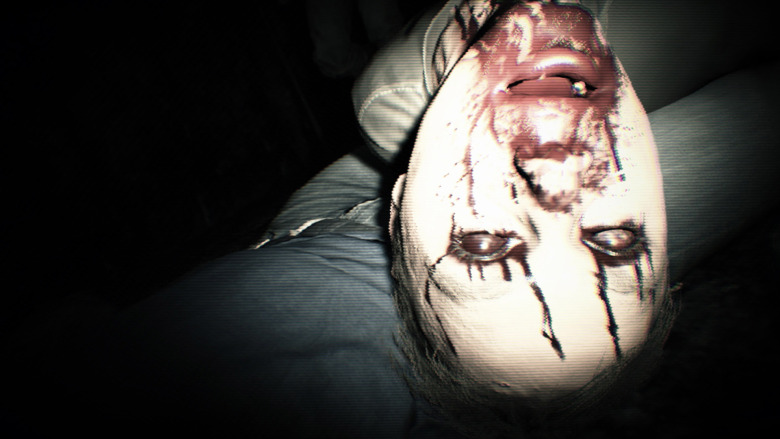
Whilst Resident Evil might be one of the oldest franchises in the survival horror genre, the latest game in the series is one of the most frightening entries. Taking on a first-person perspective, Resident Evil VII shifts the focus from gunplay and action to one that focuses on sneaking through dark corridors, avoiding detection, and desperate survival.

The introduction of found-footage style sections also added an extra element of horror to the game that was missing in other recent Resident Evil titles. Resident Evil VII puts you in the shoes of Ethan, a man searching for his missing wife, who ends up stumbling across a horrific mystery that connects back to the Umbrella Corporation, one that will have him fighting for his very life.


Alien: Isolation (PS3, PS4, Xbox 360, Xbox One, Windows)

After the disappointment of Aliens: Colonial Marines, Sega shocked gamers with an Alien game that managed to perfectly capture the aesthetic and horror of the original movie, in what is possibly the best Alien game to ever be produced.

Playing as Amanda Ripley, daughter of the Alien protagonist Ellen Ripley, you travel to the Sevestopol space station to search for clues to her mother’s disappearance. Unfortunately, the station is under siege from the same creature that hunted her mother years before.

The Pulse Rifles, Smart Guns, and other weapons iconic with the series were stripped away, changing the game from an experience where you hunt the xenomorph, to one where you must avoid the monster at all cost. Alien: Isolation reminds gamers just how frightening an enemy you can’t fight can be, and just why Alien should still be recognised as one of the best horror films.


Silent Hill 2 (PS2, Xbox, Windows)

The second entry into the Silent Hill franchise is still one of the best to date, with a big focus on character and psychological horror. Whilst other series focused on shock and moments of surprise to induce horror, Silent Hill 2 focuses on atmosphere to deliver much of its fear.

The story follows James Sunderland, a man haunted by the death of his wife, who becomes drawn to the mysterious town of Silent Hill, where he must not only face his own inner demons, but the truth of the death of his wife. Despite being an older game, Silent Hill 2 can still shock and scare as well as when it was first released. Plus, the recent HD re-release means that the game is now available on newer consoles with a glossier look.


Outlast (PS4, Xbox One, Windows)

Whilst many games in the survival horror genre will pit you against foes much stronger than you with few ways to defend yourself, Outlast gives you absolutely no way to do so. Outlast has you running and hiding instead of fighting as you investigate your way through an asylum full of terrors.

You play as a freelance journalist, armed with only a video camera, who decides to investigate the mysterious Mount Massive Asylum, and the inhumane experiments taking place there. A mixture of jump scares and atmosphere, Outlast will have you jumping out of your skin as you try to stay alive in a setting that maintains the terror between foes and jump scares.


Dead Space 2 (PS3, Xbox 360, Windows)

Dead Space 2 builds upon the solid foundation of the first game and improves upon it in almost every way. The game expands its mythology and story, gives us a bigger and scarier setting, introduces new enemies, and even allows Isaac to speak.

Following the events of the first game, Isaac awakens in an asylum on the Sprawl, a densely populated space station on one of Saturn’s moons. Unfortunately, a Necromorph outbreak has already hit the station, decimating the population. What follows is a game that explores the madness that Isaac is now experiencing, the conspiracy behind the Necromorph outbreak, and one of survival.


Go to Amy's Blog