Sunday, 16 October 2022

Batgirls #10 - Comic Review


Originally published on Patreon


The mystery of the Hill Ripper deepens in this issue of Batgirls as the team tries to crack the mysterious message left behind at the scene of the latest murder, hidden inside a fake eye.

So, a good portion of this issue is given over to the cracking of the eye code, with Steph and Cass spending pages and pages in the library and in their loft pouring over any book that has anything to do with eyes, or the letter I, in hopes that one of them will be connected to the cipher. It feels a lot like a shot in the dark, and it's no surprise when it doesn't work out for them. But, Steph does manage to meet a cute boy and get his phone number, so it's not all bad.

Meanwhile, Babs tries to get help from the GCPD from commissioner Montoya. Whilst the conversation doesn't end up with the cops agreeing to help the Batgirls, it is still a nice scene, especially in the way that Montoya addresses the fact that nothing can keep Oracle out of their systems. It seems like she's perhaps caused a lot of grief for the GCPD IT department over the years. It's also great to have Rene acknowledge her time as The Question.

The Batgirls also get in a small fight with Killer Moth this issue, and whilst it's nothing spectacular it does break up the monotony of trying to crack the code quite nicely, and gives the more action oriented reader something to enjoy.

This issue also reveals that Killer Moth isn't alone in his crimes, and that he's working with someone else who's masterminding all of the murders and puzzles. Now, in the first scene where we see him there's a green suit in the background, and later on Babs mentions a villain they know who likes puzzles, so I was thinking this has to be The Riddler. However, thanks to the fact that every artist draws the characters differently and if they're out of their costumes you don't always know who they are, I'm not sure it this is him or not. Especially when he describes himself as 'Mr Fun'.

The next issue could reveal that this is the Riddler, that this is all some big elaborate game for him and it would make sense. But, it could also just be introducing a whole new villain, and we've been made to think of The Riddler as a fake-out. I wouldn't be surprised with either one. Whichever it is, I'm looking forward to finding out, as it's definitely the better story in the series so far.

The book's art is provided by Neil Googe and Rico Renzi, and for the most part looks really good. There are a few scenes where I didn't really enjoy it so much, especially when drawing the girls out of costume and just hanging out. They look a bit weird at times, and I'm not sure if I completely like the style.

Overall, this was a very enjoyable issue, and it's looking like the mystery is deepening. 


This article, and many others, can be read a month early on my Patreon for as little as $3 a month!


Support Amy on Patreon

Buy Amy A Coffee

Go to Amy's Blog

Pennywise: The Story of IT – Documentary Review


Originally published on Set The Tape


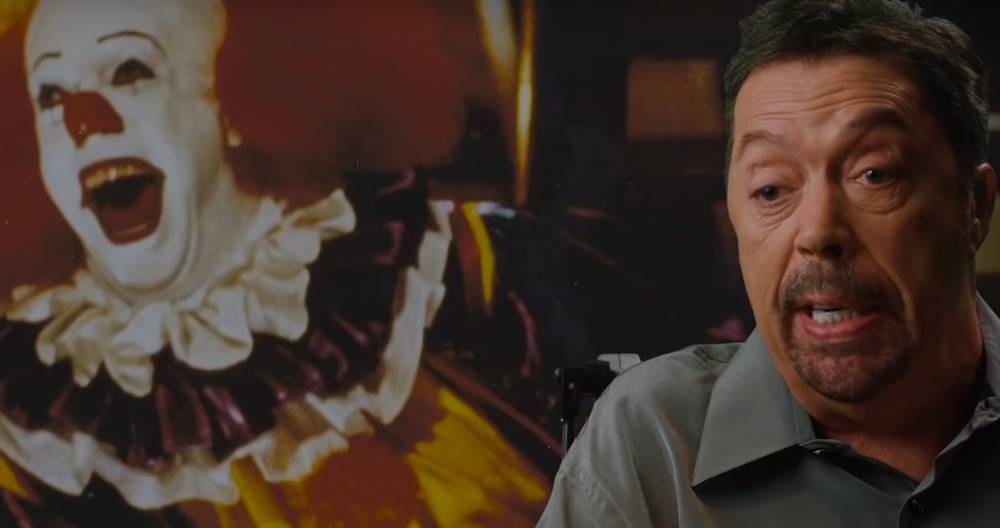
Stephen King‘s IT is easily one of the most famous horror stories of the modern age. And whilst the book itself has earned praise and fame, it’s perhaps not the only reason the story of a killer clown who eats children is as well known, even to those who’ve never read the book. A large part of the cultural impact must go to the 1990 made for TV mini-series starring Tim Curry.

This three hour television movie, split across two nights, the series was a huge success, bringing in more than 30 million viewers when it first aired, as well as high praise from critics. As time went on, the series would find more and more fans as it received home releases, and word of the show spread. This was in large part due to the performance of Tim Curry in the titular role of IT, an evil, ancient entity that feeds on children by terrorising them, that takes on the form of Pennywise the clown to try to lure them in. Curry’s performance became so beloved, and feared, that chances are if someone said IT to you, you’d be thinking of him first.

And as the love for the series has endured over the decades, fans have come together to try and delve deeper into one of the most successful television movies of all time, as well as one of the most beloved Stephen King adaptations. Originally started as an Indiegogo campaign in 2017, Pennywise: The Story of IT set out to tell the story of the creation of the film, interviewing cast and crew, and featuring archival footage, to go into more detail than any other time before.


The film, directed by John Campopiano and Chris Griffiths, begins with shaky, grainy footage from a talk Stephen King attended, where he tells a story about how he was inspired when out for a walk, and how that idea just kept sticking with him, demanding to become something bigger. This story is a perfect jumping on point, as it not only displays the way in which King works, but it also speaks to the creators of the mini-series fighting to bring to life an ‘impossible project’ for as long as they did, and even the makers of this film, working for years to see this documentary movie completed.

From here the film takes a look at clowns and the fear that they bring people, in a section that probably isn’t needed, but acts as a decent enough introduction. The film them begins in earnest by going into the details of how the series was created, with discussion about the process of crafting the 1000 plus page novel down into a two night event, the ways in which the casting of the film was done which included the titbit that Malcolm McDowell was almost cast in the role of Pennywise (how different a version that would have been), and stories about clashes with the network.

The most interesting parts of the film come in the interviews, and Pennywise: The Story of IT has them in spades. Telling the story without any kind of commentary or voice-over, the film allows the cast and crew to fill us in on the things that happened. The benefit of this is that the film feels like you’re sitting down with the people involved in the series and just listening to them remember their time working on it. The stars of the film who were kids when it were made have some of the best stories, and you can clearly tell that there was a lot of enjoyment on set and that these memories are good ones for them.


The downside, however, is that there are times when the documentary feels a little disjointed, and the anecdotes and stories don’t quite flow from one into the other perhaps as well as the filmmakers were hoping, and it can feel a little jarring as they move from topic to topic. A few parts of the film gain more attention than others, such as a fair bit of time being given over to the making of the photo album scene, where other scenes feel rather light on details. Perhaps the more intriguing sections are those where we get to see the creative process for the make-up designs for Pennywise, and the final form of the creature that ended up a bit less than ideal. I always enjoy seeing the monster effects being made, and the different concept art that happens on a film, so these parts were great.

But we can’t talk about this film and the making of IT without addressing Tim Curry. Curry made the series what it was, and this documentary wouldn’t be complete without him. Curry appears a number of times, and it’s great to see him looking so well, and getting to talk about his time creating one of his most iconic characters. The sad part is that in a film that’s more than two hours long Curry features in less than ten minutes in total. It’s impossible to know how much time they had with him, and if he was unable to do more, but with the film spending longer on why people are frightened of clowns than with the most iconic frightening clown (except perhaps John Wayne Gacey) it feels like a misstep.

On the whole Pennywise: The Story of IT is an enjoyable watch, though a bit overly long in places, and whilst it does focus on some areas more than others you’re sure to come away from watching it with both a new appreciation for the series, and a whole host of new anecdotes and trivia.


Support Amy on Patreon

Buy Amy A Coffee

Go to Amy's Blog

Saturday, 15 October 2022

Poison Ivy #4 - Comic Review


Originally published on Patreon


The latest issue of Poison Ivy continues Ivy down her path towards her goal for total global destruction of the human race, whilst humanising her a little, and bringing the series villain a little more into the foreground.

Last issue Ivy spent some time reconnecting with another human being by helping her to plant a small garden area next to her motel. It gave Ivy a small breather from her mission, and it showed a side to her that's been pretty lacking since this series started.

In this issue Ivy gets a job for Amazon, sorry, unspecified high intensity packing job for an online retailer that has awful bosses and makes their employees suffer through harsh work practices. Absolutely not Amazon. Anyway, Ivy is immediately reminded of Jason Woodrue, the man who abused her and turned her into Poison Ivy, by her new boss.

She's barely into her first shift, secreting her killer spores into the thousands of packages being shipped out, when one of her coworkers gets sexually abused by the boss. Feeling a level of kinship for the woman, Ivy terrorises the boss, infects him with the spores, and controls him into doing something good for a short while before he dies.

As her reward for helping the woman Ivy gets to immediately jump into bed with her. However, she gets attacked by one of the plant monsters following her.

So, I've got some issues with this one. All of the stuff with Ivy working in not-Amazon are great. I like how she's using it to spread her spores, how the abusive boss reminds her of her own past trauma, and how she gets back at him. It's all great as it humanises her a bit more, and despite her continuing with her plan I think that this is another of these tiny human interactions that's eventually going to get her to rethink things.

The thing that I didn't like here was Ivy sleeping with the woman she helped. It felt incredibly rushed, 'you got rid of my abusive boss you just assaulted me, you can have sex as a reward' felt a bit weird. But the weirdest part was that through the experience Ivy's internal monologue to Harley was telling her how she's thinking about her the whole time, but how great it was, and she imagines Harley sitting in he corner watching with a big smile on her face like this is some kind of cuckold situation. It felt all kinds of wrong.

Harley and Ivy are a couple that are going through a weird patch, I get that, but surely this is something that would mean their relationship is done, right? Ivy is saying how much she cares about Harley and how she loved her, and how sleeping with someone else meant nothing because she was thinking of her the whole ti,e is abusive a fuck to me. Harley got out of one nasty relationship and now it seems like she's stumbled into another. If Ivy ever tells her about this and Harley doesn't dump her on the spot I'll be pissed. It felt like such a huge misstep, and I honestly hated it.

Overall, though, the comics is continuing to be great, with fantastic art, and interesting story, and the most engaging and layered Poison Ivy story I think I've ever read.


This article, and many others, can be read a month early on my Patreon for as little as $3 a month!


Support Amy on Patreon

Buy Amy A Coffee

Go to Amy's Blog

Nubia: Queen of the Amazons #4 - Comic Review


Originally published on Patreon


The final issue of this Nubia focused mini-series has arrived, and whilst the series has wavered a little for me at a few points, it generally manages to stick the landing pretty well.

After all of the build-up and back story reveals we get Nubia fighting Zillah for the power of the god Sekhmet in the grounds of her ancient temple; a place where Nubia once fought to become Sekhmet's champion a lifetime ago.

We get a couple of flashbacks in this issue that show Nubia (or Zahavah as she was back then) meeting with the goddess and proving herself worthy of becoming her champion. It was great to see Sekhmet here, especially as the Wonder Woman stuff tends to stick pretty closely to the Greek pantheon of gods. They dip into other world religions and mythologies on occasion (such as the recent time with the Norse gods in Wonder Woman) but it's a rare occurrence.

The fight between Nubia and her former friend is done very well, and you can really feel the power coming off the two women here as they clash. Zillah is doing everything she can to kill Nubia in order to prove herself, whilst Nubia is having to try and restrain herself from unleashing her full power so as not to kill a woman she still, in some way, cares about.

The issue does seem to be setting up stuff to come however, as the story ends with something of a cliffhanger with a promise for more things to come in Wonder Woman, though it doesn't tell us how long we have to wait for that. But with the next arc of Wonder Woman starting with the next issue, hopefully it won't be too long before we get more of this.

Nubia is a character that I knew next to nothing about before I jumped back into DC comics around the time of Infinite Frontier (having dropped off largely due to disliking the changes made by The New 52), but over the past couple of years she's been given a much bigger role, a new focus, and has quickly become one of the characters that I'll pick up a book about because I'm happy to see more of her. And this series has been a lot of fun because it's put her squarely in the focus.


This article, and many others, can be read a month early on my Patreon for as little as $3 a month!


Support Amy on Patreon

Buy Amy A Coffee

Go to Amy's Blog

Resident Evil 6 – Throwback 10


Originally published on Set The Tape


Resident Evil is a popular series, and whilst it’s been argued that it didn’t invent the survival horror genre, it certainly made it popular, and became a flagship franchise in horror games and for Capcom.

Over the years since the first game came out the series has gone through some changes, both graphically and in storytelling, both getting increasingly better as people began to actually take pride in the series. One of the biggest changes came with Resident Evil 4, where the game took on a more action quality; something that would increase in the fifth game. And whilst the games became more focused on guns and explosive set pieces, they still at least tried to be horror games. Unfortunately, when Resident Evil 6 came around that all changed for the worse.

Work on Resident Evil 6 began in 2009, shortly after the release of Resident Evil 5, and development consisted of more than 600 people, becoming the biggest production in Capcom’s history. One of the things that the team decided during production, however, was that the survival horror market was too small for Resident Evil, and in 2012, a few months before the game released, they issued a press statement announcing that the game would be focused more around the action genre.


Whilst this made some fans of the series a little worried, most were still looking forward to the game; after all, the last two main series entries had a bigger focus on action, and both were extremely well received and were some of the more poplar entries in the franchise. When the game was released it looked like perhaps Capcom were overselling the action focus, as the first few levels of the Leon campaign took things slowly, put you in dark, deserted environments, and threw some classic zombies at you. It captured the feel of Resident Evil 2 with some extra action beats and fancy new controls thrown in. But it soon became clear that these levels were an outlier, and the rest of the game was drastically different.

Split across four separate stories that interweave together, Resident Evil 6 was less a survival horror game and more like a modern shooter action affair with a few monsters thrown into the mix. Instead of fighting through creepy locations you’d be running around giant cities, inside aircraft carriers, and in ancient ruins (somehow there are giant tombs and underground cathedrals underneath the US that are hundreds of years old?). Instead of fighting zombies and the occasional special infected you’d be in gunfights with terrorists who might sometimes grow a weird limb or two, would have huge car chases, and jump motorcycles over attack helicopters. And Leon would proceed to spend the game moving from explosion to explosion as he crashed a car, a bus, a train, an aeroplane, and basically anything with wheels near him would explode.

Not only did the game try to make the action bigger, but it tried to make the story bigger too. Instead of creating one or two scenarios like with the classic games, giving you the choice of which story to play, the game presented you with four stories, all of which had to be played to get the entire thing, and all of which weave in and out of each other. The result is a game that feels incredibly bloated, and overly long (it ended up being twice as long as Resident Evil 5, the longest game in the series before this point). The different scenarios came with multiple protagonists, and in order to complete the entire story and see everything you would have to play through far too many hours. The length was a big factor in the less than stellar reception the game received upon release, with many complaining that levels and story would quickly begin to overstay its welcome.


Whilst the game sold well – more than ten million copies – it was very much poorly received, with the best reviews only giving it a middle of the road welcome. It was criticised for the varying quality between the different story campaigns, with large tonal and style shifts between some of them, and some even called the game a step back for the series. Hiroyuki Kobayashi, the game’s producer, clashed with some of the fans and critics after the release, and would go on to respond to those criticising the shift into a pure action game by stating that he would not be beholden to the fans.

Whilst it’s commendable that Hiroyuki Kobayashi stuck to his guns that way, it is worth noting that the next game released in the series, Resident Evil: Revelations 2 dropped many of the new elements in the game, and embraced a more traditional horror feel, even though it was released episodically. The next mainline game in the series, Resident Evil 7 went even further to distance itself from Resident Evil 6, taking on a first person perspective, and trying to make itself the most frightening horror experience in the series to date. With the remakes for the second and third games, and the eight main-line games, all going back to horror as the main genre with a bit of action thrown in, it does seem like Resident Evil 6 was something of a failure for the studio, and that its attempts to transform it into an action series over horror resulted in Resident Evil having to focus even more on horror in order to appease fans.

Thanks to its shift away from what made the series notable, an overly long, complex, and boring story, and some flat characters, Resident Evil 6 is perhaps one of the biggest failures in the series, despite the amount of sales it made. However, the resultant shift back to horror, and the creation of a Dungeons & Dragons campaign that would go on to become Critical Role by several members of the cast and production team, are perhaps some of the best things to come out of a game that’s otherwise best skipped.


Support Amy on Patreon

Buy Amy A Coffee

Go to Amy's Blog

Friday, 14 October 2022

Sword of Azrael #2 - Comic Review


Originally published on Patreon


The second issue of the new Azrael series jumps straight into the action as the monastery island comes under attack from the forces of the Knights Templar and their hired assassin, Vengeance.

The issue starts with some fighting, and some explanations as Vengeance doesn't shy away about why she's there, going into some of her reasons and backstory. I really like that Watters isn't trying to hold too much back to try and make a sense of mystery, and seems willing to come forward with stuff upfront. It's also great that she mentions Azael's history with her father.

This issue also starts to bring in some more parts of the story that Watters wrote in Batman Urban Legends, which was reprinted into it's own one-shot the same week as the first issue of this series. I'm glad that there are some things from that coming back, and that it wasn't just an attempt to make a little bit more money off the character by doing the reprint.

We also get some more insight into The System, and how the 'angels' are programmed. This also ties into some stuff that we learnt in the recent DC Saved by the Belle Reve comic that revealed Jean Paul's programming happened a lot earlier in his life than he first believed. It really feels like Azrael is going through something of a slight resurgence at the moment, with the little stories in other books playing a part in this series (plus his main role in one of the DV vs Vampires spin-off books). Watters really seems to get the character, and wants to do something interesting with him. Considering he's a character that has been very underused over the years it's great to get a series that is putting the care and attention in.


This article, and many others, can be read a month early on my Patreon for as little as $3 a month!


Support Amy on Patreon

Buy Amy A Coffee

Go to Amy's Blog

Multiversity: Teen Justice #4 - Comic Review


Originally published on Patreon


Multiversity: Teen Justice has become a strange book, mainly because I'm not really sure what it's doing. It was revealed that villainous Green Lanterns were harvesting something from humans using the Church of Blood in the first issue (maybe the second?) and since then we still haven't really learnt any more. We don't know what Sinestra is doing, what they're harvesting, or why. 

The book seems to be spending a lot of time not really doing much of anything, and it's injecting extra character drama to pad it out. Half the team are mad at Aquagirl for having gone off with the adult heroes, but I don't really know why. I also don't know what happened to them, and exactly how she ended up back on Earth.

Perhaps I keep misunderstanding or missing things, but so far it's a lot of stuff happening, and I've no idea why. For example, at the end of this issue the team manages to escape from the Church of blood, but when they come to a couple of them are missing. I have no idea why. 

I started off liking this book, I liked the concept and the team, but it's become a book that I'm struggling to like much at the minute. There are three issues left, and I'm really hoping that a lot of these problems get sorted out quick, so that the series can at least go out on a high note.


This article, and many others, can be read a month early on my Patreon for as little as $3 a month!


Support Amy on Patreon

Buy Amy A Coffee

Go to Amy's Blog

The Wild Man: Skunk Ape – Film Review


Originally published on Set The Tape


Ape-like men are a staple of mythology and cyrptozoology. Whether it’s stories about the Yeti, Bigfoot, Sasquach, Skunk Ape, or Momo, these creatures appear throughout the world under different names. And even if you don’t believe in them it’s likely you’ll have seen the now infamous Patterson-Gimlin footage of a supposed creature walking through the woods. And with Ape Men being so well known it’s a surprise that they’re not featured in horror films more. The new Ryan Justice directed The Wild Man: Skunk Ape attempts to cash in on this gap in the market.

This found footage movie begins as an investigation into a missing woman in southern Florida by a trio of young filmmakers, Sarah (Lauren Crandall), Brandon (Julian Green), and Tim (Mike Reed). Shortly into their investigation they begin to hear reports of the Skunk Ape, a Bigfoot like creature that the local residents claim lives in the nearby everglades. They also say that it’s responsible for the disappearance of several women over the years, prompting the trio into looking into this connection.

They soon discover that the latest missing woman had a connection to a local wildlife tracker and hunter named Dale (David E. McMahon), who also claims to have encountered the Skunk Ape. Believing that Dale is either connected to the disappearance, or could perhaps lead them to proof of the Skun Ape’s existence, they head out into the everglades with him, searching for the fabled creature.


The Wild Man: Skunk Ape starts decently enough, with the found footage style being structured into more of a documentary style film. The footage cuts from interview to interview, piecing together an introduction for the film that establishes the missing women, the local community, and the connection to the mythic Skunk Ape. However, this doesn’t last for long, as the film then cuts to our filmmakers sitting in a cheap motel room with one of them informing the others “That’s what I’ve edited together so far”. From here, the film becomes what one would normally expect from this genre, and any kind of distinctiveness or flair that it was beginning to establish for itself goes out of the window.

And that’s one of the biggest shames of the film, as the opening five to ten minutes felt different at least. It felt like it was something pieced together after the fact, like a documentary show presenting these events to an audience. But after this point it’s no different from any other film that’s shot from a first person perspective. The documentary style has been done before, and works well; the Australian found footage horror film The Tunnel presented the entire film as a documentary, complete with sit-down talking heads breaking up the action and talking about the events that the cameras caught, and still sticks out in my mind as memorable because of this creativity. The Wild Man: Skunk Ape in contrast has nothing about it stylistically that sets it apart.

The story, at least, does try to do something unexpected, and it’s something that it shows off in the film’s trailer, so I can talk about it without it being a spoiler. For the first half of the film our crew is either going around town trying to interview folks, or is out in the forest at night searching for monsters. But midway through it switches things up as our central characters sneak their way into a shadowy military facility for reasons I won’t reveal. This changes the tone and the pacing, but doesn’t really do the film many favours, as it goes from pretty boring into boring and weird.


This section of the film seems to break some of the rules as per the shooting style of the film too, as we not only have footage captured by the cameras our lead characters are carrying, but footage from base security cameras, and gun mounted cameras spliced in. Do our characters get this footage before leaving? No. So how is it a part of the film? Couldn’t tell you. You’re suddenly left wondering if the footage we’re watching isn’t what is captured by the people we’re following, but any kind of on site cameras, what is this? Is the filmmaker just telling a story that is pieced together through any in world camera source, but isn’t a film that exists in universe? If so, why did it not use this technique before to establish this? It’s very unclear what the director is going for.

Outside of these issues, the cast feels pretty weak at times too, and the big dramatic moments never quite hit their mark as characters feel less than fully invested in the moment. Performances never quite feel real, and the actors come across as if they’re playing caricatures of horror movie characters rather than actual people. I know low budget horror films aren’t the most well known for stellar acting, but there were times where the film made the original Resident Evil game voice acting look top tier. This, along with a monster that looked like it was picked up off a fancy dress shop rack end up making the film feel kind of cheap.

If you’re a big horror fan who wants to experience everything in the genre you might want to add this to your list of stuff to watch for when you’ve got absolutely nothing else, but for everyone else, this might be one that leaves you feeling a bit bored more than anything else.


Support Amy on Patreon

Buy Amy A Coffee

Go to Amy's Blog

Thursday, 13 October 2022

The New Champion of Shazam! #2 - Comic Review


Originally published on Patreon


Last issue Mary tried to leave her old life behind and start the next chapter of her journey by moving away to college; however, her plans were soon derailed when a talking rabbit, Hoppy, gives her a message from Billy, and restores her powers. She's barely getting over that when the police arrive and tell her that her parents have gone missing.

Now, Mary has had to return home to help take care of her siblings as the only adult in the family, and is having to attend a rundown community college instead. But she's determined to get back to the life she was building before by finding her missing parents.

This second issue is a lot of fun, and now that a lot of the groundwork has been done in the first issue we're able to jump into the more enjoyable super heroics side of things as Mary tries to find out what has happened to her parents. Part of her investigations come with going to the new community college, as it's on the route her parents would have taken, and she seems to be hoping to use it as a base to search outwards from. 

However, she's barely sat down for her first class when she has to fly away to stop a giant, mutating crocodile from tearing up the city. Whilst fighting it she encounters a trio of strange beings with odd symbols on their chests, and her magic is quickly beaten by them. It's pretty clear that these three are going to be antagonists for Mary this series, and I'm glad they've come out into the open after being in the background last issue, as it means that we're not going to be waiting for Mary to discover that there's more to things than just a normal disappearance. 

Now, I do have one problem with this issue, Hoppy gets hurt. And by the end of the issue he's not awake and talking again. I don't like this, because I don't know if he's just out of action for a bit, or if he's dead. I can't handle a dead Hoppy. Please be okay next issue.


This article, and many others, can be read a month early on my Patreon for as little as $3 a month!


Support Amy on Patreon

Buy Amy A Coffee

Go to Amy's Blog
Dark Knights of Steel: Tales from the Three Kingdoms #1 - Comic Review


Originally published on Patreon


Dark Knights of Steel has been a great new version of the DC Universe, transporting characters we know and love into a medieval fantasy setting, and doing some interesting new things with them; the Green Man was a triple combo that I was not expecting!

And whilst we're waiting for the next chapter of the regular series we get a new one-shot to tide us over, delving into the history of this world and taking a look at some of the unseen adventures.

The first story deals with Arkham Orphanage, and we get to see some child versions of this worlds Two-Face, Penguin, Killer Croc, Man-Bat, Riddler, and Jimmy Olsen. Jimmy getting adopted by Perry White and his wife to work at the printers press is a great choice, and him and a young Kal-El making friends when Jimmy goes up on the roof at night to look at the stars is lovely. I really like that even in this completely different world the two of them are still good friends, and that when Kal learns that Jimmy has gone missing he immediately sets out to help him.

Despite turning Arkham into an orphanage, the story still includes some of the dark history that comes with the name, as the head of the orphanage experiments on the children there to try and make magically powered beings; creating Man-Bat and Killer Croc. The fact that General Waller takes her into custody, and tells her that she's going to be working for Waller from now on does make me think that perhaps this is a story thread that could come back in the main series; especially with the kingdoms on the verge of war and more powered people being needed.

The second story jumps forward in time to a point that doesn't seem too far removed from the main story, where Kal is sneaking out of the palace with Harley Quinn to get to see a bit more of his kingdom. Going out in disguise, they hope to blend into the Halloween festival going on. However, Bruce catches them in the act and insists on going along with them. The three of them come across a group of young thieves, the Robins, whilst trying to enjoy their evening.

This is a really cool story for showing us how Bruce ends up with his gang of Robins working for him, and feels like something that the main series definitely doesn't have the time to really delve into. The Robins have some important roles in the plot, so getting to see how they ended up with Bruce feels like a good use for this book. It also gets bonus points for including Haley too.

The final story goes back in time, and focuses on a young Bruce. When travelling through the forest with some royal guards Bruce and his soldiers come under attack from a huge, armoured figure; Bane. Bane kills his guards, but instead of trying to harm Bruce, swears fealty to him. Bane reveals that he loved Bruce's parents, and sees Bruce as the true heir to the kingdom, not the El's.

Bruce agrees to train with Bane, learning how to fight and how to get the better of your foe, and the two of them eventually travel to the castle so that Bane can use his magic weapons to kill the El's. However, Bruce betrays him, immobilises him, and has his taken away to be locked in 'the pit'. Bruce swears loyalty to the El's and promises to forever protect them from the dangers of magic.

This story gives a little insight into how the characters fear magic, and have a hard-line stance against it; as well as showing the sheer cunning of Bruce. It's also really cool to get to see this worlds version of the Secret Six. Bane and Ragdoll in particular have absolutely great designs.

As I've been enjoying the main series so much I'm absolutely happy to see the world expand with books like this. I hope that we get the next issue of Dark Knights of Steel soon, but if we have to wait give us more stuff like this whilst we do.


This article, and many others, can be read a month early on my Patreon for as little as $3 a month!


Support Amy on Patreon

Buy Amy A Coffee

Go to Amy's Blog