Thursday, 29 September 2022

Detective Comics #1063 - Comic Review


Originally published on Patreon


The second issue of Ram V's new run on Detective Comics continues to play out as a strange, almost dream-like mystery where you're hard pressed to know what's going on. Batman is investigating a series of strange events across the city where people are being changed into monsters via magic and music.

In this issue he tries to discover more information, first by visiting the reformed Harvey Dent (who's sporting an odd new look), and then by visiting the criminal Maestro so that he can examine the unusual music box Batman has discovered. 

We get hints as to what might be happen by following Batman, with him learning more about the music box and the strange 'black noise' that it emits, which may explain the drastic effects it seems to have on people. But the biggest information reveals comes from following the members of the Orgham family; who we learn are part of the Arkham family.

It looks like the Orghams feel like they have a claim to Gotham, especially the old Arkham properties, and are coming to claim the city with magic and demons.

I'm sure many of us have seen Batman go up against various strange threats over the years, aliens, gods, demons, and villains from other worlds, but it still feels a little odd when the fantastical happens in a book like Detective Comics. Whilst there may be a more grounded explanation to come later in the story, for now it looks like magic and demons are the big thing behind the Orgham family. And whilst this absolutely fits within the DC Universe, it feels slightly jarring to see Batman investigating the case the same way he would any other crime.

I also found Harvey Dent to be a little odd here too. Having seen him in Task Force Z recently I knew that he'd reformed and was trying to do better, but there he at least looked like the Harvey Dent you'd know. Here he's sporting a new look, with a grey streak in his hair, and a fancy golden mask across the scarred part of his face. As far as I'm aware, this is the first appearance of this new look, and it certainly adds to the feeling of unease and weirdness, as Dent's new golden face brings forth images from classic mythology.

The art on the book is decent, and it certainly helps to set the mood and the tone tanks to the way it's coloured. There are times where the book begins to feel like it might be messing with reality and the way you're seeing things, due in large part to the way the colours start to shift, or the way characters are drawn; so the art here is definitely a big art of the storytelling process.

I'm not sure how I feel about the new series yet, and I think I'm going to have to have a bit more of the story before I can make my mind up. There are some interesting things here, and some stuff that feels a bit weirder than I was expecting. Hopefully by the time more issues are out I'll have a more solid opinion.


This article, and many others, can be read a month early on my Patreon for as little as $3 a month!


Support Amy on Patreon

Buy Amy A Coffee

Go to Amy's Blog

The Swamp Thing #16 - Comic Review


Originally published on Patreon


The final issue of The Swamp Thing feels like something of an anomaly for this series, and for the character of Swamp Thing in general; because it ends on a note of hope and happiness. From everything I've read for the character in the past this feels like a rarity. Swamp Thing seems built to suffer, to be depressed and in pain, but here the series ends in such a way that if he were to never appear again you could feel satisfied and happy with how his story ends.

Not a huge amount happens, the Parliament of Gears must make a choice this issue, with two options for it to pick as its avatar, each with a different outlook on humanity and how to use the power it has. Swamp Thing stands in the middle, urging the parliament to make the right choice.

Whilst it's not an action packed issue, with not a huge amount happening in it it is the culmination of multiple issues that have all been building towards this; and as such it feels a lot bigger than the individual parts.

And as far as endings go it's decent. I enjoyed it, and overall I liked the entire series. I've mentioned in previous The Swamp Thing reviews that I was growing tired of the series a little, and whilst it was an enjoyable read I am glad that it has finally come to an end. I think perhaps it's a series that may sit better with me if ever I choose to reread it again in the future as a single collected piece, rather than waiting month to month for each chapter.


This article, and many others, can be read a month early on my Patreon for as little as $3 a month!


Support Amy on Patreon

Buy Amy A Coffee

Go to Amy's Blog

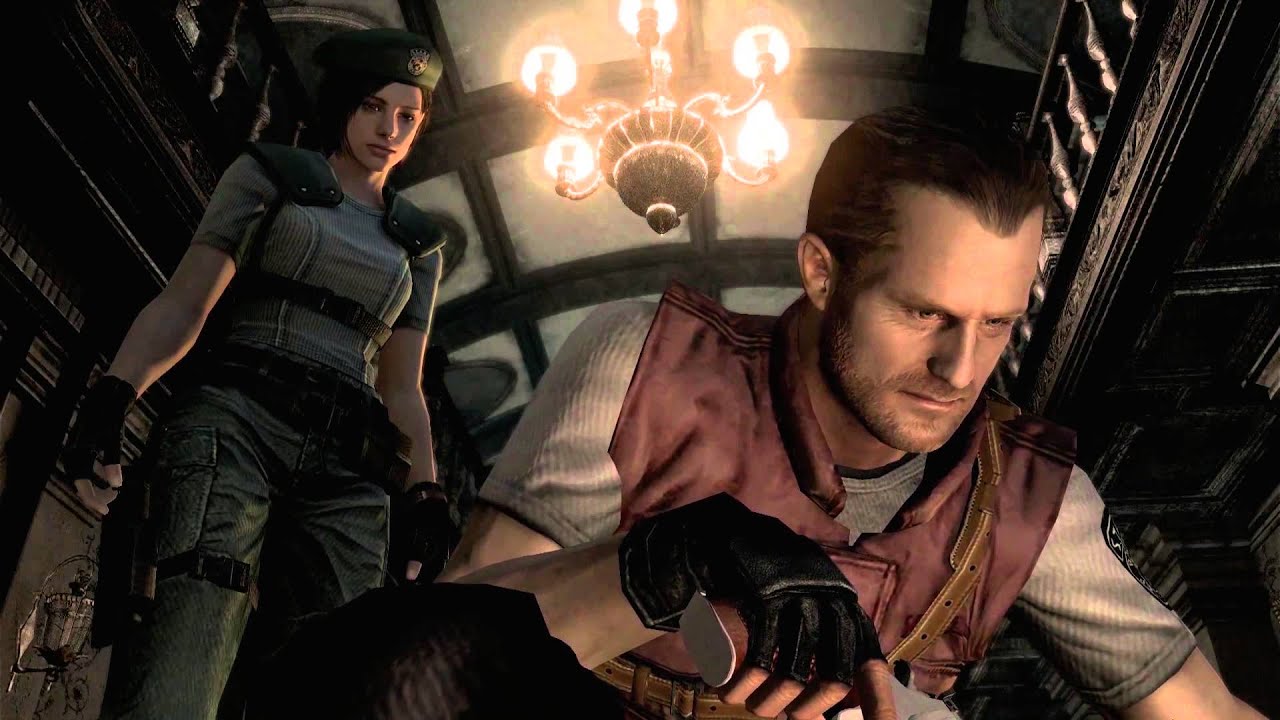
Resident Evil (2002) – Throwback 20


Originally published on Set The Tape


The Resident Evil series is a franchise that has some pretty frightening moments in it, with games, films, books, and comics, that have some truly memorably frightening scares. But perhaps one of the most frightening things that I’ve only just come to realise is that the hugely popular 2002 remake of the original game came out only five years after the first game, but has now turned twenty years old. The franchise continues to frighten with simply the passage of time.

The original Resident Evil game was a huge success around the world, and many would argue that it was the true birth of the Survival Horror genre of games. Thanks to the popularity, it spawned a number of sequels over the next few years, with Resident Evil 2, and Resident Evil 3: Nemesis both joining the original on the Sony Playstation. There were also a few spin-off games, like Resident Evil: Survivor on the Playstation, and Resident Evil: Gaiden on the Gameboy Color. The series made a big jump in 2000 when Resident Evil: Code Veronica debut on the Dreamcast, with improved graphics and game-play. By now the series was well established and well loved.

When it was released in 2001, Nintendo announced that the Resident Evil games would be coming to their new console, the GameCube. And whilst it was initially planned that the first three games and Resident Evil: Code Veronica would be coming to the console as ports, Shinji Mikami, the designer and director of the original game, felt that the first game hadn’t aged well enough to be put onto the GameCube and that it could even put off new players. Instead, a bold new plan was devised: a completely new version of the game that would not only push the new consoles graphical capability, but would allow Mikami to make a game closer to his original vision. 


The story for the game would largely remain the same; it would still star the characters of Jill Valentine, Chris Redfield, Barry Burton, Rebecca Chambers, and Albert Wesker as they made their way through the vast Spencer Mansion, hidden deep within the Arklay Mountains. Having entered the surrounding area looking for their missing compatriots, the members of the Special Tactics and Rescue Squad (S.T.A.R.S.) end up running for their lives from monster dogs, taking refuge within a large mansion estate. However, inside they discover zombies, giant spiders, and other monstrous creatures created by a bio-weapon gone wrong.

Instead of simply recreating the original game with improved graphics, the programming team, which consisted of only four people, redesigned the game from the ground up. The Spencer Estate was given new areas for players to explore. The series’ iconic puzzles were included, but went through some drastic changes that would challenge even veteran players. As well as the new areas, story that was cut from the original was reintroduced in this game, introducing players to the character of Lisa Trevor for the first time.

These changes offered something new for returning players, and meant that even those who had completed the game dozens of times and knew the Spencer Estate like the back of their hand would be facing something of a challenge. The game also came with much improved performances from the voice actors. And whilst the original was well known for its bad acting and terrible dialogue (something that gave that game a lot of charm), the new game never ended up feeling ridiculous like that original did; and this helped to greatly increase the sense of horror.

To begin with the team tried to create the game using computer graphics animation, but soon realised that this would be too challenging for the new console. Instead, they went back to a similar approach to the original, where 3D models would be placed into environments with pre-rendered backgrounds, albeit ones with much better graphical quality. The game also kept the fixed camera style of the original, although there were parts where they camera was able to move in a more dynamic way, enhancing the game-play experience and helping to present a more movie like product.


The team also gave the combat system a bit of an overhaul, and added new weapons that would allow players to escape from enemies as they were being grabbed; this helped with the increased difficulty. The difficulty itself was something that took the team a while to perfect, as some wished to make the game tougher by adding invisible enemies, though this was deemed to be too hard on players. However, the game did introduce a new mechanic where if certain zombies were not burnt when killed they would mutate, and come back as faster, tougher, and more vicious creatures. The game also decreased the amount of ammo that could be found, and increased the number of enemies, forcing players to have to carefully consider when to fight and when to run.

Upon its release the Resident Evil Remake, or REmake, received critical acclaim from most journalists and reviewers, and the improved graphics and tougher game-play quickly had the game being referred to as one of the scariest video games ever made. The new game not only showcased the graphical capabilities of the GameCube, but showed a vast difference in it and the original. Even now, twenty years on, the game is still held up as one of the most visually impressive entries in the series. Even though there are more powerful, and graphically superior games in the series, the quality of design, and the tight, claustrophobic nature of the game still keeps it looking great two decades later. Since its release the game has been re-released a number of times, with a version on the Wii, a HD remaster being released across several consoles in 2015, including the Playstation 3 &4, and the Xbox One, and most recently, a version on the Nintendo Switch.

Despite being twenty years old (cue internal screaming) this version of Resident Evil remains one of the high points of the franchise, and is often held up as one of the best horror games of all time. And for fans of the original, it offers a great alternative to the charming yet clunky game that started it all.


Support Amy on Patreon

Buy Amy A Coffee

Go to Amy's Blog

Wednesday, 28 September 2022

The Retaliators – Film Review


Originally published on Set The Tape


The trailer for The Retaliators paints a pretty clear picture of what this film is going to be about: a father looking to get revenge against the man who kills his daughter. So when the film begins and you watch a pair of girls lost in the woods suddenly coming under attack from what looks like zombies I don’t think I could be blamed for having to double check I’m watching the right film. The Retaliators begins by subverting your expectations, and flips between genres more than once in a move that will leave most audiences wondering just what they’ve watched.

After the aforementioned open, The Retaliators introduces us to a family shopping for their Christmas tree as the holiday season sets in. The father, a sensitive community pastor named John (Michael Lombardi), gets into an altercation when another man steals their tree, but turns the other cheek, and does nothing about it. His daughters, Sarah (Katie Kelly) and Rebecca (Abbey Hafer) are left somewhat disappointed in him, and John ends up feeling unsure if he did the right thing or not.

In an attempt to make himself look better he allows Sarah to go out to a Christmas party with her friends; a big change from his normal overprotective way of doing things. Unfortunately for her, she crosses paths with Ram (Joseph Gatt), a murderous criminal who has a man tied up in the boot of his car. Realising that Sarah has heard the man, Ram chases after her, runs her car off the road, and drowns her in the river.


A short time after the event Bishop is approached by Jed (Marc Menchaca), a police detective who has a unique proposition for him. He’s captured Ram, and has him tied up and tortured in a remote location. Bishop is given the chance to spend one minute alone with Ram, able to do whatever he wants to him, as long as he doesn’t kill him. Unfortunately, other criminals are on Ram’s trail and are close to finding him. How does this all connect to the zombie opening? Well, you’re just going to have to watch the film to find that one out.

There are times when The Retaliators seems to be trying to be more than one kind of movie. The opening scene notwithstanding, the start of the film spends time getting to know the Bishop family, showing us the relationship between John and his eldest daughter. John is overprotective, but also doesn’t want to resort to being aggressive or violent to protect his family. His daughter respects him, but is starting to feel that respect wavering because he let Dante from Clerks steal their Christmas tree. They’re not perfect, but they clearly care about each other, and as such you do feel it when John gets a panicked phone call from Sarah as a man is trying to kill her.

The film tries to spend time with the grief of the Bishop family, showing the funeral, and how the community comes together around them, yet John feels isolated and alone in his grief. His youngest daughter Rebecca retreats into herself a little, and the energy and joy she brought to the performance in the early scenes has gone. Even the wild premise of the detective capturing criminals off the street for the families of their victims to get revenge on is treated with more seriousness than you’d first think, with Jed’s backstory being a pretty harrowing one.


But the film’s third act mirrors the opening as it switches gears, does a hard turn, and jumps the shark, as it turns from grim crime story into a horror gore-fest. It feels like the end of a very different movie has been tacked onto The Retaliators, and whilst it isn’t un-entertaining, it’s such a huge tonal whiplash that it makes it hard to still feel connected to this story and its characters.

Whilst the cast try their best to make the characters feel genuine throughout, there are times where the acting falls a little flatter than is best too, as there are more than one scene where the characters are delivering emotional lines in an almost casual way. Whilst they’re not bad actors by any stretch, there are times where it feels like they’re just unable to hit the emotional beats the film calls far. A lot of the supporting cast are also made up from musicians and band members who feature in the film’s soundtrack.

The Retaliators isn’t a bad film, but it’s not amazing either. It occupies a middle ground of being entertaining enough to be enjoyable, yet probably won’t be a film that people are quick to go out and recommend, or to watch again. It tries to do something different, and whilst it might not always work, it does at least stand out.


Support Amy on Patreon

Buy Amy A Coffee

Go to Amy's Blog

Tuesday, 27 September 2022

Olympus: Rebirth #1 - Comic Review


Originally published on Patreon


There have been a lot of changes in the Wonder Woman mythos recently. There's a new Wonder Girl, a new group of amazons was found, Hippolyta died, Nubia became the new queen, and the three tribes have come together as one. It's been a lot. But it's also been really good!

One of the newest developments centres around the former queen, Diana's mother, Hippolyta. After apparently being murdered, Hippolyta's spirit returned to inform her people that it was all part of a plan that she had devised that would enable her to ascend to godhood; thereby granting her the ability to help her people within the realm of the gods.

Now, we actually get to see what happens after this revelation, as Hippolyta's spirit makes its way into the afterlife, to join the other gods of Olympus.

As anyone who's read Wonder Woman long enough would expect, this means that there is plenty of godly politics going on, with some plots, backstabbing, and alliances being made as not everyone is happy with the new addition to the pantheon. 

Hippolyta feels like a force of disruption amongst the gods, but not necessarily a bad one. Gods like Zeus have become lazy and lax over the years, and Hera is a manipulator out only for herself. Hippolyta sees a lot of the flaws and the hypocrisy and calls them out on it. She even goes on a little quest to prove herself to them, and to bring back the one missing member of the pantheon.

The extra-sized one-shot is entertaining, but never really trays beyond the realm of being perfectly fine. There are no big moments here that will wow you, no story revelations that seem to set up big things to come, and nothing that left me wanting more. It feels like this is a single issue designed to flesh out the world of the Amazons a little, but that that's about it. And whilst it's a fine read there's nothing here that elevates this issue into must read territory.


This article, and many others, can be read a month early on my Patreon for as little as $3 a month!


Support Amy on Patreon

Buy Amy A Coffee

Go to Amy's Blog

Survival Street #2 – Comic Review


Originally published on Set The Tape


I was very pleasantly surprised by the first issue of Survival Street, a comic that takes readers to a very dark, corporate run future where most people are either out for themselves or to screw others over, or both, and the only people looking to make a difference and do some good are a group of rogue freedom fighters who also happen to be puppets. In this new issue we get to delve a little into their history, as well as getting some huge action scenes.

Issue two begins in medias res, with the Salutation Street gang running for their lives as a huge crowd chases them, shooting at them. The puppets are forced to take shelter inside an old church, believing it will give them sanctuary; unfortunately it’s the Church of Christ the Reloaded, and these people aren’t up for taking prisoners. Two pages in and I was already laughing out loud.

From here we get a series of flashbacks that begin to bring us up to speed on things, learning through some old news reports that the gang are in Hollow Point, a small Texan town run by the WRA, the Weapons Retailers of America, and that the town is every gun-nut’s wet dream.  They have open carry, concealed carry, and anything you can carry rules, and duels settle everything from arguments to divorces. As the book says, it’s “basically Westworld without the robots”.

And as Hollow Point looks set to expand their laws for who can carry guns, having previously made it so school kids can carry weapons, they now want to make it legal that toddlers have guns. And this is something that the Survival Street puppets think is pretty bad. Challenging the WRA CEO to a duel, he gets the townspeople to fight in his place, plunging the entire town into a gunfight.

Mixed in with this we also get some flashbacks to the origins of the puppets, learning that they’re not made, that they’re not puppets come to life, but in fact come from a remote island. When humans discover their home they make a deal with the puppets to mine the island’s guano deposits. This ends up forever changing the puppet’s society, and is another example of how rampant capitalism and colonialism destroys entire cultures.

Whilst the first issue was a great introduction to this world it had its ups and downs; some moments that were a bit slower, and points at which the narrative had room to breathe. This issue doesn’t. It has an almost breakneck pace, where everything happening in Hollow Point is a mad dash to survive as the puppets find themselves having to battle against dozens, perhaps hundreds, of gun wielding maniacs. Things escalate and go in some pretty wild directions, but all of it is honestly brilliant. The book knows it’s ridiculous and absolutely leans into it. There are explosions, people diving through the air whilst shooting, car crashes, and even a Charlton Heston robot.

Some of the ridiculousness is tempered by the flashbacks to the origins of the puppets, which are actually kind of sad as you get to see this wonderfully innocent group of people being exploited and changed, their way of life being ruined, all because the humans want more money, more resources. It gives reasons for why this group of kids’ TV personalities have become vigilantes; because they’ve seen their own world ruined by capitalist pigs, and don’t want it to happen again.

The artwork on this issue is provided by Abylay Kussainov and Ellie Wright, and looks great. The action scenes are all bombastic and full of energy, but the best part is how much personality they put into the characters. They make the puppets more expressive and emotive than a lot of comics are able to make their human characters look, and it’s surprising how much humanity these weird, fuzzy people have in their faces.

Survival Street is one of the best series that Dark Horse is producing right now, and James Asmus and Jim Festante are producing a story so weird, wacky, and wonderful that it feels like it can go in any direction and do pretty much anything it wants; and that level of fun and creativity is wonderful to see. I have no idea where this book is going next, but I am so excited to see it.


Support Amy on Patreon

Buy Amy A Coffee

Go to Amy's Blog

Monday, 26 September 2022

Task Force Z #11 - Comic Review


Originally published on Patreon


We come to the penultimate issue of Task Force Z, and it might be the weakest of the series yet; which doesn't bode well for the story going out on a high next time.

The biggest problem with this issue is the pacing. Things don't happen in order here, and there are time-jumps and flashbacks to the point where I'm not sure what order everything happened in. It was honestly quite confusing at times, and I don't think it did anything to serve the story.

And the story here is a bit weird at times too (which is saying a lot for this series). Gotham is back in control of his body, though is now huge and filled with venom. Gotham Girl turns up out of nowhere looking for her brother because she somehow knew where he'd be.

Bloom has gotten hold of the Batman Rookie suit as well, and is using it to fight Jason's team, whilst Jason fights Blooms team, which consists of old members of Jason's team. Which doesn't really work with Deadshot as he didn't want to come back, died again to help Jason so that he didn't have to come back, and is now happily working against Jason for Bloom because Bloom brought him back. It just doesn't quite sit well.

I found it hard to really enjoy this issue, and in a lot of ways it felt like it was just being used to move pieces into place for the conclusion; but in ways that wasn't really fun or in the best service of the story.

I'm hoping that these issues will be cleared up for issue twelve, and that the series can go out on the high it deserves.


This article, and many others, can be read a month early on my Patreon for as little as $3 a month!


Support Amy on Patreon

Buy Amy A Coffee

Go to Amy's Blog

Astonishing Times / Twelve Percent Dread – Graphic Novel Review


Originally published on Set The Tape


Dark Horse have a lot of new graphic novels out this week, with a variety of titles on offer. Whilst some of their titles have some more action and horror oriented themes, not every book does, and if you’re looking for something a little different, these two might just be of interest to you.


Astonishing Times Vol. 1

Superhero comics are the backbone of the industry. When comics were first coming into being there were a lot of genres on offer, from superheroes to crime books, to pirate stories, and sci-fi schlock. And whilst many of these titles fell away over the years the ones that kept selling, that grew in popularity year after year, and have become the genre that people think of when they hear the word comic is superheroes. Some characters have gone on to become instantly recognisable across the globe, and you can show people in most countries the Superman logo and they’ll know exactly who it is. Superheroes are modern mythology, and this is a big theme for the new book Astonishing Times.

Astonishing Times is set in a world where superheroes are very real, and have been operating out in the open for decades. Whilst they were once beloved by millions, they’ve gradually faded into the background somewhat as people get used to them, and no one seems to bat an eyelid when a costumed hero is waiting in line in the local coffee shop. But there is someone who still thinks of these heroes as worth people’s attention and adoration: Noah Sans.

Noah is a reporter, covering the adventures of the world’s ever growing superhero population. However, people don’t care about heroes anymore, and Noah’s column is on the verge of being cancelled. Using the goodwill of his father’s legacy at the paper (a man who also covered superhero news), Noah gets one last chance to write the story that will save his career. And whilst he sits and scours the web, trying to find something that will stop him losing his job, the biggest story of his life falls into his lap. A superhero has been found dead, and it begins a series of events that will lead to Noah discovering some dark secrets about the world’s greatest heroes.


Astonishing Times is trying to take something of a different look at super heroes, mainly by focusing on someone one step removed from the heroes themselves. We follow a pretty normal guy instead of one of the costumed adventurers, and whilst this gives us a decent introduction to this world it’s not long before you start to feel a bit lost in the piles of continuity and history that the comic is trying to conjure up, despite it being the first volume in this series. There is a lot of history here, there are characters with decades of adventures under their belts, and world events that have changed this setting until it’s quite different from our own; and whilst Astonishing Times draws upon all of this in the crafting of its story it never really explains much of it to the reader.

We meet heroes who are the ‘greatest’ the world has ever known, but we’re not told much about them. Characters reference past conflict and relationships, but we’re not told what they are. We hear about alien invasions and global conflict, but aren’t given any detail about them. And the bad guy is set to tear the world down and start again because of everything they’ve seen and been through, but we don’t know what it all is. The biggest problem with this book is that it doesn’t feel like a volume one, it feels like a volume one through ten squashed down into five issues. Things happen too quickly, too much history is referenced without any weight behind it, and for the most part I was left unable to care for what was going on. Frank Barbiere and Arris Quinones, the two writers, clearly have a lot of good ideas, but it feels like they’re trying to use everything all at once.

The art in Astonishing Times, provided by Ruairi Coleman and Lauren Affe, looks great, and they’re able to make the book look bold and interesting throughout. The bland, everyday scenes all have extra details and small things thrown into them for you to take a look at, usually tiny details that adds to the world building, and the action sequences are done really well. The book has a visual scale and scope that matches the story well, and even if you’re left unsure of everything that’s happened in this world up to this point, the art showcases why the events here are grand.

If you’re looking for a superhero book that’s doing something a bit different from usual, and want to jump into a small, self contained story that you can read in a single sitting Astonishing Times could provide you with what you need.


Twelve Percent Dread

Twelve Percent Dread by Emily McGovern is something of a strange book. At more than 400 pages long it’s a big, bulky read that certainly gives you a lot of content for your money. But does that length translate into quality, or does the book spend too long doing nothing?

The story follows several characters in their day to day lives in a Britain not too different from our own. Our chief character is Katie, who’s living with her non-binary ex, Nas, in a rented room with a washed up 90’s TV comedian whilst they wait for Nas’ visa application to be approved. Out of work and struggling to get by, Katie jumps from job opportunity to job opportunity, trying her hand in all kinds of fields, before scamming her way into being the personal tutor for the daughter of the wealthiest and most powerful woman in the country, tech billionaire Michelle.

Michelle gets a lot of focus in the book too, as her tech company Arko is trying to push their new apps and tech whilst doing shady dealings with the government. Katie’s friend Emma also works at Arko, and is one of Michelle’s go to people. She gets landed with a special project whilst working to get their new social media app working right, where she has to babysit a strange new member of staff. All of the stories in Twelve Percent Dread move in and out of each other, intertwining until they become one larger narrative later on in the book.

For the most part, the book feels like a strange ‘slice of life’ type tale for a modern audience, where everyone is glued to their tech, people are struggling for work, and the world feels a bit like a capitalist hellscape that’s doing everything it can to grind you down into nothing (so nothing like modern Britain at all then). One of the biggest issues with the book, for me at least, is that it takes far too long for anything to actually start to happen. The book spends more than a hundred pages following the characters around, watching their daily lives, listening into meandering conversations, where nothing much really happens. Yes, stuff does happen later in the story, but I really struggled to feel encouraged to get to that point, as I kept wanting to put the book down as nothing happened over and over again.

Another problem I had was that it was incredibly hard to connect with the characters and to know what was going on. Part of this was down to the really weird things that they said and did, and it wasn’t until I read the blurb later on that I realised the book was supposed to be a comedy. If that’s the case, it’s a form of humour that absolutely didn’t connect with me, and it ended up leaving me feeling like I was watching really weird people who say the most unusual things for no reason. The artwork also didn’t help with being able to connect with the characters. The art feels incredibly simple, and there’s very little detail to it. None of the characters are drawn as people, and are more crude approximations of what people are like. They have square, round, or triangular heads with two dot eyes and some lines for hair, and that’s it. A couple of the characters are more distinct because of hairstyles that are obviously theirs, but there are many times where the narrative jumps to another character and you just don’t know because the characters don’t really look that different. It often felt like reading a rough draft of the final book, with storyboard images rather than the final product; art that gives the general impression, but lacks any real depth.

I understand that the book has done well, and has garnered a lot of praise, and all I can say is that I must just not be the right reader for Twelve Percent Dread. And whilst I didn’t get on with it, and didn’t really enjoy it, that doesn’t mean that others won’t. So if you’re looking for a book that is very, very different from other graphic novels on the market, this is definitely one of them.


Support Amy on Patreon

Buy Amy A Coffee

Go to Amy's Blog

Sunday, 25 September 2022

Robin #17 - Comic Review


Originally published on Patreon


So, after seventeen issues this run of Robin comes to a close. This is a huge shame, as this has been a hugely enjoyable series; but, as things are being set up for Batman vs Robin the story isn't quite over here.

This issue sees Robin and his allies racing back to Lazarus Island as they realise that Lord Death Man has tricked them all. And it seems like he's been tricked too, as he trades Damian's stolen heart (that Flatline ripped out early on in the series) to Mother Soul.

Having promised Lord Death Man power in exchange for the heart, she gives him a taste of Lazarus power, transforming him into a hulking monstrosity. Luckily, the teens arrive in time to stop his rampage and take him down (with a particularly brutal final move fro Damian). With the threat apparently dealt with, as they know nothing of Mother Soul's involvement, the teens spend the day partying on the beach together and hanging out as friends before they all set out on their own separate journeys.

In some ways I really liked the ending here. It felt earned. Damian had worked hard to get his new friends, and the bonds that have been formed over the last year and a half feel genuine. I love his relationship with Connor, and his evolving romance with Flatline feels like it's somehow perfect for him (of course Damian would do for a scary goth girl who can kill you without breaking a sweat). I liked that they all got to send some time together at the end, that you get to see their friendships and their bonds. But I'm sad that it's coming to an end.

I want more of this series. And whilst we've got the new series focusing on Damian, and Flatline is on one of the covers indicating she's in it, it doesn't feel like it's going to be the same. Joshua Williamson did a great job at making Damian a skilled fighter, a deadly killer, and a bit of a brat whilst also giving him depth, personality, and made him actually feel like a teen. 

I've loved the Robin series, and have enjoyed each and every issue of the book. And whilst it's sad that's its come to a close, I will look back at this series fondly.


This article, and many others, can be read a month early on my Patreon for as little as $3 a month!


Support Amy on Patreon

Buy Amy A Coffee

Go to Amy's Blog

Batman: One Bad Day: The Riddler #1 - Comic Review


Originally published on Patreon


I'll admit something that might lose me some DC geek points, I'm not that fond of The Killing Joke. I think it's a perfectly fine, average Batman story, but that's about it. So, an entire series of one shots taking the theme of 'one bad day' being all it takes to create a villain that was originally brought up in that book had me a little unsure whether I was looking forward to reading this. And this first issue, focused on the Riddler, really doesn't help.

Batman: One Bad Day: The Riddler begins with a lengthy scene in first person as we follow the life of a random man in Gotham, hearing about his family. Several pages into this scene the Riddler walks up behind him and shoots him in the head. The Riddler then waits for the cops to arrive and arrest him.

This sets up a big question for the GCPD and Batman, what's the riddle? Riddler doesn't do things for no reason, so what's his game. Well, it turns out that there is no game. There is no big riddle. He's just shown Batman what he's capable of, and then tells him that if Batman ever comes near him again a random person in Gotham will be murdered.

He then uses threats against the families of cops, prison guards, and literally anyone else in his way (including mob bosses) to set himself up as the untouchable king of Gotham.

All of this is interspersed with flashbacks of Edward in school, failing to get perfect grades because one of his teachers includes a riddle on tests. When Edward fails to get perfect scores his father, the headmaster, beats him. This pushes Edward to his 'one bad day' where he murders the teacher.

Oh boy, do I have very little good to say about this book.

Firstly, the story. So. The Riddler tells no riddles, has no schemes or mysteries, he simply uses random murder and threats to get what he wants. So who the hell is he now the, because he's certainly not the Riddler. Like, who would Mr Freeze be if you stripped away everything around his cold gimmick? Just Mr Person? There's nothing about this version of the Riddler that makes him the Riddler, and this story could have been told about any villain, or even just a random guy. And perhaps would have been better if it was.

Batman also tortures people in this book, almost needlessly. He repeatedly dunks a tied up, bleeding man in shark filled water even when he's offering up the info Batman wants purely because I guess Batman feels he needs to suffer more first. And, at the end of the book it's heavily implied that this is also Batman's 'one bad day', and that he kills the Riddler in order to stop him. Fucking awful.

The flashbacks to Edwards past are bad too. Edward is a struggling kid, coming to his teacher begging him not to go against the school rules and put test points on a riddle, telling him that its causing him distress, that he can't cope with it. And the teacher claps him on the back and goes 'don't let it worry you dude, it's just life, be chill'. It's like the teacher thinks he's some kind of Dead Poets Society scenario when he;s instead fucking up a kid.

There's also the implication that Edward is pushed into snapping because his father abuses and beats him for not being perfect. This is one of those gross false narratives and stereotypes where it says that those who're abused become abusers, killers. It's pretty messed up that we're still using that concept in the year 2022.

A lot of the supporting characters act really poorly too. There's a scene where the Riddler is surrounded by cops who've been ordered to put a straight jacket on him, and because of his threats to their families the cops all freak out, turn on each other, and everyone in the room but the Riddler and Commissioner Gordon guns each other down. Huh?

There are some decent moments to be found, one or two I think. The scenes where Bruce spends some time with the widow of the Riddlers random victim are incredibly sweet, and show a decent side to the man that is often overlooked for big superhero stories.

The art on the book feels like a weird mixed bag too. There are a lot of pages that are incredibly busy and crowded feeling, with odd staging and rain and smoke effects everywhere. It can sometimes be a bit overpowering, and it can help to make the scenes feel overly oppressive and gloomy. There is a two page spread that's absolutely gorgeous though, where a basketball court is split into the present and a flashback, with two very different colour schemes in each section. The split between the two sides is gorgeous, and it makes for a great visual of the flashback ending and the present beginning.

Overall, I think I kind of hated this story. If was slow and dull in a lot of places, had what felt like bad story decisions and awful character moments, and might be the worst Riddler story I've ever read, because it never felt like the Riddler. I'm hoping the other one-shots are better than this, because if they're not this is going to be a poor series for sure.


This article, and many others, can be read a month early on my Patreon for as little as $3 a month!


Support Amy on Patreon

Buy Amy A Coffee

Go to Amy's Blog