Sunday, 11 July 2021

5 LGBTQ+ Books To Check Out


Originally published on Set The Tape


With Pride Month nearing its end we thought we should highlight some great LGBTQ+ fiction that people might want to take the time to check out, and that we’d focus on creators who sometimes get overlooked in the publishing industry – writers of colour.


Cemetery Boys by Aiden Thomas

Latinx teen Yadriel is having problems convincing his family to accept him as a trans man, so sets out on a plan to prove himself a man. When he and his friends hatch a scheme to summon the ghost of his murdered cousin things don’t quite go as planned, and he accidentally summons the spirit of Julian Diaz, the local bad boy who recently died. Now the two teens are forced to help each other out before Julian can move on, but as they do they find themselves becoming closer.

Hyped up on its release in 2020, Cemetery Boys proved to be a very popular YA novel, incorporating elements from the Latinx experience, trans masculine narratives, the supernatural, and even queer romance. Thanks to Aiden Thomas’ richly imaginative and vibrant narrative, a plot with magic and mystery, and characters that you can’t help but fall in love with, this is a book that should be on everyone’s to-be-read pile.


Ace of Spades by Faridah Àbíké-Íyímídé

Set in the halls of Niveus Private Academy, an elite school for the perfect children of the mega-wealthy, Ace of Spades tells the story of Aces, an anonymous figure who reveals dark secrets the students are trying to hide. When two of the most popular students in the school, musician Devon and head girl Chiamaka, are targeted by Aces things become heated across the school.

Having been described as Gossip Girl with a dash of Get Out thrown into the mix, but Black and queer, Ace of Spades has been one of the more highly anticipated YA books of 2021 (having just been released this June). Thanks to Àbíké-Íyímídé’s talent at crafting tension and suspense, as well as some shocking twists and turns in the narrative, the book will hook a lot of readers very quickly. But the book also deals with some heavy topics, and explores the intersection of class, race, and sexualities, bringing some very important topics to the forefront of the book.


Felix Ever After by Kacen Callender

Felix is black, queer, and trans, and because he’s never been in love he’s worried that his marginalisations mean that he’s never going to get a love story of his own. When one of the students at his school begins to send anonymous transphobic messages, after publicly posting his deadname and pre-transition photos, Felix sets out to find the culprit and get revenge. However, he never expected to end up falling into a love-triangle, as well as discovering more about himself along the way.

Stories that deal with the harsh reality of transphobia, about how much that kind of abuse can hurt a person, and how society tends not to see it as a real form of abuse, can be hard reads, and there are moments in Felix Ever After that do hit hard, that really put you in Felix’s head and show the pain he’s going through. However, the book is about so much more than that, and is about the beauty and joy of getting to be your true self, it’s about self discovery and love, and it makes for an incredibly moving and memorable piece.


Cinderella Is Dead by Kalynn Bayron

It’s been 200 years since Cinderella met her prince, and now every year teen girls are required to attend the Annual Ball, where they have to find a husband by demonstrating their finery and grace. Those that are not picked are never heard from again. However, sixteen-year-old Sophia doesn’t want a husband; she wants to marry her childhood best friend Erin. When she flees the Ball and finds herself in Cinderella’s mausoleum she meets the last descendent of Cinderella, and the two of them vow to bring down the king and end this horrible tradition.

Cinderella is Dead is an inventive twist on the classic fairy tale, one that shows the more frightening side to these childhood tales, but also one that centres a Black queer girl as the hero of the piece; something we need more of. With some pretty unexpected twists and surprises, some intense moments, and young queer women setting out to destroy the patriarchy, this might be a book based on story centuries old, but it’s definitely geared to a modern audience.


The Black Flamingo by Dean Atta

Michael is coming to terms with his identity as a mixed race and gay teen in the UK, but when he discovers the art of drag he finds a new way to come to terms with who he is and express himself under the drag identity The Black Flamingo. Through his adventures with his new drag friends he learns to embrace the parts of himself he was never allowed to before, as well as finding love.

Written in verse, this YA book is nothing if not a celebration of the beauty of both blackness and queerness, one that touches on deep emotional highs and lows. Even if you’re not the biggest fan of drag, which not everyone is, it’s not really about that. It’s about a young man finding a way of expressing himself, of becoming comfortable with who he is in a world filled with toxic masculinity. A genuine celebration of getting to be yourself openly and proudly.


Buy Amy A Coffee

Go to Amy's Blog

Saturday, 10 July 2021

What Big Teeth by Rose Szabo - Book Review


'Eleanor has not seen or spoken with her family in years, not since they sent her away to Saint Brigid's boarding school. She knows them only as vague memories: her grandfather's tremendous fanged snout, the barrel full of water her mother always soaked in, and strange hunting trips in a dark wood with her sister and cousins.

'When Eleanor finally returns to their ancestral home on the rainy coast of Maine, she finds them already gathered in wait, seemingly ready to welcome her back with open arms. But a strange and sudden death rocks the family, and in order to keep the family that abandoned her from falling apart, Eleanor calls upon her mysterious other grandmother from across the sea.

'Grandmere brings order to the chaotic household, but that order soon turns to tyranny. If any of them are to survive, Eleanor must embrace her strange family and confront the monstrousness lurking deep within her Grandmere – and herself.'

What Big Teeth tells the story of Eleanor, a young woman who was sent away from her family to attend a boarding school across the country several years ago, and hasn't seen or heard from them since. After a violent altercation at school with one of the fellow students Eleanor packs her bags and heads back to her home. She's not expecting a warm reception, for several reasons, and finds a family strangely familiar, yet also alien to her; her family having moved on in her absence.

The Zarrin family aren't just normal people, however, and each of them holds a dark secret within them. Her grandmother, who rules the household, practices magic, her mother is covered in strange coral-like polyps and must stay wet, and her grandfather, father, cousin, and sister can all change into monstrous wolves and stalk the forests around their home. Despite this strangeness Eleanor seems to be the strangest of all of them, because she's not like the rest of them. She can't become the wolf, and despite trying all her life it doesn't seem like there's one within her. Instead, she has vague memories of something else stirring inside her, something she has no words for.

When her grandmother dies shortly after using her magics to read Eleanor's future Eleanor is left in charge of her grandmother's business, and charged with protecting the family she feels so separated from. When she learns that her mother's mother is still alive she writes to her, asking her to come and help, but this might not be the lifeline she's expecting as shortly after her Grandmere arrives things in the house begin to get worse.

From very early on reading What Big Teeth there are some definite Addams Family vibes going on in this book. The family are all creepy and odd in some way, have connections to magic and folklore, and live in a big mansion away from the rest of the small town community; a community that fears them. It has a Gothic feel baked into every character and moment, and I feel if you put a mood board together for this book it'd be creepy old houses and Tim Burton movies.

Rose Szabo is really good at putting this kind of aesthetic into the story but not going too far with it and making it feel over the top, too much like a caricature. They're able to infuse the house and the family with a strangeness that feels so other, yet everyone in the family feels like a real person. Yes, they might be extreme in some way, but you always feel like you understand what motivates them, why they act the way they do. Szabo is able to make these larger than life beings feel like real people, even if they can also transform into wolves; and that's a hell of an accomplishment. 

The character of Eleanor is our main point of view for the book, and thanks to her having spent a number of years away from her family and needing to relearn who they are and what it's like to live with them we get to see them through this fairly fresh perspective. Their strangeness isn't new to her, but thanks to the intervening years away from them is feels like it is. Not only does this allow the readers an easy way into this family, to be shocked by their oddness, but it works well for the story too, and really help to set Eleanor as an outsider, which sets the story up to go in some interesting directions. 

I liked Eleanor as a character, despite her making what I felt were some bad mistakes at times, but then that's part of any character's journey. Eleanor is the reason things go wrong in this book, or more precisely, her choices set the family down the path for things to go wrong. But where the rest of her family only seem to have one way of dealing with things, striking out violently, Eleanor is smart enough to know that that won't help them here, and has to use her difference from her family in order to save them. She doesn't have the power or the physical strengths of her family, so she has to learn to use her mind.

Ultimately, this seemed to be one of the main themes of the book; learning and looking for answers. Eleanor has to learn to find her place in a family that she doesn't recognise. She's searching for answers for why she's so different, and to learn more about the thing hidden inside of her. And she's digging into the family's past, trying to discover how they all ended up here.

These brief glimpses into the past were some of my favourite moments, and I loved it when her grandfather told the tale of his home country, some unnamed place somewhere deep in Europe. His story of this land where language didn't exist, where the bells sounded to warn the people of the approaching monsters, and his encounter with the powerful dark entity that stalked them may have been one of the shortest moments in the book, but it left a lasting impression. I think this was the moment that I realised that there was something a little special about this book, and about Rose Szabo as a writer. This tiny part set the tone for the whole novel, and was one of the creepiest and most disturbing moments. I'm hoping that we get to see more like this in Szabo's future work, and I know that if they ever decided to write an intense horror story it'd be incredibly chilling.

What Big Teeth is an interesting, Gothic YA story filled with mystery and horror elements. It's a story about finding your place in the world, of learning to accept your family for their faults and their strangeness. And it's a story about discovering who you really are; and all of it's wrapped up in this wonderfully dark, delightfully queer story. An outstanding debut from an author we should all be keeping an eye on.


Buy Amy A Coffee

Go to Amy's Blog

Friday, 9 July 2021

City of Iron and Dust by J.P. Oakes - Book Review


'In this fast-paced dark fantasy debut, the Fae seek to rebel against their Goblin oppressors over one long bloody night.

'The Iron City is a prison, a maze, an industrial blight. It is the result of a war that saw the Goblins grind the Fae beneath their collective boot heels. And tonight, it is also a city that churns with life. Tonight, a young fae is trying to make his fortune one drug deal at a time; a goblin prince is searching for a path between his own dreams and others' expectations; his bodyguard is deciding who to kill first; an artist is hunting for her own voice; an old soldier is starting a new revolution; a young rebel is finding fresh ways to fight; and an old woman is dreaming of reclaiming her power over them all. 

'Tonight, all their stories are twisting together, wrapped up around a single bag of Dust--the only drug that can still fuel Fae magic--and its fate and theirs will change the Iron City forever.'

So often in fiction we see revolutions being led by a strong central figure, some lone hero who's risen up to become a beacon around which everyone else can rally behind in their fight against an oppressive regime. These tend to be the main characters for dystopian fiction, and it's something that I kind of expected from City of Iron and Dust; but I was pleasantly surprised to find that not only was I wrong, but that the book delivered something completely different.

City of Iron and Dust takes place in the Iron City, a vast, maze-like place where the Fae, various races descended from fairy folk, have been forced to live following their defeat in a war against Goblins. Due to their connection with nature, and the fact that they can draw magic from it, the Goblins have constructed the city so that the Fae are trapped away from the outside world, surrounded by Iron, a substance that's deadly to them.

Forced to work in huge factories, refineries, and other gruelling areas of production, the Fae have been ground under the heels of their Gobln masters, treated as second class citizens to be looked down upon. Despite so many of the Fae having never known any other life, some still fight for the freedom and liberation of their people, and we join the city on the night that these feelings swell to a breaking point and violence breaks out across the Iron City.

Instead of following the leader of this revolution, one lone hero who's banded everyone together, we follow several characters; most of whom are regular people. This is because J.P. Oakes has taken something of a more realistic approach to the story, because quite often in revolution it isn't about one person, and it's the combined efforts of dozens, hundreds, or even thousands. These people, sometimes only united in their desire for freedom, and with no formal bonds between their cells or groups, are the real force behind change; and that's who this book focuses on instead.

There's a variety of people who we follow across the course of the story, on both sides of the conflict. There's a low level drug dealer who finds himself in possession of a huge quantity of Dust, a drug that allows the Fae to access their latent magic abilities, who ends up being wanted by both sides of the conflict because of what he has. There's a young artist, who wants to use his skills and his vision to inspire those around him to rise up and fight for their freedom, for a better world through his art rather than any action he could take. We follow a member of a small group of revolutionaries who end up getting involved in the citywide fight, and we see how this small cell act in the face of full scale uprising.

We also follow some figures who aren't Fea, who are in difficult positions because of who they are. There's the daughter of one of the five main Goblin houses who rules the city, a woman who's set to inherit her father's vast wealth and power but doesn't want to be a evil overlord like him, and wants peace between the Goblins and Fae. We also get to follow her sister, a half Goblin half Fae who's been broken and beaten into being the perfect weapon, tasked only with protecting her sister at any costs. We also spend a lot of time with the former head of one of the other Goblin houses, an aged woman who not only hates that she's no longer in control of her house, but sets out to use the revolution as a means to gain control of all of them.

The book jumps between the various characters across the course of the story, and we get to discover that no one character, that neither side in this conflict, really knows everything. Everyone has their own plans and their own schemes, and whilst some of these are pretty sound, through our unique perspective as the reader we see that all of these plots are balancing on the edge of a knife; that so many of them are at risk of falling apart. The revolution depicted in this book is messy, it's chaotic, and everyone is scrabbling simply to survive the night, and a who does or doesn't seems to very much be down to luck.

It felt more real because of this, that there wasn't some big villain somewhere who'd plotted everything out, who'd anticipated all the variables and was pulling the strings the whole time. Instead, people were left on the back foot, were having to bluff their way through, and left reacting to what their enemies were doing a lot of the time. Despite it being a fantastical story, filled with inhuman people and magic, it made it feel more real that a lot of books like this.

The story also used its fantasy elements well. It's full of creatures like Goblins, Kobolds, Selkies, Gnomes, and other fantasy races, and it made good use of magic, but for the most part it was a very modern story. There were mobile phones, cars, and guns. It was less a fantasy story, and more a real world story that just happened to replace the humans with other races. This combination was something that felt odd at first, as I've rarely read stories where it's done, but it felt right for the kind of story that Oakes was trying to tell; and come the end it felt completely natural to see a Goblin firing a gun from the back of a tank.

There's a lot to City of Iron and Dust, a lot of characters with their own stories and motivations, lots of plots and themes that all weave in and out of each other to create this story that whilst covering only one night also encompasses several stories; all of which could have had its own book. It's a book that feels really dense, that packs the content in. It also makes many fantasy elements accessible for people who might never had tried the genre before, thanks to its hybrid nature. This is a book that managed to subvert my expectations a number of times, one that was never what I expected, and one that I'm sure will intrigue a lot of readers.


Buy Amy A Coffee

Go to Amy's Blog

Thursday, 8 July 2021

Target: Kree - A Marvel: Crisis Protocol Novel by Stuart Moore - Book Review


'The Avengers clash with the Guardians of the Galaxy in a desperate search for a planet-killer, in this action-packed novel set in the world of the Marvel: Crisis Protocol game

'Following the destruction of their world, a group of Kree refugees come to Earth to work for Stark Enterprises. But the Guardians of the Galaxy arrive soon after, believing that the world-killer is actually one of those Kree, now hiding out on Earth. But there are others after the killer too, and the Avengers have no choice but to respond – and both Tony Stark and Ms Marvel have to choose between the fate of the Earth and the people they care about.'

The Marvel: Crisis Protocol miniature game gets its first novelisation from Aconyte Books this week as the Avengers and the Guardians of the Galaxy end up embroiled in a plot that has already seen the destruction of an alien world, and might now see Earth lost too.

The action begins on a distant Kree planet, where thousands of inhabitants are trying desperately got get aboard a handful of vessels as the planet is torn apart under them. Trying to manage the mad dash to the limited escape vessels, the Guardians of the Galaxy are doing what they can for the people; though it soon becomes clear that they're not going to be able to save everyone. Trying to find out why this is happening, Gamora manages to see a lone figure inside the centre of the energy that's tearing the planet apart, indicating that this isn't a natural disaster, but the actions of an outside party. Sadly, the Guardians are unable to stop the planet's destruction and tens of thousands are lost; including one of their own.

Several months later, one of the ships that was able to flee the destruction has managed to find a new home for it's people on Earth, where Tony Stark has agreed to provide them with housing and support in exchange for giving them jobs inside his company. However, things don't seem to be as good as the Kree hoped, and thanks to someone below Stark taking control of the project the refugees have become little more than slaves, living in squalid conditions, and forced to work themselves to exhaustion.

This information has barely been brought to Tony's attention by the Kree's lawyer, Jennifer Walters, also known as She-Hulk, when the Guardians turn up on the scene. They're convinced that the planet killer is amongst the Kree trying to build a new life on Earth, and have set their sights on getting revenge for their former team-mate. 

Now Tony and a handful of his fellow Avengers have to stop the Guardians from possibly attacking an innocent person; but it soon becomes clear that there might be more going on than anyone suspects, and that a planet killer might be under their noses, just waiting to destroy Earth too.

Sometimes when comic book characters make the leap to other mediums they end up in the hands of people who don't really understand what it is that makes comics work, and you end up with stories that feel too far removed from their source material. Luckily, this book manages to avoid that by actually getting a comic book writer to take on the challenge. 

Stuart Moore is a name that some comics readers might recognise, as he's written several big name titles at Marvel over the years; including Iron Man: Director of S.H.I.E.L.D., Wolverine: Blood Sorrow, and Thanos: Death Sentence. This isn't Moore's first foray into bringing comic characters to prose, however, as he's also created several prose novels over the years that both adapt existing comic stories as well as ones that are completely new creations. 

Moore is one of those rare authors who just seems to completely understand what makes comics work, and knows how to transplant them into a new medium without losing any of that magic. Because of this Target: Kree flows extremely well, and whilst there is plenty of action and spectacle mixed in with character moments and story beats, the two are never fighting against each other for centre stage. Just like with comics, it's managed to find this wonderful balance where you can come for the characters, to see what happens to them and their stories, but also enjoy some over the top, epic fight scenes that leave you feeling awed.

The book really manages to capture the essence of a lot of these characters too, and you can tell Moore knows them well. Everyone has a very distinct voice, and feels really different from each other; which is no easy feat considering how many established characters actually end up featuring in the book once everything's said and done. Some of the members of the Guardians of the Galaxy are particularly stand-out, with both Rocket Raccoon and Drax being a ton of fun to read whenever they're on the page. But if I were to pick one character who really stands out it's Ms Marvel.

Ms Marvel is the one character in the book that I'm the least familiar with, and I've not read as much of her stuff as I have the other characters. That being said, I found that I got to know her pretty quickly, and soon came to like who she was. Moore managed to make her feel young and hopeful, filled with worry about if she's good enough to be a hero, let alone an Avenger, yet also determined to help out and try to make the world a better place. She had an energy to her that I think was sometimes lacking from the older, more world weary characters; and if I have one real criticism of the book it's that we didn't spend enough time with her, because she was just delightful.

Aconyte Books have published some other Marvel books, most of which focus on a small handful of characters at most, and even then they'll still put the main attention on one character in particular. But this is the first of their Marvel novels that really showcases a big cast of characters, where everyone gets a moment to shine and the story isn't afraid to jump around as it shows us what everyone's up to. And it really works. It shows that novels are goof for telling focused, character driven stories, but also big bombastic stories where scores of heroes are having to fight to save the entire planet.

One of the most exciting parts of the entire book, however, is the end, because it seems to be setting up for more exciting things to come. One of our heroes from this book is being recruited by a new band of iconic characters to go on and fight a particularly menacing foe; and I really hope that this is setting up for a follow-up because I really need the book that seems to be promising.

If you love superheroes getting in fights with each other, if you like bug team ups against powerful foes, if you like stories where the stakes are the entire planet, and if you're a fan of comics this is the kind of novel that will appeal to you. It throws so much at the reader that you're constantly on your toes, excited to find out what's going to happen next, or eager to see which hero might appear at the last minute to help save the day. A ton of fun that every geek is sure to love.


Buy Amy A Coffee

Go to Amy's Blog

Wednesday, 7 July 2021

Star Wars: The High Republic Adventures #5 – Comic Review


Originally published on Set The Tape 


The first major story arc in the Star Wars: The High Republic Adventures series comes to a close with this issue, and sets our characters out on firm paths going forward into the next exciting chapter.

The book opens where the last one left off, with the Jedi and Nihil locked in fierce combat, whilst Zeen heads to the junk moon of Quantxi in order to find her friend, Krix Kamerat, who has fallen in with the Nihil. Thankfully, the Jedi padawans, Lula Talisola, Qort, and Farzala, have gone after Zeen, though they might struggle to get to her in time to stop the confrontation that’s sure to happen when she and Krix come face to face once again.

This issue is packed full of action, with some large scale battles as the Jedi and Nihil come into conflict, and the Trash Mavens of Quantxi summon a huge monster to come and fight for them against the invaders; but the book also manages to pack in a good deal of plot, and we see some interesting things happen over the course of the issue.

Not only do we get to see Zeen and Krix finally decide what sides of the conflict they want to be on (setting things up nicely for future stories), but we also discover that the Nihil aren’t just randomly attacking planets or simply sowing chaos for the sake of it. Whilst we don’t know the full details yet, it’s revealed that the Nihil are looking for some kind of ancient artefacts, and have already found some. This mysterious revelation sets Yoda out on his own to try and find answers, answers that the audience will hopefully get soon.


This new mystery definitely adds a lot to the series, and makes it feel like there’s a lot more going on than we thought up to this point. The series hasn’t been bad up to now, but it has felt a little like there wasn’t a ‘bigger picture’, that it was simply living in the moment, telling stories of the Jedi and Nihil clashing whenever they came across each other; albeit with the personal story of Zeen and Krix thrown in.

Now, however, we know that there’s some big secret at the heart of things, that the Nihil have a plan, and that’s definitely a lot more intriguing. It makes the story feel bigger, like it could have larger stakes and a bigger impact upon The High Republic series and franchise as a whole. Who knows, with them being after some kind of ancient artefact this could start to touch upon The Old Republic, which would be extremely exciting.

The issue brings this introductory chapter to this new era to a close in a decent way, and establishes some new plot threads well, allowing Daniel Jose Older to start focusing on other things now that we’ve got a firm footing in this new time frame. While I am hoping we will learn more about this bigger mystery, I’m also interested in seeing him focus on some of the characters that haven’t really had a chance to shine yet; something which we might be getting very soon if the cover for issue six is anything to go by.


Buy Amy A Coffee

Go to Amy's Blog

Tuesday, 6 July 2021

Namesake by Adrienne Young - Book Review


Originally published on Set The Tape


'Welcome to a world made dangerous by the sea and by those who wish to profit from it. Where a young girl must find her place and her family while trying to survive in a world built for men.

'With the Marigold ship free of her father, Fable and the rest of the crew were set to start over. That freedom is short-lived when Fable becomes a pawn in a notorious thug’s scheme. In order to get to her intended destination, she must help him to secure a partnership with Holland, a powerful gem trader who is more than she seems.

'As Fable descends deeper into a world of betrayal and deception, she learns that the secrets her mother took to her grave are now putting the people Fable cares about in danger. If Fable is going to save them, then she must risk everything—including the boy she loves and the home she has finally found.'

I really enjoyed the first part of the Fable duology, but was really upset that it ended the way it did; not because it was bad, but because I was going to have to wait several months to find out what happened next. Thankfully, Namesake not only carried on this story with these characters I really liked, but it also took it in some interesting new directions.

Picking up where the last book left off out hero, Fable, finds herself prisoner on the ship of one of her enemies, Zola, where one of the men who raised her, whom she thought was dead, is working with the vicious criminal. Separated from her own ship and her new family Fable is set to work by Zola, along with a group of other dredgers, to find a supply of gems in a distant reef. With a target painted on her back, Fable has to try to survive the experience whilst also avoiding Zola's murderous crew, all whilst figuring out a way for her to get back to her friends. But when it turns out this is only the first step in an even bigger, and more dangerous scheme, Fable will discover things that will change her life forever.

If I was to advise the best way to read Namesake it would be straight after reading Fable. I reread the first book before going into this one, and it struck me how little it felt like a sequel, and more of one continuous story. The first book did a lot of world building, and established the characters well, and whilst the second book takes readers to some new and interesting places, and brings in a handful of new characters, it's definitely much more story driven. If the two books had been presented together as one complete volume it wouldn't have felt out of place at all.

One of the things the book does well that I really loved was the way that it delivered some interesting surprises. From simple things such as bringing back a minor antagonist from the first book and forcing him to work with Fable, to travelling to the port of Bastian and showing us a world completely different to the one we got to know in the first book. Things felt more complex here, with more twists and turns and double crosses thrown into the mix.

Namesake also changed the way it presented Fable in a lot of ways too. In the first book she was an incredibly strong and confident young woman, despite being in over her head a lot of the time. She knew what she wanted and she went for it, she never backed down or let herself be intimidated, and it was this kind of attitude that won over the crew of the Marigold, as well as myself. This time she's very much on the back foot, being pushed around by others and used as a pawn in other people's schemes. Whilst this does give her a few opportunities to flex her more sneaky side, coming up with schemes of her own to get out of things, it was very clear that Fable was playing in games with much more experienced players.

Whilst it was interesting to see this shift in the way Fable had to operate it did show a few of her flaws too, namely that she is just a kid despite her experience, and the people manipulating her are much older and more powerful than she is. But, this isn't a bad thing, as it took her character in new directions and changed a number of her personal relationships, forcing her to test the bonds of family she'd forged in the first book.

Namesake felt very different to the first book, and I think that it lacked some of the sense of adventure and wonder that the first book had as it shifted towards political machinations over the swashbuckling sense of adventure the first book had. But it never felt boring. It expanded the world, challenged the characters, brought in new people and did interesting things with them (I never thought I'd like Koy, let alone love him). I you enjoyed the first book you're going to get on well with this one.


Buy Amy A Coffee

Go to Amy's Blog

Monday, 5 July 2021

Arkham Horror: The Devourer Below - Charlotte Llewelyn-Wells Interview


After reading through the latest Arkham Horror release from Aconyte books, The Devourer Below, I sat down for a chat with Charlotte Llewelyn-Wells, the editor of the short story collection. My review for the book can be found here.


For those who might not be in the know as to how such things work, how do you go about putting together an anthology such as this as the editor?

So once we’ve decided to do an anthology, I usually start by thinking if there’s any particular theme or scenario that we want to focus on or tie-in to. It’s also something I’ll discuss with Marc (our publisher), my fellow editor Gwen, and the studio in case anyone has suggestions – it’s often a collaborative start. Having that end goal for the anthology in mind helps me think about what sort of stories we might be looking for, and then I can explain what I want and need to the authors! 

I’ll usually then reach out to authors, and if they’re interested then I ask them to pitch. I’ll give them some guidelines to work within, some reference material and some potential characters or subjects they might like to include, and see what they come up with! Once we have pitches, then we check them with the team at FFG, just to make sure everything fits within the lore, then the authors get writing. 

Once they’ve drafted their stories, I edit them and the authors make any changes, we get them approved, and then I sit down with a notebook and put them in order! That’s always a fun challenge because it’s like putting together a puzzle without knowing what the finished item should look like – it’s a bit gut-instinctive but I’ll consider characters, story tone, length and then construct the finished document. Then it goes off for copy-edits and a proof read.

It’s quite a long process, but it’s a fun one! 


Is it difficult to put together an anthology such as this, where you’re having to work with several different writers?

The only thing difficult is sometimes the deadlines sneak up on you, but I love working with all the different authors for an anthology. Everyone has their own writing style and interests, and they all bring something unique to the table. I love that I can give them all the same list of characters/themes to choose from and they’ll all come up with something different! And everyone is very amenable if we need to make changes. 


Anthologies are seen as a popular way of trying out new authors or properties without committing to a full novel, do you think they’re a benefit for franchises like Arkham Horror, where people might not have tried any of the fiction before?

I do! I think anthologies are a great way for readers to try out both new authors and new worlds, because they give you such a great overview and a chance to get a feel for the characters and the universe. They’re a great way to dip your toe in and try something new, and if you don’t like it then at least you tried! But if you do like it then you have a whole new world to explore (in games and fiction) and some new authors to try. Your TBR pile, and your wallet, might not thank you, but you’ll have a great time and lots more cool books to read. 
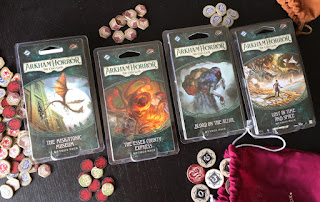

Arkham Horror Deck Building Game


Did the pandemic and the change to work practices make it more difficult than usual to put together a book like this?

I’ve been working at home since March 2020, so I’m fairly used to working remotely at this point. But luckily the Aconyte team is always around if I need to ask them something and working at home means they don’t have to listen to me excitedly chatter non-stop about all the cool stories I’m working on! I’m sure when we’re in the office they get very bored of me ruining all the books before they’ve read them. 

Our authors have always been based all over the world, so I’m getting pretty good at time zones. And having authors from across the globe means they bring their own experiences and perspectives to the table. 

One thing that has changed is that people can’t always get out to local game stores or board game cafes to play games or test them out, so we make sure to provide lots of material if they need a hand. I always try and be flexible and work with my authors to make sure the process is as smooth for them as possible, especially amongst all the recent upheaval.  


Were you a fan of Arkham Horror before getting involved with this collection, and if so how did you get into it?

I’ve been editing Aconyte’s Arkham Horror fiction since we first started back in 2019. I knew of Arkham beforehand, but I’d not had a chance to play it. So very early on myself, Marc (our publisher) and Nick (our publishing co-ordinator) sat down with the game and played it through. It did not go well… we started with such confidence (as I’m sure everyone does) but I think we were all dead within ninety minutes. We failed miserably! But it was so much fun and a great way to get into the world of Arkham Horror – plus it combines my love of gribbly monsters, alternative history and very cool characters. 


This is the first Arkham Horror anthology collection, how did you go about deciding which authors would be included in it, and the types of stories that you wanted it to feature?

When we look at authors for out books and stories, we ask them to express interest and have some knowledge or awareness of the world, and we also ask that they’re mindful of our guidelines, that they’re flexible and that they can fit with out deadlines too. We’d actually thought about putting a different anthology for Arkham Horror together, before this one, which didn’t quite work out, so I already had some interested authors from that process. So instead of our original idea, we asked them to pivot onto the new theme! 

In terms of types of story, I worked with the team at FFG to create a list of possible themes, characters (both investigators and cultists), or locations that authors could include or choose from. These were all tied to ‘The Night of the Zealot’ scenario and the Revised Core Set for the Arkham Horror Living Card Game. We very much themed it around Umôrdhoth, ghouls and things that go bump in the night, and we wanted stories that would embrace that! 


Charlotte has previously edited the Keyforge anthologyfor Aconyte Books.


The collection’s stories are all connected with the inclusion of Umôrdhoth, as well as some key themes and creatures, was it difficult to try and get these different stories to include these elements?

Actually it was very easy! We told the authors from the start what the themes were and what we were aiming for, so they knew from the start where they needed to aim. I did ask them to tell me what they were interested in before they pitched, so we didn’t end up with two stories with the same central character, but they all came up with some amazing, unique ideas. It turns out when you tell authors to write some stories about ghouls, cultists and the like, they really go all out! 


The book has stories that whilst all being horror are very different from each other, some being more psychological horror, others being historical pieces set in the distant past. How much freedom did the authors have to explore these different themes and ideas?

I tried to give the authors quite a bit of freedom, depending on what character’s they wanted to use, or what settings and themes they wanted to explore. We did have guidelines for them to follow – like a sandbox we wanted them to play in – and we do have limits on what they can include, but I really like seeing what authors come up with when given these tools, so I try to let them explore what they’re interested in. It just has to fit within the IP and the anthology, which is where I’m on hand to make suggestions, tweak details and just give things a nudge if necessary.  


What do you think it is about cosmic horror, and the work of Lovecraft in particular, that has made it endure so long and become so beloved?

This is such a cool question, and one I could probably write an essay on. I think the idea that there might be something out there, that’s not necessarily benevolent, is a concept that people are fascinated by. That there are things we cannot and should not know. It’s a reflection on the human experience – that there are dark things in the places we don’t see or don’t want to see. 

Lovecraft has endured, but I think what I like most is the way that people have taken his ideas and run with them. Created new adaptations, twisted them, and bought their own views and experiences to his work. I really love what some modern authors, and games like Arkham Horror have done, which is to take these works and use them as a basis for their exploration of these ideas. It really means we can open it up to reflect the world we live in, and the experiences of those around us, rather than just those that Lovecraft deemed fitting. 


Will this be a one off for Arkham Horror, or can we expect more anthology collections in the future?

I don’t have one planned at the moment but that doesn’t mean there won’t be one! Watch this space… 


Buy Amy A Coffee

Go to Amy's Blog

Sunday, 4 July 2021

The Devourer Below: An Arkham Horror Anthology - Book Review


'The city of Arkham falls prey to ghoulish dread in this chilling anthology of action-packed adventure, from the bestselling world of Arkham Horror

'Something monstrous has come to Arkham, Massachusetts. There have always been shadows here, but now a new hunger has risen from the depths and threatens those who dwell here. But there are heroes too – people who stand up and fight to stem the tide, even when it costs them everything. Explore eight shocking new tales of occult horror, captivating mystery, and existential fear – from a zealous new heroine to conniving cultists, bootleg whiskey to night terrors, and fiends that crawl from open graves. A nightmare has fallen across Arkham, and it will devour all.'

The Devourer Below is the first anthology book in the ever popular Arkham Horror book series, and takes readers on a host of adventures around the titular city as ordinary folk, private investigators, and monster hunters come face to face wit enigmatic cults, twisted monstrosities, and the ancient evil that connects them all; Umôrdhoth, the Devourere Below.

The first story in this collection, 'Running the Night Whiskey' by Evan Dicken is a great way to kick things off, and introduces us to several ideas that will make repeat appearances across the book. The story follows Leo, a former soldier in the Great War turned into a bit of a rogue, who upon finding himself in some trouble with local bootleggers and gangsters, agrees to help an old friend from the army smuggle some illegal booze into Arkham.

Over the course of this story we get to know Leo, and learn about his history both as a criminal and his time in the war. Dicken gives several curve balls across the narrative, letting you think one particular thing is going to happen before subtly subverting your expectations, before the final horrific revelations. The story introduces the entity of Umôrdhoth, the cults that worship him, the ghouls that serve him, as well as the idea that there are people in the world who oppose these forces, and are willing to fight against them.

'Shadows Dawning' by Georgina Kamsika tells the story of Lita Chandler, a recently widowed woman whose husband was targeted and killed by a cult. Not knowing who in Arkham she can trust anymore, but knowing that the cult is still out there, Lita enters a desperate mission to find answers as to why her husband was killed, as well as taking revenge against those who took him from her.

There's a sense of desperation to this story, as Lita struggles to find answers and to stay alive in the face of these evil people that really transports you into her shoes. Even as a reader you never know what's going to come next, you're always on guard waiting for a sudden attack to come, and you're never sure who Lita should be trusting. It really sells the insidiousness of the cults in Arkham, how they seem to be everywhere and everyone, yet also impossible to find when you want to.

'The Hounds Below' by Josh Reynolds is one of the more chilling stories in the collection, and revisits one of the ideas first suggested in 'Running the Night Whiskey'; that the battlefields of World War One played host to ghouls and monsters. The story sees an investigative journalist visiting an asylum in Arkham, hoping to talk to a man who has been locked away for cannibalism.

Over the course of watching this reporter talk to the cannibal we get to discover that he was set on this path of killing and eating people thanks to the war and the horrors that he saw there, both human horror, and those much older. It gives us a disturbing insight into how a regular person can begin to find themselves serving the darker forces of the universe, and how close we all are to pure evil under the right circumstances. 

Thomas Parrott makes two contributions to this collection, in a story that gets spread out over the course of the book. The first, 'Labyrinth' sees private investigator Joe Diamond getting wind of a possible case connected to the occult. A woman named Nadia Leandros has the same strange birth mark as a man recently found murdered, and the young woman has begun to complain about strange dreams, and people following her. Joe sets out to try and dig up some background information on the case, and with the help of a fried discovers that it might be connected to the secret of what really inspired the myth of the Labyrinth of Knossos.

This story lays the seeds for the rest of the tale, which comes at the end of the collection, but manages to craft it's own satisfying and engaging narrative as Joe is told the 'real' story of what happened to the hero Theseus. With every other story in this collection, and most stories involving the Lovecraft mythology, set within the last hundred years or so it makes for a wonderful and striking change to see this mythology meeting the myths of Ancient Greece.

Davide Mana's 'All My Friends Are Monsters' tells the story of Ruth Turner, a woman who works in the local morgue by day, but spends her nights dressed as a man drinking in the local speak-easy's. With Ruth visiting the illegal drinking establishments, wearing 'mens' clothing, and being in a relationship with a woman she's worried one day when she's approached by a couple of people who ask her to turn a blind eye to them claiming a few bodies in exchange for them staying quite about her own activities.

This story shows us how easy it is to dragged into something that is out of your control, where you can see something awful taking place, yet are powerless to do anything about it. Not only that, but over the course of the story we get to see Ruth going from appalled by what she sees happening, to strangely indifferent. The way Mana looks at how people can become desensitised by the things around them, to the point where the monstrous can become the mundane is deeply chilling.

'The Darkling Woods' by Cath Lauria tells the tale of two young orphans living on the streets of Arkham who decide to try and and get off the streets for a night. Geting away from the gangs and dangers of the docks, the two of them head into the city where they convince the owner of a small boarding house to let them rent a room for the night. But they soon discover that perhaps the streets are a little safer when the owner takes an unusual interest in them.

This is the only story in the collection that doesn't focus on adults, and frames children as the lead characters, which definitely makes it stand out a lot. So often with the Arkham Horror franchise we see adults having to deal with these issues, discovering the existence of existential horrors and cults that I never actually considered how a child would fare with doing the same. It frames the whole thing a new way, one that I'd love to see done again in the future.

'Professor Warren's Investiture' by Davidd Annandale tells the story of Professor Peter Warren, a somewhat looked down upon member of the Miskatonic University. Warren has spent years gathering information and notes on what he believes to be the greater mysteries of the universe, things that see his colleague mocking him and his life's endeavour. However, when he's approached by a woman who shares his interest, and offers him new evidence that will help his work it takes him in a dangerous new direction.

I found this story to be incredibly interesting, as it really went into Warren's obsession, and how it transforms him and consumes him to a point where it pushes him towards the very evil that he's trying to learn about. So often in these stories we discover people who are already involved in the cults, who're zealots and believers, so getting to see how someone gets twisted into that, how they come to accept these evils and enjoy it makes for an insightful story.

The final story in the collection, 'Sins in the Blood' by Thomas Parrott, continues the story of private investigator Joe Diamond as he and an ally of his, a magic practising waitress named Agnes, set out to help Nadia Leandros, and break the curse upon her family bloodline that will soon lead to her death. Unfortunately, this means that the three of them will have to not only deal with the deadly cultists that are closing in on them, but will have to perform a dangerous ritual that could destroy them all.

Whilst very different from the first part of this story, 'Sins in the Blood' works well as a conclusion to this tale, and shifts it's focus from investigating into the past to fighting for survival in the present. It's one of the more action packed entries in this collection, and is a great not to end things on. The story also makes me want to read more about Joe and his fight against the evils in Arkham; so I'm hoping this could be a character that Reynolds comes to again some day.

I've really enjoyed the Arkham Horror novels I've read, and have found them to be some incredibly creepy and compelling horror mystery stories, so I'm absolutely over the moon to see these tales work so well in short story form too, and I'm excited to see more anthology books like this. Whether you're a long time fan of the series, or looking for some shorter fiction to try out before making the big plunge, The Devourer Below is the ideal read.


Make sure to check back on the blog tomorrow as I chat with Charlotte Llewelyn-Wells, the editor of The Devourer Below, and find out how the book came to life.


Buy Amy A Coffee

Go to Amy's Blog

Saturday, 3 July 2021

5 LGBTQ+ Graphic Novels To Check Out


Originally published on Set The Tape


Whilst comic books and graphic novels used to be the sole domain of brightly coloured heroes and odd villains, the industry has expanded over the decades, and independent comics are more popular than ever, with more and more books that don’t fit into the superhero mould becoming best sellers. But it can still be hard to find comics that showcase LGBTQ+ content. Well, here are five titles that you absolutely need to check out.


The Deep And Dark Blue by Niki Smith

After a political coup sees twins Hawke and Grayson having to flee their family home, they need to find somewhere to hide away from those who want to kill them in order to take over the kingdom.

Donning disguises as Hannah and Grayce they take refuge with the priestesses of The Communion of the Blue. Whilst Hawke spends his time plotting ways to take back his home and yearns for the day he can throw off his disguise, Grayce discovers that she’s never been happier, and realises that her old life as Grayson was the real disguise she had to wear.

The Deep And Dark Blue is a fantasy story filled with political machinations, as well as some subtle magic, but at its heart it’s a story about self discovery and learning to become yourself. Grayce’s journey to realising that she was always supposed to be a girl is genuinely beautiful, and the moment where she comes out to her brother literally made me cry. The message of acceptance and love within the pages of this book make it one I’ll come back to time and time again.


You Brought Me The Ocean by Alex Sanchez

Jake Hyde lives with his single mother in the desert town of Truth or Consequences in New Mexico, far from the ocean. Despite this, he yearns to be near the water, and is planning to leave his hometown to attend college on the coast.

As Jake figures out how he’s going to reveal his life changing plans to his mother, and best friend Maria, he is shocked to find that he’s attracted to Kenny, captain of the swim team. Not only that, but he’s been hiding strange powers that appear whenever he touches water.

You Brought Me The Ocean is actually a re-imagining of the origin story of Jackson Hyde, also known as Aqualad. Originally introduced during the comic event Brightest Day in 2010, the character would go through some changes over the years and eventually come out as gay.

Alex Sanchez changes Jake’s backstory, having him realise his sexuality during his final days in high school, and the drama that comes along with it. Despite being a story about a superhero, his powers and the broader DC universe don’t play much of a part in this story, and it’s focused instead on a very real and relatable young man. Even if you’ve never picked up a superhero book and have no desire to, this is a comic that anyone would fall in love with.


How To Be Ace: A Memoir of Growing Up Asexual by Rebecca Burgess

Asexuality can often be overlooked, or outright denied to exist. People will turn around to asexual people and tell them that they’ve ‘not found the right person yet’, or that they’re ‘being too picky’.

There are even people within the LGBTQ+ community who will deny Ace folks exist. This is why a book like Rebecca Burgess’ How To Be Ace are really important.

An autobiographical book, it tells Rebecca’s story as she navigates her life trying to figure out her sexuality. Because of how little asexuality is talked about Rebecca spends a great deal of the book unsure if she’s ‘normal’, and it’s as much about her journey to understand it herself as it is getting others to too.

However, thanks to books like this, asexuality is becoming more and more recognised, and this is the perfect graphic novel to help young people figure out their own sexuality, and if they too might be ace.


Girl Haven by Lilah Sturges

Three years after Ash’s mother disappeared they make friends with a group of girls at their school. It turns out that the three of them are part of the school’s Pride club, and invite Ash to hang out with them.

When they go to spend time at Ash’s house they discover a load of stuff that Ash’s mother left behind, costumes and books about the magic kingdom of Koretris. The four friends try one of the magic spells in the books and find themselves transported to Koretris, which is odd as only girls are supposed to be able to go there, and Ash was born a boy. As the four of them travel across the magic land trying to find a way home, Ash begins to question if they were ever really a boy at all.

Having previously found fame writing Lumberjanes, which also has some great queer representation, trans author Lilah Sturges decides to make a book about not only discovering your queer identity whilst still a teen, but coming out as trans too. The fact that it’s all set in a magical kingdom with sword wielding rabbit people, ancient prophecies, and powerful villains to vanquish just makes it even more enjoyable.


Batwoman: Elegy by Greg Rucka

Another entry from DC Comics, this one is actually set within the mainstream universe, and is the first story under the Batwoman title.

Originally having been introduced into comics as part of the year long 52 series, where she was also written by Rucka, Batwoman may have worn a costume similar to Batman, but had no connection with the character. Instead, Kate Kane took on the heroic identity to help protect Gotham in Batman’s absence.

What makes the series stand out, other than the amazing art, is the fact that it’s the first DC title with an openly lesbian hero headlining. Plus, Kate’s sexuality is a major part of the story, as she’d previously been thrown out of the military for being a lesbian. Whilst the character might have found further fame thanks to the CW series where actress Ruby Rose took on the role, this is essentially the comic that started it all, and is the first time DC really took a chance on a queer hero in a mainstream way.


Buy Amy A Coffee

Go to Amy's Blog

Friday, 2 July 2021

Sonic & Sega All-Stars Racing – Throwback 10


Originally published on Set The Tape


Racing games have always been big business for the video games industry. They might not be the biggest earners or the most memorable games around, but they always sell well, and there are always a lot of them on every gaming system. Whilst most try to take a serious approach to racing, one of the biggest names in the entire genre was the cartoonish Mario Kart series, which has been around since 1992.

Other companies tried to emulate the success of Nintendo’s racing game, but none were really able to recapture that kind of magic, or offer as iconic a roster of racers. It looked like the Italian plumber would dominate racing, but that changed in 2011 when Sega released Sonic & Sega All-Stars Racing.

Now, I’m not saying that it’s better than Mario Kart, or that it achieves the same level of sales or recognition, but it’s one of the only games around that’s able to stand beside the Nintendo series for fun, brightly coloured environments, and instantly recognisable characters.

Released onto multiple platforms, including the Xbox 360, Playstation 3, Wii, and even the handheld Nintendo DS, the game received positive reviews from publications on its release, and public praise quickly followed. It was instantly popular thanks not only to its host of characters (more on that in a bit), but it’s inventive level of design. Drawing upon other games produced by Sega, the racer allowed players to revisit some classics. There was Sunshine Tour, which took inspiration from Dreamcast game Samba de Amigo; Monkey Target, which took racers into the treetops of the popular Gamecube title Super Monkey Ball; the snow covered Icicle Valley, based upon little remembered Billy Hatcher game; and of course, tracks like Ocean Ruin, which recreated stages from the Sonic The Hedgehog series.


Not only did the game offer some fun and frantic courses to race in across three different modes – Grand Prix, Single Race, and Time Tiral – it also included Missions, special tasks that require you to complete races and challenges under certain conditions. These ranged from drifting for a set amount of time, to beating the race whilst a countdown eliminated the racers at the rear, and even driving around new areas collecting items. These Missions took practice, and if you wanted to beat them with the best rank they could require multiple play throughs. The Missions added a lot of extra playability to the game, giving people something more to do than simply beating the same tracks over and over again, and completing these missions was as fun a group activity as the regular races whenever I got together with friends to play the game.


The game also offered a lot of characters to choose from. Unlike Mario Kart, which (with a few exceptions) chiefly drew upon only the Super Mario series, Sonic & Sega All-Stars Racing featured racers from across Sega’s catalogue of games. Of course there were the expected characters like Sonic, Tails, Shadow the Hedgehog, and even Doctor Eggman, but there were some odd choices too, like the Bonanza Brothers, Jacky and Akira from Virtual Fighter, a couple of zombies from House of the Dead, Ulala from Space Channel 5, and Opa-Opa from Fantasy Zone who ran around the track itself rather than using a vehicle.

Having these iconic characters mixed in with some obscure, and some would say bizarre, choices makes for a game that felt a lot different from other racing games. It felt like Sega wasn’t necessarily trying to make a game that felt cohesive, but one that was fun, that drew upon everything the company had done before as a big celebration of their characters and games, even if it didn’t quite fit together perfectly.

Whilst Mario Kart might be one of the most iconic ‘fun’ racing games it’s a series that I feel gets a little too much praise. If you’re looking for a truly fun, wacky, and enjoyable racing game you need to look at their Sega cousin instead, as Sonic & Sega All-Stars Racing will forever be one of my favourite racing games ever made.


Buy Amy A Coffee

Go to Amy's Blog