Wednesday, 6 June 2018

The Grass Arena – DVD Review


Originally published on Set The Tape


The Grass Arena tells the true life story of John Healy (Mark Rylance), a man who hit rock bottom, but managed to turn his life around thanks to his love of chess. Based upon the autobiography of the same name, the 1990’s film has finally come to home release on DVD.

I’d never heard of John Healy before watching this film, and found the synopsis of the film to be very interesting, and was looking forward to learning more about him. Unfortunately, I felt fairly let down by the end.

My main issue with the film is that it packs a lot into it’s run time, but doesn’t really give any other the plot points or character development any real time. The film begins with John’s childhood, where we see the abuse that he suffered at home from his overbearing and abusive father.

Much of this abuse stems from the fact that John struggles to stand up straight, complaining about what he describes as a lump in his back. This feels like it should be something that’s addressed, especially after an X-ray discovers a shadow over one of his lungs, yet this is dropped without an explenation and never comes up again; leaving me wondering what John may have been wrong with John, and if this was something that plagued him throughout life.

Another aspect of his childhood that puts him at odds with his father is his lack of faith, but yet again this isn’t really gone into. It’s not clear if John had faith and lost it, or if he never believed in god to begin with. I couldn’t help but feel that for a plot point that was such a big part of John’s poor childhood, a sentence or two of dialogue giving more context would have helped a little.

Sadly, this is something that would give me issue throughout the film, as the film makes a number of jumps in time and story, yet never really goes into explanation as to what’s happening. For example, at one point John meets a woman in a cafe, the next he’s living with her and two other men in an abandoned factory until one of them dies. Who are these people? How did he start living with them? How long were they together? I haven’t a clue, because the film fails to explain this, and several other developments in John’s life.

Much of this feels like a product of time constraints. It felt like 90 minutes wasn’t enough time to fit in all of the information on a life as packed as John’s. Perhaps a mini-series would have been a better format as it would have allowed the filmmakers more time to explain and develop the events in a more cohesive way.

There are moments in the film that are good, however, such as when Fox (Bunny May) teaches him to play chess. Watching the development between the two of them is a genuinely sweet moment, especially when the two of them are playing the game in their bunk at night, all in their heads. The natural ability of John is astounding, and his chess skills are shocking, especially as it was what he needed to end the cycle of self destruction that he was on, giving him that new obsession he needed to stay sober.

The Grass Arena is far from a perfect film, but it achieves it’s goals of telling a story about an amazing and inspiring man. It shows that it’s never too late to turn your life around or to discover your true passions. If given more time to go into greater detail the film would have been even better, but as it is, it’s still a well made and competent movie.


Go to Amy's Blog

Monday, 4 June 2018

Star Wars: Smuggler’s Run by Greg Rucka - Book Review


Originally published on Set The Tape


Released shortly after Star Wars: The Force Awakens, and advertised as containing clues to the film, Star Wars: Smuggler’s Run focuses on the first mission that Han Solo and Chewbacca undertake for the Rebel Alliance.

Beginning just hours after the medal ceremony at the end of Star Wars: A New Hope, the book sees Princess Leia convincing the pair of smugglers to travel to the Outer Rim world of Cyrkon in order to rescue a Rebel agent on the run from the Empire.

It’s interesting to see Han and Chewie so quickly after the events of Star Wars: A New Hope, where they are still trying to break away from their criminal past and wanting to become the freedom fighters we know that they will go on to be. Throughout the book we see Han and Chewie discussing their motivations for helping the Rebels.

We get to see the fight within Han in particular as he wants to be seen as a dashing rogue, capable of heroic actions, but is confronted by the reality that whilst people may like him, they don’t completely trust him. This helps to fill in some of the character development that we don’t get to see between episodes 4 and 5.

Star Wars: Smuggler’s Run also fills in some of Han Solo’s past, not only letting us meet some of his friends and former associates such as Delia and Curtis, whilst showing the reader some of the less savoury sides of Han’s time as a criminal as he comes up against a group of bounty hunters looking to cash in on Jabba the Hutt’s bounty.

When a vicious Imperial Security Bureau agent arrives on Cyrkon looking for the rebel that Han and Chewie are there to help, things get even more complicated, with multiple factions getting in the way of our heroes from achieving their goals.


The Imperial agent, Alecia Beck, is a surprisingly good antagonist considering the relatively short amount of time given over to her in the fairly short book. She’s cold and calculating, willing to hurt civilians, and to brutally punish the enemies of the Empire; coupled with her startling visual look of white uniform, facial scar, and cybernetic eye, she’s an impressive villain. It’s a shame that she has yet to be featured in any other Star Wars lore, as she would be perfect for more stories involving the Empire.

Beck is also joined in her actions by the older clone trooper Rainer, who acts as her second in command. Whilst he doesn’t have a great deal to do in the story, it’s a nice inclusion that ties the original trilogy more to the prequel era stories. Much like Star Wars Rebels and their inclusion of Star Wars Clone Wars characters, I’m happy to see the Star Wars stories merge together more into one cohesive whole.

Star Wars: Smuggler’s Run, like the other books in the ‘Journey to Star Wars: The Force Awakens’ book series, has a few illustrated pages at certain points in the book. Beautiful painted art by Phil Noto, who has worked on a number of the Marvel Star Wars comics, they look stunning in black and white, with brief splashes of red. It’s a shame that the book doesn’t have more pages like this.

Whilst Star Wars: Smuggler’s Run is a short read, and designed to be accessible to readers of a young age, it has enough content to it to have several action sequences, as well as character development. Being a part of the new official canon, Star Wars: Smuggler’s Run offers some great insight into everyone’s favourite smuggler and his Wookie companion.


Go to Amy's Blog

Ghost House – Film Review


Originally published on Set The Tape


Ghost House tells the story of Jim (James Landry Hebert) and Julie (Scout Taylor-Compton), a young couple on holiday in Thailand. Everything is going well for the young couple, they’ve got a likeable, if other enthusiastic tour-guide/driver who’s taking care of them, Julie is loving photographing their surroundings, and they’ve just gotten engaged. It should be a wonderful holiday, but, it would appear that the two of them don’t know some very simple rules.

Never go off the beaten track into strange places, never accept drinks from strangers, and don’t mess with ghost houses. Some of these are fairly simple and should really be common sense for most travellers (probably not the ghost house bit to be fair though), but Jim and Julie quickly fall under the obviously creepy influence of two British holidaymakers Robert (Russell Geoffrey Banks) and Billy (Rich Lee Gray).

Despite appearing to want to celebrate the new engagement, it’s clear that something else is going on, and when the two Brits lure the young couple out into the countryside to look as a ghost house graveyard Julie is soon tricked into disturbing one of the houses, letting her fall victim to the vengeful spirit residing within.

For those wondering what a ghost house is a small shrine made as a place for restless spirits to live. Found throughout several Southeast Asian countries, spirit houses as they are known in real life, can range in size and design, but are mostly like elaborate bird tables.

The ghost house graveyard, a place filled with old and decaying ghost houses, is a very creepy location, filled with fog, twisted sculptures, and hidden danger. In fact, every time you see a ghost house (even before they make it to the grave yard) the film does its best to put you on edge, focusing on the darkness within them, with shots that slowly zoom in, lasting longer than they probably should.


Once Julie has disturbed the ghost house, however, the tension never really goes away as we see the spirit slowly worm its way into her soul. The best way to describe it is like a form of possession, but Julie is never ‘taken over’ or becomes someone else. Instead, she’s slowly drawn deeper into the spirit world, the ghost appearing and disappearing, using jumps and a sense of dread as it stalks Julie for the course of the film.

The scenes with the ghost, played by Wen-Chu Yang, are well crafted enough, with the jump scares never feeling overly forced. The times when it works best, though, are when you know that she’s coming, but the scene draws itself out, with the faint sound of the ghost getting closer the only indication that she’s around.

Whilst Julie is plagued by these ghostly apparitions Jim has to find a way to save her, leading to an adventure through the back streets of Thailand, and deep into the countryside to seek help from a witch doctor. Some of the best scenes happen once the group leaves the familiar surroundings of the city and ventures into the forests. It’s an environment that’s not always seen, familiar yet alien, and it makes the characters feel more isolated and heightens the sense of danger.

There are many aspects of Ghost House that will feel familiar, especially if you’ve seen a few Asian horror films over the years, and whilst it might not win any awards for originality or innovation, it does execute its story well. The scenes are well shot, and there’s a lot of atmosphere, especially in the scenes in the haunted forests.

Ghost House achieves what it sets out to do, and delivers an engaging and enjoyable horror experience, and the faults that are present can easily be forgiven.


Go to Amy's Blog

Thursday, 31 May 2018

The Ice King – DVD Review


Originally published on Set The Tape


Released by: Dogwoof Entertainment
Directed by: James Erskine
Run Time: 88 minutes
RRP: £12.9

John Curry transformed ice skating from a dated sport into an exalted art form. Coming out on the night of his Olympic Win in 1976, he became the first openly gay Olympian in a time when homosexuality was not even fully legal. Toxic yet charming; rebellious yet elitist; emotionally aloof yet spectacularly needy; ferociously ambitious yet bent on self-destruction, this is a man forever on the run: from his father’s ghost, his country, and even his own self. Above all, John Curry was an artist and an athlete whose body time and again – sometimes against his will – became a political battlefield.

The Ice King tells the captivating true-life story of John Curry, a young man from Birmingham who would go on to transform the world of figure skating, changing it from a rigid sport into the art it is today. Before Torvill and Dean became household names, John Curry paved the way.

Whilst I won’t admit to knowing a great deal about sport (anyone who has seen me try to do any will attest to that) I was incredibly surprised by how much I didn’t know about figure skating. For male skaters, the sport was more of a display of athletic ability, rather than the balletic form it is now.

This was the world into which the young John Curry entered, a man who had wanted to go into dancing and ballet but was prevent from doing so by his father, who felt that it was an un-masculine pursuit. Through his passion for dance and his deep sensitivity he would go on to change the entire sport, wowing judges and audiences across the world in competitions and even the Winter Olympics.


The film shines a light on his passions, on the dedication that he put into his craft, and how it would go on to direct his entire life; leaving competitive figure skating to establish his own touring skating company that modelled itself on a traditional dance company, travelling around the world to perform to sold out audiences.

The Ice King shows another side to John Curry, however, as it explores the pain and depression that he suffered through, a part of people’s lives that aren’t often shown to the public. More than once in the documentary Curry says ‘Whatever greatness I  possess, there are demons of equal value’.

One part of this is due to John being gay, a factor that would shape his life in huge ways, both because of the era of rampant homophobia that he lived in, but also because of his coming out on the day that he won his Olympic gold medal.

This is one of the more fascinating parts of the documentary, seeing the world that John had to live in, seeing grown men addressing rooms full of children warning of the danger of ‘queers’, or the hatred towards the gay community during the AIDS crisis.

Unfortunately, due to John Curry dying of an AIDS-related heart attack in 1994 he is unable to take part in this documentary himself, though through the use of archived interviews, camcorder footage of performances (which are often times the only footage in existence, complete with audience members getting in the way and shaky handling), and interviews with people who knew him the documentary feels incredibly in depth and personal.

There are sections of the film that use extracts from his personal letters to provide insight into his inner thoughts during some of the bigger events of his life, voiced by a particularly good voice impersonator. Whilst I don’t always like these kind of methods in documentaries, it works very well here.

The Ice King brilliantly brings together archive footage, voice over interviews, and candid video to deliver a truly well crafted and thoughtful documentary, telling the tale of a man that changed an entire sport and influenced thousands of people across the world.


Go to Amy's Blog

Star Trek: The Next Generation: Through the Mirror #4 – Comic Review


Originally published on Set The Tape


Finally, Mirror Picard’s plot is revealed! It’s Enterprise crew versus Enterprise crew, with the fate of a galaxy hanging in the balance!

Publisher: IDW Publishing
Writers: Scott Tipton & David Tipton
Artists: J.K. Woodward & Carlos Niet
Pages: 32

Finally, readers of Star Trek: The Next Generation: Through the Mirror get to find out what the mirror universe Captain Picard’s plans are; and they’re much bigger than I was expecting.

The previous issues had made it clear the the I.S.S. Enterprise and it’s crew were stealing technology and resources from the prime universe in order to fill their ship stores, and to act as bartering supplies to help them win favours with other Imperial ships. Whilst I thought that they were targeting the U.S.S. Enterprise in order to steal something from them, probably something unique to the ship itself, I was completely wrong; they wanted the entire ship.

Having modified the Martorelles Array to act as a giant transporter, capable of bringing an entire star-ship through universes, the crew of the I.S.S. Enterprise intend to claim the ship as their own, with the eventual goal of each of their command crew having their own Galaxy Class ship to command; making them an unstoppable force.

Not wanting to bring across the entire crew and ending up with a thousand or more hostages, the mirror universe gang have come up with a plan to trick the people off the U.S.S. Enterprise. This is the part of the mission that Inquisitor Troi was tasked with, that we never got to see in the previous issue.

Thanks to some sheer luck of Commander Riker wanting to find their Troi at the same time the Inquisitor is on the ship, they discover that there are two Diana’s, and that one is sabotaging the ship. It’s a fun little moment as Riker and Data realise that the computer isn’t malfunctioning, but rather they’ve been infiltrated, and it’s a good way for the plan to go wrong without having one of the mirror universe crew having messed up in some way.

Thankfully, being aware of the sabotage the U.S.S. Enterprise crew manage to undo it, and even beam across to the mirror univers themselves, bringing Captain Picard face to face with his double on board the I.S.S. Enterprise for a confrontation that is sure to be explosive and dramatic.

The fourth issue moves with a brisk pace, and there’s almost no time to stop and think about what is happening, but with so little time left in which to tell the story this fast pace is needed in order to get all of the pieces in place for the final issue. Thankfully, this faster pace isn’t a detriment to the story in any way, and the reader is still given some small character moments to enjoy, such as the alternate Barclay and his anger over how the U.S.S. Enterprise crew treats his counterpart.

The art, as always, is on fine form, and you’re instantly able to tell who is who without any difficulty, something that is always good when your characters are supposed to look like real people. The best art in the issue, however, still falls to the B story by J.K. Woodward. The wonderful hand painted style gives these few pages a lot of gravitas. The darkness of Data and Spock’s surroundings doesn’t just feel like a dark mass, but has texture and depth. The recreation of the actors here is also spectacular, with the actors faces being near spot on in every single panel.

The B story also finally offers some more insight into the past of Emperor Spock, and the reformed Terran Empire that he created following the mirror episode on the original series. As this not only ties into the story being told in these Star Trek: The Next Generation comics, but also plays a part into the history of the mirror universe seen in several Star Trek: Deep Space Nine episodes, it’s a nice inclusion.

With only two issues left of Star Trek: The Next Generation: Through the Mirror in which to wrap up its story both Scott and David Tipton keep the story moving with pace, but never make it feel rushed. It gives us small character moments, and big scenes filled with exposition. It manages to keep the reader entertained throughout and move all of the pieces into place for what is sure to be a dramatic conclusion.


Go to Amy's Blog

Tuesday, 29 May 2018

Star Wars: Death Troopers by Joe Schreiber - Book Review


Originally published on Set The Tape


When the Imperial prison barge Purge–temporary home to five hundred of the galaxy’s most ruthless killers, rebels, scoundrels, and thieves–breaks down in a distant, uninhabited part of space, its only hope appears to lie with a Star Destroyer found drifting, derelict, and seemingly abandoned. But when a boarding party from the Purge is sent to scavenge for parts, only half of them come back–bringing with them a horrific disease so lethal that within hours nearly all aboard the Purge die in ways too hideous to imagine. And death is only the beginning.

The Purge’s half-dozen survivors–two teenage brothers, a sadistic captain of the guards, a couple of rogue smugglers, and the chief medical officer, the lone woman on board–will do whatever it takes to stay alive. But nothing can prepare them for what lies waiting aboard the Star Destroyer amid its vast creaking emptiness that isn’t really empty at all. For the dead are rising: soulless, unstoppable, and unspeakably hungry.

Publisher: Del Rey Books
Author: Joe Schriber
Pages: 304
Price: £5.99

After the Disney purchase of Star Wars one of the biggest concerns of fans became what was and wasn’t canon anymore. The stories that came after Star Wars: Return of the Jedi were pretty much assumed to be going as this was the area that Disney would be wanting to make films about, but the pasts of the characters was something that could still draw upon the stories that are now considered Legends. Solo: A Star Wars Story is set to fill in some of these gaps for the beloved character of Han Solo, but the Legends stories are full of interesting histories, one of which is a strange departure for the Star Wars universe. Star Wars: Death Troopers.

Set before the events of Star Wars: A New Hope, Star Wars: Death Troopers tells the story of Han and Chewie as prisoners of the Empire aboard the prison ship Purge. It being a prequel, and Han and Chewie being free men in the first film, it’s clear that the two of them won’t stay prisoners for long. But if you’re expecting a daring prison break story you’re very much wrong. This book is a pure horror story.

The book introduces the audience to the stark reality of the Imperial prison ship through two of our main characters, the teenage Kale and Trig Longo, prisoners of the Empire. We see the brutal conditions that they have to survive in; the sadistic nature of Jareth Sartoris, the guard responsible for their fathers death; and Zahara Cody, the ships medic that isn’t really cut out for a life in the Empire thanks to having a heart.

Things begin to go wrong when the Purge suffers from engine failure, leaving the ship in desperate need. Thankfully, they come across a Star Destroyer, however, it’s just floating in space. After bio-scanning the ship they discover that there are only 10 life reading aboard; on a ship designed for 10,000. Sending a team onto the Star Destroyer looking for parts they inadvertently bring back an infection that turns everyone but the Longo brothers, Sartoris, Cody, and a handful of other into what can only be described as zombies. Yes, Star Wars: Death Troopers is a zombie horror.


Freeing the two uninfected prisoners in the maximum security cells, Han Solo and Chewbacca, the survivors must try to find a way to escape the thousands of flesh eating monsters that now infest both ships.

Star Wars: Death Troopers is a big departure for any other Star Wars book I’ve read, and it may not be to everyone’s tastes, but it’s a surprisingly interesting and engaging mix of the sci-fi fantasy universe we’ve come to know and love, and traditional horror story scenarios. The survivors creeping their way through the tight, dark halls of the disabled ships whilst trying to avoid the ravenous undead is surprisingly tense, and the lack of any Force users makes the story feel a lot more grounded and real.

It’s not just tense corridor creeping though, there are moments of face paced action as hordes of hundreds of infected come charging at the desperate survivors, leading to some interesting and inventive moments. One particular part of the story that stood out was the zombie Wookies, that’s definitely something that isn’t in any other Star Wars story.

Whilst it might not be to everyone’s tastes Star Wars: Death Troopers is an interesting an unique Star Wars book, and a odd look into what was once a part of Han Solo’s back story. With Alden Ehrenreich apparently signed on for more Star Wars films, maybe we’ll get to see Han Solo fight zombies on the big screen one day – though I wouldn’t put my money on it!


Go to Amy's Blog

Friday, 25 May 2018

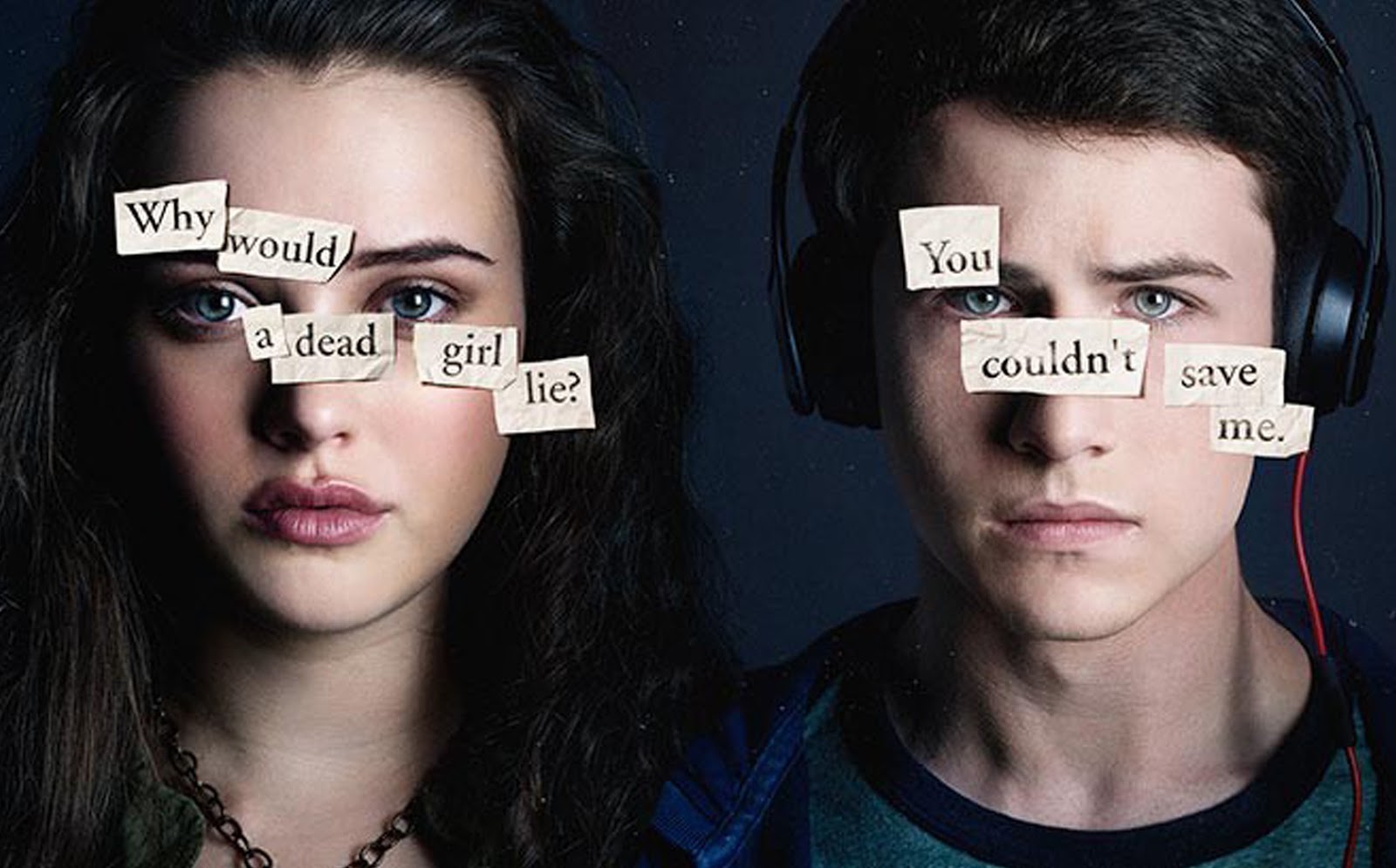
13 Reasons Why: Is the series irresponsible?


Originally published on Set The Tape


Even if you’ve not watched 13 Reasons Why, you’ve probably heard of the Netflix series adapted from the Young Adult novel that focuses on the suicide of Hannah Baker (Katherine Langford). Having taken her life, it’s revealed that Hannah has left behind a series of tapes to tell the people in her life how they contributed towards her suicide.

Whilst the show was praised by many viewers as a source of entertainment, not everyone liked what it did narratively. Some members of the mental health community and suicide prevention groups spoke out about the show as being problematic, reported here in the Guardian. Returning for a second season this week, the discussions about 13 Reasons Why and its potential to impact people with suicidal feelings have arisen once again.

The biggest issue is that the story appears to glorify suicide, making the act seem like something dramatic that can be used as a form of revenge against those who do you wrong.

The series is about a suicide, yet has very little to say about the reality of the act, particularly the psychology behind it. The audience don’t know the real Hannah Baker, they didn’t get to see her before everything fell apart for her. Suicide is a result of a culmination of events, but 13 Reasons Why doesn’t tell us this, it just shows the end result.

The danger that Netflix must mitigate against in the second season is that it can appear to some viewers as if suicide is the one and only response to the issues that Hannah faces. Young people suffering from depression and suicidal thoughts may see the way the series paints suicide as the ultimate act of revenge, which isn’t how suicide works at all. Suicide does affect those people left behind, yes, but not in the ways that the show portrays. 13 Reasons Why is a fantasy and has very little semblance on reality.

Hannah believes that people have done her harm and responds to this by forging a plan to get her own back against them by taking her life, reinforcing the notion that suicide is often undertaken for selfish reasons. In reality, people with suicidal thoughts often feel more hopeless and burdensome instead of crafting elaborate plans for revenge. Personally, I find it hard to believe that someone who is that close to suicide would have the energy or motivation to craft such an elaborate plan.

There are many factors that lead to suicide, including prior attempts, substance and drug abuse, mental illness, and family history, but the show only focuses on interpersonal stressors between Hannah and her friends. It is important to highlight to viewers that although the series tries to paint a straight line between bullying and sexual assault and suicide, it isn’t that simple in real life.

13 Reasons Why doesn’t just romanticise suicide, but it fails to inform viewers clearly enough about the warning signs during the episodes, which paints suicide in a very dangerous and irresponsible way.


Go to Amy's Blog

Trailblazers – Video Game Review


Originally published on Set The Tape


Trailblazers is a fresh new co-operative racing title with an innovative on-track game mechanic: paint the track, boost on your colour and work as a team to win!

Take control of high-speed racers in unique 3v3 team races across a series of colourful circuits. Paint the track as you race, capturing key areas to dynamically change the racing line, then boost on your team’s colour to dominate the race!

Platforms: Playstation 4, Xbox One, PC, Nintendo Switch (later this year)
Developer: Supergonk
Publisher: Rising Star Game

I’ve never been into racing games. I often find them quite repetitive and dull. One of the racing games that I did enjoy, however, was the F-Zero series, probably thanks to the fast paced racing style and unique vehicles. With it having been years since the last F-Zero game, Trailblazers manages to to recapture some of this magic and combines it with the bright, colourful fun of Splatoon.

Trailblazers borrows from the vehicles of F-Zero with the painting dynamic of the Nintendo shooter. Zipping around the twisting tracks whilst laying trails of pain, you have to work with your team mates in order to win, using the pain trails to boost your way to a victory. Your team paint trail lets your vehicle boost, and you can chain these boosts up to even greater speeds, hurtling you around the track at incredible speeds.


The pain mechanic isn’t just a simple boost feature, however, as you can pain over the opposing teams trail in order to give your team a boost whilst denying them one, as well as firing your pain ahead of you to stun enemy racers that might be in the lead. These features give the game a more tactical aspect, as you have to keep an eye on your trails, choose where to pain and where to get rid of the other teams paint, and can even be offensive when need be. Coupled together with some multi-route tracks and races that happen across multiple levels, it makes Trailblazers a racing game that is more tactical than most.

The locations in Trailblazers are brightly coloured and visually impressive. There’s the orange desert location, the bright green jungle world, the blues and purples of the futuristic city; with all of the tracks being bright and distinct from each other.

The design aesthetic of the game isn’t just limited to the tracks, as all of the racers and their vehicles are hugely different. Some ships look like beaten up pick-up trucks, others are sleek and new, and some even look like classic cars turned into sci-fi vehicles. Whilst the vehicles have similarities to many modern and historic cars, the racers are a much more varied bunch, with a cast that includes humans, robot, and aliens. My personal favourite is the little blue frog-man.


Trailblazers is immediately accessible, with the basics covered in just a couple of races, but thanks to the options available through different racers with their own abilities, tactical racing, and multiple vehicles, it’s a game that also has a lot more depth to it; one that can take a lot longer to master.

Thanks to a lengthy story campaign that lets you try out each of the racers, with multiple medals to unlock and a cross-platform multiplayer that allows you to play against real people at any time, Trailblazers is a game with a huge amount of life in it. I’m very much looking forward to its future release on the Switch, as it’s the perfect game to play on the go.


Go to Amy's Blog

Star Trek: The Next Generation: Through the Mirror #3 – Comic Review


Originally published on Set The Tape


It’s interstellar espionage aboard the Enterprise-D when the Mirror Universe crew infiltrates Captain Picard’s ship! What are they up to? The answers are here!

Publisher: IDW Publishing
Writers: Scott Tipton & David Tipton
Artists: J.K. Woodward & Josh Hood

The third issue of Star Trek: The Next Generation: Through the Mirror, the follow-up to the popular Star Trek: The Next Generation: Mirror Broken, finally begins to answer some of the questions raised in issues one and two.

It appears that the I.S.S. Enterprise-D, the mirror universe version of the Enterprise, has been using their transporters to send members of their crew across into the main universe in order to steal supplies and equipment, things that are in very short supply to them due to blockades set up by the Klingon and Cardassians.

The thefts aren’t just to help the I.S.S. Enterprise, however, but are being used as bargaining chips in order to gain favours and alliances with other ships in the Terran Empire. It appears that the mirror Picard has bigger plans than simply filling his cargo bays.

One of the big parts of his plan appears to involve the U.S.S. Enterprise, and requires them sending a member of their own crew onto the Enterprise in order to trick them into going where they want them to be. This is what makes the third issue stand out from the others, it feels more like a heist story, with Reg Barclay training for his mission on the holodeck, the sneaking through the ship, sending false messages and knocking out guards.

It took me a while when first seeing Barclay’s practice run to realise what was going on, despite several clues throughout, such as crew members being dressed in the early season uniforms. It’s a subtle touch that you don’t even pick up on straight away, but makes perfect sense within the context of the story.

Despite some slight mishaps, such as Barclay beating the crap out of Enterprise crew members because he didn’t like that they said, it appears that the crew of the I.S.S. Enterprise have succeeded in their task of luring the Enterprise into a trap.

In the back up story, ‘Ripe For Plunder’, which is done in the same gorgeous art style as Star Trek: The Next Generation: Mirror Broken, Data has continued in his search for the missing Emperor Spock, finding him hiding on a jungle planet under heavy guard. Despite all the intrigue in the main story, I’m actually more interested in finding out what’s going to happen between Data and Spock in the next issue.

With more of the plot and motivations being revealed it finally feels like Star Trek: The Next Generation: Through the Mirror is stepping up in pace and excitement. Hopefully the title will continue to deliver on this quality in the upcoming issues, and will end up being as good as the previous story.


Go to Amy's Blog

Tuesday, 22 May 2018

New Horizons by Christopher Webster – Book Review


Originally published on Set The Tape


Kids call it The Compound – an endless wilderness enclave where teens rule and every day is a fight for survival. A world out-of-time where an elaborate culture has arisen out of the violence and scarcity, and all live under the thumb of unseen masters who have ultimate control.

15 year-old Marcus Riley is The Compound’s latest enrolment. A delinquent, kidnapped from his inner-city apartment; he wakes up alone in the wilderness. Left with nothing but the clothes on his back and a cryptic note in his pocket, it seems only his wits will keep him alive… but for how long?

Publisher: StoryFix Media
Author: Christopher Webster
Pages: 295
Price: £8.99

Young Adult books are an interesting genre, often telling coming of age stories. You tend to find that they’re either stories of romance and young love, or stories of survival and overcoming overwhelming odds. Whilst New Horizons does have a small amount of teenage love within its pages, it very much squarely falls into the latter category.

Taken from his normal life and thrust into a strange place, forced to survive whilst some unseen group monitor and manipulate from behind the scenes, at first New Horizons had something of a Maze Runner vibe to it. What sets this apart though, is the fact that it’s taking place today, in the modern world.

There’s a strange facility/compound that’s being run by a shady organisation, like in other YA books yes, but it isn’t some dystopian future where such things can be waved away as ‘how the world works now’. The Compound exists in an America that exists now, in a society that seems to be pretty much exactly like ours. And this is one of the most intriguing things about this book.

The characters are from the ‘real world’, as it were, they’ve been to high school, they talk about music and fashion, they reference social media and popular television shows, and this makes the book more refreshing than you’d initially think. It’s not a world ravaged by disease or global disaster, or a society ruled by the elite whilst the regular people live in despair; this is us as we are now, which makes the way the characters react and interact more relatable and interesting.

The lead character, Marcus Riley, is an interesting hero for the story. You see, unlike other YA stories that are in a similar vein, I absolutely hated him to begin with. Unlike characters such as Katniss Everdeen in The Hunger Games or Thomas in The Maze Runner, Marcus begins the story as an arsehole.

With his parents having recently divorced, he hates his father, constantly lashes out at his mother, acts as a spoilt brat, and generally is the kind of kid you’d never want to have yourself. The worst part is when he becomes responsible for putting another kid in hospital, potentially dying, his response is that it’s not fair on him.

I honestly thought that I was going to dislike the book because of how much I really hated Marcus, but Webster manages to have the character grow and evolve over the course of the story in a very believable way, almost to the point where you’ve not realised how much he’s changed until he steps up to be the selfless hero. His level of growth makes him stand apart from other YA leads, who tend to start off as fairly good, heroic people.

The story itself has plenty of twists and turns in it to keep it interesting, and whilst it does have some degree of mystery around what is happening you don’t feel cheated come the end when you get a lot of answers, yet still have questions needing resolution.

New Horizons is the first part of a trilogy of books, yet ends in such a way that it could have been a one-and-done self contained story. However, this isn’t a bad thing by any means. It actually opens the scope for the second book in exciting ways as I genuinely have no idea where the story is going to go next.

With interesting and well crafted characters, a story that feels very fantastical yet grounded in a recognisable and real world, New Horizons is an interesting first instalment in a new series of Young Adult stories that I’m sure will prove to be very popular.


Go to Amy's Blog