Saturday, 3 June 2023

Nightjar by Katya Balen - Book Review


'When Noah’s dad visits from New York, he and Noah come across an injured nightjar during a walk in the countryside. Noah is determined to save the bird, but his dad believes they should leave it alone to let nature take its course. As father and son argue, it becomes clear that Noah is angry about more than just the bird. He feels abandoned and misunderstood by his dad, who has moved to the US and started a new family there that doesn’t seem to have room for Noah. Can they find a way to build a new relationship and rediscover the common ground between them?'

When I was a younger reader there seemed to be two types of lead characters in books, the confident, almost brash boys who were always up for adventure, and the girly girls who were the sensitive souls of the world. Obviously, this wasn't a hard and fast rule, and there were books that did things different, but a lot of the stories I was given when a kid were split this way, reinforcing rigid gender roles and stereotypes. One of the things that I love about Barrington Stoke's books is that they don't do this, and more often than not, end up going against the grain somewhat. Nightjar does this, and does it wonderfully, as it delivers a story about a kind, caring, and sensitive young boy.

Nightjar tells the story of Noah, a twelve year old boy living in London with his mother. Noah's father left a number of years ago, and has made a new life for himself in New York, along with a girlfriend and her kid. But, this doesn't bother Noah too much, as he's forged a good life for himself, with his best friend, his mother, and his passion for birds. Noah loves watching birds, and his room is covered in his drawings of birds that he's seen. But more than that, he also likes helping birds, finding sick and injured birds and nursing them back to health to be released into the wild.

Noah's carefully constructed life is thrown slightly off-kilter when his father arrives in the city for a week in order to spend some time with Noah leading up to his Bat Mitzvah. The two of them struggle to really fins common ground, and their relationship becomes strained. However, when the two of them come across an injured nightjar when out on a walk, and Noah insists on helping the bird, their relationship might just get pushed to breaking point. 

I really liked Noah as a protagonist. He's not your typical thirteen year old boy. He's quiet, has a love and passion for nature, a deeply caring side, and enjoys his own company a lot of the time. He's not the kind of protagonists I was used to seeing when I was growing up reading, but he's the kind of protagonists I'd have loved to have seen. His passion and his caring side are wonderful qualities, and it makes him into a boy willing to stand up for what he believes is right.

As someone who enjoys nature, and adores animals, I loved seeing that kind of passion in Noah. I'm the kind of person who would put myself out to try and help a sick and injured animal, and my own pets have cost me many of thousands in vet bills over the years, so I absolutely understand the drive to help that's at the heart of Noah's story here.

But the book isn't just about his love of birds, as it also deals with his relationship with his father. Noah and his father don't really get on very well; not because they don't like each other, but because they don't really understand each other, and don't know how to communicate well. This is something that I think a lot of readers will understand, and something that a lot of people are trying to correct for the next generation. Parents are trying harder to fix those old stereotypes of the detached father who doesn't know how to connect with his kids, and I've seen a lot better parents in my peers; but not every family is going to be like that, and kids can still feel isolated from a parent, especially if they're separated. 

Over the course of the book there are a few times where we see the relationship between Noah and his father going back and forth in a kind of tug of war as the two of them try to figure out how to be around each other. And whilst it would be easy to have the mostly absent father be the villain of the piece, to be unwilling to change or grow over the course of the book, Balen makes Noah somewhat at fault too. Noah sticks to his guns, refuses to shift his position or think about the point his father is making because he feels like his is the only right way; and Noah has to learn that that's not the way the world works, and that he's going to have to grow as a person.

Despite not being in the book as much, Noah's mother also plays an important role, and is a big figure in his life. Noah's mother is something of the neutral party between the two of them. She understands the kind of person Noah is, she loves his passions and encourages him, but she's also there to help him see that maybe he's not always as right as he thinks he is. She has a sense of serenity and calm to her that's very much needed in the book. She's also clearly a very creative and caring person too. Not only does she nurture Noah's connection to his Jewish heritage, spending time preparing him for his Bat Mitzvah and cooking Jewish food, but she also helps other too, with her business being carefully crafting funerary dresses for babies. There's a wonderful passage in the book, after she gives Noah is Bat Mitzvah suit that describes her beautifully, 'My mum can stitch life together and death and heartbreak and hope and beauty and the past and the future. She is brilliant.'.

The book also contains a number of illustrations, provided by Richard Johnson. These are often used at key moments in the narrative, such as Noah finding the nightjar, of him nursing it back to health, his big blow-up with his dad, the emotional ending; these moments are important parts of the book, and the illustrations help with their impact. It helps the younger readers to get into these moments more, to visualise them, and I think that these scenes, accompanied by these illustrations, will be the moments that stick out in young readers minds. The fact that they're beautifully done as well only helps with this impact.

Nightjar is a delightful read, one that feels like it has a lot of heart to it, that isn't afraid to show a teen boy as sensitive, caring, and kind, yet also flawed. It explores both strained parental relationships, and strong, well connected ones. It gives insight into the life of a wonderful young boy who is clearly going to go on to become an amazing man; and it just leaves the reader with this fantastic sense of hope and goodness.


Support Amy on Patreon

Buy Amy A Coffee

Go to Amy's Blog

Friday, 2 June 2023

Masters of the Universe: Masterverse #4 – Comic Review


Originally published on Set The Tape


When Masters of the Universe: Masterverse was first announced it seemed like an interesting series. Having grown up watching the original cartoon, it’s a series that I have a passing familiarity with, and I thought exploring the world it had created and all of the various alternate versions could be quite fun.

And the series started decently enough, taking some bold creative decisions to show off some very different version of characters that fans will know. But over the course of the series it seems like the general creativity and overall quality have steadily been declining. Unfortunately, this holds true for the final issue of the mini-series, which proves to be the worst one yet.

As with the other issues, the book uses the framing device of the Sorceress and Zodak peering through portals into other universes so that the Sorceress can make her case that the world needs a He-Man, and that Prince Adam is a good choice of hero. This time, the conceit for the universes chosen is that Zodak has found a pair where the heroes are actually villains. Sadly, this falls apart almost instantly in both cases.

The first world we see is from the 2021 Masters of the Universe cartoon; a series that received criticism due to its very different design and animation style. Being passingly familiar with the He-Man mythos, I’ve been able to tell who characters are in these re-imagined worlds, but this is the first story where I honestly had no idea who some of the main characters are meant to be.

This is obviously something that this comic can’t control, as these designs were created for the TV series, but the fact that it doesn’t take a moment to really tell you who anyone is until towards the end makes it feel like a jumbled mess. It took me a while to figure out who one of the lead characters was, and I still don’t really know about another two of them.

Is this a deal-breaking thing? I can see it argued not, but the fact that there are two sets of the characters and they’re all fighting, with no visual distinction between the good and evil versions, doesn’t help you to figure out who characters are meant to be either. The dialogue also seems to constantly reference other events and people, which I can only guess are from the series. By the end of this particular story I was more than ready to move onto the next one.

That next one is also, sadly, a little confusing. The very first page of this story features the Skeletor, Man-At-Arms, and Teela of the 1987 live action movie. However, their hero isn’t a Dolph Lundgren He-Man, instead it’s a character called He-Sol. After fighting Skeletor, He-Sol jumps through a portal that lands him in another universe, in the middle of a huge battle where all red versions of heroes and villains are fighting against another He-Man-like character called Hi-Ra.

It’s slowly, very slowly, revealed that this story is dealing with a villain that’s trying to take over the universes of the multiverse by corrupting heroes and villains (making them red in a similar way to the Transformers animated series ‘Return of Optimus Prime’ story).

A lot happens in this story, and the reader is thrown from world to world and fight to fight with zero explanation, as more He-Man type characters turn up. You eventually get an explanation as to who they’re fighting and why, much too late into the story, but there’s still little explanation as to the other He-heroes. Context suggests it’s a Shazam film type situation where He-Man has shared his powers to empower his friends, but this is not confirmed in the book. The fact that this final story bleeds into the framing story makes the severe lack of explanations even more egregious, as it seems to be the most important one in the series.

The art on the book, provided by Eddie Nunez, Rico Renzi, Daniel Lopez, and Fico Ossio is really good throughout, and the art for the first story captures the look of the new television series very well. The action packs the pages for each story, and things certainly look exciting throughout. The art isn’t the issue on this book, as it all looks great. Sadly, it’s the quality of the writing that harms these tales, and drags appreciation for the artwork down.

This is the end of Masters of the Universe: Masterverse series, and it feels like a rushed one. This final issue felt like it had been created from a first draft, and that a bit more time spent on keeping the audience up to speed could have benefited the book greatly. I’m not one to normally get lost with comics, but this book seemed to expect me to keep up as the writer sped on ahead doing his own thing. It’s a shame, as the series started really well, and it would have been nice to have ended the same way. Sadly, I think that this book will be putting me off trying any further Masters of the Universe titles in the future.


Support Amy on Patreon

Buy Amy A Coffee

Go to Amy's Blog

Thursday, 1 June 2023

Finding Her Feet by Eve Ainsworth - Book Review


'A shy but talented footballer navigates challenging friendships and anxiety at school in this touching tale from acclaimed author Eve Ainsworth. Lily always feels a little bit left out. Shy and anxious, she finds school really hard, particularly as most of the other girls all seem so confident. Most of the time, Lily wishes that she could just disappear. But during a game of football in PE, Lily's teacher spots her natural talent and invites Lily to join the local girls' team, where she starts to make friends with some of the other players. Finally, she thinks she's found a place where she fits in, but will a vicious argument with one of her teammates put all her progress in jeopardy?'

Anyone who's been through the upheaval of moving from primary school to senior school will be familiar with the themes and emotions of Finding Her Feet, as Lily finds herself drifting away from her best friend, Beth, who's started making new friends. Your carefully constructed world starts to crumble around you as you're in a new place, filled with new people, having to rediscover not only your place in the various friend groups and cliques that are forming, but your passions as you head into your teen years.

Lily is struggling to do this, and even with the help of her father, she's slipping into depression and isolation. Luckily for Lily, one of her teachers, Mr Allen, notices her growing isolation and anxiety, and invites her to come along to try out for football practice with the other girls in her year group. Whilst Lily is afraid to do so at first, she eventually plucks up the courage to go along, and discovers that she's better at the sport than she first thought, and that she really enjoys it. However, the relationships in the team are difficult for her to navigate, and even when she's trying to be nice to Beth it seems to be backfiring for her. Now Lily has to try to figure out how to navigate her teammates, as well as the pitch.

Finding Her Feet is a rather nice story about, as the title suggests, finding your feet in a difficult and scary world. Lily is a quiet girl, a character that most young readers will be able to project onto quite easily, and I think that more than a few will have similar thoughts and fears that she does thanks to how overwhelming school can sometimes be.

The book also has a really decent message that sport and games can help to bring people together. Over the course of the book Lily goes from quiet, reserved, and shy to being a valued member of the team with firm friendships forming. The fact that Lily is also reluctant to even try out for the team is a great choice too, as it will show young readers that often those situations that feel scary and off-putting can lead to decent things, to fun and friendship.

It's not just Lily's story that takes place throughout the book, however, as we also get breaks between chapters where Even Ainsworth imparts brief snippets of the history of women's football in England. We go right back to the very early days, exploring the sport in the 1800's, before taking a look at the sport during World War One, and the groundbreaking Dick, Kerr Ladies team. It's amazing to learn how these women became hugely popular, and how they had some of the firsts in football. Sadly, sexism and misogyny is rampant across history, and women's football was banned by the FA in order to 'protect women', though in reality it was done to make men's football look better. Thankfully, these segments end on a happier note, with discussion on modern women's football, and the increasing popularity of the sport. Even as an adult reader these parts of the book were hugely interesting and informative, and it sparked a real desire to go and learn more about the subject.

As with other releases from Barrington Stoke, Finding Her Feet comes with a number of illustrations, by artist Luna Valentine. Valentine's art is really nice, and all of the characters have clear and distinct looks that instantly make them stand out on the page. Valantine is also fantastic at drawing expressions, and the illustrations do a wonderful job at capturing the emotions of the moments that they're portraying. The artwork was a genuine delight, and it's a shame that there's not more of it (it would make for a brilliant graphic novel!), but what is there will definitely entertain.

Finding Her Feet might be a book about football at first glance, but there's a lot more here than you'd first think, and the story about a girl finding her confidence, in taking risks and making new friends, and figuring out what she enjoys doing are all important messages that kids need. 


Support Amy on Patreon

Buy Amy A Coffee

Go to Amy's Blog

Wednesday, 31 May 2023

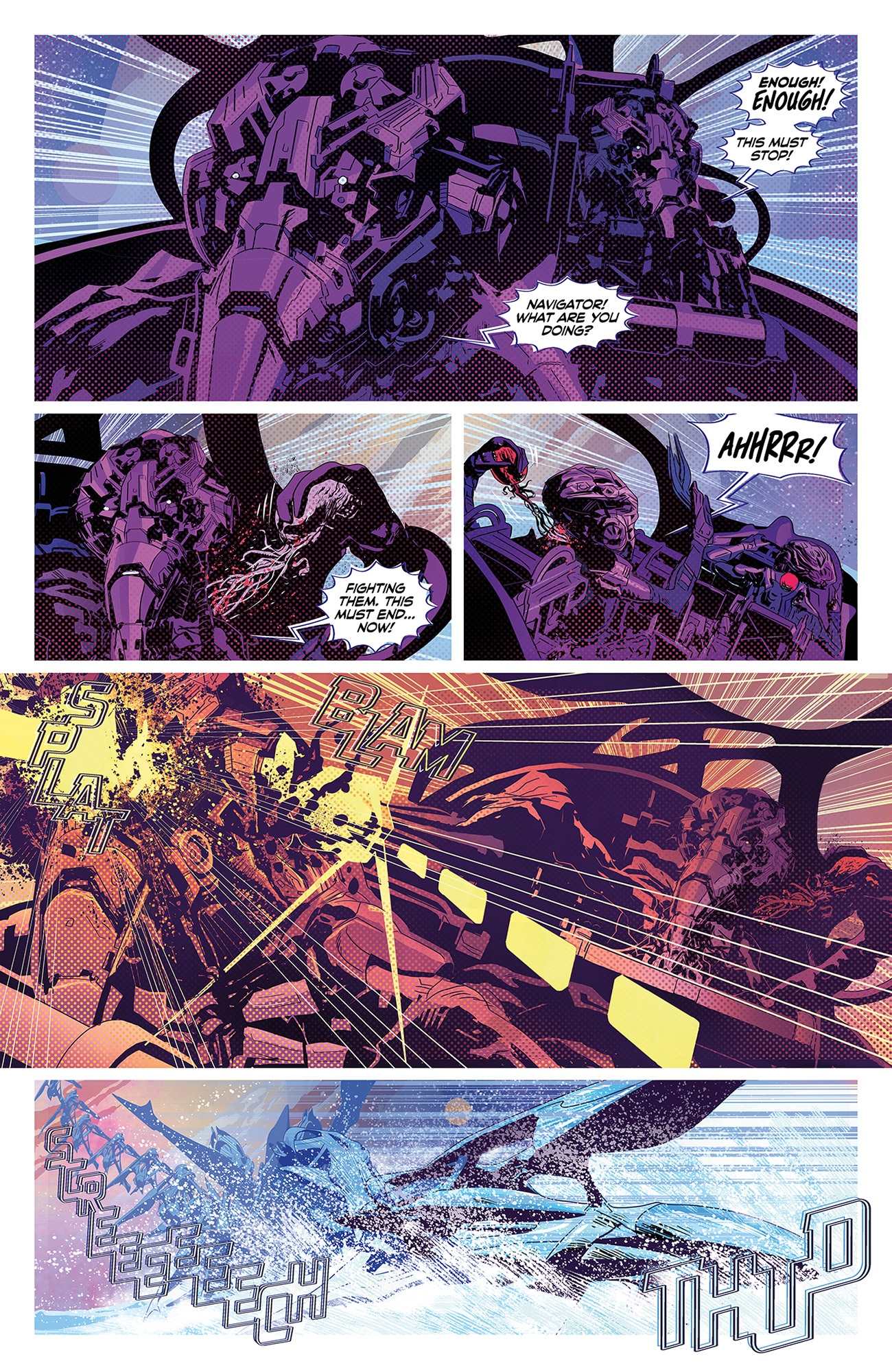
Navigator (John Bruno) – Graphic Novel Review


Originally published on Set The Tape


John Bruno is a name that might be familiar to some film buffs, especially those who have a thing for special effects and the work of James Cameron. Bruno has worked on films for decades, helping to provide the visual effects for films such as Poltergeist, Ghostbusters, Terminator 2: Judgement Day, Titanic, Aliens vs. Predator, and Kingsman: The Secret Service. He’s also directed effects heavy pieces such as a few episodes of Star Trek: Voyager, the film Virus (which was based on a Dark Horse comic), and James Cameron’s dive down into the Titanic in Deepsea Challenge 3D. With that in mind, it’s not at all surprising that his new graphic novel, Navigator, would be the kind of story that would be a special effects extravaganza if it were on the big screen.

Navigator begins taking a little inspiration from Bruno’s time with Cameron in the depths of the ocean, with a team of scientists on Europa, one of the moons of Jupiter, taking a submersible down beneath the thick layers of ice to see if they can find life on this distant satellite. And they do, they discover that an entire ecosystem of plants and marine creatures exists beneath the surface, proving for the first time that humanity isn’t alone in the universe. However, when the submersible discovers a completely unknown ship under the ice, near a strange beacon-like object, their simple study gets thrown on its head. The beacon activates, and seems to summon alien life to it, as a ship appears in the skies over the Europa base. First contact does not go well, and several members of the expedition are killed before one of the aliens inside the ship turns against his compatriots and kills his fellow soldiers. With the mission ruined, personnel dead, and a living alien on their hands, the expedition packs up and starts to head home.

Along the way the alien wakes and tells them that he’s from a race that has been enslaved by parasitic creatures that attach themselves to beings’ necks and take control of them, and that the primary entity in control is looking for an ancient device that has long since been scattered across the known universe. Once gathered together, this device will give the parasite supreme, god-like powers. The beacon the Europa team found indicated that the device is near, likely on Earth, and that an alien armada will soon be coming for humanity. Agreeing to work with the humans, the Navigator gives them technology to help prepare for the coming invasion.

That’s the basic set-up for Navigator, and the bulk of the story will jump forward five years to the point when the promised alien invasion actually occurs, giving humanity time to use the technology and aid from the Navigator to jump their technology forward hundreds of years. When the aliens arrive the story becomes a mix of a race-against-time treasure hunt, and Independence Day, as the planet fights back against a technologically and numerically superior force bent on their destruction.

Once the time jump happens, and the alien invasion starts, the book moves at an incredibly brisk pace, almost not allowing the reader a chance to take a breather and collect their thoughts before the next disaster hits, or the next battle begins. The book tries to sell the scope of the invasion this way, by having an almost constant barrage of fighting and destruction that showcases how bloodthirsty and destructive the parasite’s forces are. Its goal of obtaining the lost device are all that compel it, and humanity are little more than insects beneath it ready to be crushed. This also means that there are several characters that the book will introduce you to along the journey, but thanks to the constant barrage of alien soldiers shooting at anything in their way there is a bit of turn over in the cast of characters as they die and get replaced.

There is, however, a core contingent of characters to follow over the course of the story. The Navigator, who gets named Roy, is there throughout, as is the leader of the Europa expedition; a grizzled solider who gave up on his wife and prematurely born daughter to head into space for five years. It’s when the invasion begins, eight years after he abandoned his family, that he gets reunited with both of them as his daughter, Amy, becomes a key player in the adventure.

Their family unit is the human heart of the story, and in bad Hollywood tradition the absent father who left his wife and sick child and never once tried to contact them, gets to be the romantic lead as he and his wife reconnect and become a couple again. It’s incredibly cliched, and it’s one of the weaker parts of the book. It’s like Cynthia is given no personality beyond mother and wife, and that without her husband around she’s been in a holding pattern, waiting for him to come back to her. The fact that she immediately falls back in love with the man who walked out on her and her sick baby really robs her of any kind of agency or character strength, and feels like a huge misstep.

Thanks in part to Bruno’s work on big budget sci-fi movies, the book has a blockbuster feel to it. Everything seems to be designed to look cool, from the aliens, to their ships, and even the human technology developed to fight them. A lot of attention has been given over to the design side of things, and as such the book does have several striking moments when the two opposing forces end up clashing in battle.

There are some issues, however, as sometimes it does feel like there’s a little too much going on, and some of the larger moments end up becoming a bit muddied and messy. There’s no real distinct ‘heroes’ to follow in these moments either, and we take a more removed overview of the battle. This results in us never really feeling attached to the fight as we follow a character, but just watch as cool looking ships fight other cool looking ships at a distance.

The feeling kind of echoes in the later stages of the story too. Things happen in Navigator because the story needs them to. Technology designed to counter the alien invaders won’t work as planned because it’s dramatic for it not to, until the right moment when it’s needed to turn the tide, then it just starts working right. The alien invaders need to get the upper hand, so they have technology that allows them to teleport their ships in, but only towards the end when it becomes dramatic, and not five years earlier when they started on their way to Earth. A group of characters look doomed to time, until a magical alien entity wishes them to safety because the book needs a happy ending. A lot of stuff just happens in Navigator. And in the moment, when things are fast paced and you’re moving from one plot point to another you don’t have time to think about it, but when looking back at it you realise there is a sore lack of explanations, and that the universe of Navigator seems to operate under ‘rule of cool’ rather than any kind of logic.

That being said, if you switch your brain off and just go with it Navigator is a fun enough book. The art, by Jordi Armengol, is really good throughout, and there were never really any moments where it felt like the book didn’t look right, or was off in any way. The story is a visual treat, even if the plot at times isn’t quite firing on all cylinders. So if you’re looking for the graphic novel equivalent of a big, bombastic, high budget sci-fi action movie, Navigator is probably one of the closest you’re ever going to get to capturing that feel.


Support Amy on Patreon

Buy Amy A Coffee

Go to Amy's Blog

Tuesday, 30 May 2023

Pokemon Heroes – Throwback 20


Originally published on Set The Tape


There was a time when Pokemon was considered to be a world-wide juggernaut. The merchandise was on shop shelves, the trading cards were a hot commodity, the animated series was playing on TV, and the games were bestsellers.

The strange thing about the franchise is that that’s all still true. You can walk into most toy shops and find Pokemon toys and plushies; the cards are big business and are bought and sold for high prices; the TV show hasn’t been off air in twenty five years; and the franchise is one of the highest selling video game series of all time. Despite that, the feeling of Pokemania that swept through the UK when the series first landed has almost completely died down. Pokemon is still there, but it’s flying under the radar.

One of the ways in which the series slowly began to fall out of general public consciousness was with the films. The original Pokemon film, Pokemon: The First Movie, was a huge hit that included tie-in promotions with fast food restaurants, TV trailers, and media coverage. In comparison, the later films would receive more limited releases, and would have almost no advertisement at all.


2003’s Pokemon Heroes, the fifth film to be released, is one of these movies; one that slipped beneath the radar of the cultural zeitgeist to the point where a lot of people are still surprised that Pokemon movies are being made. Pokemon Heroes was the last Pokemon animated film to receive a cinema release outside of Japan until the 20th anniversary Pokemon: I Choose You! So with that in mind, is the final cinematic outing any good?

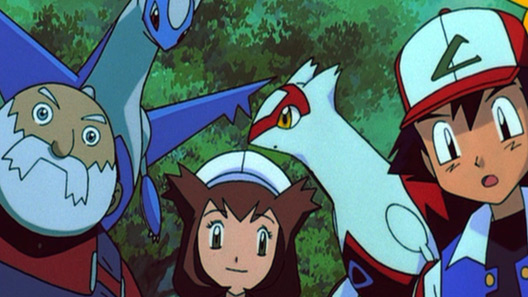
The story of Pokemon Heroes follows series regulars Ash (Veronica Taylor), Misty (Rachael Lillis), Brock (Eric Stuart), and Pikachu (Ikue ÅŒtani) as they visit the watery city of Alto Mare. Heavily inspired by Venice, the city is a warren of canals, bridges, and ancient architecture that Ash and his friends are enjoying exploring. Legend has it that Alto Mare was turned into the watery place it is when an evil trainer attacked the city centuries ago with his vicious fossil Pokemon. A Latios, a legendary dragon Pokemon, defeated the threat, and the city was forever transformed.

Since then, the city has built the Defence Mechanism of Alto Mare (D.M.A. for short), a device capable of protecting Alto Mare and its citizens using the Soul Dew, the remains of the Latios that died saving them. Of course, the villainous Team Rocket want the device; though not the ones you’d expect. New antagonists Annie (Megan Hollingshead) and Oakley (Lisa Ortiz) hatch a scheme to get their hands on the device. Luckily, Ash and his friends are ready to stop them, with the help of the children of the original Latios.

One of the things that immediately stands out about Pokemon Heroes is that it feels like it’s very much doing its own thing. The events of the movie are set in a completely new area not found in any of the games, and not mentioned in the television series. This is something that the show has done in the past, but thanks to Alto Mare taking such heavy inspiration from Venice it does feel quite jarring to watch, as this is one of the closest it’s ever felt to seeing Pokemon wandering around a place you recognise (until Detective Pikachu at least). Thanks to this choice, the animation feels slightly off throughout.


One of the things with the Pokemon movies, as with any animated series being made into a feature film, is that the animation has been given an upgrade and looks different from the show. In this case the result is a movie where things look much darker than normal. The film looks dull, and much of the colour and vibrancy that the series incorporates is replaced by darker tones and a drab set of colours. Part of this is down to the aforementioned desire to evoke images of Venice, as the film sticks pretty close to the look and feel of the real world location. Whilst it feels weird to see the show like this, it’s only heightened when you have Pikachu running around what is essentially the streets of Venice, chasing after a red and white dragon creature.

Another thing that the film does to its detriment is to side-line most of the main cast. Ash gets the focus here, and that’s not much of a surprise, but more often than not Misty and Brock are simply removed from the movie completely. Ash and Pikachu run off and leave them, or they get separated from Ash thanks to locked doors, leaving them absent for the majority of the film. Team Rocket, however, suffer the most. Whilst the new characters Annie and Oakley are part of the gang, they’re not the ones people think of when they hear the name. Iconic characters Jessie (Rachael Lillis), James (Eric Stuart), and Meowth (Maddie Blaustein) are in the film, but feature in less than a minute of the film’s total run time. Their presence feels almost pointless, and almost like they were included as some kind of box ticking exercise or contractual obligation.

The film didn’t do well upon release. It released in Japan a year earlier, the same week as Star Wars: Attack of the Clones, which resulted in it failing to make much of a dent at the box office. Similarly, it’s US theatrical release ended up being the lowest grossing release for the franchise, and was possibly a big reason why it was the final one for many years. Part of the failure may have come from the poor press the film received. Pokemon Heroes receiving a majority of negative reviews from outlets that was sure to have hurt its sales, though no response was as bad as the New York Post review, which gave it 0 stars and called it “a form of child abuse”.


Support Amy on Patreon

Buy Amy A Coffee

Go to Amy's Blog

Sunday, 28 May 2023

Lot 13 by Steve Niles – Graphic Novel Review


Originally published on Set The Tape


Steve Niles is a name that will be familiar to fans of horror comics, as having created the hugely popular 30 Days of Night, and The October Faction, as well as working on other horror titles such as 28 Days Later: The Aftermath, and even bringing more horror focused stories to characters like Batman. Lot 13 is not a new book from Niles, having originally been published as individual issues by DC Comics in 2013, but the new graphic novel collection of the story by Dark Horse is the first time that it has been collected together in graphic novel form, allowing many readers to discover it for the very first time.

Lot 13 begins in the year 1670 in the small colony of Fairfax, Virginia, where a man is on trial. However, this isn’t the kind of trial that you’re used to; the man, Robert Wyatt, killed his entire family and then himself. The bodies of the Wyatt family have been dumped on chairs in the courtroom, sacks tied over their heads, and are on trial for the mortal sin of murder and suicide (with the victims somehow being condemned too). Upon being found guilty, and their souls denied a place in the afterlife, the townspeople assault their corpses.

In the modern day a young couple and their three teenage kids are packing up their apartment and moving across country to start their new life in their own house. Unfortunately, when they arrive at their home there’s been some kind of mix-up, and the house is being fumigated. With nowhere else to stay, the family begins searching for somewhere to rest up for the night. They start to see strange things, ghostly figures that shouldn’t exist.

When the family thinks that they hit a small boy with their truck they come to a screeching halt, only to find the blood that spattered their windshield gone, and no sign of the accident. It’s then that they spot a lone apartment building, standing in the middle of nowhere on the side of the road, advertising apartments to rent by the night. Realising that they’re all tired and need to rest, the family check into the building on lot 13, little realising that they may never check out.

One of the biggest issues that I had when reading Lot 13 is that despite being five issues long nothing much really happens in the book, with all of the main story being set up in issue one, and paid off in issue five, with everything that happens in between either feeling rushed, or added for the sake of padding. It also means that for a lot of the book weird stuff simply happens, and there’s no rhyme or reason for it. The ghost of a little boy shows up and says creepy cryptic things, but who knows why? The ghosts jump from scaring the family to helping them from page to page. So much of the book is just reading stuff happening and hoping that it makes sense at some point down the line.

With this being a horror book, however, Niles tries to fill these moments of nothing by making them scary, and unfortunately he does this with excessive blood and gore. The ghosts in this book are bloody and beaten, with the wounds that killed them following them into the afterlife. As a result half the characters are talking with half their faces blown off, or their bodies ripped open. It feels like a lot of this is done for shock or gross factor, and as such it quickly wears pretty thin. Perhaps the worst part is when a sexual assault scene is thrown into the book. This moment could have been included without the book showing the victim being assaulted, but instead a couple of pages are given over to a moment that feels gross more than it does horrific.

There are moments in the story that feel like the writer trying to make a moment feel cool, such as the family equipping themselves with more guns than the army, and mowing their way through hordes of the undead as they try to escape Lot 13. If anything, this moment just ends up feeling ridiculous, and kind of out of place, and takes out any of the horror that the book may have managed to build for itself. A family trapped in an ever shifting maze of a building filled with ghosts and ghouls could be scary, but not when they’re tooled up like Rambo.

The art on the book, by Glenn Fabry, is decent, and manages to make the grosser elements of the book come to life well. There are several scenes absolutely packed with characters and details, and it’s clear that Fabry has put a lot of work into making these moments feel overwhelming for the characters in them. There are a lot of times the book feels too bright, however, to fully lean into the horror elements, and everything is on display. Much like a horror film that never turns the lights down, the book almost feels like it’s showing off too much, and taking some of that fear away.

Steve Niles is a big name in horror comics, and because of that I took a shot at Lot 13 but it’s a book that I failed to connect with. A lot of it felt like it was treading water, and a lot of it felt like it was trying to freak the audience out with gore and blood rather than actually trying to build tension. If blood and guts and weird stuff is your jam then you may find something here worth while.


Support Amy on Patreon

Buy Amy A Coffee

Go to Amy's Blog

Saturday, 27 May 2023

Sons of Ashgard: Ill Met in Elmgard by Chad Corrie – Graphic Novel Review


Originally published on Set The Tape


Historical fiction isn’t a genre that you often see in comics. If you do, it tends to be versions of history with a twist on them, where history has diverged at some point in some unusual way, or it has some kind of fantastical element like magic or the supernatural added into the mix. Sons of Ashgard: Ill Met in Elmgard doesn’t do either of those things to make its Norse inspired story. Instead it makes the rather bold and cute move of making all of the characters small furry animals.

The story centres on Erick Redfur, a red squirrel who begins the tale on a ship travelling to a distant land named Elmgard. Erick has been forced to leave his lifelong home, and everyone he knows, after being accused of murder. Rather than being sentenced to death, Erick is banished from the land he once called home, and branded with the name Bloodhand. Hoping that he can escape his past in Elmgard, Erick is seeking out a second chance at life.

Erick spends some time settling into the small coastal village of Old Shore, visiting the local tavern where he meets Gorm, a huge guy who makes coin by arm-wrestling the men of the village. That night, the village comes under attack by Skraelings, a clan of vicious chipmunk warriors. As the village deals with their wounded and dead after the attack, Erick is brought before the Jarl, who wants Erick to join up with a small scouting team tasked with going after the Skraelings, finding where they live, and striking back if possible. Whilst Erick refuses, the Jarl uses the secret of Erick’s crime to force him to cooperate. Now Erick and a group of warriors and trackers have to head out into the wilderness, and danger.

At its heart Sons of Ashgard: Ill Met in Elmgard is an action adventure story in the same vein as The 13th Warrior or Beowulf. If the book had humans rather than animals it would be an intense story, one where a small band of fighters are facing off against dangerous odds, going up against vicious killers who can’t be reasoned with, having to kill just to stay alive. And there are times where the book does feel a bit like that, but as soon as the characters are switched out for animals it suddenly becomes an all ages story. The violence, which does include death, loses its edge, and it feels like you’re reading a mature children’s story rather than a violent historical epic. And ultimately, that choice also makes the book stand out.

I’ve read a lot of comics, and a lot of books try to go violent, perhaps hoping that the ultra-violence, the blood and guts and swearing, will end up with the book standing out amongst its competitors. And yes, this does make very violent books immediately different from your standard superhero comics like Superman and Batman, but after a while they all tend to bleed into each other, and it becomes hard to recall any of them. In comparison, I’m going to remember Sons of Ashgard: Ill Met in Elmgard precisely because it didn’t go with a ‘realistic’ approach. I’m going to remember the squirrel warriors, the chipmunk people attacking a village, and the more cutesy aesthetic of the book.

While the book goes for a more all ages approach visually, it doesn’t feel the need to dumb things down for the readers. The characters are flawed, they have complex emotions and motivations, and they have some pretty adult conversations. The story and script could be given to human characters with relatively little change and it would still work well. And that is another thing that the book has working in its favour. It feels like anyone can pick it up and enjoy it without feeling left behind, or like they’re too smart for it; which is a very tough thing to pull off.

I’ve spoken a bit about the fact that the book stands out because of the characters being animals, and I have to take some time to sing the praises of Matt Wendt, the artist on the book. Every single page looks absolutely fantastic, from the backgrounds, to the locations, to each and every character having their own unique look, a lot of effort seems to have gone into making the book stand out from a visual point. Each of the main characters who make up Erick’s team, Gorm the large guy who uses his fists, Henrik the cocky swordsman, Rolf the mysterious tracker and bowman, Bruna the fierce shield maiden, and Soren the city guard tasked with keeping them on mission all have their own personalities that come through in the designs. You can tell each of them apart in a second, thanks to their unique looks and styles, and it helps in keeping track in the large fight scenes and the chaos that comes later in the book.

I can see some readers passing over Sons of Ashgard: Ill Met in Elmgard, thinking that it might be a children’s book, thanks to the bright colours and animal characters. But whilst it will be a fun book for younger readers that doesn’t mean that adults should miss out on it too. Whether you’re reading it with your kid, or if you’re not even a parent, there are a lot of fun, entertaining moments to be found in this book and it’s worth giving a try if you’re able.


Support Amy on Patreon

Buy Amy A Coffee

Go to Amy's Blog

Friday, 26 May 2023

Metro: Last Light – Throwback 10


Originally published on Set The Tape


First person shooters are a very common genre in video games. Ever since Doom took the world by storm (and is still one of the most ported games ever made), the first person shooter has been not only a staple of gaming, but one of the most popular ones. Over the years, as technology improved, the FPS genre only got better, and it’s hard to argue that its peak wasn’t around 2010 when games like Call of Duty: Modern Warfare 2 were dominating the charts. At a time when military and squad based shooters were all the rage it was hard to find a first person shooter that dared to try something different, that risked low sales in order to try something bold. However, the Metro series did just that.

Metro 2033, the first game in the series, was released in 2010, and ended up being a commercial and critical success, despite generally going under the radar of a lot of people. Based upon the post-apocalyptic novel by Russian author Dmitry Glukhovsky, the game stripped down a lot of the big, bombastic action elements that were dominating the FPS genre, and instead created a dark, survival horror shooter. Thanks to the success of the first game a sequel was given the go-ahead, and whilst it would end up expanding on the scope of the first game in a number of ways, Metro: Last Light would continue to be a more story driven, darker themed action game that would stand out amongst its competitors.

Whilst the first game took a lot of inspiration from the novel it shares a name with, the sequel would take a departure from the books, and would not be following the events of Metro 2034 as fans anticipated. Instead, the studio decided to take the story in its own direction, following on from the ‘bad’ ending of the game, as they considered it to be the more interesting of the two to launch into a sequel with. Despite moving away from the books, original creator Dmitry Glukhovsky was involved in the story process, and wrote much of the dialogue for the game.


Metro: Last Light takes place one year after the events of the first game, and players once again get to take control of Artyom, who has now become a fully fledged Ranger. The Rangers have moved into the massive underground military bunker, D6, which players discovered at the end of the last game, and are trying to keep peace amongst the citizens of the Metro, whilst also keeping the location of D6 a secret. When news reaches the Rangers that one of the Dark Ones, the mysterious creatures killed at the end of the first game, are still alive, Artyom is sent out to find it and kill it, along with Ranger sniper Travelling up to the irradiated surface, players navigate their way through the ruins of the old world until they find the Dark One, who turns out to be a child. Thus begins a series of events that will see Artyom having to battle against Nazis, Communists, and hordes of mutants as he tries to prevent a war, and protect the Dark One that he believes could be the key to bringing lasting peace for the remnants of humanity.

Whilst the story of the Metro series is one of its key selling points, the main area in which the game stands out, especially amongst its competitors at the time, is in the realism that it tries to bring to the game play. The first game was praised for its stealth elements, and this was taken to heart in the sequel. A bigger emphasis was given over to stealth, and the option for players to go through the entire game without killing a single human enemy, opting instead for sneaking and non-lethal take-downs. In order to assist players with their stealth approach the levels were made a little less linear, with multiple routes through environments for players to choose from. Players can also use darkness to assist them, turning off lights and blowing out oil lamps as they go to create darker areas in which to hide.

While it’s possible to play through the entirety of Metro: Last Light without killing a single human enemy (you will still have to kill mutant creatures) the game doesn’t force this on you, and if you wanted to take a more action approach to things you’re able to do so. That being said, the game is incredibly aware of its setting, and making an immersive story and environment are key; as such, players will still need to weigh their options carefully in regards to what weapons to use and how to source ammunition. Supplies aren’t that limited in Metro: Last Light that you’d feel at risk of running out of ammunition, but there’s always the possibility you might have to make a mad dash through a hail of gunfire to grab more bullets if you’re not careful.


The developers wanted the players to feel as immersed in the setting as they could, and one of the ways the game does this is by removing any kind of heads up display. There are no cross-hairs on the screen to show where your weapon is pointing, and you either have to fire from the hip and hope for the best, or aim down the gun’s sights. There’s no ammunition counter on screen, and you either have to keep track of bullets in your head, or watch your magazine where you will see your bullets going down with each shot. Things like timers for your gas mask filers are done on your watch, and players have to make the character bring their arm up to check it. And there are no way-points or objective markers, and you will have to use your compass to know your direction; something else that you need to actively bring up. These choices not only make it feel like you’re in a much more real environment, but also make the game feel a bit more challenging than your average shooter, where everything is displayed on screen for you.

Whilst the game is a first person shooter that deals with the fracturing and infighting between humanity after the end of society, there’s more to it than that. The first game was heavily praised for the horror elements that it included, and some of the more memorable segments of that game are the most frightening ones. The sequel would continue to bring these elements of the supernatural and the horrific into the second game. Whilst the game would use the mutants for this, with huge bestial creatures springing out of the dark at Artyom, there are also elements of the game that are a bit more unusual, and harder to explain away. Whether it’s ghostly visions or things that don’t quite make sense in the real world, the Metro series is happy to stray close to out and out horror in order to make the experience more varied and interesting.

The Metro series is one that has gained more and more attention over the years; both of the first two games have received remastered versions that have been released on later generation consoles, as well as on the Nintendo Switch, and the third game in the series, Metro: Exodus, is one of the best games of its generation. It may have had a more humble beginning, being a weird horror shooter based on a book, made by a small team that a lot of people didn’t hear about at the time, but over the years it’s continued to grow and gain more and more fans. Amongst a seas of tactical shooters, military simulators, and run and gun gore-fests, the Metro series continues to stand tall as a unique series; one that does its own thing, makes its own world, and embraces what makes it different. If you’ve never picked up the series before you’re doing yourself a disservice.


Support Amy on Patreon

Buy Amy A Coffee

Go to Amy's Blog

Thursday, 25 May 2023

The Dead Hour (Season One) – TV Review


Originally published on Set The Tape


Horror is one of the best genres to fit into the anthology format. Ever since people started telling each other scary stories around camp fires it hasn’t taken much to make people afraid; and some of the most memorable spooky stories can be told in a few minutes. Horror anthologies can be found everywhere, from books, to television, and even film, and now horror fans can add another anthology to the ever expanding collection, with the new twelve part series The Dead Hour.

Produced by Terror Films, the series premieres worldwide on digital platforms on the 12th of May. The series creators, Daniel B. Iske and Scott Coleman, have described the series as having been inspired by events in the world today, and that it acts as something of a commentary on many of the issues in today’s world. Having been given access to the first two episodes of the season, it does seem like the duo, who also direct and write the series, are indeed drawing inspiration from issues that viewers may be facing, although it doesn’t seem like they’re really saying much.

The first episode ‘Donor’ follows a man who has been laid off from his job, and is keeping it secret from his wife as he searches for more work. Whilst he’s been struggling to find work he’s been using their savings to keep them afloat, and has also found a new way to make some money: selling blood to a shady guy who works on the waterfront. The man has been selling his blood for a while, and the doctor tells him that he can make more money by selling other things, such as organs and skin. When his wife reveals that they’re expecting a baby, the man makes the plunge and starts to sell off other parts of his body.


I can see how this episode might be making a statement about how hard it is to find work, and how increasing debts can quickly mount up and cause people to take desperate action, so I’m willing to give the creators credit on that one. However, if you don’t read interviews with them you’d likely not come away from the show having picked up on this, as some meta knowledge is definitely needed. The episode itself feels quite cheap and poorly produced, and those points are what stand out the most.

The episode looks rather drab throughout, with poor lighting and dull, murky colours. There’s one scene where the man and his wife are talking whilst in their car, and it looks pretty awful. The lighting on the actors’ faces is dull and murky, and never changes, and it doesn’t match what’s on the other side of the windows at all. It’s also painfully clear that the background has been composited in, as some parts have bright white lines around them where the effect hasn’t been put in properly, and every time the female actor moves her head her hair pops in and out of the background. There’s another point in the episode where a weird blur effect has been used on the man’s arm instead of just having him shake his arm, and it looks blocky and pixelated, and more like he’s being sucked into a computer than anything realistic.

The second episode suffers from less technical issues than the first, yet manages to feel even less connected from the statements about real world issues. Entitled ‘Alcoholic Vampire’, the story does exactly what is says on the tin. It introduces viewers to a vampire that gets women drunk, takes them home, then kills them and feeds on them. It later transpires that the man, who is able to go out in the daylight yet has fangs, so is likely an actual vampire, drinks in order to handle killing his victims. That being said, the story does little to prove that that main character actually feels that way. He makes an impassioned speech at AA telling people he needs to drink to deal with how he lives, yet he seems to display no guilt anywhere else, and even takes quite a bit of pleasure in the killing.


This episode has very few effects to get wrong, though there are a few moments that come across as being cheaply produced, such as the blood he keeps in his fridge looking more like red dyed water thanks to being incredibly thin and washed out, and the blood stains around the corners of his mouth being thick, crunchy, and black, like the fake blood was thickly applied hours before and left to dry. Much like the first episode, however, it looks visually bland and flat throughout, and feels as though little effort or thought went into the lighting of the episodes or the composition of the shots.

This lack of visual creativity is made even more stark when you see the intro sequences, which feature a glamorous radio show host introducing each of the stories. These segments feel like they’ve got the colour and contrast turned right up, and feature some halfway decent angles and shots. It’s incredibly clear that these segments were shot at on a different date than the others, and almost feel like they have come from another production entirely.

When first reviewing The Dead Hour I was a little disappointed that I’d only been given access to the first two episodes of the season. However, having now watched those first two episodes I’m glad that I didn’t have to force myself through any more of it. There might be some halfway entertaining things to find in this series, but if so they’re not to be found in the first two episodes. Hardcore horror fans who’ll watch anything might be able to put up with it, but everyone else would probably be best avoiding The Dead Hour.


Support Amy on Patreon

Buy Amy A Coffee

Go to Amy's Blog

Tuesday, 23 May 2023

Star Wars: Visions (Season Two) – TV Review


Originally published on Set The Tape


Some have argued that the Star Wars brand has suffered under the leadership of Disney. This mainly comes from the fact that the old Expanded Universe (which had its own tiered system of canon that varied from project to project and would often be changed or ignored) was swept into a pile and labelled as Legends, and made non-canon.

There’s also a lot of anger at the franchise becoming more diverse, but many of the haters will deny that as a reason. But to claim that Star Wars has suffered under Disney feels very disingenuous. There have been five movies under them, with more to come, several live action TV series with more to come, and several animated series, also with more to come. The brand is still incredibly popular, but it also feels like it’s never quite been as creative either.

Star Wars: Visions began in 2021 as a series of nine animated shorts, outside of the main canon, where different animation studios could coma along and put their own spin on a galaxy far, far away. The show was incredibly well received, and a second season was soon announced. Whilst the first season played it safe, having all nine of the episodes made by Japanese animation studios, the second season adds a lot more variety into the mix, bringing together animation studios from across the globe to create the most diverse and entertaining season yet.


The first episode of the season is ‘Sith’, and is created by El Guiri Studios, an animation studio based in Madrid. It opens the season with a bang, delivering an animation style more interesting and unique than anything in the first season. At times the episode looks three dimensional, at others it’s like a moving oil painting. It’s hard to pin down exactly the best way to describe it, but watching it feels like you’re discovering a whole new way of animating something. The story focuses on a woman living on a remote planet with her droid for company. She spends her days trying to embrace the light within her, and visualises the Force as a form of painting, a way of illuminating and colouring the universe around her. Unfortunately, as a former Sith, she’s also running from her old master, who has tracked her down. It’s a pretty simple story, but the way it’s presented makes it a fast paced, action-packed episode that feels perfect for opening the season.

Next up is ‘Screecher’s Reach’ by Cartoon Saloon, an Irish team who have made some of my favourite animated movies in recent years. The story follows a group of kids who live in a workhouse, who dream of a better future. One day they sneak off, stealing some speeders, and decide to head to Screecher’s Reach, a place that’s said to be haunted. One of the girls is determined to reach it, motivated by an unusual necklace that she wears. This is my favourite episode of the season. The animation style is absolutely gorgeous, and suits this story so well. It’s part childhood adventure, part horror, and it features one of the more frightening people created in Star Wars. There are moments where it almost feels like you’re inside someone’s nightmare. The music in this episode is also wonderful, and the ending is one that will stick with you long after it’s done.

‘In The Stars’ is created by Chilean based studio Punkrobot, and makes use of stop motion animation. It tells the story of two sisters trying to survive on an Imperial occupied world that has been transformed into a barren, toxic waste-filled land thanks to the theft of its resources. Having heard tales of how their mother, a Force user, led a rebellion against the Empire, and died, the younger sister is determined to fight them herself. The animation in this episode is wonderful to watch, and it takes a while to realise that it’s stop motion rather than CGI animation (the studio has done both styles in the past). It’s the way the characters move, and some of the model sets and backgrounds that eventually give it away, though the animation is produced so fluidly and deftly that it’s easy to believe it’s being created by computers. The episode has a visual style unique to itself, and features some truly memorable character designs.


‘I Am Your Mother’ is a short that British fans will immediately recognise, and get excited about, thanks to the episode being made by British claymation studio Aardman Animations. Seemingly set some time after the original trilogy, it introduces viewers to a young girl named Anni (Charithra Chandran),  attending the Wedge Antilles flying school on the day of the big family flying race. Unfortunately, Anni’s too embarrassed by her mother and their junky old ship to enter the race. But then her mother finds out, and becomes determined to win. This episode is nothing but silly, all ages fun, packed full of cool background characters, nods to every corner of Star Wars, and even contains some Aardman references too.

‘Journey To The Dark Head’ is the one episode this season that feels like it could have fit nicely into the first season thanks to the animation style. Produced by Korean Studio Mir, this episode has a much more anime style and tone to it than the rest of this season. It tells the story of a planet where two giant statues, both connected to the Force but one Dark Side and the other Light Side, help to reveal visions of the future. With the Jedi fighting, and losing, a war against the Sith, a mission is proposed to travel there and destroy the Dark Side statue to help sway the course of the war. However, a powerful Sith is hunting the Jedi sent there. This episode has some really cool designs, and some moments that really impress, and I wanted to like it more; unfortunately, when compared to every other episode it doesn’t really feel distinct enough to stand out.


In 'Spy Dancer' French animators Studio La Cachette puts a very French spin on Star Wars, as it takes viewers to a planet under Imperial occupation, where a small resistance group spies on the Empire from inside their night club. The story very much reminds one of the work done by the French Resistance against the Nazis, which is a perfect fit for Star Wars’ story about fighting against fascism. The episode takes a hand drawn approach to the animation, and features big, thick lines and very well done flowing animation style that lends itself incredibly well to the story being told. Despite being the most simple looking of the episodes at first glance, it ends up being one of the best of the season.

‘The Bandits of Golak’ is the episode that I saw the most buzz around leading up to the release, and after watching it it’s easy to see why. Created by the Indian animation studio 88 Pictures, this story draws a lot off inspiration from Indian culture, and looks absolutely phenomenal because of it. The episode tells the story of a boy and his younger sister, who have been forced to flee their home and head to the settlement of Golak. Along the journey, the girl uses her Force powers and is seen by a member of the public, who reports her to the Empire. Upon arriving at Golak, they’re approached by an Imperial Inquisitor, but luckily for them a Jedi is hiding at Golak, and comes to their aid. Not only is this a really well executed story, with some fun moments and some great character beats, but it also has some fantastic design elements. The Inquisitor is the best looking one we’ve had yet, with some stand-out visual flair to it. The episode also features some of the best fight choreography in the series.

Taking a leaf out of the first season, ‘The Pit’ is created by the Japanese animation studio D’Art Shtajio, and features a style that will feel familiar to anime fans. It tells the story of a group of Imperial slaves forced to dig a deep pit in order to mine Kyber crystals. After years of digging they hit the bottom, and the Empire no longer needs them, and so they leave them trapped in the bottom of the pit. One of the slaves decides to climb his way out, and heads to the nearby town hoping to get help to save everyone else. This episode has some pretty dark moments, and takes a fairly realistic look at slavery and the abuse that people do to each other. I don’t feel like it’s a coincidence that the slaves in this episode are mostly portrayed as people of colour, and the Imperials are in glimmering white. This episode might make some feel uncomfortable, but it works well.


The final episode is ‘Aau’s Song’, produced by South African studio Triggerfish. This episode is nothing less than adorable. The woolly, felt-like animation style is utterly unique, and is one of the most visually impressive episodes of the season. The story feels like it could easily slip into canon, and does some interesting things with both Kyber and the Force in the way that Aau uses her connection to it. The character designs are not only unique, but very quickly endear you to them to the point where you’d want to give them a big fuzzy hug. This episode feels like it moves the fastest, and it comes to a close all too soon, bringing an amazing episode, and an amazing series to an end.

The first season of Star Wars: Visions was an interesting project, one that offered some fun stories, but stories that never felt like they made much of an impact. There were one or two episodes that were memorable, and that have lived on beyond the show (for example the Ronin episode), but many of them are ones I struggle to remember.

In comparison, the second season feels like a massive increase in quality. The concept of giving different studios the chance to play in this universe really feels like it’s found its feet here, and the stories on offer this season have very quickly become some of the best Star Wars stories I’ve experienced. It won’t be for everyone, and those fans who are so caught up on canon that they don’t let themselves just have fun will surely hate it. But those willing to take the stories on their own merit will absolutely love it.


Support Amy on Patreon

Buy Amy A Coffee

Go to Amy's Blog