Sunday, 5 February 2023

Dark Knights of Steel #9 - Comic Review


Originally published on Patreon


So this might be the best issue of this series yet. As the two armies come together on the field of battle outside the cast of the El's things come to a dramatic breaking point when Lara uses her heat vision to cut Queen Hippolyta down, murdering her in front of her family and army. 

This issue picks up where the last issue ended, with the two armies having watched one of the queens die. As you can imagine, this sparks the battle that has been brewing for the entire series. The battle begins even as Kal-El arrives, hoping to prevent disaster, as super powered beings and regular humans clash. 

Whilst all of this is happening Lara flies off to the castle and begins killing the powered prisoners in the dungeons. This allows Oliver and Dinah a chance to break free, but raises questions as to why Lara is doing all of this. Indeed, this issue makes you question a lot of what we've seen before. Characters realise that they've been manipulated and lied to, it appears that Kal-El has no idea about the betrayal that Bruce is talking about, and double crosses seem to be coming out of nowhere.

Well, we finally get an answer to it all. The White Martians are here. The reveal that Lara is actually a White Martian was a genuine surprise, as even when I was going through all of the possible reasons and explanations in my head they didn't pop up. It's a dramatic moment, but it didn't have the same impact as the final moments of the issue, where Alfred reveals why he knows about the White Martians. I was losing my mind before the final page, having realised it was coming, but still yelled out loud when it happened. Alfred is Martian Manhunter!

This kind of thing is why I absolutely love these kinds of Elseworld stories. They're able to do things that the regular comics could never do in a million years. They can throw wild ideas out there and do the unexpected because there are no rules. And to be fair, the book had already set up this kind of idea, as it had combined Joker, Lex, and GL into one character; so why not these two too?

The art on the book is really fantastic too, with the huge battle scenes filling large panels on the pages. They're packed with people, full of action and movement. It really sells the scale and the chaos of the war that has just broken out. The art team on this series has always managed to deliver some fantastic things, and this issue might be some of the best.

With the disappointment that was the final issue of DC Vs Vampires I'm really hoping that Dark Knights of Steel manages to stick the landing, and was worried going into this issue that it might start to lose its way; but now I'm so hyped for the next issue. This is my first comic read of 2023 and it had me yelling out loud and left me with a huge smile. Hopefully more like this will come in the future.


This article, and many others, can be read a month early on my Patreon for as little as $3 a month!


Support Amy on Patreon

Buy Amy A Coffee

Go to Amy's Blog

The Executioner Collection – Blu-ray Review


Originally published on Set The Tape


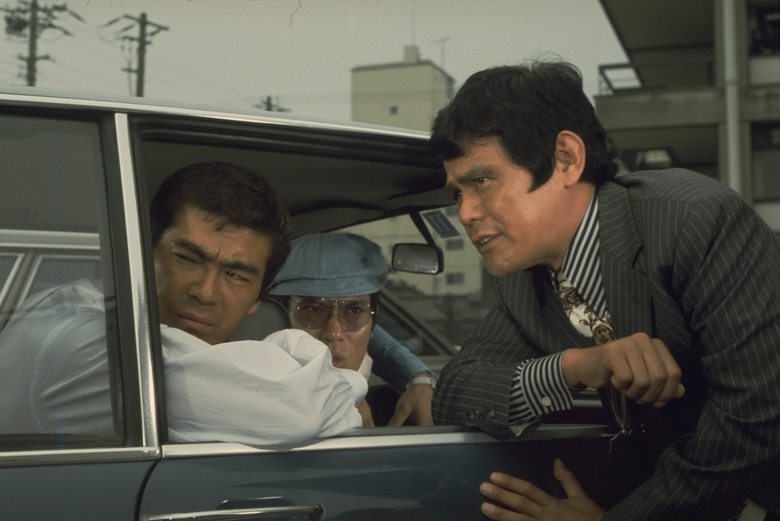
Sonny Chiba is a name that will be familiar to those who enjoy Japanese cinema. One of the bigger stars in Japan for his martial arts abilities, he would go on to become known throughout the world when his films found fan bases in multiple countries, due in large part to his 1974 film The Street Fighter, an intense, violent action movie that would become Toei’s first big success in the US. That same year, however, Chiba released a couple of action comedy movies that might not have reached the same level of fame, but are well worth the watch.

The Executioner is the more serious of the two movies collected together in this new Blu-ray set by Arrow Video, and seems to have received the most attention out of the two, with it being the only one to have both an English language dub from its original US release, and a new audio-commentary.

Chiba stars as Ryuichi Koga, the latest in a long line of ninja masters, who has been training to become the perfect ninja assassin since he was a child. He’s hired, along with a disgraced former cop named Hayabusa (Makoto Sato) who performs contract killings directed by his own strange moral compass, and a renegade martial arts master Sakura (Eiji Gō). The three unusual men are brought together to help steal a cache of drugs from the mafia, who are using diplomatic immunity and political connections to bring their product into the country.


But the three of them aren’t exactly good guys. All of them agree to do it for the cash, rather than to help people, and all of them are trained killers. Sakura is even introduced into the story whilst in prison for rape, and we get a sequence where Koga has to use his ninja skills in order to break him out. Once assembled, however, the team become a bickering trio of weirdos. They are either incredibly good at their jobs, or are pretty comically bad depending on the scene, and often act like toddlers trying to play tricks on each other and end up on top. The tone is not what you’d expect from the title or the trailer, and is closer to something like the second Lethal Weapon movie than your typical hardcore action-fest.

But this is a tone that works surprisingly well for the film. The characters end up being quite charming, and you forget that they’re a group of people who should probably be locked away. They manage to get you invested in their plight, and you end up rooting for them. Which is a good thing, because there are times where the odds end up pretty stacked against them. There are several fight scenes scattered throughout the film, with Chiba usually taking the lead in them, that are a lot more intense than the rest of the movie would have you believe. Chiba really excels in these scenes, and it’s easy to see how he became such a well respected action star through these moments.

Whilst The Executioner manages to walk the line between action and comedy well, the quickly produced sequel (released that same year) The Executioner II: Karate Inferno really leans into the comedic aspects, and it ends up much more of a comedy film.

Having been recruited once again, after managing to survive the events of the first movie, the three anti-heroes are brought together to pull a heist. This movie has far fewer action sequences, and none of them really stand out as much as those in the first one (apart from one moment where Chiba literally rips a man’s liver out and then hits his head around 360).


The moments that shine in this film are the comedic ones. Moments like one of the team getting set on fire and Chiba pissing on him to put it out, or Sakura’s hand getting glued to a table which results in him having a block of wood stuck to his hand for the rest of the film, give you an idea of the level of humour the film goes for. It’s silly and slapstick, but the team absolutely pull it off, and the movie ends up being incredibly charming, and possibly more fun than the first.

As mentioned earlier, there is a commentary on the first film, which brings together film experts and authors Chris Poggiali and Marc Walkow, who offer insight into the making of the movie, its impact, the state of Japanese cinema at the time, and the life and career of Sonny Chiba. It’s an interesting commentary track, and you do come away having learned something from it. There’s also a thirty minute documentary piece about Chiba, which talks to experts and some people who know him, to further round out the talk about his career.

For those who are fans of martial arts action movies, The Executioner Collection offers a pair of movies that are a lot of fun to watch. Neither really takes itself too seriously, and the aim of both of them seems to be to entertain the audience and have the viewer leave with a smile on their face. And in that regards, both of these movies achieve that goal.


Support Amy on Patreon

Buy Amy A Coffee

Go to Amy's Blog

Saturday, 4 February 2023

Splinter Cell: Dragon Fire by James Swallow - Book Review


Inside North Korea, veteran Fourth Echelon agent Sam Fisher finds himself on the run when a top-secret covert mission goes fatally wrong. Betrayed by his allies, hunted by his adversaries, and disavowed by his own agency, Sam is stranded deep inside hostile territory – and his only chance of survival is to uncover a murderous plot that reaches into the heart of the hermit state, and beyond. Meanwhile, Fisher’s estranged daughter Sarah risks everything to assemble an off-the-books effort to find her missing father before his luck runs out – but the conspiracy that framed Sam goes deeper than either of them realise… 

Splinter Cell: Dragonfire continues the story of Fourth Echelon agent Sam Fisher and his daughter, Sarah, that was begun in last year's Splinter Cell: Firewall, as our heroes face one of their toughest challenges yet when they find themselves caught up in a plot to push the world to the brink of war in order to destabilise a global power.

Splinter Cell: Firewall was a tech heavy book. It was about shady businessmen creating a powerful piece of technology that they wanted to turn to evil ends. In contrast, this new book feels like a much more back to basics action thriller, and with a few teaks it could easily work in any recent decade due to not having to rely on cutting edge technology to drive the story forward. This results in the book feeling like a perfect companion piece to the other, with both of these books showing the versatility of these characters and the world originally created by Tom Clancy; now continued with such flair by James Swallow.

Splinter Cell: Dragonfire sees veteran agent Sam Fisher being sent on a top secret mission into North Korea in order to assassinate a dangerous figure. Deep behind enemy lines, Sam has been told that his target has control of a weapon of mass destruction, and that millions of lives and global stability are on the line. However, moments before pulling the trigger Sam realises that he's been set up, and that he's been tricked into killing an important political figure. Despite stopping the assassination in time, Sam is caught and it looks to the world like the US is trying to kill one of the most important figures in North Korea.

A prisoner of the insular nation, Sam is cast off by his government and left alone to not only fight for his freedom, but to try and get to the bottom of the conspiracy that almost saw him kill the wrong man. Fortunately for him, his friends and family refuse to abandon him, even if his government has, and his daughter Sarah sets out to save her father.

Splinter Cell: Dragonfire might be the best of the Splinter Cell books that I've read due to the fact that Swallow has stripped away a lot of the high-tech gadgetry and tech wizardry that tends to go with these kinds of stories. Sam is no longer kitted out with the best weapons and devices, he doesn't have a tech genius talking in his ear, and his back-up isn't hacking their way into secure systems for him whilst he takes out bad guys who don't even know he's there. This time the tables have been turned. Sam is alone, he's scavenging weapons where he can, he's taping books to himself to use as body armour, he's stealing cars, and he's kicking in doors. He's been reduced to simply being a man; and yet he manages to still be one of the most frighteningly efficient and skilled men around.

I'm sure that there will be those that love the parts of the series that this book seems to do away with, and might even be upset that they're missing here; but I think it makes the story better. We're getting to see Sam Fisher in a new way, it's impressing upon the reader that it's the man, not the weapons and gadgets, that makes him who he is, and it shows how Splinter Cell doesn't have to just sit in one particular box.

The book also continues to expand upon the relationship between Sam and Sarah that was built in the last book, with Sarah having joined Fourth Echelon as a field agent. At the end of that book Sam asked his boss to try and keep Sarah away from the field, and danger, as much as possible; and here we see the result of that. Their relationship is strained, even close to breaking; but when things go wrong and her father is in danger she's willing to come to his aid. It's a nice continuation, and their development here fits perfectly with what was done in the last book.

Splinter Cell: Dragonfire feels like a bold departure from what people expect of the series. It takes some risks, does things different, and ends up being all the more enjoyable for having done so. More stories like with this Sam Fisher are a must to keep things interesting.


Support Amy on Patreon

Buy Amy A Coffee

Go to Amy's Blog

Thursday, 2 February 2023

The Broken Dragon by Karen McCombie - Book Review


'Tyra's really happy to move in with her nan. But starting at a new school can be tricky, and Tyra is worried about fitting in. Then Nan surprises Tyra with a beautiful china snow dragon, and Tyra has an idea. She'll take the dragon into school. The other children will love it - and maybe it'll make them like Tyra too! But disaster strikes and the beautiful dragon is smashed. Can Tyra find a way to repair Nan's special present and make some new friends along the way?'

The Broken Dragon tells the story of Tyra, a young girl who's recently had to move in with her nan, though for an undisclosed reason. She and her nan get along really well, and even though her nan isn't able to afford everything, and the two of them often go round the charity shops together, she always treats Tyra as much as she can, and the two of them have a happy life together. However, things are set to change as the new school year is starting, and Tyra has to go to her new school for the first time.

On her first day Tyra turns up in one of her favourite dragon shirts, a rainbow beanie, and bright tie-dye shorts. She loves to dress bright and fun, and is clearly an outgoing and boystrous person. But some of her new classmates are unsure of how to act around her, and she begins to feel lonely. When one of the mothers invites Tyra and her nan to come to a birthday picnic with the rest of the class Tyra learns that one of the other girls, Yasmeen, likes dragons too. So the next day Tyra decides to take her new, very delicate dragon statue into school to try and bond; but as the title suggests, this isn't set to go well.

One of the things that I really liked about The Broken Dragon is that the book makes it very clear that it's okay to be different, what some folks might even say is 'weird', without actually saying it. At first Tyra doesn't fit in with the other children, she dresses wilder than them, she's very loud and gets excited easily, and she isn't afraid to show the world her love of dragons. She's a very free-spirited girl, and one who isn't ashamed of who she is. With so many children being told that they need to fit in, told how to act, told how to conform, it's a wonderful breath of fresh air to have a book where the lead doesn't have to change or act differently in order to make friends of become popular. She just has to be herself.

It's not stated in the book, but there seems to be a reason for Tyra coming to live with her nan that she doesn't want to speak about, and it did make me think that it was indicating some kind of personal tragedy in her past; possibly losing her parents. Whilst the book doesn't go into this there's enough hints that it shows kids that non-traditional home lives, and guardians who aren't your parents are perfectly fine and valid. As long as you have a guardian who loves you, cares for you, and treats you well it doesn't matter who you live with.

I also got the impression from the book that Tyra might even be autistic, thanks to the way she acts in social situations, her hyper fixation on dragons, and the fact that a lot of her dialogue is in bold because she tends to be quite loud and excited when talking. Again, this is something that the book doesn't directly address, and I think that's a really good thing. Neurodivergent readers will be able to look at Tyra and might see some connections with her, and neurotypical readers can read it a come away seeing her as just a bit of an excitable kid. It enables all kinds of readers to be able to see different things in Tyra, to connect with her in different ways, and to feel included without having to make clearly defined labels or boxes in order to do so.

There's a lot of positive message in The Broken Dragon, and I think that young readers will come away from the book with some decent impressions about being yourself, about making friends, and how just because something is broken it doesn't mean it's ruined forever. 


Support Amy on Patreon

Buy Amy A Coffee

Go to Amy's Blog

Wednesday, 1 February 2023

Next To Alice by Anne Fine - Book Review


'At first Ben doesn't want to sit next to Alice. He thinks she's scary. She tells him off for sloppy drawing and careless handwriting. She even complains about his table manners! But when Ben starts to take Alice's advice he sees a few changes.Maybe sitting next to her isn't as bad as he feared. So what will Ben do when he gets the chance to go back to his old seat?'

School can be a difficult time for kids, not only do you have the pressure of trying to learn and proving how well you've learned through tests and assessments, but you also have the trials and tribulations of making friends, interpersonal drama, and the often quite nasty attitudes that kids get around each other. Any one of these things can be bad, but when all clumped together school can become a minefield. As such its understandable that kids just want to keep their heads down, avoid drama, and get it over with as quickly as they can.

Unfortunately for Ben, his carefully crafted school life it thrown upside down when a broken window means he needs to move, and he gets put next to Alice. Alice scares Ben, and he doesn't want to sit with her. She criticises his drawing and makes him redo it, she tells him his handwriting is bad and how to improve it, she even complains about how he eats his food at lunch time. And whilst these things might be annoying, or even seen as bullying, Alice never seems to do it out of malice, and goes out of her way to tell try and get Ben to try harder, to do better, and to slow down more. And he's shocked when he begins to see positive results. His work is singled out as being better, and he enjoys his lunch more when he slows down and savours it.

As the day wears on the two of them begin to like being around each other, they start to bond, and Ben even comes to like Alice. So when he's told that he can return to his regular spot the next day he comes to reevaluate what he really wants.

At its heart, Next to Alice is a story about not judging people too quickly. Ben thinks that Alice is bossy and scary, but she's just a bit direct. She sees things a certain way, sees what might be the best, most practical solution, and tells people to do it. But not because she's mean, because she wants what's best. From an outside perspective you can understand why Ben might not want to be sat next to her, but just like him, the more you're around her the more you realise she's actually pretty cool. Too many people make snap judgements about people based on next to no information, and teaching kids from a young age that you should really give kids a chance is a lesson that needs to be taught.

The book isn't a hard lesson though, as there's quite a bit of humour and a few jokes thrown in that make the book quite enjoyable to read. A lot of this comes from people being scared of Alice; such as when another student turns round to mock Ben, but quickly changes his mind when Alice gives him a 'you sure you want to?' kind of look. These jokes work well because they're often accompanied by really lovely illustrations. Gareth Conway provides the art on the book and it complements the story beautifully. The small expressions on the kids faces, the way their body language puts across what they're feeling, really helps to land a lot of the humour, and you start to really visualise a lot of what makes Alice a fun character because of that.

Anne Fine is an author who has received huge amounts of praise for her children's literature, and whilst Next to Alice is a short read it really does illustrate why Fine is considered one of the best children's writers around. Next to Alice is such an enjoyable and engaging read that I was honestly disappointed that it was over so quickly.


Support Amy on Patreon

Buy Amy A Coffee

Go to Amy's Blog

Tuesday, 31 January 2023

Terror World, A Zombicide Invader Novel - Cath Luria Interview


Cath Luria is a Colorado girl who loves snow and sunshine. She is a prolific author of science fiction, fantasy, suspense and romance fiction, and has a vast collection of beautiful edged weapons. She has written a number of books for Aconyte, including Elsa Bloodstone: Bequest, and Terror World, A Zombicide: Invader Novel. I got a chance to ask her some questions about her latest work.


Terror World mixes together sci-fi and horror really well, with some fun sci-fi concepts and some interesting aliens and characters and a situation that just keeps building the tension. Are you a fan of stories where the two genres combine, and if so what films, books, or games are your favourites?

Sci-fi and horror are like milk and cookies to me. They’re good alone, but they also work so well together! I think there’s a lot of horror, or at least extreme anxiety, inherent in science fiction—no one knows what’s coming next. It could be amazing, but it’s so much easier sometimes to imagine how things could go terribly. Science fiction horror is a genre in its own right—the Alien franchise is amazing and terrifying and one of my favorite things ever.


How did you end up writing Terror World, was this a project that you pursued, or were you approached to write it?

I pitched the IP for it! It’s outside of my Marvel wheelhouse, but that was the point for me. I wanted to try something new, and I LOVE zombie media. Make them space zombies, and it’s a total win for me. It wasn’t smooth sailing getting from pitch to finished novel, but I’m really glad I did it. 


Were you a fan of Zombicide before writing the book, and if not did you have to emerse yourself in the game universe much before writing your story?

I didn’t know anything about Zombicide before writing this book, but I did a LOT of research heading into pitching it. I read all the media I could get my hands on, I read Tim’s book, I delved into the game and the playstyle—and thankfully, I was able to be pretty comprehensive with it all, since there really isn’t that much Zombicide media out there yet.


The Zombicide games are pretty new, and don’t have a huge amount of lore to draw upon, though their website features galleries of lots of different characters and creatures. How much of Terror World was constrained to things already established, and how much freedom did you have to create new things?

Exactly, it’s new! I actually appreciate that, because it makes it easier for me to get fully acquainted with the IP. Lucky for me, they were very encouraging when it came to new ideas and concepts. In fact, I ended up being warned away from what they’d done before. They wanted something really difference from me, which ended up being a blessing.


You introduce a whole new group of characters for the book that don’t appear in the game, how did you go about choosing what type of characters would become the heroes of the book, and were there any that were favourites of yours?

I read through a bunch of Zombicide character descriptions and the graphic novel to get some ideas, but once I knew the general direction I wanted to go with this book, I knew I was going to need a different kind of crew than Zombicide had seen before. My book begins as a journey of scientific discovery, so you’re going to have to center scientists for that. It helps that I’m married to one—I’m very familiar with that archetype 😊 Dizzie Drexler was definitely one of my favorites to write, but the Bane brothers were awesome too. I loved writing Mason’s multi-mind perspective.


Your book features a few different types of monsters beyond what we’d seen in the previous Zombicide: Invasion novel, Planet Havoc, and you did some new and interesting things with the way some of the characters were infected. Was it daunting to try and put a new spin on things like that?

I thought it would be daunting, but then I was basically given carte blanche to do whatever I wanted and all of a sudden things kind of fell into place. The IP owners still had to approve the synopsis, of course, so they were fine with it, but I got to do the heavy lifting with how infection spread and things like that, and that was hugely fun. My editor Gwen Nix was so, so helpful there.


Terror World feels a lot different to Planet Havoc, where that one was filled with action and shooting and had quite a few characters to lose along the way your book was smaller in scope, focused on only a handful of people, and dealt more with building tension slowly than having monsters constantly rushing at the heroes. Do you prefer horror stories that are like that over the ones with the bigger body counts and lots of action?

I personally like a nice, intimate horror story. Don’t get me wrong! I love action novels and big casts! I loved Planet Havoc, and originally I pitched a book that was very similar to it. I thought that was what the IP wanted, and was subsequently smacked down. They had the big action story full of monsters, and they wanted to go in a different direction with my book. That went from being a disappointment to being hugely fun in short order.


The book has a pretty big mystery in it, and whilst we don’t really get any concrete answers by the end there are a few possible scenarios raised. If you were asked to continue the story would you want to tell the sequel/prequel story to Terror World?

I would LOVE to continue this in a sequel/prequel sort of way. I thought the twist at the end was particularly interesting, and I’d love to delve into the repercussions of it all if given the opportunity. Plus I’d just like to revisit the survivors.


If you were stuck in a zombie scenario like this what skills do you think you’d be able to bring to the table in order to survive to the end?

I’ve survived in some fairly minimalist situations, so I think I could offer quite a bit 😉 I’ve killed and cooked a turkey, I have decades worth of adrenal stress conditioning to help in fight or flight situations, I own lots of bludgeoning and cutting weapons, and my husband owns a huge number of tools. We’ve got a zombie-killing armory in our very own home, so convenient!


Can you give us any hints for future projects that you’re working on that fans of the book can look forward to?

I’m pitching a few different projects right now! As soon as I’m allowed to talk about them, I will happily share 😊 My next Aconyte book, however, is Silver Sable: Payback, coming out March 24, 2023, and I’m so excited for it!


Support Amy on Patreon

Buy Amy A Coffee

Go to Amy's Blog

Monday, 30 January 2023

Star Wars: The High Republic Adventures #2 – Comic Review


Originally published on Set The Tape


Eagle eyed readers of our comic reviews will have noticed that I’ve covered Star Wars: The High Republic Adventures before, and that the series came to an end last year. You’re not imagining things, and this is indeed the second time that this series has been made. And whilst the names are the same, the contents inside are quite different.

The latest era of the Star Wars universe, The High Republic, proved to be a hugely popular series of stories set around 200 years before the event of the prequel trilogy. Spread over books, comics, and audio dramas (and with a live action series set in that era being made right now!) it was an exciting time for fans. But those stories came to a close, and the decision was made that the second phase of The High Republic would go even further back in time. And that’s where this new comic takes us.

In the first issue we were introduced to Jedi Padawan Sav Malagán, a Kyuzo Jedi who appeared as an older woman in the original run of the series in issue eight, who is a much younger woman now (barely more than a young teen). Training on the planet Takodana, she’s become obsessed with the stories about the pirate queen and outlaw Maz Kanata, who owns the castle across the lake from the Jedi outpost. Sneaking over there one night, she ends up getting involved in one of Maz’s adventures, and finds herself going off planet with Maz’s crew to help.

The second issue picks up with Maz and her people heading into orbit to chase after the Dank Graks (evil space gang). However, it seems like Maz and her people got into space first, so they leave their ship and board the bad guys’ ship before they can get back. Unfortunately, the Graks realise this, and end up boarding Maz’s ship to take that over. Thus we end up with each group on the other’s ships, having a space battle.

Where the first issue gave readers a lot of different things to sink their teeth into, this second issue feels a little light on the ground in comparison. The overview of the plot above is pretty much most of what happens here, and there’s not really much for either group to do other than board a ship and start fighting. There are a couple of small moments where we get some more insight into the characters that make up Maz’s crew, such as Coromont having a small corrections officer living inside his back that pops out to tell him off whenever he breaks the law.

These are the more interesting parts of the book, as Maz’s crew are definitely one of the weirder and more eclectic teams we’ve seen in Star Wars. I understand that the comic needs to have some action beats here and there in order to keep things exciting, but I can’t help but feel that time might be better spent exploring these characters a bit more first, giving us more details about them.

In comparison, it felt like I had a much better handle on the characters in the phase one version of the series than I do here, with the young Jedi in that series being characters that were a lot easier to get to know and connect with than this bunch of space pirates. One thing that Older does do here, that was a big part of the first phase comic, is to introduce another queer Star Wars romance. Whilst this seems to be one that has come to an end, it does seem like it’s one that will have some bearing on the story. Plus, it’s great to have more queer Star Wars content.

The art on the book, by Toni Bruno and Michael Atiyeh, is bold, bright, and easy to keep track of. The book is mainly designed with younger readers in mind (even though it’s a book for all ages) and the art reflects this. Its pretty simple to understand, and the characters all have distinct looks and designs that are easy to recognise and pick out of a crowd. That being said, this issue is mainly people either sitting around, or walking through hallways, so it does feel like this issue fails to really show off the full extent of what the art team can do. I’m looking forward to seeing what they might be able to deliver in future issues.

Overall, this is an okay start to the series, though it does feel a bit more directionless than the Phase One content, which seemed to have a very clear mission statement. I don’t know what these characters are going to be getting up to, or much about them, but hope that this is something that future issues helps to lock down.


Support Amy on Patreon

Buy Amy A Coffee

Go to Amy's Blog

Sunday, 29 January 2023

Who Are The 5 Best Jedi?


Originally published on Set The Tape


The Jedi are much beloved by both casual viewers and Star Wars fanatics alike. If a Star Wars project doesn’t have someone using the force or pulling out a lightsaber at some point, people will start trying to examine which character is secretly a Jedi and will do so at some point, or call it boring (we’re looking at everyone claiming Luthen is secretly a Jedi in Andor right now). Over the course of the Star Wars saga there are a lot of Jedi, and everyone has their favourites. But which are the best ones, the ones that best exemplify what it means to be a Jedi? Here’s a list of five that we think do just that.

(Before we begin, because this will definitely be criticised at some point: Luke Skywalker isn’t on this list. I love Luke, he’s a great character, but he’s not one of the best Jedi. He makes mistakes, he tries to recreate the old Jedi order and fails because of that, and whilst he does great things following that he does make a lot of mistakes. It’s the same reason Yoda won’t be here either. Sorry.)


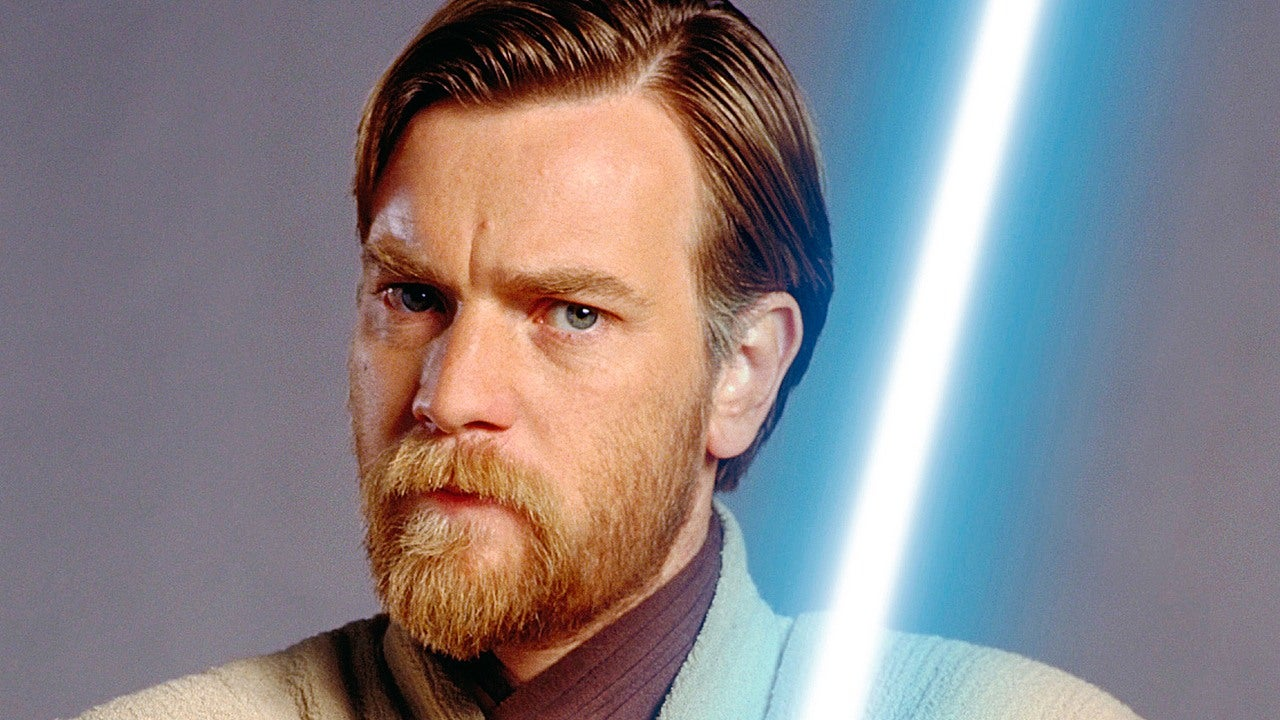
Obi-Wan Kenobi

This might be a choice that some people would argue against being considered one of the best. He trained the man who would become Darth Vader and helps destroy the Jedi order, so how can he be one of the best? And that’s a good point. However, thanks to the manipulations of Palpatine it’s not all down to Obi-Wan. But the stuff that is down to Obi-Wan makes him a pretty damn good Jedi. A rebellious youngling, Obi-Wan was put with Qui-Gon Jinn (more on him later) to learn from. With Qui-Gon being something of a rebel the only way for Obi-Wan to rebel against his master was to become the most by the book Jedi possible.

This is something that we see in Obi-Wan across the saga. He follows the rules, but with a sense of right and wrong. When the Jedi council order the assassination of Count Dooku he speaks out against it. He treats his clones as living beings, people with personalities and the right to live. He respects life, he cares about people. This helps to make him one of the better Jedi around. Even after Anakin falls to the dark side he ‘does what he must’ to stop him, bringing the fallen Jedi close to death – yet he can’t kill a wounded and broken man who he loved. Whilst that decision would go on to have huge repercussions, his respect for life stopped him killing, and kept him on the right path. Obi-Wan is the best example of what the Jedi of the prequel era should have been. He was an exemplar of the order at that time.


Kanan Jarrus

A padawan during the Clone Wars, Kanan watched his master die during Order 66 and went on the run. After hiding out for a number of years, picking up new skills from smugglers and rogues, he met pilot Her Syndulla and joined her crew, a crew that would eventually become part of the beginnings of the Rebel Alliance. It was when the team went to rescue a group of Wookie prisoners that Kanan relit his saber and embraced his role as a Jedi once again. Over the next four years Kanan would battle against Imperial Inquisitors, Darth Vader, and Maul, all whilst trying to train his own apprentice, Ezra Bridger. Despite never finishing his own training, Kanan was officially knighted through the Force by the spirits of former Jedi.

Kanan isn’t what people expect when they think of Jedi. He’s not a monk-like figure like most others. He embraces his emotions, forming a family with the crew of the Ghost, and even falls in love. Despite this, he manages to find a balance between the teachings of the old Jedi and his new life. He’s able to use his passions and his love to make him into a better Jedi, driving him to do some good in the galaxy. In many ways, he’s what Anakin could have been if he was allowed to love openly. There are many reasons for Kanan to be considered one of the best Jedi, but it’s perhaps his final act, giving his life to save his family, that solidifies why he’s deserving of the title. In the end he sacrificed his existence to help others and do the right thing; which is ultimately what the Jedi are all about.


Ahsoka Tano

Yes, another one that people will instantly argue against because of her line ‘I am no Jedi’, but there’s a good reason for Ahsoka Tano to be here. Ahoska instantly garnered criticism from some Star Wars fans when she was introduced in The Clone Wars as Anakin’s apprentice. He never had an apprentice in the third film, so why was she there? Over the course of the series, however, Ahsoka grew on fans, and became a firm favourite. We got to see a different side of Anakin through her, and she became an important part of his eventual fall.

Despite leaving the Jedi order during the war Ahsoka still held true to the values of the Jedi. She wanted to help people. She would go on to take part in the Siege of Mandalore alongside the clones, even if she wasn’t an official Jedi. After surviving Order 66 she would go into hiding, but would ultimately be drawn back into the conflict in order to help others. She would help with the formation of the Rebel Alliance, and risked her life on multiple occasions. She could have had a quiet, simple life away from everything, but her desire to help those in need and fight against the darkness in the galaxy prevented that. Whilst she might not be a Jedi in name, she is in deeds. The things she does are the things that Jedi do. She helps people, she puts her life on the line, and she tries to make the galaxy better. She might claim she’s not a Jedi, but she’s more Jedi than most. She’s also one of the few people to survive in conflicts against Imperial Inquisitors, General Grievous, Darth Vader, Maul, and Emperor Palpatine (some more than once), and shouldn’t be taken lightly.


Qui-Gon Jinn

Qui-Gon Jinn was not particularly liked by the members of the Jedi council. He didn’t always follow orders, he questioned authority, and was considered something of a renegade. But he didn’t do these things for bad reasons. Qui-Gon, more than most other Jedi, believed in the Living Force, and whilst other Jedi tried to maintain order and held to more rigid rule Qui-Gon kind of just went with the flow. He’d allow the Force itself to guide him, to help make his decisions, and help him to do what was right. And this often put him at odds with the council.

The Jedi at the time of the prequel era were mired in politics, they’d lost their way somewhat, and Qui-Gon wanting nothing to do with that made him a maverick. But it also made him a better Jedi. He wasn’t happy to let injustice lie if it meant that political deals could be made. He hated slavery and those who practised it. He called out wrongdoers, no matter their station. He was the kind of Jedi that the Jedi should have been. Whilst Obi-Wan was the best the Jedi of that time could have been, his old master was what the Jedi should have been.


Rey Skywalker

Rey Skywalker (and she is a Skywalker) gets a lot of hate for a lot of reasons, some petty misogynistic reasons included. And whilst some will call her a Mary Sue (often using the phrase incorrectly) she’s a lot closer to Luke Skywalker than people would like to believe. She shares a lot of aspects with Luke, an upbringing on a harsh world, the affinity to the Force, great piloting skills, and a family with ties to the dark side. But where Luke becomes focused on recreating the Jedi as they once were, which leads to his failure, Rey is perhaps the best way to create a new Jedi.

Rey has many, many reasons to turn to the dark side throughout the sequel trilogy. She gets tempted by it at multiple points, with characters trying to push her towards turning. And she never does. It would be easier for her if she did, but it doesn’t once enter her mind. Instead of allowing her anger to turn her, she channels it to try and do good instead. Perhaps closer to Kanan than other Jedi, able to better balance the emotions the old order would try to remove, she becomes the embodiment of what the Jedi can be, becoming ‘all the Jedi’ in order to defeat Palpatine. With the sequel trilogy having come to an end, exploring what comes next in other forms has the potential to see Rey create a new Jedi order, one that has learned from the mistakes of the past, and can become a better force for good.


Support Amy on Patreon

Buy Amy A Coffee

Go to Amy's Blog

Saturday, 28 January 2023

Godzilla: Monsters & Protectors – All Hail The King #4 – Comic Review


Originally published on Set The Tape


The penultimate issue of IDW Publishing‘s latest kid friendly Godzilla series, Godzilla: Monsters & Protectors – All Hail The King, sets up for one final fight as King Ghidorah and Godzilla prepare to face off once again – but a new Kaiju protector steps up to challenge the evil space dragon (wyvern) too.

After the previous issue saw Godzilla and Ghidorah fight, a fight that brought an end to the golden monster’s reign of terror, our heroes think that the danger has passed, and that the world is safe. Which isn’t too far-fetched a conclusion to have made. Unfortunately, another psychic dream lets the kids know that Ghidorah is still out there somewhere. With the monster coming back, stronger than before, the kids need to call upon some extra help for the weakened Godzilla, and so Karen is finally able to make a connection with her Kaiju and summon his aid. And whilst I won’t reveal who it is, I will say that my prediction was right, and that I’m looking forward to seeing the next issue.

Whilst not a huge amount happens in this issue, and most of it takes place over a relatively short amount of time, it does get everything in place for the finale. It gets readers caught up on the situation, it explains the odds stacked against our protagonists, and it makes it clear that this isn’t like other Kaiju battles where the monsters will smash a city or two and go back to sleep. This is a fight with the fate of the entire planet hanging in the balance, because if Ghidorah isn’t stopped he’ll kill every other living thing. And the book does this whilst furthering the development of the core set of characters.

Cedric gets to calm down a bit, and isn’t as much of an insufferable gory hog as in previous issues. He understands that things are bad, and stops being a dick towards Karen. He even seems to get excited when she summons her Kaiju, and is impressed that her way of doing so is a bit more visually interesting than him and the others holding hands and calling for Godzilla. It’s nice to see him finally getting a bit of growth, and seeing him finally being nice towards Karen feels like something we’ve been waiting for for a long while.

The art on this issue, crafted by Dan Schoening and Luis Antonio Delgado, is really nice, and whilst there’s no Kaiju action in this issue to wow readers they still manage to make the book look visually interesting and engaging. The small touches in the backgrounds, and the expressiveness of the characters stop a dialogue- and information-heavy issue from feeling like a slog. It’s always fun to look through this book and see what little touches the art team put in there, like the Hedorah plushy that Cedric has in his bedroom that’s absolutely adorable.

With one more issue to go it’s a shame that the end is so close, but with the promise of the biggest fight that this series has seen it’s an issue that could be one of the best ones yet.


Support Amy on Patreon

Buy Amy A Coffee

Go to Amy's Blog
Friday, 27 January 2023

DmC: Devil May Cry – Throwback 10


Originally published on Set The Tape


The Devil May Cry franchise is an unusual one to say the least. Originally created to be the fourth instalment in the Resident Evil franchise, the game was considered too much of a departure from the tone of that game, and was instead turned into its own IP. And it was one that thrived. Thanks to the frenetic and dynamic action of the series, as well as some interesting character design, a complex story, and the ability to be open to a lot of replay, the series became a hit and received a number of sequels.

But, as can often happen with sequels, the series became more complex and even a little confusing as it went on, especially to new fans. Devil May Cry became a series that wasn’t easy to drop into with each new release, and required you to either go back and play them all, or to do some reading online. As such, in 2013 an attempt was made to reboot the franchise.

DmC: Devil May Cry was announced in 2010 at the Tokyo Game Show, confirming rumours circulating in the games industry that a fifth entry in the series was being developed. However, audiences were left a little surprised when it was revealed that the new game would be a reboot set in its own, separate universe to the others. Despite Devil May Cry 4 being a financial success it had performed poorer than other entries, and Capcom decided that a fresh restart would be a good way to entice in newer players.


The British game studio Ninja Theory were hired to spearhead the new game, thanks in part to their work on the game Heavenly Sword, which Capcom believed would work well with the Devil May Cry series. The new game was given a brand new setting, a world where demonic forces existed in secret beneath the human world that they controlled through comforts like the media and our food. Living on the edges of society, Dante is a young demon hunter who has made it his mission to challenge these evil forces whenever he can. However, this has made Dante a target for the demons, and when they try to kill him he gets recruited to join The Order, a group dedicated to exposing and destroying the demon world.

The game not only changed the setting, but small parts of Dante’s back story too. As opposed to the original series where he was half human/half demon, here he’s a demon-angel hybrid. This change was made in part to introduce a new element into the game-play that not only allowed Dante to enter a demonic form, but an angelic one too. Players were able to switch between his three forms in combat at will, allowing them to create some impressive combos. However, the one change to Dante that seemed to rile up fans was his physical appearance.


The original Dante was designed from a Japanese perspective, and he fell in line with many of the visual styles that you’d expect to find in manga and anime heroes. One of the series producers, Motohide Eshiro, said that the original Dante was created to be what a Japanese audience would think of as cool, and that one of the things that they wanted from the new game was to appeal to a younger, western audience. This led to a pretty radical redesign of the character that received a lot of backlash before the game had even been released. Some fans hated the design that much that the team at Ninja Theory received death threats over it.

Despite this backlash, when the game was finally released it received a great deal of praise from both the games media and the public. The game was praised for the reboot, with outlets citing the newly revised story as being a lot easier to follow than previous entries, as well as more accessible to new gamers. The new combat system was also held up as something worthy of praise, with the frenetic action, the ability to create combos, and the easy to learn yet complex system seen as an improvement.

Despite the complaints from the ‘fans’ of the series, it seemed like DmC: Devil May Cry became something of a success. As time has gone on since it’s initial release the anger over the new direction has lessened, especially since Devil May Cry 5 has been released and returned players to the ‘prime’ timeline and characters. DmC: Devil May Cry is an interesting and enjoyable game, but is also an interesting look at how fanbases can react to new ideas being introduced into their franchise; though this kind of anger at change is something that we’re seeing more and more of in geek circles.


Support Amy on Patreon

Buy Amy A Coffee

Go to Amy's Blog