Saturday, 5 March 2022

Deadly Games – Blu-ray Review


Originally published on Set The Tape


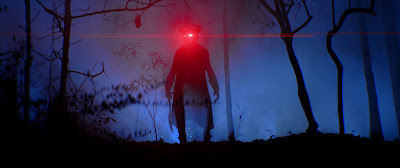
When we think of slasher movies we often imagine masked killers chasing lusty teens, often after said teen has done some drugs or engaged in some kind of sexual activity. It’s become so baked into the genre that when I began watching Deadly Games I was very surprised when it turned out to be a very different kind of film; one that felt like more of a Giallo style thriller than a slasher movie.

The film begins with a young woman alone at home in the dark of night, feeling like someone is watching her from the shadows. After receiving a creepy telephone call someone breaks into the house, and she ends up being thrown through a window, falling down a steep cliff to her death. The following day the woman’s sister, Keegan (Jo Ann Harris), returns to town. Despite having moved away a while ago, and not really liking her sister, Keegan feels like it’s her duty to come home and try to spend some time with her family.

She also begins to reconnect with some old friends, including Roger Lane (Sam Groom), who’s married to one of her friends and is the cop investigating the murder. As Keegan begins to settle back into her old life she learns that many of her friends have fairly open marriages, and it seems like most of the people in town are sleeping with each other; thus, she doesn’t feel too bad when she and Roger begin to grow closer. But when another murder happens it becomes clear that there’s a serial killer at work.


Deadly Games feels pretty different from a lot of 80’s slasher films, a lot more mature in certain ways. The cast is older, with the main characters all being in their late twenties or thirties, there’s a lot less of an emphasis on gore and imaginative kills, and more of the run time is given over to the relationships between the characters than any actual killing. After the first murder, which happens within the opening scene, the next doesn’t happen until half way through the film.

Instead, Deadly Games focuses on the people, and we follow Keegan as she returns to a life she left behind and begins to try to navigate the intricate lives she finds once back. Characters tend to feel rather dubious at best, with most of the people we meet cheating on their partners, lying, and sneaking around in some way. It’s hinted at that some of the dalliances that happen are done so with the consent of their married partners, but definitely not all of them. If anything, the film feels more like a soap opera than a slasher at times, and the fact that a number of TV and soap stars appear definitely help with that impression.


But the film is a slasher, and there are killings that happen. Whilst most of them are fairly tame, and the killings aren’t the most creative part of the film, the fact that it kept me guessing about who the killer was through most of it was the more entertaining aspect. The two main suspects are pretty well crafted, with Roger being a big contender, as well as Billy (Steve Railsback), an injured Vietnam veteran being set out to be a possible murderer. Both actors play their parts well, and I found myself going back and forth over who it could be more than once. The mystery at the heart of the film was easily the best part, and what I think pushed it more into the thriller genre than horror for me.

As well as presenting the movie in a newly restores 2K restoration from the original camera negative, quite easily the best looking the film has ever been, the new release from Arrow Video comes with a full length audio commentary by The Hysteria Continues, a podcast that specialises in slasher movies. Alongside this there’s a new interview with actor Jere Rae-Mansfield, and special effects and stunt coordinator John Eggett. There’s also an image gallery, with never before seen behind the scenes photos, and the original trailer. And if you access the BB-ROM content you can check out the original script, which includes a number of scenes that were cut from the film.

Deadly Games is an odd movie, one that feels like it’s mislabelled as a slasher, but makes for a pretty good thriller. With some good performances from the cast, and an interesting take on small town American life, it very much feels like the kind of film you wouldn’t get today, and anyone interested in cinema history will find a lot to enjoy here.


Support Amy on Patreon

Buy Amy A Coffee

Go to Amy's Blog

Friday, 4 March 2022

Skinny Tiger and Fatty Dragon – Blu-ray Review


Originally published on Set The Tape


Buddy cop movies were big business in the 80s and 90s, and you couldn’t go for long without a movie star trying the genre at least once. Hong Kong cinema was no exception to this. 1990 saw Hong Kong legend Sammo Hung coming together with Karl Maka, a big star in his own right, to team up as cops to take down drug dealing gangsters.

The plot of Skinny Tiger and Fatty Dragon isn’t the most straightforward, and there are times where it seems to go on meandering tangents that don’t add much to the overall story, but serve to showcase the comedy of the script, and the acting talents of the two leads. The basic plot sees our two cops, Fatty (Sammo Hung) and Baldy (Karl Maka) foiling a jewellery robbery, and discovering that the gang involved are also part of a scene to hand off some drugs.

Learning that the criminals are going to be dressed as a woman, with drugs shoved down their bra, the two set out to find the crook, but end up getting in trouble for starting a fight in a women’s changing room. Determined to keep on the case, despite the warning from their boss, the two of them end up getting deeper into the triad’s schemes; but thanks to a fight smashing its way through the wedding of the Deputy Police Commissioner, they are both taken off the case. However, when the triad sends assassins to kill the two cops and their families, Fatty and Baldy hatch a daring plan.


Skinny Tiger and Fatty Dragon feels a lot like it’s trying to emulate the biggest name in buddy cop movies, Lethal Weapon, though at times it does come across a lot more like National Lampoon’s Loaded Weapon thanks to its weird humour; but this isn’t a slight on the movie in any way, as this ends up being an incredibly entertaining take on the formula.

Sammo Hung and Karl Maka clearly have some great chemistry when on screen together, and their characters complement each other well. Maka’s Baldy is a bit of a player, a fast talker who easily gets himself into trouble, and likes to play around with the ladies. Fatty, on the other hand, is the quieter of the two, the guy who’s too shy to tell the girl he likes that he wants to go out with her, and is often left in dangerous situations thanks to Baldy’s plans. However, where things take an interesting turn is that despite being the more gentle of the two on the outside, when things hit the fan Fatty is absolutely deadly in a fight.

There are a number of times during the extras on this release that people refer to this movie as being Sammo Hung’s Bruce Lee film, and you can really see that influence here. Having seen Hung fight in other films I’d seen him do some amazing things, and some of the stunts he’d performed were very impressive; but I’d have said he was closer in style to someone like Jackie Chan than Lee. Here however, Hung does his best Lee impression, making fight sounds that are instantly familiar to Lee fans, thumbing his nose, and tackling some moves that wouldn’t have been out of place in something like Enter The Dragon.

The mix of silly, almost ridiculous comedy, the chemistry between the two leads, and some really impressive fights, makes Skinny Tiger and Fatty Dragon one of the better buddy cop movies from the era. It might not have had the recognition in the west like some of the other big names in the genre, but it’s a movie that I think could have easily been a hit around the world; and one that deserved a sequel or two.

This new release from Eureka Entertainment comes with the original Cantonese audio, so that you can watch it in the original language with subtitles, or you can try it out with the English dub. It’s worth noting, if you play the English dub with the newly translated subtitles you’ll find that quite a few of the lines don’t quite line up together; leading to a unique experience where you get two slightly different translations of the film.


There’s also a pair of audio commentaries along with the movie. The first features Asian film expert Frank Djeng (who has appeared on several of Eureka’s releases) and martial artist and actor Robert ‘Bobby’ Samuels. The two of them offer a lot of interesting insight into the movie, and Djeng is a fount of information as always. The second commentary features cinema experts Mike Leeder and Arne Venema, and is the less enjoyable of the two, as Leeder and Venema spend much of the runtime of the commentary lamenting ‘political correctness’ making it hard to make films like this anymore.

In addition to the commentaries there’s a new interview with stuntman Mark Houghton; a pretty long archival interview with director Lau Kar-wing; and a decent archival interview with stuntman and action choreographer Ridley Tsui. There’s also an extended cut of the final fight scene with deleted moments restored that’s a lot of fun to watch through. The second disc also comes with the feature length documentary I Am White Tiger, which takes a look at martial artist Mark Houghton, his journey from watching martial arts movies in England to being in them, as well as the various trials and tribulations along the way. This documentary is an incredibly eye-opening experience, and features some stories that are absolutely shocking. And if you’re lucky enough to get the Limited Edition there’s a great collector’s booklet packed full of new writing about the movie.

Skinny Tiger and Fatty Dragon is a fun movie, and this new release really packs in the extras, making this one of the best ways to experience it, and even long time fans of Hong Kong cinema will come away from this new release having learnt something from the tons of extras that come with it.


Support Amy on Patreon

Buy Amy A Coffee

Go to Amy's Blog

Thursday, 3 March 2022

Demigod – Film Review


Originally published Set The Tape


Cults have always been easy fodder for horror films. Cults by their very nature are strange things. They act weird, they often worship shifty and unusual things, and there are recorded cases of cults ending in death and horror. As such, it’s not really a surprise that they appear in horror films frequently. Demigod is the latest film to include a frightening religious group, but in this case it’s the thing they pray to that’s more of a threat than the cult itself.

The story of Demigod follows Robin (Rachel Nichols) and her husband Leo (Yohance Myles) as they travel from the US to Germany following the death of Robin’s grandfather, Karl (Jeremy London). Robin has been given everything her grandfather owned, and as such the two of them have journeyed out to his remote forest home to go through his things and see what they’re able to do with his estate.

Shortly after arriving at the remote cabin the two of them run into local hunter Arthur (played by the film’s writer and director Miles Doleac), and his daughter Amalia (Rachel Ryals), who tells the young couple stories of the things that haunt the forest, of how people sometimes go missing and are never seen again. This information puts the two of them on edge, and encourages Robin to tell Leo of some of the strange things her grandfather used to do, and the reason why her parents moved away and never let him talk to Robin again.


That night, the cabin comes under attack from a group of strange women who kidnap Robin and Leo. The next day the two of them wake up in the woods, tied to trees, alongside a group of other victims; including Arthur and Amalia. The group learns that the group who took them worship the ancient hunter god who lives within the forest, and that they are to be the sacrifice to him. Let loose out into the forest, the group must try to survive as the cult’s god stalks them one by one.

Demigod feels like a strange film to try and figure out to begin with. When the film starts we get a strange scene where this odd cult is performing a ritual over a pregnant woman, a woman who was trying to escape their clutches. As the film builds it seems more and more like this cult is going to be the focus, especially when they invade the cabin and take Robin and Leo prisoner. It begins to feel like this is going to be some grindhouse-like flick, where our victims are going to be chased through the forest by the villains, and that them worshipping some ancient god of the hunt is just the justification for this rather than the old trope of ‘strange cannibal family’.

But Demigod does something I wasn’t expecting, and the god shows up. This film – that feels very grounded and real, thanks in part to it not being hugely polished, and feeling grimy – takes a sudden shift into the fantastical when a cow-headed man begins to chase people down. At first I was thinking it was perhaps a man in a costume, but no, the film fully embraces the notion that the forest is actually the home of an ancient god and just runs with it.


Outside of the strangeness of the plot the main draw would be trying to work out what happened with Robin as a young girl. We get hints through stories, and dream sequences, and because of this Robin ends up being the only really developed character across the course of the movie. Leo gets some interesting moments, and Arthur is a morally grey character who adds some drama into the mix, but they never feel more than just simple archetypes. Plus, the other people who are being hunted alongside the main four are so forgettable and brief that I’m not even sure if they’re named in the movie.

Demigod is not the kind of movie that I was expecting from the marketing, and it seems to have taken two very different types of horror genres and smashed them together to try and do something interesting and new. Unfortunately, thanks to not really developing any of the characters in any real way, and the lack of any real tension over the course of the movie, I never felt connected with the characters, and wasn’t really that invested in seeing if they lived or not.

For horror fans looking for something to throw on for a few hours Demigod will be worth a go, but if you’re looking for something that will surprise you, that will break boundaries, or will get you invested, this probably won’t be ticking any of those boxes for you.


Support Amy on Patreon

Buy Amy A Coffee

Go to Amy's Blog

The Raven Riddle by Vashti Hardy - Book Review


'Best seller Vashti Hardy returns with another heartfelt and action-filled addition to the Griffin Gate series.

'Grace’s family are wardens of the Griffin map, using its teleport technology to fight crime across Moreland. And now there’s someone new on the team: Tom Eely, who has been training hard to become a warden.

'Grace and Tom reckon they’re ready to tackle a mission together, but they’re disappointed when Mum sends them to a quiet mountain village where ravens have been pestering the locals. Surely there won’t be any opportunities to use their exciting gadgets or combat skills there?

'But as the pair investigate, the situation becomes more puzzling. Why does it seem like the ravens are protecting something? And are the villagers’ tales of a mountain witch really to be believed? Grace and Tom will have to use all their wit, skill and courage if they want to solve the raven riddle...'

The Griffin Gate series has proven to be an enjoyable, and often action packed series of adventure books for young readers, and now the young hero Grace gets to return for a third outing, joined by her new friend Tom.

Having began reading this series with the second book in the series, The Puffin Portal, I was familiar with how Tom had recently come to become part of Grace's family as well as joining their team. The book begins not long after the events of the last book, with Tom having gone through several weeks of training to get him used to being a Warden. He's a capable kid, and is as eager as Grace to get out into the world and start working some cases.

When Grace's older brother, Bren returns from a case in the village of Brook Hollow to collect some equipment. However, when an emergency call comes in Bren, and Grace's mother, are have to leave. This means that Grace and Tom get to take over Bren's mission; even if it is just looking into some misbehaving Ravens.

Arriving in Brook Hollow, the two teens get reports of flocks of Ravens that have been harassing the townspeople, and scaring them away from the nearby forest. Setting out to investigate, the two of them are surprised to find a strange cabin out in the forest, and get even more freaked out when the building gets up and starts walking about on legs. Were the villagers right, could there be a witch in the forest behind all the trouble?

I really enjoy how the Griffin Gate books presents the readers with a pretty unusual, but not too weird, mystery to begin things, something that Grace and Tom can be sent on as younger, less experienced Wardens. But very quickly it becomes clear that there's more going on than you first think, and that the mystery has a number of elements you wouldn't be able to predict. This time it being a big house that can get up and walk around.

Whilst the last book was about a mystery, this one isn't so much though. Pretty soon after the discovery of the strange house Tom and Grace get presented with an explanation, and it seems like the situation can be put to bed. This comes when there's still half the book left, so there has to be something else going on right? Absolutely, it's at this point that Vashti Hardy switches gears and it goes from a strange mystery story into an adventure story, as a huge flood threatens to destroy everything and everyone in the area and the kids have to try to find a way to save the day.

The sudden shift into a disaster story was pretty unexpected, but was absolutely wonderful to read. It made this book feel very different from the previous one, showing that big, exciting things can happen in this series. It also gave both Grace and Tom moments to shine, they got to step up and be heroic, and they bonded even further, proving themselves to be an incredibly effective team.

The book also features some fantastic illustrations by Natalie Smmillie, who provides the interior and cover art for the book. Whilst the cover is in full colour the interior art is in black and white, but this doesn't do anything to diminish how great the art is. The illustrations really help to bring the story to life in fun and exciting ways, showcasing some of the bigger moments of the book. There's a full page illustration close to the end where Tom gets to make his big hero moment, and it's absolutely fantastic.

The Raven Riddle is the perfect addition to this series. It shows how things have evolved since Tom joined the team, how he makes for a perfect addition and works really well with Grace. And it's also a great jumping on point for new readers as it doesn't punish you for not having read the previous books, giving you everything you need to know to get up to speed and dive straight in. If your kids love fun adventure stories this is one they'll definitely want to check out.


Support Amy on Patreon

Buy Amy A Coffee

Go to Amy's Blog

Wednesday, 2 March 2022

Fagin's Girl by Karen McCombie - Book Review


'Fagin’s infamous gang comes to life once again in this exciting Oliver Twist-inspired adventure from bestselling author Karen McCombie.

'Orphan Ettie Shaw is penniless and homeless on the streets of London when she is spotted by her older brother Joe.

'Joe has fallen in with a notorious pickpocket gang run by a man called Fagin, and Ettie has to disguise herself as a boy so she can come back with him to Fagin’s lair.

'At first Ettie is able to help out with mending and other domestic jobs, but when one of the other boys falls ill, Fagin demands that Ettie go out pickpocketing with Joe and everything goes horribly wrong …'

Fagin's Girl is one of the new releases from children's publisher Barrington Stoke, one that takes some inspiration from the famous Dickens novel Oliver Twist to tell a surprising tale.

The book begins in London in 1936, where we meet Ettie Shaw. Ettie is a young girl who lives in a small one room apartment with her mother, and older brother Joe, and is struggling to get by following the death of her father. The family are doing what they can, having moved to a smaller home, and everyone is pitching in to help. Ettie and her mother make fake flowers to sell, whilst Joe works as a table boy at a local brewery.

However, when Joe reveals that the owner of the brewery was beating him, showing the huge bruises that cover his back, he admits that he left the job over a week ago. When he refuses to admit to his mother what he's been doing since, and how he's been getting money for the family an argument breaks out and Joe leaves.

With Joe gone, and with even less money coming in, Ettie and her mother have to move once again, and tragedy soon strikes. Suffering from arsenic poisoning, Ettie's mother passes away, leaving Ettie completely alone in the world. She tries to make it on her own for a while, sleeping rough and trying to earn pennies as a road sweep, but just when all hope seems lost she finds Joe once again. Joe tells her of a man, Fagin, who gives him work and a place to sleep. Joe and Ettie come up with a plan to disguise Ettie as a boy, convincing Fagin to give her a job. But now Joe has to try and hide the truth of just what it is he and Fagin's other boys actually do.

Karen McCombie doesn't hide things from her younger readers with Fagin's Girl, she puts the harshness and cruelty of this era at the forefront of things, showing how children would grow up in poverty, barely surviving, watching parents and siblings die. It's a shocking opening to a book, sure, but it's one that isn't hugely far from the truth of things. And that's something that I always like about Barrington Stoke's historical novels, and McCombie's work, such as The Girl With Her Head In The Clouds, they might be telling fictitious stories but they're very much grounded in reality.

That being said, this book does draw from some more fictitious places, as the name suggests. The book features Fagin, the famous figure from Charles Dickens' novel Oliver Twist, which was first published in the same year that Fagin's Girl is set. Fagin is very much the same character here as in the Dickens book, though I did get the sense that this is him when he's still getting used to his system. He has less children working for him, there's no characters like Dodger there, and it very much seems to be his early days. And I really liked that approach. I think if the book did feature more characters from the original novel it would have felt a bit too much, a bit pastiche, but McCombie manages to walk a perfect line where it feels enough of a nod to the other boo, without going too far.

One of the things that surprised me the most, and this is a spoiler for the ending, so skip ahead if you don't want to know, is how the book shifted gears suddenly at the end. In the penultimate chapter of the book Ettie and Joe are caught pick-pocketing, and thanks to Joe's quick thinking only he gets in trouble for the crime. The next chapter then jumps forward 150 years to 1988, where a young schoolgirl in Australia is giving a talk to her class. It turns out that what we'd been reading the story about how this girls family came to Australia, as Joe was her ancestor. This whole thing was a bit of a shock, a twist I didn't see coming, but it actually worked really well, turning the book into more than a simple Georgian/Victorian era historical piece.

The book also comes with a number of illustrations scattered throughout the narrative, provided by Anneli Bray. Bray's work features on the front cover in colour, and looks absolutely wonderful, showing Ettie playing above the streets of London as the sun sets in beautiful oranges. But from here the artwork takes a darker turn, mostly due to being printed in black and white in the book itself. Now, I really liked this choice to not have the art in colour, as it fit with the narrative. Ettie's life is so hard, and the events so awful that there often feels like there's very little joy in her life, and the gloomy, black and white illustrations really highlight this, as they don't let the reader escape into brightness or bold colours.

Fagin's Girl ended up being an interesting look into life as a poor, downtrodden child on the streets of London in an era where no one would care is you lived or not, where survival was a daily battle. These can be topics that are hard to approach with younger audiences, but McCombie does it wonderfully, making it accessible, whilst not shying away from the awfulness. 


Support Amy on Patreon

Buy Amy A Coffee

Go to Amy's Blog

Tuesday, 1 March 2022

Call of Duty: Vanguard – Collectibles Review


Originally published on Set The Tape


Gamers love merchandise. As someone who’s been playing video games for as long as I can remember, and who lives with two other people in the same boat, my house is filled with models, action figures, and random knick-knacks from various games, to the point where we’ve had to add new rooms onto the house. Finding something to display from a game that you love can be a great feeling, showing off your support for a franchise that has brought you countless hours of entertainment.

But there are some games where it’s harder to find such things, and Call of Duty has often seemed like one of these. You can find t-shirts and hats that feature Call of Duty inspired logos and artwork, but this isn’t quite the same; not least because whilst wearing a t-shirt you’re not normally the one who gets to see the designs. Koyo seems to be trying to rectify this lack of merchandise with their newly released Call of Duty: Vanguard products.


The first of these new products is the Call of Duty: Vanguard Patch Set. This set comes with three embroidered fabric patches featuring designs inspired by the different game modes, and include the Snake Bite patch, which features a bold, severed snake head on a bright yellow background, the Death Run patch, which has a skeletal faced pilot on it in nice muted orange colours that look very pumpkin-like and Halloween inspired, and the Dog Fight patch, which has a very animated looking dog wearing a pilot’s cap and boxing cloves squaring up for a fight.

These patches are actually really nice, the artwork that they feature is very bold and cartoonish, and definitely looks like the kind of art you’d expect to find painted on fighter planes or adorning the side of a chopper. The embroidery feels really well done too, and it seems like a decent amount of care and attention has been given over to them; they don’t feel like they’re going to start falling apart any time soon. One of the best bits is that they come with Velcro backs, so you don’t have to permanently attach them to things. This means that they can easily be removed, moved, or attached to pre-existing spaces on other items without you having to use the backing that comes with it. This level of flexibility of use is definitely a plus, and means that they don’t need to be displayed on one specific thing.


The second pack I received was the Call of Duty: Vanguard DIY Pin Badge Set. Now, I’m honestly not sure where the DIY element comes in here, as the badges are fully made and don’t feature any customisation; but I assume it could be in reference to the fact that the artwork on these badges are inspired by the hand painted nose artwork that fighter pilots would put on their vehicles.

The three badges all have a very punky feel to them, and wouldn’t look out of place emblazoned on the back of a biker’s jacket. There’s the Royal Corps badge, that features red and blue art of a snake wrapping itself around a bomb, the black and white Flying Assassins logo that has a knife stabbing through a winged skull, and my personal favourite the Stinger badge, which has a really cool looking wasp dude in a pilot’s hat in a lovely yellow and blue colour.

Due to coming in a three pack these badges are a bit smaller than the other badges on offer from Koyo, and as such they’re fairly light feeling too. The benefit of this is that you would definitely be able to wear all three without it starting to weigh you down too much or pulling on your clothes. They are all made from pretty decent material though, and feel pretty solid in your hand. The colours are nice and bold too, and my only real complaint is that it can be hard to see the white on the silver for the Flying Assassin badge on occasion, depending on your angle.


The next item I was sent was the Call of Duty: Vangaurd Logo Pin Badge. This badge is pretty plain from a design point of view: it’s the game’s title presented in badge form, and as such there’s not a great deal that can be done from a design perspective to make it flashier. However, the badge itself is really well made. It’s a decent size, the metal is pretty weighty and doesn’t feel cheap at all, and the black and red of the logo are nice and bright with a decent level of gloss on them. It works pretty nicely, and looks good on display.


Speaking of logos, Koyo are also offering a keyring featuring the logo. This is a big, chunky piece made from pretty thick metal, and is about twice the size of the logo pinbadge. The chain and loop at the end of the keyring aren’t small either, and it really does seem to be a piece designed to take some wear and tear, and I can’t see this being one of those keyrings that’s easily going to fall off or go missing. However, due to the size of it, I don’t think you’d be able to have many keys on there with it before it starts to get too big for your pocket.


My personal favourite item from the new line is the Call of Duty : Vanguard Bar Blade. Now, being someone who hasn’t been out to a bar in a long time I’d simply call this a bottle opener, but I do get that there are some differences and that some people might be looking for one of these specifically; but, even as a simple around-the-house bottle opener this is really, really good. From a design perspective it’s pretty nice. One side has a simple, flat silver with the logo for the game embossed into it and filled with a nice glossy black and red paint. The other side of the bald features a camo pattern in greens and brown for if you need that bottle of beer on the battlefield.

What I liked most about this item, however, was something that most people might not consider: it was really nice to use as a disabled person. The blade is a decent size to hold in my hand, and I was able to grip it well without any difficulty even when my hand wasn’t working right. The length of it also meant that I didn’t have to apply too much pressure when opening the bottle, which helped with my bad wrist. I know this isn’t designed as a disability aid, but it’s honestly the nicest bottle opener I’ve used in a good, long while.

Overall, I was really impressed with the items on offer from Koyo, they were well designed and well made, the quality felt really good, and it was really nice to see stuff like artwork from the game being used on merch rather than just the logo every time. If you’re looking for something to get to show your love of the game, some nice new pin badges, or even a disability friendly bottle opener, these might just be worth your time.


Support Amy on Patreon

Buy Amy A Coffee

Go to Amy's Blog

Monday, 28 February 2022

Star Wars Adventures: Tales of Villainy #14 – Comic Review


Originally published on Set The Tape


When the last issue of IDW‘s Star Wars Adventures: Tales of Villainy ended, we’d seen the frightening power of Darth Vader, and we’d left sequel-era hero Rey in a sticky situation as her new ally, Moebin, had been captured by a bounty hunter. This time, we get to find out how Rey will be able to solve this dilemma, as well as getting to see a softer side of one of the newer characters in the Star Wars canon.

The first story in this issue, ‘Repair Stop, Part 2’ by George Mann, picks up where the last issue left off, with the togruta smuggler Moebin tied up and prisoner to the rather large and intimidating bounty hunter, Kief. Having used a variety of gadgets and some clever moves, the man has managed to best Rey, who doesn’t seem to have anything other than her staff with her, and has captured his target. Unfortunately, he doesn’t seem to be the brightest star in the sky, and is easily distracted by Rey, allowing Moebin a chance to try and escape.

This honestly, doesn’t do good things for Kief, and makes him look kind of silly. The bounty hunter who was pulling out weapons and gadgets to get the upper hand in the last issue is now dumb enough to just stand there and chat whilst his prisoner escapes his binds about a foot behind him. It’s not exactly going to get him put up there with the all time greats like Boba Fett or Bossk. The silver lining to this is that it means we get some more shenanigans across the story as he and Rey have a back and forward over who gets to have the upper hand.

Overall, this story began quite promisingly with the first part, but the finale feels kind of rushed. There are times where the characters feel like they’re making silly mistakes, just so that it can lead to the next story beat, and Rey feels like she’s kind of going through the motions as she seems to be doing very little to help with the situation. It’s clear from context clues that this story is taking place between episodes 8 and 9, which means that she can’t just pull out her light saver as she’s probably not fixed it yet, but she still has force powers; yet she never uses the force to try and help stop the bad guy. It just seems like she’s making all the wrong choices so as to drag out the story.

The art, provided by Butch Mapa and Charlie Kirchoff, is pretty decent though. The characters from the movies all look like the actors, and the new characters are pretty distinct looking. Moebin and Kief have some striking designs that makes them easy to spot on the page, and this definitely helps everyone to stand out from the background. Everything has decent detail, and it’s one of the nicer looking stories in the series yet.


The second story this issue is ‘A Very Nihil Interlude’ by Justina Ireland. Straight away I was excited for this story, not just because I love Justina Ireland’s work, but because the variant cover shows that this story will be featuring Deva Lompop; a pretty interesting new characters.

The story begins on Hon-Tallos, a planet already mentioned in a few High Republic stories, where a young Nautolan girl called Vroma is being chased through her village by one of the local bullies. She’s taken a Durga Berry from the berry grove. Despite the grove being open to all, the bullies tell Vrona that she’s not welcome there, and that the berries are theirs. Left alone in the street with her broken berry, Vrona is approached by a woman who watched the whole thing, Deva Lompop. Deva tells the girl that there’s a good way of dealing with bullies, and agrees to help her get even.

This story, though short, was a lot of fun. Having recently first appeared in the comic tie-in War of the Bounty Hunters: Jabba the Hutt, Deva instantly stood out as a character of note. Having been around in the High Republic era, being a formidable bounty hunter, and just looking cool, she’s been an instant stand-out. Here we get to see more of her in her early days, as she works with the Nihil. Not only is it interesting to see more of this younger Deva, but it’s brilliant to see the villains of this era doing something good. It adds more depth to the Nihil as a whole, and suggests that they’re not all villains out to do no good. Whether you’re aware of who Deva is or not, this short story is sure to be a fun experience that will stick out.

The art for the story is provide by Nick Brokenshire, and I’ve found that their particular style works really well with stories that focus on the Nihil. Brokenshire’s art has a wonderful amount of detail to it, and when applied to characters that are a bit more chaotic, like the Nihil, it seems to fit well. They also manage to make Deva look beautiful one moment, and truly frightening the next; which is perfect.

Whilst the first story in this issue feels like a bit of a letdown, the second is perfect, and is a prime example of some of the cool things that the Star Wars Adventures series can do; adding extra detail and context to characters from other stories, whilst being hugely entertaining themselves.


Support Amy on Patreon

Buy Amy A Coffee

Go to Amy's Blog

Sunday, 27 February 2022

Wrath by Marcus Sedgwick - Book Review


'Cassie Cotton has always been unusual, a bit different - but this only makes her more intriguing to her classmate Fitz.

'Cassie can hear a noise that most people don't notice or recognise, and she believes it's a sound that shows the Earth is in distress, damaged by human activity that is causing climate change.

'When this belief leads to her being ridiculed and bullied at school, Cassie disappears. Fitz is determined to find her, but he has no idea where to start looking, or if he'll be in time to help her...'

Wrath tells the story of Cassie Cotton, a teenage girl who's been struggling during the Covid lock-down, who's been hearing this strange humming noise, and who suddenly goes missing one day. Left behind with no idea what might have happened to her, her best friend Fitz tries desperately to figure out what could have happened to Cassie.

Wrath is the latest children's book release from publisher Barrington Stoke, a publisher that has been producing some excellent children's reads. Normally with their books there's a theme to them, a topic that they're dealing with in some way. Sometimes this is a story about wildfires that help raise awareness of nature and global warming, or stories about a family struggling to get by that teaches young readers about poverty and how hard some people in the UK have it. Often the themes are pretty obvious, and central to the book; but it took me a while to see the central themes in Wrath.

The book begins with Cassie, already being missing. She's just vanished and people are still trying to figure out when she might have disappeared, and where she could have gone. One of these people is Fitz, one of her best friends, her band-mate, and someone who secretly has a crush on her. Over lock-down Cassie had been messaging Fitz, as well as secretly meeting him in the middle of the night, telling him about a strange humming sound that she's been hearing. 

As the days pass, Cassie keeps insisting that she can hear the hum, that it's always there when its quiet, and that she thinks it the sound of the earth itself. Whilst Fitz wants to be a good friend to her, he can't hear the sound, and as the days pass other people hear about Cassie's sound, and start mocking her for it. When Fitz stupidly agrees with one of his friends that Cassie might be crazy she overhears this, and it's the last time that he sees her before she vanishes. 

With the police searching for her, Fitz believes that the sound might be connected with her disappearance somehow, and starts to search through everything she sent him about it. Desperate to find his friend, to tell her he's sorry, and that he loves her, Fitz will go to impossible lengths to get her back.

Wrath tells its story across a series of flashbacks, scattered over the days when Cassie goes missing, showing both how Fitz is dealing with his friend being gone, as well as what led them both to this point. The story unfolds slowly, with small pieces of the puzzle being handed to readers as Fitz starts to piece together what might have happened. Because of this, it's not clear at first what might be going on.

For the longest time I was left wondering if perhaps there would be some kind of supernatural element to the book, that the hum would be something real, something that could have whisked Cassie away from her home. Whilst there's no explanation for the hum by the end of the book, it eventually becomes clear that this is a much more down to earth story; one about relationships and wanting to escape.

You see, Cassie is going through a difficult home life leading up to her disappearance. Yes, she has both parents living with her, and they're pretty rich, a stark contrast to Fitz who lives with his father and struggles to get by, but thanks to her parents relationship going through a rough patch she's living in a house filled with constant arguments. She's being subjected to shouts and screams, the sound of broken things, and is trying to drown that noise out. Her disappearance is as much about escaping her family as it is trying to figure out what the hum is.

The relationship between her and Fitz is also given a lot of weight, and most of the scenes in the book involve the two of them, or at least relate to their connection with each other. Fitz is either spending time with Cassie, thinking about her, searching for her, or wanting to make things better with her. And this huge focus he has on her could have easily come across as creepy, some kind of teen obsession, yet it doesn't. There's another character in the book who is written this way, and there's such a sharp contrast between him and Fitz; you see that Fitz isn't some love-struck teen, desperate to just possess the girl he loves, but an actual decent person with a damn fine heart.

By the end of Wrath its clear that this is a story about love, about relationships, and about escaping the things that bring you pain. It shows how those around you can be hurt by your actions, even if you don't think so. Cassie was hurt by her parents, and her leaving hurt Fitz. But ultimately it's these connections that help save her come the end, that ground Cassie and show her that she doesn't have to face the huge, frightening world all on her own. And because of that, I think the book has a wonderful message behind it.


Support Amy on Patreon

Buy Amy A Coffee

Go to Amy's Blog

Thursday, 24 February 2022

A Lesson in Vengeance by Victoria Lee - Book Review


'Felicity Morrow is back at Dalloway School. Perched in the Catskill mountains, the centuries-old, ivy-covered campus was home until the tragic death of her girlfriend. Now, after a year away, she’s returned to graduate. She even has her old room in Godwin House, the exclusive dormitory rumored to be haunted by the spirits of five Dalloway students—girls some say were witches. The Dalloway Five all died mysteriously, one after another, right on Godwin grounds.

'Witchcraft is woven into Dalloway’s history. The school doesn’t talk about it, but the students do. In secret rooms and shadowy corners, girls convene. And before her girlfriend died, Felicity was drawn to the dark. She’s determined to leave that behind her now; all Felicity wants is to focus on her senior thesis and graduate. But it’s hard when Dalloway’s occult history is everywhere. And when the new girl won’t let her forget.

'It’s Ellis Haley’s first year at Dalloway, and she’s already amassed a loyal following. A prodigy novelist at seventeen, Ellis is a so-called “method writer.” She’s eccentric and brilliant, and Felicity can’t shake the pull she feels to her. So when Ellis asks Felicity for help researching the Dalloway Five for her second book, Felicity can’t say no. Given her history with the arcane, Felicity is the perfect resource. And when history begins to repeat itself, Felicity will have to face the darkness in Dalloway–and in herself.'

I'd only recently heard of the term dark academia, having stumbled across a video essay that explained this fairly new,and popular, genre. As far as I was aware, I'd not actually read any books that were expressly described as being dark academia; though there are definitely a few that skirt close to it. But A Lesson in Vengeance is a book that as soon as I heard about it people were throwing that phrase around; and as such I was really looking forward to finally experiencing this popular genre.

A Lesson in Vengeance begins by introducing us to Felicity Morrow, a young woman who has returned to college following a long break the previous year for so far unspecified reasons. We get hints that it was something bad that happened to her, but not much else at this point. Felicity attends the Dalloway School, and lives in the centuries old Godwin house; a small building dating back to the 1700's that played home to five young women who were accused of being witches, and who died in strange and tragic circumstances. The Dalloway Five.

Expecting to be the only person at Godwin house this early, Felicity is surprised to find another student there, Ellis Haley. Ellis is in her first year at Dalloway, and is a world famous author at only seventeen. Whilst Felicity initially takes a dislike to her, and the way the other girls at Godwin house flock around her, the two of them begin to grow close. Eventually, Ellis asks Felicity for hep writing her next novel, a story about the Dalloway Five. The two of them begin to plan out how someone could have committed these historic murders, making it look like the work of magic. But Felicity begins to unlock suppressed memories of the tragic events that took place the previous year, and begins to think that she may be quite literally haunted by the ghosts of what happened.

A Lesson in Vengeance is a mystery thriller book, with some possible supernatural elements thrown in to have the reader question if something more than ordinary might be going on. You'll spend a lot of time reading this book learning small snippets of information about Felicity's past, trying to piece together what happened to her and her girlfriend, Alex; as well as watching as Felicity and Ellis grow close in the present.

There feels like there's a lot of balls up in the air when reading this book, a lot of things to keep track of and to watch out for as you juggle small clues, vague hints, and outright disinformation. Because of this, I often found it hard to fully invest in what was happening. There were more and a few times where we'd be given a piece of information as fact, and then several pages later we'd be told it was an outright lie. I suspect that this was done both for dramatic effect, and possibly to show the mental health issues that Felicity was dealing with; but I would sometimes feel like a bit of a cheat to me. For example, I don't know what we gained from Felicity giving us a completely fabricated version of events, which was immediately proven to be false. I don't know why we were made to believe something was real before it was quickly revealed to be fake, other than to perhaps make us not believe anything that Felicity was seeing.

If this was, in fact, an attempt to have the reader begin to doubt the sincerity of the narrator, I didn't like this method. It's not someone starting to question if maybe they imagined seeing a ghost, or questioning if maybe their recollection could be slightly off; this was the narrator giving us an openly false narrative that was nothing like reality, which then immediately made me doubt anything that had come before it. I wasn't jut questioning if what was happening now was false, but if anything in the entire book was even real; and this effected how I thought about what I'd already read in a negative way. It's difficult to write about mental health, and certain issues are going to be harder to convey, but I just found that Felicity creating this entirely different version of events made her completely untrustworthy, and broke some of my enjoyment of the book.

The other main protagonist for the book, and only other real character, is Ellis. Ellis is seventeen, a published author who has received a Pulitzer, has been on the cover of Time Magazine, and has more wild stories than someone three times her age. And there's my biggest issue with her right off the bat. Ellis is a character who cannot, should not, be seventeen. I know it might not sound very generous of me, but her level of achievement, her fame and fortune and skill at just seventeen feel completely and utterly unbelievable. These feelings were only compound by the way she acted. She spends long periods locked in her room writing, but when she comes out she's introducing girls older than her to different whiskey drinks, she'd driving around to old antique shops, and she's staring off into the distance with a look of angst on her face. She's a thirty-five-year-old trapped in a teenage body. The fact that we also get this ridiculous horror story like backstory for her doesn't help either, as her entire character began to feel like walking tropes rather than a real human being.

This was something that I found with all of the characters if I'm being honest, they all came across like people twice their age, and none of them felt like teens at all. I know some people complain about how immature protagonists in YA books are because they're kids, but if these characters were stated to be in their thirties but nothing else was changed it wouldn't feel out of place at all. Perhaps its just that each and every one of them was pretentious, attending this old college, dressing in tweeds and plaids that seem to have come off a dark academia mood board, talking about how difficult their privileged lives are, discussing old classics like they should shape the way people view the world. Yes, it might be ticking all the boxes for fans of dark academia, but it resulted in teens who felt like they were trying too hard to be adults, and came across as very false.

In addition to Ellis being this super special 'greatest writer of her generation' at seventeen we had a similar thing with Alex, Felicity's ex. Alex, who I believe was also seventeen at the time of her death, was an Olympic athlete who'd climbed Everest twice already and was the second youngest person in the world to do so. Whilst I know that there are young Olympians, and that the youngest person to climb Everest was thirteen, this just felt like another example of the main characters needing to be super special wonder people. I don't know how she does it, but Felicity seems to only attract the greatest people of her age. Perhaps this is another reason why everyone in this book feels so rich and privileged that I couldn't really connect with them.

The romance between both Felicity and Alex in the past, and Felicity and Ellis in the present both felt super toxic to me too. I know that you don't have to write happy relationships in books, and that there are toxic relationships in the world; but boy does it seem like Felicity can't pick a decent person to give her love to. It just comes across like both of the main f/f relationships in the novel feature abusive elements, and this just gets further compounded in the epilogue section where Felicity casually mentions wanting to leave her loving girlfriend because she doesn't quite fit her vibe. The book ends with her dating this lovely lady, having dinner with her, and pages before she was going 'she's not really the cool kind of girl I want, so I'm just gonna leave her'. It really seems like Felicity is a toxic woman who shouldn't be dating anyone.

Outside of Felicity and Ellis, and talk about Alex, there aren't really any real characters in the book. There are three other housemates that live in Godwin, but I couldn't tell you their names let alone what they're like as they're so forgettable. These other three only seem to appear when the plot needs them to, and do the barest minimum before leaving again. The book could have cut half the scenes they were in and you wouldn't really notice their absence as they bring nothing to the table.

I really wanted to like A Lesson in Vengeance, I wanted to get invested in this story and the characters, but I found so little of either actually in the pages. What was there felt too disconnected, too heavily reliant on exaggerated tropes and 'vibes' to get by, and often came across more like a pastiche. Perhaps I'm simply the wrong audience for this, I'm sure there will be people who will lap up the dark academia theme, who will dig the characters and love the romance and mystery; but I'm not one of them. 


Support Amy on Patreon

Buy Amy A Coffee

Go to Amy's Blog

Wednesday, 23 February 2022

Power Rangers Wild Force – Throwback 20


Originally published on Set The Tape


When Mighty Morphin Power Rangers first hit television screens in 1993 it was a big gamble for Saban. They’d taken footage from a strange Japanese franchise, Super Sentai (Kyōryū Sentai Zyuranger to be exact), and cobbled it together with American actors and some awful scripts and hoped that the bright costumes, weird monsters, and giant robot fights would prove to be popular. And boy was it! The show was an instant hit, and over the next three years the series became a global phenomenon.

But when they’d exhausted all of the Kyōryū Sentai Zyuranger footage, and tried forcing in footage from the next two Sentai series, it was becoming clear that this method wasn’t working anymore. So the franchise took the bold step of reinventing itself completely with Power Rangers Zeo, which featured all new costumes. This gamble worked once again, and thus the show would start a process whereby it would change dramatically every year, and soon it was even starting afresh with new characters and new stories each time, making a franchise where the show could vary wildly year to year.

Going into its tenth year, the show became Power Rangers Wild Force, coming off the back of the hugely popular Power Rangers Time Force. Where Time Force had been a bit more mature, featuring a story of time travel, a dystopian police state future, and questions of whether people are genetically evil, Wild Force took a much more back to basics approach and chose to tell a much more simple, and dare I say, childish story.


Power Rangers Wild Force tells the story of Turtle Cove, a city that’s being attacked by strange monsters called Orgs. When a young man named Cole (Ricardo Medina Jr.), who was raised in the jungle by a native tribe after his parents died, travels to Turtle Cove to look for answers about his past, he comes across a group of heroes fighting the Orgs. These four tell him that they’re the Wild Force Rangers, and that he’s destined to join them.

Cole is taken to the floating turtle shaped island of the Animarium, a place filled with giant robotic animals and nature. Here he meets a magical princess who tells him that the Orgs are demonic spirits that can possess technology, becoming creatures that will try to destroy the natural world. Knowing that he was destined to join the Rangers, and hoping that it can help him learn about his parents, Cole becomes the Red Wild Force Ranger.

Power Rangers Wild Force takes a very fairy tale approach to its story, with even the idea of the floating Animarium being an actual fairy tale within the universe canon. Complex narratives about if someone is truly evil or not, and whether they have the capacity to change go straight out the window as it’s established early on that the Orgs are soulless monsters that need to be fought. The result of this is a show that definitely works for kids, but feels suddenly jarring for its older viewers.

The series had been getting more mature up to this point. Rangers had gone from teens in high school to young adults, to members of a secret military group, to cops from the future. The Rangers and their worlds had become more complex and layered (as complex and layered as this franchise can be anyway). Then this show comes along and it’s very stripped down. Most of the team act like kids, despite clearly being in their twenties, and it’s never clear if they’re supposed to be young adults or teenagers. The only real exception to this is the Yellow Ranger, Taylor (Alyson Kiperman), who we learn is an Air Force pilot who was leading the team before Cole, and was even a lone Ranger for several months. Where the show about that?!


A few things I can compliment this iteration of Power Rangers for are the monsters and the team-ups. The monsters of the seasons prior to this were flat and boring. Their themes were too broad to be interesting. Demons and mutants from the future sound good on paper, but when that could mean anything it meant pretty weak and uninteresting designs most times. This series, however, does it right by having a very clear brief: monsters made out of technology. The result is a slew of brilliant designs, and fun personalities that result in some of the best monsters in the last ten years.

I cannot talk about Power Rangers Wild Force without also mentioning the team-ups. This season gets two, the first being a two part story that brings back the cast of Power Rangers Time Force for what feels like their real finale. Characters, both hero and villain, get a real resolution this time, and it feels like you can’t watch Time Force without including these great episodes to round it out. There’s also the tenth anniversary special, ‘Forever Red’, which brings together ten Red Rangers from past seasons for one huge, action packed special where they have to save the Earth. Pretty much always included in best of lists for the entire franchise, this episode is one that you’d show people who’ve never seen Power Rangers to show how cool the franchise is.

Power Rangers Wild Force might not be perfect, in a lot of ways. The story is simplistic and silly at times, there are way too many zords, and the acting is pretty terrible; but these are things you expect from this show. But it has a lot of good stuff in it too, and the highs of the season are pretty damn cool. As an anniversary season, and the final season of the original Saban era of the show it’s pretty damn good.


Support Amy on Patreon

Buy Amy A Coffee

Go to Amy's Blog