Tuesday, 14 November 2017

Power Rangers Ninja Steel ‘Helping Hand’ Review


Originally Published on Set The Tape

Is this really how Power Rangers Ninja Steel is going into its season finale? I’ve not been kind when talking about this season of Power Rangers, and I’ve often scored it very low; but it’s been a real struggle to find good things to say about the episodes.

‘Helping Hand’ is the penultimate episode of the season, leading straight into the finale, but other than two minutes at the very end could have been any episode anywhere else in the season.

With the Rangers needing to find an extra credit assignment for shop class, Sarah (Chrysti Ane) tries to improve upon her flying hoverboard, which has been experiencing some difficulties with its battery. This gives the audience an insight into her home life, and introduces her mother, Jackie (Jodie Rimmer). Much like Sarah, Jackie is an inventor, however, where Sarah is creating actual flying hoverboards and holographic clones that can act independently and interact with the world (remember how ridiculous that episode was?), she’s a bit of a disaster.

Attempting to help improve Sarah’s battery she ends up creating a super-charger that gives the battery so much power that it goes flying out of control. This plot point then takes a back seat for a while as the Rangers have to deal with this week’s monster, Forcefear (Darren Young).

When the monster proves to be too tough for the Rangers to defeat by conventional means they have to produce a new ninja star with the very last piece of Ninja Steel in order to combine all of their Zords. This is where the two stories meet, as the super-charger that Sarah’s mother made is used to charge up the new ninja star before it’s thrown into the Ninja Nexus Prism, something that has never needed to be done before in 20 episodes.

With this new ninja star they are able to create the Ninja Ultrazord, one of the most god awful looking Zords ever. The Ninja Ultrazord consists of the RoboRed Zord sitting inside the Ninja Megazord, sitting inside the Lion Fire Zord. Whilst the blame for this creation lies with Super Sentai rather than Power Rangers, it’s still awful.


Defeating Forcefear, Sarah learns that her mother was only trying to help her, and he two of them reconcile. Just when you think that the episode is over, however, Victor (Chris Reid) and Monty (Caleb Benit) show up to accidentally obtain all of the ninja power stars (minus the morphing stars that the Rangers have on them all the time) using their super magnet extra credit project.

This is where Galvanax (Richard Simpson) shows up and claims the power stars, before declaring to the buzzcam in a fourth wall breaking moment that the upcoming season finale will be ‘one to remember’.

So after months of watching Galvanax, the most powerful and feared warrior in the galaxy, try and fail to obtain the ninja power stars, Victor and Monty succeed; two characters that are so awful they make the original series’ Bulk and Skull look like Shaft and Han Solo.

Any threat or gravitas Galvanx has just been thrown out of the window. Rather than having him working on some kind of scheme for weeks that culminates in him achieving his goals he simply stumbles upon a pair of idiots that have managed it.

It’s this kind of this kind of thing that makes Power Rangers Ninja Steel so bad, there’s literally no season arc. There’s no character development, there’s no story, there’s no personality.

Normally I’m looking forward to a season finale, especial one that would put the Rangers in such a dire situation, but here I’m just desperate for it to be over; and hoping against all indications that Saban get their shit together so that they don’t ruin Power Rangers Super Ninja Steel for the franchise’s 25th anniversary.


Go to Amy's Blog

The Walking Dead ‘Monsters’ Review


Originally Published on Set The Tape

The Walking Dead continues to plod on through their ‘all out war’ as the latest episode tries to force in a discussion about morals, does nothing with the previous episodes cliffhanger reveal, and kills another LGBT+ character.

I’ve complained about The Walking Dead having a lack of action in the past, that the series can at times feel slow and boring, but I’m starting to believe that the introduction of a gunfight every episode is not the way to resolve this. I know that the series is trying to push the idea that our heroes are at war, but they need to do something more interesting with the concept, because a season of this is going to get very old very fast.

Picking up where the last episode left off, we find Rick (Andrew Lincoln) facing off against Morales (Juan Gabriel Pareja). It’s come as little surprise that Morales and the rest of the Saviours have come to view Rick as a villain, in the same way that they think about Negan (Jeffrey Dean Morgan). The Saviours don’t see themselves as bad guys (just look at what they call themselves), and of course Negan would be telling his people that Rick is a Monster.

What the episode tries to do with this, however, is to have the characters question if they are actually monsters, if they’ve moved beyond the characters that they started as. Well, yes, of course they are. Let’s not forget, the war between the Saviours and Ricks people started because the ‘good guys’ murdered a load of saviours in their sleep. That’s not something that good people do so easily. Perhaps it’s a good question to have our heroes ask, but it feels like it’s come a few seasons too late. It would have worked much better back during the conflict with the Governor, but it just falls short of the mark here.


This question echoes with some of the rest of the cast though, with Jesus (Tom Payne) still arguing with Morgan (Lennie James) and Tara (Alanna Masterson) about whether they should be taking Saviours prisoner or killing them. Whilst I can understand Jesus’s desire not to just kill everyone they come across there are so many problems that taking people prisoner raises.

Where will they keep their prisoners? Will they have to remove people from the fight to guard them? How much resources such as food and water will they lose on keeping them alive? What happens if they break out? It’s too big of a problem to be practical.

Unfortunately, this disagreement over how to handle the prisoners leads to conflict between Morgan and Jesus, with the two of them literally fighting over it. Whilst the fight between the two of them is visually interesting, and goes to show off just how good Jesus is at hand to hand combat (something we’ve not seen in a very long time), it feels without purpose, especially as it resolves nothing.

The episode also sees Eric (Jordan Woods-Robinson) dieing as a result of the wounds he received in the previous episode, bringing to an end the shows last surviving visible gay couple. Whilst the episode tried to elicit emotional impact from the moment, concentrating on Aaron’s (Ross Marquand) reaction, because we hardly knew Eric it had little impact. Though what it is sure to do is annoy many LGBT+ fans of the series as it yet again destroys an openly gay couple.

The Walking Dead seems to want to deliver top quality action every episode this season, but hasn’t even delivered it once yet, instead giving us the same bland gun fights again and again. Sadly, the series has lacked any kind of character development or growth either, with people appearing to just be going through the motions. Hopefully the series will begin to improve soon, otherwise ‘all out war’ could very quickly become ‘all out bore’.

Go to Amy's Blog

Face/Off - 20 Years Later


Originally Published on Set The Tape

Question: Nicolas Cage, good actor or bad actor? The answer: Yes.

Face/Off is the third American made John Woo film, behind Hard Target and Broken Arrow, and sees John Travolta playing FBI Agent Sean Archer, a man obsessed with capturing the criminal Castor Troy, played by Nicholas Cage.

With a fairly standard beginning to the film, an FBI Agent gone mad with stopping the man responsible for his son’s death, the film takes a sharp turn into the extraordinary after Castor Troy is captured but ends up in a coma. With a bomb set to detonate somewhere within L.A. and the only other person who knows its location being Castor’s brother Pollux (Alessandro Nivola) Archer takes desperate measures to get the information, having his face surgically removed and replaced with Castor Troy’s.

With the film suddenly shifting its hero and villain actors Face/Off gives one of the most unique action film experiences around. The characters stay the same, but the actors switch roles for the majority of the film. With the roles first being intended for Harrison Ford and Michael Douglas when the script was first penned, then Arnold Schwartzenegger and Sylvester Stallone, it’s surprising that the roles eventually went to Cage and Travolta. Despite this, the two actors play their dual parts so well that it’s hard to see another pairing doing the film in the same way (although I would love to see the Arnie/Stallone version).

Face/Off gives both of its actors room to embrace their crazy side when playing the villainous Castor Troy, and whilst no one else quite does crazy as well as Nicholas Cage, Travolta managed to demonstrate just how good he can be when playing the creepy bad guy; something that he would go on to do again after Face/Off in roles in Swordfish, The Punisher, and his 2015 Oscars moment with Idina Menzel.


Looking into the making of the film I discovered that both John Travolta and Nicholas Cage spent two weeks together before filming began, working with each other to to figure out how their characters would talk, the way they would mover, and the little expressions they would make. Perhaps this is something that helps to sell the switch between the two of them, that they’re not just trying to play each other, but are playing characters that they both had a hand in creating. Whilst this comes across in how they both play Archer, there are some subtle differences in their depictions of Castor Troy, though this could be because they’re both trying to out crazy the other.

Whilst the acting is great throughout, including some brilliant performances from its supporting cast, it’s the directing from Hong Kong legend John Woo that really makes the film something special. With a directing style that many have tried to replicate over the years, Woo has a way of bringing beauty and spectacle not just to action scenes, but even the most ordinary and banal moments.

Throughout the film we are treated to some of the best staples of John Woo directing, including an aeroplane chase that crashes into a hanger, a boat chase that crashes into a pier, and a shootout set to ‘Somewhere Over The Rainbow’. Executed with more flair than his previous Hollywood films, it’s clear that he’s been given more room to direct in his usual style.

A great example of what a director can accomplish with the help of some very talented actors when they’re left alone by the studio, Face/Off still remains one of the best action films ever made. With a great performance from Nicolas Cage, and a great turn at a villain from John Travolta, this unlikely duo work ridiculously well together on screen.


Go to Amy's Blog

Monday, 13 November 2017

Were The Alien vs Predator Movies That Bad?


Originally Published on Set The Tape

I’ve loved both of the Alien and Predator franchises since I was a kid, having watched the films almost every weekend when I stayed around my grandparents house. As such, I was hugely excited for the Alien Vs Predator films when they were announced. It probably won’t come as a surprise to say that I, like many others, was disappointed with the films, but were they really that bad?

The first film in the Alien vs Predator franchise is easily the best of the two films, with almost all fans agreeing that it wins out over the sequel. Set on modern day Earth, the Weyland Corporation discovers an ancient pyramid deep beneath the ice of Antarctica. Assembling a team of specialists, they investigate the structure, only to find themselves caught between two warring alien races.

Now, this isn’t a great film, not by any margin, however it does have a lot of good elements to it that work well when taken separately. The concept of the Predators using Earth to hunt Xenomorphs is good. The fight scenes are well choreographed. The effects are good for the time. Unfortunately, the film never really works. Perhaps this is because much of the story feels rushed, with very little sense of time passing during the events of the film. One moment a character is being attacked by a facehugger, and then five minutes later they’re giving birth to an Xenomorph.

These two events may be happening hours apart, but the film fails to give any sense of this. As a result, things escalate very quickly, and a conclusion happens before you realise you’re at the end of the film. This quick pace not only makes the story feel disjointed, but destroys any sense of tension, as there’s never a slower moment for the film to build suspense.

Whether this short run time was a studio decision, or simply the original story as written is unknown, but it’s definitely a major factor to the films poor reception. If the film had been given more room to tell its story, get to know its characters, and to build tension it would have been much better received.


Where the first Alien Vs Predator film was a collection of good moments poorly presented, there is little to nothing redeeming about the sequel, Alien Vs Predator: Requiem.

Following on almost directly from the first film, the sequel follows the Predator/Xenomorph hybrid, Predalien, from the finale as it causes a Predator scout ship to crash just outside a small American town. As the Predalien is a queen it begins to infect people across the town, creating its own hive. In response to this the Predators dispatch an experienced alien hunter to destroy the creatures.

Whilst the idea of having the Xenomorphs spread through an average town might initially seem like a terrifying thought it quickly becomes apparent that the aliens just don’t work in the real world and look totally out of place. There are a few moments in the film that have some good action, with the Predator hunting Xenomorphs in the sewers being particularly impressive, many of the other scenes in the film feel like a letdown in comparison.

The human characters also have very little going for them, with none of the characters feel particularly likeable. The ex-con and his kid brother are dull, with the younger brothers story of dealing with school bullies and winning over a girl falling flat on its face. The mother returning from war and reconnecting with her daughter is clearly supposed to be trying to evoke the same kind of relationship as Ripley and Newt from Aliens, but there’s so little characterisation or time given to them that I often forgot that the woman even had a daughter.


Whilst the film does embrace the R-rating of the films it’s based upon blood and gore don’t make up for a lacklustre plot and boring action sequences. The creature effects don’t feel as good as the first film either, perhaps because the Xenomorphs are now inside peoples homes and running down streets, which does kind of take something away from the horror of them.

The Alien Vs Predator films aren’t great cinema. They’re not going to be remembered as groundbreaking, or as a classic. The first film is still a competent and entertaining movie, however, though one that suffers for its quick pace. Unfortunately, because of just how utterly terrible the sequel is it often gets remembered as worse than it was. If you want to mindless monster fun the first film will scratch that itch, but the sequel is still best avoided.


Go to Amy's Blog

Call of Duty 4: Modern Warfare - Ten Years On


Originally Published on Set The Tape

Call of Duty 4: Modern Warfare marked a turning point in the Call of Duty franchise. The first game to shift its setting away from World War Two, it would spark a change in direction that would ultimately turn the franchise into a sci-fi series. Whether or not that’s something that is a good thing, and fans are still debating that, it’s impossible not to acknowledge Call of Duty 4: Modern Warfare as a literal game changer.

Set in the future, at the time, of 2011, Call of Duty 4: Modern Warfare sees a radical ultranationalist leader begin a conflict that would go on to span the globe, including Russia, the Middle East, and the United Kingdom. Taking on the roles of both a United States Force Reconnaissance Marine, and a British SAS commando, the player gets the opportunity to switch between these two characters, getting to see multiple parts of the conflict, as they hunt down the ultranationalist leader.

Whilst later games in the series would go on to take a frantic, almost over the top pace, Call of Duty 4: Modern Warfare has a slower, grounded pace to it, one that helps to give the player weight. You’re not jumping around locations or dashing about using mech suits, you’re just a simple soldier, fighting for your life.

The gameplay gives enough variety of action that it doesn’t feel like it repeats itself too much over it’s five hour camplain. Some levels have you assaulting enemy held compounds, other will see you sneaking your way into Pripyat in a level where stealth is the only way forward, and some will have you piloting massive bombers, reigning destruction down from high above the battlefield.


The game can feel frantic and faced paced, yet manages to fit in some slower moments that help to break up the pace. This is something that later games in the series would fail to do, relying on spectacle and explosions to keep players interested.

Thankfully, this variety, and some interesting characterisation, keep you interested enough to play through the game multiple times, something that the game actively encourages you to do so with the inclusion of Arcade Mode. Arcade Mode is a feature that only appeared in the Nintendo DS version of Call of Duty: Black Ops and Call of Duty: Modern Warfare: Mobilized outside of this game, and helps Call of Duty 4: Modern Warfare to stand out amongst the other games in the franchise.

Allowing players to replay through the game with a running countdown, earning points for completing levels before time runs out, and for killing enemies in creative and accurate ways, Arcade Mode challenges you to play the game over and over, trying to beat your previous score. I lost count of the number of times that I played through Arcade Mode over the regular campaign simply because it felt more rewarding to see your points racking up on screen.

Call of Duty 4: Modern Warfare also offered a strong multi-player element, including many features that would go on to be series staples, such as kill streak rewards, character and player ID customisation, and ‘Prestige’ mode. With multi-player levels built out of campaign maps, and some specially created just for multi-player, the online mode became a huge draw for many fans, with some even skipping the single player experience totally in order to play it.

A game that would go on to be a template for the Call of Duty games that we have today, and with some features that still let the game stand apart from other entries in the series Call of Duty 4: Modern Warfare is one of the stronger games in the franchise. With a new, remastered version of the game now available on XBOX One and Playstation 4, it’s still a great time to experience the game, whether as a new player, or someone that played it the first time it came out.


Go to Amy's Blog

Legends of Tomorrow ‘Zari’ Review


Originally Published on Set The Tape

Legends of Tomorrow ditches the adventure of the week format to build upon their season arc and introduce a brand new member of the team. Sadly, this episode does drop many of the comedic elements that have been in place in the previous episodes, much to the detriment of the story.

Set within the dystopia of Seattle 2042, where Metahumans and religion have been banned, the episode feels kind of flat. There’s little about this time period or location that jump out as being memorable, especially in comparison to some of the other future time periods they’ve visited, such as the future Star City in season one.

Thankfully, events are kept entertaining enough by the arrival of Kuasa (Tracy Ifeachor), who has been sent to kill the titular character Zari (Tala Ashe). Thanks to her nifty water powers and her silent demeanor, the episode plays a lot like The Terminator, with some obvious comparisons to Robert Patrick’s T1000. Thankfully, the episode acknowledges this, even having Nate (Nick Zano) deliver the line ‘come with us if you want to live’.

This is the first time that the series has introduced a new character to the crew that doesn’t really have a reason to be there, Amaya (Maisie Richardson-Sellers) joined to find the Reverse Flash (Matt Metscher) and Nate joined to help rescue the team, so it was always going to be a tough sell. However, by the end of the episode you genuinely feel like Zari would join the team just to get away from the awful time period she was living in.


Zari herself only gets the most basic of character development in this episode, where it tells you a small amount of her backstory but offers little insight into who she is as a person. Hopefully this will be something that will be rectified over the course of the season, especially with her apparent connection to the season’s big bad.

Unlike her comic book counterpart Isis (despite hating it when shows change a character’s name, I can really understand why they couldn’t call a Muslim superhero Isis on television at the moment), Zari appears to draw her powers from a totem, in a similar way to Amaya and Kuasa. The CW DC Universe has mentioned Kahndaq in the past, so I’m keeping my fingers crossed that they will somehow tie Zari to the mythology of Shazam and Black Adam before the season finishes.

Despite the grim and gritty time period dragging down the amount of comedy the episode could use, the episode does manage to keep being it’s ridiculous self thanks to a sub-plot involving Nate and Amaya drinking hallucinogenic tea in order to go on a vision quest to try and find a solution for Amaya’s problems with her totem. Whilst Amaya did manage to go on a vision quest and talk to her ancestors, Nate just got very, very high. This lead to one of the worst rescues the show has ever had, and Nate getting very close to getting his arse kicked by Sara (Caity Lotz).

Only time will tell how Zari will fit in with the rest of the cast, and whether her inclusion on the team will be a temporary, story driven thing in the same way as the Hawks in season one, but hopefully she will bring a fresh perspective and energy to what has become a very well bonded group.


Go to Amy's Blog

Star Wars Rebels ‘Heroes of Mandalore Part 2’ Review


Originally Published on Set The Tape

Following the vicious assault from the Empire using a weapon of Sabine’s (Tiya Sircar) own design, the Mandalorian resistance must find a way to destroy the devastating weapon before it can be used on more of their people.

In the first few seasons of Star Wars Rebels we didn’t really get a sense of who Sabine was, but during season three we learnt that she ended up doing some very questionable things for the Empire, and now we get to see the consequences of those actions. Despite undoing some of the gravity of the final moments of the first part of this story by revealing that Sabine’s mother and brother survived the attack, the episode still manages to maintain some heavy emotional impact.

We learn that the weapon that Sabine designed was made to target the materials that make up Mandalorian armour, superheating those materials and essentially cooking those inside until they’re reduced to ash. It’s moments like this that really separate Star Wars Rebels from other children’s shows and embraces some of the darker elements of the Star Wars universe. Thankfully the show is able to balance these darker moments with some lighter scenes to deliver a series that can appeal to a wider audience.

Sabine’s past with the Empire worked very well with the return of Bo-Katan (Katee Sackhoff) and her reluctance to lead Mandalore against the Empire. Both of the characters went through a lot of growth during the events of the episode, with Sabine having to face responsibility for her past actions and ensuring that something good would come it, whilst Bo-Katan came to accept that she could lead Mandalore without having to be her sister.


The scenes where Sabine and Bo-Katan are being tortured by Tiber Saxon (Tobias Menzies) reflects the scenes from Return of the Jedi, where Luke is being tortured by Emperor Palpatine’s force lightning in order to get him to switch sides. Whether intentional, or just something that is purely by chance, it gives the scenes some extra weight.

The episode manages to pack a lot of action and emotion into its short runtime, with the assault on the Imperial facility being one of the best action sequences that the show has produced in a long time. The moment when Ezra (Taylor Gray) opens the hangar doors to find a full blown battle going on between Mandalorian warriors and the Imperial forces, complete with walkers, is a pretty spectacular moment. With such a major focus on Sabine this episode, and a lack of characters like Hera (Vanessa Marshall) and Zeb (Steven Blum), hopefully these characters will be given a chance to shine as the series progresses.

Despite only focusing on a small part of the the fight against the Empire, and putting one member of Phoenix Squadron in the main role, the episode manages to build a strong platform for the tone of the rest of the season.


Go to Amy's Blog

Friday, 10 November 2017

Arrow ‘Next of Kin’ Review


Originally Published on Set The Tape

Arrow explores new relationships within the team this week as a major status quo takes effect with Diggle (David Ramsey) taking over the mantle of Green Arrow.

At the end of the last episode, when Oliver (Stephen Amell) handed over his bow to Diggle it was a surprise twist, and one that I think we all know won’t last forever. Thankfully, it’s lasted more than just a single episode and looks set to be a major factor for the season going forward. Diggle stepping into his new role is the main drive of the episode, with Oliver’s developing relationship with William (Jack Moore) taking up the B plot, but finally getting some room to develop.

For the most part, Diggle’s story was a fairly formulaic and predictable one. He’s stepped into Oliver’s shoes (or hood), finds that he doubts his abilities to lead, restores his faith in himself, and leads the team to victory. Thankfully, a surprise moment at the end of the episode and some visually dynamic action moments elevate what could have been a very dull passing of leadership story.

Just like Oliver has so many times in the past, Diggle puts a lot of blame on himself during the episode, even leading to a moment when Oliver confronts him from brooding in the bunker. Sadly, much like Oliver, Diggle makes a decision that is sure to come back and bit everyone later on in the season, as the final scene in the episode shows him buying drugs to deal with his nerve damage.

This seems like a stupid decision. Why wouldn’t Diggle just talk to Oliver and tell him he’s not well? Thankfully, the episode goes a long way to explaining that when we see Diggle acknowledging that Oliver needs to step away from being the Green Arrow for his son. Any lingering doubts about taking over would easily then be quashed in a rather touching moment when Oliver tells Diggle that he’s the reason he was Green Arrow to begin with.

Calling all the way back to the first season, Oliver tells Diggle that without his friendship and guidance he’d have stayed a killer, a man simply crossing names off a list. It’s an interesting change to the Green Arrow mythology, but one that works well within the universe that the CW has created. It also makes the alternate future we saw in Legends of Tomorrow where Diggle’s son was the Green Arrow feel a lot more meaningful.


Whilst it’s always interesting to see Oliver playing the Mayor, and this episode has some interesting developments with the anti-vigilante bill, his role as a father is less interesting. I appreciate that the series hasn’t made William’s intergration into Olivers life easy, that would feel too cheap, but some of the tension between the two of them is starting to wear a little thin.

Thankfully, Felicity (Emily Bett Rickards) is on hand to be an important neutral party for William, someone with whom he doesn’t have that kind of emotional baggage and can just be a friend for him. The scene with the two of them doing math together was actually rather sweet, and the kind of thing I hope that we’ll see more of in future episodes.

The episode also found a little time to give its supporting characters time to do something outside of a fight scene this week. The episode further developed the relationship between Diggle and Dinah (Juliana Harkavy), thankfully moving them away from some of the antagonism that hung between the two of them in the previous two episodes. Instead, Dinah gets on board with the new status quo and gives Diggle her support. Whilst it did take the whole episode for Diggle to really earn this, her background as a police officer made her shift here more believable; she is a woman used to following orders after all.

The moment when Rene (Rick Gonzalez) goes behind Diggles back to Oliver is actually handled remarkably well. He and Diggle are friends, and Diggle understands that he only went to Oliver from a place of concern for the team and the mission. Where the show could have blown this up into an argument, or even a division between the two of them, it takes a very grownup approach to the situation.

With some interesting character development, some of which will surely develop into important stories later in the season, and some creative fight sequences (the limo fight is one of the best the series has done in a while) ‘Next of Kin’ ushers in a new era for Arrow.


Go to Amy's Blog

Thursday, 9 November 2017

Telltale's Batman Coming To Comics


The Batman: The Telltale Series story is coming to comics in February 2018 in a new limited series comic set within the narrative of the games.

Batman: Sins of the Father will be written by Christos Gage and feature art by Raffaele Ienco, and will be set between the first two seasons of the game. The story will focus on the titular hero as he discovers that his father was part of a criminal conspiracy.

'I love the bold choices the Telltale Games folk made in their approach to Batman, by having Bruce Wayne discover his father was part of a criminal conspiracy.' Said series writer Christos Gage. 'I'm excited to contribute to this world and I can't wait for fans to see Raffaele bring the story to life. He is a great match to the visual style of the game, while adding his unique, hard-hitting take to it.'

BATMAN: SINS OF THE FATHER #1

Written by CHRISTOS GAGE • Art and cover by RAFFAELE IENCO • Video game art variant cover

Based on the acclaimed video game series from Telltale Games, this new digital-first comic tells the story of events between the first and second seasons. Someone is killing people associated with Arkham Asylum during the time Thomas Wayne was forcibly committing people there. Suspicion falls on the families suing Bruce Wayne to pay for the harm caused by his father. Batman has other ideas, but his investigation leads to him becoming the target of a deadly assassin.

Batman: Sins of the Father goes on sale February 21st 2018.


Go to Amy's Blog

5 Other FPS Games If You Love Call Of Duty


Originally Published on Set The Tape

Call of Duty is one of the most popular First Person Shooter game series, offering players a variety of experiences from historical settings, to hard science fiction. But what other games can people try out if they’ve played all of the Call of Duty titles and need something else to scratch that itch? Here’s a list of five first person shooter games to try…


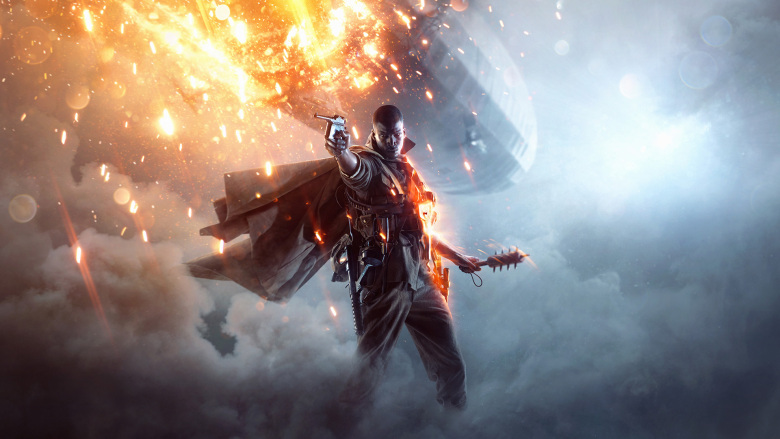
Battlefield One (PS4, Xbox One, Nintendo Switch, Windows)

After a number of games set within the modern era Battlefield One turns back the clock to World War One, lending its iconic large scale style to the vast battles of the first world war.

Not being known for providing great single player campaigns, Battlefield One manages to capture the struggle and tragedy of the setting in some unique moments. Rather than following one single narrative, the game instead uses a number of smaller stories to paint a picture of the war on a whole.

It’s multiplayer is where the game shines, however, with several game modes available, ranging from the standard Team Deathmatch and Domination modes, to the unique War Pigeons. The game manages to balance small, intense combat with massive battles in a satisfying way.


Wolfenstein: The New Order (PS3, PS4, Xbox 360, Xbox One, Windows)

A sequel to the 2009 Wolfenstein, Wolfenstein: The New Order is set in an alternate universe where the Nazis won World War 2. Once again thrown into the role of William ‘B.J.’ Blazkowicz, who awakens after fourteen years in a coma to find the allied powers have fallen, and the Nazis now rule America.

What follows is an intense shooter that blends futuristic elements and world war two technology as players fight as part of a desperate underground resistance. Despite having no multiplayer experience the game makes up for this with a great single player game, filled with huge action sequences, as well as tiny details that build a well rounded gameplay experience.


Star Wars Battlefront (PS4, Xbox One, Windows)

From a game with no multiplayer, to one that is nothing but multiplayer, Star Wars Battlefront is an online shooter that features a variety of gameplay modes, all set within the Star Wars universe.

Players can choose from smaller scale combat such as Hero Hunt, which sees players take on the roles of iconic characters like Luke Skywalker, Darth Vader, and Han Solo; massive scale battles like Walker Assault, which sees the Empire trying to destroy a Rebel base with AT-AT walkers; or even air combat in Fighter Squadron, where players put TIE Fighters and X-Wings against each other.

Despite criticism for a lack of single player campaign Star Wars Battlefront still offers an amazing shooter experience. Fortunately, the upcoming sequel seems to have responded to these criticisms by adding a canonical single player campaign.


Metro 2033 (PS4, Xbox 360, Xbox One, Windows)

Based upon the popular book by Russian author Dmitri Glukovsky, Metro 2033, is a survival horror first person shooter set in a post apocalyptic world, where survivors of the nuclear apocalypse dwell in the Moscow Metro tunnels.

Taking on the role of Artyom, the player must navigate their way through the tunnel system, fighting bandits, Nazis, and communists, as well as horrible mutant creatures, all the while trying to discover the mystery of the supernatural Dark Ones.

Metro 2033 mixes intense first person combat with stealth and horror sections in a setting that is truly unique amongst the genre. With a HD remaster having been released on Playstation 4 and Xbox One, along with the sequel, Metro: Last Light, and a third game on the way, now is a perfect time to get into a great FPS series.


Resistance: Fall of Man (PS3)

One of the first games released on the Playstation 3, Resistance: Fall of Man is the first game in the Resistance series, a game that blends historic action with science fiction elements.

Set in a world where the alien insect race known as the Chimera invaded our world during the early 1900’s. Having taken over Russia and Europe by the 1950’s, the American forces have engaged the monstrous Chimera in the remains of Britain.

What follows is a mixture of World War 2 era combat and science fiction mystery as you fight not only for survival, but to uncover the mystery of the Chimera.


Go to Amy's Blog