Thursday, 19 October 2017

The Evil Within 2: 5 Other Survival Horror Games


Originally published on Set The Tape

The Evil Within 2 might be the newest kid on the block as far as survival horror games go, but the genre has been around for many years now, and has given some great horror experiences. So what games are worth playing if you enjoy survival horror? Here’s a list of five of the best.

Resident Evil VII: Biohazard (PS4, Xbox One, Windows)

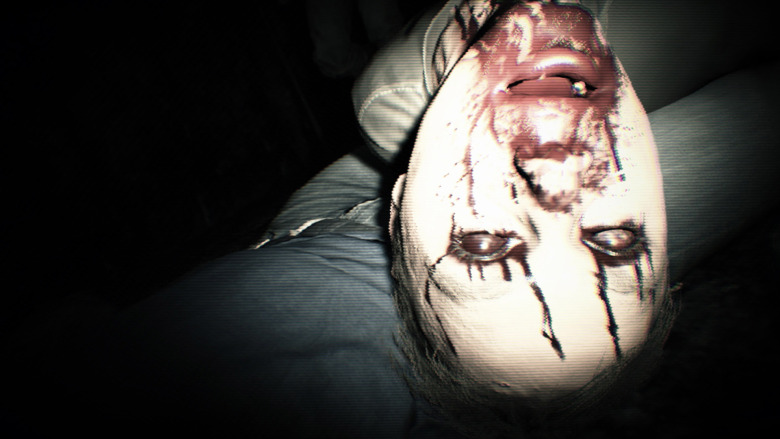
Whilst Resident Evil might be one of the oldest franchises in the survival horror genre, the latest game in the series is one of the most frightening entries. Taking on a first-person perspective, Resident Evil VII shifts the focus from gunplay and action to one that focuses on sneaking through dark corridors, avoiding detection, and desperate survival.

The introduction of found-footage style sections also added an extra element of horror to the game that was missing in other recent Resident Evil titles. Resident Evil VII puts you in the shoes of Ethan, a man searching for his missing wife, who ends up stumbling across a horrific mystery that connects back to the Umbrella Corporation, one that will have him fighting for his very life.


Alien: Isolation (PS3, PS4, Xbox 360, Xbox One, Windows)

After the disappointment of Aliens: Colonial Marines, Sega shocked gamers with an Alien game that managed to perfectly capture the aesthetic and horror of the original movie, in what is possibly the best Alien game to ever be produced.

Playing as Amanda Ripley, daughter of the Alien protagonist Ellen Ripley, you travel to the Sevestopol space station to search for clues to her mother’s disappearance. Unfortunately, the station is under siege from the same creature that hunted her mother years before.

The Pulse Rifles, Smart Guns, and other weapons iconic with the series were stripped away, changing the game from an experience where you hunt the xenomorph, to one where you must avoid the monster at all cost. Alien: Isolation reminds gamers just how frightening an enemy you can’t fight can be, and just why Alien should still be recognised as one of the best horror films.


Silent Hill 2 (PS2, Xbox, Windows)

The second entry into the Silent Hill franchise is still one of the best to date, with a big focus on character and psychological horror. Whilst other series focused on shock and moments of surprise to induce horror, Silent Hill 2 focuses on atmosphere to deliver much of its fear.

The story follows James Sunderland, a man haunted by the death of his wife, who becomes drawn to the mysterious town of Silent Hill, where he must not only face his own inner demons, but the truth of the death of his wife. Despite being an older game, Silent Hill 2 can still shock and scare as well as when it was first released. Plus, the recent HD re-release means that the game is now available on newer consoles with a glossier look.


Outlast (PS4, Xbox One, Windows)

Whilst many games in the survival horror genre will pit you against foes much stronger than you with few ways to defend yourself, Outlast gives you absolutely no way to do so. Outlast has you running and hiding instead of fighting as you investigate your way through an asylum full of terrors.

You play as a freelance journalist, armed with only a video camera, who decides to investigate the mysterious Mount Massive Asylum, and the inhumane experiments taking place there. A mixture of jump scares and atmosphere, Outlast will have you jumping out of your skin as you try to stay alive in a setting that maintains the terror between foes and jump scares.


Dead Space 2 (PS3, Xbox 360, Windows)

Dead Space 2 builds upon the solid foundation of the first game and improves upon it in almost every way. The game expands its mythology and story, gives us a bigger and scarier setting, introduces new enemies, and even allows Isaac to speak.

Following the events of the first game, Isaac awakens in an asylum on the Sprawl, a densely populated space station on one of Saturn’s moons. Unfortunately, a Necromorph outbreak has already hit the station, decimating the population. What follows is a game that explores the madness that Isaac is now experiencing, the conspiracy behind the Necromorph outbreak, and one of survival.


Go to Amy's Blog

Wednesday, 18 October 2017

Psycho Rangers Come To BOOM! Studios Power Rangers Comic


The iconic Psycho Rangers, who first appeared in the 1998 series Power Rangers in Space, will be coming to the ongoing Boom! Studios Mighty Morphin Power Rangers comic with issue #20, on sale 25th October.

The preview page released by BOOM! reveals that the Psycho Rangers will tie into the introduction of the original team of Mighty Morphin Power Rangers, a team before Jason, Kimberly, Billy, Zach, Trini, and Tommy, way back in 1969.


The preview page not only reveals that the Psycho Rangers will in some way be connected to the moon landing, but will also introduce a Green Psycho Ranger for the first time.


Go to Amy's Blog

Hellraiser: Ranking The Cult Horror Franchise


Originally Published on Set The Tape

With a franchise spanning 30 years, Hellraiser is one of the most enduring horror series in part because its very concept lends well to telling new and interesting stories over films that have a human antagonist. With nine films (so far) in the series, it’s time to look back at the scary – and the scary awful – films of this iconic franchise.


9. Hellraiser: Revelations (2011)

The most recent addition to the Hellraiser franchise is also easily the worst. The film’s story, one of the first in a long time that was written specifically to be a Hellraiser sequel, is boring and moves at a slow pace; and no amount of call-backs and nods to the previous films can help to alleviate the tedium.

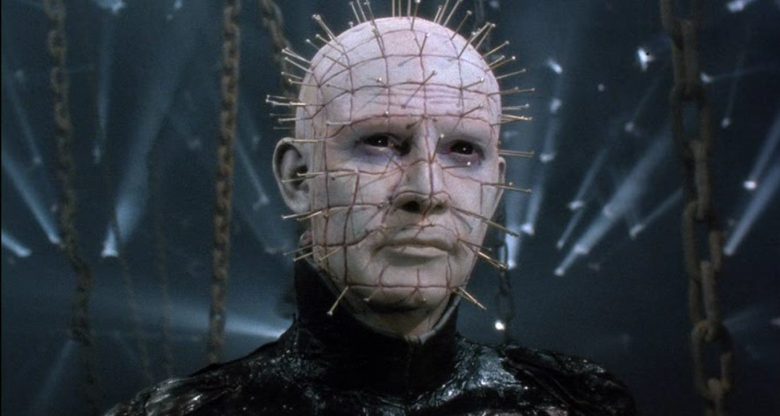
However, the biggest problem is the lack of Doug Bradley as Pinhead. There is enough scope in the Hellraiser mythology for the series to be able to work without Pinhead, but Pinhead can only be played by Bradley. If the Hellraiser franchise is to continue, it has a huge amount of damage control to do after this terrible entry.


8. Hellraiser: Hellworld (2005)

Hellworld is what you’d get if you mixed a teen slasher film with Hellraiser; and it’s as awful as that idea sounds. It feels like another project completely that ended up having the Hellraiser franchise crammed in at the end (which is actually what happened). As such, you can get through most of the film forgetting that it’s supposed to be part of the franchise.

Not even the appearance of horror veteran Lance Henriksen can help to elevate what is at best a mediocre slasher film.


7. Hellraiser: Bloodline (1996)

Bloodline is the entry in the series that I’m most disappointed with. Horror and sci-fi go so well together, and the prospect of setting a Hellraiser film on a space station is genuinely intriguing and disturbing as it’s an ultimate inescapable haunted house.

Unfortunately, Bloodline tried to cram too much into one film. Telling three interconnected stories over multiple locations and time periods, it became too bloated under its ambition and ultimately failed to excite.

Stories of extensive studio interference and both the writer and director claiming that they’re disappointed with the final product not being what they intended explains a great deal of the problems the film experienced.


6. Hellraiser: Hellseeker (2002)

Hellseeker should have been bigger and better than it turned out to be, having the return of Ashley Lawrence as Kirsty for the first time since Hellraiser 3. Sadly, the decision to make Kirsty a spurned lover using the Lament Configuration as revenge against her husband felt so out of character for her. If the film didn’t involve Kirsty then it would probably be further up the list. As it is, it suffers for her inclusion.


5. Hellraiser: Deader (2005)

Released the same year as Hellworld, Deader feels much more like a Hellraiser film. The story follows an investigative journalist who is looking into a cult that is killing and resurrecting people so that their leader, a descendant of the the designer of the Lament Configuration, can vanquish Pinhead.

Despite not beginning as a Hellraiser film, it works well as a part of the franchise; one that manages to build upon and use the pre existing mythology without trying to shake up the status-quo.


4. Hellraiser: Inferno (2000)

Inferno was the first Hellraiser film that made me scared of the Cenobites from a psychological point of view. The hooks and chains take a back seat in this entry as Pinhead and his minions play a game of psychological torture against a highly unlikable detective who stumbles across the Lament Configuration at a crime scene.

It’s easy to see how this film started off as another project before the Hellraiser elements were added later on, but it’s one that works incredibly well and will stick with you in a way that some of the others won't.


3. Hellraiser 3: Hell on Earth (1992)

The third instalment in the Hellraiser series is perhaps one of the most ‘Hollywood’ entries; one that very much feels like a product of the time it was made. It was the first of the films that felt more like a franchise sequel, being more over-the-top and flashy than its predecessors.

Despite this, it still managed to present Pinhead as a chilling villain, one capable of playing both intricate mind games and going on kill crazy rampages.


2. Hellbound: Hellraiser 2 (1988)

The first sequel is still the best. With a direct continuation of the events of the first, you can easily watch the two of them back to back as one piece. The film continues to build upon the mythology and horrors of the previous film, yet feels like its own entity.

Hellbound is the film that explores the inner workings of the Hellraiser universe more than any others, yet leaves viewers with as many questions as answers. Dark, disturbing and horrifically beautiful, Hellbound shows how good a Hellraiser sequel can be.


1. Hellraiser (1987)

Hellraiser is still easily the best entry in the entire franchise. A game-changing film upon its release, Hellraiser shocked audiences as it showed that horror could be gory and disgusting, yet thought provoking and deep.

The film changed the way that people looked at horror, made an instant icon in Pinhead, and launched the film career of Clive Barker. 30 years later, Hellraiser continues to terrify, enthral, and thrill.


Go to Amy's Blog

Ghostbusters: Interdimensional Cross-Rip Review


Originally published on Set The Tape

Ghostbusters: Interdimensional Cross-Rip is my first Ghostbusters comic read in a long time; and it’s an absolutely brilliant way to jump back into the series, collecting together all 11 issues of the third volume of the ongoing series, the 2015 annual, and four issues of the Ghostbusters: Get Real mini-series; all in one gorgeous hardcover collection.

Ghostbusters: Interdimensional Cross-Rip begins with the Ghostbusters: Get Real mini-series, with the Ghostbusters of the 1980’s cartoon series The Real Ghostbusters tackling a vengeful elder god Proteus. When this group of ghostbusters are transported across dimensions to the world of the Ghostbuster comics the two teams must work together to stop Proteus, and find a way to get the other team home.

As someone who holds fond memories of The Real Ghostbusters show from my childhood, it’s brilliant to see the show so faithfully recreated within the pages of this book. The character designs not only stand out in stark contrast to the regular Ghostbusters, all big hair and bright colours, but the sections set within their dimension have a completely different look to it, like a filter has been applied to the artwork to make it look like an episode on VHS.

The choice to keep the two styles so distinct and different means that you always know which version of the characters you’re dealing with in any particular scene, and which world they’re in. It’s a bold choice, but one that serves the story well.

The mini-series also manages to pack in a lot of fun references and cameo appearances too, including a brief scene with the Extreme Ghostbusters. This helps to flesh out the idea of a massive Ghostbusters multiverse, something which is explored a little later on in the book where the possible reasons for the creation of the multiverse is explored.

Once the hijinks with the multiple teams is resolved the rest of the book follows the Ghostbusters as they’re recruited by a mysterious businessman to clear ghosts out of locations all around the world so that they can be redeveloped. Queue a globe trekking adventure that sees our heroes visit some of the iconic haunted locations around the world, including Poveglia Island, Paris, and Aokigahara Suicide Forest.

Seeing the Ghostbusters outside of New York makes for a great change, one in which the characters not only get to visit new locations, but also fight creatures of other mythology, such as Japanese Yurei, and Irish Banshee’s. Some of these creatures have some brilliant designs, with the skinless ghost of Jean L’ecorcheur in particular jumping out of the pages as a very memorable and disturbing image.

When a particularly powerful threat rears its head the Ghostbusters have to call upon their allies to help them, including their counterparts from The Real Ghostbusters universe, in order to save the world, and one of their own.

Ghostbusters: Interdimensional Cross-Rip packs a lot of issues within its pages, and whilst it’s a big read it manages to include several well told stories, dozens of great character moments, emotion and heartache, and humour that makes it an easy read.

With beautiful artwork, great monster design, and cameos and easter eggs aplenty, this is an essential read for any fan of the franchise, whether they’ve read any of the comics before or not.


Go to Amy's Blog

Power Rangers Ninja Steel ‘Grave Robber’ Review


Originally published on Set The Tape

The latest episode of Power Rangers Ninja Steel, ‘Grave Robber’, is this season’s Halloween special. Whilst not a clip show like Power Rangers Dino Charge episodes, it fails to capture the charm or fun that previous iterations have managed so well.

When given a spooky board game to play, the Rangers (minus Levi) find themselves having to fight against formerly defeated foes returning from the grave. This in itself isn’t a bad concept, and it means that the series is able to utilise more Super Sentai footage that didn’t appear in the previous encounters with these monsters.

Whilst the action sequences of the Rangers are well made and entertaining, the episode is let down by the interconnecting scenes being quite flat and boring. The most charming moment of the episode involving the American cast is easily Sarah prancing through the set dressed as a fluffy unicorn, but everything else very much lacks the charm and humour that I’ve come to expect of a Halloween episode. Though, lacking charm and humour is probably a good way to describe much of Power Rangers Ninja Steel.

Thankfully, by including several fights against monsters that we’ve already encountered in the series, the episode is able to give us some things that we’ve not seen before; some of which you can imagine were cut from the original monster appearances because they were too bizarre to appear anywhere else but in a Halloween show. Calvin being tied to the side of a speeding truck with the unconscious driver about to send the vehicle off the edge of a cliff stands out as particularly special, and contains some very impressive stunt work; and is easily the best action sequence of the episode.

Sadly, the episode lacks in a lot of areas. The bizarre and over the top Ranger sequences really hammer home that the American side of the series is really not up to par. The characters still don’t feel developed so close to the end of the season, the stories feel barely thought through and lack any spark, and the cast aren’t given the chance to do anything to challenge themselves or win the audience over. Fingers crossed that things will improve on the way to the finale and going into Power Ranger Super Ninja Steel next year.


Go to Amy's Blog

LEGO Ninjago: 5 Other LEGO Properties That Could Be Adapted To Film


Originally published on Set The Tape

With the popularity of the LEGO films going from strength to strength, and Lego Ninjago having hit screens, what other LEGO franchises could be adapted to the next film? Here’s a list of five pre-existing LEGO properties that could make the transition.


LEGO Nexo Knights

Though a new addition to the LEGO universe, Nexo Knights has proven to be a popular one with its blend of medieval fantasy and science fiction.

LEGO Nexo Knights follows a group of five young knights, Aaron, Lance, Clay, Axl, and Princess Macy who protect the kingdom of Knighton from the evil clown Jestro and his army of lava monsters.

With a television series based upon Nexo Knights already in its fourth season a film adaptation could continue on with the story already established (much in the same way that the Ninjago movie has), or it could be something of a reboot of the franchise, retelling the origin of the Nexo Knight universe to help introduce new fans to the franchise.


LEGO Star Wars: The Freemaker Adventures

The Freemaker Adventures is the most recent addition to the Star Wars universe LEGO have made, with the series following the Freemaker family, Zander, Rowan, and Kordi (along with their old battle droid Roger).

The first season of the show saw the Freemaker family searching for the pieces of the fabled Kyber Sabre before the Empire get their hands on the weapon, and the second series had the Freemakers join with the Rebel Alliance during the gap between The Empire Strikes Back and Return of the Jedi.

With Star Wars as popular as ever, and the series now at a point between Return of the Jedi and The Force Awakens, now might be a good time to explore the events between the original trilogy and the new entries in the saga with a Freemaker movie.


LEGO City: Undercover

LEGO City: Undercover was an amazingly fun LEGO game. Playing as undercover cop Chase McCain you had to infiltrate a number of gangs in order to track down the escaped convict Rex Fury and uncover his plan.

Little would have to be done to the main story of the game in order to adapt it to the big screen, with the main plot lending itself well to a cinematic action comedy. Yes, some of the levels from the game would probably drop by the wayside for an adaptation, but it would still make for an entertaining film.

We all know that the LEGO Movie and LEGO Batman Movie had a lot of fun cameos in too, which is something that the game had already embraced, featuring the LEGO versions of Starsky and Hutch, Dirty Harry, Columbo, Cagney and Lacey, and even Arnold Schwartzeneggar in silly and bizarre moments.


LEGO Legends of Chima

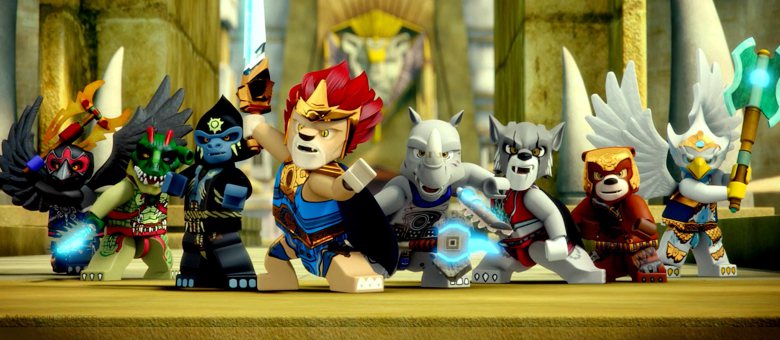
LEGO Legends of Chima is a fantasy tale set in a world inhabited by a number of different tribes resembling anthropomorphic animals, such as Lions, Wolves, and Sabertooth Tigers, who are at war with each other for a magical crystal substance called CHI.

A once peaceful kingdom falling into civil war, factions with alliances and histories, and a once beautiful land ruined by war, LEGO Legends of Chima could be the watered down LEGO version of Game of Thrones on the big screen.

With three season of television to draw upon and dozens of characters to choose from, LEGO Legends of Chima has an extensive mythology to build upon, whether continuing the story already established, or starting from scratch to tell their own version of the Chima story.


LEGO Elves

LEGO Elves is the most recent addition to the LEGO universe, and one that has been steadily growing in popularity.

LEGO Elves centres on Emily Jones, a girl from the real world who upon the death of her grandmother receives an amulet that transports her to the parallel world of Elvendale. In Elvendale Emily befriends four young elves, Azari Firedancer the fire elf, Farran Leafshade the earth elf, Aria Windwhistler the wind elf, and Naida Riverheart the water elf. Together with her friends Emily must try to find her way back home.

The concept of someone transported from one world to another could be used to fun effect in a movie, with someone from the real world being transported into a LEGO universe, actually becoming LEGO themselves. The reveal of real people in the LEGO Movie was a fun surprise, and one that could be replicated in a LEGO Elves film.

LEGO Elves is also the only LEGO property where the animated series is traditionally animated in a realistic style, rather than resembling the toys that its based upon.


Go to Amy's Blog

The Evil Within 2: Looking Back At The Original Game


Originally published on Set The Tape

Created by the father of Resident Evil, Shinji Mikami, The Evil Within is a survival horror descent into madness following police detective Sebastian Castellanos as he’s pulled through a distorted world of nightmares and monsters. Building upon many of the survival horror tropes established by others in the genre, The Evil Within is an unforgiving fight for survival in a world that barely makes sense and tests the limits of the player’s skill.

Similar in look and style to Resident Evil 4 (Shinji Mikami’s last work on the series) The Evil Within pushes the horror elements further than most games in the genre, using the fact that the game is set within a bizarre dream world in a madman’s head to create scenarios that simply could not exist otherwise. Having been called in to investigate a brutal murder at Beacon Memorial hospital, Sebastian and his partners are suddenly thrown into twisted nightmare landscape inhabited by tortured souls.


Over the course of the game, Sebastian and the player come to learn that they are trapped within a shared Matrix-like world within the mind of the mentally unstable Ruvik, connected through brain sharing technology. The game draws upon the nightmares and fears of those trapped within the device, as well as the inner demons of Ruvik himself. The back story unfolds slowly, with small looks into Ruvik’s memories and shattered psyche rather than large revelations.

Whilst there’s a lot of mystery throughout the game, one that does add to the horror of not know what is happening and why, there are a lot of questions that will remain unanswered, with some of the bigger mysteries not solved until the very end of the game; or even until the DLC.

Despite some aspects of the story remaining unresolved, or simply unexplained, the gameplay itself is incredibly solid. The environments are are varied, ranging from gothic mansions, factories, mines, and even a ruined city, yet all manage to feel connected through the solid design that permeates the whole game. There are lots of different areas, some of which feel completely unconnected, yet all feel natural to the game because of the art style and attention to detail that is put into each location.


The combat mechanic will be very similar to those who have played survival horror games previously, with a small but varied selection of weapons to use. You begin your adventure with your police issue revolver before going on to find a shotgun, sniper rifle, and even a crossbow. The crossbow is one of the more interesting additions to the game due to its varied ammunition, such as harpoons, electrified bolts, freezing arrows, and explosive rounds.

Unfortunately, the game will make you count your bullets often as you come across little ammunition during your adventure, instead forcing you to rely on close quarters combat, sneak attacks, and traps. The lack of ammunition and addition of other means of combatting your enemies does add the option of a stealth playthrough that is missing from many survival horror games, meaning that there’s more replay options as you can try different techniques in the same level.

With collectables and upgrades scattered throughout levels, there’s incentive to stick with it even when things get difficult, building your character up slowly until you can beat the game fully.

If you’ve not played The Evil Within you should definitely take the time to explore the first game before jumping into the sequel.


Go to Amy's Blog

Tuesday, 17 October 2017

Warhammer: Vermintide 2 Announced


The sequel to 2015's Warhammer: Virmintide, the co-operative first-person action game where players work together to take on the forces of the vicious rat-like Skaven, has been announced for a 2018 release. Featuring the introduction of the evil Chaos, who have allied themselves with the Skaven to plunge the world into death and decay, players will have to work together to survive.


'Vermintide is a visually stunning and groundbreaking melee action game pushing the boundaries of the first person co-op genre. The game introduces the dark and twisted Chaos as an enemy faction. Other new feature include 15 hero careers, new environments, talent trees and the proprietary Heroic Deeds System. Warhammer: Virmintide 2 is heading to PC's and consoles.

'Vermintide 2 is the evolution of the genre. If you liked the first game you'll love the second,' said the CEO of Fatshark, Martin Wahlund. 'We have listened to the community, analysed hours and hours of online playthroughs, and combined this with our passion for co-op games to bring you the very best experience possible.'


Go to Amy's Blog

Star Trek: Discovery ‘The Butcher’s Knife Cares Not For The Lamb’s Cry’ Review


Originally published on Set The Tape


With the previous episode of Star Trek: Discovery acting as something of a second pilot episode, one that established a new mission for our lead character of Michael Burnham (Sonequa Martin-Green), ‘The Butcher’s Knife Cares Not For The Lamb’s Cry’ helps to remind audiences of the threat of the war with the Klingon Empire; something that was spoken about but seldom seen previously.

With a Federation mining colony under attack from the Klingons as the main driver of this episode, it not only shows audiences how the war is unfolding, but just how different the characters in Star Trek: Discovery are from previous series.

Whilst Captains like Picard, Sisko, and Kirk would lament the plight of the people under siege, and make saving them their first priority Jason Isaacs’ Captain Lorca is much more concerned with the effect that the loss of the dilithium crystal mine will have on the war effort. Lorca isn’t the kind of captain that we’ve had before, even Captain Sisko lamented the loss of life above resources during the Dominion Wars.

Lorca goes on to use the loss of innocent life to motivate his crew to work harder, playing haunting transmissions from those under siege across the ship’s intercom, but even then it doesn’t feel like he himself cares, but is simply manipulating the emotions of his crew for his own ends. This plays out further towards the end of the episode, whereafter saving the colony, the Discovery immediately leaves, leaving the wounded to fend for themselves. He’s saved the facility; the people mean little to him.

His focus on the war ties into Burnham’s story, when we discover that room we saw at the end of the last episode is the place where he hones his study of war, complete with display cases full of weapons, the skeletal remains of a classic series Gorn, and the monstrous creature from the remains of the USS Glen.

Lorca wants Burnham to study the creature, to adapt it for use in the war; something that is at odds with the approach Burnham would take as a scientist. Over the course of the episode we begin to learn more of the creature, the gigantic tardigrade, which does take away some of the mystery and fear that surrounded it in the previous episode; though this is replace with a sense of wonder, and even sympathy.


With the tardigrade being the missing component the crew needs in order to make their spore drive engines, which will allow them to use the new technology to travel almost anywhere in the galaxy in the blink of an eye. Despite this being a hugely important step towards a way to win the war things are called into question when Burnham sees that the creature is put in pain whenever the spore drive is used.

Though not completely addressed, it’s clear that this will become a conflict going forwards in upcoming episodes, where the characters will have to question if it is right to harm a sentient creature, even if it can mean saving billions of lives. Whilst this question would be a swift “no” in other Star Trek series, it’s sure to be more complex here; and will probably be a conflict on which Burnham and Lorca will fall on separate sides after Saru’s comments that both Burnham and Lorca ‘act insincerely and without thought of the consequences in pursuit of their own goals’.

This episode also brings the Klingons to the forefront when we discover that following the battle at the binary stars, the crew of T’Kuvma’s ship have been stranded for six months and are trying desperately to survive and repair their ship.

Whilst these scenes aren’t nearly as engaging as those involving the Klingons in the first two episodes, they do establish further drama within their ranks, with Voq finding himself set upon a very different path by the end. These scenes do give us one of the most shocking, and surprisingly upsetting moments of the episode, however, when we learn that the Klingons ate the remains of Captain Georgiou. Despite no longer being on the show, this small line hits hard, and reminds audiences of just how important the character is to the story of Star Trek: Discovery, something that is reflected in the final scene.

The fourth episode of Star Trek: Discovery continues to build well upon the universe already established, and gives us some interesting looks into some of our main characters. It also begins to set up further story elements and conflicts that will be sure to play out in further episodes, and adds more fuel to the theory that perhaps the Discovery is more involved with Section 31 than the Federation.


Go to Amy's Blog

5 80’s TV Shows That Need A Reboot


Originally published on Set The Tape

Everyone loves the 80’s. From the amazing music to the unforgettable films, the decade is one that is held in high regard for its level of creativity. The 80’s is inspiring new film and television, such as IT and Stranger Things, as well as several television shows from the time being remade, such as shoulder pad loving soap Dynasty, making a return to Netflix this week.

With the return of shows such as Macgyver, Twin Peaks, Miami Vice, and Duck Tales to our screens over the last few years, we ponder what other shows could be ripe for a return…


Magnum, P.I.

Running for eight seasons, Magnum, P.I. was an incredibly popular crime drama show that could easily make a return, what with the detective genre being as healthy as ever.

The original series saw Tom Selleck playing Thomas Sullivan Magnum IV (yep, really), who lives on a private estate in Hawaii but works as a private detective. With a show that featured exotic locations, flash sports cars, and beautiful women it does at times feel like a fantasy that most people would have, but that was a lot of the appeal.

With so many serious and ‘gritty’ shows on television, a little glossy fun like Magnum popping up again would be more than welcome.


M*A*S*H

A dark comedy that followed the United States Army Mobile Army Surgical Hospital during the Korean War. A careful mixture of standard sitcom humour and frank discussion about war and death.

A reboot of M*A*S*H wouldn’t necessarily need to be a direct remake. The basic premise could be used to adapt it to a more recent and relevant setting, such as the Gulf War. With people being more politically aware than during the original run of M*A*S*H, a reboot would allow for interesting discussion on politics–both at home and globally–the nature of war, and the effects that war has on those involved.

M*A*S*H wouldn’t be the easiest of choices to bring back, but it’s one that would allow for a broad range of tone and social commentary.


He-Man and the Masters of the Universe

I’m sure that we all remember the cartoon series He-Man, and whilst it was a good show and could easily be brought back as a revamped animated series I’d rather propose that a rebooted live-action show would be much more interesting.

The live-action film, starring Dolph Lundgren as He-Man, may have been a bit of a mess, and didn’t make a huge amount of money, but has become so beloved as a cult classic in the years since that a live action show would surely have an audience.

With a little imagination and a network such as HBO or Netflix giving it a fair budget, there’s no reason why it couldn’t recreate the look and feel of the original animated series.


The A-Team

There are few shows that feel as 80’s as The A-Team; even if you’ve never seen an episode of the show there’s a good chance that you’re aware of it – it did make Mr T a household name after all. Following a group of mercenaries that were part of a military special forces unit before being framed for a crime, the A-Team take on various missions around the world, helping those in need.

Whilst the show was remade as a feature film several years ago it didn’t quite manage to recapture the bizarre magic of the original series. By bringing it back to television there’d be enough time to explore the characters and to flesh them out in a way that the film wasn’t able to.

With the improvements to television special effects and production values, a new version of the A-Team would be able to create over the top action sequences reminiscent of the original.


Quantum Leap

Okay, so this one is a little bit of a cheat as it only started in 1989, and what I’m proposing isn’t a reboot. But I think that Quantum Leap should come back!

Whilst you could easily remake the show with an entirely new cast and it would work fine, I think that Quantum Leap could come back to television as a continuation of the original show. With the original cast still alive and acting, and the end of the original run remaining open to continuation, a new series could pick up with Dr. Sam Beckett still leaping through time, helping people and setting things right.

Quantum Leap always tried to do new and interesting things, doing the best it could with its budget, but a modern version of the show could push further into the kinds of settings and locations that the original run was unable to do.


Go to Amy's Blog