Monday, 16 October 2017

5 Horror Films That Need A TV Show


Originally published on Set The Tape

Horror films have always been popular, and with the improvement of television as a storytelling medium, more and more horror film franchises are making the leap to the small screen, such as Psycho, Evil Dead and The Exorcist, which this week returns for its second season in the UK, developing the mythology of William Friedkin’s original classic.

We have horror on the brain this week, consequently, especially given we’re in the run up to Halloween, so we pondered five other great horror movies and franchise that would make a strong leap from the big to small screen…


Alien

With the latest films in the Alien franchise dividing fans, perhaps now would be a good time for the franchise to make the leap to television. The Alien universe encompasses hundreds of years, and as such means that there’s ample room to be creative as to what era to set a series in, though using Aliens as a foundation seems to be a sensible choice.

You could easily create a series around the Colonial Marines, following a squad of soldiers as they find themselves fighting against the xenomorphs. This could be done in a similar way to the old Colonial Marines comics, where they’re sent to a number of worlds to fight alien threats.


Child’s Play

The Child’s Play series is one that started a with a serious tone, but over time embraced the more humorous side of itself. In this it shares a lot of similarities to the Evil Dead franchise, and much like Evil Dead it lends itself quite well to the idea of a television series.

Like Ash vs. Evil Dead, it could be a continuation of the films, focusing on what the possessed Chucky doll does between films, following him on his adventures. Hell, if Starz were to produce the series they could even do a Child’s Play/Evil Dead crossover episode or two.


The Thing

The Thing is one of the all time great horror films, not least because of the genuine horror of not knowing who you can trust in a scenario where your life is in danger. When your most trusted friend could turn out to be a monster who wants to take you over, how could you ever know who was real? This would make a great basis for a horror series.

I’d propose a show that would be more of a sequel to The Thing, rather than an adaptation. Create a show where the titular monster has made it off the Arctic. Set it in a world where the monster has managed to spread and take over most life.

Not only would this allow you to make a post-apocalyptic show, which are always popular, but a show that would be full of tension and horror as the survivors would never be able to let their guard down, even with each other.


It Follows

It Follows was a haunting film about some kind of entity that stalked people until it caught them and killed them. The entity could take on the form of any person and could only be seen by those it was following at that time.

Because the entity could be passed on to another through sex, the film was seen by some as a parable about the dangers of sex and sexually transmitted infections. By adapting this into a series it would allow more time to explore the story and delve deeper into the mythology.

It could even go on to finally explore what the entity is, whether it is actually real, if it can be stopped in any permanent way, or even where it came from.


Invasion of the Body Snatchers

In much the same way that The Thing would work as a series, so would Invasion of the Body Snatchers. Expand the narrative to give us a more complex story of infiltration and replacement. A series could take the time to show what happens on a more global scale, or even what the pod people’s end game would be.

The story could begin as the small town horror story that the original film was before expanding outwards in later seasons, showing what would happen as the invasion expanded across a country, before the whole world.


Go to Amy's Blog

Looking back at… Middle-Earth: Shadow of Mordor


Originally published on Set The Tape

Middle-Earth: Shadow of Mordor managed to surprise a number of gamers when it was released back in 2014. Up until that point games based upon the Lord of the Rings/The Hobbit were often disappointing and lacklustre, but then Middle-Earth: Shadow of Mordor arrived and showed just how amazing J.R.R. Tolkien’s world can be in this medium.

Taking place between the events of The Hobbit and Lord of the Rings, Middle-Earth: Shadow of Mordor follows Talion, a ranger from Gondor, who is defending an outpost near Mordor when the forces of Sauron return and murder him and his family. After his death Talion becomes merged with the wraith of the elf Celebrimbor, the man who forged the rings of power. Together, the two of them return to the land of the living and set out to avenge the death of Talions family.

What follows is an open world action adventure across the land of Mordor. You can choose to take on specific missions and tasks, explore the environment, or collect items scattered across the landscape that will give you additional abilities. Playing like a combination of an Assassin’s Creed game and Batman: Arkham City, Shadows of Mordor allows players to fight the forces of Sauron through stealth and fear, or through vicious combat.


The game’s combat is incredibly fluid, allowing you to have Talion fighting Orcs one on one, or in groups of a dozen or more. Whilst the game does borrow from the combat of the Batman games it adds its own feel with buckets of gore and messy killing moves that sever limb and impale enemies.

The game very much embraces its setting, with even the tiniest detail steeped in the style of the cinematic Lord of the Rings universe. Costumes, characters, ruined buildings, and weapons, all of it looks like it was taken out of the Peter Jackson films. Whilst the game itself isn’t really an official tie-in to the films this similar design does help to ground the game into a universe that many people will be familiar with.

One of the features of Middle-Earth: Shadow of Mordor that makes the game stand out from similar experiences is the Nemesis System. The Nemeses are random enemies in Saurons army that uniquely generated for each playthrough of the game. Each of these Nemeses has their own personality, and will move through the ranks of the enemy army.


These enemies will each react to Talion and his actions in their own way, whether to fight against him, to flee, or to enact some other plan. The Nemeses will also have relationships to each other, some of which work together – others you can make challenge each other until one is killed.

By defeating the enemies in the Nemesis System, or even by dying at their hands, you will have an affect on the web of enemies and alter your gameplay experience. Not only does this system make the game stand out from other open world adventure games, but means that your gameplay experience will be different each time you play the game.

Middle-Earth: Shadow of Mordor stands out amongst other action games with its unique gameplay additions and its stand-out setting. The unpredictable nature of the Nemesis system delivers a game that offers more memorable and unique battles than other games that are more scripted. Fun combat and exploration of an iconic location adds to a game that is incredibly fun and challenging.


Go to Amy's Blog

Star Wars Jedi Knight: Dark Forces 2 Review


Originally published on Set The Tape

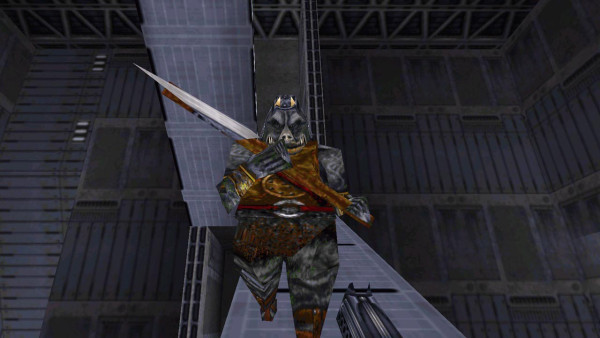
Star Wars Jedi Knight: Dark Forces 2 is the sequel to the popular 1995 game Star Wars: Dark Forces. The game once again lets you take on the role of Kyle Katarn, former Imperial officer turned mercenary, who has now learnt that he is force sensitive and begin to train as a Jedi. Unfortunately, Kyle’s father is murdered by the Dark Jedi, Jerec, who wants to know the location of the mythic Valley of the Jedi.

Whilst the first game in the series was very much a Doom clone set within the Star Wars universe, Star Wars Jedi Knight: Dark Forces 2 introduces improvements and variety to the gameplay, chiefly with the introduction of The Force as a playable element, along with lightsaber combat. Setting the style of gameplay that would be used by Star Wars games for decades, Star Wars Jedi Knight: Dark Forces allows the player to choose how they will learn the ways of The Force, allowing you the option to customise and upgrade your abilities as you see fit.

The Force powers are split into three separate categories; Light Side powers, which allow you to heal yourself, make yourself undetectable to enemies, and to protect yourself from damage; Dark Side powers, which allow you to throw objects at enemies, choke them from a distance, or fire lightning at them; and Neutral powers, which focus on enhanced speed, agility, and other physical traits.


The different Force abilities are separated fairly rigidly, more so in the rest of the Star Wars universe, where throwing things with The Force was never seen as a Dark Side ability, and Jedi’s used the power all the time. It’s a stricter line between light and dark as the game wants you to think about the path that you’ll be guiding Kyle down, whether the abilities that you’re teaching him are leading him towards the Dark Side, or if he can remain a hero.

At the time of release the game was promoting these choices between Light and Dark as being significant for how the game would play out, yet this isn’t as stark a difference in the game as the developers led people to believe. The biggest difference to the story comes at the end of the game, where players are allowed to choose a ‘good’ or ‘bad’ ending, having Kyle join Luke Skywalker’s Jedi Academy, or having him absorb the power of the Valley of the Jedi and becoming the new Emperor respectively.

Despite this lack of diversity in the story the game still manages to be exciting and engaging, with a number of huge set pieces for the player to enjoy, such as running through a crashing cargo ship, or dodging attacks from TIE Fighters whilst on top of a space station.

The level designs help with this sense of scope and hugeness of story, as it quickly becomes clear that they are much bigger than the previous game, taking full advantage of the extra movement and agility that comes with having a character that can use The Force. Whilst not the biggest levels you’ll ever play in a video game, there is enough of a sense of freedom to them that they feel new and exciting compared to Star Wars: Dark Forces.


One of the features that makes the game stand out, and is definitely a product of the time that it was made in, is the use of full-motion video cutscenes. Whilst the prospect of live action video cut scenes set within the Star Wars universe may at first seem like an exciting idea, please bear in mind that this is mid-90’s video game acting and effects.

At the very best the acting in the cutscenes are mediocre, thoug more often than not it’s just plain bad. The actors don’t quite look right for the role, with Kyle Katarn looking more like a daytime soap character than a grizzled warrior. Despite this, there is something rather charming about these poorly acted moments that will endear them to you in a ‘so bad they’re good’ way.

Star Wars Jedi Knight: Dark Forces 2 is an improvement over its predecessor in a lot of ways, with a better story, bigger levels, and improved game design. By introducing The Force to Kyle Katarn, however, the game sets the series on a new course, one that leads to some amazing games such as Star Wars Jedi Knight 2: Jedi Outcast, and Star Wars Jedi Knight: Jedi Academy, as well as establishing Kyle as one of the most beloved characters in the old expanded universe.


Go to Amy's Blog

Friday, 13 October 2017

X-Men: The New Mutants Trailer Released


The first trailer for the upcoming X-Men film, X-Men: The The New Mutants, has been released online following a tease from the director, Josh Boone.


X-Men: The New Mutants stars Maisie Williams as Wolfsbane, Anya Taylor-Joy as Magik, Charlie Heaton as Cannonball, Henry Zaga as Sunspot (whose character last appeared in X-Men: Days of Future Past), Blu Hunt as Mirage, and Alicia Braga as Dr. Cecillia Reyes.


Go to Amy's Blog

Mother Removes Child From School For Learning About LGBT+ People


A mother in Atlanta has removed her daughter from school following a lesson that taught children that LGBT+ people exist.

Octavia Parks, whose 12-year-old daughter attends Lithonia Middle School in Georgia, told Fox News in an interview that she chose to remove her daughter from the school following a lesson in which students were taught the correct terms for same sex relationships.


'We're talking about a sixth grader who still watches Nickelodeon.' Parks complained. 'I'm not ready to explain what these words are nor what they mean. I will be removing her from class and I'm going to take it to the board of education to see what they have to say about it as well.

'Why are they teaching that in school? What does it have to do with life?'

Some outlets are reporting that other parents have also complained about their children learning that LGBT+ relationships exist, and that further action has been taken against the school.


Go to Amy's Blog

Thursday, 12 October 2017

Killing Rumer – Book Review


Originally published on Set The Tape

‘The dark wants to eat me. I’ve spent long enough in dark places to know. I’m underground, buried deep, soil cramming into my mouth. The nightmare I’ve had since I was a kid. All I have to do is choke it down, fight the clawing panic, surrender to the shadows, but that would mean giving in, and Rumer Cross is no fucking coward.’
Killing Rumer is an upcoming crime horror book from author and film journalist Joshua Winning.

The book is written from the point of view of Rumer Cross, a nineteen year old girl living in London. Rumer begins the book working for a detective agency, where she is employed to follow people around, catching evidence of her targets cheating on their wives, screwing over their employers, or generally just being jerks.

Rumer had bounced around between foster homes and the streets growing up, which has made her into hard and cynical young woman. Along with this, she has also had to deal with the legacy of her long dead mother, a mob assassin and criminal known as the ‘Witch Assassin’, responsible for some of the most bloodthirsty crimes the country has ever seen.

When Rumer is kidnapped by a vicious crime lord who believes that she’s hiding a bizarre occult relic Rumer’s simple life is thrown into turmoil. On the run and hunted by criminals and killers Rumer must try to find out who is after her, what it is they’re after, and how to stop them. Along the way Rumer must also confront the possibility that she might be cursed; a horrific legacy left behind by her occult obsessed mother that kills anyone who becomes close to her.

Killing Rumer manages to combine real world elements of crime thriller and the occult in interesting ways to create a story that feels like it belongs in the real world, yet also skirts into the mystical with little difficulty. Two of the main story threads of the book concern the mysterious artifact that the bad guys are after, and Rumer’s apparent curse, both of which are recurring narratives throughout the book.

Despite there being such a heavy focus on the occult and magic, Killing Rumer never makes anything overt. There are no people practicing black magic, there isn’t anyone throwing spells at each other or anything like that, but come the end of the book you’re left wondering if magic and the occult actually do exist in this universe.

It’s a clever and compelling tightrope that the author treads, managing to make numerous situations that support the idea that the supernatural does exist, whilst also offering very real world explanations that makes the whole thing seem ridiculous. Even the very last moments of the book manages to throw in one last complication that makes you question the events that you’ve just read, and what might actually be real.

Rumer is an interesting and very human character, one that has her fair share of flaws and makes mistakes throughout the story. Whilst at first she comes across as someone a little too cold as the story progresses and you learn more about her and her past it becomes easy to understand how she ended up being the person she is.

She feels vulnerable beneath her hard exterior, a young woman desperate to find her place in the world and to be able to be happy, yet struggling against the fears and insecurities of her troubled past. This makes her a very real and relatable character, one that you’ll find yourself very invested in.

Killing Rumer is an engaging mystery story that incorporates several other genres in interesting ways, creating a unique experience. A must read.


Go to Amy's Blog

Wednesday, 11 October 2017

Power Rangers Ninja Steel – 1×15 ‘The Royal Rumble’ – Review


Originally published on Set The Tape

Picking up where the previous episode of Ninja Steel left off, Viera’s ship has been damaged and she’s stuck on Earth. Seeking out the Power Rangers for help, Viera asks them to help her in finding a power source for her ship. Initially Mick refuses to help the princess, revealing to the group that he is from the Lion Galaxy, and that he was sold into slavery along with 100 others of his race at the command of the royal family.

With Drillion still alive, and looking to even conclude his battle with the Rangers and Viera, Mick must be convinced to help the princess if the team is to succeed.

‘The Royal Rumble‘ acts as a loose second part to the arrival of Princess Viera and the Fire Mega Zord. Whilst the episode has some great action sequences, it underutilises some great character moments and story beats that needed much more attention.

Ninja Steel has suffered from this in the past, with the characters taking a back seat to flash and robot fights. Sadly, here it’s perhaps the worst example, where the reveal that Mick was sold into slavery being quickly resolved and glossed over rather than explored. I’m not suggesting that this plot thread should have gone on to last for multiple episodes, but Mick should have been harder to convince to help Viera. Instead, he forgives her far too quickly.

With Mick and Brody having both been slaves on Galvanax’s ship for ten years the this would have been the perfect opportunity for the show to have the two of them show how deep their friendship is. Imagine how powerful it could have been if Brody had to convince Mick into giving a powerful weapon to the woman whose family ripped him from his home and sold him to a literal monster.


Power Rangers might be a children’s show, but it’s explored some heavy and emotional ideas in the past, with Power Rangers Time Force exploring racism and prejudice in the episode ‘Trip Takes a Stand‘, or the effects a loss of a parent can have in the Power Rangers S.P.D. episode ‘Reflection‘. Unfortunately, this story is lost in the rush to introduce the new Zord, as well as new power-up mode for the Red Ranger in which he receives Princess Viera’s armour.

Whilst the episode lacks the emotional punch that it almost had, and important character growth, the action sequences are incredibly well made, with some stunning shots and stunts.

If Ninja Steel could combine the pretty action sequences that it has been able to deliver so far with improved characterisation the series would increase in quality. As it is, the series is more style over substance so far, and with only five episodes left before the finale it’s looking less and less likely that the series will be able to deliver the quality of even last year’s Power Rangers Dino Supercharge.


Go to Amy's Blog

Middle-Earth Shadow of War: 5 Other Fantasy Games You May Enjoy


Originally published on Set The Tape

As the release of Middle-Earth: Shadow of War fast approaches, now seems like a good opportunity to take a look at some other fantasy games that fans of the Middle-Earth games will enjoy.


Elder Scrolls V: Skyrim
Platform: PS3, PS4, Xbox 360, Xbox One, Windows, Nintendo Switch

One of the best fantasy games available on the market, and possibly one of the best video games ever made, Elder Scrolls V: Skyrim allows incredible freedom of choice, so much so that no two gameplay experiences will be the same.

Set in the huge land of Skyrim, you are dropped into the middle of an epic fantasy story. Able to choose your race, gender, and class, you can choose to fight to save the world, or simply wander the land picking flowers and hunting deer. The game offers so much choice and variety in a world packed full of side quests and missions that you can keep playing for years.

With the game available on almost every console, and soon to be handheld on the Nintendo Switch, it’s easy to find a version for your system.


The Witcher 3: Wild Hunt
Platform: PS4, Xbox One, Windows

The Witcher 3: Wild Hunt is an incredibly beautiful and well made game, set in a fantasy world that feels real and dynamic. Playing as Geralt of Riva, a monster hunter known as a Witcher, you are able to journey through the world of The Witcher, either pursuing the main story or taking on side missions to hunt various creatures.

The game’s day and night cycle can go on to have an effect on the world around you, making some creatures more deadly at certain times, letting the player choose not just how, but when to approach certain situations.

With an in depth story, branching dialogue options, and a competent combat mechanic, The Witcher 3: Wild Hunt is a vast and varied gaming experience.


Dragon’s Dogma
Platform: PS3, PS4, Xbox 360, Xbox One, Windows

Dragon’s Dogma mixes open world fantasy exploration with epic hack and slash combat against huge monstrous enemies. The game lets you choose your character’s gender and class, allowing for a level of personalisation to create your own version of the story.

After having your heart torn out by a dragon, who names you the ‘chosen one’, you are revived as an ‘Arisen’, and must go on a quest to kill the dragon and regain your heart. Along the way you’ll meet other characters, and will have to fight against monsters so massive that they take up most of the screen.

Whilst a lot of games with giant boss monsters have you attack the legs and lower extremities of the creature, in Dragon’s Dogma you can climb on top of the monsters and attack them from above, creating some of the most visually impressive action moments in any fantasy game.


Horizon: Zero Dawn
Platform: PS4

Possibly something of a cheat on this list, as Horizon: Zero Dawn is more of a science-fiction game than a fantasy one; however, the gameplay is such a unique mixture of fantasy and science fiction that it deserves to be included on this list.

Set around a thousand years in the future where humanity has regressed into a primitive tribal society, Horizon: Zero Dawn sees players take on the role of Aloy. Aloy is a hunter, who can explore the vast future landscape with her bow and spear, fighting against huge robotic foes.

Fusing the traditional fantasy elements of primitive societies, weapons such as bows and spears, with a future setting, and replacing creatures like dragons with robotic dinosaurs makes Horizon: Zero Dawn one of the most unique fantasy games around.


Dragon Age: Inquisition
Platform: PS3, PS4, Xbox 360, Xbox One, Windows

Dragon Age: Inquisition has less of a focus on action than other games on this list, but is set in an incredibly detailed and well-crafted fantasy world. Able to craft a character of your own creation, in what is still one of the best character creation systems, you’re quickly drawn into a supernatural mystery that sees your character travelling across the world of Thedas, searching for allies in your battle against other worldly forces.

Despite a simpler combat system, the character interactions and dialogue options available in Dragon Age: Inquisition are a real draw, with dozens of options available for players to personalise their own stories. Able to forge alliances with your responses, to romance party members in nuanced relationships, to shape the world with how you deploy and grow your troops, Dragon Age: Inquisition is a game with massive depth and weight.


Go to Amy's Blog

Judge Dredd: The Blessed Earth #6 – Comic Review


Originally published on Set The Tape

Issue six of Judge Dredd: The Blessed Earth jumps straight into action as we find Dredd the prisoner of the reanimated skeleton of former Cadet Judge Brad Johnson from all the way back in the first issue.

Bundled into the back of Johnson’s truck, the two of them are being pursued by a dozen Neon Knights vehicles in a chase sequence straight out of Mad Max. The action is fast and frentic, and comes with some pretty big plot revelations too, making that scene feel fast and punchy.

The art style really shines here too, with the cobbled together vehicles, gunfire, and explosions coming together in pags that almost feel like there’s too much to take in. It adds to the action, makes things feel punchy and dangerous. The issue also holds huge revelations regarding the missing skeletons, and the robot revolution, as Judge Quill discovers that the people who have fallen victim to the skeleton thefts are biosims, artificially created humans.

When confronting Judge Hershey and Judge Anderson about the situation Quill gets faced with a horrific moral argument, can artificial life be considered real life? Whilst Quill argues that the destruction of biosims and robots constitutes to genocide Anderson retorts that it’s no different than recycling.

With the series having previously made parallels to machines being treated similarly to slaves, and with the Neon Knights a very clear depiction of the KKK, Judge Dredd: The Blessed Earth feels very much like a story that is relevant today, with a hard focus on racism and hatred amidst the science fiction trappings. This feels incredibly relevant in this issue, where these themes aren’t just hinted at, but thrown straight into the reader’s faces.

Possibly the best issue of the series thus far, issue six answers many of the mysteries surrounding the events of the previous issues, and sets up well for what feels to be an actionpacked, and weighty finale.


Go to Amy's Blog

Armstrong – Film Review


Originally published on Set The Tape

STARRING: Vicky Jeudy, Shawn Parsons, Jason Antoon, Christian Anderson.

WRITTEN BY: Nick Rufca
DIRECTED BY: Kerry Carlock & Nicholas Lund-Ulrich

Armstrong is made out to be a superhero film, and in a time where the film market is flooded with comic book superhero movies it would be easy to produce a film that fits that mould. However, Armstrong isn’t that kind of film. It has more creativity, intelligence, and spark than I was expecting from an independent superhero film. Possibly because I didn’t see it as a superhero film whilst watching it; something that worked incredibly well in the films favour.

The titular character of Armstrong, a former soldier with a high-tech bionic arm capable of shooting lasers, feels less of a stereotypical superhero and more a regular man on a mission. He doesn’t wear a mask or an over the top costume, and whilst he does have a hood/cape it feels more like part of his military ensemble than trying to be like a comic book character.

This goes a long way in grounding the film, in making it more real world than a lot of superhero films. Yes, he’s got a bionic arm that shoots lasers, and he’s fighting a high-tech doomsday cult that wants to end the world; but the film feels a lot more real than that story deserves. It’s more Netflix’s Daredevil or Jessica Jones than it is Iron Man or The Avengers.

A lot of this comes from the way the film is shot, as much as from the hero. The film is all set within the same night, meaning that the film is very dark in the way it looks, though it does make use of some very beautiful cinematography to make Los Angeles jump out of the screen. Many of the scene make use of bold colours to make the locations sparkle, such as deep yellows and oranges in construction sites and warehouse districts, and bright whites and greens in an underground car park.


The film looks beautiful throughout, using the fact that it is set during one night to shoot the film in such a way that it makes the most out of what some would call a limitation. There aren’t many films set in Los Angeles at night that manage to make the city look the way Armstrong manages. It feels like a city we all know and recognise, yet has a look and feel that stands out as its own.

The films cast are well picked, and with only three named characters to lead the story, getting the right actors was hugely important. Vicky Jeudy, best known for her role as Janae Watson in Orange Is the New Black, plays Lauren, an EMT on her first shift. Nervous at starting her new job, and later we discover because she’s a recovering addict, we spend the most time with her over the course of the film, and get to see how she grows as a person over just a few short hours.

Jeudy is believable in the role, able to play the emotional young woman incredibly convincingly, and by the end of the film you come to believe her change into a hero, someone willing to risk their life for a greater cause. Her partner Eddie, played by Jason Antoon, has less character growth, but we do get to see a lot of sides to his personality as events begin to unfold. Initially something of a cynic and a jerk he never really stops being that person, but you do get to see his caring side. He’s not the most instantly likeable person, but he does feel like someone with a well rounded and thought through personality.

Armstrong himself remains the least developed character by the end of the film, but that’s okay, because his role isn’t to be the films hero, but to drive the story forward and help to forge the films real hero, Lauren. Shawn Parsons sells the role well, believable as a former soldier and a man on the fringes of society. Whilst we don’t get to see him performing any over the top or crazy feats that you’d expect from a superhero it’s okay, because that would feel too jarring for the film. He’s grounded and real, which is just what he needs to be.

Armstrong doesn’t have a huge Hollywood style budget, it’s not a Marvel or DC superhero film, it doesn’t have the money to splash out on big effects shots, so the special effects in the film are fairly fleeting, and because of this more effort is given to making them look good. The film won’t be held up as a technical masterpiece, or nominated for its effects, but it does manage to do the most important thing – it keeps its effects well crafted and realistic. I wasn’t once drawn out of the film because of shoddy CGI or poor practical effects, and that’s something that some big studio films fall short of.

Armstrong is a character driven action film masquerading as a superhero film, and because of that it’s actually one of the more refreshing superhero films I’ve seen in a while. With engaging and interesting characters, beautiful cinematography, and an ending that leaves the film open to a sequel, Armstrong is a film worth giving a chance.


Go to Amy's Blog