Monday, 12 February 2024

Inside - Limited Edition Blu-ray Review


Having recently experienced my first film in the French New Extremity with 2003's High Tension, I was interested in seeing other films in the genre. With Second Sight's new Limited Edition release of Inside, I was excited to dive into this dark and grizzly tale.

Often featured on lists of 'most extreme' horror films, I'd heard of Inside for a while, but knew relatively little about it other than how people felt after watching it. Upon learning about the main premise of the film, I could see how this scenario is ripe for a frightening tale, and how the movie could get under your skin.

The film opens on tragedy, and sets the stage for more to come. Before the credits have even begun we witness one of the worst scenarios that people may ever have to live with, as pregnant Sarah (Alysson Paradis) sits wounded and bloody in her crashed car, her husband dead beside her. A young family has been ripped to pieces before it's even had a chance; yet this is perhaps one of the least awful things that happens in the film, and with the movie opening this way it's making it clear to the audience that what's coming is going to be a lot darker still.

Jumping forward in time a short while, we meet up with Sarah on Christmas Eve as she readies to have her baby. Now heavily pregnant, ready to be taken into hospital and induced if the baby doesn't come naturally, she walks through her meetings with hospital staff almost a zombie. Still reeling from the loss of her husband, she's facing the future as a single mother, forced by tragedy to go into what should be a wonderful stage of her life wounded and alone. Though she is alone in that sense, she has the support of her mother and co-workers, and we see some of them trying their best to help her through this time.


Sarah returns to her remote home, ready to spend Christmas Eve alone until her boss can take her into the hospital the next morning. When she's awoken by a woman banging frantically on her door, however, her night takes a sinister turn. The woman reveals to Sarah, who refuses to let her in, that she knows she's alone, that her husband is dead, and even calls her by name. Sure that she's in danger, Sarah begins a fight to protect both herself, and the life of her unborn child.

Inside is not for the feint of heart, and might be one of the bloodiest, most brutal, and downright nasty films that I've ever seen. The movie is filled with a sense of dread and unease from the very beginning. Sarah is presented as a woman deeply in mourning, of having almost given up on life. There's the sense that if it weren't for the baby that she is expecting she may have even given up completely. But that's not to say the baby is even really presented as anything hopeful for her. Early on in the film Sarah has a nightmare where she's choking, coughing up a stream of breast milk before the ghastly form of her baby rips out of her mouth like a scene from Alien.

The beginning of the film makes you wonder if Sarah even really wants this child or not. She seems to treat her pregnancy as an inconvenience, something that she hates, and shows no excitement towards holding her child in her arms. There's a moment where she is attempting to knit for the baby, but her work is broken and full of holes. This feels like both a representation for her life in that moment, broken and missing pieces since the loss of her husband, but also shows a lack of wanting to make it right from her too. She's not undone the knitting and started afresh, nor has she repaired the holes. Instead, she's left them there, moving on even though the entire project has become a failure.

Even when La Femme (Béatrice Dalle ), the films antagonist, arrives on the scene and begins threatening Sarah it's not completely clear if Sarah is being motivated to save her child, or simply just to save herself. Sarah's motherhood feels quite removed from her throughout the film, and the disconnect of seeing a heavily pregnant person on screen who isn't putting her pregnancy and baby first with joy is an unusual enough a sight to feel off.

Once La Femme enters Sarah's home, the film becomes a more traditional killer style narrative. La Femme wants the baby, and she's going to gut Sarah in order to get it. This begins a cat and mouse scenario where a bloody and wounded Sarah has to find a way to escape from her home and the woman, whilst others who come to the house are picked off one by one. The amount of other characters that arrive, steadily filling the house with victims for La Femme, does feel a bit excessive, and some of them seem to only be there in order for more blood and gore to be thrown around. Three cops turning up along with a guy they've arrested, doesn't really add anything more than a single cop would; other than a chance for more brutal killings.


And brutality is the main thing on the menu here. The violence in Inside is brutal and bloody, with an eye for making the audience uncomfortable. And whilst there are some fans of horror who love that, who say the bloodier the better, I myself see no inherent horror in blood and gore, and can often find it off putting. Gore is an easy go to, a quick and cheap way of getting under the audiences skin. And the over use of it in Inside feels somewhat disappointing. The film had some interesting ideas, and was ripe for a thought provoking character study, but most of the film had a blood covered Sarah hiding in her bathroom as others were killed, or fighting off La Femme in almost sadistic fashion. It honestly left me feeling kind of uninterested in large portions of the film, as characters rolling around in blood was much less interesting that Sarah as a character.

But, this is a film that's brought up in terms of the more brutal, gory, and uncomfortable horror films you can find, and for that it absolutely delivers. There are parts of the film that are downright disgusting, and others that left me wincing as what I saw on screen made my stomach turn and the hairs on my neck stand up. I'm also very much aware that I'm both someone who is unable to have a child, and doesn't want one, so the horror of Sarah's situation likely hits different to me than someone who can have kids, or already has them. And I'd certainly never want someone to watch this film whilst actually pregnant.

The new Limited Edition release comes with a lot of extra features, including two audio commentaries; one by Anna Bogutskaya, with another by Elena Lazic. Both of these go into the film in depth, discussing the movies themes, how it was made, and the impact that it had on French cinema and horror at the time. If you're interested in film these commentaries are well worth a listen, and I found them perhaps more interesting than the film itself at times. There are also a series of new interviews made just for this release, featuring the cowriters and directors, the lead actress, producer, cinematographer, and stunt coordinator, all of whom go into different aspects of the films production. There is also a small documentary piece by Jenn Adams to round out the disc. The set also comes with a slipcase featuring new artwork, a 70 page book filled with essays by film experts, and a series of collectors art cards. 

For fans of extreme horror Inside is probably a film you're already familiar with, but even if you are this new set offers enough extras and new features to be worthy of consideration. For those who have never seen it before, but have maybe heard whispers and want to test their mettle against the horrors that the film contains there's never been a better time to pick up a copy.


Support Amy on Patreon

Buy Amy A Coffee

Go to Amy's Blog

Monday, 5 February 2024

The Missing Bunny by Holly Webb - Book Review


'Can Annie find her missing bunny before it’s caught by the neighbourhood fox? A gentle and heart-warming animal story from worldwide bestseller Holly Webb. Annie is really excited about her new pet rabbits and can’t wait to welcome them into the amazing new home her dad has built for them.

'But when Annie is in a rush to get to school the next morning, she doesn’t check that the door to the hutch is shut properly, and one of the rabbits, Humbug, escapes. Can Annie find Humbug in time to save her from the neighbourhood fox …?'

Getting to review children's books is great, even though I don't have a child of my own to read them to. Getting to see how children's literature has evolved since I was a kid, the kinds of stories they have on offer, the things that these stories are teaching them always has me coming away with a smile on my face. As someone who has rabbits running through my house The Missing Bunny was a book that interested me immediately. I was looking forward to seeing what Holly Webb would be teaching young readers about rabbits; and I was so happy with the results.

The Missing Bunny tells the story of Annie, a young girl who desperately wants a pet rabbit of her own. When the book begins her parents have finally told her that she can have a rabbit, but she still doesn't have one as they need to make sure that the house is ready for their new friend. And this is where I found my first thing with the book that made me super happy, it understood that the way people have been taught to keep rabbits is wrong, and that a lot more work is needed. The book even says that rabbits don't belong in small hutches; something more people should be aware of.

So, Annie and her parents prepare a space for the rabbits in the garage, where they can be kept warm and safe, away from the outdoors. A house of them is built so that at night they've got somewhere to sleep. And a special run is built for them in the garden so that they can play outside safely. Even before we've seen our first rabbit the book is teaching children better rabbit care than I was shown at that age.

Once they're ready, the family go to find a bunny, and come back with two. Again, another good lesson that the book is teaching; that you should never have a lone rabbit. Annie gets two, a black and white bunny called Humbug, and a ginger one named Toffee. Toffee and Humbug come come, and settle into their new life. Annie brings them food, plays with them, snuggles them, and when her dad is home from work they get to free roam on their lawn. Everything is going well for them.

However, when Annie is in a rush one morning and accidentally leaves their house door open Humbug begins to explore, and slips out into the garage; and then out to the wider world. Realising her precious rabbit is missing, Annie sets out to try and find her and bring her home. 

There is a certain degree of peril to The Missing Bunny, and some younger readers might feel a bit worried for Humbug, especially when night sets in and it starts to get cold. As a bunny parent this part of the book even got me, and I found myself imagining the worry I'd go through if one of my rabbits got loose. Thankfully, things end well, and Humbug gets to come home safely.

The Missing Bunny is a really good read for showing children how much work goes into having a rabbit, how much prep work is needed before you even get one, and how delicate they can be. And, it shows how bad things can get if you're not careful with them. Hopefully it will make kids who want a pet rabbit understand that they're big commitments, and that a lot of care and attention is required. 

The book is filled with illustrations by Antonia Woodward, whose are you can see on the cover. As this is a Little Gems title, the interior art comes in full colour, and is wonderful throughout. Woodward's art is delightful to look at, and their depictions of Toffee and Humbug are too adorable. The rabbits are depicted with a ton of life and character to them, and once Humbug goes missing the illustrations really help to push the relevant feelings in the moment (the drawing of Humbug snuggling into Annie when she found her way home hits perfectly).

The Missing Bunny is a delightful read. It's a book that I can very much see myself recommending to others, especially if I know someone with a young child wanting a pet rabbit. It's a great little read that was a pleasure from start to finish. And my bunnies approved of it too!


Gowron, Kira, Ronan, and Daisy (sadly recently passed away).


Support Amy on Patreon

Buy Amy A Coffee

Go to Amy's Blog

Thursday, 1 February 2024

The Division: Hunted by Thomas Parrott - Book Review


'An Agent turned rogue poses an apocalyptic threat to the Division, unless her former friends can eliminate her first, in this rip-roaring instalment of the Operation Crossroads series. Division agent Maira Kanhai is alive. Maira Kanhai has gone rogue. When Brenda Wells learns that her old recruit’s – and close friend’s – watch has turned red, she refuses to believe it. Yet the agents sent to track Maira down have irrefutable evidence saying otherwise. With the threads holding the Division together fraying under heavy assault, Brenda desperately assembles a specialized Division cell and heads out to learn the truth. In the blistering heat of the American Southwest, they face grave danger at every turn. There they learn that other deadly parties are stalking Maira too, hoping to use her to destroy the Division once and for all.'

The second instalment of Thomas Parrott's The Division series ended on something of a shocking note. Series lead Maira Kanhai appeared to be killed in the final confrontation, but in the final pages of the book we learned that she was in fact still alive, taken prisoner by a mysterious new faction. The third book picks up where that story left off, with the surviving members of Maira's team, and Brenda, the woman who brought her into the Division, learning that she's still alive and trying to bring her home. Unfortunately, Some within the Division believe that Maira has gone rogue, and it becomes a race against time for her team not just to rescue her, but to clear her name too.

Each of the books in this series have told a single, cohesive story, yet manage to feel like they have their own tone and focus, and this book is very much more character driven, with the team having to come together to save one of their own, rather than having to deal with some huge looming threat (though of course there is that too).

Because of this, a good portion of the start of the book is focused on Maira, on both where she is and what she's doing in the present, but also her past. We've gotten a decent idea of who the character is up to now, especially in the first book in the series, but this feels like the first time in a while we've had this deep a dive on the character; and it's done really well. Parrott makes Maira feel like a more conflicted and complex character than would first appear, and for what you'd expect for a character who's essentially an action game star. 

One of the things that surprised me during the focus on her, though it has features in small ways in previous books, is Maira's sexuality. Of course, her being attracted to a woman will cause certain fans of the series to cry in outrage, and I've already seen a review that calls her sexuality 'forced' and decided to use a slur to describe her. This is what happens when something that 'gamers' latch onto in any way includes a minority group or representation. The same week that I'm writing this review I've seen people playing the new Suicide Squad: Kill The Justice League complain about a progress flag being in the game; a game where you can play as a canonically bisexual character, and Batman is voiced by his most famous actor who is himself a gay man who based his portrayal of Batman on his own experiences as a gay man. Despite what these people will say, Maira's queerness isn't forced, isn't being done for 'PC points' or any such rubbish, but is simply a realistic inclusion of people from different backgrounds, and it's handled really well.

As with any book in this series The Division: Hunted includes a good deal of action and gunfights, and there are parts of the book that are so well done. Parrott is able to write action with such attention to detail and well crafted descriptions that it feels like you've been dropped right into the middle of things. You don't have any trouble picturing the flying bullets and the explosions, and it almost feels like you're watching an action movie over simply reading the descriptions. Parrott is so good at immersive action that whenever you know an action scene is coming up you can't help but get excited for it.

With The Division being such a popular game series with fans who've put hundreds of hours into them it could be hard to bring that to life in book form in a way that doesn't feel like it's missing out on something, but this book manages to be an almost perfect addition to that universe. It slips into what's come before without disrupting things, and eagle eyed fans will notice connections to the games that are sure to delight. Whether you're someone who loves the franchise, or are simply looking for some cool Tom Clancy inspired reading, this book has you covered.


Support Amy on Patreon

Buy Amy A Coffee

Go to Amy's Blog

Friday, 26 January 2024

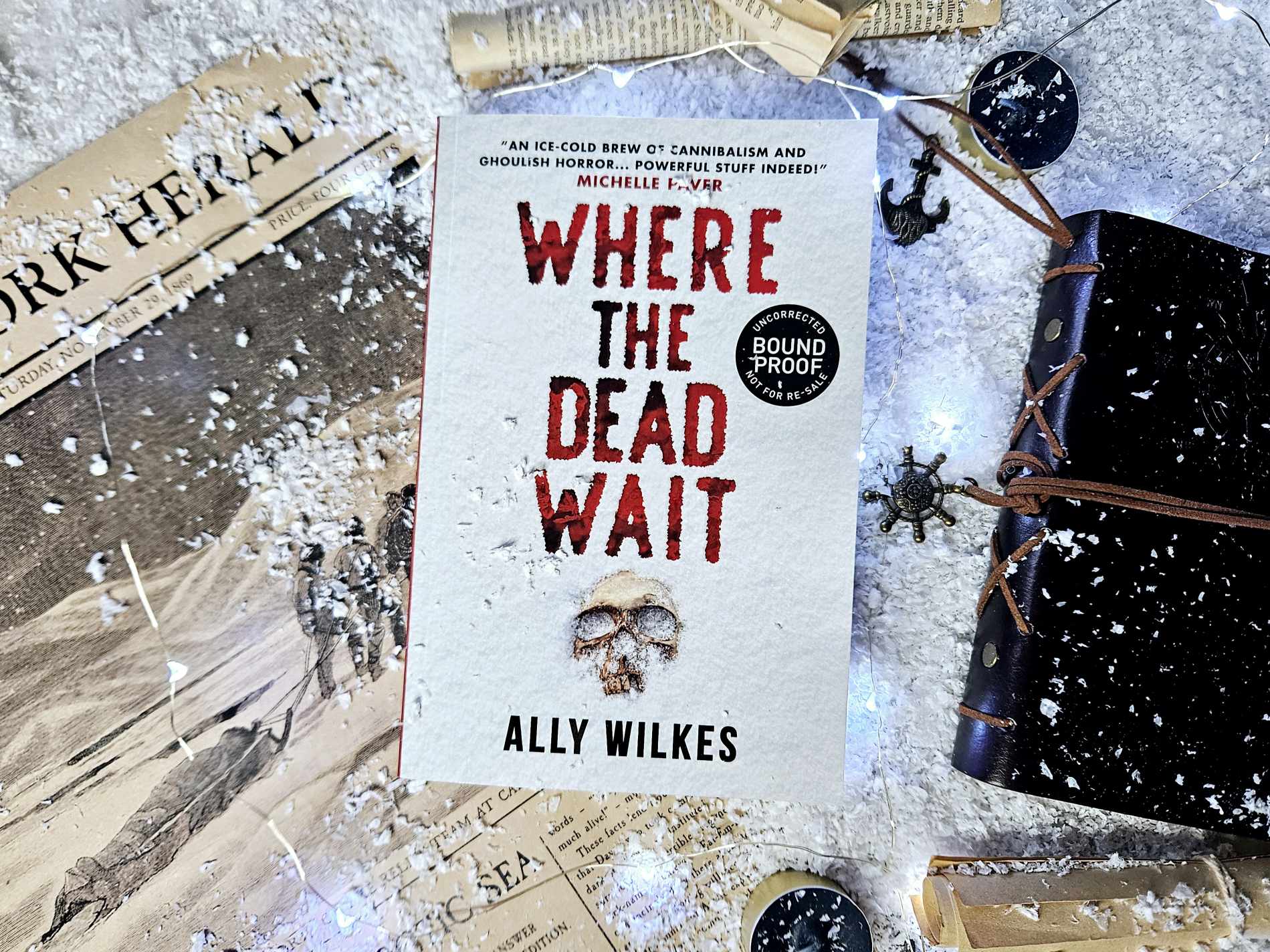
Where the Dead Wait by Ally Wilkes - Blog Tour


'William Day should be an acclaimed Arctic explorer. But after a failed expedition, in which his remaining men only survived by eating their dead comrades, he returned in disgrace.

'Thirteen years later, his second-in-command, Jesse Stevens, has gone missing in the same frozen waters. Perhaps this is Day’s chance to restore his tarnished reputation by bringing Stevens­­—the man who’s haunted his whole life—back home. But when the rescue mission becomes an uncanny journey into his past, Day must face up to the things he’s done.

'Abandonment. Betrayal. Cannibalism.

'Aboard ship, Day must also contend with unwanted passengers: a reporter obsessively digging up the truth about the first expedition, as well as Stevens’s wife, a spirit-medium whose séances both fascinate and frighten. Following a trail of cryptic messages, gaunt bodies, and old bones, their search becomes more and more unnerving, as it becomes clear that the restless dead are never far behind. Something is coming through.'

Ally Wilkes seems to have found something that she's really, really good at writing, and I'm super glad that they're sticking to it. After the absolutely fantastic All The White Spaces, one of the best debut novels I've read, I was happy to learn that they would be staying in the realms of historical, queer, arctic horror stories, and Where the Dead Wait is the perfect companion piece to the first book; though this time it jumps to the other side of the world, and gives you a reason to fear the North Pole, as well as the South. 

Where the Dead Wait tells the story of William Day, a young sailor who found himself in a horrific position some thirteen years prior to the main events of the book. Part of a polar expedition, his ship became trapped in the ice, with the provisions running low and the crew becoming sick. When the captain dies, Day is thrust into a doomed command, and tries his best to keep the sick and dying members of the crew alive as they take to the ice. He does whatever it takes to keep himself and his men alive, even doing the unthinkable. 

When Day and his men are finally found the truth about their survival becomes a scandal, with stories of cannibalism splashed across the front pages of the papers. Day becomes a pariah. However, years later, when one of the members of his old crew, and the man he secretly loves, Jesse Stevens, has gone missing in the same icy waters in another expedition. Day is given the chance to redeem himself, and save the man he loves, by leading a rescue party north to find the missing group. But this is no normal expedition, his crew is filled with the superstitious survivors of a disaster at sea, and he has to bring along Stevens' wife, a psychic medium, and her personal bodyguard, a native girl named Qila. 

As they sail into the cold and desolate north, looking for signs of the missing party more and more strange things begin to happen on the ship, and Day has to questions if the strange visions he's being haunted by might not just be all in his mind, but dark forces from beyond the veil come to destroy him and his crew. 


Much like All The White Spaces, I found that Where the Dead Wait became the perfect kind of book for the time of the year I read it. Sitting in the dark of my room, the only illumination the screen of my kindle and a dim lamp, wrapped in a blanket against the cold, whilst fierce wind howled against the side of the house, rattling the windows in their frames. The only thing that was missing were flurries of snow. This book makes for a perfect winter read, one that has you questioning if the chill that just went down your spine was the weather, or what you just read.

And, similarly to her last book, Wilkes doesn't use obvious horror. The book has you questioning what is and isn't real, has you wondering if the characters are going mad, and what kind of dark forces are lurking just out of sight. Much of the book relies on an increasing sense of tension, slowly ramping up the eeriness until you're almost begging for something to happen just to cause a break in the worry that's building inside you. However, unlike the previous book, where that tension never really broke, this time it does. Wilkes throws some truly horrific moments at the readers, and they do so in ways that shock and astonish, moments that leave you wondering if what you read was real, or another dark hallucination in the arctic night.

One of the things that I personally loved about All the White Spaces was the queer representation the book had. The lead character was a young trans man, and it was fantastic to see a lead in a horror story from this demographic. And I know a lot of people were hoping for something similar with this book too, and Wilkes absolutely delivers on that a second time, telling a wonderfully crafted story of hidden gay love, of a man desperately wanting to be with someone society tells him he can't be. There are some wonderful moments in the book that goes deep into Day's head, and shows you how much his love for Stevens has affected him. But, a persons feelings can sometimes hide some painful truths, and our hearts can lie to us, and the more we learn about Stevens the more complex this relationship becomes, leading to some unexpected moments that might be some of the most horrific due to how real it is. 

Where the Dead Wait is a hugely atmospheric book, one that's packed full of dark and disturbing scenes that play with both the characters and readers heads. It demands your attention, and juggles a lot of plot threads and characters, creating an intricate and fascinating tapestry (one that you might want to make notes about along the way just to keep up). With Wilkes having explored the two opposing extremes of the globe, terrifying readers of both tales, I can't wait to see what they have in store for us next. Whatever it is, I'll be reading it as soon as I can.


Support Amy on Patreon

Buy Amy A Coffee

Go to Amy's Blog

Friday, 19 January 2024

Crave #2 - Comic Review


The first issue of Crave set up an interesting premise, an app that would lead you to the thing you wanted most in the world if you followed its specific instructions step by step. Who created Crave, how does it know the things it knows, and what ulterior motive does it have were all questions that were seeded in the first issue but left mostly untouched. This issue does little to move these mysteries forward, instead taking some time to show the destructive nature of the app, and how people getting what they want isn't necessarily a good thing.

This issue takes place over a relatively short period of time, Albert is still stuck in the lift with Sofia so the events of this issue don't seem to happen over more than an hour at most. The main focus of the issue is David, who finds himself walking through the campus, seeing various people openly hooking up in the corridors, some even having sex out in the open, as Crave begins to get people what they want. 

David finds himself in the library for a study session with Alexandria, where they're the only two there. Everyone else has left in order to go and look at some kind of accident that one of the teaching staff has been in, which begs the question of if Crave caused that accident to get these two alone. After some back and forth flirting the two of them start having sex on the library table, before David runs out of the room, unable to go through with things. Meanwhile, his former girlfriend asks Crave where he is, and it shows her CCTV footage of him almost having sex with Alexandria, and Alexandria masturbating when he leaves, footage that she leaks to the rest of the campus.

And that's about all that happens in the issue. There's a lot of sex with a lot of different people going on, and this issue more than earns its mature rating, and it moves some of the character relationships around a little; but it felt very short in comparison to the first issue thanks to it mainly being pages of people in various states of undress and sexual acts.

The sinister nature of the Crave app is further highlighted in this issue, with the hint that it may have hurt someone, a background character mentioning bad things happening when they didn't follow the instructions exactly, and it being able to access security cameras and sending it to people. It furthers the air of menace and the feelings of bad things coming on the horizon, but I was surprised by how much of the story took a back seat this issue, considering the limited number of issues given over to the story. But, if you came to this series for sex and titillation then this issue certainly delivers on that, managing to be adult and graphic whilst not being too lewd.

As with the first issue, Maria Llovet does everything, from the writing to the art, colours, and lettering. The art on the book is really good, and Llovet has a style that lends itself well to the type of story that she's telling here. A lot of the issue deals with sex and nudity, and most of it happens in the background of panels, mostly covered, in a way that makes it clear what's happening without showing anything graphic. However, when David and Alexandria finally come together that's when the book becomes more open in what it shows. Llovet chooses how much to show and when to match the pace of the story, knowing that it's better to hold some stuff back until David's story reaches a climactic moment (no pun intended), using more graphic material then to heighten the emotions in the scene. 

Whilst I enjoyed the first issue of Crave for the mystery that it established, the focus on the more sexual aspects of this issue left me feeling a little less excited. Whilst I'm still really looking forward to diving into the answers to the questions that I have, this issue didn't really address many of them. I'm hoping that the next issue shifts to cover more of the main story, and finds a nice balance between the plot and the sex scenes so that one isn't given priority over another. Whatever comes next though, I'm definitely still on board to see this series through.


Support Amy on Patreon

Buy Amy A Coffee

Go to Amy's Blog

Mean Streets - Limited Edition 4K UHD Review


Martin Scorsese is a well known name in the world of cinema. Having been responsible for creating a number of acclaimed movies, most people will have seen at least one of his films, even if it's Shark Tale and they didn't even realise it's as Scorsese movie (it's about gangsters though, so that should have tipped people off). Whilst Mean Streets wasn't his first film, it is the film that helped to launch his career. And to celebrate it's 50th anniversary, Second Sight films has released a new Limited Edition Ultra HD release.

Whilst Scorsese's filmography is quite a varied one, with the forementioned animated kids feature, and films such as The Last Temptation of Christ, Hugo, and The Aviator showing that he can turn his hand to multiple genre's and tones, a lot of people hear the name Scorsese and think 'gangsters'. And I have to admit, that's where my mind often goes first too, and as such I wasn't surprised to learn that his first big feature film was indeed, a film about criminals and gangsters.

Released a year after The Godfather, Mean Streets is an almost polar opposite in terms of tone and style. Whereas the Francis Ford Coppola feature romanticised gangsters, and presented a visually beautiful film, Mean Streets is a dirtier, and more realistic interpretation of life as a small level criminal in the 1970's New York. The palatial home of the Corleone's is replaced with crummy apartments, the richly tailored suits are instead cheap and at times tacky, and the romanticism of the criminal world is thrown out in favour of a nasty, harsh, and even cruel existence. 


The film mainly follows Charlie Cappa, played by Harvey Keitel, the nephew of a powerful mafioso. Charlie is a man driven by his faith, and his belief that the best way to atone for your sins is through your actions, rather than simply reciting prayers in church. As such, he tries to do his best for the people around him, and is generally well liked. Unfortunately, his drive to help others has landed him in trouble thanks to the actions of Jonny Boy (Robert De Niro), a young punk who owes every loan shark and criminal in the city money, and refuses to get his life together or hold down a job.

Charlie is trying to help Jonny Boy in large part to him seeing Johnny Boy's cousin, Teresa (Amy Robinson), a relationship that he has to keep secret due to Teresa's epilepsy; a condition that has alienated her from older members of the Italian American community, and has her labelled by Charlie's uncle as 'having something wrong in the head'.

Mean Streets has a very loose plot, and a lot of the film is simply following Charlie as he interacts with other people, getting to know him and his friends, and seeing how his desire to help out Johnny Boy is negatively affecting his life. As such, there are a lot of scenes in the film that don't feel massively important, moments that don't really connect to any kind of larger story, and are there simply to flesh out the world that Scorsese is creating. And whilst I imagine some viewers would question this inclusion, caring only for moments that further the story, these moments are in many ways the point of the story.

There's not really much of a goal for Charlie, no grand plan that he's trying to commit to. There comes a point towards the latter half of the film where he's given an opportunity by his uncle, but it doesn't feel like something that Charlie specifically sought out or fought for. He, much like most people in life, simply moves from moment to moment, trying to do his best as he does so. The scenes where it's just him and his friends hanging out are some of the better parts of the movie, and their comradery becomes an important point, especially when Johnny Boy's actions begins to erode that.


That doesn't mean that the film isn't slow in places. Despite only being two hours long (a fairly short film for Scorsese) it does feel a bit longer thanks to the meandering plot and the slow pace. There are a number of storylines and plots that don't seem to really go anywhere, such as Charlie desperately wanting to date a Black stripper and how he dating a Black woman would affect his reputation and standing in the community, comes up a few times, but never really amounts to much. You can definitely see the style of films that Scorsese would go on to make evolving here, experimentations into ways of movie making that would become a staple of his career that don't quite feel perfected yet. As such, it's probably not going to be in your top list of Scorsese movies, but it does make for an interesting examination of his early work.

Alongside the new 4K restoration of the film, the disc includes a newly recorded audio commentary from Demetrios Matheou, author of BFI Films Classics Mean Street, and David Thompson, Co-Editor of the book Scorsese on Scorsese which offers some interesting insights into the film and Scorsese's following career. There is also a scene specific audio commentary with Scorsese himself, along with actor Amy Robinson. Alongside this are new interviews, Q&A's, and documentaries about the film. The Limited Edition also comes with a number of postcards from the film, as well as a 178 page booklet featuring several essays on the movie (the booklet was not provided for review)

Mean Streets makes for an interesting look back at the beginning of a director's career that would span decades, becoming one of the most well known directors in the world. For fans of Scorsese, this new release offers the opportunity to see where it all began, but even those who aren't massively knowledgeable of his work will find an entertaining movie waiting for them.


Support Amy on Patreon

Buy Amy A Coffee

Go to Amy's Blog

Thursday, 18 January 2024

Green Lantern #7 - Comic Review


I've had some mixed feelings on Green Lantern since it began. Whilst I love these characters, Hal being Earthbound might be one of the least interesting things I'd have wanted to see done with the character. I love the GL books for their space adventures, for the amazing things that can be included, and sweeping, epic stories that just can't be replicated as an Earth based hero. So sticking Hal in one place, with him mostly dealing with relationship woes had me dipping in interest somewhat. However, this issue finally feels like the tiny nuggets of information we've been given up to this point are finally paying off, and that an interesting story has started to form.

At the end of the last issue ended with the appearance of Razer, a fan favourite character from the short lives Green Lantern Animated Series, and the revelation that Kilowog hasn't been on Earth, and that Hal has been talking to a construct of his friend. And why would he be doing this? Because Kilowog is dead. This revelation alone honestly had me going into issue seven somewhat mad. I love Kilowog, and if he's been killed off I'm going to be quite upset about it.

Mostly a flashback issue, the months release takes us back to when the United Planets first start to take over the Green Lantern Corps, and goes into what some of the Earth Lanterns are doing, and why Hal quit. With the news that Sector 2814 is being quarantined, some of the veteran Earth Lanterns begin to voice their disagreement, but quickly agree to stay for a while to see out some special missions that only their experience and strength can deal with. The only one that we learn of is that Guy has been sent to arrest Lobo, something that might bring his character into the upcoming Superman story involving a city full of Czarnians and Brainiac perhaps.

Hal and Kilowog are assigned to guard the president as he travels to Korugar to meet with Sinestro, in an attempt to bring Korugar into the United Planets. Obviously, Hal isn't on board with this, and doesn't trust Sinestro, and his former mentor is able to push his buttons in a way that gets Hal kicked out of the room and sent back to the ship. It's whilst this happens that a trio of Sinestro Corps members attack the meeting, trying to kill the president. Rushing back to help, Hal is able to get the president safely back to the ship whilst Kilowog holds off the Sinestro Corpsmen. 

However, when the yellow Power Battery has a flair of energy it seems to explode outwards, vaporising Kilowog and the three Corpsmen. This, along with Sinestro coming into the United Planets, and Earth being locked off, leads Hal to quit the corps. Whilst this flashback doesn't reveal how or why Sinestro ended up stuck on Earth, it does explain some of the strangeness happening with his ring the previous two issues, where it changed to a Red Lantern ring, and Sinestro was lost to his rage. This is definitely shaping up to be the main mystery of the series, as Razer reveals that the Central Power Battery of the Blue Lanterns has also been destroyed.

I'm very much glad that things seem to have finally began in earnest now, and that we're getting a story that isn't just going to be Hal having adventures on Earth. The problems with the rings and the batteries seems to be the central mystery of the series, and looks to be where things are going from here. I am also holding out hope that Kilowog getting hit by the energy from the yellow Central Battery was not him being killed and vaporised, but perhaps transported somewhere else. I will continue to hold out hope that he will return until they show us a dead body.

Speaking of hope, the inclusion of Razer is perhaps one of the most interesting, and exciting parts of the book too. DC has already teased Aya in the comics, and having Razer just walk up to Hal and talk about their past friendship and adventures is a very interesting development. Is it saying that the show happened, but perhaps in a different way that fits into the continuity we already know? Perhaps. And I'm not even sure that I need a definitive answer to that. Just his inclusion, and the book acting like a continuation of the show is good enough for me.

Alongside the shift in story, this issue also featured a change in art team. Amancay Nahuelpan takes over art duties, and Romulo Fajardo Jr. provides the colours on the book. I think this might be my favourite art on the series so far, and everything looked fantastic. All of the human Lanterns looked really good, and every alien looked especially cool. I think being able to draw really weird stuff in really cool ways is definitely a big plus for good Green Lantern art, and this team do so on every single page. 

I hope that this tone and style of story continue for the series going forward. I'm interested in finding out what's going on with the strange surges of power, and I'm hoping that we get to get Hal away from Earth and get some of the kinds of Green Lantern stories that I love the most. 


Support Amy on Patreon

Buy Amy A Coffee

Go to Amy's Blog

Listmas 2023 – Movies


Originally published at Set The Tape


This year I took part in the Set The Tape Listmas articles, sharing my thoughts on some of my favourite media from the last year. I talked briefly about a few of the movies that I enjoyed.


Barbie

Barbies aren’t just for kids, they’re also for kick-ass adults who get that the patriarchy isn’t just about horses and needs tearing down. A toy-inspired film with more depth to it than you could ever expect, rapturously bright colours, musical numbers, and fantastic jokes that help to deliver an important message about the way society treats women and femme presenting people.

I wasn’t sold on the concept of this film, I didn’t know what to expect from it, and was ready to wait until it hit home release. Then I got taken to see it for my birthday, and it became a fantastic cinema experience. The only time I’ve seen a screen absolutely packed, the atmosphere was infectious. The jokes brought the room down, you could hear the sniffles when the film got emotional, and there were moments of quiet introspection, such as when America Ferrera delivered a speech on the contradictions and impossible standards that society puts on women; a speech that a lot of people should hear at some point.

With so many films and shows based on toys being little more than glorified advertisements, it’s easy to dismiss Barbie as nothing more than that, when in reality its introspective look at feminism wrapped up in nostalgic imagery and an intellectual property was what kept that audience coming back over and over again. So don’t just dismiss Barbie (Margot Robbie) because she loves pretty dresses and pink, because she’s got some stuff to say that you need to hear; and a final line you’ll never see coming. 


Godzilla Minus One

I pitched Godzilla Minus One as my film of the year before I’d even seen it, and I was bang on the money. I love the Godzilla franchise, for its wackiness and silly stories, the cheap effects, and odd monsters. But there’s also a lot of depth to be found. Whilst this may have been somewhat diluted over the seven decades since he first emerged from the ocean, the franchise started off as a discussion of the horrors of war, a vein which Godzilla Minus One follows in. Whilst the original was a discussion of the horrors of the atomic bomb and the monstrous attack the US made on Japan (told by people who lived through it), this film puts Japan’s own government and culture in its cross-hairs.

The film follows Koichi (Ryunosuke Kamiki), a Kamikaze pilot who chooses not to follow through with his mission, too afraid to die. Koichi is haunted by the horrors of the war, of his desire to live, which goes in conflict with societal expectations to die willingly. Some treat him like a coward, others treat him like a hero. Through it all, his nightmares follow him. He’s a man broken by war. And when Godzilla emerges and kills thousands a group of civilians band together to try to create a plan to destroy the monster, unwilling to trust a government who have so willingly thrown life away before.

Godzilla Minus One is a film about a giant monster wrecking things (and it does so amazingly), but it’s also a film that says the Japanese government were wrong. It says that not dying in war is nothing to be ashamed of, and that never going to war is a good thing. A film with more depth and heart than you’d first expect, and a film that will move you to cry more than once. 


Guardians of the Galaxy vol. 3

I didn’t see Guardians of the Galaxy 3 in the cinema. I was trying to find the time to fit it in, but then I had people warn me about watching it. My house is full of animals, and I’ve got four bunnies running around it. People who knew I’m a bunny mum told me to go into the film with care. And boy am I glad I waited until home release. This film broke me. There came a part – I’m sure you know which if you’ve seen it – that made me weep. But I had to do so quietly, because it was the kind of crying where if I’d have made a noise it would have been a wail.

I was watching perhaps the most emotionally devastating film in the MCU, one that put animal cruelty at the heart of it, whilst one of my rabbits was staying in our living room, only recently out of life-saving surgery that left her with scars on her head, and a permanent disability. I know it’s very specific circumstances, but it made this film hit all the harder. Bradley Cooper and the other animal actors made me care for a collection of pixels to the point where I couldn’t think of this film without crying. That’s damn good acting.

A film about family, trauma, loss, and the path to healing, this is not only the perfect conclusion to the Guardians story, but for me the most engaging and moving film in the entire MCU. It also showed that it was Rocket Raccoon, not Starlord (Chris Pratt), at the heart of this galactic corner of the universe, and demonstrated how even the most silly comic book concepts can be made into wonderful stories that will stick with you forever. 


Support Amy on Patreon

Buy Amy A Coffee

Go to Amy's Blog

Wednesday, 17 January 2024

Miguel O'Hara: Spider-Man 2099 #2 - Comic Review


Miguel O'Hara continues to deal with the spooky side of the 2099 universe as he's called to the moon to help the Egyptian god Khonshu, the alter ego of the hero Moon Knight. However, whilst exploring Moon Knights tomb on the moon Miguel learns that there is another who has called that tomb home before, and he's out for blood.

After the somewhat familiar story in the last issue (scientist makes a virus that goes out of control and begins a zombie apocalypse) I have to say I appreciate just how silly this issue is in places. Delightfully so though; it was very much an enjoyable thing.

Donning some armour to give him some space protection, Miguel gets teleported to the surface of the moon, where he finds the body of the mummy Khonshu, near death (of their equivalent), who warns Miguel that the person who attacked them is still around. This leads to the reveal that Dracula is on the moon, and the ancient vampire quickly attacks Miguel, trying to get Spider-Man to transport him back to Earth so that he can feed; and so that he can begin his campaign of revenge.

Whilst the two of them are fighting we learn that decades before the vampire nation of Terra Rubra was attacked by a weapon that fired a gigantic beam of sunlight into the heart of the vampire city. Dracula watched as thousands of his people were obliterated, and he himself was left close to death with burns so intense that they scarred his undead soul. Placed into a special coffin by some of the survivors, he was fired at the moon, where his coffin buried beneath the surface, and he spent the decades between then and now healing. 

This story, and what we learn came next for Earth's vampires, is ridiculous science fiction, it's slightly campy, and it comes up with truly ridiculous ideas; but I really like it. It was the best part of the issue, and was more interesting than the fight between Dracula and Miguel, and I would have liked to have seen more of this backstory as it was definitely the thing that I thought about most after finishing the book. 

Whilst Steve Orlando continues on from the last issue in the writers role, the art team is different this time round, with Michael Dowling and Jim Campbell taking over the art and colouring duties respectively. The art on this issue is good, and isn't too tonally different from what we had in the first issue. This helps to maintain the general feel and tone of the series, and it means that when the series is eventually collected into graphic novel form it shouldn't be too jarring moving from the first issue to this one. There are some great visual moments in the issue too, such as the times that Dracula suddenly appear behind Miguel, his arms raised as he looms over our hero (it's Dracula, so he can get away with doing it multiple times an issue), and there's a a very cool panel of a throat being bitten out during the fight that's super well done. But for me it's the page that deals with the destruction of Terra Rubra that's my favourite visual in the book; one that my mind keeps coming back to.

There's a definite difference in tone between the two issues of the series that we've had so far, and whilst they both try different things I found them being stronger in different areas. The zombie hordes of the first issue were enjoyable to see Miguel deal with, whilst it was the world building of the second issue that took top spot for me. The series seems to be having a lot of fun exploring different kinds of horror stories, and different parts of the 2099 world, and going along for the ride has been a lot of fun too. Looks like next up we're getting werewolves!


Support Amy on Patreon

Buy Amy A Coffee

Go to Amy's Blog

Into The West: The Founding of Valdemar Book Two by Mercedes Lackey - Book Review


'The long-awaited founding of Valdemar comes to life in this second book in the new series from a New York Times-bestselling author and beloved fantasist. Baron Valdemar and his people have found a temporary haven, but it cannot hold all of them, or for long. Trouble could follow on their heels at any moment, and there are too many people for Crescent Lake to support. Those who are willing to make a further trek by barge on into the West will follow him into a wilderness depopulated by war and scarred by the terrible magics of a thousand years ago and the Mage Wars. But the wilderness is not as empty as it seems. There are potential friends and rapacious foes........and someone is watching them.'

The second part of the new prequel trilogy that explores the beginnings of the popular fantasy series is now out in paperback in the UK, just in time to get ready for the final part to be released.

Following the dramatic events of the previous book, which saw the brave Baron Kordas evacuating his people from under the nose of a cruel empire, and the destruction of the capital of said empire, the refugees find themselves in a strange new land, searching for a home. The book begins not long after the first ended, with the people of Valdemar living in thousands of barges in the lake where they first found themselves after fleeing the empire. With tens of thousands of people crammed into these temporary homes, in a distant and unknown place, things are tough.

Baron Kordas, having prepared for this moment his entire life, finds that despite all of the plans laid out by him, and his father and grandfather before him, there was nothing that could have prepared them for the strangeness of the place they would find themselves. As the refugees set out down river, hoping to find a land that can safely support them all and not harm anyone else who lives in the area, they begin to discover strange and dangerous threats along the way. With monstrous creatures, giant animals, and spots of intense magic to contend with, Kordas and his people will have to contend with the impossible. And all the while, there is a greater force watching over them, judging their actions.

Into the West is a very different kind of book to Beyond, the first in the series. Where that book dealt with political machinations, secret plans, and a desperate escape against an ever decreasing deadline, this book in contrast feels a lot less tense. There's no looming threat here, and whilst the refugees will encounter dangers along the way there's not constant worry in the same way that there was worry about what the Emperor might do as was present in the first book. This doesn't mean that there's no tension, however, as the book instead focuses on the much smaller, human drama that the escapees have to deal with.

The politics of the high court are replaces with having to keep order amongst a group of people who were forced to feel their homes, who are constantly on the move, and who need to pool together in order to survive. Across the book we see Kordas and his advisers having to deal with this in various ways, from the distribution of food and equipment, to people wanting to leave the group altogether.  It's the kind of stuff that I can see some readers getting a bit glassy eyed over, but I found it really interesting to watch how this group tried to survive on their journey to a new home, and in some ways it felt like the fantasy version of the Battlestar Galactica remake, where you'd see how the convoy were having to work together and how the people in charge dealt with interpersonal issues amongst various groups.

But, not all of the conflict in the book comes from within, and there's a great deal of new and amazing things to discover as the group makes their way down river. There are several creatures that the group come across on their journey that lead to some shocking moments, and some interesting revelations about the place that they've found themselves in. The best of these, for me, was the forest. This part of the book was hugely fascinating, and had some wonderfully tense moments and a few things that made my jaw drop open in surprise, and I'd loved to have seen more stuff like this throughout the book. As it was, this ended up being a big moment, and one that I ended up thinking about for a good long while after finishing the book.

Most of the characters remain fairly consistent across the book, and the journey into the unknown only ends up strengthening them in a lot of ways. Most of the characters that we follow are leaders, and people with the experience and expertise needed to get everyone to their new home safely, and as such they tend not to have moments of weakness, nor moments of doubt. The main exception, the character who gets the biggest arc and goes through the most changes is Delia. Delia isn't much of a character in the first book, and begins this one as a girl used to the life of luxury forced to have to work all day, and who harbours a crush on her brother-in-law. She's the kind of character who I'd have ended up hating if she'd have remained this way. Thankfully, she gets put into an important role early on, and ends up becoming a much better person because of it. As the book doesn't really take the time to look at many of the people in the expedition, Delia kind of acts as their representive, and her journey from someone unable to survive on her own to a hardened and competent member of the convoy reflects what many of the Valdemarian people will have gone through. 

I was also glad that the Dolls feature heavily in this book too, and I adored the changes that they went through  and their evolution. They were one of the things in the first book that really fascinated me, and certain Dolls quickly became some of my favourite characters in the second book too.

There's a lot to like about this entry in the series, even if it's a very different kind of book than the first. And, much like the first book, there are some dramatic changes towards the end of the book that look set to create a foundation for a third book that goes in a completely different direction again. I imagine this book is full of easter eggs and special nods for people who have read other entries in the Valdemar series, but even as someone who came to this trilogy with no experience of the other books it's been a fantastic read throughout.


Support Amy on Patreon

Buy Amy A Coffee

Go to Amy's Blog