Sunday, 15 August 2021

The Warden - Jon Richter Interview


After reading through the latest release from Jon Richter, The Warden, I sat down for a chat with Jon about how the book came about, and what it was like writing during a pandemic. My review for the book can be found here.


In the afterword for the book you talk about it being written during the pandemic, was this an idea that solely came about because of Covid and lock-downs, or was it something that you were toying with before but life kind of gave a push with current events?

The book was completely COVID/lockdown inspired, I suppose just my way of ‘processing’ what was happening around me: the sudden and bizarre cessation of huge numbers of activities and things that felt utterly and completely habitual and taken for granted, the seemingly overnight transformation of these routines into new and different habits and rituals (handwashing, face masks, Zoom calls), the spread of misinformation, the wildly different reactions of people to the whole situation… so in some ways the book is really just my form of a pandemic diary!


The story features two interweaving plots, one that follows a man in 2024 who’s being isolated from the outside world, and the other showing the start of the pandemic and the creation of the AI that controls The Tower. Why did you choose to structure the book this way?

I’ve worked as an accountant for twenty years entirely for ‘big corporates’, and for a long time I’ve wanted to set a story in that world – but a much less boring and frustrating version!  An AI character featured in one of my previous novels, and was a type of character I wanted to explore further, so I thought a ‘back story’ of its creation and how it might interact with and manipulate its cynical capitalist creators and their corporate politics and bureaucracy might be a fun way to do it… hopefully I succeeded!

I’ve also always enjoyed interesting structures for books (as opposed to single POV, straightforward chronological order) so when I realised that two story strands I’d dreamt up might actually be able to be weaved together into one weird-yet-cohesive whole, that was the impetus I needed to get going on the project!  (If anyone’s interested in a recommendation for an ingenious way to structure a novel, try Use Of Weapons by Iain M Banks: it features alternating chapters that start in the past, moving forward, and chapters that start in the future, moving backward.  We see the same character, but his future self is horribly transformed and emotionally eviscerated – the book’s climax is therefore the story’s middle, which reveals the incident that caused this devastation.)


The Warden shows a UK where people have been in one long lock-down for years, which after seeing how our own government has dealt with things might be the most fantastical element of the book. Did current Covid events ever influence your story, or make you think about changing things in any way?

The honest truth is that I naively thought, like I think a lot of us did, that the pandemic would be done and dusted within a few months!  So when I started writing The Warden around March 2020, I thought the pandemic would be a think of the past before I’d even finished the book – little did I know it would be released just over a year later in the middle of another lockdown!

I did worry that this would make the story too close to home for some people, particularly those who have suffered misfortunes or bereavements during this terrible pandemic, but hopefully the book is far-fetched and fun enough to not have that impact – it’s very much intended as an alternate ‘extreme’ take on what might happen, rather than a realistic reflection, although I agree that the shambolic performance of our government is making me wonder how unrealistic the book’s setting might actually turn out to be…


I’ve seen some people saying that no one would want to read anything that deals with pandemics or viral apocalypses at the moment, but I found this book to be such a compulsive read that I couldn’t put down. Did you find that writing a book that deals with a Covid pandemic that lasts years to be something of a tough sell?

It’s definitely been one of my more divisive books, and I do understand the people who have reviewed it negatively as a result; the once-popular setting of ‘pandemic-driven dystopia’ has suddenly become much less of a fantasy than we all could ever have imagined!  The responses I’ve had though have largely been along exactly those lines (‘I didn’t think I’d enjoy this, but it turns out I did’) and I’m very grateful to you for your kind words.  I think the key is that the story isn’t attempting to be realistic or taking itself particularly seriously – it’s just an exploration of a few (slightly mad) ideas, like most of my books are I suppose!

It is interesting to see that a lot of authors are choosing to simply ignore the pandemic in their writing, setting their books either just before the outbreak or in a sort of alternative reality where it never happened.  I think this might change over time as COVID becomes more of ‘a thing we all lived through’ rather than a still-current event, in the same way that you wouldn’t set a book during wartime years without mentioning the war, if that makes sense?


If you were in The Tower do you think you’d have been able to cope with the isolation, and what do you think you’d do to keep yourself occupied for all that time?

I suppose the honest answer is that my pandemic experience wasn’t wildly dissimilar to life in The Tower!  I worked from home throughout, making my working day a non-stop series of Word documents, Excel spreadsheets, Powerpoint presentations and Zoom calls – then I worked on my writing around that, which meant more Word documents, and finally I spent a lot of time doing the recreational stuff I’ve always enjoyed: watching movies, playing video games, listening to music and going out running to exercise!  So I think I’ve been very fortunate that (a) I was able to earn money during lockdown, and (b) my nerdy lifestyle wasn’t too badly affected by the circumstances.  For others, for example those who enjoy the outdoors and sunny holidays, I’m sure the experience has been much tougher.


One of your other books, Auxiliary: London 2039, has some similar themes to this book; a future where people have become more reliant on machines and robotics, and the sinister ways that can turn on people. Is this an idea that particularly appeals to you?

I think this future is absolutely inevitable, or at least the ‘reliant on machines and robotics’ bit.  To an extent it’s already come true – a lot of us simply couldn’t function without our laptops, TVs and smartphones, and we already rely on algorithms and other AI to support us in our daily lives.  In some ways an extrapolation of this, where the AI is able to communicate with us much more effectively than Alexa’s rudimentary Q&A, might actually feel more personal and less cold – as an example, I can certainly see the huge benefits of the proposed care robots that will keep people company in old folks’ homes.  But we certainly need to manage the technology carefully to avoid the dreaded ‘Skynet’ scenario beloved of writers like me: the tipping point is of course the moment when the learning capabilities of our creations outstrip our abilities to predict the end results.

I suppose some comfort should be drawn from the fact that a future with more technology, better integrated, isn’t necessarily a bad one – it just seems that way because we fiction writers love a bit of drama and conflict!


Was it different writing a book during a global pandemic than your normal approach?

I did experience a bit of the creative ‘brain fog’ that quite a lot of creatives talked about, where you had this increased amount of time in which to work as well as fewer distractions, and yet found your mind at times completely stifled.  I think lack of inspiration was the issue; I realised that our brains need change and stimulation, not necessarily from grand overseas travel experiences, but even from just dragging yourself out to the local sandwich shop or having a phone call with your mum or whatever.  But overall I think my creative process (shut self away in writing room with laptop, emerge several hours later with a chunk of writing done, try to remember to eat food) was pretty much the same as always – in some ways, the fact that I knew I wasn’t really missing out on anything was quite helpful!


What are you working on next, what can people look forward to seeing from you in the future?

In my usual genre-hopping way, I’ve got a couple of books in the pipeline that are a bit different: a fantasy effort I wrote recently that I’m seeking representation for, and a (weird) crime thriller I’m just starting out on.  I do have another sci-fi-ish idea up my gleaming metallic sleeve, but that might be on the back burner until next year… but the beauty of this career is that you never know when inspiration will strike, and (a bit like The Warden) I could find myself writing something completely unexpected in a few months’ time!

I also write short dark stories from time to time and am slowly amassing enough for a third collection – my first two anthologies get a bit less love than some of my more mainstream releases, so I’d be delighted if any readers would check out Jon Richter’s Disturbing Works (Volumes One and Two) for some creepy tales with unexpected twists (they’ve been described as ‘Tales Of The Unexpected meets Black Mirror’, a quote I was extremely happy with!)  You can find these, and the rest of my seven books (and other peculiar projects) at www.jon-richter.com, or alternatively just type Jon Richter into Amazon to peruse my sinister wares – you’ll find crime thrillers as well as more cyberpunk, so hopefully there’s something there that appeals to everyone.  I also host a fortnightly podcast called Dark Natter, where I chat to guests about their favourite pieces of dark fiction, which is available on all the major streaming platforms.

Thanks so much for having me as a guest on your blog; it’s great to be allowed to waffle on about my work and I hope I haven’t been too self-indulgent!  I wish you and your readers an absolutely ace rest of your day.


Buy Amy A Coffee

Go to Amy's Blog

Saturday, 14 August 2021

The Warden by Jon Richter - Book Review


'The year is 2024, and the residents of the Tower, a virus-proof apartment building, live in a state of permanent lockdown. The building is controlled by James, who keeps the residents safe but incarcerated. Behind bricked-up front doors, their every need is serviced; they are pampered but remain prisoners.

'This suits Eugene just fine. Ravaged by the traumas of his past, the agoraphobic ex-detective has no intention of ever setting foot outside again. But when he finds the Tower’s building manager brutally dismembered, his investigator’s instincts won’t allow him to ignore the vicious crime.

'What Eugene finds beyond the comfort of his apartment’s walls will turn his sheltered existence upside down. To unravel the Tower’s mysteries, he must confront James... and James takes his role as the Warden very, very seriously.'

When I was first approached to see if I wanted to read The Warden I was a bit nervous about agreeing to it. We're over a year into a global pandemic that his killed tens of thousands, and resulted in serious health conditions for many, with no real end in sight (thank you variant strains and shit government reactions), so I wasn't sure that I was going to want to read a book that actively addressed these ideas. However, having read a couple of books by Jon Richter before I was aware that he's a writer that handles issues well, and thought I'd give it a shot. And I was so glad that I did.

Set in the summer of 2024, The Warden follows the day to day life of Eugene, a former police detective who is one of the select few people to have been chosen to live in The Tower, an experimental building operated by an advanced AI that's designed to keep those inside safe from the deadly Covid virus that's making life outside impossible.

The Tower is controlled by James, an AI that's been programmed to keep the inhabitants safe and secure. It delivers their meals, it talks to them, it even supplies the inhabitants with the supplies to pursue their various hobbies and interests. It's their protector and their friend. And if things work well with The Tower more of these structures could be built; a possible solution to the years long lockdown that has been taking place.

Eugene is happy with these arrangements, even before the lockdown he was struggling to go outside his home thanks to a trauma in his past, and getting to lock himself away with everything he needs delivered to him by efficient robotic servants seems like a dream scenario. And at first everything is going well, but when the small lift that delivers his food opens up one morning with a body inside Eugene's stable new existence gets thrown out the window, and he has to fall back onto his old training and his ingenuity to try and get to the bottom of things.

At it's hear The Warden isn't about Covid, or any kind of virus outbreak really. What it is is a locked room mystery. The pandemic is simply the reason for the characters involved being unable to simply leave, to being able to run for help, or to find somewhere safe to hide. This story could have easily taken place in another inescapable location, such as at the bottom of the ocean or in the dark void of space. And because of that, this isn't a book that I found to be too depressing or awful to read because of the current real world events.

The mystery of what's happening inside The Tower, the murder, the apparent vanishing people, and the madman on the loose, isn't the only plot thread that takes up large sections of the book, however, as we get a second narrative that weaves in and out of Eugene's story. In a series of flashbacks we get to see the creation of James, the AI that controls everything.

At first I wasn't sure what these flashbacks were, as we follow a fairly powerful and at times unlikeable businesswoman who works in the company that would go on to create The Tower. But as things unfolded and it became clear that this was an origin of sorts for one of the more important characters in the main story I began to enjoy it more and more. Not only did these sections add more context to the world as we got to see how the pandemic played out and evolved, but also began to understand what James was, and what he was capable of. There were seeds being planted for answers that would be revealed in Eugene's story, as well as its own mystery that began to be just as compelling as the one in 2024.

There were times where I began to hate this shifting narrative, purely because as soon as I spent time with one I'd want to know all the answers because it was so engaging. Then the narrative would jump to the other story and I'd be frustrated that I'd have to wait to see what happened in the other, before becoming engrossed in the second one. This repeated so many times in the book that I found it hard to pick which of the two narratives I liked the most, and the constant wanting to know more kept me reading long after I should have put the book down to take a break. The Warden was responsible for a couple of very late nights, as I kept telling myself 'just one more chapter' over and over again.

Whilst I've only read one other Jon Richter novel, and a collection of his short stories, this is something that I've found in his work every time I read it. Jon is able to craft a mystery in a way that it never feels like you're being strung along or teased, yet you become so absorbed into the narrative and want to keep on reading. Because of this compulsive hold it had over me, the strangeness of the locked room mystery, and the two stories weaving in and out I almost forgot that this was a book that I was nervous about picking up. 

If you see the description of this book and think that it might not be the best time to read a story about lockdowns, pandemics, and Covid in particular I can fully understand that; but I would say just give it a go. Just try the first few chapters. Just see if this mystery piques your interest, because I can assure you it's so much more than a story about living in a world with Covid.

The Warden surprised me in a lot of way, it was so much better than I was expecting, and proved to me that stories can be set in a world that reflects our current crisis without if being overwhelming or depressing; that in the hands of a writer as talented as Jon Richter the pandemic and become a background element of a truly engaging and exciting story.


Buy Amy A Coffee

Go to Amy's Blog

Friday, 13 August 2021

Mothra – Throwback 60


Originally published on Set The Tape


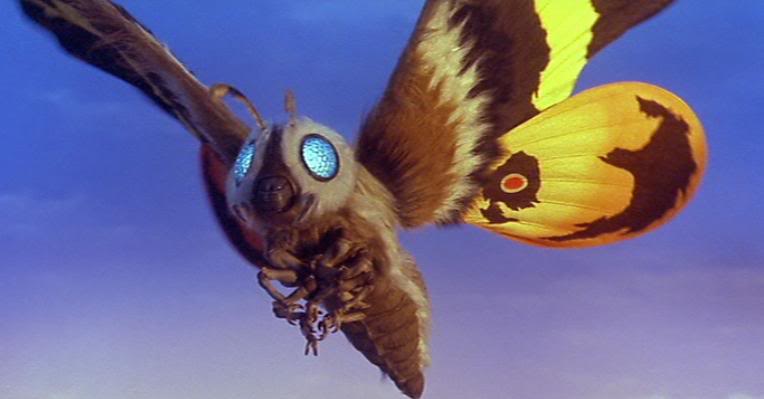
If Godzilla is King of the Monsters then Mothra is undoubtedly the Queen. Originally appearing in Mothra in 1961, this winged Kaiju would appear in many of her own films, as well as a number of Godzilla movies over the years, firmly earning her place as one of the most beloved movie monsters of all time.

Mothra begins with a ship lost at sea during a terrible storm, and a search for any survivors about to be abandoned. Luckily, the last of the search and rescue helicopters spots some of the ship’s crew on the rocky shore of Infant Island, a small atoll that had been used for atomic testing. When the survivors are brought home they tell people that Infant Island is actually inhabited, and that the people there took care of them.

An expedition is put together to travel to Infant Island to find out more about these people. The group discover a strange forest filled with giant plants, and soon locate the inhabitants. Stranger still, the island is also home to two fairies, who communicate telepathically, and seem to possess strange powers. The leader of the expedition, a shady businessman called Nelson, captures the fairies, killing several of the islanders in the process.


With the two fairies taken to Tokyo, their protector, Mothra, emerges from her egg in order to save them. This giant larva follows the expedition back to Japan, and demolishes Tokyo as she spins a cocoon around Tokyo Tower. Seeing this, Nelson takes the fairies and flees to the fictional country of Rosilica. When Mothra emerges from her cocoon she’s her beautiful, fully grown self. Now able to fly, she travels across the globe to Rosilica. Mothra attacks New Kirk City, and manages to free the fairies, whilst Nelson is killed by the police. Reunited, Mothra and the fairies return to Infant Island together.

One of the things that instantly makes Mothra stand out from other Kaiju movies is that she’s quite clearly not a villain. Other giant monster movies both before and after Mothra would centre on a creature causing havoc and destruction, even if it was down to a more friendly monster to stop them. In this film, however, the monstrous villain of the piece is Nelson, played by Jerry Ito. Representing the greed and capitalistic nature of the West, his home country of Rosilica seems to be an amalgam of both Russia and America, with New Kirk City standing in for New York.

The change to the established formula definitely helped Mothra to stand out amongst other Kaiju movies of the time, and her being a somewhat heroic figure made it a lot easier for Toho to produce more films with her, folding her into the Godzilla universe three years later when the two of them would clash; though they would eventually go on to work together to protect the earth from King Ghidorah in other projects.


Mothra also stood out due to the inclusion of a sense of whimsical fantasy, using on-screen musical numbers courtesy of the fairies, played by famous Japanese pop icons The Peanuts. Despite featuring elements that touch upon science, such as the atomic testing on Infant Island (similar to the themes in Godzilla), the film was definitely more of a fantasy movie, and audiences loved it because of this. Mothra and her fairies are not the result of atomic radiation, but are implied to be divine figures.

The film would prove to be a big hit in Japan, but also had a lot of success in other countries too. Columbia Pictures actually helped with the production of the film, and distributed it to the US, where it was similarly well received. This partnership also meant that it was one of the more lavish Toho productions, creating some of the largest miniatures special effects supervisor Eiji Tsuburaya had ever made.

There are a lot of films that are referred to as a ‘classic’ but Mothra is one where the title is very much deserved. The film had a huge budget at the time, and thanks to the dedication of the cast and crew you can definitely see it coming into play on screen. Everything looks superb, and the characters all give it their all. The film would spawn one of the most popular film monsters of all time, and with an impressive 9 million tickets sold in Japan, it was a bigger hit than the original 1954 Godzilla.


Buy Amy A Coffee

Go to Amy's Blog

Thursday, 12 August 2021

Bigotry In The Publishing Industry


Earlier this month criticism was made about Some Kids I Taught and What They Taught Me by Scottish poet and author Kate Clanchy, a book that was a memoir of her time working in a school. The book was originally published in 2019, but it wasn't until certain passages from the book were posted online by a reader that people became more aware of the content of the book.

In a number of passages Clanchy described her former students, children, with language that can only be described as racist, abelist, and even transphobic in its content and usage. These quotes, taken directly from the book, were shared on social media, which immediately resulted in Clanchy denying they were real; even though simply picking up her book and reading through it would prove that that claim was simply not true.

Clanchy described autistic students in this way:

'Janie and Chris are eleven and have Autism Spectrum Disorder. They know this: they are fully certified and statemented; they will tell you all about it freely. They are cheerful, frank children in general: shouty, active, unselfconsciously odd. When we fill in the form for a poetry competition, they both seek out and tick 'other' for their gender. This seems spot on; though they both wear skirts and have long, thick hair, it is somehow very hard to identify them as girls.'

Clanchy goes on to describe how spending more than an hour in their company would be awful, and how she set them an 'absurdly abstruse and difficult exercise', and promptly forgot about them for over an hour. She also states that no other children would want to be be friends with them because of their autism. 

She shames female students for gaining weight in one passage:

'she captained every school team through her sixth form and would have been on some cross country teams too, except every year she put on another ten pounds or so of fat on her small, strong frame, and slowed herself down too much to win at hurdles.'

 Perhaps most common in the book, however, was Clanchy's casual racism. 

'I was baffled when a boy with jet-black hair and a fine Ashkenazi nose named David Marks refused any Jewish heritage, or when a freckled Irish-eyed kid called O'Riordan declared he's never heard of Dublin. The few mixed-race kids were even more aggressively shut down, rejecting any kind of ancestor, Carribean or other-wise. 'I'm normal, Miss', they'd say. 'Normal'.'


'I wonder again what Shakila does to her hijab, and why it seems to sit fuller and higher than the other girls' - a Mother Superior hijab, or one from Vermeer. It can't be starched. Maybe it's draped over twisted horns of hair, like Carrie Fisher's in Star Wars. That would go with her furry eyebrows, her slanting, sparkling black eyes, her general, Mongolian ferocity.'


 'Aadil always seems so grand: a tall Somali boy with a deep, African voice, and the almost aristocrically calm manner that sometimes goes with being extremely good looking.'


When these comments were flagged in several reviews on Goodreads Clanchy began to respond to reviewers, telling them that she was not using racist language, and that their reviews were unfair. She then went to her social media to speak out at what she was claiming to be false quotes.


'Sorry to whinge but -on Goodreads, someone made up a racist quote and said it was in my book. Other reviewers picked it up and repeated it. I've flagged the reviews many times but it does no good. Today I got my first email threat based on it. Is there anything I can do?'

She then encouraged her followers to report the reviews as being false because they pointed out the harmful nature of the language that she was using. Going so far as to deny certain terms were even in her book; despite several of these already having been shown to be in her book.


'Flag the reviews? None of these terms are in my book - it's all made up.'

What followed from this was a number of Clanchy's supporters, including fellow authors, jumping to her defence, shouting down anyone on social media who were speaking out against her. As can be expected, the people who were more often than not on the receiving end of this were women of colour, who were simply trying to engage in a meaningful discussion about the casual racism in publishing, and how the concerns of minority groups are often brushed aside. 

Chimene Suleyma, author of The Good Immigrant, Monisha Rajesh, author of Around The World in 80 Trains, and Professor Sunny Singh, author of Hotel Arcadia, were amongst those who received the worst abuse for speaking out on this subject.

Author Philip Pullman was one of the authors who defended Clanchy, apparently taking it at her word that the quotes being shared were faked, and made claims that it was unfair to judge a book based solely on several quotes, and that people who had an issue with the book were being too picky.


'If you look hard enough, you'll find something to be offended by in every book ever published. A better way of reading is to see the whole picture, the tendency of the entire book. Clanchy's book is humane, warm, decent, generous, and welcoming.' Pullman responded. Though after reading a number of quotes I'm not sure I'd describe Clanchy's words in such ways.

Most disturbingly, however, was when Pullman compared the people concerned with racism and bigotry within the publishing industry to both ISIS and the Taliban.


'Critics of Kate Clanchy: is this the kind of support you welcome? Someone who thinks it's not necessary to read a book before condemning it? What a shameful attitude. It would find a comfortable home in Isis or the Taliban.' He said, responding to a tweet that wasn't even about Clanchy's book.

Whilst Pullman did release an apology after this, he apologised for responding to the incorrect tweet, and for responding in haste. He did not, however, apologise to comparing women of colour concerned about racism and bigotry to terrorist organisations. At the time of the publication of this article no such apology appears to have been given.

As should also have been expected, much of the media that have covered this event have framed Clanchy the victim of 'cancellation', finding nothing wrong with the content of her book, if they ever mention it, nor do they talk about the abuse or discrimination shown towards people of colour who have spoken out against her.

Despite the hate shown towards the people trying to do good work, to raise awareness of bigotry in publishing and how the industry will quickly close ranks to protect white authors, people have come together to support people like Chimene Suleyma, Monisha Rajesh, and Professor Sunny Singh.

An Open Letter From The Writing and Publishing Community has been created by Sabeena Akhtar, a writer, editor, and festival programmer. This open letter states that the signatories stand with the people who have received abuse, criticism, harassment, and gaslighting thanks to speaking out about this issue. It also calls upon those in the publishing community to do better, to support more than just white authors, and to protect the victims of racism and bigotry within the publishing community.

At the time of this article going live over 1000 people within the writing and publishing community have signed their names to this letter. I'm proud to say that I'm one of them, and that I will always support those trying to call out bigotry and trying to make the world a better place. I would ask those who feel the same to share the letter, to sign it, to stand with those who are being targeted, and to try and make things better whenever you can.


Buy Amy A Coffee

Go to Amy's Blog

Star Wars: The High Republic Adventures #6 – Comic Review


Originally published on Set The Tape


Whilst I’ve been enjoying Star Wars: The High Republic Adventures, it has at times felt like it’s been removed from the rest of the High Republic series, happily doing its own thing without really touching upon the other parts of this universe too much. This seems to have changed with the latest issue, and it’s by far the best of the series to date.

The story moves away from the clash with the Nihil, instead seeing two of the supporting padawans from the first story arc, Farzala and Qort, being sent into Hutt space as their mentor is dispatched to broker a lasting peace between the Jedi and the Hutts. This opportunity has only presented itself thanks to the forces of Jedi Marshall Avar Kriss and the Hutt army led by Myarga the Hutt fighting side by side to combat the sentient dark side plant creatures, the Drengir (currently taking place in the Star Wars: The High Republic comics from Marvel).

In order to get to Hutt space the three Jedi are travelling on board Vessel, a star ship with an interesting crew who might be familiar to those who’ve read the The High Republic: Into The Dark novel. Upon arriving at Nal Hutta, however, Master Obratuk falls into a hibernation cycle, leaving it up to his young students to step in and try to negotiate peace. Things take an even more dangerous turn when a gang take over Vessel, using it to try to disrupt the peace. Now Farzalla and Leox Gyasi are trapped on the surface, running from Hutt forces, whilst Qort, Affie Hollow, and Geode, are left on the ship trying to take back control.

For possibly the first time since the series began, Star Wars: The High Republic Adventures feels like part of a bigger whole. Yes, it was always clear that it was a part of this new era that Disney are creating, but it always felt like it was taking place in its own little bubble. However, here we have a plot being motivated by events in the other comic series, and featuring characters from one of the novels too. Suddenly this series feels like it’s an important piece of the larger tapestry, and I’m seriously enjoying that.


The story of the fight against the Drengir is a very interesting one, and has led to some amazing character moments and story beats in the other comic series (Jedi riding Rancors into battle will always be one of the coolest things ever), and we get a taste of that here. There is a brief appearance of the Drengir in this book, and whilst it’s not around for long it makes a big enough impact to impress upon readers how dangerous they are; which could be very useful if people are only picking up this title.

Some of the best parts of the issue come from character interaction, and I really liked the way that Daniel Jose Older brought the crew of Vessel to life, and integrated them with the young Jedi. It may sound strange, but the scene where the Padawan we can’t understand has a conversation with a living slab of rock that never talks, and ends up hugging him was strangely one of the best moments in the book. Older was able to somehow convey a lot through these two sharing a scene together, and it brought a surprising smile to my face. It kept surprising me how much Geode became a character to watch throughout the issue, and how this sentient slab suddenly appearing or dissapearing around the ship, frightening adversaries was an absolute delight.

It wasn’t just the writing that felt great this issue, as the art seemed to take a big leap in quality too. Whilst I very much liked the style used on the first story arc, and the somewhat messy and chaotic style suited the story being told there, the cleaner art style here works really well. The art team of Harvey Tolibao, Pow Rodrix, and Rebecca Nalty really brought the characters and locations to life in enjoyable ways. I especially liked how they managed to make the young characters look even cuter in a tiny flashback panel too.

Star Wars: The High Republic Adventures has been a lot of fun since it first began, but this is the point where it starts to feel like an essential entry in the new era, where anyone who tries to claim it’s just for younger readers and doesn’t really matter or doesn’t count is proven wrong. This is a title that’s not only a ton of fun to read, but is becoming a vital part of the High Republic.


Buy Amy A Coffee

Go to Amy's Blog

Wednesday, 11 August 2021

Pray Away – Documentary Review


Originally published on Set The Tape


Content Warning: This review make references to conversion therapy, homophobia, transphobia, self harm, suicide, mental and psychological abuse, and sexual assault.

If you’ve never heard of Conversion Therapy I consider you a lucky person. Unfortunately, this dangerous, destructive, and even life ending practice is still allowed in many countries (including our own here in the UK) and is a big fear for members of the LGBTQ+ community. The new Netflix documentary Pray Away, directed by Kristine Stolakis, takes a look at this anti-queer movement by talking to several people who went through it themselves, as well as being leading voices in it.

Conversion Therapy is nothing new, and it’s been practised for decades, especially in many of the conservative Christian parts of the US. This documentary takes a look at the growth of this movement in the US by talking to a number of people who went through it themselves, some of whom were quite well known in the 80s and 90s for being ‘ex-gay’. Two of these people are John Paulk and Yvette Cantu Schneider, two people who shot to fame because of their ‘conversion’, and were instrumental in pushing it on others.

Over the course of the film we see these two today, with Paulk living happily as an openly gay man, and Schneider as a happily married bisexual woman, but these moments are also interspersed with footage of them as ‘ex-gays’, and the difference is staggering. We see people who looked miserable. People who were trapped living a lie. Simply looking at their eyes during this old footage shows how much pain they must have been in, as they honestly looked dead inside.


This footage is often of them appearing on talk shows, in press conferences, and news programmes as they tried to sell others on the idea that being gay was a choice, that it was something that people made the decision to pursue in response to failed relationships with their parents, or as the result of some latent sexual abuse, and that through therapy, faith in Jesus, and the support of their fellow Christians they could leave this all behind and be ‘normal’ heterosexuals.

These moments are hard enough to watch, but it’s the personal testimonies of those who got out that are some of the hardest hitting parts of the movie. One of the people the documentary follows is Julie Rodgers, who we get to see planning her wedding to her future wife. Julie was a teen when she was first sent to be ‘corrected’ at Living Hope, an organisation for queer teens.

Julie was essentially brainwashed into thinking that she was a straight woman thanks to a crank psychologist, and was eventually recruited into the organisation herself. It was during this time that she was even manipulated into talking about her sexual assault on stage, to use it as a blame for her homosexuality. Seeing her talk about the treatment she went through at the time is heartbreaking stuff, and not for the faint of heart. She talks openly about how the shame and fear she was made to feel for being gay led her to self harm; the scars of which are visible as she walks down the aisle in her wedding dress.

The most heartbreaking moment for myself though is when the film visits a man called Jeffrey, who we see several times during the film. Unlike the other people we see in this film Jeffrey hasn’t left the ex-gay movement, and is still a part of it. Jeffrey describes himself as ex-gay and ex-transgender. We see him talking about his former life, showing pictures of himself as a healthy and happy looking woman, telling people that what he was doing was evil, and how through Jesus he’s found his true path. It was genuinely crushing to see this, to see someone who’s been twisted into hating themselves so much, who’s fighting against who they are every day and living a miserable existence rather than just being given the support they need to be happy. I really hope that they’re able to join the others one day in being ex-ex-gay, and can live as their authentic self.


Pray Away doesn’t shy away from how destructive this movement was, and many of the former leaders of it left when confronted with the damage they caused, and you can see it still haunts them. One of them breaks down on camera, admitting that they’re ashamed, and that they have blood on their hands, and I’m glad they feel this way, because this action has harmed people. It has killed people. But these people now understand that what they did was wrong and are trying to do better. Sadly, it’s a long fight as more and more conversion therapy groups are appearing around the world.

When people ask why we need Pride Month, why there should be parades for queer people, when they ask what rights we don’t have because they think now that places like the UK and US have same sex marriage the fight is over, this is what we need to be answering with. This is what’s still happening in the world. People are being broken down, forced into thinking that who they are as a person is wrong, and being made to change everything about themselves even if it leaves them miserable and suicidal.

This film might not be easy to watch, but it’s the kind of thing that needs to be shown. People need to realise how bad this issue is and how much needs to be done about it. So please, go give this film a watch, feel awful about it, feel like crying; but then get angry that it’s being allowed to happen, and help add your voice to the fight to stop this horrific act.


Buy Amy A Coffee

Go to Amy's Blog

Tuesday, 10 August 2021

The Millionaires’ Express – Blu-ray Review


Originally published on Set The Tape

The Millionaires’ Express is one of the films created by legendary Hong Kong actor and director Sammo Hung at the height of his directorial career. A wonderful mixture of spaghetti western, slapstick comedy, and some spectacularly executed martial arts sequences, it’s an absolute delight to watch. And it’s now received a new Blu-ray release from Eureka Entertainment that can’t be missed.

The film follows a number of plots and characters, all of which centre around an express train travelling from Shanghai, and a struggling mountain town, and the chaos that ensues when the two come together. In the desert town of Hanshui, a local security chief and his gang of followers set a fire in the town to distract the inhabitants, allowing them to rob the local bank. They flee the scene and plan to get on board the express train to make their getaway.

The train plays host to a whole slew of odd and interesting characters, including an adulterous man, rival martial artists, and a trio of samurai who are transporting a map that holds the location to valuable Chinese treasures. Also travelling on the train is a group of gangsters who have a plot to steal the map from the Japanese trio, with the help of a group of criminals who will board the train mid-journey.


Back in Hanshui, a local outlaw, played by Sammo Hung, returns to the town after years away. Having realised that his past actions hurt his home town he has a plan to blow up part of the train track, forcing the express train to stop just outside of town. He hopes that this will result in the wealthy passengers having to come to Hanshui and spend their money. When he manages to stop the train, all of these various plans and schemes come to a head in Hanshui, forcing the residents, and most of the passengers, to have to fight against the gang of criminals that come to take over.

To say the plot of The Millionaires’ Express is complex is an understatement. There were times where I was left wondering what was possibly going to happen next, as the various characters and plots intersected with and passed through the other stories to the point where the whole thing felt like it resembled a ball of knotted twine rather than a straightforward narrative. But despite this, I never really felt lost. The characters that inhabit the film are so broad and almost arch that you can always keep track of what’s happening, and even though it was sometimes quite silly it all made sense to each individual story.

For the most part the film plays out like a slapstick comedy, with pretty much every scene having multiple jokes and visual gags in it. There were numerous times when I found myself laughing out loud, and the scene where the adulterous husband gets caught out by his wife and has to come up with an excuse on the spot leads to one of the silliest, but best scenes in the movie.

It’s not all comedy, however, as the film packs in the action. The fights are extremely well choreographed, and I don’t think that there’s a single window or door that isn’t jumped through in the whole film. Actors throw each other around the set, smashing through tables and chairs, jumping and flipping off buildings as if they’re only a few feet high and not three stories tall. One moment that stands out for sheer physical brilliance is when one of the fighters rolls up the banisters of the stairs mid-fight. The fact that Hung doesn’t just focus on one fight in the climax, but brings together several across the town, all with their own styles and visual flair is nothing short of remarkable.


This new Blu-ray release doesn’t just come with the film, however, as it packs a ton of extra features onto its two discs. People lucky enough to pick up a copy don’t just get one version of the film, but four. There’s the original Hong Kong Theatrical Cut of the film; the Extended version; the English Language version; and the brand new Hybrid Cut, which combines footage from the other version to produce the ‘ultimate’ version of the film, specially made just for this release. As a bonus, all four versions of the film get a beautiful 2K restoration, allowing them to look their best.

There are also a load of interesting extras to keep you going too, including a full colour booklet that goes into the making of the film; a reversible poster featuring both original and brand new artwork; new feature length commentaries by film experts who bring a ton of insight about the film; and a host of brand new and archival interviews with the various stars of the movie.

The Millionaires’ Express is a wonderfully strange hybrid of slapstick comedy and brilliant martial arts, a film that has a little something for everyone, and one that any collector should absolutely grab whilst they can.


Buy Amy A Coffee

Go to Amy's Blog

Monday, 9 August 2021

Harley Quinn The Animated Series: Eat. BANG! Kill. Tour - Tee Franklin Interview


After getting the chance to read the first issue of the new comic series, Harley Quinn The Animated Series: Eat. BANG! Kill. Tour, from DC, I spoke with its writer, Tee Franklin, to talk about how she went about writing such an amazingly fun book. My review for the first issue can be found here.


First off, how did you end up working on the book? Did DC approach you to make a pitch for the story, or did you go to them about it?

Sorta.

Over the summer last year, I ended up randomly chatting with Marc Guggenheim (Arrow) and he was impressed with my writing, like he actually purchased my digital comics — BINGO LOVE, JOOK JOINT, A BLAZIN — and was letting me know what he thought of them as he read it. He then asked me about the Big Two and I was honest that I didn’t think I was what they were looking for. 

Boy, was I wrong! 

He introduced me to editor Katie Kubert and at the end of the year I was asked to pitch and I started my new year with the news of me writing Harley Quinn! 

Happy New Year indeed!


I loved the way that the book absolutely felt like part of the show, how it had the same sense of humour and how the characters, particularly Harley, Ivy, and Gordon felt like they'd jumped straight off the screen. Was it difficult to get their voices right, or did you find it flowed quite easily for you?

Max! Max! MAX!!! Max is a damn beast!!! I’m in awe of every single page they turn in, I have all the reactions. It’s truly Max’s facial expressions for me, they have me laughing my ass off for real. 

Taylor’s letters show such emotion and attitude of not just Harley and Ivy, but also Kaley and Lake. Even Chris’ Gordon. Everything just flows so beautifully.

Marissa’s colors! Can we talk about them real quick? It's not just the colors of Ivy & Harley’s outfits, but the background. The fire and sun meeting just gives off this beautiful background color. Amazing! 

The entire team did the damn thing!

With all of that said, I’m sooo hyped that you picked that up! I tried to embrace what Patrick, Justin, and the team did on the animated series. I’ve seen the show fourteen times now and I never get tired of it. This flowed easily, I gotta shout out my autism for that, I hear Kaley, Lake and Chris’ voices in my head and I type what they say to me. 

I love being autistic! 


Were you a fan of the series before getting the chance to write the comic, and if so what about the show appealed to you enough to want to write the comic tie-in?

Before December of last year, I was already on my third re-watch. The show is that good! I would randomly tweet about it, but when that first kiss happened…BAYBEEEEE!!!!! Shit got real for me, I was always talking about it online, I was hyped! 

I’ve been a fan of Harley from her first appearance, I have pieces of art, sneakers, shirts of Harley as well as Ivy. I cosplayed as Ivy a longgggg time ago. 

So being a massive fan that just so happens to be a comic book writer is kismet. When I read the email about Harley Quinn the animated series I remember a high pitch, blood curdling scream escaping my mouth! My poor kids thought something was wrong. Sorry babies. 

For me it was a no-brainer that I would pitch to write the series—and, for what it’s worth, I’m the first Black woman to write Harley. 


Issue one releases physically on September 14th.


The first issue has a lot of fun moments in it, but also takes some time to treat Harley and Ivy’s new relationship with care, and we see Ivy dealing with the fallout of what happened in the show. Was it important to you to show the deeper, emotional side of the characters rather than just them having wacky hi-jinks?

The first issue was sooo much fun to write! Torturing Gordon made me so unbelievably happy. Lol! 

Harley and Ivy are now navigating something brand new: a queer relationship. They’re baby queers!  So, of course it was beyond important that I get this blossoming romance right. 

People are complex, as is Harlivy. We’re gonna have every moment possible — wacky, loving, emotional, sensual, sexual — I didn’t just wanna focus on them being the usual Harley and Ivy seen in the show. 


The comic doesn’t shy away from the relationship between the two leads, and is more explicit than I think I’ve ever seen the two of them in any other comic. Was it important to you to push this in the comic, to not cut away and show the physical love between two women?

Honestly, I want to give the fans what they’re craving. Every issue I’m trying something, it’s just so important to see a healthy queer love in any medium.


Your work has always involved important issues and has been about representing more marginalised and sometimes overlooked communities, and I love that a queer relationship is being given such a big focus by DC. Why is giving queer voices a space in comics something that you’re passionate about?

Like I said before, these healthy queer relationships need to be more visible. The narrative of LGBTQIA people, with some exceptions, have been trash for so long, I’m gonna do my best as a queer woman to put out content where people can see themselves.


Tee's graphic novel Bingo Love.


DC have been including more queer characters in their comics now, and recently published DC Pride, as well as having some graphic novels that feature queer content, such as I Brought You The Ocean. Have you found that the comics industry has become more open to queer content in recent years?

Honestly, the comics industry has had tons of queer content. The indie comics, Webtoons, webcomics, Kickstarter, the content is there, you just had to look for it outside of the Big Two. 


You’ve written comics that feature Black characters and queer people, and these have been things that you’ve brought a lot of attention to as a queer Black woman. You’re also disabled though, and one of the things that I’ve noticed as a disabled person myself is the lack of representation for disabled people in comics. Do you think that could be something we will begin to see more of in the industry in the future?

Almost every comic that I’ve put out has disabled people in it. I’m Black, Queer, disabled and autistic, I NEED to see characters that look like me in everything that I do in some capacity. For whatever reason there aren’t many disabled characters in comics — I’m sure the reason is ableist. Just like how it is in real life and in Hollywood. Disabled characters are played by non disabled people, because they can do a “better job” than us or we’re just an inconvenience. 

Disabled people are extremely talented and I truly hope that other editors take notice of it. This entire time writing Harley Quinn I’ve been in the hospital — March to June, every month hospitalized. I knew I was going to be fired, but I wasn’t; DC accommodated me. If editors and publishers and Hollywood would just accommodate disabled people and reach out to them, they would sell more. Y’all are leaving money on the table, because we don’t look “normal” or again, we’re inconveniencing you in some capacity. It’s played out…it’s 2021, do better. 

Hire disabled people. PERIOD. 


What are your plans after this series, are you hoping to continue to work with DC, or do you have any other creator owned projects that you’re going to be bringing out?

I HOPE that Harley Quinn: Eat. Bang! Kill Tour does astronomical numbers and I get multiple DC projects — particularly Vixen. I love this character so much and she has a TON of potential. 

I’m currently working on a creator owned comic with some extremely talented people and I’m also working on a few TV shows that haven't been announced yet. I’m not too busy DC, holla at your girl!

Be sure to pre-order Harley Quinn: Eat, Bang, Kill Tour today so that I can continue to write for DC!


Harley Quinn The Animated Series: Eat. BANG! Kill. Tour releases in print on September 14th, so make sure to pre-order your copy. 


Buy Amy A Coffee

Go to Amy's Blog

Sunday, 8 August 2021

Harley Quinn The Animated Series: Eat. BANG! Kill. Tour #1 - Comic Review


Since first appearing on screens in Batman: The Animated Series Harley Quinn has been an instant hit with fans. Originally the Joker's girlfriend and sidekick, over the years the character was given more depth and chance to grow, and has spent the last few years as her own person away from the abusive relationship she once had with the Joker; and has been so much better because of it.

Harley Quinn The Animated Series was the first time that the character got to headline her own show, an animated series was designed for an adult audience, a decision that allowed the writers to take Harley in fun new directions and explore her character in ways that the comics didn't often do; and all with frequent swearing and gore.

One of the things the show did in its second season was to explore the relationship between Harley and Poison Ivy, two characters that have been together in several versions of DC books, usually in separate universes and timelines than the main continuity. By the end of the second season Ivy's wedding to the costumed villain Kite Man was ruined, and the two women had declared their love for one another, driving off into the sunset like Thelma and Louise.

This is where Harley Quinn The Animated Series: Eat. BANG! Kill. Tour comes in, as the new comic series picks up right where the show left off. Written by Tee Franklin, the first ever Black queer disabled autistic woman to write Harley Quinn, the Franklin manages to capture everything that made the series one of the best shows that DC has ever made, as well as taking the characters in a wonderful new direction.

With the GCPD hot on their trail our two heroines (is that the right word?) spend the first several pages of the book racing around the Harley Quinn Highway, getting the cops off their back. This gives the reader the opportunity to get caught up on events as Harley recaps the events of the show, whilst also allowing for some cool action as she leaps from vehicle to vehicle doing damage to the cops.


Whilst this is all good and fun, and it is a lot of fun, it's the relationship between Harley and Ivy that a lot of us are here for. And it absolutely gets centre stage. There's been a panel of the comic doing the rounds in the build up to the release, of the two of them in their car with Ivy running her hand up Harley's leg to somewhere quite special, with a look of absolute delight on Harley's face. Fans have rightly gotten excited by this, as it's possibly one of the most physically intimate we've ever seen the two of them (Ivy's an inch away from the jackpot).

Well, having been allowed to read the issue before release I can confirm for folks that this is probably the most tame the two of them are, as things get a whole lot more physical between them. It's the queerest I think I've ever seen a DC comic, with the creative team not shying away from the fact that the gays fuck. It's delightful not just in its inclusion, but the sheer joy it brings the characters. I don't mean from a 'sex is fun' way, but because it's two people so deeply in love with each other getting to explore each other and learn about each other in ways they never have before; taking their relationship to an exciting new level.

But it's also treated with a lot of seriousness too, as there's a moment in the book where Ivy contemplates what has led her to this point, and it gets too much for her. We see in this moment that it's not just a physical relationship between Harley and Ivy, but an emotional one too as Harley holds her girlfriend as she cries. 

The entire creative team have done brilliantly with this book. Tee Franklin has made sure that this very much feels like part of the show, with the same level of humour and fun. The art team have done similarly, with Max Sarin, Marissa Louise, and Taylor Esposito making the book look like it came out of the TV show. Sarin is able to recreate the characters and locations from the series with staggeringly good effect, and Louise's colours make every panel and scene pop. 

In just a single issue this might be one of the best queer relationships DC has put to print, and there's still so much more to come. The issue ends with the promise of some wacky and weird stuff to come, and I'm honestly super excited for it. If anything I'm a little annoyed that we're all going to have to wait a month between each issue. If you were waiting to see how well the digital version of the book did before putting in an order for the physical book you should stop waiting around and make sure that you pre-order this whilst you can, as Harley Quinn The Animated Series: Eat. BANG! Kill. Tour is a comic that's going to sell fast, and be talked about for a long while.


Make sure to check back tomorrow as I get to chat to Tee Franklin about working on this amazing new series.


Buy Amy A Coffee

Go to Amy's Blog

Saturday, 7 August 2021

The Intergalactic Adventures of Zakk Ridley Volume 2: Sins of the Past #1 - Comic Review


After several years of waiting the story of intergalactic scoundrel and smuggler Zakk Ridley finally gets to continue in the latest comic release from Markosia Publishing, and it feels like the characters were never away.

Picking up almost immediately where the first volume left off, this new issue sees Zakk and his allies heading to ground after their confrontation with President Beckham, a confrontation that left the President wounded and Zakk a wanted man. This leads to some divide in the group as Zakk initially doesn't want anything to do with Kyouri's plan to find and join the resistance. This disagreement only seems to get worse when Zakk learns that Lianna, and an old ally Ethel, have been kidnapped by Danesh Kabli.

Now joined by Tiina, Ethel's daughter, the team decide to try to find a way of rescuing their allies. However, things only get worse for them as President Beckham has hired the Honourable Order of Interplanetary Assassination, space ninja's, to track down and kill them all.

You'd be hard pressed to tell that it's been several years since the first volume of the series came out, as the creative team seem to have picked up where they left off without any loss of quality. The story feels like it could have been written straight after the first book, with the same snappy humour and weird world building going on, whilst artist Ewan McLaughlin continues to provide art for the book.

The only real difference between this issue and what I've seen in the series before is the slight change in art style when the ship is travelling through the Caligan Rift. Instead of the usual painted look the style becomes a bit messier, a bit more angular and sharp. The line work is bolder and it looks more hand drawn than hand painted. This, along with the single colour infusing the whole scene really stands out against the rest of the issue, and makes the faster than light travel seem strange and different from everything else.

If you enjoyed the first volume then you're probably going to like this first issue. It carries on the story, but does some new things, and continues to build upon the ideas created in volume one. If this is your first time picking up the series, however, you may find yourself a little lost as this is very much just another part of the same story, and reading volume one is an absolute must before delving into this one.


Buy Amy A Coffee

Go to Amy's Blog