Tuesday, 15 June 2021

Ten Low by Stark Holborn - Book Review


Originally published on Set The Tape


'Firefly meets Dune in a breakneck race to escape across an alien moon thriving with aliens and criminals.

'Ten Low is an ex-army medic, one of many convicts eking out a living at the universe's edge. She's desperate to escape her memories of the interstellar war, and the crimes she committed, but trouble seems to follow wherever she goes. One night, attempting to atone for her sins, she pulls a teenage girl - the sole survivor - from the wreck of a spaceship. But Gabriella Ortiz is no ordinary girl. The result of a military genetics programme, she is a decorated Army General, from the opposing side of the war to Ten. Worse, Ten realises the crash was an assassination attempt, and that someone wants the Ortiz dead...

'The pair bury their hatreds and strike an uneasy deal to smuggle the General off-world. Their road won't be easy: they must cross the moon's lawless wastes, facing military hit squads, bandits and the one-eyed leader of an all-female road gang, in a frantic race to get the General to safety. But something else waits in the darkness at the universe's edge. Something that threatens to reveal Ten's worst nightmare: the truth of who she really is and what she is running from.'

Ten Low takes readers to the desolate planet of Factus, on the edge of known space. Having been set up as a colony world for convicts and the more undesirable aspects of society, the planet is home to thieves, killers, former soldiers, deserters, and vicious criminal gangs. One of the people who stands out as different on Factus, however, is Ten Low, an ex-con medic who's trying her best to do right on the planet, helping to save others lives to try and make up for some of the bad things she did during the war.

When Ten witnesses a small ship crash into the desert wastes of Factus she heads to the wreckage, hoping that she might be able to help any survivors. What she finds is a teenage girl in a military uniform, and with a generals rank tattooed onto her. It turns out that Ten has discovered General Gabriella Ortiz, a celebrated commander in her former enemy's Minority Force, a child soldier program. Despite this, Ten decides to help the child, and agrees to transport her back to her forces so that she can be rescued. However, after she delivers the general safely she discovers information that indicates that the crash was no accident, and that the general was in fact the target of an assassination. Now Ten must chose whether to walk away, or if she's willing to put her life on the line to help a child soldier who hates her.

Despite being a science fiction story, Ten Low has more in common with gritty Western tales and war stories than it does stories that involve spaceships and aliens. Stark Holborn gives readers a very real, a very grim and gritty story about people trying to survive not just extreme conditions, but the horrors of war and the scars that they can leave upon a person.

Ten Low herself is the kind of figure that one would expect to see wandering the wild frontier of the US during the gold rush, moving from town to town helping who they can, all whilst trying to avoid roving criminals and corrupt lawmen; and there is a great deal of that in this book, but Ten is a lot more complex than that. She's a woman who's quite literally haunted by her past, who has shaped her entire identity on Factus around the horrors that she has seen and done. She has a tally, a list of people whose lives she ended, and she's doing whatever she can to bring herself back down to even, to help enough that it won't stain her soul anymore. 

Whilst this initially seems to be an incredibly noble goal, the longer we spend with Ten the more we see that it's not goodness that pushes her to this, but guilt. She's a woman who has done some incredibly bad things, who has a lot of blood on her hands. This is a theme that we see reflected in her companion for the book, General Gabriella Ortiz. A child soldier, Gabriella was an orphan taken in by the military, raised and trained to be a tactical genius, taught how to fight and kill, and enhanced to be more than a child of her years should be capable of. Despite being presented as a competent and cold-hearted solider we learn that there is more to her too, that she's something of a victim herself. She's had her childhood taken from her, she's been experimented on, and she's been forced to do some horrific things.

Over the course of the book and the time we spend with these two we get asked some uncomfortable questions about war, about what's right and what's wrong. Both sides, represented by Ten and Ortiz have arguments for why they were doing the right thing, and why the other side were the villains. And we see through the way both of them have been treated that neither side really cared about the harm that befell it's own people. The book takes a look at the military industrial complex and makes a point of highlighting how little it cares for those that get harmed, even if those harmed are heroes on their side.

The book also takes an interesting look at the criminal inhabitants of Factus, and makes you question your first assumptions on them too. People who are presented as criminals and smugglers end up being counted amongst the heroes, whilst those on the side of law and order are more vicious and villainous than those they're supposed to bring in. There's even frightening gangs who run around the planet stealing organs and killing people who are more complex than you first think, and who may have more honourable goals than you first expect.

Ten Low is the kind of book that has a lot more depth and character focus than you'd first think from the description, one that goes deep into some heavy themes all whilst delivering an engaging and action packed character driven narrative. Whether you're a fan of science fiction or not, this is the kind of book that will appeal to many readers, and shouldn't be discounted just because it's set on another planet.


Buy Amy A Coffee

Go to Amy's Blog

Monday, 14 June 2021

The Silence of the Lambs – Throwback 30


Originally published on Set The Tape
 

Depending on who you ask, people will argue over what genre The Silence of the Lambs falls into, whether it’s a psychological horror, or a crime thriller. There are good arguments for both categories, and reasons why it works as either. But one thing that most people will agree on is that thanks to the incredible direction from Jonathan Demme, and stellar performances from Anthony Hopkins and Jodie Foster, it’s a film that will go down as an all time great.

Based upon the novel of the same name by Thomas Harris, the story follows young FBI trainee Clarice Starling (Jodie Foster), who’s pulled from her training by the head of the Behavioral Science Unit and is assigned to interview the notorious cannibal serial killer Hannibal Lecter (Anthony Hopkins). Clarice is being sent in to get Lecter’s insight that they believe might be able to assist with catching the killer known as Buffalo Bill; a killer who leaves his female victims partially skinned.

When a senator’s daughter is the latest woman kidnapped by Buffalo Bill, Clarice must continue her interviews with Lecter, piecing together the small clues that he gives her in hopes of finding the killer before the senator’s daughter is killed. Clarice eventually figures out that Buffalo Bill knew his first victim and is able to track him down in time to stop him killing again. However, Lecter is able to mount a daring escape from his cell, and ends up free once again.


This was the second time a Hannibal Lecter book was adapted to the big screen, with the first novel in the series, Red Dragon, having been made into Manhunter in 1986. The film performed poorly at the box office, so when the time came to adapt the second book there were a number of changes behind the scenes, resulting in both a new director in Jonathan Demme, and a new Dr. Lecter, as original actor Brian Cox was replaced. These changes proved to be to the film’s benefit, as it quickly reached number one in the box office, staying there for several weeks.

The film quickly gained recognition in the media across dozens of reviews, with critics and the public enjoying the film for its slow burn of tension, the masterful performances from its leads, and its dramatic conclusion. This praise translated into even bigger gross, going on to earn $130 million; as well as five Academy Awards for Best Film, Best Director, Best Actor, Best Actress, and Best Adapted Screenplay. Since then the film has won several other awards, and frequently finds itself on numerous greatest film lists.


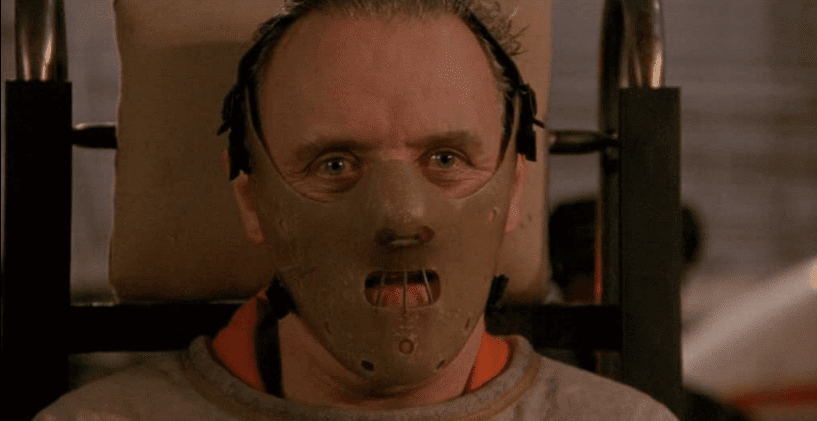
The Silence of the Lambs has become so popular and beloved over the years that it has become a piece of pop culture royalty, with dozens, perhaps hundreds, of films and television shows parodying it. Even those who have never seen The Silence of the Lambs will know who Hannibal Lecter is, will recognise his iconic mask, and know the noise he makes in the infamous “I ate his liver with some fava beans and a nice chianti” scene. It’s become one of the most iconic pieces of film, and that’s something you can’t deny.

Despite the numerous accolades, I do feel that I need to address the LGBTQ+ elephant in the room, namely the negative impact the film has had on the transgender community. There has been a lot of discussion and discourse over the thirty years since the film came out, with a lot of criticism coming from the LGBTQ+ community because of the depiction of Buffalo Bill.

Even though there’s a throwaway line in the film about Buffalo Bill not being a real transexual, but thinks he is, there’s no denying that he’s an incredibly queer coded villain, and one that plays on dangerous tropes of trans people being dangerous and mentally unstable. Even though Clarice and Hannibal spend time discussing how Bill isn’t trans, and director Demme has spoken about it and apologised more than once over the years, most people will remember the character as dancing around in women’s clothing and wanting to make a woman suit out of skin. As such, despite how well made this film is, how well received it is, and even how much people like it, it can’t be denied that it has done serious harm to a marginalised group.

I have always liked The Silence of the Lambs, and like parts of it to this day, but can’t ignore that thanks to the huge impact it has had it’s probably done some harm, and watching it now has become somewhat difficult. That being said, I will still enjoy watching Anthony Hopkins and Jodie Foster playing off each other in some of the best scenes in cinema history.


Buy Amy A Coffee

Go to Amy's Blog

Saturday, 12 June 2021

Julia Scotti: Funny That Way – Film Review


Originally published on Set The Tape


Comedian Julia Scotti has been in the comedy business for decades, though to many it appeared that she started her career as a contestant on America’s Got Talent in 2016. But before that she’d been travelling around the US and Canada, taking to the stage to perform alongside names such as Chris Rock and Jerry Seinfeld in venues and on television as Rick Scotti. You see, Julia is transgender, and this film takes a look at her unique story.

Golden Globe nominated screenwriter and filmmaker Susan Sandler makes her directorial debut in this wonderfully sweet documentary that allows viewers to take a look into the life of Julia, leading up to her appearance on America’s Got Talent and beyond, as well as her personal history. We’re led through Julia’s life by Julia herself, and as such we get a somewhat interesting and whimsical version of events, with Julia injecting a great deal of humour into things.

Over the course of the film we hear Julia tell of how all her life she never really felt happy or comfortable, how much of her life she never really felt like she knew how to be a boy, and as such turned to acting and comedy in order to try and fit in. Her comedy eventually turned into a stand-up career after she won a comedy competition; though this too would leave her feeling less than happy. Just like her career, her personal life struggled, especially her relationships. We learn that when she came to the realisation she was trans and needed to transition it resulted in a bad end to her marriage, and a separation with her children that would last fourteen years.


Thankfully, it’s not all heartbreak and gloom for Julia, as we get to see her not only having a wonderful relationship with her son now, but also getting to perform on stage once again across several venues. There’s one particular performance where her son joins her on stage and he refers to her as his mother, and Julia says its the first time she’s heard that; it’s a sweet moment, and you can see the genuine joy it brings her. The film has a lot of moments like that, times where you see these small moments of happiness that being her true self brings her, and it makes the film feel incredibly special.


The relationship with her son is one of the central parts of the film, due in part to him being an up-and-coming comedian himself. We get to see Julia acting as something of a mentor to him, as the two of them watch through her old stand-up routines and talk through the evolution of jokes and how to find the perfect routine to win over the audience. Whilst an interesting insight into how comedians make such routines feel effortless, it also allows Julia a look back at some parts of her life anew, especially an old routine where she, as Rick, makes jokes about trans people. Of course, these jokes being from the 1980s, they’re pretty unkind; but you also get to see Julia realise that it was her trying to work through her own thoughts and feelings, even before she herself knew she was trans.

The film also features some well crafted animated segments when Julia is talking. One that works particularly well is a confrontation she had with one of her doctors following her recovery from a quadruple heart bypass, when he intentionally misgenders her repeatedly. It takes what could have been quite an unpleasant story, and instead plays it through the lens through which Julia experiences her life, one of both levity and huge personal strength.

The film is a really well made and thoughtful look at a woman who’s putting herself front and centre, who’s opening herself up to hate and criticism for who she is, all in the pursuit of bringing people joy and laughter. It shows the level of strength that trans people have, how difficult and painful their lives can be up to their transition when they’re pretending to be someone they’re not, and how much happiness being able to be themselves brings. Julia is a pretty amazing woman, and her story is one that I loved learning about, and hopefully it’s one that can help people realise that trans people are just like everyone else, and just as deserving of their love and respect.


Buy Amy A Coffee

Go to Amy's Blog

Friday, 11 June 2021

Star Wars: The Empire Strikes Back 40th Anniversary Special – Comic Review


Originally published on Set The Tape


Since its release in 1977, Star Wars has been a staple of the science fiction genre, beloved by millions, and making creator George Lucas both a rich man and a household name. Whilst Star Wars: A New Hope was a massive success it was not the most popular of the original trilogy, with that accolade (for many at least) going to the sequel, Star Wars: The Empire Strikes Back, a film that reaches its 40th anniversary this year. To celebrate this, Titan Comics have released a beautiful new book to take a look back at what many consider to be the best film in the franchise.

Starting with a brief summary of the original film, the new book delves deep into the development of Star Wars: The Empire Strikes Back, providing readers with insight into how long and laborious the project was to even get off the ground to begin with. Soon after the release of the original film, when it became clear it was a huge success, George Lucas had to negotiate with 20th Century Fox to be able to make the new film, and to also secure creative control and much of the rights; something that would be a huge financial success for Lucas personally, as well as allowing him the freedom to later go on to create things such as the prequel trilogy and The Clone Wars series.

With the rights and creative control secured, Lucas set out to bring a lot of the crew from the previous movie back together, including such names as concept artist Ralph McQuarrie, who would create much of the look and feel of the entire Star Wars universe, and director of visual photography Dennis Muren. The book also goes into detail on how the film came together in regards to the story, giving insight into how brief, scribbled notes by Lucas would be expanded upon by the first writer for the film, Leigh Brackett, who would unfortunately die from cancer after submitting the first draft of the film. With help from Lawrence Kasdan Lucas himself worked on the script, and the story for Star Wars: The Empire Strikes Back was finalised.


After this, the book is split into sections that takes a look into different parts of the production, focusing on key sequences and locations from the story. We get insight into how the production not only went about designing the frozen, snowy planet of Hoth, but the difficulties they faced filming in Norway. We get some amazing behind the scenes photographs of the puppeteers and special effects wizards bringing the iconic battle against the AT-AT walkers to life. And we see the design process and development that went into even the tiniest background detail for the dramatic opening. A good portion of the book is spent covering the start of the film, but it provides excellent insight into how the cast and crew made the planet come to life, how it produced the epic battle scenes, and it even shows the cast having fun behind the scenes.

This treatment gets repeated with other important parts of the film, including the introduction of Jedi Master Yoda and the swamp planet of Degobah, the first appearance of the Emperor himself, and everyone’s favourite bounty hunter Boba Fett. These insights make it clear just how much Star Wars: The Empire Strikes Back actually added to the Star Wars universe. It was giving viewers deeper insights into the ways of the Jedi, showing the insides of Imperial ships for the first time, bringing to life the criminal underbelly of the galaxy, and actually showing what the guerrilla war between the Empire and the Rebel Alliance was actually like for those involved. The book snaps you out of the magic and wonder of the film and makes you realise that whilst Star Wars: A New Hope might have started it all, it was actually this film that made the universe feel more real, more alive, and more detailed.

This is why this book is so good, it shows you why its considered to be the best by many, many fans. You get to see how much of the heavy lifting this instalment did for the entire franchise, and the level of dedication and skill that went into it from the writers, the set designers, the costumers, and the model makers. You might think that you’d know everything you need to about a film that’s forty years old, that this book couldn’t possibly add anything new, but you’d be surprised how much insight they cram into the pages here. Whether you’re a casual watcher of the films, or a hard-core fan who knows every Clone Trooper’s serial number, there’s going to be something in this book to enjoy.


Buy Amy A Coffee

Go to Amy's Blog

Thursday, 10 June 2021

The Ghastling no. 13 - Book Review


'The Ghastling’s thirteenth issue features tales of strange visitors, unnatural children, canny and uncanny animals and lost souls trapped between our world and the next.

'Includes stories from William Burton McCormick, Kaitlynn McShea, Lena Ng, Damien B. Raphael, Megan Stannard, Emily Ruth Verona, Beanie Aurora White, Nick Ryle Wright and Ann Wuehler.'


I received a copy of book thirteen of The Ghastling as part of my subscription to the horror themed book box The Abominable Book Club, and was instantly drawn to its bold, eye catching cover. I'd never picked up a short story magazine before, but a quick flick through the pages of this book instantly had my interest, as it's variety of contents and punchy interior design made it something I knew I was going to be reading very, very soon.

The Ghastling was created back in the much cheerier and more hopeful days of 2014 by Rebecca Parfitt. A biannual short story magazine with a bent towards the creepy and the classical, it captures the feel and style of the Penny-Dreadful's.

This issue is packed with a host of interesting stories, and begins with 'Grubble' by Damien B. Raphael, which tells the story of a young woman discovering a doll made of straw in the woods. This living doll feeds on fabric and clothing, and begins to grow; but when the young woman tells her mother about her new friend she's faced with a truly horrifying reaction.

'The King of the Rats' by Lena Ng is a story that I definitely wished I'd read in another room of the house, as my own pet rats were watching me at the time and made me feel a little uneasy. It tells the story of William Hughes, a doctor who receives a letter from an uncle he's never met, asking him to travel out to his country home so that they can discuss some important paperwork and secure an inheritance for William. But once he arrives at his uncles home he discovers something sinister lurking within.

Readers are transported to the small town of San Miguel E Grande in Mexico in 'Mojigamgas' by Kaitlynn McShea. Artist Alonso works hard to create his giants for the local festival, creating some of the best around, and is overjoyed to discover that his wife is expecting their first child; but their lives take a dark and tragic turn when the next festival comes around.

'Slack Water' by Megan Stannard follows the spirits of two young women who've lost their lives to tragic circumstances, whose bodies now reside deep in the canal, waiting to be discovered. Despite never knowing each other in life, these two women have become friends in death, and their darkly comedic tale will have you wanting to spend more time with these two young women.

Ann Wuehler's 'Jimmy's Jar Collection' sees bored teen Park spending time with her cousin Jimmy in the local cemetery, where the young lad has a collection of jars filled with strange concoctions. Jimmy claims that these are his ghost lures, and that with just a bit of patience and luck he's able to draw ghosts into the jars and trap them. At first Park doesn't believe a word of what he's saying, but then she begins to notice that they might not be completely alone in the graveyard after-all. 

If you ever wonder what your pets are looking at when you catch them just staring at nothing, or barking at something that isn't there 'The Dog Lives In This One' by Emily Ruth Verona answers these questions. We even get the story from the point of view of a good doggy who protects their owner from the things that inhabit their home with them.

'Unlucky For Some' by Nick Ryle Wright tells the story of Charles, a bingo caller who used to be the fun, much loved host of the local bingo hall, but things have changed. The hall has been taken over by a big firm that doesn't like his way of doing things, the personal touch is gone and he doesn't enjoy the work anymore, and his partner has moved on without him when he doesn't want to do something with his life. Charles sets out to try and do something better with himself, but sometimes that's easier said than done.

'1000 Rabbits' by Beanie Aurora White takes readers to a small town where the Father Yakob sets out to bring good luck to the people by killing and skinning 1000 rabbits before the end of the year. However, once the 1000th rabbit has been skinned his daughter begins to see a strange boy appearing round town, and bad things start to happen. Perhaps Yakob has brought his town the exact opposite of good luck with his bloodthirsty goal.

The final story in the collection, 'The Bell Keeper's Tale' by William Burton McCormick takes readers to the port town of Riga, where a bell keep tells us about the strange hauntings that take place within the walls of his old church, and the strange things that happen to those that try to stay within its walls overnight. When strange figures appear in the church he suspects they may be supernatural beings.

One of the things that's absolutely wonderful about this book is the sheer variety to the types of stories on offer here. Some feel like Gothic stories, things from hundreds of years ago, whilst others feel incredibly modern, and take a new approach to their narrative. Some show us the less frightening side to the supernatural, whilst others are designed to chill.

I was deeply impressed with not just the quality of the words within the book, but the entire design. The editorial team have done a wonderful job of creating something that feels a bit special. The illustrations and artwork throughout not only compliment the stories, but help to evoke the pulpy, newspaper-like Penny Dreadful's, complete with mock advertisements. 

If you've never picked up a short story magazine before, but are considering doing so, I'd definitely say that The Ghastling is well worth a consideration.


Buy Amy A Coffee

Go to Amy's Blog

Wednesday, 9 June 2021

Be Nice To Aunt Emma by Anne Fine - Book Review


'There are many reasons why Tansy dreads Aunt Emma coming to visit. She's rude, she's boring, and Tansy has to give up her room so Aunt Emma can sleep there. And every year Dad makes Tansy promise to be nice - even when Aunt Emma is awful. But this year, when Tansy is left alone with Aunt Emma, she decides she's going to be the nicest she's every been - so sickly sweet that it'll drive Aunt Emma crazy! Let the games begin ...'

Having family members you don't get on with can be hard, and this can be especially true for children, young people who don't know how to navigate the difficulties of family drama. This is something that young Tansy has to deal with whenever her aunt Emma comes to visit. Even though she only passes through their home on her way to holiday once a year Tansy dreads Emma's visits, the nasty comments she makes, and having to sleep on the floor as Emma gets her bed.

This year she's hoping that things might be a bit better, but as soon as she arrives aunt Emma is making her feel bad. She's even picking on the dog. So when she has to be left alone with aunt Emma she's expecting the worst, but comes up with a new plan on how to deal with this troublesome family member. Tansy decides to be nice to her. Not just nice, but super nice. Nice enough to drive her aunt mad.

Anne Fine crafts a rather fun and endearing story across the relatively short space of Be Nice To Aunt Emma, and you quickly get a good sense of what the characters are like. Even before she arrives on the scene you have a pretty clear picture of what to expect from aunt Emma's visit. As soon as she enters the fun really starts, with Tansy having to navigate her way through snarky comments, trying her best to not upset anyone and to earn a reward for her good behaviour from her dad.

The interplay between Tansy and Emma is definitely the highlight of the book, and the moments where Tansy is trying to annoy her aunt with how sweet she is are particularly stand out. However, this being a children's book no one is every really bad, and eventually Tansy and her aunt come to an understanding, and Tansy even comes to really like Emma, being disappointed that she's having to leave so quickly come the end.

The relatively quick change in tone, and the alteration to the relationship the two of them have doesn't feel rushed, however, and it actually leaves you wanting to read more, wishing that the book went on longer. 

The story is also accompanied by some frankly brilliant artwork by Gareth Conway, who really helps to bring the book to life. Not only has he illustrated some of the key scenes from the narrative, but he's managed to make even the most ordinary moments look dynamic and full of fun.

Be Nice To Aunt Emma is a fun and engaging children's read, one that readers of any age are sure to enjoy. It shows kids ways in which to deal with those annoying and nasty relatives, and that just because you might think someone is nasty it doesn't always mean that they're a bad person.


Buy Amy A Coffee

Go to Amy's Blog

Tuesday, 8 June 2021

Vanquish – Film Review


Originally published on Set The Tape


Vanquish feels like it should be a good film. It’s got a snappy one-word title; there’s a popular female lead in Ruby Rose; Oscar-winning actor Morgan Freeman plays the main antagonist; and the premise of the plot guarantees action and a race against time. Sadly, Vanquish proves to be incredibly dull, barely going through the motions, and seems to be a very questionable choice in roles for Mr Freeman.

The story begins with a credits sequence that sets up the plot: a very long, seven minute credit sequence that feels almost twice as long. Freeman plays Damon, a former dirty cop who was injured and had to leave the force, yet still runs his corrupt operation from his home. When it seems like his plot to make money off the various criminals across the city is about to be exposed, he kidnaps the daughter of his carer Victoria (Ruby Rose) and forces her to make five money collections in order to get her back.

Whilst this sounds a bit ridiculous at first glance (why make your carer go into dangerous places to get huge quantities of cash?), it’s revealed through some clunky dialogue that Victoria used to run drugs ‘for the Russians’, and Damon wants her to employ her old skills. This unfortunately descends into violence, as it seems that every criminal in the city has a past with Victoria and her brother (who’s not in the film, nor explained) and Victoria needs to murder her way across the city. The plot to make her have to fight every gangster and crooked cop is already thin enough, but when you discover that Damon literally just put Victoria’s daughter in his spare room and all she had to do was look around the house to find her it gets even more ridiculous.


Equipped with a pair of guns and a body-cam Rose makes her way around the city on the back of a motorcycle with sound effects that make it seem more like a Star Wars speeder than a real vehicle. The action sequences are so brief and spread out that they feel forgettable, and even the high speed chases fall flat largely due to her spending much of them arguing with Freeman, who’s chatting in her ear like a glorified sat-nav.

Vanquish feels like it is the first draft of a story, the basic framework over which you’d build the rest of the movie. There are moments where we get huge info dumps, like the previously mentioned seven minute long credits sequence, yet I never felt like I knew enough to actually know what was happening. What was Damon doing with the various gangs around town? Who knows. What happened with Victoria and her brother, and why does every criminal know her? I don’t know. What’s wrong with Victoria’s ‘sick’ daughter who only says she’s ‘tired’? Haven’t a clue. Did anyone making this film even care? It doesn’t seem like it.


The performances seem to be phoned in at best, almost literally in Morgan Freeman’s case as he spends the majority of the film talking to Rose on the phone. Despite being an actor of amazing calibre Freeman delivers his lines like he’s either bored or falling asleep. Ruby Rose stumbles through action sequences giving head tilts to show her annoyance, or possibly to look tough. It felt so flat that the 90 minute run time felt incredibly bloated and left me bored throughout.

With action thriller films being a dime a dozen, and there being some truly good ones around, I’d be hard pressed to recommend Vanquish as one that’s worth your time. With a poor script, dull performances, and forgettable action there’s nothing here that would translate into a good time.


Buy Amy A Coffee

Go to Amy's Blog

Monday, 7 June 2021

Tea Party Parade by Nick Sharratt - Book Review


'Today's the day - it's the tea party parade! The kids are in their costumes and the teachers are marching too. Teacups are twirling, cake slices are spinning, and the big finale is going to be the best show of all! Join in with all the fun of the parade in Nick Sharratt's beautiful new Little Gem.

'Bursting with lots of rhyme, rhythm and energy for little ones to enjoy, it's the perfect book for a young reader's first steps on the path to reading independence.'

Tea Party Parade is the latest Little Gems release from publisher Barrignton Stoke, and follows Class One's preparations for their special Children's Parade, which this year features a tea party as their theme. The children don their costumes and practice their moves, all under the supervision of their teachers so that they're perfect for the actual parade day.

Writer and artist Nick Sharratt is the sole contributor to this book, providing all of the bold and brightly coloured illustrations that fill the pages. These illustrations accompany the text, and show every stage of the preparations for the parade. Sharratt's style works perfectly for this kind of book, and his clear and easy to follow text works well with his easy to understand artwork.

One of the things that I really liked about the artwork was the amount of diversity and inclusion within the pages. Not only was there an even split between boys and girls, but we have children from different racial backgrounds, as well as a student with a hearing aid, and one in a wheelchair. With so many other children's books doing the bare minimum of representation it's wonderful to have one that includes a wide range of children, that doesn't exclude, and shows a diverse school; like many children in the real world would experience.

Whilst it's not a long read Tea Party Parade is one that I'm sure kids are going to enjoy. The easy to follow story, the wonderful illustrations, and the feeling of fun that's baked into every page means that it's a book that will definitely entertain.


Buy Amy A Coffee

Go to Amy's Blog

Thursday, 3 June 2021

The Small Things by Lisa Thompson - Book Review


'Anna’s anxious when she’s picked to befriend the new girl in her class. For a start, Ellie is ill and can’t come to school herself. So Anna has to communicate with her through a new kind of robot. But Anna is also worried that her life’s too small and boring to be of interest to her new friend. Compared to the other girls, she doesn’t have anything exciting to talk about and so when Ellie asks her a question, a little white lie pops out. Then another and another. When Ellie finds out the truth, can their friendship survive ...?

'Inspired by a true story, a groundbreaking robot helps friendship blossom in this poignant and uplifting novella from bestseller Lisa Thompson.'

The Small Things is the story of Anna, a kid who feels like she's on the outside at school. Despite having friends in her class Anna is constantly worried about fitting in with them because her family can't afford for her to be involved in out of school activities like her friends are. Instead of being able to attend football, horse riding, or ice skating, she spends her evenings at home alone.

When a new girl, Ellie, joins her class things start to change. The thing that makes Ellie stand out from other kids, she's not actually in the class. It turns out that Ellie is quite sick, and isn't able to come to class in person. As such, there's a new addition in the form of an interactive robot that allows Ellie to see and hear everything from her home; and even interact with her fellow classmates. When Anna is picked to pair up with Ellie she's at first excited, but when Ellie begins to ask her what she does outside of school Anna panics. She doesn't want her new friend to think that she's boring. So she starts to make up some stuff.

What begins as one little lie about what she did the night before becomes an entire series of lies, ones where Anna is able to do all of the activities that she's always wanted to. The problem is, she's now lying to her new friend; and the lies can't be kept up forever.

The Small Things is, at its heart, a book about being true to yourself. Over the course of the book Anna feels like she needs to make up things about herself to seem interesting, stories about learning to ice skate or going on trips to the ice cream parlour with her family. At first it's tiny things, things that don't mean much, but eventually it begins to consume Anna and she's having to try and keep Ellie from asking her about things in front of other people, so that her lies don't get exposed. Not only is this tiring for her, having to remember all of her lies and stopping Ellie from finding out the truth, but it makes her feel like a bad friend too.

Not only does Anna have to learn that lying is bad, a good moral for any kids book, but that the things Ellie liked about her weren't the things that she was lying about. Ellie liked Anna's friendliness, her outgoing personality, and the small things she does to be kind to others. She shows Anna that it's not the big, exciting lies that made the two of them friends, but the little things that make her who she is that did. The book is telling kids that even if they don't feel like they're exciting people, they don't have to be, that just being themselves is good enough.

The book also covers the topic of disabled children pretty well, and I never once felt like Ellie was simply being used as a plot device, or was only included to make Anna feel guilty. Disabled people are so often used as plot devices where people are told that they should feel sorry for them, or used to make characters feel bad, it was so refreshing for Ellie to be just treated like a regular kid, albeit one who we interacted with via a robot. The integration of the robot into the story was well done too, and was my introduction to this technology. With remote learning being so widespread and accessible thanks to Covid I was hoping it was something that was being offered to disabled students before, but learning that it's not, and that robots like this are being used instead was something of an eyeopener. 

I think that there's a lot of good morals in The Small Things and that it's got some incredibly positive messages in its pages about being inclusive and accepting of others, but also of yourself. We would all be happier if like Anna we learned to love the small things that make us who we are, and realise that we don't need exciting hobbies to make us wonderful people.


Buy Amy A Coffee

Go to Amy's Blog

Wednesday, 2 June 2021

Assassin's Creed: The Ming Storm by Yan Leisheng - Book Review


'The Ming dynasty becomes a battleground for the Brotherhood of Assassins and the Order of the Templars in this blockbuster action novel from a previously unexplored part of the beloved Assassin’s Creed universe.

'China, 16th century. The Assassins are gone. Zhang Yong, the relentless leader of the Eight Tigers, took advantage of the emperor's death to eliminate all his opponents, and now the Templars hold all the power. Shao Jun, the last representative of her clan, barely escapes death and has no choice but to flee her homeland. Vowing to avenge her former brothers in arms, she travels to Europe to train with the legendary Ezio Auditore. When she returns to the Middle Kingdom, her saber and her determination alone will not be enough to eliminate Zhang Yong: she will have to surround herself with allies and walk in the shadows to defeat the Eight Tigers.'

I enjoy the Assassin's Creed series, despite having really fallen behind in the games. I've played several, and those that I have played I've really enjoyed, especially Assassin's Creed: Syndicate (seriously, set anything in Victorian era London I'm going to fall in love with it). But, I've not really experienced all that this ever expanding universe has to offer, so when I saw that Aconyte Books were going to be bringing out a novel set in this universe I was very, very excited.

Assassin's Creed: The Ming Storm follows the events of the side scrolling spin-off game Assassin's Creed Chronicles: China, and sees the assassin Shao Jun returning to her homeland after spending time learning from master assassin Ezio Auditore following the destruction of her brotherhood. Having been taught by the best assassin in the world Shao Jun feels that she's finally ready to take on the members of the Eight Tigers, a group of eunuchs that control the Chinese imperial court.

I'm actually quite glad that I haven't played this game, as it means that I get to come to the book completely fresh, without any preconceptions of what to expect. Though I do expect that there will be moments in this book that directly reference parts of the game, and those will be completely lost on me. However, the book very much feels like a regular novel, and there were never any times where anything felt odd or out of place, like Yan Leisheng was having to put something in just because it was in the game.

Instead of feeling like an adaptation, books that sometimes struggle to have their own voice, or where the parts of the story that the author has added feel tonally very different from those in the original material, Assassin's Creed: The Ming Storm felt like a cohesive and tonally unique book. If I didn't know it was telling the story of the game I'd have believed it was a completely original new story within that universe.

I was also very impressed that Aconyte employed a Chinese author to work on the book. I know this might seem like a really obvious thing to do, but not every publisher would think to do that. Not only does this decision show a great deal of respect on the publisher's part, but it also makes the book feel very different. You can always tell when an author knows the subjects that they're writing about, and when people are writing about places and people that they know over things they've simply researched.

Yan Leisheng wrote in a way I wasn't expecting too, and it took me a while to learn his writing style. This was partially down to myself, and the fact that I was expecting the book to have a certain pace and tone because of the source material it's based upon. I was expecting the novel to move quickly, to be full of action, and to have faced paced dialogue. Instead, it's a book that takes it's time. It spends a good deal of its text going into depth about the people and places, and making sure the reader has a good understanding of things. There are sometimes moments where Leicheng will spend a page or two giving you detail about the history of a person in the middle of dialogue, where the response to what they've just said takes a page or two to come because of the details we're being given.

I'm not sure if this is a cultural thing or not, whether it's a writing style that's more favoured by Chinese authors like Leisheng, or if it's his own personal style. Either way, it made the book a very different type of experience, though if I had to compare his style to another author I'd have to say it reads like Stephen King. Much like King Leisheng goes into depth, provides heaps of context, and doesn't race towards a conclusion, instead allowing the reader to meander through this world he's creating.

Assassin's Creed: The Ming Storm might be based upon a video game, but it felt like a book that was purely its own creation. It's a book that cares more about crafting a living breathing world, filled with characters that have a lot of depth, who the readers can come to understand. Even if you're not normally interested in video game books, or even action books, I'd say it's worth reading because it's a lot more than either of those, and is a book that explores the history and culture of China with care and attention.


Buy Amy A Coffee

Go to Amy's Blog