Wednesday, 9 September 2020

Crowning Soul by Sahira Javid - Book Review


'Be swept away in this unique fantasy debut from Sahira Javaid. A spellbinding adventure of belonging, finding hope and where the price of a soul is another soul’s fate. Perfect for fans of InuYasha, Children of Blood and Bone and The Candle and The Flame.

'Nezha Zaman considers her gift to control fire a dangerous secret. A secret that unravels when she encounters a vengeful shadow jinni in a maze garden that has been stalking her family, and knows about her power. Weeks after seeing the demonic being, Nezha is torn from her world through her backyard pond and transported to another dimension which sought out the light inside her heart.

'Nezha learns from two unicorns that the dimension is her family’s roots, and the light is a fragment of an angel’s shattered soul. The three must work together to find the soul’s shards in a land teeming with shape-shifting jinn. If Nezha fails to stop the corrupted Iron Prince, the malevolent jinn at his side will shatter her soul next.'

Crowning Soul already ticked a number of boxes for me before I picked it up, it's an own voices fantasy book with a female Muslim lead, with an alternate world filled with magic and amazing creatures inspired by cultures not always given a spotlight in the genre, and the cover is just gorgeous. I was set to really enjoy this book, and was so excited to read it; so I'm so disappointed that I just couldn't enjoy it at all.

The story starts by introducing readers to our main hero, Nezah, a young woman working in her parents flower shop in Morocco, but hiding her special abilities to control fire, turning it into a weapon. These early chapters were a little difficult to get used to, as it felt a little like I'd perhaps missed something, and I even had to check that this wasn't a sequel novel. But no, this is the first in a planned series. I think part of the problem is that Nezah is introduced already with powers, already knowing about Jinni's, and we have to piece together later on that this is something that she has been dealing with for years and has been getting used to. Unfortunately, as this isn't made clear early on I started of feeling a bit lost.

Once the main story actually begins to kick in Nezah finds herself transported to another world, one filled with magic and monsters, where her family are royalty. Here she's given a quest to recover the pieces of an angel's soul, and is joined on her mission by a pair of unicorns, Sapphire and Thunder. However, this is where the book really began to fall apart for me too.

As soon as Nezah is sent on this mission things begin to happen at a break-neck speed, and it became hard to keep track of everything that was happening, or even why. Instead of one adventure to retrieve this broken soul there's dozens of pieces, with each one having its own little adventure. It felt more like reading summaries of ten minute long episodes of an animated series than actually reading a book. Nezah and her friends arrive at a new place, they meet a local inhabitant who's either good and immediately hands over the piece of soul because they can tell Nezah is good; or they're a villain, so they get in a fight, beat them, and get the soul fragment.

These confrontations happen at such a pace that I found myself forgetting where the characters had been and who they'd met almost immediately after. They jump from location to location, seemingly getting to remote places within a day, meeting magical creatures without batting an eyelid, spend ten minutes getting a soul fragment, and then going home. It became so repetitive that it became boring, and started to be a slog to read.

There also seemed to be little internal logic to some of the events too, such as Nezah being crowned queen of an entire kingdom in one chapter, then learning that she has a relative in this new dimension in another, and that she will stay at her house whenever she's in this world. But, why isn't she staying at a palace or some kind of estate if shes queen? And why does she never have queenly duties to perform, or have anyone from the royal court interact with her? She just gets given a crown and then goes off to do whatever she wants without anyone caring. And this is something that seems to happen often, with people having little to no interest in things, or blindly accepting things at face value and moving on. Nezah's parents learn that she's travelling to a magical kingdom to fight monsters and they react with 'okay, well be safe, see you later'. There just didn't seem to be much internal consistency to the world or characters, and things just happened to serve the story rather than being organic. None of the characters seemed to have a personality or their own drives, immediately doing or saying whatever was needed, even if it made no sense or kept internal logic to things that had come before.

Crowning Soul is marketed as Young Adult, but I can't help but feel that it's being aimed at the wrong audience, and should be a young middle grade book instead. A younger audience, reading a chapter or two before bed each night with their parents might get along better with this book, and will treat it like a cartoon series, where they can did in and out and not really worry about things outside those immediate chapters or an over arching narrative. Older readers might struggle with it where younger children wouldn't.

There's some great stuff in this book, some brilliant ideas, but it all feels bogged down behind things that don't really work, or haven't been given enough time to breath. I feel that perhaps the book could have probably benefited from another draft or two, where some of these issues could have been worked out and some of the excess could have been cut away. As it is, it's a 600 page novel that feels about three times as long, that I couldn't connect with; and I'm so sad that it wasn't the book I was hoping it would be.


Buy Amy A Coffee

Go to Amy's Blog

Tuesday, 8 September 2020

The Paper Tigers – Fantasia International Film Festival


Originally published on Set The Tape


Receiving its world premiere at Fantasia International Film Festival, The Paper Tigers follows three martial arts prodigies who have long since given up on fighting and have become washed-up middle-aged men, who are brought back together when their mentor dies.

It starts with the dramatic death of Sifu Chang (Roger Yuan), who is killed in an alleyway by some unseen figure. The film then jumps backwards thirty years, and we get a montage of Sifu Chang training his students during the film’s opening credits, using old hand-held camera footage. It’s here that we get introduced to the main characters, Danny (Yoshi Sudarso), Hing (Peter Sudarso), and Jim (Gui DaSilva-Greene).

These flashbacks are great, and really sell how important Kung Fu was to these characters, and how like a family they were. It also shows how great the three of them are as fighters, especially Danny, who goes on to become the next in line to inherit the clan after Sifu Chang. The Sudarso brothers are also both popular Power Rangers actors, so I got a big kick out of seeing them here.

Whilst I was sad to see the younger versions of these characters go after this opening, their older counterparts are great. Danny (Alain Uy) is a divorced insurance salesman, working hard to try and be a good weekend dad to his son. Hing (Ron Yuan) is overweight and has a knee in a brace after an work accident several years before, and is fighting against his disability.  Jim (Mykel Shannon Jenkins) has managed to keep physically fit, and works in a local boxing gym, but has forgotten a lot of his Kung Fu training.

The three of them are great protagonists, and it’s really nice to see them trying to come back together not only as fighters, but as people who once considered themselves family but had long been out of touch. The film has some great moments of the three of them reminiscing about old times, remembering their teacher and the family he made them, and it’s genuinely moving at points.

There’s also a lot of comedy here too, and the main cast clearly had a lot of fun making the movie and showing how their characters are out of shape or not ready to go back into the world of Kung Fu. There’s also a rivalry with an old opponent of theirs, Carter (Matthew Page), that results in one of the best fights in the film that’s so full of charm and humour that it had me laughing out loud more than once.

The Paper Tigers is a great movie, that takes the kind of stories and tropes that we’ve all seen before, but puts a fun spin on things. This might be another ‘fighter comes out of retirement’ story, but it’s one of the more enjoyable ones, and one of the most believable. These aren’t super heroes who have one day of training and are suddenly back in shape and ready to take on the world, they’re regular people with faults and flaws, and that makes it all the more relatable and charming. This is easily one of the films I’ve had the most fun watching this year, and I’m definitely going to want to watch it again.

The Paper TIgers had its world premiere at Fantasia International Film Festival on 30th August 2020.


Buy Amy A Coffee

Go to Amy's Blog

Monday, 7 September 2020

The Horror Crowd – FrightFest Digital Edition


Originally published on Set The Tape

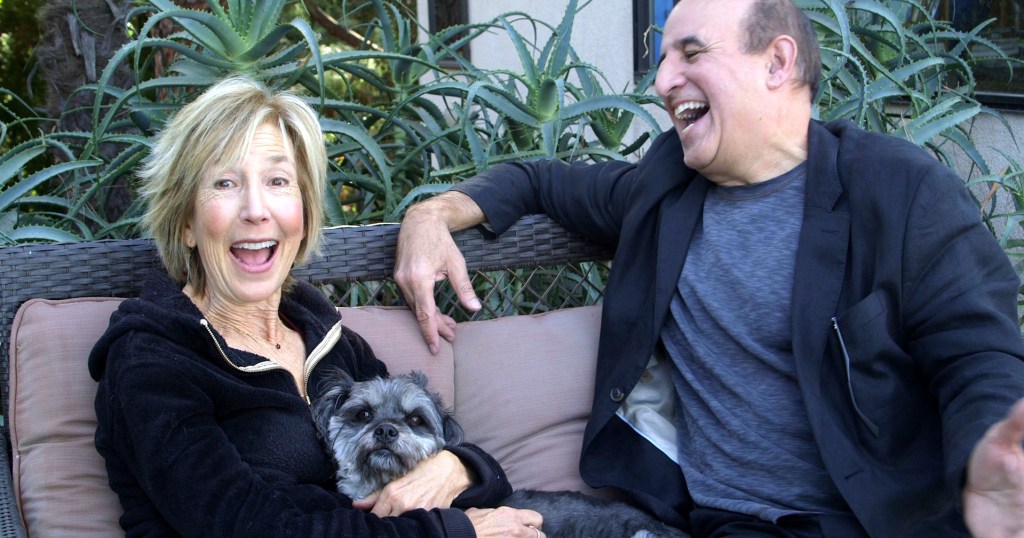
The Horror Crowd is a brand new documentary for any fans of horror movies and any aspiring horror creators. Directed and hosted by Ruben Pla, the film talks to a number of big names in the industry, including Lin Shaye, Oren Peri, Greg Grunberg, Russell Mulcahy, Clare Krammer, and Adam Robitel to name just a few.

The film has a very relaxed tone; really it’s a load of friends hanging out together, talking about their love for horror and the film industry. It’s clear very early on that these people all know each other, and that the title isn’t just something thrown together for the film, but a name that really applies to these people. Many of their stories end up turning into anecdotes that involve other big names, stories about parties they’ve been to, or how they’d attend trivia nights at a small LA cafe that all the horror folks hung out at.

This relaxed feel makes the film really accessible, and it’s like you’re being brought into this circle of friends and being included in their world. The conversations never feel staged or stale, and there are more smiles and laughter than you’d first expect. It’s informative, and you learn a lot, but you never feel like you’re in a lecture or being given a lesson.

The Horror Crowd takes a look at the genre as a whole, delving back through time to its early days and how it played an influence on these creators. It’s great to see them talking about watching  classic horror films like Night of the Living Dead, Halloween, and The Exorcist when they were children, and how it gave them a love of the genre – not only because it reassures me that perhaps myself watching such films before I’d reached double digits wasn’t so unusual, but also because it reminds people that horror can be a positive thing, that it can be a great thing for children.

The film also talks about how these creators got into the world of horror, and it’s a really informative thing for anyone wanting to do the same, or to be creative in any kind of way. It’s highlighted just how hard it can be to be successful as a creator, how you have to put up with rejection time and time again. These people are the ones who didn’t take this rejection to heart, though, who kept trying and didn’t give up on their dreams. You can see this level of passion and determination in how they talk about the genre, in their friendships with other creators, and how excited they get for future projects.

The Horror Crowd is a great look at a small group of creatives, of people both in front of and behind the cameras, who help each other out and support each other so that they can live their dreams and create to inspire future generations. The film will make you look at the horror industry in a new light, will make you remember how much you enjoy some of these films, how horror can work with so many other genres and can appeal to everyone. A brilliantly fun and engaging film that will leave you wanting to sit down and watch a load of great horror films.

The Horror Crowd received its world premiere on 29th August at FrightFest Digital Edition 2020.


Buy Amy A Coffee

Go to Amy's Blog

Thursday, 3 September 2020

The Brink by James S. Murray and Darren Wearmouth - Book Review


'The sequel to the international bestseller (including #1 Sunday Times bestseller) Awakened, by one of the stars of TruTV’s Impractical Jokers and a bestselling science fiction author.

'Former NYC Mayor Tom Cafferty has been haunted by the horror of a single day. The opening of the brand new Z-train subway line beneath the Hudson River—the supposed shining moment of his tenure. But the ribbon-cutting ceremony turned deadly when the train carrying Cafferty’s wife and other citizens was attacked by a horde of hyper intelligent, bloodthirsty creatures previously unknown to humanity.

'Everything changed for Cafferty, ex-NYPD officer Sarah Bowcut, and tech-expert Diego Munoz that day. They had uncovered the deadly truth: the attack was no accident.

'And now the creatures that wreaked havoc underneath New York have spread worldwide, and with a massive cover-up—and a secret organisation holding nations hostage with the knowledge of how to kill them—Cafferty’s team must fight against impossible odds to save the entire planet from an apocalyptic scale disaster.'

The first book in the Awakened series is a tight and claustrophobic horror story that saw a group of people trapped underground, being slowly picked off by vicious creatures. The book was filled with dark tunnels, hidden caves, and a race for survival that played out over just a few hours. It didn't have time to really slow down and explain much, and relied on the increasing build up of tension to keep the reader going. The Brink, by comparison is a much more leisurely read, thanks in part to opening the world up in scope and allowing events to play out over a longer period. It also feels less like a horror film, and more like an international thriller.

The story picks up a while after the first book, and sees the survivors of that event, former New York mayor Tom Cafferty, his wife Ellen, tech guy Diego Muzo, and former SWAT officer Sarah Bowcut, having dedicated their lives to stopping the shadowy organisation that was responsible for unleashing the creatures into the tunnels below New York. They've spent months training themselves, engineering their own weapons to fight the creatures, and have been gathering intelligence on the Foundation For Human Advancement. By the time we meet up with them here they're ready to approach the leaders of Great Britain to try and get them to join in their private war.

Already the book feels bigger, and this doesn't stop here, the book jumps across the globe from chapter to chapter, following the leader of the Foundation, Albert Van Ness, in his secret headquarters in Paris, showing events in a number of US cities, and having a literal ticking clock that can spell doom for countries around the world. The first book very much felt like a personal story of survival, a small event that pushed a handful of people to their limits, this in some ways feels more like a James Bond story.

But, this isn't a bad thing, as I really enjoyed the expanded scope of this story, especially in how it explained more of the backstory that was only hinted at in Awakened. The first book didn't even tell us about the Foundation until half way through, and even then it was a vague description of who they were and how they were founded. Here, we not only got to see their operations across the globe, their advanced technology and secret bases, but also the very first encounter with the creatures. One of the early scenes in the book jumps back to World War Two, to show the story we were hinted at in the first novel, of Albert's father trying to escape the devastation of war and sneak Hitler out of the Fuhrer Bunker, only to discover the monsters that dwell beneath the earth. Any scene that builds upon he backstory is greatly appreciated, especially when we get to see Hitler ripped apart by monsters. It also showed that the series is capable of expanding it's scope to show other stories at other points of history, to tell tales of other encounters with the creatures in different eras. I'd love to see more done with this, perhaps a spin-off book or two that played with this idea. Why not have Roman soldiers fighting these monsters, or Vikings, or Samurai. Yes, it might be a little cheesy, but it's the kind of cheesy I'd be up for.

I think that some people might be shocked by some of the changes that this book makes to the formula from the first, and if you were expecting or hoping for another tense horror story you might be a bit let down, but if you're wanting to see more from these characters and learn more about this world it's definitely going to keep you happy.

What I found surprising, however, was how this book in some ways felt like a finale. I knew going into the first book that this was going to be a trilogy, so when (spoilers) come the end Cafferty and his team have essentially stopped Van Ness and saved the world I was a little shocked, as I'd have expected that in the third book. But perhaps this was intentional. I think Murray and Wearmouth knew that readers would be expecting something like that, and instead have decided to do something different.

This isn't a story where the hero beats the bad guy and saves the day, by the end of the story the Foundation is gone and the world knows about the creatures, but the monsters are still out there. The threat of this advanced, predatory race hasn't been stopped. And, they've also made the bold decision to have Cafferty so obsessed with this cause, so dedicated to saving the world that the second book ends with him beginning down a similar path to Van Ness. He's beginning to believe that the ends justify the means, that his mission is all that matters, and I honestly don't know if he's going to become a villainous figure in the third book; and that excites me. 

Cafferty could become a monster himself to stop the creatures, or he could be forced to look at what he's doing and who he's becoming. I don't know what way it's going to play out, and I don't even know what I'd like to see more. Him being pushed to the brink and stopping himself from becoming a villain at the last minute would be great, but so would a story where the hero we've followed for two books becomes un-redeemable. The writers have taken what could have been a fairly one dimensional 'hero' character and made him so much more interesting.

That's really what this book does, it takes ideas and notions that the first book had, things that we've seen before, and twists them into something new and interesting. It's not just a tense fight for survival anymore, it's a global conspiracy. It's not just black and white heroes and villains, there's moral grey. This could have been a fairly standard sequel, it could have stuck with what it did in the first book and played it safe, but instead it makes some bold turns and leaves me genuinely excited to find out what could happen next, which is kind of a perfect middle chapter.


Buy Amy A Coffee

Go to Amy's Blog

Wednesday, 2 September 2020

Star Trek: Deep Space Nine - Too Long A Sacrifice #2 – Comic Review


Originally published on Set The Tape


The plot thickens, and more bodies fall, putting Odo to the test, in the second entry in the new Star Trek: Deep Space Nine comic series.

Following the explosive events of the first issue, Odo, with the aid of Commander Worf, starts to dig for answers as to who was behind the station bombing. As was somewhat expected, Quark is something of a red herring, and is quickly eliminated from the investigation; but if Odo was investigating anything and didn’t consider Quark a culprit it just wouldn’t be right.

Instead, the investigators try to find out how the deadly weapons made their way onto a secure station in the middle of a war. This leads to Odo and Worf getting to break up illegal card games, crash shady deals, and grab some smugglers. It’s a fun little montage of the two security officers taking down criminals, and Odo even gets a moment to make the reader laugh out loud.

Despite best investigations the two of them don’t find any answers. However, things get even more complicated when they discover that a Bajoran victim had ties to the Cardassians during the occupation, and a Ferengi delegation vital to the war effort are killed with poison. Due to the escalating nature of the attacks a new investigator is sent to the station, a Betazoid from Federation Security called Retlaw.

This issue adds extra wrinkles to the investigation, and manages to increase the stakes thanks to the attack on the Ferengi, but we don’t get any closer to finding out who might be behind it all; as such, it does feel a like the story’s treading water a little. Luckily, there are enough interesting titbits of information and nice character moments for it to still be entertaining throughout.

We only meet Retlaw at the very end of the issue, so it’s not clear the kind of person he’s going to be, or how he’s going to get along with Odo, though perhaps there are some clues. He seems to lean into being a Betazoid, and uses his psychic abilities extensively in this first scene, reading people’s thoughts and answering questions before they’re even asked. Odo, however, has no real mind to read (something that fans knew from episodes of the series featuring Majel Barrett’s Lwaxana Troi). It’s a tiny fact, but one that shows just how well versed with the source material Scott and David Tipton must be.

I’m definitely looking forward to seeing how Odo and Retlaw will interact in coming issues, and anticipate an interesting relationship forming between the two of them. I’m also anxious to see how the mystery plays out. At the moment it seems like it could lead in a number of directions, and I’m very interested to discover if this is some big plan from the Dominion, or perhaps a smaller, more personal vendetta.


Buy Amy A Coffee

Go to Amy's Blog

Tuesday, 1 September 2020

Punching The Air by Ibi Zoboi and Yusef Salaam - Book Review


'From award-winning, bestselling author Ibi Zoboi and prison reform activist Yusef Salaam of the Exonerated Five comes a powerful YA novel in verse about a boy who is wrongfully incarcerated. Perfect for fans of Jason Reynolds, Walter Dean Myers, and Elizabeth Acevedo.

'Amal Shahid has always been an artist and a poet. But even in a diverse art school, he’s seen as disruptive and unmotivated by a biased system. Then one fateful night, an altercation in a gentrifying neighborhood escalates into tragedy. “Boys just being boys” turns out to be true only when those boys are white.

'Suddenly, at just sixteen years old, Amal’s bright future is upended: he is convicted of a crime he didn’t commit and sent to prison. Despair and rage almost sink him until he turns to the refuge of his words, his art. This never should have been his story. But can he change it?

'With spellbinding lyricism, award-winning author Ibi Zoboi and prison reform activist Yusef Salaam tell a moving and deeply profound story about how one boy is able to maintain his humanity and fight for the truth, in a system designed to strip him of both.'

I have to be honest, I've never been a huge fan of poetry, and verse has been something that I enjoy in very small doses, but never really go out of my way to engage with; as such, I was a little unsure how I was going to get on with Punching The Air, a book written in verse. Well, I needn't have been concerned about it, as this book is amazing.

The story follows Amal, a young man who finds himself in a situation going quickly out of his control. Following a fight where a white teen ended up badly beaten Amal is blamed for the event, and must face a legal system set up to see him lose, despite his innocence. Even though the blurb makes it clear that Amal is going to be found guilty, that he's going to be sent to prison I still found these part of the book so tense. The moments leading up to the delivery of the verdict were so heart wrenching, and I wanted Amal to be found innocent so much. I knew what was going to happen, but it still hurt to see that guilty verdict, to see the effect it had on Amal.

It's clear throughout the book the influence that Dr. Salaam had on this book, the amount of insight and real experience he brought to this story, but the moments in the court room was so raw, so powerful, and really hammered home what he himself must have been going through when he lived through this. This became the moment I went from really liking the book and being invested to being absolutely in love with this book.

Other books that try to cover these kinds of subjects can be emotional, they can be powerful, but part of me often thinks that this is an author tapping into emotions and experiences they've not been through themselves, that it's an aprximation of those events. Punching The Air has an author with those first hand experiences. Salaam sat in court, he listened to his name dragged through the mud, his life torn to pieces in front of him; he felt those emotions, and he brings them to this book. I found myself wanting to cry, wanting to rage, there are so many times that reading this book hurt, because this isn't just a fiction. It's reality for so many people.

The book makes a point of highlighting how Amal has his identity distorted during his trial. Amal is a man, whilst the teen who was hurt is a boy; despite them being the same age. Amal talks about how he's seen as a man, fully formed, never having been a child, never been afraid of monsters, never hidden from thunder, because he's a Black man, he has to be aggressive. The book doesn't shy away from the horrible, harsh reality that the US legal system will always, always cast Black people in the role of the aggressor, always paint them as angry and violent, whilst White people will always be misunderstood, in the wrong place, innocent until proven guilty.

It also makes a point that the US prison system is legalised slavery, even quoting from the thirteenth amendment to the constitution, 'Neither slavery nor involuntary servitude, except as a punishment for crime whereof the party shall have been duly convicted, shall exist within the United States, or any place subject to their jurisdiction.' 

I'm sure that there would be some who would say that the book is trying to push a certain point or agenda, and whilst I'm sure it is as who could live through such an unjust system and not want prison reform, there is nothing in this book that isn't true. The constitution does legalise prison slavery. The system does hurt the Black community more, often unjustly. And there are stark differences between how Black and White defendants are treated.

2020 has been a hugely important year for the fight against racism and police corruption in the US. Black Lives Matter protests have taken place across the globe, and are still happening to this day. This is a perfect environment for Punching The Air to be published in, as this topic has never been as loud or in the public eye. 

This is a book that is hugely important, that will help to open some people's eyes, and needs to be read. I hope that if you're reading this and are unsure whether to pick up the book you've now made up your mind to do so. I hope that it moves you, that it makes you want to raise awareness, to take action. And I hope that you share it with others. Get your friends to read it, share it with your family, get your libraries to stock it. Black Lives Matter, their voices matter, their stories matter, and this book matters.


Buy Amy A Coffee

Go to Amy's Blog

Monday, 31 August 2020

Joan of Arc (1999) – Blu-ray Review


Originally published on Set The Tape


Joan of Arc is receiving a new Blu-ray release from Studiocanal, bringing the often overlooked Luc Besson film to a whole new audience. Telling the story of real life war hero and saint, Joan of Arc. Like all films based on historical events, this one takes some liberties, but never feels like it’s making huge leaps or trying to bend events too far.

The film follows Joan (Milla Jovovich) from her childhood to her eventual death, though focuses on only certain aspects of her life. It begins with Joan as a child living in a small village with her family. She’s already clearly very religious, and cares deeply about God. She’s also already having visions of a young boy in white sitting on a throne, a being who speaks to her, telling her to be a good person and do kind things. Unfortunately, when the English attack her village she witnesses her older sister’s murder and rape (in that order), and develops a deep hatred for the English.

Jumping several years ahead, Joan is now a young woman who has already inspired many of the peasants across France, which grants her an audience with the Dauphin and future king, Charles VII (John Malkovich). After meeting with her and believing that Joan has been sent by God, Charles gives Joan an army to travel to Orleans, which is under siege by the English. From here, Joan leads a military campaign that pushes the English back and wins Charles his crown. However, when Joan is captured by the English she’s put on trial for heresy, and after being found guilty she’s burnt at the stake.

It’s a story that many will be familiar with, if not all the details, at least the broad strokes. And the film only really pays attention to the broad strokes of Joan’s life. It jumps from her childhood to several years later, and after a large portion being focused on the siege of Orleans it moves on to showing her as a general without a real war to fight. The film doesn’t get bogged down in the details, or spend time on every single event, because it’s not really a story about Joan’s life, but of the trauma that she goes through.


Luc Besson has said in the book The Films of Luc Bessson that he wanted to follow Joan emotionally, to show her doubts, and to show that people never really come home from war. And the film really manages to capture that. We see the highs of Joan taking Orleans, of her being a hero to the people, of securing the King’s crown, to being pushed aside, left without troops, without a real enemy to fight. It’s a stark shift, and we see how this has affected Joan and her mind. It’s a harsh shift, but only really the beginning of the end.

Before this, the film also has a pretty good depiction of the siege of Orleans, yet thanks to having been spoilt by huge battles in things like Game of Thrones and Lord of the Rings it does feel very small, and a little like a reenactment at times. I’m not sure how well these scenes would have played at the time, but watching the film now, they’re definitely the weakest part in comparison to the emotional journey of Joan.


The end of the film focuses on the trial that she faced at the hands of the English, and thanks to extensive records having survived, mirrors some of these events. We see the church try to back her into corners, to trip her up into saying the wrong thing. And she so nearly makes it through the trial; and even though we know her ultimate end it’s still heart breaking to see her do everything right, yet still be condemned.

It’s during these moments that the film does something really interesting too, and gives a physical embodiment to the voice in her head. Credited as The Conscience, this hooded figure begins to challenge her views of what she’s been through, making her question if she had ever heard God or if she was just making it all up. The Conscience is a great manifestation of her internal struggle, and is played masterfully by Dustin Hoffman, taking something that could have been a bit silly and over the top and grounding it.

The film ends on a very down note, with the last scene being Joan burning to death. Part of me thought that it could have done with something else at the end, possibly to try and take away from this sad end, but this isn’t really a story that could end any other way. It’s a young woman whose faith was hugely important to her, that helped her to achieve amazing things, helped her to secure a kingdom, but resulted in her horrific death at only nineteen. You can’t make that into something happy, but Luc Besson manages to make it into something impactful, and that will stick with you for a while after watching it.


Buy Amy A Coffee

Go to Amy's Blog

Friday, 28 August 2020

Special Actors – Fantasia International Film Festival


Originally published on Set The Tape

Playing at Fantasia International Film Festival, Special Actors follows Kazuto (Kazuto Osawa), a young man who dreams of being an actor, but due to a nervous medical condition, faints whenever he’s put into high stress situations. Having recently failed an audition, losing his job, and being behind on his rent, all seems lost until he comes across his brother, Hiroki (Hiroki Kawano), who he’s not seen since their mother’s funeral several years before.

It turns out his brother has gotten into acting too, and might have the perfect place for Kazuto, an agency called Special Actors. This group gets hired to perform in the real world, posing as angry customers to test employees, pretending to be grieving friends at high profile funerals, and even helping people look tough to their dates by faking a drunken incident. Kazuto begins to find his feet with the group, but things start to become a challenge when they’re hired to help prevent a young woman giving away her family business to a cult.

This marks the third film from director Shinichiro Ueda, who shot to fame in 2017 when he made the zombie comedy film One Cut of the Dead. Made for just $25,000, the film would go on to gross more than $30.5 million worldwide, making film history by earning over a thousand times its budget. As such, there are a lot of expectations on Special Actors to do well, and to be another hit. Whilst it’s probably not going to reach the heights of Ueda’s first movie, it’s certainly still a good film.


Special Actors has a lot of charm, and the first few scenes of the film set up the tone tone nicely. It’s not a laugh a minute comedy by any means, but it never takes itself completely seriously. It likes to throw small gags into fairly straight scenes, like a cult leader with a ridiculous perm. It’s inoffensive, and wins you over quite quickly. It also feels a lot like a heist caper, with the team of actors plotting ways to take down the dastardly cult, coming up with intricate plans, and then having to deal with things on the fly as they inevitably go wrong.

There are a few twists and turns to the plot towards the end that will make you chuckle as you realise that even the audience hasn’t been let in on everything, and there’s even something that will alter your entire view of the whole movie, perhaps even prompting you to go back and watch it again with this new perspective.

Special Actors is, at its core, a film about bettering yourself, about a man fighting past his issues and his problems to try and achieve his dreams. It’s definitely a fun way to spend a couple of hours.

Special Actors played at Fantasia International Film Festival, which runs 20th August – 2nd September 2020.


Thursday, 27 August 2020

Hunter’s Moon – Film Review


Originally published on Set The Tape

The trailer for Hunter’s Moon looked really promising. A big house in the middle of nowhere, a home invasion, werewolves. It looked like it might have been a lot of fun. Sadly, the end product was dull throughout and had a ‘twist’ ending that was obvious a mile away and not nearly as clever as the film thinks.

The film begins with Martin Ellsbury (Sean Patrick Flanery), a charming serial killer, who’s lured a young woman to his remote home in order to drug her and murder her, before burying her in his orchard. The intro ends with something coming out of the orchard killing him. Skipping to some time later we’re introduced to the Delaney family, who are moving into the home.

On their way to the new house Bernice (Amanda Wyss) and her daughters Juliet (Katrina Bowden), Lisa (India Ennenga), and Wendy (Emmalee Parker) hear from one of the locals that their new home belonged to a serial killer, which seems to cause some friction with father of the family Thomas (Jay Mohr). Despite this, the family settle into their new home and Thomas and Bernice set out on some business, leaving the girls home alone. Unfortunately for them, a trio of local criminals have decided to target them for home invasion.

One of the biggest issues that the film has is that there’s no real sense of tension, despite it trying to force some into the narrative. There’s a moment towards the start where it seems to be hinting that Thomas might be an abusive husband/father, but this never comes up again, and he’s generally a nice guy. And when the criminals enter the home you never really feel like the girls are in any real danger.


It also very quickly becomes obvious what’s really going on, which I can’t really talk about without spoiling the movie. But if you’re paying attention to the narrative I’m sure that you’ll pick up on it before it’s made expressly obvious. There’s also something with Thomas Jane’s cop character that is supposed to throw you, but is also quite obvious. That’s my biggest issue with the film really, that the plot is obvious, nothing happens that I wasn’t expecting, and the characters don’t feel developed much in any way.

The werewolves aren’t hugely impressive either, and when you actually get to see one properly it feels faintly ridiculous. The suits look like old gorilla costumes with big rubber wolf faces stuck on them. The face is static and looks ridiculously goofy to the point that it isn’t threatening at all.

I wish I could find something good to say about the film, but I’m really struggling. The acting feels dull, as if the actors didn’t didn’t really want to be there. The plot, as I’ve already said, is predictable. The monsters look goofy. I was waiting for the story to get good, and it just didn’t. The trailer made it look like this was going to be a group of people holed up in a house under siege by werewolves, but it really wasn’t. If that’s what you want then Dog Soldiers is what you should be watching instead. It’s amazing that a film that’s nearly 20 years old and had a lower budget made werewolves that looked a million times better than those in this film. It’s hard to see where the $2.5 million budget went on Hunter’s Moon.


Wednesday, 26 August 2020

Crazy Samurai Musashi – Fantasia International Film Festival


Originally published on Set The Tape


Playing on demand at Fantasia International Film Festival, Crazy Samurai Musashi might be one of the most ambitious films I’ve ever seen. It’s not a major blockbuster by any means, it’s not going to wow with visual effects, or amaze with its writing, but it might be one of the best fight scenes in movie history.

There’s not much of a story for this film; it starts with members of the Yoshioka clan preparing to repel a master swordsman, Musashi (Tak Sakaguchi), who is coming to wipe them out. In order to prepare for his arrival, they’ve gathered a small army of warriors. Despite this, Musashi has managed to sneak through their forces and eliminate his target; however, to get away, he has to fight past this army. This begins a single take fight that lasts more than 70 minutes, in which the lone swordsman has to fight more than 400 people. Like I said, ambitious.

The fight is pretty amazing, and is incredibly gruelling to watch as it’s clear Sakaguchi is absolutely knackered by the end. There are quieter moments throughout this scene where he stops to grab a drink and rest for a moment, and you can see him panting for breath, and sweat dripping off him as he’s genuinely worn out from fighting for so long.

Whilst it’s impressive from a technical point of view, there are some moments where the action drags. When Musashi is surrounded by a dozen or more fighters and is fending off their attacks for several minutes before dispatching them it can get a bit repetitive. The film tries to combat this by shifting the setting, moving the action through an abandoned town, or by occasionally throwing in some characters for him to go up against, usually with a stand out weapon, or a brief bit of dialogue to go along with the fight. These moments prove to be the saving grace of the sequence, and stop it becoming boring.

After this giant single take there is a jump in the story, and we get to see the character a number of years later, in a more traditional fight, complete with edits and cuts. After seeing the previous fight this feels so much more dynamic, and has a speed and energy the other scene was lacking. If the rest of the film had been like this, the overall effect would have been a lot more entertaining

I honestly don’t know how I feel about this movie. Yes, it’s incredibly impressive, and probably shows a more realistic approach to a sword fight than any other film has done. However, this doesn’t necessarily make it completely entertaining, and does make an argument that editing is needed to make action sequences better.

For action fans, and anyone who likes Samurai movies, this is definitely worth a watch, and will be unlike any other film you’re likely to see.

Crazy Samurai Musashi is playing on demand at Fantasia International Film Festival, which runs 20th August – 2nd September 2020.


Buy Amy A Coffee

Go to Amy's Blog