Perhaps it says a lot about the current political and social climate of the world when all you need to do is look at teen movies to see how things have shifted in the last dozen years. Whilst at one time you’d have stories about navigating the dramas of high school, like Mean Girls, or stories about teens desperate to lose their virginity, such as American Pie or Kevin and Perry Go Large, today it’s about horrific futures and desperate fights for survival.
Whilst this arguably provides much more interesting stories, it can lead to a market place filled with a lot of very similar films; The Hunger Games, The Divergent Series, and The Maze Runner were all released in quick succession of one another. Because of the huge popularity of The Hunger Games and the push of this kind of fiction, I ended up missing The Maze Runner when it was first released, and didn’t actually get around to watching it until the second film was out, doing the two of them back-to-back.
Where The Hunger Games and Divergent presented worlds that were ruled by totalitarian governments, with people forced into lives that they didn’t want or were just downright exploitative, The Maze Runner actually managed to subvert expectations by focusing small.
Over the course of the rest of The Maze Runner series we find out more about the world, the evil government/company behind everything, and the apocalypse that befell the Earth, the first film doesn’t really give us any of this. Instead, it focuses on a small cast of characters who begin knowing as much as the audience does, dumped into the centre of a gigantic shifting maze without memory of who they are.
It’s a bold choice. It doesn’t provide any answers about what is really happening until the final few minutes of the film (and we find out later that most of these revelations shouldn’t be trusted), but it really works.
This is a film set in a post apocalypse future, but that doesn’t matter here. The Maze Runner is a mystery before anything else. Who are these people? Why are they in the maze? Who built the maze How do they escape? What are the mysterious creatures that dwell within? These are the important questions.
Thankfully, the film is good at letting these mysteries play out slowly, letting you get used to one part of the world before introducing more intrigue, or providing answers, such as the slow introduction to the Grievers, the monsters living within the walls of the maze.
The cast, though young, are able to carry the film incredibly well, managing to keep it engaging and entertaining even when nothing is happening. Dylan O’Brien is good in the role of Thomas and is believable in his arc, going from scared and confused outsider to a brave and competent leader. It doesn’t feel forced or unbelievable like this kind of role can do, and he doesn’t have the arrogance or unlikable qualities that surround characters like Katniss from The Hunger Games.
The best characters, however, are probably Thomas Brodie-Sangster’s Newt and Ki Hong Lee’s Minho. Two characters that begin the film in positions of power over Thomas, become mentors to him, friends and equals, and eventually look to him as their leader. Their arcs in this first film are complex ones, as their relationships with Thomas change drastically, yet they manage to feel very natural and believable. Most importantly, though, is that both of these characters are incredibly likable throughout, so it comes as no surprise that they go on to survive the Maze and will become important characters in the rest of the series.
The weakest link is Kaya Scodelario as Teresa, the only female member of the young cast. Unlike the male cast members she never quite feels comfortable in her role. Perhaps this is an intentional choice on the part of the filmmakers for developments that will happen to her character in the sequel, but here it feels slightly out-of-place.
Overall, The Maze Runner is very enjoyable and that manages to stand out against the other teen apocalypse movies from the same time. Overlooked because it lacked the star cast of The Hunger Games, it delivers a much more engaging and entertaining film than its more well-known counterpart. If you missed this upon first release, you definitely need to do yourself a favour and go back catch up before the release of Maze Runner: The Death Cure.
Star Wars: Forces of Destiny has already garnered a good reputation for taking a look at the female characters from the Star Wars universe and giving them a chance to shine in the relatively short time that it’s been around. Kicking off the five issues of the comic being released this month is the original female hero of the Star Wars saga, Princess Leia.
Set on the frozen world of Hoth shortly before the events of Star Wars: The Empire Strikes Back, this issue follows Princess Leia as she and a handful of other Star Wars heroes search the icy wastes of Hoth looking for a crashed Rebel ship that will help them to repair their damaged power generator.
Princess Leia is put into a position where she is representing the will to carry on, feeling as tired and run down as the rest of the Rebels around her, but putting on a brave face, giving inspirational speeches, and pushing her people to carry on. All while also having to deal with an incredibly unruly Tauntaun.
The book manages to mix together the sense of desperation that the Rebels are feeling with a nice amount of humour as Princess Leia is constantly battling against an animal that would rather dig around in the snow and throw her off its back than do what it’s told. This helps the book from ever feeling too overly serious or grim, but the balance with the real emotions that the characters would be feeling helps to prevent the book from falling into the realms of too comedic or childish.
The story also manages to capture the banter between Han Solo and Princess Leia quite well, with a snarky back and forth between the two of them that we know is close to building to the beginning of their love story. Not only does this help the book feel more in line with the period it’s set in, but also gives Han something to do because, as with all Star Wars: Forces of Destiny stories, the men aren’t the heroes here.
Princess Leia is the focus, she’s the emotional heart, she’s the one who finds herself in jeopardy, and she’s the one who gets herself out of it (well, with a little help from her Tauntaun too).
The story doesn’t mess with the established timeline of events, and fits neatly into the story of Star War: The Empire Strikes Back, with a throwaway line referencing things living in the tunnels beneath Hoth’s surface indicating that this happens between Luke Skywalker getting attacked by a Wompa, and the Imperial assault on the planet. Instead, this adds further elements to one of the most popular Star Wars stories, giving it some more background detail.
One of the best additions it does make to the events of Star Wars: The Empire Strikes Back is showing that Hera Syndulla from Star Wars Rebels is present on Hoth, and that she and The Ghost would have been one of the ships that ends up fleeing the planet during the battle with the AT-AT’s.
This is where Star Wars: Forces of Destiny really does good, showcasing the female characters of the universe, makes connections between the older elements of the franchise and the new characters, and gives us extra layers of detail to stories that we’re already familiar with.
It may be chance that the Star Wars: Forces of Destiny books being released over the course of January began with Princess Leia, it could be because she’s the original Star Wars heroine, but the book coming out a little over a year since the loss of Carrie Fisher makes it feel like a conscious choice on the publisher’s part to put her first. Princess Leia inspired generations of Star Wars fans, even up to her last appearance on-screen in Star Wars: The Last Jedi, proving how amazing she was right up to the end. This may not be a special tribute to her, or to Carrie, but it feels that much more special.
I have to be honest, until looking into the film to write this article, I had no idea that The Jackal was a remake of the classic film The Day of the Jackal. I know of the original film, I saw that they had similar titles, but it never occurred to me that they would be connected as the plots are so different.
I know now that at the time of the making of The Jackal people were upset, particularly those with a connection to The Day of the Jackal, and that some of this permeated the press and critics of the time, leading to some mixed reviews. But even as a remake of a beloved film it’s different enough and bold enough to stand on its own.
The plot centres around a hit-man known as The Jackal (Bruce Willis), who has been hired to kill the head of the FBI. With only one person able to positively identify The Jackal, the FBI and MVD recruit the former IRA sniper Declan Mulqueen (Richard Gere) to be part of the hunt for the killer.
From here the story is split between the two leads, with Gere’s terrorist turned good-guy working alongside the deputy director of the FBI Carter Preston (Sidney Poitier) and MVD agent Major Valentina Koslova (Diane Venora) to track down The Jackal, whilst we also get to see what the assassin is doing in his increasingly elaborate plot, switching from one identity and disguise to the next as he works his way down from Canada into the United States.
It’s this cat and mouse chase, jumping from one side of the plot to the other, that helps to make this an enjoyable experience, getting to not just see the good guys closing in on the villain, but actually getting to see first hand all of the things that he’s doing, rather than hearing about it later on. These story jumps also help to build tension as the hunt for the killer gets closer and closer, with the characters circling around each other more than once.
These scenes also help to show just how cold and sometimes downright evil The Jackal is, willing to kill anyone that gets in his way. Whilst not just showing us more of his character, these moments build the anticipation and tension for the few scenes where the villain actually comes face to face with the heroes, delivering some great action sequences; one of which actually claims the life of one of the three heroes.
The action sequences are well made, and the final fight does manage to stand out, with a running gunfight through the Washington DC subway system. The action sequences are something a little different from other action films. Yes, it’s slightly over the top, but manages to feel much more grounded and real than many others.
This is one of the beauties of The Jackal: it’s ridiculous and over the top, yet never reaches the level of ridiculousness that was common in action movies of the 80’s and 90’s. It is able to keep a sense of realism and reality that separates it from other action films of the time, such as Face/Off, Con Air, and Starship Troopers.
However, the acting is the main thing that pushes the film to be something a little special, which is solid and competent throughout. Whilst the film does have some big names and instantly recognisable stars in the cast, such as Willis, Gere, and Poitier, it’s easily Diane Venora who steals the film with her subtle yet memorable performance, especially in her fatal confrontation with The Jackal.
Often overlooked due to the sheer fact that it is a remake of a ‘classic’ film, The Jackal is a very strong, capable action thriller with a big name cast, some good cinematography, and competent action sequences.
Welcome to the latest show notes for Eccentric Earth, where I will include the research for each episode (essentially my script), along with a number of photographs and documents.
Episode Three - The Emu War
After the end of World War One many of Australia’s returning soldiers chose to become farmers, moving to Western Australia marginal areas for work, along with a number of British servicemen who chose to make a new life for themselves in Australia.
Things went well for these farmers until 1929, when the Wall Street Crash occurred. Due to the crash many countries suffered from economic depression. Australia was no exception. The country suffered from years of high unemployment levels, plunging incomes, and a lack of economic growth.
Following the crash farmers were encouraged to increase their wheat crops, with the government promising—and failing to deliver—assistance in the form of subsidies. In spite of the recommendations and the promised subsidies, wheat prices continued to fall, and by October 1932 matters were becoming intense, with the farmers preparing to harvest the season's crop while simultaneously threatening to refuse to load the wheat.
Before a resolution to this problem could be reached, things were complicated with the arrival oif 20,000 emus.
Modern day Emu migration.
Emus regularly migrate across large areas of Western Australia after their breeding season, heading to the coast from the inland regions. Due to farmers having cleared large areas of land, and having increased water supplies for their livestock, the emus found that the cultivated lands were a good habitat.
The Emus began to foray into the farmers territory—in particular the marginal farming land around Chandler and Walgoolan. The emus descended on the farmland, consuming as much of the crop as they could, and leaving what they did not eat useless to the farmers.
The Emus were not the only concern for farmers at the time. Thanks to the Emus breaking through barriers and fences the crops also fell victim to other pests, such as rabbits.
With their crops being destroyed, and the Emus continuing their advance, a number of farmers were selected to meet with Sir George Pearce, the Australian Minister of Defence.
Sir George Pearce, Australian Minister of Defence.
Due to many of the farmers being veterans of World War I, they were well aware of the effectiveness of machine guns, and they requested that the weapons be deployed to deal with the problem. The minister agreed, although with a number of conditions attached: the guns were to only be used by military personnel, and troop transport was to be financed by the Western Australian government, however, the farmers would provide food and accommodation for the soldiers, and they would have to pay for the ammunition.
The Government also supported the deployment of military personnel on the grounds that the birds would make good target practice for their soldiers, although it has also been argued that some in the government may have viewed this as a way of being seen to be helping the Western Australian farmers, and towards that end a cinematographer from Fox Movietone was enlisted to document events.
Military involvement was due to begin in October 1932. The operation was conducted under the command of Major G.P.W. Meredith of the Seventh Heavy Battery of the Royal Australian Artillery, with Meredith commanding soldiers Sergeant S. McMurray and Gunner J. O'Hallora, armed with two Lewis automatic machine guns and 10,000 rounds of
ammunition.
The operation was delayed, however, by a period of rainfall that caused the emus to scatter over a wider area. The rain ceased by 2 November 1932, at which point the troops were deployed with orders to assist the farmers and, according to a newspaper account, to collect 100 emu skins so that their feathers could be used to make hats for light horsemen.
On 2 November the men travelled to Campion, where some 50 emus were sighted. As the birds were out of range of the guns, the local settlers attempted to herd the emus into an ambush, but the birds split into small groups and ran so that they were difficult to target. Whilst the first volley from the machine guns was ineffective due to the range, a second round of gunfire was able to kill a number of the birds. Later the same day a small flock was encountered, and close to a dozen birds were killed.
The next significant event was on 4 November. Meredith had established an ambush near a local dam, and more than 1,000 emus were spotted heading towards their position. This time the gunners waited until the birds were in close proximity before opening fire. The gun jammed after only twelve birds were killed and the remainder scattered before any more could be killed. No more birds were sighted that day.
In the days that followed Meredith chose to move further south where the birds were "reported to be fairly tame", but there was only limited success in spite of his efforts. By the fourth day of the campaign, army observers noted that "each pack seems to have its own leader now - a big black-plumed bird which stands fully six feet high and keeps watch while his mates carry out their work of destruction and warns them of our approach."
Major Meredith with his vehicle mounted machine gun.
At one stage Meredith even went so far as to mount one of the guns on a truck: a move that proved to be ineffective, as the truck was unable to gain on the birds, and the ride was so rough that the gunner was unable to fire any shots.
By 8 November, six days after the first engagement, 2,500 rounds of ammunition had been fired. 50 birds had been killed. Meredith's official report noted that his men had suffered no casualties.
Summarising the event, ornithologist Dominic Serventy commented:
‘The machine-gunners' dreams of point blank fire into serried masses of Emus were soon dissipated. The Emu command had evidently ordered guerrilla tactics, and its unwieldy army soon split up into innumerable small units that made use of the military equipment uneconomic. A crestfallen field force therefore withdrew from the combat area after about a month.’
On 8 November, representatives in the Australian House of Representatives discussed the operation. Following the negative coverage of the events in the local media, that included claims that "only a few" emus had died, George Pearce withdrew the military personnel and the guns on 8 November.
After the withdrawal, Major Meredith compared the emus to Zulus and commented on the striking manoeuvrability of the emus, even while badly wounded.
‘If we had a military division with the bullet-carrying capacity of these birds it would face any army in the world... They can face machine guns with the invulnerability of tanks. They are like Zulus whom even dum-dum bullets could not stop.’
After the withdrawal of the military, the emu attacks on crops continued. Farmers again asked for support, citing the hot weather and drought that brought emus invading farms in the thousands. James Mitchell, the Premier of Western Australia lent his strong support to renewal of the military assistance. Additionally, a report from the Base Commander indicated that 300 emus had been killed in the initial operation, more than initially believed.
Acting on the requests and the Base Commander's report, by 12 November the Minister of Defence approved a resumption of military efforts. He defended the decision in the senate, explaining why the soldiers were necessary to combat the serious agricultural threat of the large emu population. Although the military had agreed to lend the guns to the Western Australian government on the expectation that they would provide the necessary people, Meredith was once again placed in the field due to an apparent lack of experienced machine gunners in the state.
Taking to the field on 13 November 1932, the military found a degree of success over the first two days, with approximately 40 emus killed. The third day, 15 November, proved to be far less successful, but by 2 December the guns were accounting for approximately 100 emus per week. Meredith was recalled on 10 December, and in his report he claimed 986 kills with 9,860 rounds, at a rate of exactly 10 rounds per confirmed kill. In addition, Meredith claimed 2,500 wounded birds had died as a result of the injuries that they had sustained.
Troops and equipment were finally withdrawn when the public opinion on the matter changed, with people no longer seeing this as an important cause that would help to save valuable farmland and crops, but as a costly folly. Australia had lost its war against the Emu.
Join me, your host Amy Walker, as I delve into stories from across history. This week I'm joined by Pete D. Gaskell, as we talk about the only war fought on Australian soil, in which Australia lost. The Emu War.
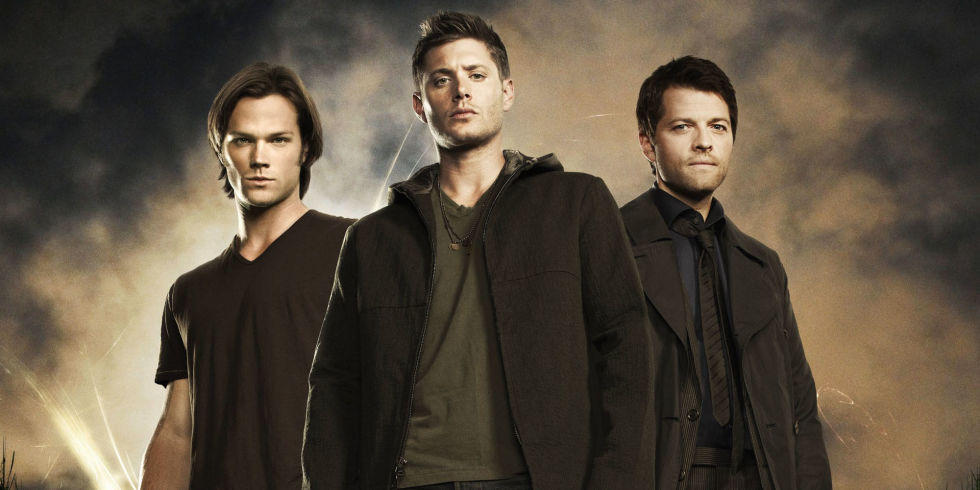
Supernatural is a big show. It may have started off with many people calling it a Buffy rip-off, or thinking that it was just about two pretty boys fighting monsters and couldn’t really offer any depth or lasting appeal, but with the series going into its 13th season it’s more than proven that not only is it one of the most successful cult shows on television, but that it’s able to remain entertaining and creative despite 264 episodes already having aired.
The latest picks up where the shocking and brutal finale of season 12 left off. Castiel (Misha Collins) has been killed, Crowley (Mark Sheppard) has sacrificed himself, Mary (Samantha Smith) is trapped in an apocalyptic universe with Lucifer (Mark Pellegrino), and Lucifers son has been born. Sam (Jared Padalecki) and Dean (Jensen Ackles) are not in a good place.
This isn’t the first time that a series of Supernatural has started following a major disaster in the previous season’s finale. In fact, it’s a lot more common that the show does this so things are likely to improve for our heroes before the end of the season and things can go bad again. However, this is the first time where it’s been so unclear as to what will come next.
First things first – and potential spoilers so skip to the next paragraph if you want to go in to season 13 completely blind – Castiel is coming back. This was something that the showrunners kept quiet about for about two weeks before confirming that everyone’s favourite angel would be returning. With Cas having died numerous times before, and having become such an important part of the series, it would now be shocking if he didn’t come back.
Sam and Dean are in a situation that is incredibly dire. Crowley may have been a demon, but had helped the two of them more times than not, and kept the forces of Hell somewhat in check. With him gone they’ve lost a powerful ally, and may be facing bigger dangers going forwards. They also lost Rowena (Ruth Connell) towards the end of season 12, which again, is a powerful ally that has helped them in the past.
The biggest loss has been that of Mary. With their mother having come back into their lives after decades dead the two brothers finally had a family again. Whilst things did have a rocky start Mary was very much their kick arse hunter mother by the end of the season, and fit perfectly into the show. Whilst last time we saw her she was still alive, how long she will stay that way, and if she’ll be able to get back home is a major mystery of the new season.
The most important question though is that of Lucifer’s son Jack, to be played by Alexander Calvert (whom geek fans may recognise as Anarky from season four of Arrow). Little is known about Jack yet, other than the fact that he is the son of Lucifer, and that as a Nephilim he’ll possess incredible powers. Whether he will be a force for good, or ultimately become the villain of the season has yet to be revealed.
Despite the many questions and mysteries around the new season, showrunners have revealed that some previously believed dead characters will be returning, though not who or how. The introduction of a parallel world does open up the possibility to old characters coming back. They’ve also revealed that the show will be attempting a second backdoor pilot for a spin off series about Sheriff Jody Mills (Kim Rhodes) as she continues to take in young women who have lost their families to the supernatural, training them to be hunters.
The biggest tease for things to come is animated cross-over episode with Scooby Doo. Yes, you read that correctly: Supernatural is doing a cartoon Scooby Doo episode. Sam and Dean will team up with Shaggy, Scooby, and the rest of the gang, and the Impala will race the Mystery Machine. If that alone doesn’t encourage you to watch when the show returns, I don’t know what will.
Judge Death. A name that is as recognisable and iconic as Judge Dredd, more recognisable to most people than more regular characters from the Judge Dredd books such as Judge Anderson or Judge Hershey. Before I’d even read a single page of Judge Dredd I’d hear about Judge Death and the other Dark Judges.
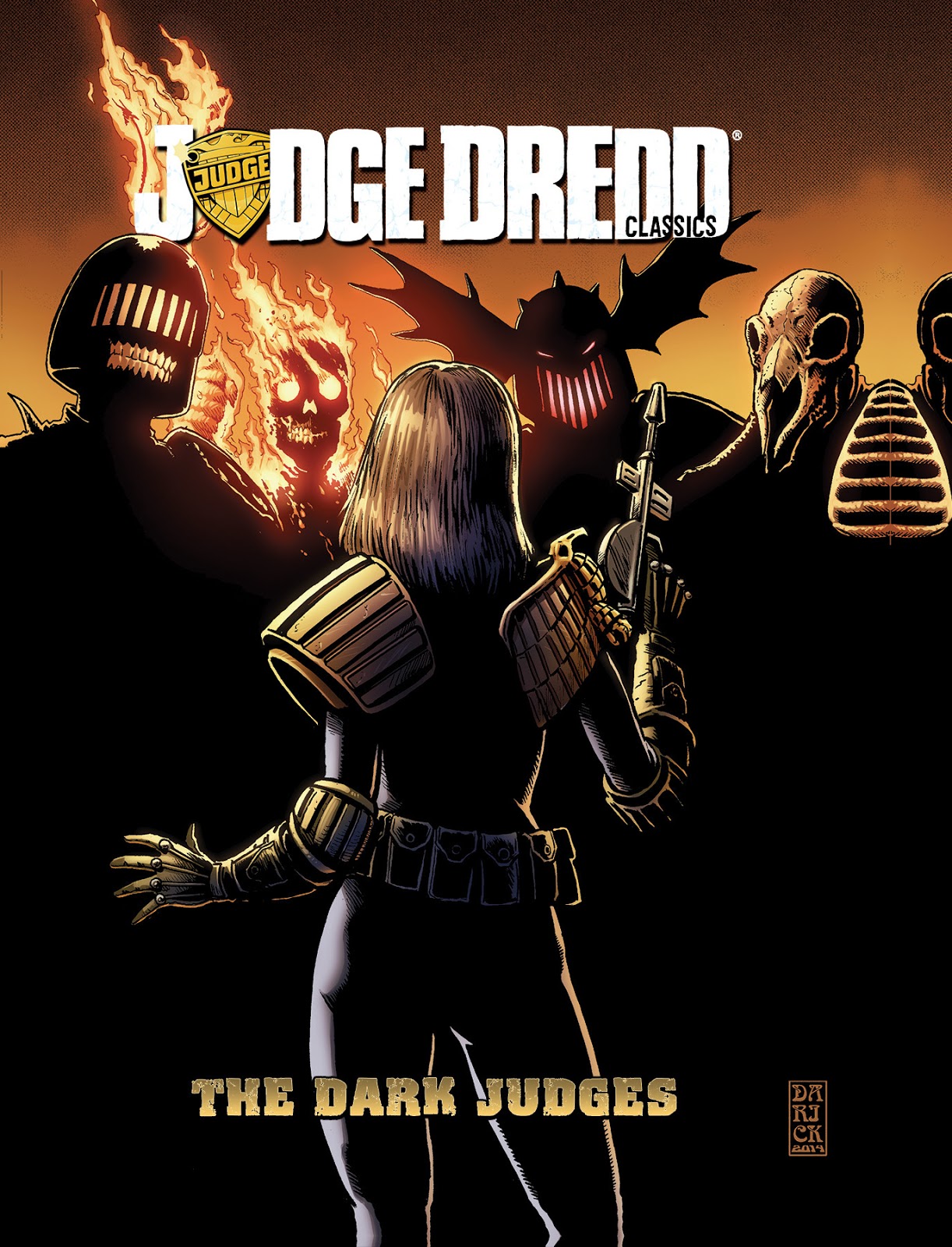
Judge Dredd Classics: The Dark Judges collects together the first three stories to feature Judge Death, and his three cohorts, in one single volume, allowing people such as myself, who know about the legacy of the Dark Judges but has never read it, a chance to see how it all began.
The three stories collected in this trade come from the early 80’s, and begins way back in 2000AD #149, and you can tell this. The first story in particular, ‘Judge Death’, is very simplistic in the way it’s written compared to a lot of later Judge Dredd stories, using a lot of narration boxes and captions to fill in the story beats. In a way, it reminds me of early DC books from the 1940’s and 50’s, where they had a lot of ‘tell me’ rather than a ‘show me’ way of telling a story.
This simplicity carries through most of the story, with Judge Death being beaten in an incredibly simplistic way. It’s actually extremely shocking that this was the first appearance of Dredd’s greatest foe, because he feels like a weak villain of the week style bad guy. Whether this was an intentional choice in order to lower expectations before his huge return a year later, or if he just proved so popular that they knew they had to bring him back, it’s still very jarring to read.
I was also surprised to learn in this first Judge Death story that it was also the first appearance of Judge Anderson, a character that would go on to play a major part in the Judge Dredd mythology and last for decades.
After this story, the book goes on to include the first introduction of the fellow Dark Judges, Judge Fear, Judge Fire, and Judge Mortis. This is where the book gets really good, building up the mythology of the Dark Judges and their home dimension, creating a solid foundation that would go on to remain relatively unchanged for years.
With the inclusion of the other Dark Judges we get to see how much more of a threat Judge Death is, as the four of them tear through Mega City One, leaving a trail of corpses in their wake.
Despite being a Judge Dredd book, all three of these stories firmly push Judge Anderson to the forefront, with the third story actually originally published as a Anderson Psi Division title, and Dredd himself only appearing in a handful of panels throughout. Whilst this may be surprising to some readers it does make for a nice change, and it gives another of the series’ main characters the opportunity to shine.
Because the older 2000AD books were produced in black and white, the story has been completely revamped, with the stories now presented in beautiful full colour. It’s a big change from the original source material, but the colours used here actually accentuate the story. The Dark Judges have dirty, muted colours, whilst the rest of Mega City One and it’s inhabitants are bright and colourful. It helps to tell the story, it allows the characters to leap from the pages in ways they didn’t before. And most importantly, it accentuates the original art without detracting from it.
Judge Dredd Classics: The Dark Judges is a great collection, bringing together the origins of some of the most iconic villains in both 2000AD and comics in general. Whether familiar with these stories, or only vaguely aware of who the Dark Judges are, this is a must read for any fans of the Judge Dredd mythology.
‘After Thrawn is rescued from exile by Imperial soldiers, his deadly ingenuity and keen tactical abilities swiftly capture the attention of Emperor Palpatine. And just as quickly, Thrawn proves to be as indispensable to the Empire as he is ambitious; a brilliant warrior never to be underestimated.
‘On missions to rout smugglers, snare pirates, and defeat pirates, he triumphs again and again, inspiring even greater admiration from the Empire. One promotion follows another, but will be put to the ultimate test when Thrawn rises to admiral – and must pit all the knowledge, instincts, and battle forces at his command against an insurgent uprising that threatens not only innocent lives but also the Empire’s grip on the galaxy.’
When Disney acquired Star Wars and did away with the old expanded universe there were many things that fans were sad to see go, the Solo Twins, Mara Jade, Kyle Katarn, but one that the most people were sad to see go was Grand Admiral Thrawn, one of the most ruthless, and cunning bad guys in the Star Wars universe.
Star Wars Rebels surprised fans in the third season with the surprise return of Thrawn, casting him as the main antagonist for the series. Star Wars: Thrawn is set before his on screen debut, and tells the story of his arrival within the Empire, and his rise to the rank of Grand Admiral. The best thing, however, is that the book is written by Timothy Zhan, the original creator of Thrawn.
Whilst in the past books that have featured Thrawn have also had some major Star Wars characters competing for story time, with Thrawn sharing his pages with Luke Skywalker, Han Solo, and Princess Leia to name just a few. Here, however, Thrawn is front and centre of the book, though the story does include some small interludes with Arihnda Pryce.
Thanks to Thrawns cold, calculating manner, and his tight focus on his goals this book works so incredibly well. Any other character in this same story just wouldn’t be as interesting, but Thrawn himself exudes the same menace and awe here that he has on screen in Star Wars Rebels. Thanks to the inclusion of Eli Vanto, Thrawns aide and friend, we get more of a grounded and human insight into the character, though he never feels warm of kind at any time.
The book not only tells the backstory of Thrawn, but also shows how Pryce, who would go on to be Governor of Lothal in Star Wars Rebels. Seeing the twin stories is an interesting choice, seeing these two ruthless and calculating people rising to positions of huge power through very different paths. It also adds a little more depth to the scenes that characters share together in the television series as you discover that the two of them have a history and connections beyond the show.
Star Wars: Thrawn doesn’t add anything big to the Star Wars universe, there are no huge revelations or reveals here that will be effecting the wider universe, but it does explore a small portion of the past of one of the most popular Star Wars characters in a hugely well crafted and entertaining way.
With a second Thrawn book coming out in 2018, one that will be teaming him up with Darth Vader, it’s well worth going back and reading Star Wars: Thrawn before it’s release.
Released 20 years ago in the UK, Starship Troopers was a film that was misunderstood by many critics and journalists at the time, who failed to look past the glossy action movie exterior, to see the satirical war commentary that lies beneath.
Directed by Paul Verhoeven, director of celebrated classics such as RoboCop and Total Recall, and based upon the novel of the same name by Robert A. Heinlein, the film tells the story of three high school friends who join the military to fight an intergalactic a war with an alien race of bug-like creatures.
While the book was written as a celebration of the military that revelled in the glories of war, Verhoeven took his film in a different direction, using satire and over the top characterisation and events to paint the military as both ridiculous and dangerous. Verhoeven takes visual inspiration from the Nazi party, with many of the film’s uniforms, flags and iconography being similar to that of the Third Reich.
None of this is too shocking, however, given Paul Verhoeven’s history of growing up in Nazi occupied Netherlands and seeing a nearby German military base fall under attack from Allied forces on more than one occasion. Some view Starship Troopers as a satire of the military and war, but they can often fail to grasp just how anti-military the film is. Critic Phil Coldiron put it best when he called it “one of the greatest anti-imperialist films”.
This bleeds through the entire runtime, not just from the aforementioned designs, but in the casting of young blonde-haired and blue eyed actors, in having all older figures of authority missing limbs and covered in scars, and with blatant propaganda videos appearing throughout.
Despite these deeper themes, the overall experience is quite simple. Earth has gone to war with an alien race of insects from the planet Klendathu, a race that the human leaders claim want to wipe out all of humanity. Three high schoolers immediately join up for patriotism and glory, each entering a different branch of the military; Rico (Casper Van Dien) joins the mobile infantry, Carmen (Denise Richards) joins the Federation Fleet, and Carl (Neil Patrick Harris) joins Military Intelligence.
Over the course of the film we see the trials and tribulations of these three, along with a host of other characters, as humanity takes to the stars to kill the bugs. We see victories and defeats, mistakes and advancements, love and loss. The film shows us all aspects of the war, yet never glorifies it, never rewards the characters. Even come the end when they manage to reach their objective and capture one of the bug’s leaders, the characters simply go back to the fight.
Even for a film that’s now two decades old, it still looks great. Mixing together CGI and practical effects, it manages to look glossy and bright, with brightly coloured bugs swarming across desert planets as they try to kill their fragile human foes. The costume design makes the heroes stand out, their dark black and grey uniforms a stark contrast to the desert battlefields they fight in. The costumes were well received and would go on to be re-used in several film and television projects, including (surprisingly) Power Rangers Lost Galaxy.
With competent action choreography, huge explosions, and more expended rounds of ammunition than any other film to that point, the war sequences are loud, brash, and gory. The bugs explode in showers of disgusting fluids, and humans are stabbed, slashed, and ripped to pieces in deaths that don’t shy away from showing the brutality of war.
Starship Troopers is filled with over the top characters, action, and silly moments that makes it more than just a standard war movie, or more than a science fiction film. With war, fascism, and violence perhaps more prevalent today than the time of its original release, the film remains an important social commentary wrapped in a wacky sci-fi adventure.
After three years of watching The Flash go up against evil speedsters the show needed something different for its fourth season in order to stand out from previous years. Yes, the characters have changed, with many now having powers and hero personas of their own, new people have come and gone, and the personal trials and tribulations are different, but rehashing the same type of villain for a fourth time would be a huge mistake.
Fortunately, the creators of the show seem to have paid attention to all of the grumblings and criticism that viewers have had during the third season, and have made an extra effort to make a change. It might not seem like much, but the simple act of giving the fourth season a big bad that doesn’t have a carbon copy of the Flash’s powers makes a big change to the way the series has played out so far.
Using The Thinker (Neil Sandilands) as the villain took many people by surprise when it was first announced, however, after only a handful of episodes it has become clear that this was a brilliant choice. The villain can no longer have super speed fights with The Flash, he can’t travel in time, or skip between parallel worlds, but he’s able to challenge the character in a way never seen before.
Team Flash has always been a smart group, and they’re even better off now that Earth-2’s Harry Wells (Tom Cavanagh) is back, but now they all look like idiots next to their villain. They’re up against someone who’s not only smarter than them, but is able to predict their every move and reaction before they’ve even crossed the heroes minds. Even before the shock plot twist of the mid-season finale episode it was difficult to see how they might be able to beat The Thinker.
This is what has made this season great so far: they have given us a villain and problems that actually challenge our heroes in ways that they haven’t before, and it’s both exciting and scary.
As well as a new villain, this season has given us one of the best new additions to Team Flash, Ralph Dibney (Hartley Sawyer), the Elongated Man. The series has been great with it’s supporting characters, Cisco (Calros Valdes) as Vibe has been great, the roller coaster of Caitlyn (Danielle Panabaker) and Killer Frost has be awesome, but season three did drop the ball in a few ways. It didn’t really know what to do with Wally (Keiynan Lonsdale), and Julian (Tom Felton) was interesting but didn’t bring a great deal to the team dynamic. Ralph, on the other hand, is a great new wrinkle in the team dynamic, and a fun injection of energy.
The Elongated Man is a much beloved comic book character (his story line in Identity Crisis is still one of the most heartbreaking comic book stories DC has ever written), so the show needed to do something really special with him here. Yes, he might not be the Ralph we know and love from the books, he’s much more of an arse, but you can see the Ralph he’s going to become beneath it all, the hero he’s destined to become. His continued journey to becoming a hero, and the fun energy he’s bringing to the series, makes him a great addition to the show.
With the final episode of this first half of the series pulling the rug out from audiences feet by essentially having The Thinker beat Barry in a way that has never been done before, it’s putting the second half of the season in a position to go in some bold new directions. How Barry being framed for murder will play out, if he’ll be found guilty, if his identity as The Flash will come out, are exciting prospects.
The Flash, more than any of the other CW DC shows, has sometimes fallen into the trap of feeling slightly repetitive, but thanks to a drastically different villain, some new cast additions, and brave story choices, season four already stands out as a old and different direction for the show.